Commercial Vehicles

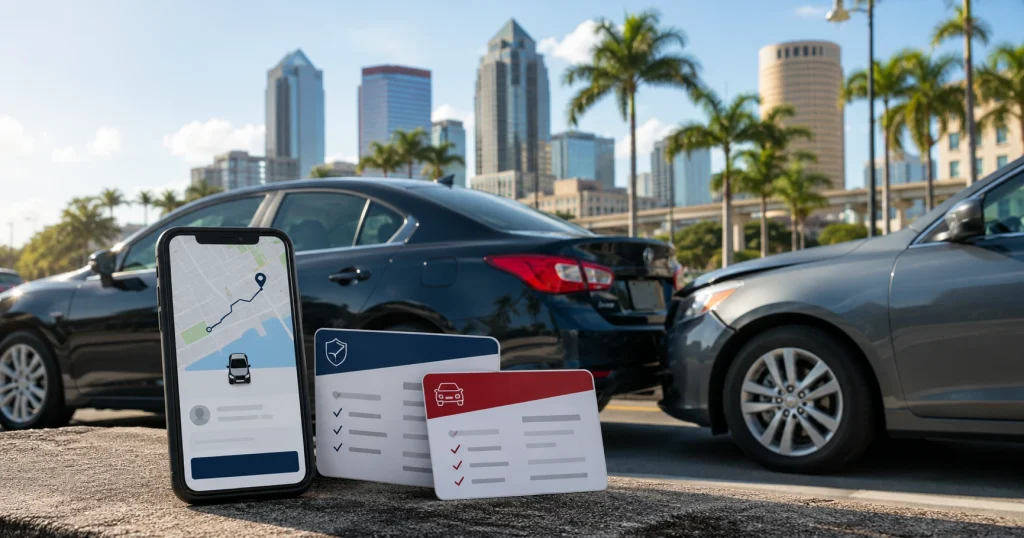
Vehículos de rideshare, una aplicación de viaje y documentos de seguro después de un choque en Tampa, solo con fines ilustrativos.
Blog, Commercial Vehicles, Spanish

Seguro de Rideshare vs. Seguro Personal Después de un Choque en Tampa: ¿Qué Póliza Lo Cubre?

Resumen Rápido El estado de la aplicación del conductor puede determinar qué póliza de seguro responde después del choque. Si la aplicación estaba apagada, el reclamo suele comenzar con el seguro personal del conductor. Si la aplicación estaba activa, pero el conductor no había aceptado un viaje, la ley exige al menos $50,000 por persona, $100,000 por incidente y $25,000 por daños a la propiedad. Si el conductor había aceptado un viaje o llevaba a un pasajero, la ley de Florida exige al menos $1 millón en cobertura primaria de responsabilidad civil de automóvil. Guarde recibos, capturas de pantalla, datos del viaje y el reporte policial. ¿Tuvo un mal día? Llame a The Reyes Firm al 833-4 BAD DAY. Después de un choque de Uber o Lyft, entender el seguro de rideshare vs. el seguro personal en Tampa puede sentirse abrumador. El conductor puede señalar a Uber o Lyft. La aseguradora personal puede decir que el conductor estaba trabajando. La plataforma puede pedir más pruebas antes de confirmar la cobertura. Esa demora puede afectar su reclamo. El estado de la aplicación puede definir qué póliza responde, cuánta cobertura está disponible y por qué una aseguradora intenta negar el pago. Esta guía explica cómo funciona el seguro de rideshare en Florida después de un choque en Tampa, qué evidencia debe guardar y cuándo conviene llamar a The Reyes Firm. Atendemos a personas lesionadas en Tampa, East Tampa, Brandon, Riverview, Plant City y otras comunidades de Hillsborough County. ¿Por qué importa el estado de la aplicación después de un choque de Uber o Lyft? El estado de la aplicación importa porque identifica la etapa de cobertura activa en el momento exacto del impacto. En un accidente de rideshare, no basta con saber que el vehículo trabajaba para Uber o Lyft. También debe probarse qué hacía el conductor dentro de la aplicación cuando ocurrió el choque. La ley de Florida divide la actividad del conductor de una empresa de red de transporte, conocida como TNC, en varias etapas: Desconectado. El conductor no ha iniciado sesión en la aplicación de Uber o Lyft. Conectado y esperando una solicitud. El conductor está disponible, pero todavía no ha aceptado un viaje. En camino a recoger al pasajero. El conductor ya aceptó el viaje y se dirige al lugar de recogida. Transportando al pasajero. El pasajero está dentro del vehículo. Cada etapa puede activar una revisión de seguro distinta. También puede cambiar la cantidad de cobertura disponible y la forma en que responde la aseguradora personal del conductor. ⚖️ SUS DERECHOS El Estatuto de Florida § 627.748 exige que un conductor de TNC entregue información de seguro después de un choque. Cuando se solicita, también debe indicar si estaba conectado a la aplicación o participando en un viaje previamente acordado. Durante una investigación de cobertura, la TNC también debe proporcionar ciertos horarios de inicio y cierre de sesión. Después de identificar la etapa de la aplicación, el siguiente paso es determinar qué póliza debe responder. ¿Qué seguro aplica si la aplicación de Uber o Lyft estaba apagada? Si la aplicación estaba completamente apagada, el reclamo suele comenzar con el seguro personal de automóvil del conductor. Uber o Lyft puede sostener que el conductor no estaba usando la plataforma. En ese escenario, el seguro mantenido por la empresa de rideshare puede no aplicar, aunque todavía deben revisarse otras fuentes de recuperación. Para un choque con Uber o un choque con Lyft, la información de la aplicación sigue siendo importante. No debe aceptarse una respuesta verbal del conductor sin revisar los registros disponibles. Las protecciones básicas de seguro en Florida pueden agotarse rápido después de una lesión grave. Los beneficios de PIP generalmente están limitados a $10,000 en beneficios médicos y por incapacidad. PIP significa Protección contra Lesiones Personales y ayuda a pagar ciertos gastos médicos relacionados con el choque. Los beneficios médicos generalmente reembolsan el 80% de los gastos médicos razonables y necesarios cuando usted logra recibir atención inicial dentro de los 14 días después del choque. La cobertura mínima puede agotarse con atención de emergencia, cirugía, pérdida de ingresos o tratamiento a largo plazo. Por eso deben revisarse todas las posibles fuentes de recuperación: La póliza personal de automóvil del conductor de rideshare La cobertura PIP de la persona lesionada La cobertura de motorista sin seguro o con seguro insuficiente de la persona lesionada El seguro de cualquier otro conductor responsable Cualquier póliza general o de exceso disponible ⚠️ ADVERTENCIA SOBRE EL PLAZO La mayoría de las demandas por lesiones personales basadas en negligencia en Florida deben presentarse dentro de 2 años. Este plazo se encuentra en el Estatuto de Florida § 95.11. No espere hasta que una aseguradora termine su investigación para proteger su derecho a presentar una demanda. Aunque la aplicación estuviera apagada y la cobertura fuera limitada, la investigación no debe terminar ahí. Otras partes, pólizas o actos de negligencia todavía pueden afectar el reclamo. ¿Cómo funciona el seguro después de un accidente de Uber o Lyft? El seguro después de un accidente de Uber o Lyft cambia según la actividad del conductor en la aplicación. Edward Reyes, Esq., explica en el video del artículo original cómo la cobertura puede variar cuando el conductor está desconectado, esperando una solicitud, en camino a recoger a alguien o transportando a un pasajero. Video: Mantener el mismo video incrustado que aparece en la versión original en inglés. La idea principal es clara: el estado de la aplicación importa. Una póliza distinta puede responder cuando el conductor lleva a un pasajero, y cuando usa el vehículo para fines personales. También deben revisarse los hechos, todas las pólizas disponibles y el lenguaje exacto de cada contrato de seguro. ¿Qué pasa si el conductor estaba conectado, pero no había aceptado un viaje? Cuando el conductor estaba conectado y disponible, pero aún no había aceptado un viaje, se trata comúnmente del Período 1. Esta etapa crea una de las disputas de cobertura más frecuentes porque el conductor usa la aplicación
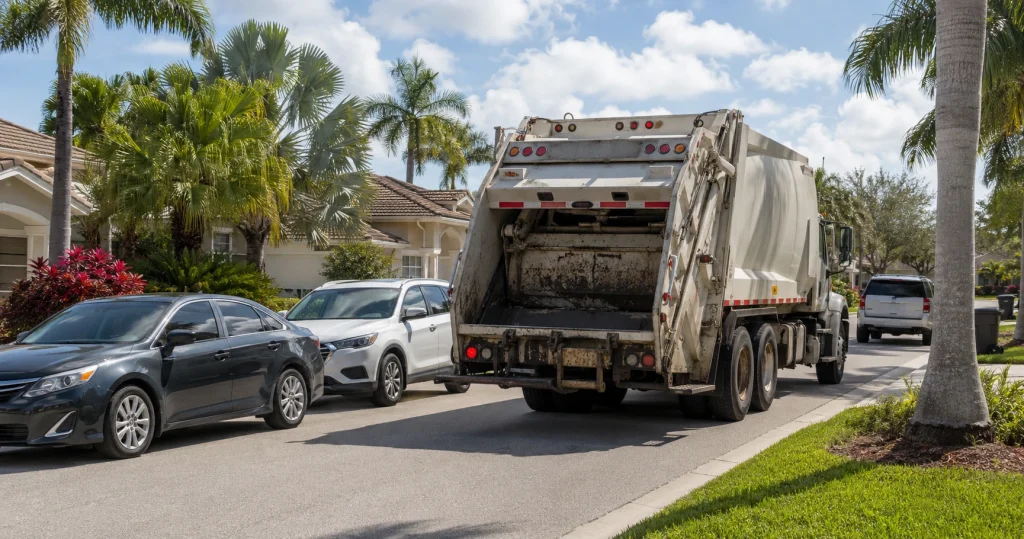
Commercial garbage truck on a Tampa residential street near passenger vehicles, for illustrative purposes only
Blog, Commercial Vehicles, Truck Accidents

Tampa Garbage Truck Accident Attorney: Who May Be Liable?

What You Need to Know Garbage truck crashes can involve private waste companies, contractors, municipalities, maintenance providers, and other responsible parties. Important evidence may include route data, onboard video, inspection reports, maintenance records, driver files, and government contracts. Claims involving city or county garbage trucks may have special notice requirements and recovery limits. Most Florida negligence lawsuits must be filed within two years, but other deadlines may apply to government claims. A Tampa garbage truck accident attorney can identify responsible parties and protect evidence before it disappears. Had a bad day? Call The Reyes Firm at 833-4 BAD DAY. SCHEDULE A FREE CASE REVIEW A garbage truck crash can leave you badly hurt and unsure where to turn. You may not know who owns the truck, who employs the driver, or which insurance company should pay your claim. A Tampa garbage truck accident attorney can investigate those questions before important evidence disappears. These cases may involve a private waste company, a government contractor, the City of Tampa, Hillsborough County, or several companies connected to the same truck. Because garbage trucks are commercial vehicles, their accident claims often involve company records, maintenance evidence, commercial insurance, and multiple responsible parties. Learn more about how The Reyes Firm handles truck and commercial vehicle accidents in Tampa. Why Are Garbage Truck Accidents Different From Other Tampa Crashes? Garbage trucks make frequent stops, reverse through residential areas, and operate close to parked cars, pedestrians, cyclists, and sanitation workers. Their size, blind spots, specialized equipment, and collection schedules create risks that don’t exist in a typical passenger-vehicle accident. A garbage truck does not have to be an 18-wheeler to qualify as a commercial vehicle. Many garbage and recycling trucks are large single-unit vehicles that carry heavy loads through narrow streets. They may operate in Tampa neighborhoods while residents are: Leaving for work or school Walking dogs Riding bicycles Placing containers near the roadway Backing out of driveways Crossing streets Waiting at school bus stops Garbage trucks also use hydraulic lifts, compactors, alarms, cameras, and other specialized equipment. A failure in any of these systems can put drivers, workers, and nearby residents in danger. 💡 Did You Know? The Federal Motor Carrier Safety Administration reported that 99 garbage or refuse trucks were involved in fatal crashes nationwide in 2021. Another 1,460 were involved in injury crashes, and 2,520 were involved in towaway crashes involving disabling vehicle damage. These are national figures for large trucks classified as garbage or refuse vehicles. They are not Tampa-only crash totals. FMCSA’s fatal-crash figures draw from the National Highway Traffic Safety Administration’s Fatality Analysis Reporting System, a nationwide census of fatal traffic crashes. The complete figures appear in FMCSA’s Large Truck and Bus Crash Facts 2021. What Causes Garbage Truck Accidents in Tampa? Garbage truck accidents often result from unsafe backing, large blind spots, distracted driving, driver fatigue, poor maintenance, or unsafe collection procedures. The exact cause may not be clear from the police report, so investigators may need to review the truck’s video, route data, maintenance history, and company records. Unsafe backing Garbage trucks frequently reverse on residential streets, in apartment complexes, and near commercial properties. The driver may not see a person, bicycle, parked vehicle, or car entering the collection area. Reverse cameras, mirrors, alarms, and spotters can help reduce this danger. Investigators should determine if these safety measures were available and used. Blind-spot and wide-turn collisions A large garbage truck may have blind spots along its sides, directly behind it, and near the front. A driver who fails to check those areas can sideswipe a vehicle, strike a pedestrian, or trap a cyclist during a turn. Distracted or fatigued driving Garbage truck drivers may need to watch workers, follow route instructions, monitor equipment, and navigate tight spaces. A cellphone, dispatch message, route device, or conversation inside the cab can pull the driver’s attention away from the road. Early collection schedules and long shifts may also contribute to fatigue. Poor maintenance Garbage trucks experience repeated braking, turning, stopping, lifting, and compacting. Companies should inspect and maintain important systems, including: Brakes Tires Lights Mirrors Reverse alarms Cameras Hydraulic equipment Steering components Maintenance records can show if a known problem was ignored or a required repair was delayed. Falling trash or equipment Loose garbage, tools, containers, or mechanical parts can fall into traffic. A driver may swerve, brake suddenly, or crash without touching the garbage truck. If trash, equipment, or unsecured material falls from a garbage truck and causes a collision, the claim may involve a truck-lost-load accident, even if the vehicles never make direct contact. Unsafe company practices The driver may not be the only person responsible. A waste company or contractor may contribute to a crash by: Hiring an unqualified driver Providing inadequate training Ignoring prior safety complaints Setting an unsafe collection schedule Failing to inspect the truck Keeping defective equipment in service Pressuring drivers to complete routes too quickly A careful investigation looks beyond the person behind the wheel. Who Can Be Liable for a Garbage Truck Accident in Tampa? The driver, waste collection company, truck owner, government contractor, municipality, maintenance provider, or equipment manufacturer may be liable. The answer depends on who controlled the driver, owned the truck, maintained its equipment, established the route, and caused or contributed to the crash. The garbage truck driver A driver may be responsible for speeding, unsafe backing, distracted driving, failing to yield, or ignoring a collection safety rule. A citation may support a claim, but a citation is not always required to prove negligence. The waste collection company A private sanitation company may be responsible for its employee’s actions while the driver is performing assigned work. The company may also face direct responsibility for unsafe hiring, poor training, weak supervision, or neglected maintenance. The truck owner The company shown on the truck may not own it. A separate leasing company, fleet operator, or contractor could control the vehicle and its maintenance. Ownership records and contracts can help determine which company

Dump Truck Through the City Construction Zone (1)
Blog, Commercial Vehicles, Truck Accidents

Who Is Liable After a Construction Truck Accident in Tampa?

What You Need to Know A construction truck driver may not be the only person responsible for your crash. The driver’s employer, truck owner, contractor, loader, maintenance provider, or parts manufacturer may also be liable. Driver logs, electronic truck data, inspection records, contracts, and jobsite records can disappear or be overwritten. Florida generally gives you two years to file a negligence lawsuit, but some cases have shorter notice requirements. This guide covers roadway crashes involving construction vehicles, not workers’ compensation claims for injuries inside a jobsite. Had a bad day? Call The Reyes Firm at 833-4 BAD DAY. A crash with a dump truck, cement mixer, flatbed, or equipment hauler can leave you badly hurt and unsure which company is responsible. The logo on the door may not tell the full story. Several contractors, owners, and insurers may be connected to the same vehicle. A construction truck accident lawyer can investigate those relationships, preserve evidence, and identify every available insurance policy. At The Reyes Firm, we help injured people understand their options and take action before important records disappear. For help with a serious commercial vehicle claim, visit our Tampa truck and commercial vehicle accident attorney page or call 833-4 BAD DAY. The Reyes Firm is located at 4730 N. Habana Ave., Suite 201, Tampa, FL 33614. Who Can Be Held Liable for a Construction Truck Accident? The construction truck driver, employer, truck owner, general contractor, subcontractor, cargo loader, maintenance company, or parts manufacturer may be liable. Liability depends on the driver’s work assignment, vehicle ownership, contracts, safety records, cargo handling, and the act that caused the crash. More than one insurance policy may apply. The driver A driver may be responsible for speeding, following too closely, distracted driving, unsafe lane changes, fatigue, impairment, or failing to inspect the truck. A citation can be useful evidence, but a citation is not required to bring an injury claim. The driver’s employer An employer may be responsible for a driver’s negligence when the driver was acting within the scope of the job. The company may also face direct claims for unsafe hiring, poor training, weak supervision, or keeping a dangerous driver on the road. The truck owner or leasing company Construction vehicles are often rented, leased, or owned by a company other than the driver’s employer. Before deciding who should be included in the claim, examine maintenance responsibilities and control over the vehicle. Contractors and subcontractors A general contractor may hire a hauling company to move soil, concrete, debris, steel, or equipment. Contracts, dispatch messages, delivery tickets, and site-entry records can show which business controlled the work and created the unsafe condition. Cargo loaders and maintenance providers An improperly loaded truck may spill materials, roll over, or take longer to stop. A separate maintenance provider may be responsible for failed brakes, worn tires, broken lights, or other unsafe equipment. Vehicle and parts manufacturers A defective tire, brake component, steering system, coupling device, or warning system may support a product liability claim. Protect the truck and damaged parts from alteration or disposal so qualified experts can inspect them. ⚠️ Warning: Florida’s filing deadline can expire quickly Florida generally allows two years to file a lawsuit based on negligence under Florida Statute § 95.11(5)(a). A government vehicle, public road project, death, or other special circumstance may create different deadlines or notice rules. Do not wait until the deadline is close. What Makes Construction Truck Crashes Different From Ordinary Car Accidents? Construction truck crashes often involve heavier vehicles, specialized equipment, commercial safety rules, layered contracts, and several insurers. Dump trucks, cement mixers, flatbeds, utility trucks, and equipment haulers also have large blind spots and longer stopping distances. Their records can reveal safety failures that an ordinary police report may not show. Construction vehicles may carry loose gravel, sand, concrete, steel, machinery, or demolition debris. Shifting or falling material can cause a collision even when the truck never touches another vehicle. Florida applies commercial vehicle safety requirements through Florida Statute § 316.302. The exact state and federal rules that apply depend on the truck, its weight, cargo, route, and business operation. Common construction vehicle crashes include: Dump truck rollovers Rear-end crashes involving loaded trucks Cement mixer crashes Flatbed cargo spills Wide-turn and blind-spot collisions Equipment trailer separations Work-zone collisions Our guide to the types of truck accidents in Florida explains how the crash type can point to its cause. Cargo records and weight data may be especially important after an overloaded truck accident. 💡 Did You Know? In 2022, 29% of fatal crashes in work zones and 12% of injury crashes in work zones involved at least one large truck, according to the Federal Motor Carrier Safety Administration. FMCSA also tracks large-truck crashes by roadway type, lighting, weather, road surface, and other conditions. These factors can become important when investigating a construction truck crash and determining what contributed to it. Source: FMCSA Large Truck and Bus Crash Facts 2022. What Evidence Can Prove Who Caused the Crash? Strong construction truck cases rely on evidence from the roadway, the truck, the driver, the companies, the project, and medical treatment. A prompt preservation letter can require businesses to keep records and physical evidence. The investigation should begin before electronic data is overwritten, surveillance is deleted, or the truck is repaired and returned to service. Important evidence may include: Police reports, photographs, video, and witness statements Electronic logging device and engine control module data Dash camera, nearby business, traffic, and jobsite footage Driver qualification, training, and disciplinary records Hours-of-service, dispatch, GPS, and phone records Pre-trip inspection and maintenance records Load tickets, weigh records, delivery receipts, and cargo documents Contracts between contractors, subcontractors, owners, and haulers Site-entry logs and project schedules The truck, trailer, tie-downs, tires, brakes, and damaged parts Medical records, bills, wage records, and injury photographs The police report is only a starting point. It may identify vehicles and witnesses, but it rarely contains every contract, electronic record, or safety document needed to establish company liability. The

Uber Eats delivery driver accident involving two vehicles in Tampa, Florida, for illustrative purposes only.
Blog, Commercial Vehicles

Uber Eats Accident Claims in Florida: Who Pays After a Crash?

What You Need to Know Uber Eats accident claims may involve the delivery driver, another negligent motorist, and several insurance policies. The driver’s app and delivery status can affect which coverage applies. An Uber Eats delivery is not automatically covered by the same Florida insurance rules as an Uber passenger trip. App records, order details, GPS data, photographs, and witness information can help prove the driver was making a delivery. Florida’s 14-day PIP treatment rule and two-year negligence deadline may affect your claim. Had a bad day? Call The Reyes Firm at 833-4 BAD DAY. An Uber Eats driver hit your car. Now you are hurt, your vehicle needs repairs, and the insurance card you received may not tell the whole story. Uber Eats accident claims can be more complicated than ordinary car accident claims. The driver may have been using a personal vehicle for paid delivery work. That can raise questions about business-use exclusions, app-based coverage, and which company must respond. You don’t have to answer those questions alone. First, get medical care, document the crash, and preserve proof of the driver’s delivery activity. Who Can File an Uber Eats Accident Claim in Florida? People injured by a negligent Uber Eats driver may have the right to bring a claim in Florida. This may include occupants of another vehicle, pedestrians, cyclists, and other road users. An Uber Eats driver injured by another motorist may also have a claim against the person who caused the collision. Possible claimants include: A driver whose vehicle was hit by an Uber Eats driver A passenger riding in another vehicle A pedestrian or cyclist struck during a delivery An Uber Eats driver injured by another negligent motorist A family pursuing a wrongful death claim What types of Uber Eats accidents happen in Tampa? Delivery drivers often travel through busy intersections, restaurant parking lots, neighborhoods, and apartment complexes. They may rely on navigation, order notifications, and delivery instructions while trying to meet a customer’s requested delivery time. Common crashes include: Rear-end collisions Unsafe lane changes Failure-to-yield crashes Red-light and stop-sign collisions Pedestrian and bicycle accidents Parking lot crashes Accidents caused by speeding or distraction These crashes may happen across Tampa, including Downtown Tampa, Ybor City, South Tampa, Brandon, Riverview, and Plant City. Heavy traffic on I-4, I-75, and I-275 can also increase the risk when a delivery driver travels between pickup and drop-off locations. 💡 Did You Know? FLHSMV reports that one in seven Florida crashes involves a distracted driver. NHTSA also warns that reading or sending a text takes a driver’s eyes off the road for about five seconds. At 55 mph, that is like driving the length of a football field without looking at the road. These statistics cover distracted driving generally and are not specific to Uber Eats drivers. Review FLHSMV’s distracted-driving guidance and NHTSA’s distracted-driving data. Delivery work alone does not prove that a driver was distracted or negligent. Evidence must show what the driver did and how that conduct contributed to the crash. Who Pays After an Uber Eats Driver Causes an Accident? Payment may come from your PIP coverage, the delivery driver’s personal insurer, insurance maintained through Uber, another at-fault driver’s policy, or uninsured motorist coverage. No single policy applies to every Uber Eats accident. The answer requires the actual policies, the driver’s delivery status, and evidence showing who caused the crash. Potential source When it may apply Your Personal Injury Protection coverage Initial medical expenses and part of your lost income, subject to Florida law and policy terms The delivery driver’s personal auto policy If the policy covers the loss and no delivery or business-use exclusion applies Insurance maintained through Uber During qualifying delivery activity, subject to the current policy, coverage period, exclusions, and Florida requirements Another driver’s liability coverage When a motorist other than the Uber Eats driver caused or contributed to the crash Uninsured or underinsured motorist coverage When an at-fault driver has no bodily injury coverage or too little coverage Optional injury protection When an eligible delivery driver purchased the coverage, and the loss falls within its terms Uber states that it maintains auto insurance on behalf of drivers and delivery people during certain covered activity. Uber also advises drivers and people involved in a crash to report it through its claims process. Those statements do not establish that a specific claim is covered. The policy and the facts still control. Review Uber’s insurance information. Why does the driver’s delivery status matter? The insurance investigation should establish what the driver was doing at the exact time of impact: Was the driver offline? Was the driver logged in and waiting for an order? Had the driver accepted an order? Was the driver traveling to a restaurant? Had the food been picked up? Was the driver traveling to the customer? Had the delivery just ended? A screenshot, customer receipt, restaurant pickup record, app notification, or GPS record may help answer these questions. Is Uber Eats insurance the same as Uber rideshare insurance? No. Food delivery and passenger transportation are different activities. Florida Statute §627.748 establishes insurance rules for transportation network company drivers who use an app to arrange passenger rides. An Uber Eats delivery does not automatically qualify as a prearranged passenger ride under that statute. Florida also regulates agreements between food delivery platforms and food service establishments. Florida Statute §509.103 requires certain agreements to identify insurance requirements for delivery partners and who pays the cost. It does not create one universal liability limit for every Uber Eats crash. This distinction is why you should not assume that the $1 million coverage commonly discussed in Uber passenger cases applies to your food delivery accident. ⚠️ Warning: Get Medical Care Within 14 Days. Florida Statute § 627.736 generally requires you to receive initial medical services and care within 14 days of a motor vehicle crash to qualify for PIP medical benefits. Waiting longer can prevent you from receiving those benefits. Read Florida Statute § 627.736. Can You

Amazon delivery van and passenger vehicle after a crash in Tampa, Florida, for illustrative purposes only.
Blog, Commercial Vehicles, Company-Caused Car Accidents

Amazon Delivery Accident Liability: Who Pays When a Driver Hits You?

What You Need to Know The Amazon name on a van or package does not always tell you who is legally responsible for the crash. A driver may work for an Amazon Delivery Service Partner, drive through Amazon Flex, or work for another company involved in the delivery. Different delivery arrangements can mean different insurance policies and responsible parties. Photos, delivery records, app data, GPS information, video, contracts, and insurance records can help show who should pay. The sooner the crash is investigated, the easier it may be to preserve evidence that can disappear or be overwritten. Had a bad day? Call The Reyes Firm at 833-4 BAD DAY. An Amazon delivery vehicle hit you. You are hurt, your car is damaged, and now you are trying to figure out who is supposed to pay. That question may be harder than it looks. The driver may not actually work for Amazon. The van may belong to another company. A personal insurance policy, commercial policy, delivery company, vehicle owner, or other business may be involved. An Amazon truck accident liability attorney can investigate those relationships and find out which companies and insurance policies may be responsible for your losses. If your crash happened in Tampa or elsewhere in Hillsborough County, the first step is not guessing who is liable. It is finding out exactly who the driver worked for, what type of delivery they were making, and which insurance covered the trip. Our guide from an Amazon delivery truck accident attorney explains why these cases can involve more moving parts than a typical car accident. Who Can Be Responsible After an Amazon Delivery Crash? More than one person or company may be responsible after an Amazon delivery crash. The driver may be at fault for careless driving, but the investigation may also lead to the driver’s employer, a delivery company, the vehicle owner, an insurer, or another business connected to the trip. The Amazon logo alone does not answer the question. After a crash, we may need to determine: Who was driving the vehicle Who hired or employed the driver Who owned or leased the vehicle Which Amazon delivery program was being used What the driver was doing at the time of the crash Which insurance policies were active If another company helped cause the collision For example, a driver who runs a red light may be personally responsible for causing the crash. If that driver was working for a delivery company at the time, the company and its insurance may also need to be investigated. If poor vehicle maintenance contributed to the crash, the vehicle owner or maintenance company could also become part of the case. The right answer comes from the evidence. What should you do at the scene? If you can do so safely: Take photos of the delivery vehicle and your vehicle Photograph company markings and the license plate Get the driver’s name and insurance information Ask who employs the driver Get witness names and contact information Save any dashcam or phone video Get the police report number You should also get medical care if you are hurt. Florida’s PIP law generally requires a person to receive initial medical services and care within 14 days of a motor vehicle crash to qualify for certain PIP medical benefits under Florida Statute § 627.736. ⚠️ Warning: Florida deadlines can affect your claim Florida Statute § 95.11(5)(a) generally gives you two years to file a negligence lawsuit. PIP also has a separate 14-day rule for certain medical benefits. Other deadlines can apply depending on the claim and the parties involved, so waiting can put important rights and evidence at risk. Watch: Who Pays After an Amazon Delivery Truck Accident? A delivery truck crash can involve more than the driver alone. In this short video, Edward Reyes explains why accidents involving Amazon and other delivery vehicles may involve commercial insurance, company responsibility, and additional questions about who should pay for your injuries and losses. Edward Reyes, Esq. explains why delivery truck accident claims can involve questions about the driver, the company, and available insurance coverage. Does It Matter If the Driver Works for a DSP or Amazon Flex? Yes. The driver’s delivery arrangement can change the entire insurance and liability investigation. A DSP driver usually works for a separate delivery company. An Amazon Flex driver normally uses a personal vehicle. Each setup creates different questions about employment, insurance, vehicle ownership, and company responsibility. Amazon Delivery Service Partner drivers Amazon’s Delivery Service Partner program uses independently operated delivery businesses. Those businesses generally hire and manage their own drivers. A DSP driver may be operating a branded delivery van, but that does not mean Amazon directly employs the driver. In a DSP crash, important questions may include: Which DSP employed the driver? Who owned or leased the van? Which commercial insurance covered the vehicle? Was the driver making deliveries at the time? Did the company properly train the driver? Were there safety problems before the crash? Was the vehicle properly maintained? Records from the DSP can become very important. Amazon Flex drivers Amazon Flex works differently. Flex drivers generally use their own vehicles to make deliveries. That can make the insurance investigation more complicated because a personal auto policy may be involved along with coverage connected to Amazon Flex. An Amazon Flex accident lawyer may look closely at: The driver’s delivery block App activity GPS information Package scans Route records Personal auto insurance Commercial coverage connected to the delivery The timing matters. A driver who was actively delivering packages may create different insurance questions than a driver who had already finished a delivery block. A simple comparison Delivery setup Vehicle Main question DSP driver Often a branded delivery van Which delivery company and commercial policy covered the trip? Amazon Flex Usually the driver’s personal vehicle What was the driver’s delivery status, and which insurance policies were active? Other contractor Varies Who hired the driver, owned the vehicle, and insured the work? That

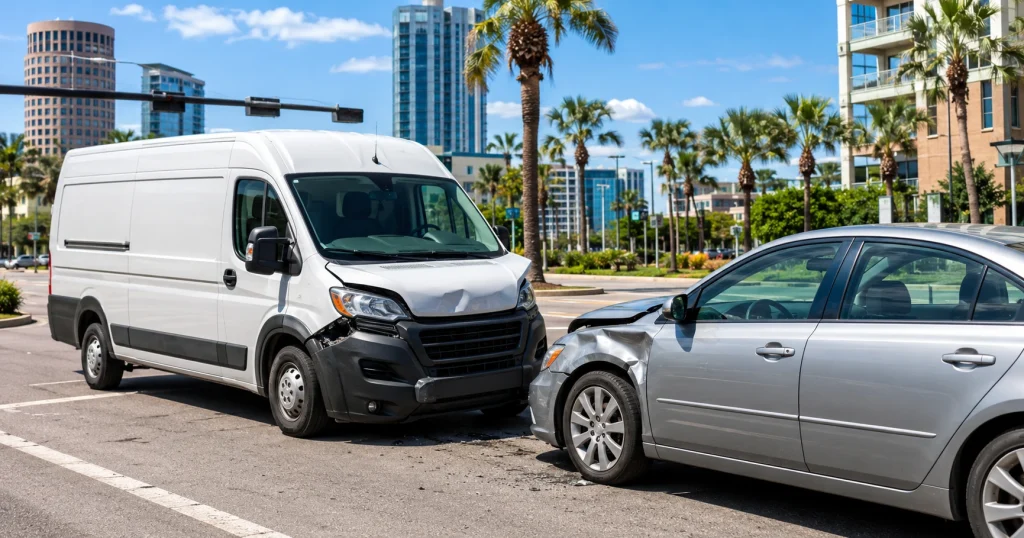
Company van and car involved in a Florida crash, illustrating a claim against a company when its employee or contractor causes an accident.
Blog, Commercial Vehicles, Company-Caused Car Accidents, Spanish

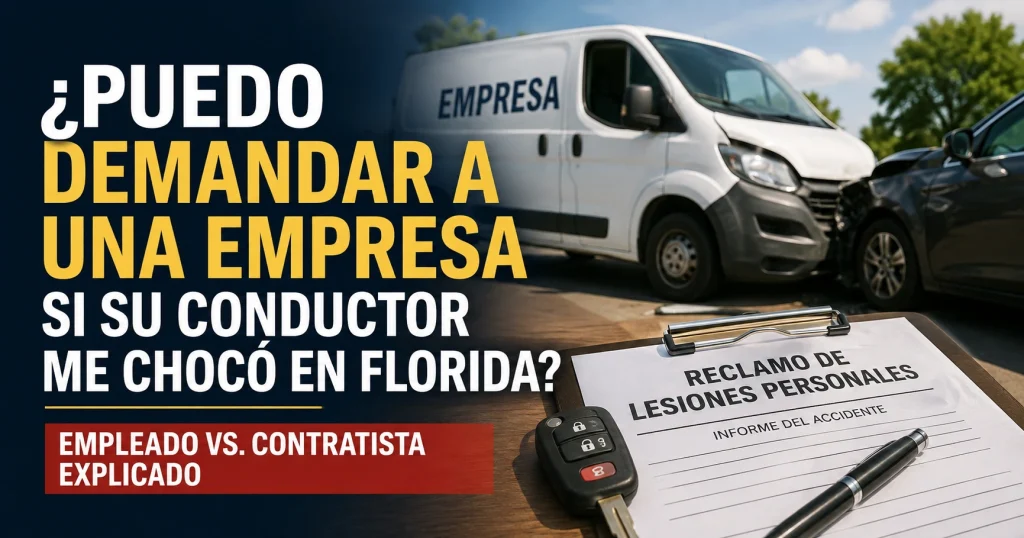
¿Puedo Demandar a una Empresa Si Su Conductor Me Chocó en Florida? Empleado vs. Contratista Explicado

Lo Que Usted Necesita Saber En Florida, usted puede demandar a una empresa si su conductor lo chocó, pero la respuesta depende del estatus laboral del conductor, lo que el conductor estaba haciendo, y quién era dueño o controlaba el vehículo. Si el conductor era un empleado actuando dentro del ámbito de su trabajo, la empresa puede ser responsable bajo la doctrina de Florida llamada respondeat superior. Si al conductor se le llamó “contratista independiente,” esa etiqueta no siempre termina el caso. Las cortes de Florida pueden analizar el control real de la empresa. La Doctrina de Instrumento Peligroso de Florida puede crear un camino separado hacia la responsabilidad del dueño del vehículo cuando una empresa permite que alguien maneje su vehículo. Pueden aplicar límites y excepciones. Florida es un estado de “no culpa”. Su cobertura de PIP generalmente paga primero. Los reclamos de lesiones más allá del PIP pueden depender de si sus lesiones cumplen con el umbral de lesión grave de Florida. Para la mayoría de los reclamos por negligencia en accidentes de auto en Florida que surgieron a partir del 24 de marzo de 2023, el plazo para demandar generalmente es de dos años, no cuatro años. La regla de negligencia comparativa modificada de Florida puede impedir la recuperación si se determina que usted tuvo más del 50% de culpa. ¿Tuvo un mal día? Llame a The Reyes Firm: 833-4 BAD DAY Si usted se pregunta, “¿Puedo demandar a una empresa si su conductor me chocó en Florida?” probablemente esté lidiando con dolor, cuentas, y llamadas confusas de seguros. Un choque que involucra un vehículo de empresa puede sentirse diferente de un accidente de auto común porque más de una persona o negocio puede estar involucrado. Lo difícil es saber quién puede ser responsable. ¿Era el conductor un empleado? ¿Un contratista? ¿Estaba el conductor trabajando en ese momento? ¿La empresa era dueña del vehículo? Esta guía explica cómo la ley de Florida trata los accidentes con conductores de empresa, el estatus de contratista vs. empleado, el seguro de PIP, y la responsabilidad de la empresa. También explica por qué la preservación rápida de evidencia importa en los casos de accidentes con vehículos de empresa en Tampa. ¿Puedo Demandar a una Empresa Si Su Conductor Me Chocó en Florida? Sí, usted puede demandar a una empresa si su conductor lo chocó en Florida, pero la respuesta depende de varios hechos. Las preguntas clave son: ¿Era el conductor un empleado o un contratista independiente? ¿Estaba el conductor trabajando en el momento del choque? ¿La empresa era dueña, arrendaba, o controlaba el vehículo? ¿La empresa contrató, supervisó, o confió el vehículo al conductor de forma negligente? ¿Sus lesiones le permiten salir del sistema de PIP sin culpa de Florida? Florida es un estado de seguro sin culpa. Después de muchos choques, su propia cobertura de Protección Contra Lesiones Personales paga primero, sin importar quién causó el choque. El PIP de Florida generalmente cubre el 80% de los gastos médicos razonables y el 60% de los ingresos perdidos, sujeto a los límites de la póliza y otras reglas legales. Para buscar ciertos daños contra el conductor o la empresa responsable, sus lesiones pueden necesitar cumplir con el umbral de lesión grave de Florida. Este umbral puede incluir lesión permanente, cicatrices importantes, o pérdida de una función corporal importante. ⚠️ Alerta de Plazo: Para la mayoría de los reclamos de lesiones personales por negligencia en Florida que surgieron a partir del 24 de marzo de 2023, el plazo generalmente es de dos años. El plazo anterior de cuatro años no debe usarse para la mayoría de los reclamos modernos por negligencia en accidentes de auto en Florida. Evidencia como datos de GPS, video de cámara de tablero, registros de despacho, registros de aplicaciones, y archivos del historial del conductor puede desaparecer rápido. Por eso la acción legal temprana importa. Fuente: Estatuto de Florida § 95.11. ¿Cuál Es la Diferencia Entre un Empleado y un Contratista Independiente en un Accidente de Florida? En un caso de accidente con vehículo de empresa en Florida, la distinción entre un empleado y un contratista independiente puede afectar la responsabilidad de la empresa. Si el conductor era un empleado actuando dentro del ámbito de su trabajo, la empresa puede ser responsable bajo la doctrina de respondeat superior. Esa frase legal significa que un empleador puede ser responsable cuando un empleado causa daño mientras realiza trabajo relacionado con su empleo. Si el conductor era un contratista independiente, la empresa puede argumentar que no es responsable. Pero esa etiqueta no siempre es la respuesta final. Una empresa puede llamar a alguien “contratista 1099,” pero las cortes de Florida todavía pueden analizar la relación de trabajo real. Cuanto más control tenía la empresa sobre el trabajo del conductor, más fuerte es el argumento de que el conductor actuaba como empleado. Factores de Empleado vs. Contratista en Casos de Accidente en Florida Factor Apunta Hacia Empleado Apunta Hacia Contratista Control sobre el trabajo La empresa dirige cómo se hace el trabajo El trabajador decide cómo completar el trabajo Propiedad del vehículo La empresa es dueña o arrienda el vehículo El trabajador usa su propio vehículo Horario La empresa fija las horas, rutas, o turnos Los trabajadores controlan su propio horario Supervisión La empresa monitorea el desempeño diario El trabajador opera de forma independiente Identificación de marca El vehículo, uniforme, o app identifica fuertemente a la empresa El trabajador opera bajo su propia identidad de negocio Pago Por hora, salario, o pago fijo por ruta Por proyecto, por trabajo, o por entrega Exclusividad Trabaja principalmente para una empresa Trabaja para varios negocios Duración Relación continua Trabajo de corto plazo o por proyecto Ningún factor solo decide el caso. Las cortes de Florida consideran toda la relación, incluyendo el contrato, el control de la empresa, la autonomía del conductor, y los hechos del choque. ¿Qué Pasa Si la Empresa Dice Que el Conductor Era un Contratista Independiente? Si la empresa dice que

Injured driver reviewing questions with an Amazon truck accident lawyer in Tampa, for illustrative purposes only.
Blog, Commercial Vehicles

10 Questions to Ask an Amazon Truck Accident Lawyer

What You Need to Know Ask about the lawyer’s experience with Amazon delivery vans, DSP drivers, Flex drivers, commercial trucks, and serious injury claims. The lawyer should know how to identify the driver’s employer, vehicle owner, delivery company, and every possible insurer. Ask how the firm will preserve GPS records, delivery app activity, camera footage, route data, and company documents. Review communication, contingency fees, case costs, settlement strategy, and trial preparation before signing. Avoid lawyers who promise a specific result, rush you to hire them, or cannot explain Amazon’s delivery structure. Had a bad day? Call The Reyes Firm at 833-4 BAD DAY. You may know that you need legal help after an Amazon delivery crash. The harder question is how to choose the lawyer who will protect your case. The questions to ask an Amazon truck accident lawyer can reveal how the attorney investigates delivery companies, preserves electronic evidence, handles insurance disputes, and prepares serious claims. If you were hurt in Tampa, you can speak with The Reyes Firm at 833-4 BAD DAY during a free consultation. An Amazon van accident lawyer in Tampa should look beyond the vehicle’s logo. The driver, employer, vehicle owner, delivery company, and insurance carrier may all be different parties. How Do You Choose the Right Amazon Truck Accident Lawyer? Choose a lawyer who can explain Amazon’s delivery structure, identify every possible company and insurer, preserve electronic evidence, and prepare a serious injury claim for litigation. During the free consultation, ask focused questions about experience, investigation, communication, fees, and trial readiness. Clear answers matter more than slogans or promises. Use these 10 questions during your consultation: Question to ask What the answer should explain 1. Have you handled delivery vehicle or commercial truck cases? The lawyer’s experience with company vehicles, commercial insurance, electronic evidence, and serious injuries 2. Do you understand Amazon DSP and Amazon Flex claims? The differences among DSP employees, Flex contractors, freight drivers, and other delivery arrangements 3. Who could be responsible for my crash? The driver, DSP, employer, vehicle owner, fleet company, Amazon-related entity, maintenance provider, and insurers 4. What evidence will you preserve first? GPS data, app records, route information, camera footage, vehicle data, messages, and company files 5. How will you determine the driver’s work status? Delivery-block records, app activity, package scans, route history, dispatch records, and witness information 6. Who will handle my case and answer my questions? The attorney, support team, main contact, and expected communication schedule 7. How does your contingency fee work? The fee percentage, case costs, written agreement, and what happens if there is no recovery 8. How will you document my injuries and losses? Medical care, future treatment, lost income, reduced earning ability, property damage, and daily limitations 9. Are you prepared to file a lawsuit and take the case to trial? The firm’s approach to litigation, experts, depositions, evidence, negotiation, and trial preparation 10. What should I do after this consultation? Medical care, evidence protection, insurance communication, documents to save, and the next legal steps A good attorney should welcome careful questions. You should leave the consultation with a clearer understanding of the process, even if you need time before making a decision. ⚠️ Warning: Florida’s Filing Deadline Can Arrive Quickly Florida Statute § 95.11 generally gives you two years to file an action founded on negligence. Different deadlines or notice rules may apply in cases involving a government entity, wrongful death, or other special facts. A consultation does not stop the deadline, and delivery records or video may be lost much sooner. What Experience Should an Amazon Truck Accident Lawyer Have? An Amazon truck accident lawyer should have meaningful experience with commercial vehicle crashes, delivery companies, layered insurance coverage, and cases involving contractors or DSPs. The lawyer should also know how to separate Amazon Flex claims from DSP, freight, semi-truck, and ordinary delivery van cases. Start by asking about the types of vehicles and delivery arrangements the lawyer understands. Amazon DSP cases Many Amazon-branded vans are operated by Delivery Service Partners, often called DSPs. A DSP is generally a separate delivery business that hires drivers and may own, lease, or operate the delivery vehicles. A DSP claim may involve: The delivery driver The DSP company A fleet or leasing company A commercial auto insurer A maintenance provider An Amazon-related entity, when supported by the facts The logo does not answer every legal question. Contracts, route records, control over the work, insurance policies, and driver status may matter. A lawyer should also explain the evidence needed to sue Amazon after a delivery van accident without claiming that Amazon is automatically responsible. Amazon Flex cases Amazon Flex drivers commonly use personal vehicles and accept delivery blocks through an app. These cases may raise questions about personal insurance, paid-delivery exclusions, supplemental coverage, app status, and the driver’s activity at the moment of the crash. A Tampa Amazon Flex accident lawyer should review: The driver’s delivery block App login and activity Package pickup and scan records Route and GPS information Personal auto insurance Any additional policy connected to delivery work Freight and semi-truck cases Amazon freight can also involve tractor-trailers, third-party motor carriers, contractors, and logistics companies. These claims may include federal safety records, electronic logging devices, driver qualification files, maintenance records, and cargo documents. FMCSA defines a large truck for its crash data as a truck with a gross vehicle weight rating above 10,000 pounds. A smaller delivery van may fall into a different category, so an attorney should not treat every Amazon vehicle like a tractor-trailer. NHTSA reported that 5,472 people were killed in crashes involving large trucks in 2023. Another estimated 153,452 people were injured. In both groups, 70% were occupants of vehicles other than the large truck. These figures apply to large trucks weighing more than 10,000 pounds, not standard Amazon delivery vans, but they show the serious risks involved when passenger vehicles collide with larger commercial trucks. What Should the Lawyer Investigate After an Amazon Delivery Crash? The

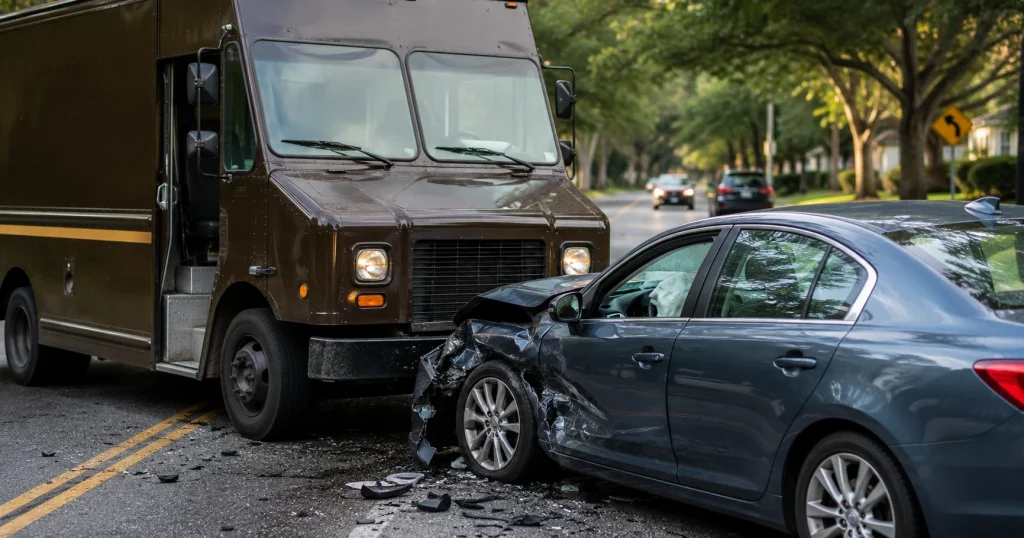
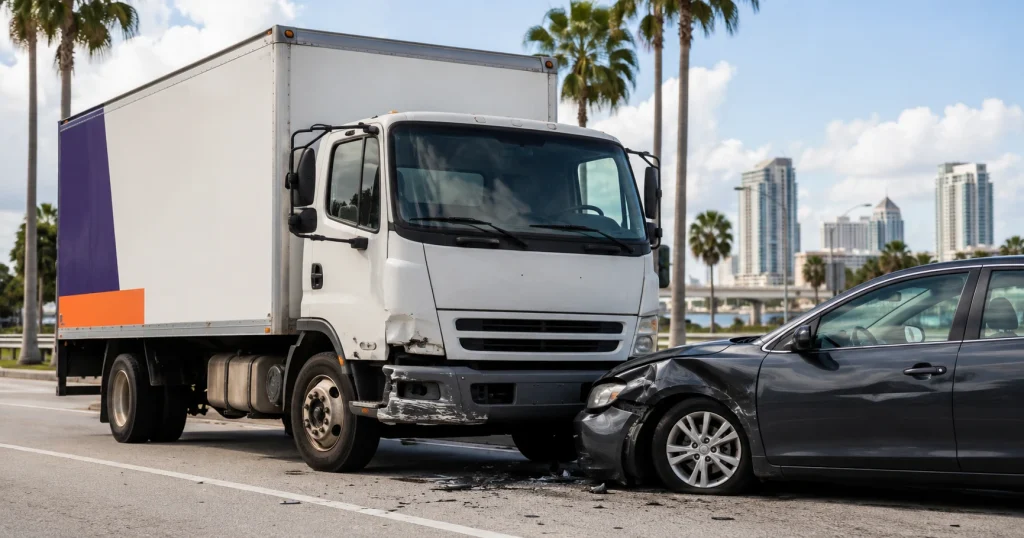
Brown delivery truck and damaged passenger car after a collision in Tampa, Florida, representing what happens if a UPS truck hits your car, for illustrative purposes only.
Blog, Commercial Vehicles

What Happens If a UPS Truck Hits Your Car in Florida?

What You Need to Know Call 911, get medical help, and document the UPS truck, driver, and crash scene. A UPS vehicle accident claim is different from a lost or damaged package claim. The driver, UPS, a vehicle owner, a contractor, or another party may be responsible. Commercial records such as route data, video, vehicle information, and company documents should be preserved quickly. Florida deadlines and comparative-fault rules can affect your right to recover compensation. Had a bad day? Call The Reyes Firm at 833-4 BAD DAY. A collision with a UPS delivery truck can leave you hurt, shaken, and unsure who to call. You may be dealing with a damaged car while an insurance representative asks questions before you understand the full extent of your injuries. If you are asking what happens if a UPS truck hits your car, start by protecting your health and the evidence. A UPS truck accident in Tampa may involve more companies, records, and insurance issues than a regular two-car crash. You do not have to sort through the claim alone. The Reyes Firm helps injured people understand what happened, identify the responsible parties, and protect important evidence before it disappears. What Should You Do After a UPS Truck Hits Your Car in Florida? After a UPS truck hits your car in Florida, call 911, move to safety if you can, and get medical attention. Photograph the vehicles, UPS markings, license plate, unit number, road conditions, and visible injuries. Collect witness details and avoid guessing about fault when speaking with police or insurers. Take these steps when you can do so safely: Call law enforcement. Ask for police and emergency medical help if anyone may be injured. Get medical care. Some neck, back, head, and shoulder injuries become clearer after the shock fades. Photograph the UPS vehicle. Capture the license plate, unit number, DOT number, company markings, and vehicle damage. Collect the driver’s information. Ask for the driver’s name, license, employer information, and insurance details. Find witnesses. Get names, phone numbers, and any available video. Protect your records. Save medical paperwork, repair estimates, towing bills, wage records, receipts, and photographs. Use care with recorded statements. Give accurate facts, but do not guess about speed, distance, fault, or your medical condition. A Tampa UPS truck accident may happen during a neighborhood delivery, on Hillsborough Avenue or Dale Mabry Highway, or along a major route such as I-275. The same basic steps apply, but your safety comes first. ⚠️ Warning: Florida Deadlines Can Affect Your Claim: Florida Statute § 95.11 generally gives you two years to file a negligence action. Other deadlines or exceptions may apply. Video, route data, vehicle records, and witness memories may disappear much sooner, so waiting can hurt the investigation. Do not repair or dispose of your vehicle before the damage has been photographed and inspected. Your vehicle may contain evidence showing the direction and force of the impact. Who May Be Responsible for a UPS Truck Accident? A UPS truck accident may involve the driver, UPS, a vehicle owner, a maintenance contractor, a loading company, or another careless driver. The right defendants depend on employment, vehicle ownership, the driver’s work activity, and the evidence. A UPS logo does not answer every liability question. Possible responsible parties include: The UPS driver The driver’s employer The owner or lessee of the vehicle A maintenance or repair contractor A loading or cargo company Another driver who helped cause the crash A parts manufacturer when a proven defect contributed The investigation may examine what the driver was doing, who controlled the delivery work, who owned the vehicle, and which company maintained it. Our guide explaining who may be responsible for a UPS vehicle crash covers these liability questions in more detail. NHTSA reported that 70 percent of people killed in large-truck crashes during 2024 were occupants of other vehicles. That national figure does not establish fault in any individual UPS crash, but it shows why the damage to people in smaller vehicles must be taken seriously. 💡 Did You Know? FLHSMV reported 46,651 commercial motor vehicle crashes in Florida in 2024, including 315 fatalities. These figures cover commercial vehicles statewide, not UPS trucks alone. Source: FLHSMV. A company vehicle accident lawyer in Florida can investigate the relationship between the driver, vehicle owner, employer, and insurance companies. How Do You File a Claim After a UPS Driver Causes a Crash? To file a claim after a UPS driver causes a crash, report the collision to your insurer, gather the crash report and medical records, and identify the commercial insurer or claims administrator. This is a vehicle injury claim, not a package claim, so ordinary UPS shipping support is not the right process. A UPS auto accident claim may involve several parts: Part of the claim What it may address Your auto policy Initial benefits or coverage available under your policy Liability claim Losses caused by the responsible driver or company Property damage claim Repairs, total-loss value, towing, storage, or rental costs Injury claim Medical expenses, income loss, future needs, and other damages Lawsuit A formal court case when responsibility or compensation remains disputed Start by keeping a written claim file. Include: The crash-report number Driver and vehicle information Insurance claim numbers Medical appointments and bills Repair estimates and vehicle photographs Missed work and wage records Every letter, email, or text from an insurer Do not use UPS package tracking or package-claim support to report bodily injury from a vehicle collision. The correct insurer or claims administrator may not be identified until the crash report, registration, employment information, and insurance records are reviewed. A Florida delivery truck accident lawyer can help identify the correct claim channel and communicate with the companies involved. Be cautious with any release. Signing a property damage or injury release may end part or all of your claim. Read the document closely before accepting payment. Can You Sue UPS After a Truck Accident in Florida? You may be able to sue UPS

A delivery truck and damaged passenger car after a collision on a Tampa roadway, representing FedEx truck accident settlements in Florida, for illustrative purposes only.
Blog, Commercial Vehicles

FedEx Truck Accident Settlements in Florida

What You Need to Know There is no fixed or reliable average for FedEx truck accident settlements. Claim value may depend on your injuries, treatment, lost income, future needs, pain, property damage, and evidence. The driver, an employer, a service provider, a vehicle owner, Federal Express Corporation, or another company may be responsible. Fast evidence preservation can protect video, route data, vehicle records, contracts, and insurance information. Florida deadlines can affect your rights, so early legal guidance may help protect your claim. Had a bad day? Call The Reyes Firm at 833-4 BAD DAY. You may be worried about the value of your claim after being hit by a FedEx truck. You may also be asking who must pay, how long the process could take, and how to tell if an offer is fair. FedEx truck accident settlements do not follow a fixed chart or reliable average. Your claim must be valued from the facts. A FedEx truck accident lawyer in Tampa can investigate the companies involved, preserve evidence, document your losses, and review any FedEx settlement offer before you sign away your rights. The Reyes Firm Hurt in a FedEx Truck Accident? Get clear answers about your Florida accident claim and any settlement offer you received. Schedule a Free Case Evaluation What Determines a FedEx Truck Accident Settlement? A FedEx truck accident settlement is based on the harm you can prove, the strength of the liability evidence, the insurance available, and the parties responsible. Your medical needs, lost income, future limits, pain, property loss, and share of fault can all change the value of a Florida claim. Insurers usually examine the crash evidence, your medical records, your work history, the available policies, and any dispute about fault. Category of loss Examples that may be documented Medical costs Emergency care, hospital bills, surgery, rehabilitation, physical therapy, medication, and future medical care Income losses Missed pay, lost benefits, reduced hours, and reduced future earning capacity Property losses Vehicle repair or replacement, towing, storage, and damaged personal property Human losses Pain and suffering, disability, scarring, emotional harm, and loss of normal life Wrongful death losses Qualifying funeral costs, lost support, lost services, and other damages allowed by Florida law Not every category applies to every case. Future losses usually require reliable medical, employment, or financial support. The quality of your records can affect how clearly the claim shows the full impact of the crash. ⚠️ Warning: Florida Deadlines Can Affect Your Claim Florida Statutes Section 95.11 generally provides a two-year filing period for an action founded on negligence. Exceptions or other claim types may change the deadline. Waiting can also allow video, electronic data, and witness memories to disappear before the filing period ends. How Much Compensation Can You Get After a FedEx Truck Accident? There is no reliable standard average for FedEx truck accident settlements. Compensation is based on your documented economic losses, the human impact of the injuries, the strength of the evidence, available coverage, and Florida law. A prior settlement or verdict cannot establish what your Tampa case should be worth. Economic damages are losses that can often be supported with bills, wage records, estimates, and expert analysis. They may include medical expenses, future treatment, lost income, reduced earning capacity, and vehicle damage. Noneconomic damages address the personal impact of an injury. They may include pain and suffering, disability, mental distress, and the loss of normal daily activities. These losses still need evidence, such as medical findings, testimony, photographs, and records showing how your life changed. A serious claim may also require analysis of future surgery, ongoing therapy, home assistance, work restrictions, or permanent disability. 💡 Did You Know? FLHSMV’s 2024 statewide report recorded 46,651 commercial motor vehicle crashes in Florida and 315 fatalities connected to those crashes. This figure covers commercial vehicles as a group, not only FedEx vehicles, but it shows why commercial crash claims deserve careful investigation. Does the Morga verdict show what a FedEx settlement is worth? No. In Morga v. FedEx Ground Package System, Inc., a New Mexico jury awarded more than $165 million in compensatory damages after a catastrophic crash that killed two family members and seriously injured a young child. The New Mexico Supreme Court affirmed the judgment in 2022. It was a jury verdict, not a typical settlement, and it does not predict the value of a Florida FedEx accident claim. A FedEx lawsuit settlement is negotiated by the parties. A verdict is decided by a judge or jury after trial. Both are tied to the evidence, law, injuries, and parties in that specific case. What Happens If You Get Hit by a FedEx Truck? After a FedEx truck crash, protect your health and the evidence first. Get medical care, report the collision, photograph the scene, identify the driver and vehicle, gather witness details, and preserve damaged property. Before signing a release or accepting a FedEx settlement offer, understand your injuries and legal options. Take these steps when you can do so safely: Seek medical care. Some injuries become clearer after the shock of the crash fades. Follow your treatment plan and save every record. Report the crash. Call law enforcement and give accurate facts without guessing about speed, distance, or fault. Document the scene. Photograph vehicle damage, FedEx branding, license plates, unit numbers, road conditions, debris, and visible injuries. Identify people and companies. Get the driver’s name, employer information, insurance details, vehicle registration, and witness contacts. Preserve physical and digital evidence. Keep damaged items, dashcam files, phone photos, medical records, wage documents, repair estimates, and receipts. Use care with insurance communications. Do not guess in a recorded statement or sign a broad medical release without understanding it. Review any offer before signing. A release may end the entire claim, including losses that appear later. Our guide to what happens if a FedEx truck hits your car explains these first steps in more detail. A quick offer may arrive before your doctor can explain future treatment or work limits. That

Repartidor lesionado junto a una camioneta de reparto después de un accidente de tránsito en Tampa, Florida, para fines ilustrativos únicamente.
Blog, Commercial Vehicles, Spanish

Abogado de Accidentes de Repartidores en Tampa: Qué Hacer Después de un Choque con un Vehículo de Reparto

Si está buscando un abogado de accidentes de repartidores en Tampa después de un choque, puede que esté lastimado, estresado, e inseguro de en qué compañía de seguros confiar. Los casos de vehículos de reparto pueden complicarse rápido. Los choques de Amazon, FedEx, UPS, USPS, y repartidores de aplicaciones pueden involucrar contratistas, registros de aplicaciones, políticas de la empresa, y varias capas de seguro. The Reyes Firm puede revisar el choque, explicarle quién puede ser responsable, y ayudar a proteger evidencia clave antes de que desaparezca. Lo Que Usted Necesita Saber Los accidentes con vehículos de reparto a menudo son más complicados que los choques de auto comunes. Los choques de Amazon, FedEx, UPS, USPS, y repartidores de aplicaciones pueden involucrar reglas de seguro diferentes. Los beneficios de PIP de Florida pueden ayudar a pagar gastos médicos iniciales, pero usted debe recibir atención médica calificada dentro de 14 días. El plazo actual de prescripción por negligencia en Florida generalmente es de dos años. Evidencia como video de cámara de tablero, datos de GPS, registros de ruta, y datos de la aplicación del conductor puede desaparecer rápido. The Reyes Firm ¿Sufrió Lesiones en un Accidente con un Repartidor en Tampa? The Reyes Firm ofrece consultas gratuitas y maneja casos de lesiones por contingencia. ¿Tuvo un mal día? Llame al 833-4 BAD DAY. Contáctenos Ahora ¿Qué Debe Saber Primero Después de un Accidente con un Repartidor en Tampa? Si lo golpea un vehículo de reparto en Tampa, su caso puede involucrar más que el seguro personal del conductor. Según los hechos, el reclamo puede involucrar a una empresa de reparto, un contratista, un dueño de vehículo, una póliza de seguro comercial, o varias capas de cobertura. Esto es lo primero que debe saber: Los accidentes con vehículos de reparto a menudo son más complejos que los accidentes de auto comunes. Los choques de Amazon, FedEx, UPS, USPS, y repartidores de aplicaciones pueden tener reglas de seguro diferentes. Los beneficios de PIP de Florida pueden ayudar a pagar gastos médicos iniciales, pero usted debe recibir atención médica calificada dentro de 14 días. El plazo actual de prescripción por negligencia en Florida generalmente es de dos años. Evidencia como video de cámara de tablero, datos de GPS, registros de ruta, y datos de la aplicación del conductor puede desaparecer rápido. The Reyes Firm ofrece consultas gratuitas y maneja casos de lesiones por contingencia. No se deben honorarios de abogado a menos que se recupere compensación para usted. Los costos y gastos del caso se manejan según el acuerdo de honorarios por escrito. ¿Tuvo un mal día? Llame a The Reyes Firm al 833-4 BAD DAY. ¿Quién Paga por Sus Lesiones Después de un Accidente con un Repartidor en Tampa? Después de un accidente con un repartidor en Tampa, el pago puede venir de varias fuentes. Estas pueden incluir su propia cobertura de Protección Contra Lesiones Personales (PIP), el seguro del conductor repartidor, el seguro del dueño del vehículo, una póliza de contratista, o una póliza comercial conectada con la empresa de reparto. Florida es un estado de “no culpa” para muchos reclamos de lesiones de vehículos motorizados. Eso significa que su propia cobertura de PIP puede aplicar primero, sin importar quién causó el choque. El estatuto de PIP de Florida ofrece hasta $10,000 en beneficios médicos y de discapacidad combinados. Las reglas de pago médico dependen de la atención oportuna y de si un proveedor calificado encuentra una condición médica de emergencia. Para lesiones graves, el PIP puede no ser suficiente. Los choques de reparto pueden involucrar cobertura comercial si el conductor estaba trabajando. El conductor también puede haber estado usando un vehículo de la empresa, una camioneta propiedad de un contratista, o una aplicación de reparto. Un reclamo por lesiones de vehículo de reparto en Tampa puede involucrar a: El conductor repartidor El empleador o contratista del conductor La empresa que era dueña, arrendaba, o controlaba el vehículo Una plataforma de reparto o empresa matriz, según el control y los hechos Una empresa de mantenimiento de terceros Otro conductor negligente Florida también reconoce la culpa comparativa. Eso significa que su pago puede reducirse si usted comparte la culpa. Bajo el Estatuto de Florida 768.81, su compensación puede reducirse según su porcentaje de culpa. Una parte que se determine que tuvo más del 50% de culpa por su propio daño generalmente no puede recuperar daños en una acción por negligencia. 🛡️ Sus Derechos Bajo la Ley de Florida: No asuma que no tiene caso solo porque un ajustador de seguros le diga que usted fue parcialmente responsable. La culpa se puede disputar, los reportes de choque pueden omitir hechos importantes, y los casos de vehículos de reparto a menudo requieren una investigación más profunda. ¿Puede Demandar a Amazon, FedEx, UPS, u Otra Empresa de Reparto Después de un Choque? Usted puede presentar un reclamo contra una empresa de reparto, un contratista, un dueño de vehículo, o una aseguradora comercial después de un choque. Si Amazon, FedEx, UPS, USPS, u otra empresa puede ser responsable depende del estatus laboral del conductor, la propiedad del vehículo, la cobertura de seguro, y el nivel de control que la empresa tenía sobre el reparto. Cada modelo de reparto es diferente: Los accidentes de reparto de Amazon pueden involucrar a Socios de Servicio de Entrega, conductores de Amazon Flex, camionetas propiedad de contratistas, o registros de reparto basados en aplicaciones. Los accidentes de FedEx pueden involucrar reglas diferentes según si el conductor trabajaba con FedEx Ground, FedEx Express, o un proveedor de servicio independiente. Los choques de camiones de reparto de UPS a menudo involucran empleados de la empresa, pero los hechos siguen importando. Los choques de USPS generalmente involucran procedimientos de reclamo federal y reglas estrictas de aviso. DoorDash, Instacart, Uber Eats, y otras plataformas de reparto por aplicación pueden ofrecer seguro basado en la aplicación que varía según el estatus del conductor. El logo en el vehículo no es el final de la investigación. Es el

Scroll to Top