Commercial Vehicles

Delivery driver accident attorney in Tampa featured image showing a delivery van crash with a passenger car, for The Reyes Firm personal injury blog.
Blog, Commercial Vehicles, Company-Caused Car Accidents

Delivery Driver Accident Attorney in Tampa: What to Do After a Delivery Vehicle Crash

If you are looking for a delivery driver accident attorney Tampa after a crash, you may be hurt, stressed, and unsure which insurance company to trust.  Delivery vehicle cases can become confusing fast. Amazon, FedEx, UPS, USPS, and gig delivery crashes may involve contractors, app records, company policies, and multiple layers of insurance.  The Reyes Firm can review the crash, explain who may be responsible, and help protect key evidence before it disappears. The Reyes Firm Had a Bad Day? Was There a Logo on the Vehicle? A company logo, van number, driver uniform, delivery app, or package label may help identify who is responsible after a crash involving an Amazon, FedEx, UPS, or other delivery vehicle. Schedule Your Free Consultation What Should You Know First After a Delivery Driver Accident in Tampa? If a delivery vehicle hits you in Tampa, your case may involve more than the driver’s personal insurance. Depending on the facts, the claim may involve a delivery company, a contractor, a vehicle owner, a commercial insurance policy, or several layers of coverage.  Here are the first things to know: Delivery vehicle accidents are often more complex than ordinary car accidents.  Amazon, FedEx, UPS, USPS, and gig delivery crashes can involve different insurance rules. Florida PIP benefits may help pay initial medical expenses, but you must get qualifying medical care within 14 days. Florida’s current negligence statute of limitations is generally two years. Evidence such as dashcam footage, GPS data, route logs, and driver app records can disappear quickly. The Reyes Firm offers free consultations and handles injury cases on a contingency fee basis. No attorney’s fees are owed unless compensation is recovered for you. Costs and case expenses are handled in accordance with the written fee agreement. Had a bad day? Call The Reyes Firm at 833-4 BAD DAY. Once you know the basics, the next step is understanding who may pay for your injuries.  Who Pays for Your Injuries After a Delivery Driver Accident in Tampa? After a delivery driver accident in Tampa, payment may come from several sources. These may include your own Personal Injury Protection coverage, the delivery driver’s insurance, the vehicle owner’s insurance, a contractor’s policy, or a commercial policy connected to the delivery company.  Florida is a no-fault state for many motor vehicle injury claims. That means your own PIP coverage may apply first, no matter who caused the crash.  Florida’s PIP statute provides up to $10,000 in combined medical and disability benefits. Medical payment rules depend on timely care and whether a qualifying provider finds an emergency medical condition.  For serious injuries, PIP may not be enough. Delivery crashes can involve commercial coverage if the driver was working. The driver may also have been using a company vehicle, a contractor-owned van, or a delivery app.  A Tampa delivery vehicle injury claim may involve: The delivery driver The driver’s employer or contractor The company that owned, leased, or controlled the vehicle A delivery platform or parent company, depending on control and the facts A third-party maintenance company Another negligent driver Florida also recognizes comparative fault. That means your payment can be reduced if you share blame. Under Florida Statute 768.81, your compensation can be reduced by your percentage of fault. A party found more than 50% at fault for their own harm generally may not recover damages in a negligence action.  🛡️ Your Rights Under Florida Law: Do not assume you have no case just because an insurance adjuster says you were partly responsible. Fault can be disputed, crash reports may miss important facts, and delivery-vehicle cases often require deeper investigation. Knowing who may pay helps you see why the delivery company’s role matters so much.  Can You Sue Amazon, FedEx, UPS, or Another Delivery Company After a Crash? You may be able to bring a claim against a delivery company, contractor, vehicle owner, or commercial insurer after a crash. Whether Amazon, FedEx, UPS, USPS, or another company can be held responsible depends on the driver’s employment status, vehicle ownership, insurance coverage, and the level of control the company had over the delivery.  Each delivery model is different: Amazon delivery accidents may involve Delivery Service Partners, Amazon Flex drivers, contractor-owned vans, or app-based delivery records. FedEx accidents may involve different rules depending on whether the driver worked with FedEx Ground, FedEx Express, or an independent service provider. UPS delivery truck crashes often involve company employees, but the facts still matter. USPS crashes usually involve federal claim procedures and strict notice rules. DoorDash, Instacart, Uber Eats, and other gig delivery platforms may offer app-based insurance that varies based on driver status. The logo on the vehicle is not the end of the investigation. It is the beginning.  An attorney may look for: Driver employment or contractor records Delivery route logs GPS data App activity Dispatch communications Vehicle ownership documents Insurance policies Training and safety records Dashcam or onboard camera footage If you were hit by a delivery vehicle, avoid assuming the driver is the only responsible party. In many cases, the key question is who controlled the delivery work at the time of the crash.  Once you know who may be responsible, your next move is to protect your health and your evidence.  Still have questions? Call The Reyes Firm at 833-4 BAD DAY. The consultation is free, and there’s no obligation.  What Should You Do in the First 14 Days After a Delivery Vehicle Crash? After a delivery vehicle crash in Tampa, get medical care quickly and report the crash. Document evidence, avoid recorded statements to the delivery company’s insurer, and speak with a lawyer before signing anything.  Florida’s PIP statute requires initial medical services and care within 14 days after a motor vehicle accident. The statute also limits reimbursement to $2,500 if no qualifying provider finds an emergency medical condition.  Use this checklist: Get medical care as soon as possible. Do not wait to “see if it gets better.” Pain, concussions, back injuries, and soft tissue injuries can worsen over time.
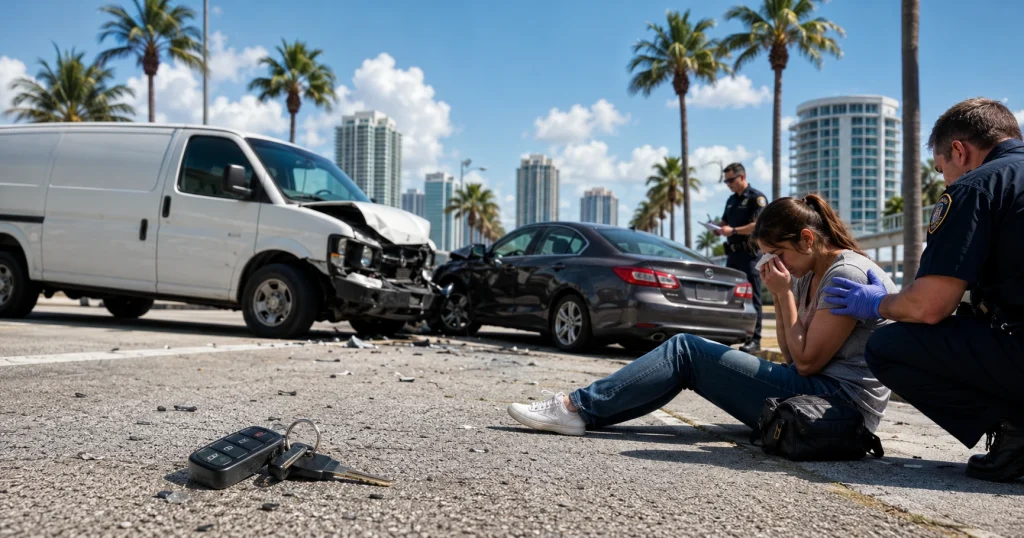
Tampa company vehicle crash scene involving borrowed car and injured victim pursuing negligent entrustment claim, for illustrative purposes only
Blog, Commercial Vehicles, Company-Caused Car Accidents

Negligent Entrustment in Florida: 5 Ways to Prove Owner Liability

In Florida, negligent entrustment means a vehicle owner may be liable if they gave a car, truck, or company vehicle to someone they knew, or reasonably should have known, was unsafe to drive. This can apply to parents, employers, private vehicle owners, and businesses that allow an unfit driver behind the wheel. Most people think of handing over car keys as an ordinary moment. A parent tosses the keys to a teenager heading to practice. A business owner assigns a work truck before the morning route. A friend lets someone drive home after dinner because it seems easier in the moment. But when the wrong person is allowed behind the wheel, that ordinary decision can change someone else’s life. A crash can take away the morning commute, the weekend baseball game, the family road trip, or the simple freedom of driving yourself where you need to go. The injury is not the whole story. The life interrupted is. That is why negligent entrustment matters in Florida. This legal claim focuses on whether the vehicle owner knew or should have known that the driver was unsafe before granting them access to the car, truck, company vehicle, or work vehicle. If you were hit by a borrowed car, company vehicle, work truck, or family vehicle in Tampa, Riverview, Brandon, Plant City, or anywhere in Hillsborough County, the driver may not be the only person responsible. The person or business that gave the driver access to the vehicle may also need to be investigated. Had a bad day? Call The Reyes Firm at 833-4 BAD DAY. The Reyes Firm Hit by Someone Who Should Never Have Had the Keys? A borrowed car, company vehicle, work truck, or family vehicle can raise bigger liability questions. Had a bad day? Schedule Your Free Consultation What You Need to Know In Florida, the person who handed over the keys may be legally responsible, not just the driver who caused the crash. Negligent entrustment means the owner gave a vehicle to someone they knew or should have known was not safe to drive. This can apply to parents who let unsafe teens drive, employers who ignore dangerous driving records, and anyone who gives keys to someone visibly impaired. Florida also has a strong vehicle owner liability rule known as the dangerous instrumentality doctrine, which may apply separately from negligent entrustment. In most Florida negligence cases, you have two years from the date of the crash to file a lawsuit under Fla. Stat. § 95.11(5)(a). Some exceptions may apply, but waiting can put your claim at serious risk. What Is Negligent Entrustment in Florida?  Negligent entrustment is a legal claim that may hold a vehicle owner responsible for giving a car, truck, or company vehicle to someone who is unsafe to drive. Negligent entrustment focuses on the owner’s conduct. It asks whether the owner knew, or reasonably should have known, that the driver was unfit to operate the vehicle safely. This is different from a basic claim against the driver. In a standard car accident claim, the focus is usually on what the driver did wrong. In a negligent entrustment claim, the focus expands to the person or business that allowed that driver to use the vehicle in the first place. Examples may include: A parent allowing an unlicensed teen to drive A business assigning a company vehicle to an employee with a dangerous driving record A vehicle owner lending a car to someone who appears intoxicated A company failing to check driving records before giving an employee access to a work truck A fleet owner ignoring repeated safety complaints about a driver If you were hit by a borrowed car, company vehicle, delivery van, work truck, or commercial vehicle in Tampa, Riverview, Brandon, Plant City, or anywhere in Hillsborough County, negligent entrustment may be an important legal issue to investigate. The Reyes Firm investigates every angle of liability from day one. That includes the driver, the vehicle owner, the employer, and any person or business that may have allowed an unsafe driver behind the wheel. When Does Negligent Entrustment Apply After a Florida Crash?  Negligent entrustment may apply when a vehicle owner gives access to a driver who is unlicensed, intoxicated, reckless, medically impaired, inexperienced, or has a history of dangerous driving. The central question is simple: Did the owner know, or should the owner have known, that this person was not safe to drive? Negligent entrustment may apply when the driver had warning signs, such as: A suspended or revoked license Prior DUI history Prior reckless driving citations Prior crashes Repeated speeding violations Visible intoxication before driving Lack of driving experience Underage driving without a valid license Known health or medical issues affecting safe driving Prior safety complaints from customers, coworkers, family members, or supervisors This issue often appears in company vehicle crashes, teen driver crashes, family vehicle crashes, borrowed car crashes, delivery vehicle crashes, and commercial fleet accidents. That distinction matters because the at-fault driver may have limited insurance. A negligent entrustment claim may reveal additional insurance coverage, company liability, or other responsible parties. ⚠️ Warning: Florida Has a Short Deadline for Negligence Claims In most Florida negligence cases, the deadline to file a lawsuit is two years from the date of the crash under Florida Statute § 95.11(5)(a). Some exceptions may apply, but waiting can put your claim at serious risk. If you believe negligent entrustment may have played a role in your crash, call The Reyes Firm at 833-4 BAD DAY. What Are the 5 Elements of Negligent Entrustment in Florida?  To prove negligent entrustment in Florida, you generally need to show that the owner gave the driver access to the vehicle, the driver was unfit, the owner knew or should have known the driver was unfit, the unfitness contributed to the crash, and you suffered damages. 1. Entrustment The owner gave the driver permission, access, or control of the vehicle. This can be direct, such as handing over the keys. It

Featured image for a Tampa truck accident insurance offer article showing a damaged semi-truck, insurance offer document, and legal claim messaging, for illustrative purposes only.
Blog, Commercial Vehicles, Truck Accidents

How to Tell If Your Tampa Truck Accident Case Is Worth More Than the Insurance Offer

What You Need to Know The first insurance offer may not include your future medical care, lost income, pain, or long-term injury needs. A Tampa truck accident insurance offer can be too low when the trucking company’s records haven’t been reviewed. Black box data, driver logs, maintenance files, cargo records, and company safety policies can change the value of your case. Florida law can affect your claim, especially if the insurance company tries to blame you for the crash. Had a bad day? Call The Reyes Firm at 833-4 BAD DAY. A truck accident can turn your life upside down in seconds. One moment you’re driving through Tampa, and the next you’re dealing with pain, medical bills, missed work, and calls from an insurance adjuster. If you received a Tampa truck accident insurance offer, you may feel pressure to take it and move on. But an early offer may not show what your case is really worth, especially when a commercial truck, delivery vehicle, 18-wheeler, or company vehicle caused the crash. At The Reyes Firm, we help injured people in Tampa and the South Shore communities understand what the insurance company may be leaving out. Our office is located at 4730 N. Habana Ave., Suite 201, Tampa, FL 33614, and our team handles truck and commercial vehicle cases across Tampa, Riverview, Brandon, Plant City, and communities across Hillsborough County. Quick Answer: A Tampa truck accident case may be worth more than the insurance offer if the offer does not include future medical care, lost income, trucking company negligence, black box data, driver logs, or long-term injury costs. Before signing anything, have the offer reviewed by a Tampa truck accident lawyer. Why Would the Insurance Offer Be Lower Than Your Truck Accident Case Is Worth? A truck accident insurance offer may be lower than your case is worth because the insurer may not have counted your full medical needs, future care, lost income, pain, or commercial trucking evidence. Early offers often arrive before the full injury story is clear and before key company records are secured. Truck accident claims are different from regular car accident claims. A crash on I-4, I-75, or I-275 may involve a driver, trucking company, cargo company, maintenance vendor, delivery contractor, or multiple insurance policies. The insurance company may look only at the first few medical bills. That can miss the real impact of the crash. Your case may be worth more if you have: Ongoing pain Surgery recommendations Missed work Reduced earning ability Permanent injury Emotional distress Future treatment needs A trucking company’s safety failure Florida had 381,210 codeable traffic crashes in 2024, according to FLHSMV’s 2024 By the Numbers report. The same report states that Florida Highway Patrol troopers worked 1,649 of the state’s 2,962 fatal crashes that year. 📊 Did You Know? FMCSA’s 2024 Pocket Guide reported 5,476 fatal crashes involving large trucks and buses in 2022. FMCSA also reported 114,000 injury crashes involving large trucks that same year. What are the 7 Signs Your Tampa Truck Accident Insurance Offer May Be Too Low? Your truck accident offer may be too low if it was made quickly, ignores future care, pressures you to sign a release, or fails to include trucking company evidence. In Tampa truck accident cases, the first offer may protect the insurer more than it protects your recovery. Here are 7 warning signs. 1. You Still Need Medical Treatment You should be careful with any offer made before your treatment is complete. You may still need imaging, injections, therapy, surgery, or follow-up care. Once you settle, you usually can’t come back later for more money. 2. The Offer Only Covers Current Bills A fair truck accident settlement should look beyond today’s bills. It should also consider future treatment, lost earning capacity, long-term pain, and the injury’s impact on daily life. A low offer often looks only at what has already been billed. 3. The Adjuster Is Pushing You to Settle Fast Fast pressure is a red flag. The insurance company may want you to settle before you talk to a Tampa truck accident lawyer. You don’t have to sign anything before you understand your rights. 4. The Trucking Company Records Haven’t Been Reviewed Truck cases often need more evidence than car accident cases. Driver logs, inspection records, black box data, and maintenance files can show what really happened. If those records haven’t been reviewed, the offer may be missing major facts. 5. The Crash Involved a Commercial Vehicle A semi-truck, box truck, dump truck, delivery van, rideshare vehicle, or company truck can involve more than one responsible party. That can increase the available insurance and the value of the claim. The insurer may not explain that clearly. 6. They Blame You Without Proof Insurance companies may argue you were speeding, distracted, or partly at fault. That matters in Florida because fault can reduce or block recovery. A lawyer can test those claims against the actual evidence. 7. The Release Gives Up All Future Claims A settlement release can close your case forever. If you sign before knowing the full value of your injuries, you may give up the right to seek more compensation later. Never treat a release like a simple receipt. How Can You Compare the Insurance Offer to the Real Case Value? You can compare the insurance offer to the actual case value by checking what the offer includes and what it excludes. A fair Tampa truck accident settlement should account for medical care, future losses, trucking evidence, fault disputes, and every responsible party, not just the first bills sent to the insurer. What the Insurance Offer May Include What the Real Case Value May Include Current medical bills Current and future medical care Basic wage loss Lost income and reduced earning ability Vehicle damage Pain, suffering, and long-term limitations Driver’s version of events Black box data, driver logs, and witness statements One insurance policy Multiple liable parties and commercial insurance coverage A quick payment Full review of

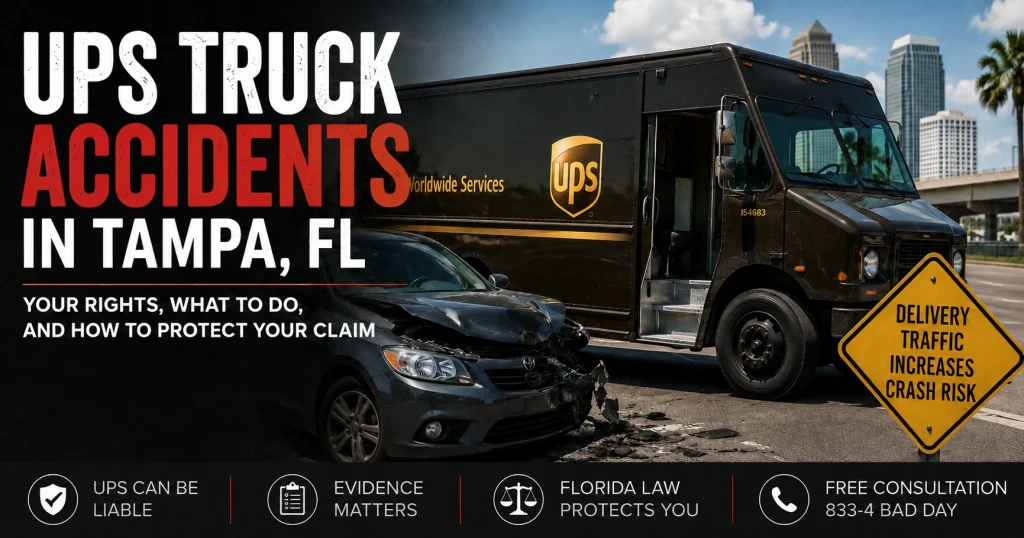
UPS truck accident in Tampa, FL showing a delivery truck and damaged car, for illustrative purposes only
Blog, Commercial Vehicles

UPS Vehicle Crashes in Tampa: Who May Be Responsible?

What You Need to Know A UPS vehicle crash in Tampa may involve the driver, UPS, a maintenance company, a loading contractor, or another negligent driver. Florida law may allow an injured person to pursue a negligence claim, but the facts must support fault. You should call 911, seek medical care, take photos, and avoid making any recorded statements before speaking with a lawyer. Florida’s PIP law requires initial medical care within 14 days to protect certain benefits. Had a bad day? Call us. 833-4 BAD DAY. If a UPS truck hit you in Tampa, your first thoughts may be pain, fear, and confusion. You may not know who to call, what to say, or how to deal with a company that already has insurance adjusters and legal teams ready. A UPS truck accident lawyer Tampa residents trust can help identify who may be responsible, preserve key evidence, and protect your claim before important records disappear. Delivery truck cases move fast because route data, GPS records, driver logs, and vehicle evidence can matter. At The Reyes Firm, we help injured people in Tampa and the South Shore communities after serious commercial vehicle crashes. Our office is located at 4730 N. Habana Ave., Suite 201, Tampa, FL 33614, and you can call us at 833-4 BAD DAY. Who may be responsible after a UPS vehicle crash in Tampa? More than one party may be responsible after a UPS vehicle crash in Tampa. The driver may be liable for careless driving, UPS may be liable under the employer responsibility rules, and other parties may share fault if poor maintenance, unsafe loading, or another driver contributed to the crash. In a UPS delivery truck accident, possible responsible parties may include: The UPS driver UPS, if the driver acted within the scope of the job A maintenance contractor A loading or cargo contractor A vehicle or parts manufacturer Another negligent driver Florida uses a modified comparative fault rule. Under Florida Statutes § 768.81, your recovery can be reduced by your share of fault, and a person found greater than 50 percent at fault may not recover damages in covered negligence cases.  🛡️ Your Rights Under Florida Law: Florida Statutes § 768.81 means fault matters after a UPS vehicle crash in Tampa. Insurance companies may try to shift blame to you or argue that you caused part of the crash. A lawyer can push back with crash scene evidence, witness statements, vehicle data, and medical records. How is suing UPS different from suing a private driver? A UPS crash claim can be more complex than a regular car accident because it may involve a commercial vehicle, company policies, delivery schedules, driver supervision, and corporate insurance. These cases often require rapid evidence preservation and a deeper investigation than a basic two-car crash would. A private driver case may focus mainly on the police report, photos, medical records, and auto insurance. A UPS vehicle crash may also involve: Route records GPS or telematics data Delivery schedules Driver training records Vehicle inspection and repair records Dashcam or onboard data, if available Company policies that may affect driver conduct FMCSA’s crash database tracks large truck and bus crashes to help identify crash trends and safety factors. FMCSA explains that its MCMIS crash file includes fatal, injury, and towaway crashes involving certain large commercial vehicles. This is why you don’t want a case that gets treated like a simple fender bender. A serious UPS truck crash in Tampa requires a legal team that understands commercial vehicle evidence and how quickly companies can begin protecting themselves. Watch: Why Delivery Truck Accidents Can Happen More Often Than People Think Delivery trucks spend long hours on Tampa roads, highways, and neighborhood streets. This video explains how traffic, fatigue, delivery pressure, distractions, and sudden stops can increase the risk of crashes involving delivery vehicles. Video for general educational purposes only. Every UPS vehicle crash in Tampa depends on the specific facts, evidence, and applicable Florida law. What proof is needed for a UPS truck accident claim? A strong UPS truck accident claim requires proof of fault, injury, and damages. Useful evidence may include the crash report, photos, medical records, witness names, vehicle damage, video footage, delivery route information, and records showing what the driver was doing before the crash. Try to gather or preserve: Photos of the UPS truck, your vehicle, injuries, road conditions, skid marks, and debris The UPS vehicle number, plate number, and any visible company markings Witness names and phone numbers The police report number Medical records and bills Photos of traffic signs, lights, and nearby cameras Notes about what the driver said at the scene Florida law requires drivers to report crashes involving injury, death, or at least $500 in apparent vehicle or property damage by the quickest means of communication to law enforcement. Florida also requires a long-form crash report for crashes involving personal injury, pain complaints, disabled vehicles requiring a wrecker, or commercial motor vehicles.  📊 Did You Know? FLHSMV reported 381,210 codable traffic crashes in Florida in 2024, with 3,184 people killed. Commercial vehicle evidence matters because Florida roads carry constant delivery traffic, especially around I-4, I-75, I-275, warehouse areas, and Tampa neighborhoods. Source: Florida Highway Safety and Motor Vehicles. What should you do after being hit by a UPS truck in Tampa? You should call 911, get medical care, document the scene, exchange information, and avoid giving recorded statements before legal advice. A UPS vehicle crash in Tampa can involve company investigators quickly, so your first steps can protect both your health and your claim. Take these steps as soon as you can: Move to a safe place and call 911. Ask for medical help, even if the pain feels delayed. Take photos and videos of everything. Get the UPS driver’s name, vehicle number, plate number, and insurance information. Ask witnesses for contact details. Do not admit fault. Do not sign anything from UPS or its insurer before speaking with a lawyer.   The Florida PIP

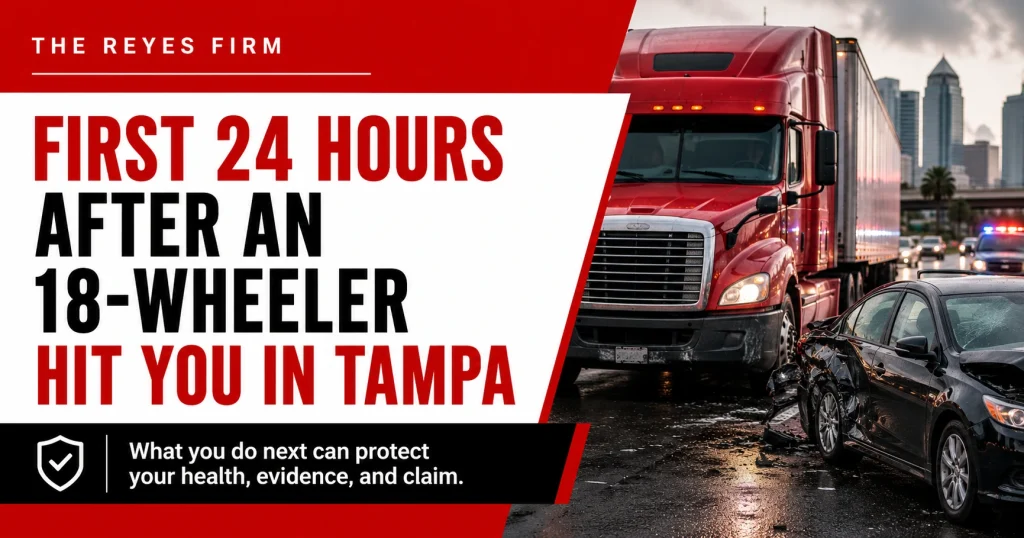
Featured image for a Tampa 18-wheeler accident blog showing a semi truck crash scene, for illustrative purposes only.
Blog, Commercial Vehicles, Truck Accidents

What to Do in the First 24 Hours After an 18-Wheeler Hit You in Tampa

What You Need to Know Call 911 first and get to a safe place if you can. Get medical care within 14 days to help protect Florida PIP benefits. Take photos, videos, witness names, truck logos, license plates, and road conditions. Do not admit fault or give a recorded statement before speaking with a lawyer. Had a bad day? Call us. 833-4 BAD DAY. You’re shaken. Your car is damaged. Traffic is moving around you on I-4, I-75, I-275, or a busy Tampa road, and the truck driver may already be calling dispatch. If an 18-wheeler hit you in Tampa, the first 24 hours matter. What you do now can protect your health, your insurance claim, and key evidence before it disappears. Truck accident cases move fast. The trucking company, its insurer, and its legal team may begin protecting their side right away. You need to protect yours just as quickly. The Reyes Firm Had a Bad Day? Was there a Logo on the truck? A company logo, DOT number, or trailer marking can help identify who may be responsible after a Tampa 18-wheeler crash. Schedule Your Free Consultation What should you do first after an 18-wheeler hit you in Tampa? Your first step after an 18-wheeler crash in Tampa is to call 911, move to safety if you can, and request medical help. A crash report, emergency response, and early medical records can all become important evidence later. Florida law requires certain crash reports to be completed after qualifying crashes.  Stay calm and focus on safety first. If your car is blocking traffic and you can move without worsening your injuries, get to a safer spot. If you feel pain, dizziness, numbness, chest pressure, or confusion, stay put and wait for help. Ask the responding officer how to get the crash report later. Florida crash reports often include insurance details, vehicle information, and basic crash facts that can help your case. Florida law also requires crash report forms to include insurance policy numbers and carrier names for vehicles involved in reportable crashes.  ⚠️ Warning: Florida’s 14 Day Medical Rule: If you were hurt in a Tampa truck accident, do not wait to get medical care. Florida Statute § 627.736 requires initial medical services within 14 days after a motor vehicle accident for PIP medical benefits to apply. Waiting too long can hurt both your health and your claim. What evidence should you collect in the first 24 hours? You should collect photos, videos, witness names, truck details, company logos, road conditions, and anything that shows how the crash happened. In a Tampa 18-wheeler accident, evidence can disappear quickly once the truck leaves, cargo gets moved, repairs begin, or electronic data gets overwritten. If you can safely document the scene, capture: Damage to all vehicles The truck cab, trailer, license plate, DOT number, and company logo Skid marks, debris, broken glass, and fluid spills Traffic signals, construction zones, and lane markings Weather, lighting, and road conditions Witness names and phone numbers Police officer names and report information Do not rely only on the trucking company to preserve evidence. Truck crashes often involve electronic logging devices, GPS data, dashcam footage, maintenance records, inspection reports, driver qualification files, cargo records, and black box data. The first 24 hours are not just about taking photos. They’re about ensuring the right legal pressure is applied to the right companies before evidence is lost. The Reyes Firm Hurt in an 18-Wheeler Accident in Tampa? Get clear next steps after a serious truck crash. Had a bad day? Contact Us Now Should you see a doctor even if you feel okay? You should see a doctor after an 18-wheeler hits you, even if you feel okay at first. Shock and adrenaline can hide pain for hours. Medical records also connect your injuries to the crash, which matters when an insurance company later questions the cause or severity of your injuries. Common delayed symptoms after a Tampa truck accident include: Neck pain Back pain Headaches Shoulder pain Numbness or tingling Dizziness Memory problems Abdominal pain Anxiety or sleep problems Florida PIP benefits can help pay part of your medical bills after a motor vehicle crash, but the 14-day rule matters. Under Florida Statute § 627.736, initial medical care must happen within 14 days after the accident for PIP medical benefits to apply.  📊 Did You Know? FLHSMV reported 46,651 commercial motor vehicle crashes in Florida in 2024, with 315 fatalities. Those numbers show why commercial vehicle crashes need fast medical, legal, and evidence preservation steps. What should you avoid saying after a Tampa 18-wheeler crash? You should avoid admitting fault, guessing about what happened, apologizing in a way that sounds like blame, or giving a recorded statement before legal advice. Insurance adjusters may use your early words against you, even if you were only trying to be polite. Do not say: “I’m fine.” “I didn’t see him.” “I may have been speeding.” “I’m sorry.” “I think it was partly my fault.” “You can record my statement now.” Give basic facts to law enforcement. Tell medical providers where you hurt. Be truthful, but do not guess. Florida’s modified comparative fault rule makes this especially important. Under Florida Statute § 768.81, a person found to be more than 50 percent at fault in covered negligence cases may not recover damages.  That rule gives the trucking company and insurer a reason to shift blame onto you. Careful attention in the first 24 hours can help prevent that. Why is an 18-wheeler accident different from a normal car crash? An 18-wheeler accident is different because the vehicle is larger, the injuries are often more catastrophic, and the case may involve several responsible parties. The driver, trucking company, maintenance provider, cargo loader, broker, or another company may all play a role. A loaded semi truck can cause life-changing harm in seconds. The legal response must move faster than a normal car accident claim. In many Tampa truck accident cases, the key

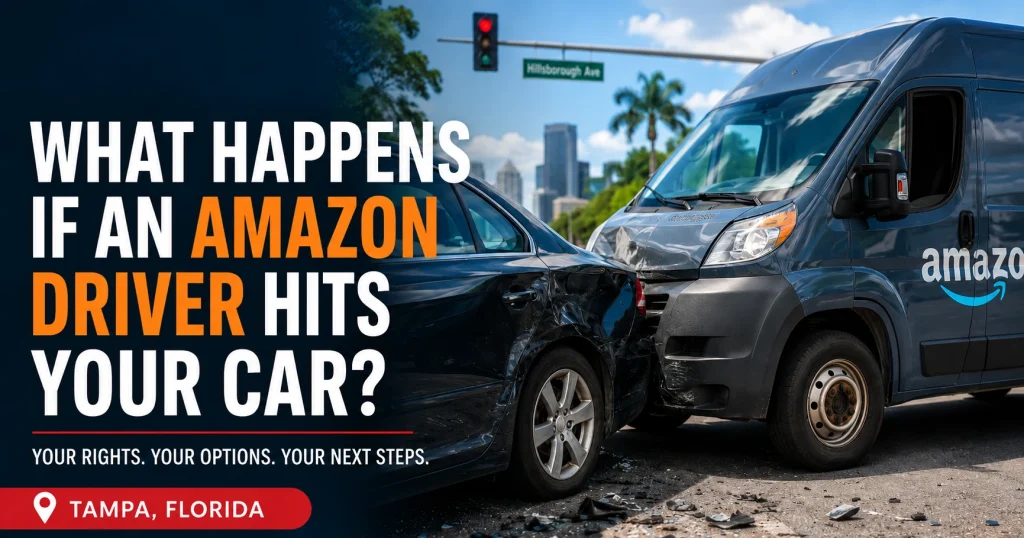
Amazon delivery van near a damaged car after a collision in Tampa, Florida, for illustrative purposes only.
Blog, Commercial Vehicles

What Happens If an Amazon Driver Hits Your Car?

Quick Answer: What Happens After an Amazon Driver Hits You? If an Amazon driver hits your car, you should call 911, get medical help, document the crash, collect the driver’s information, and avoid giving a recorded statement before speaking with an attorney. Depending on the driver’s role, compensation may come from the Amazon driver, a third-party Delivery Service Partner, Amazon Flex insurance, Amazon-related commercial coverage, or another liable party. If the crash happened in Tampa or anywhere in Florida, your claim may involve Florida’s no-fault insurance rules, commercial vehicle insurance, Amazon’s delivery contractor structure, and Florida’s two-year deadline for most negligence-based personal injury lawsuits. Florida Statute § 95.11 lists actions founded on negligence under a two-year limitations period.  What You Need to Know If an Amazon driver hits your car, call 911, document the scene, get the driver’s information, and seek medical care as soon as possible. Your own Florida PIP coverage may apply first for medical bills and certain lost wages. Liability may involve the driver, an Amazon Delivery Service Partner, Amazon Flex coverage, Amazon Logistics, or another company in the delivery chain. Amazon DSP drivers and Amazon Flex drivers are handled differently for insurance purposes. Amazon Flex’s commercial auto insurance policy includes $1,000,000 in auto liability coverage while the driver is actively delivering, according to Amazon Flex. Florida’s modified comparative fault rule can reduce or block recovery if the injured person is found partly at fault. Under Florida Statute § 768.81, a party found greater than 50% at fault for their own harm may not recover damages in covered negligence actions.  Had a bad day? Call The Reyes Firm at 833-4 BAD DAY for a free consultation. The Reyes Firm Hit by an Amazon Driver in Tampa? Get clear next steps after an Amazon delivery accident. Had a bad day? Contact Us Now You are driving through Tampa when an Amazon delivery van pulls out suddenly, runs a stop sign, rear-ends you, or sideswipes your car during a delivery route. The van may have Amazon branding, but the driver may hand you insurance information for a company you have never heard of. That is where Amazon delivery accident claims can get confusing. If you are wondering what happens if an Amazon driver hits your car, the answer depends on whether the driver was working for an Amazon Delivery Service Partner, driving for Amazon Flex, using a personal vehicle, or operating a van owned or leased by another company. At The Reyes Firm, we help injured people in Tampa and throughout Hillsborough County understand what comes next after delivery vehicle crashes. Amazon accident claims are not always simple, but Florida law gives injured drivers and passengers important rights. What Should I Do Immediately If an Amazon Driver Hits My Car? If an Amazon driver hits your car, take these steps before leaving the scene. 1. Call 911 Always report the crash. Ask for police and emergency medical help if anyone may be injured. A police report can become one of the most important documents in your claim. 2. Get the driver’s information Ask for the driver’s name, license, insurance information, and employer details. If the driver is in an Amazon-branded van, also photograph: The license plate DOT number, if visible Amazon branding Any Delivery Service Partner name The van number or fleet number The insurance card The company name matters because many Amazon delivery drivers do not technically work directly for Amazon. 3. Photograph the scene Take photos and videos of: Vehicle damage The position of both vehicles The Amazon van or personal vehicle Traffic signs and signals Skid marks or debris Road and weather conditions Visible injuries Nearby cameras or businesses 4. Get witness information If anyone saw the crash, ask for their name and phone number. Witnesses can be difficult to locate later. 5. Do not give a recorded statement right away Amazon, the DSP, or an insurance company may contact you quickly. Be careful. You are not required to explain the fault or give a recorded statement before understanding your rights. 🛡️ Important: Do Not Leave Without Identifying the Driver Type: Before leaving the scene, try to confirm whether the driver was in an Amazon-branded delivery van or a personal vehicle. This can affect which insurance policy applies. A branded van may involve a Delivery Service Partner, while a personal vehicle may involve Amazon Flex coverage. Does Florida PIP Apply If an Amazon Driver Hits Your Car? Yes, your own Florida Personal Injury Protection coverage may apply after an Amazon driver hits your car. Florida is a no-fault insurance state, which means your own PIP coverage may pay certain medical expenses and lost wages first, even if the Amazon driver caused the crash. This does not mean the Amazon driver, DSP, Amazon Flex coverage, or another company is off the hook. If your injuries are serious enough, you may be able to pursue compensation outside the no-fault system. This is why prompt medical care matters. After a crash, get checked by a doctor even if you feel “okay” at first. Some injuries appear hours or days later, and delays can create problems for both your health and your claim. 🛡️ Important: Get Medical Care Quickly: Florida PIP benefits may depend on timely medical treatment. Even if you feel okay after the crash, it is smart to get checked by a medical provider as soon as possible. Delays can hurt both your health and your injury claim. Who Pays for My Car Repairs After an Amazon Driver Hits Me? The answer depends on who the driver was and whether they were actively working at the time of the crash. Possible sources of payment may include: The Amazon driver’s insurance The DSP’s commercial auto insurance Amazon Flex’s commercial auto coverage Amazon-related additional insured coverage Your own collision coverage Your uninsured or underinsured motorist coverage, if available If the driver was in an Amazon-branded delivery van, the claim may involve a Delivery Service Partner’s commercial auto policy. If

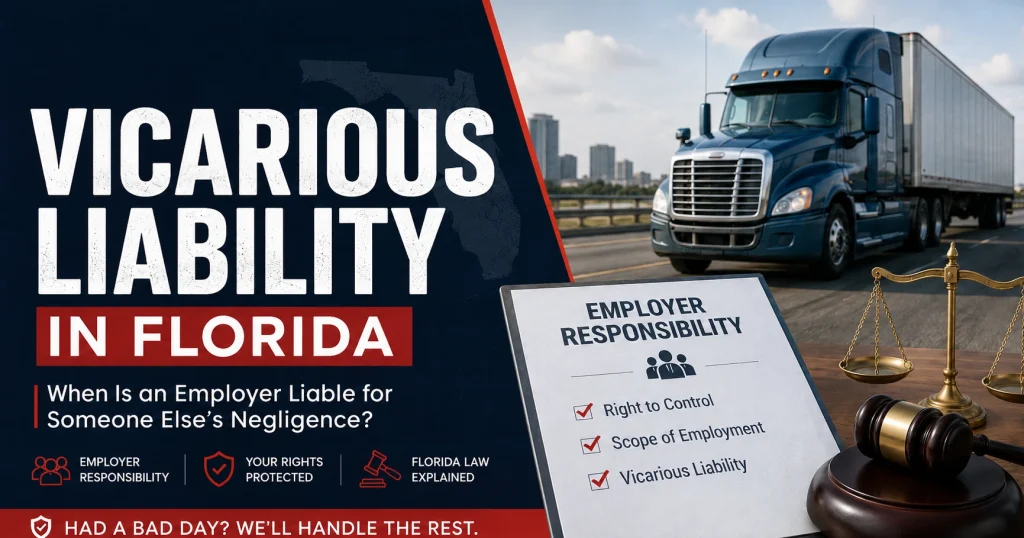
Vicarious liability in Florida graphic showing a commercial truck, employer responsibility checklist, and legal symbols for The Reyes Firm blog.
Blog, Commercial Vehicles, Company-Caused Car Accidents, Truck Accidents

Vicarious Liability in Florida: 3 Powerful Doctrines That Can Win Your Case

Quick Summary Vicarious liability in Florida means one party may be legally responsible for another person’s negligence because of their relationship. In accident cases, this often applies to employers, vehicle owners, fleet operators, and companies that put drivers on the road. Florida’s dangerous instrumentality doctrine can make a vehicle owner responsible when they allow someone else to drive their vehicle. Respondeat superior can make an employer responsible when an employee causes harm while acting within the scope of employment. Negligent hiring and negligent retention may apply when a company fails to properly screen, supervise, or remove an unsafe worker. If a company driver, work truck, or vehicle owner may be involved, The Reyes Firm can help you understand your options. The Reyes Firm Hurt by a Company Driver in Florida? You may have a claim against more than the driver. Get clear next steps after a serious crash. Had a bad day? Contact Us Now You did not see it coming. One second, you are driving home on I-275, and the next, a work truck runs a red light and changes your life. The driver hands you his license. You recognize the company logo on the door. Now you are wondering: can you bring a claim against the company too, or only the driver who hit you? That question is what vicarious liability in Florida is all about. It is a legal principle that may allow an injured person to pursue the individual who caused the crash, as well as the employer, vehicle owner, or business connected to that person. At The Reyes Firm in Tampa, we handle injury cases in which the company, fleet owner, employer, or vehicle titleholder may be one of the most important parties in the claim. Understanding how vicarious liability works can help injury victims see the full picture of who may be legally accountable. Quick Answer: What Is Vicarious Liability in Florida? Vicarious liability in Florida allows an injured person to hold one party legally responsible for another person’s negligence when the law recognizes a relationship between them. In car accident and commercial vehicle cases, this often applies through respondeat superior, the dangerous instrumentality doctrine, or negligent hiring and retention. For people injured in Tampa crashes involving company cars, delivery vans, work trucks, or commercial fleets, vicarious liability can determine whether the claim is limited to the driver or extends to the business behind the vehicle. What Does Vicarious Liability Mean in Florida? Vicarious liability means one party may be held legally responsible for another person’s negligent conduct, even if the first party did not personally cause the injury. In Florida personal injury cases, this often comes up when: An employee causes a crash while working. A vehicle owner allows someone else to drive their car, truck, or van. A company puts an unsafe driver behind the wheel. A commercial fleet vehicle is involved in a serious accident. A business argues the driver was an independent contractor rather than an employee. This matters because the person who caused the crash may not have enough insurance or financial resources to fully cover the harm. The company, employer, fleet owner, or vehicle owner may have additional insurance coverage and legal responsibility. What Is Respondeat Superior and How Does It Work in Florida? Respondeat superior means an employer may be liable for an employee’s negligent acts when those acts occur within the scope of employment. In plain English, if an employee causes harm while doing their job, the employer may have to answer for it. Florida courts generally look at whether: The employee was doing the kind of work they were hired to do. The conduct occurred within the job’s time and place limits. The employee’s actions were motivated, at least in part, by a desire to serve the employer. For example, a delivery driver who causes a crash while making deliveries in Tampa may create employer liability. A company technician driving between service appointments in Hillsborough County may also be acting within the scope of employment. The employer need not be personally careless for respondeat superior to apply. The employment relationship itself can create liability when the employee was acting within the scope of the job. ⚠️ Important: Florida’s Statute of Limitations: Most Florida negligence-based personal injury claims must be filed within 2 years under Florida Statute § 95.11. This deadline may apply to vicarious liability claims as well. Waiting too long can put your right to compensation at risk. Florida Statute § 95.11 identifies a two-year period for actions founded on negligence. If you were injured in a crash involving a company vehicle, work truck, delivery driver, or employer-driver, contact The Reyes Firm at 833-4 BAD DAY as soon as possible. What Is the Frolic and Detour Rule in Florida? The frolic-and-detour rule helps determine whether an employee was still acting within the scope of employment when the accident occurred. A detour is a minor departure from work duties. For example, a delivery driver who stops for gas or to grab lunch during a route may still be acting within the general scope of employment. A frolic is a major personal departure from the employer’s business. For example, if a driver leaves the work route for hours to handle a personal errand across town, the employer may argue that the driver was no longer acting within the scope of employment. This issue is often fact-specific. Courts may consider: How far the employee went from the work route. How long has the employee been out of work? Whether the employee was still serving the employer in some way. Whether the trip benefited the employer. Whether the employer knew or allowed the conduct. In Tampa commercial vehicle cases, this can become a central dispute. Employers may argue that the driver was on personal time. Injury victims may argue that the driver was still performing job-related duties. What Is Florida’s Dangerous Instrumentality Doctrine? Florida’s dangerous instrumentality doctrine can make a vehicle owner liable when they allow another

Featured image for a Tampa Lyft accident article showing a damaged car and rideshare vehicle, explaining rights and options after a Lyft crash.
Blog, Commercial Vehicles, Ride Sharing

Suing Lyft for Car Accident Injuries in Tampa? Know Your Rights

If you are searching for information about suing Lyft for car accident injuries in Tampa, you are probably dealing with more than a damaged vehicle. You may be facing medical bills, missed work, insurance calls, pain, and confusion about whether Lyft, the driver, or another insurer is responsible. You may have been a Lyft passenger heading home from Ybor City, a driver hit by a Lyft vehicle on Dale Mabry, or a pedestrian injured near downtown Tampa. However, when a crash occurs, rideshare accident cases can quickly become complicated. A Lyft accident is not always handled like a standard two-car crash. The insurance coverage may depend on what the Lyft driver was doing in the app at the exact moment of impact. Was the app off? Was the driver waiting for a ride request? Had the driver accepted a ride? Was a passenger already inside the vehicle? Those details matter because Florida has specific laws for transportation network companies, also known as TNCs. Under Florida Statute §627.748, a “prearranged ride” begins when a TNC driver accepts a ride request through the app and ends when the last rider exits the vehicle. The statute also sets different insurance requirements depending on the driver’s app status.  At The Reyes Firm, we help injured people and families in Tampa, Hillsborough County, and nearby communities understand their rights after serious rideshare crashes. This guide explains when you may be able to sue Lyft, how Florida rideshare insurance works, what evidence matters, and what steps you can take to protect your claim. Quick Summary: Suing Lyft for Car Accident Injuries in Florida You may be able to sue or pursue a claim after a Lyft accident in Florida, but the right claim depends on the driver’s app status, who caused the crash, and which insurance coverage applies. Florida law requires at least $1 million in primary liability coverage when a Lyft driver is engaged in a prearranged ride.  If the driver was logged into the Lyft app but had not yet accepted a ride, lower coverage limits apply: at least $50,000 per person, $100,000 per incident, and $25,000 for property damage.  Digital evidence matters. Lyft trip logs, GPS data, timestamps, app status, ride receipts, police reports, photos, and medical records can help prove which coverage period applies. Florida PIP benefits are time-sensitive. In many motor vehicle accident cases, an injured person must receive initial medical care within 14 days to access PIP medical benefits.  Florida negligence claims are generally subject to a 2-year filing deadline, so it is important to act quickly. Had a bad day? Call The Reyes Firm at 833-4 BAD DAY. The Reyes Firm Hurt in a Lyft Accident in Tampa? Get clear next steps after a serious rideshare crash. Had a bad day? Contact Us Now What Should You Know About Suing Lyft for Car Accident Injuries in Florida? When people ask about suing Lyft for car accident injuries, the answer usually depends on several facts. The most important questions are: Were you a Lyft passenger? Were you driving another vehicle hit by a Lyft driver? Were you a pedestrian, cyclist, or passenger in another car? Was the Lyft driver logged into the app? Had the Lyft driver accepted a ride request? Was the Lyft driver transporting a passenger? Did another driver cause or contribute to the crash? What insurance coverage applies? In a normal car accident claim, the case often starts with the at-fault driver’s personal auto insurance. In a Lyft accident claim, there may be additional layers of insurance. Lyft’s required TNC insurance may apply if the driver was logged into the app or engaged in a prearranged ride. That does not mean Lyft is automatically liable for every crash involving a Lyft driver. It means the driver’s app status, the cause of the crash, and the available insurance must be investigated carefully. Under Florida’s TNC law, Lyft drivers may be treated as independent contractors rather than employees when specific statutory conditions are met. This can affect how a direct claim against Lyft is argued. However, Lyft’s required insurance may still apply during covered app periods.  A direct claim against Lyft may also be possible in certain cases, such as when negligent screening, negligent hiring, or negligent retention contributed to the crash. These claims are fact-specific and require evidence. Watch: What to Do After a Lyft Accident in Tampa If a Lyft driver hit you in Tampa, this short video explains why insurance questions, settlement pressure, and delayed injuries can make rideshare accident claims more complicated than they first appear. Video summary: After a Lyft accident, injured riders, drivers, or pedestrians may face insurance calls, confusion about who is responsible, pressure to settle quickly, and questions about injuries that appear later. The Reyes Firm helps people injured in Lyft accidents across Tampa understand their options and protect their claim. Can You Sue Lyft After a Car Accident in Tampa? Yes, you may be able to sue after a Lyft accident in Tampa, but the correct legal path depends on what happened. You may have a claim against: The Lyft driver Lyft’s required rideshare insurance Another at-fault driver The vehicle owner A third-party insurer Lyft directly, if the facts support a negligent hiring, negligent retention, or negligent screening claim If your Lyft driver caused the crash while transporting you, the claim may involve Lyft’s active-ride insurance coverage. If a Lyft driver hits your car while waiting for a ride request, lower coverage limits may apply. If the Lyft driver’s app was off, the driver’s personal auto insurance is usually the starting point. This is why app-status evidence is so important. Without it, the insurance companies may dispute which coverage period applies. How Does the Lyft Driver’s App Status Affect Insurance Coverage? The Lyft driver’s app status is one of the most important facts in a Florida rideshare accident case. Florida Statute §627.748 creates different insurance requirements depending on whether the driver was logged into the app, waiting for a ride, or

Rideshare-style car accident scene in downtown Tampa with police response, used to illustrate a Lyft accident claim and insurance coverage after a crash.
Blog, Commercial Vehicles, Ride Sharing

Lyft Accident Lawyer in Tampa: What to Do After a Rideshare Crash in 2026

Quick Summary Lyft accident claims in Tampa depend heavily on the driver’s app status at the time of the crash. If the Lyft driver was logged into the app but had not accepted a ride, Florida law requires at least $50,000 per person, $100,000 per crash, and $25,000 for property damage. If the Lyft driver had accepted a ride request, Florida law requires at least $1 million in primary automobile liability coverage for death, bodily injury, and property damage. Florida PIP benefits may still matter after a Lyft crash, and injured people generally need initial medical care within 14 days to preserve PIP coverage. For many Florida negligence lawsuits, the deadline is two years. Speak with a Florida personal injury attorney as soon as possible after a Lyft crash. The Reyes Firm Hurt in a Lyft Accident in Tampa? Get clear next steps after a serious rideshare crash. Had a bad day? Schedule a Free Consultation You opened the Lyft app, requested a ride, and climbed in. A few minutes later, everything changed. Maybe another driver ran a red light. Maybe your Lyft driver was distracted by the app while moving through a Tampa intersection. Either way, you are hurt. Your neck aches. Your head feels foggy. Your phone starts ringing with numbers you do not recognize. That is a bad day. And it is exactly the kind of moment The Reyes Firm was built for. A Lyft accident in Tampa, FL, is not always a simple car crash claim. The insurance structure depends on the driver’s app status. The evidence you need can disappear quickly. Lyft, its insurer, and other insurance companies may begin protecting their own interests before you know what your injuries will cost. A qualified Lyft accident lawyer can help determine which insurance coverage applies, preserve important app and trip data, deal with the insurance companies, and pursue the compensation available under Florida law. Watch: What to Do After a Lyft Accident in Tampa If a Lyft driver hit you in Tampa, this short video explains why insurance calls, quick settlement pressure, and delayed injuries can make rideshare accident claims more complicated than they first appear. The Reyes Firm helps people injured in Lyft accidents across Tampa understand their rights, deal with insurance companies, and pursue compensation supported by the evidence. The Reyes Firm handles rideshare accident cases throughout Tampa and the South Shore communities, serving clients in Riverview, Brandon, Plant City, and communities across Hillsborough County. Call 833-4 BAD DAY or visit our office at 4730 N. Habana Ave., Suite 201, Tampa, FL 33614. Consultations are free, and we work on contingency, which means you pay no attorney’s fee unless we win your case. How Does Lyft’s Insurance Coverage Work After a Tampa Crash? Lyft accident claims are different from ordinary car accident claims because the available insurance can change based on the driver’s app status at the exact moment of the crash. Under Florida Statute §627.748, there are two major rideshare coverage situations once a driver is using the Lyft platform: the driver is logged into the digital network but not yet engaged in a prearranged ride, or the driver is engaged in a prearranged ride. Period 0: App completely off. If the driver was not logged into Lyft and was using the vehicle for personal reasons, the driver’s personal auto insurance usually applies. Lyft’s rideshare insurance generally is not involved. Logged on, but no ride accepted. If the driver was logged into the Lyft app and waiting for a ride request, Florida law requires automobile insurance with at least $50,000 for death and bodily injury per person, $100,000 for death and bodily injury per incident, and $25,000 for property damage. The policy must also include required PIP benefits and uninsured or underinsured motorist coverage. Prearranged ride period: ride accepted through passenger exit. Once the driver accepts a ride request, the prearranged ride period begins. Florida law requires at least $1 million in primary automobile liability coverage for death, bodily injury, and property damage. This coverage continues while the driver transports the rider and ends when the last passenger exits the Lyft vehicle. The details matter. A few seconds in the app timeline can affect which policy applies, how much coverage may be available, and which insurance company is responsible for handling the claim. ⚠️ Important Florida Deadline: For many negligence lawsuits in Florida, the statute of limitations is now two years. Florida Statute § 95.11 lists a two-year deadline for an action founded on negligence. This deadline is separate from your insurance claim. Waiting too long can put your right to file a lawsuit at risk. Speak with a Florida personal injury attorney as soon as possible after a Lyft crash. What Is the Lyft Coverage Gap, and Why Does It Matter? The biggest insurance dispute in many Lyft accident cases is the driver’s app status. If the driver was logged into the Lyft app but had not accepted a ride, the required insurance limit is much lower than the $1 million coverage required during an active, prearranged ride. For someone with emergency care, imaging, surgery, physical therapy, missed work, or long-term injuries, the lower coverage level may become a serious issue. Another complication is the driver’s personal auto policy. Florida law allows personal auto insurers to exclude coverage when a vehicle is being used as a transportation network company vehicle. That can create disputes between insurers and delay answers for injured people who need them quickly. This is why app data matters. A Lyft accident lawyer may request trip logs, login records, GPS data, ride acceptance timestamps, digital receipts, and insurance disclosures to determine which coverage period applied at the time of the crash. 💡 Did You Know? NHTSA estimated that 39,345 people died in traffic crashes in 2024. Even when national crash deaths decrease, serious roadway injuries remain a major concern for passengers, drivers, pedestrians, and families. Source: NHTSA. Who Is Liable After a Lyft Accident in Tampa, Florida? Liability

Overturned cattle truck on a Florida interstate near a damaged passenger car, illustrating an I-10 semi-truck crash near Marianna, Florida.
Blog, Commercial Vehicles, News, Truck Accidents

Cattle Truck Rollover on I-10: What Florida Drivers Need to Know After a Semi Crash

What should Florida drivers know after a cattle truck crash on I-10? A cattle truck crash on I-10 near Marianna is a reminder of how quickly a normal drive can turn dangerous when a semi-truck moves into a passenger vehicle’s lane. According to WTVY News 4, the Florida Highway Patrol reported that a semi hauling 89 head of cattle sideswiped a passenger car while both vehicles were traveling west on Interstate 10 near Marianna in Jackson County. The semi left the roadway, overturned on an embankment, and wrecker crews had to stabilize the trailer before removing the truck and cattle. The occupants of the passenger car, who were from Quincy, were treated at a nearby medical facility for injuries described as minor. For injured drivers and passengers, the legal question is rarely just, “What happened at the scene?” In a commercial truck crash, the deeper questions are often: Was the truck driver distracted, tired, speeding, or improperly trained? Did the trucking company follow Florida and federal safety rules? Was the livestock trailer properly loaded, inspected, and maintained? Did any company records, dashcam footage, ELD data, or black box data capture what happened before impact? At The Reyes Firm, we help injured people and families understand what to do after serious commercial vehicle crashes in Florida. If a truck sideswiped your car, forced you off the road, or caused a rollover crash, the steps you take early can affect your medical care, insurance claim, and ability to recover compensation. Quick Summary A semi hauling 89 head of cattle sideswiped a passenger car on I-10 near Marianna, Florida, then overturned on an embankment. The passenger car’s occupants were treated at a nearby medical facility for injuries described by FHP as minor. Florida commercial vehicle cases often require fast evidence preservation, including ECM data, ELD logs, dashcam footage, driver records, inspection records, and loading documents. Florida negligence-based personal injury lawsuits generally have a 2-year deadline under Fla. Stat. 95.11(5)(a), but truck evidence can disappear much sooner.  Florida PIP medical benefits generally require that initial medical care be provided within 14 days of a motor vehicle accident.  Had a bad day? Call The Reyes Firm at 833-4 BAD DAY. What happened on I-10 near Marianna, Florida? The April 2026 crash happened on Interstate 10 near Marianna in Jackson County. FHP said the semi and the passenger car were both traveling west when the semi sideswiped the car. The semi then went onto an embankment and overturned. Wrecker crews stabilized the trailer to keep it from tipping further and removed the truck, trailer, and cattle without further incident.  I-10 Near Marianna, Florida The reported cattle truck crash happened along Interstate 10 near Marianna in Jackson County, Florida. Map note: This map is provided for general geographic context only and does not identify the exact crash location. This kind of crash matters because passenger vehicles are at a serious disadvantage when sharing the road with large trucks. A semi-truck is much heavier than a passenger car, and when a large commercial vehicle drifts, sideswipes, or rolls over, the people in the smaller vehicle often face the greatest risk. The fact that the truck was hauling livestock also matters. A cattle truck crash may involve more than driver error. Investigators may need to examine the trailer, cattle loading process, route, speed, driver logs, vehicle inspection records, and the company’s safety practices. That is why injured drivers should not assume the police report tells the whole story. ⚠️ Warning: Florida truck crash evidence can disappear quickly. Florida’s statute of limitations gives many injured people a limited window to file a negligence-based lawsuit, but the practical deadline for preserving truck evidence is much shorter. Under Florida Statute § 95.11(5)(a), negligence actions generally must be filed within 2 years. But evidence like dashcam footage, ECM data, ELD logs, driver communications, GPS records, maintenance files, and loading documents may be controlled by the trucking company. If no one sends a preservation demand, key evidence can be overwritten, deleted, or lost. If a commercial truck caused your crash, act quickly. Is a livestock truck regulated like other commercial vehicles in Florida? A livestock truck may be regulated as a commercial motor vehicle under Florida law, but the exact rules depend on the vehicle, route, carrier, and how the truck is used. Florida Statute 316.302 requires many commercial motor vehicle owners and drivers operating on Florida public highways to follow federal safety regulations, including 49 C.F.R. parts 382-386 and 390-397. These rules can address driver qualifications, controlled substance and alcohol testing, safe driving rules, vehicle maintenance, inspections, and hours-of-service requirements.  However, livestock and agricultural transportation can involve specific exceptions. Florida recognizes covered farm vehicle exemptions when certain requirements are met, including that the vehicle is not being used in a for-hire motor carrier operation.  That is why a cattle truck crash should be investigated carefully rather than treated as a simple two-car accident. In a livestock hauler crash, investigators may need to determine: Who owned the truck and trailer Whether the truck was operating for-hire Who employed or contracted with the driver Whether any covered farm vehicle exemption applied Whether the cattle were loaded safely Whether the driver followed applicable hours-of-service rules Whether maintenance, inspection, or braking issues contributed to the crash A cattle truck rollover is not just a traffic report. It can involve trucking regulations, company policies, cargo loading decisions, and multiple insurance carriers. Why can cattle truck crashes be more complicated than regular car accidents? A normal car accident usually focuses on the drivers involved. A cattle truck crash can involve a much wider investigation. That is because livestock trailers carry live animals. Cattle can shift weight inside a trailer, which may affect balance, braking, lane control, and rollover risk. If the trailer was overloaded, improperly loaded, poorly maintained, or operated too fast for conditions, the crash may involve more than a single driving mistake. A truck accident lawyer may investigate: The truck driver’s actions before the crash The

Scroll to Top