Commercial Vehicles

Illustration of a damaged work vehicle after a crash for a Tampa work vehicle accident lawyer article
Blog, Commercial Vehicles, Company-Caused Car Accidents

Tampa Work Vehicle Accident Lawyer: What Happens If a Driver on the Job Hits Your Car?

You’re stopped at a red light on Dale Mabry. A van or a work vehicle with a company logo on the door rear-ends you. The driver apologizes, hands you an insurance card, and says, “Don’t worry, I’m covered through work.” You go home sore. A few days later, an insurance adjuster calls and asks for a recorded statement. You have no idea what your rights are or who is actually responsible for your medical bills. That is exactly the situation this guide is written for. We will walk you through how Florida law handles accidents caused by someone driving on the job, who can be held responsible, and what you need to do right now to protect your claim. The Reyes Firm Hit by a Work Vehicle in Tampa? Get clear next steps after a crash involving a company vehicle. Had a bad day? Contact Us Now Quick Summary If a driver who was working at the time hits your car, their employer may be on the hook for your damages, not just the driver. Florida’s statute of limitations for negligence claims is 2 years from the date of your accident under Florida Statute Section 95.11(3)(a). Miss that window, and you may lose your right to recover anything. Florida recorded 381,210 traffic crashes in 2024, according to the FLHSMV, and a significant portion involved commercial or work-related vehicles. Document everything at the scene, decline to record statements for the other driver’s insurance, and call an attorney before signing anything. Had a bad day? Call The Reyes Firm at 833-4 BAD DAY. Free consultation, no fee unless we win. Who Is Legally Responsible When a Driver Hits You During Work Hours? The driver is responsible. But so may be their employer. Florida recognizes a legal doctrine called vicarious liability. Under this rule, an employer can be held responsible for the negligent actions of an employee who was performing job duties at the time of the crash. If a delivery driver, sales representative, or service technician causes an accident while running an errand for their company, that company can be named in your claim. This matters because individual drivers often carry minimum-limit insurance. A company’s commercial policy typically carries much higher limits, meaning there may be significantly more money available to compensate you for your injuries, lost wages, and vehicle damage. The Reyes Firm regularly handles work-vehicle accident cases in Tampa. The first thing we do is investigate exactly what the driver was doing at the moment of impact. What Does “In the Course and Scope of Employment” Mean? This phrase determines whether the employer shares liability for your crash. Courts look at whether the employee was performing work-related duties when the accident occurred. If the driver was making a delivery, driving between job sites, picking up supplies, or transporting a client, the employer is likely on the hook. There are limits. If the employee was running a personal errand on company time (a detour courts sometimes call a “frolic”), the employer may not be liable for what happens during that side trip. These distinctions are fact-specific, and they are exactly the kind of issue a Tampa work vehicle accident attorney knows how to investigate and argue. Important Florida’s statute of limitations for personal injury claims is 2 years from the date of the accident under Florida Statute Section 95.11(3)(a). If you were hit by a work vehicle and have not spoken to a lawyer, the clock is already running. Miss this deadline, and you permanently lose your right to pursue compensation. Can a Company Still Be Liable If the Driver Was Off the Clock? In some work vehicle and trucking accident cases, the employer may still be responsible even if the driver says they were off duty. This video explains how company liability can still apply when the employer entrusted the vehicle to the driver. Video topic: employer liability after a trucking or work vehicle accident, including situations where the driver may have been off the clock. What if the driver were using a Personal Vehicle for Work? The employer can still be liable, even if the vehicle was not a company car. This situation comes up constantly with gig economy workers, real estate agents, contractors, and home health aides. They drive their own vehicles to work. If their employer required or expected them to use a personal car for work tasks and they caused an accident while doing so, the employer’s commercial policy may still respond. Florida courts look at the actual working relationship, not just the vehicle registration. An experienced Tampa work vehicle accident lawyer can pull dispatch logs, GPS data, employment records, and insurance declarations to build a full picture of who is responsible and what coverage is available. Did You Know? According to the Florida Department of Highway Safety and Motor Vehicles (FLHSMV), Florida recorded 381,210 traffic crashes in 2024, more than 1,000 crashes every single day. Work-related vehicle crashes represent a significant and often overlooked subset of that total. What Should You Do Right After a Work Vehicle Accident in Tampa? Act as if the evidence will disappear, because some of it will. Here is what to do immediately after a crash with a driver who was on the job: Call 911. Get law enforcement on scene. A police report creates an official record of what happened and often notes whether the at-fault driver was on the clock. Photograph everything. Capture the damage to both vehicles, the company logo on the at-fault vehicle, the license plate, any signage, road conditions, and any visible injuries. Collect the driver’s employment information. Get the employer’s name, a supervisor’s contact, and the company’s insurance information, not just the driver’s personal policy number. Seek medical attention the same day. Even if you feel okay. Adrenaline masks pain, and gaps in medical treatment are one of the first things insurance companies use to reduce your claim value. Decline a recorded statement. The employer’s insurance company is not on your side. Politely
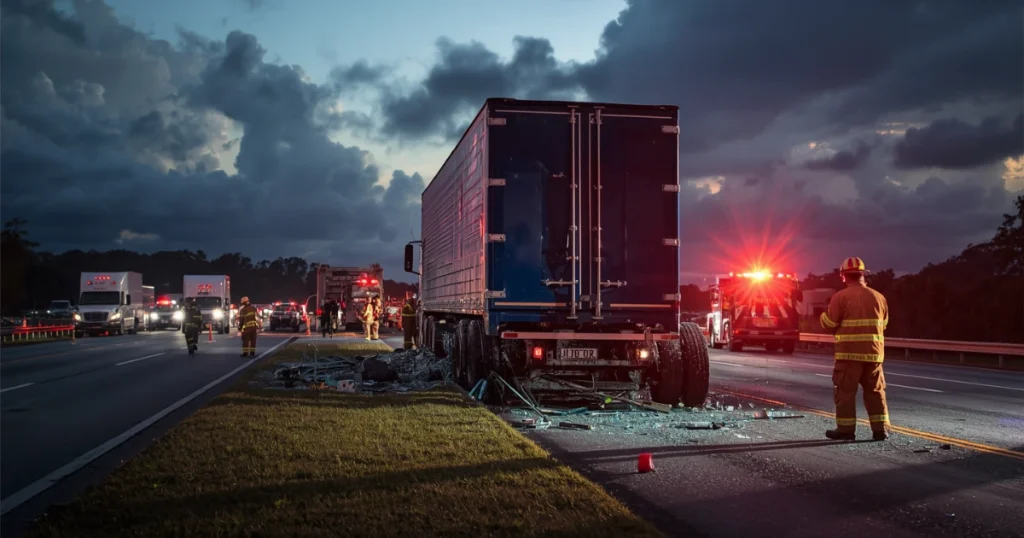
Semi-truck accident on Tampa highway at night with firefighters and emergency vehicles responding
Blog, Commercial Vehicles, Legal

Commercial Vehicle Accidents in Tampa: Know Your Rights & Essential Steps

Commercial vehicle crashes are not like your typical fender bender. Semi‑trucks and cargo vans dwarf passenger cars, so even low‑speed collisions can cause catastrophic injuries. These claims are also governed by complex federal and state regulations and often involve multiple defendants—from the driver and the trucking company to a cargo shipper, broker or maintenance shop. Understanding your rights after a commercial vehicle accident can make the difference between a fair recovery and walking away with nothing. Know your rights after a commercial vehicle accident – you don’t have to face the process alone. Quick Summary Commercial vehicle accidents often involve multiple parties—including the driver, trucking company, shippers, brokers and maintenance providers—so identifying every liable defendant is key.  Critical evidence includes driver logs, black‑box data, dispatch schedules, maintenance records, camera footage and medical evaluations. Seek medical care immediately, even if injuries seem minor—adrenaline can mask serious conditions. Be wary of early contact from insurers; recorded statements can be used against you.  Why commercial vehicle claims are unique Commercial vehicles weigh far more than passenger cars and are subject to special regulations on driver training, hours of service and maintenance. Because of their size, they take longer to stop and have larger blind spots, making crashes particularly severe. Multiple parties may be responsible—from the driver and trucking company to a cargo shipper, broker, maintenance shop or manufacturer. Identifying every defendant is critical to obtaining full compensation. Large trucks require more space and have wide blind spots, leading to unique hazards on city streets. Your rights after a commercial vehicle accident After a crash with a commercial vehicle, you have certain rights: the right to seek immediate medical care, the right to compensation for your injuries and losses, and the right to consult an attorney before speaking with insurers. You are not required to give a recorded statement to an insurance adjuster, and you should never sign a quick settlement or medical authorization without legal advice. In serious cases, you may also pursue a claim against multiple defendants to recover all available damages. What evidence matters To prove a commercial vehicle claim, you need evidence that shows what happened and who was responsible. Important evidence includes: Driver logs and electronic logging devices that document hours of service and rest breaks Dispatch records that reveal delivery schedules and pressure to meet deadlines Maintenance and inspection records showing whether the vehicle was roadworthy Camera footage from traffic lights, dash cams, businesses or on‑board systems Medical evaluations and treatment notes documenting your injuries A preservation letter to secure black‑box data before it’s overwritten Beware of early insurance contact Insurance adjusters often call within days of a crash, hoping to get a recorded statement or offer a quick settlement. Florida’s modified comparative negligence law reduces your compensation if you share fault—and if you are found more than 50 percent at fault you may recover nothing. An attorney can speak to insurers on your behalf, preserve evidence and protect your claim. Rules and deadlines to know Florida imposes strict rules for commercial vehicle claims. Missing a deadline can weaken or destroy your case. Key rules include: PIP 14‑day requirement: You must seek initial medical treatment within 14 days to qualify for personal injury protection benefits. (statute) Serious injury threshold: You may recover for pain and suffering only if you have a permanent injury, significant scarring or disfigurement, or death. (statute) Two‑year statute of limitations: Most negligence claims must be filed within two years of the crash. (statute) Modified comparative fault: If you are more than 50% at fault, you cannot recover damages. (statute) Crash report privilege: Statements made to complete crash reports are privileged and cannot be used against you. (statute) Federal safety regulations: Commercial vehicles must comply with drug testing, hours of service and maintenance rules in 49 C.F.R. parts 382–386 and 390–397. (statute) Information point: Florida recently shortened the statute of limitations for most negligence actions from four years to two—contact a lawyer right away to protect your claim. Hidden injuries & medical care After a crash, adrenaline and shock can mask symptoms. Concussions, whiplash, internal bleeding and other injuries may not show up until days later. Always see a doctor immediately and follow up even if you feel fine. Prompt treatment not only protects your health but also documents your injuries for the claim. Essential steps after a commercial vehicle accident Call 911 and cooperate with law enforcement. Seek medical attention immediately and within 14 days to preserve PIP benefits. Photograph and video the scene, vehicle damage, road conditions and any visible injuries. Collect the truck driver’s name, employer, insurance information, license plate and USDOT number. Get contact information for witnesses. Request a copy of the police report when available. Save all medical records, bills and receipts. Send a spoliation letter to the trucking company to preserve black‑box data and other evidence. Avoid giving recorded statements or signing releases without legal advice. Consult an experienced truck accident attorney as soon as possible. Watch this quick video for step‑by‑step guidance on what to do after a commercial vehicle accident: Watch: Step-by-step guide on what to do after a commercial vehicle accident in Tampa, FL How The Reyes Firm can help you Our legal team understands the regulatory landscape and the tactics used by trucking and insurance companies. We will conduct a detailed investigation, send preservation letters to secure key evidence, identify every liable party and negotiate aggressively on your behalf. You pay no fees unless we win. Call us at (813) 303-1201 or visit our contact page for a free consultation. Frequently asked questions Should I call 911 after a commercial vehicle accident even if the damage seems minor? Yes. An official police report documents the accident and may reveal hidden damage or injuries. What information should I collect from the truck driver? Gather the driver’s name, contact details, employer, insurance information, license plate number and USDOT number. Should I give a recorded statement to the trucking company’s insurer? No. Adjusters often use recorded statements

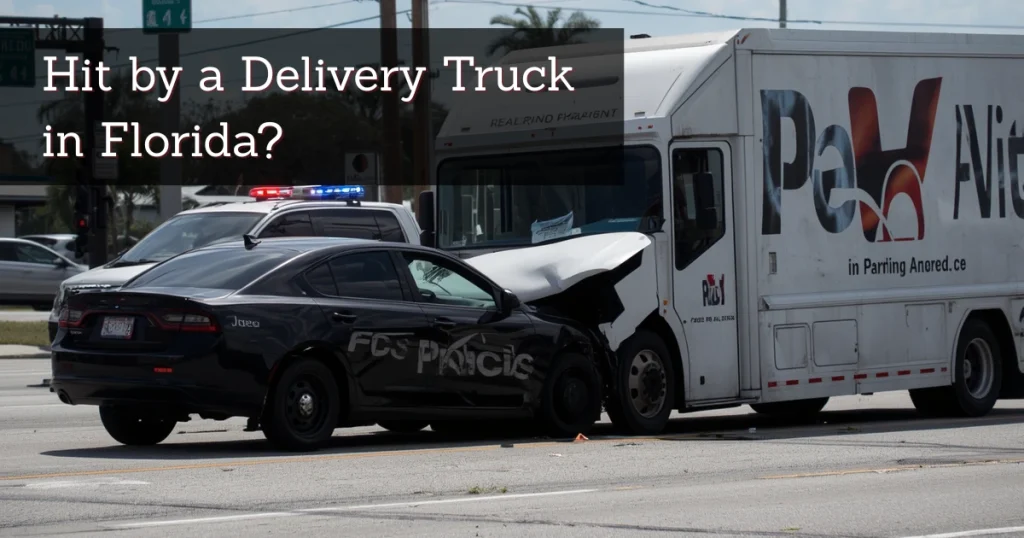
Illustration for article about being hit by a delivery truck in Florida, showing a delivery truck and damaged vehicle at a crash scene
Blog, Commercial Vehicles, Truck Accidents

Who Represents Delivery Truck Accident Victims in Florida?

Right after a delivery truck crash, most people are not thinking about statutes or insurance rules. They are thinking about pain, shock, car damage, missed work, and whether the company behind the truck is already getting ready to blame them. That reaction is normal. Delivery truck cases are often more stressful than a typical car accident because they may involve a driver, an employer, a vehicle owner, multiple insurance policies, and, in some cases, federal regulations the average person has never heard of. A Florida delivery truck accident lawyer represents people injured by working delivery vehicles and handles the company, insurers, and evidence on their behalf. After a crash, call law enforcement, get medical care, document the truck and scene, and contact The Reyes Firm before giving a recorded statement or accepting a settlement. Quick Summary Florida’s preliminary 2024 data shows 46,651 commercial motor vehicle crashes and 315 fatalities statewide. If a crash involves injury, death, a commercial motor vehicle, a wrecker, or at least $500 in apparent damage, Florida requires you to stay at the scene and call law enforcement. Florida PIP benefits generally require that initial medical care be obtained within 14 days of the crash. PIP typically provides up to $10,000 in medical and disability benefits, subject to the statute’s terms. If you are found more than 50% at fault, Florida’s modified comparative negligence rule can bar your recovery. Most negligence actions in Florida now have a 2-year filing deadline. Federal FMCSA regulations — including hours of service and vehicle maintenance rules — apply to commercial delivery vehicles and can strengthen your claim. Recoverable compensation may include medical bills, lost wages, loss of earning capacity, pain and suffering, and more. Key Takeaway A delivery truck accident case can get stronger or weaker in the first few days. The most important steps are getting safe, calling 911 when required, getting medical care quickly, and preserving the evidence that the delivery company may not volunteer later. What should someone do right after a delivery truck accident in Florida? First, get to safety, call law enforcement when required, get medical help, and start preserving evidence. In Florida, crashes involving injury or death, a commercial motor vehicle, a vehicle requiring a wrecker, or at least $500 in apparent damage must be reported to law enforcement immediately. That rule matters because delivery truck cases can change quickly. Vehicles are moved, camera footage disappears, company dispatch systems overwrite themselves, and the first version of the story is not always the most accurate one. Florida Law — When to Call 911 FLHSMV requires you to stay at the scene and call 911 if the crash involves an injury, fatality, hit and run, DUI, a vehicle needing a wrecker, a commercial motor vehicle, or at least $500 in apparent damage. What to do right away: Move to a safe location if possible. Call 911 or local law enforcement. Get the driver’s name, employer, plate number, insurance details, and any company information visible on the vehicle. Photograph vehicle positions, damage, skid marks, debris, road conditions, and delivery branding. Collect witness names and phone numbers. Do not admit fault or speculate about what happened. Florida law also requires drivers involved in a crash to provide identifying information and render reasonable assistance to injured people, meaning exchange information and help get medical care if someone may be hurt. Why are delivery truck crashes often more serious? Official crash data shows why delivery truck and commercial vehicle cases deserve careful attention in Florida. 46,651 Commercial motor vehicle crashes in Florida (preliminary 2024 data) 315 Fatalities in Florida commercial vehicle crashes (preliminary 2024) 40,901 Total U.S. roadway fatalities (NHTSA final 2023 data) Source context: FLHSMV preliminary 2024 crash data and NHTSA final 2023 roadway fatality data. Delivery truck crashes can be more catastrophic than a typical two-car collision due to a combination of physical and operational factors, vehicle size and weight, longer stopping distances, large blind spots, and the constant pressure on drivers to stay on schedule. Not every delivery vehicle is a tractor-trailer, but even smaller commercial vehicles can cause serious harm when they move through neighborhoods, stop suddenly, back into driveways, or rush through back-to-back deliveries. A delivery truck case is often not just “a car accident with a van.” It may involve business records, route pressure, vehicle maintenance questions, driver qualification issues, and multiple potentially responsible parties, all of which require a different kind of investigation than a simple two-car crash. What Are the Most Common Causes of Delivery Truck Accidents in Florida? Understanding what caused the crash is central to proving who is responsible. Some of the most frequent causes include: Driver fatigue and hours-of-service violations. Federal rules limit how long commercial drivers can operate without rest. When delivery companies push schedules too aggressively, drivers operate well past the point of safe alertness. Distracted driving. Delivery drivers frequently use GPS navigation, in-cab computers, and phones to manage route updates, customer communications, and proof-of-delivery systems, all while driving. Delivery quota pressure. Many delivery drivers are tracked by stop count and delivery time. That pressure can lead to speeding, running stop signs, and skipping mandatory rest breaks. Improper backing and blind spot failures. A large percentage of delivery truck crashes occur when drivers back into driveways, loading zones, or parking spaces with limited rear visibility. Inadequate vehicle maintenance. Brake failure, tire blowouts, and steering defects are more likely when trucks skip required pre-trip inspections or maintenance schedules. Unfamiliar routes. Delivery drivers constantly cover new neighborhoods, increasing the likelihood of sudden stops, wrong turns, and last-second lane changes. Overloaded vehicles. Cargo that exceeds weight limits or is improperly secured makes vehicles harder to control and significantly increases stopping distances. Impaired driving. Drug and alcohol violations occur in commercial trucking despite federal screening requirements, and prior violations may be discoverable through the FMCSA Drug and Alcohol Clearinghouse. Identifying the true cause, not just the surface-level description in the crash report, is one of the most important things an attorney can do in the

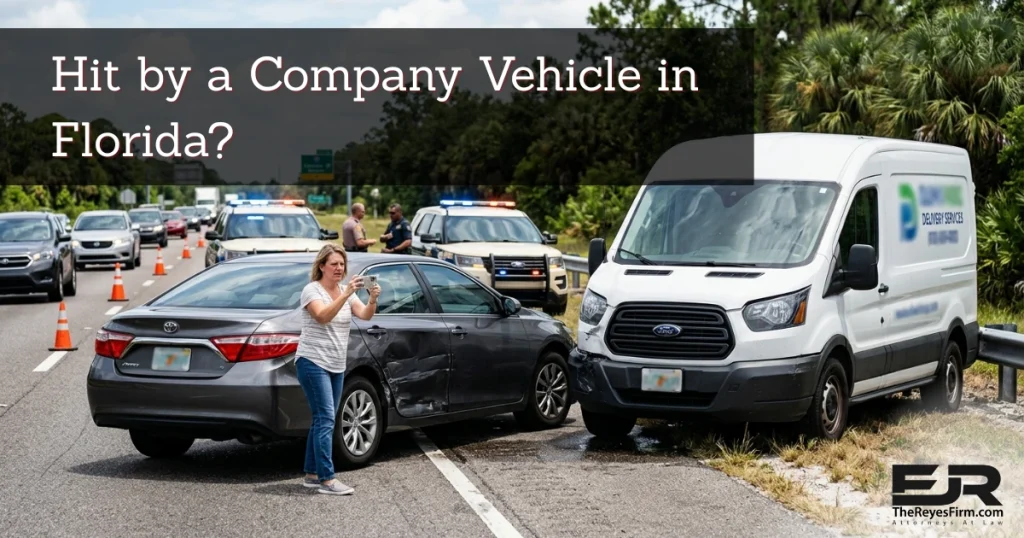
Featured image for a commercial vehicle accident lawyer in Florida article showing a crash between a passenger car and a company van, with police vehicles behind them and a woman documenting the scene.
Blog, Commercial Vehicles, Legal

Commercial Vehicle Accident Lawyer in Florida: What Injured Drivers Need to Know

After a crash with a company car, delivery van, work truck, or other business vehicle, most people are not thinking about legal terms. They are thinking about pain, medical bills, lost work time, damage to the car, and whether the vehicle’s manufacturer will take responsibility. In Florida, those worries are not theoretical. FLHSMV reports 381,210 codable traffic crashes and 3,184 traffic deaths in Florida in 2024, and its preliminary 2024 figures include 46,651 commercial motor vehicle crashes and 315 fatalities involving commercial motor vehicles. That is one reason these cases feel different. A crash involving a business vehicle often means multiple insurance policies, more records, and more people trying to control the story early. It can also mean more serious injuries, especially when the vehicle is larger, heavier, or being operated under work pressure. At the national level, NHTSA reported 40,901 traffic deaths in 2023, even though the overall fatality rate declined from 2022. This guide explains what a commercial vehicle accident lawyer in Florida does, what injured people should do right away, which Florida laws matter most, and why these cases are often more complicated than a regular car accident claim. The Reyes Firm Hurt in a Commercial Vehicle Accident in Florida? Get clear next steps after a crash involving a company car, delivery van, work truck, or fleet vehicle. Had a bad day? Contact The Reyes Firm Quick Summary Florida’s preliminary 2024 crash data shows 46,651 commercial motor vehicle crashes and 315 fatalities involving commercial motor vehicles. Florida PIP rules generally require a person to receive initial medical services within 14 days of the crash to protect eligibility for medical benefits. In Florida, a person usually must show a qualifying serious injury to recover pain and suffering damages in a motor vehicle case. Florida now uses a modified comparative negligence rule. If the injured person is found more than 50% at fault, they generally cannot recover damages in a negligence action. A negligence case is generally subject to a two-year statute of limitations in Florida. Key Takeaway After a crash with a company vehicle in Florida, the smartest first steps are simple: call 911, get medical care fast, document everything, and do not let the insurance process get ahead of the facts. What counts as a commercial vehicle in Florida? In everyday injury cases, a commercial vehicle is not just an 18-wheeler. It can include a company car, delivery van, contractor truck, utility vehicle, fleet pickup, service van, or any other vehicle used for work at the time of the crash. Florida crash reporting rules also separately recognize crashes involving commercial motor vehicles. That matters because once a vehicle is tied to a business, the case can become larger than just the driver. There may be an employer, a commercial insurance carrier, maintenance records, dispatch records, and other evidence that do not exist in a normal two-car crash. Why are commercial vehicle accident cases often more complicated? They are more complicated because the crash is only part of the story. The real questions often include whether the driver was working, whether the company maintained the vehicle properly, whether there was schedule pressure, and whether important records were created before the crash and preserved after it. Florida law specifically subjects commercial motor vehicles in interstate commerce to applicable safety regulations. These cases can also involve more serious damage. Larger vehicles require greater stopping distance, generate greater impact forces, and can cause catastrophic injuries even in crashes that appear moderate in a photo. That is part of why claims involving work trucks, fleet vehicles, and delivery vans often need more investigation than a typical rear-end collision. NHTSA also notes that speeding remained a factor in 29% of all traffic fatalities in 2023, and distracted driving killed 3,275 people in 2023, both of which are common issues in work-related driving cases. What should someone do right after a commercial vehicle crash in Florida? The first priority is safety. Call 911, move to a safer location if possible, and accept medical help if there is any sign of injury. Florida law requires a long-form crash report when law enforcement investigates certain crashes, including those involving injury, death, a vehicle requiring a wrecker, or a commercial motor vehicle. After that, the next priority is documentation. If it is safe, take photos and video of: vehicle positions all visible damage skid marks debris road and weather conditions business logos and markings on the vehicle license plates nearby cameras visible injuries Those details can become important very quickly if the company later disputes fault or tries to minimize what happened. FLHSMV is the official repository for Florida crash records, and crash reports often become a starting point, not the whole story. Watch: What to Do After a Commercial Vehicle Crash in Florida This short video walks through the first steps to take after a crash involving a commercial vehicle or semi-truck, including calling 911, documenting the scene, gathering information from the driver and witnesses, avoiding recorded statements, and getting medical care right away. What information should be exchanged at the scene? The drivers involved should exchange basic identifying and vehicle information. Florida’s crash statutes require drivers in qualifying crashes to provide identifying information and cooperate with reporting duties. For a company vehicle crash, the injured person should try to collect: the driver’s name and phone number employer or company name insurance information plate number vehicle or unit number DOT number if visible witness names and contact information The key is to gather facts, not argue. It is wise to avoid statements like “I’m sorry” or “I didn’t see you,” because those words can later be twisted into an admission of fault. When should someone get medical care after the crash? As soon as possible. In Florida, the PIP statute generally requires the injured person to receive initial services and care within 14 days after the motor vehicle accident to access those medical benefits. This is one of the most important rules in any Florida

Damaged delivery van after a Florida crash, featured image for a company vehicle accident lawyer article
Blog, Commercial Vehicles, Company-Caused Car Accidents

Company Car Crash Attorney in Florida: Who Pays After a Work Vehicle Accident?

In Florida, you can sue the company, not just the driver, when one of its vehicles causes a crash and the driver was working at the time. Right after a crash with a company-owned truck, delivery van, or fleet vehicle, most people are not thinking about legal theories. They are thinking about pain, confusion, missed work, car damage, and whether the business behind the vehicle will take responsibility. A company car crash attorney can identify the employer, fleet owner, maintenance vendor, and commercial insurance policies that may apply. These cases often involve several responsible parties, business records, and coverage disputes that do not exist in a typical two-car crash. This guide explains who may be held liable after a work-vehicle crash in Florida, what evidence matters, how employer liability works, and what injured people in Tampa, Riverview, Ruskin, Wimauma, and throughout Florida should do next. The Reyes Firm Hurt in a Company Vehicle Accident in Florida? Get clear next steps after a crash involving a delivery van, fleet car, or work vehicle. Had a bad day? Contact Us Now Quick Summary After a crash with a company vehicle, call 911, get medical care, and document the scene before evidence disappears. The company may be liable if the driver was working at the time or if the business failed to hire, train, maintain, or supervise safely. Florida cases often turn on the scope of employment, crash evidence, medical proof, and insurance strategy. Commercial policies may have higher limits, but they are usually defended aggressively. Had a bad day? Call The Reyes Firm at 833-4 BAD DAY. Key Takeaway In Florida, a company may have to pay after a work-vehicle crash if its employee caused the collision while on the job, or if the company itself acted carelessly through poor hiring, supervision, maintenance, or safety practices. Early medical care, thorough documentation, and rapid preservation of evidence often determine whether the claim remains strong. Can I Sue a Company for a Car Accident in Florida? Yes. Florida law allows you to sue the employer when one of its drivers causes a crash while working. The legal doctrine behind this is called respondeat superior, Latin for “let the employer answer.” Florida courts apply this when the driver was acting within the scope of their job at the time. The scope of employment covers deliveries, driving between job sites, and work errands. It generally does not cover personal detours during the shift. That distinction is exactly what the defense will argue, and it’s why dispatch records, route logs, and work schedules matter so much. Florida also has a separate rule called the dangerous instrumentality doctrine. A company that owns a vehicle can be held liable for a crash caused by any driver they permitted to use it, even if that driver wasn’t strictly “on the job” at the moment. These two doctrines can apply together or independently, depending on your facts. ⚠️ Warning: Florida Statute § 95.11 generally gives you two years from the date of the crash to file a negligence-based personal injury claim. But GPS logs, dashcam footage, dispatch records, electronic logging device data, and other company-held records can be overwritten or lost much sooner. An attorney may need to send a preservation demand quickly to protect key evidence. Do not wait. Who Pays After a Work Vehicle Crash in Florida? After a work vehicle crash in Florida, payment may come from the company’s insurance, the driver’s insurance, or another liable business party, such as an employer, maintenance company, or cargo-related company. The answer depends on who caused the crash, whether the driver was working at the time, and what insurance coverage applies. Video: Who May Pay After a Serious Commercial Vehicle Crash? This short video explains a question many people have after a serious commercial vehicle crash: who may pay the medical bills, handle vehicle damage, and be held financially responsible. It supports this article’s discussion of employer liability, insurance issues, and what to do next after a Florida work vehicle accident. This video reinforces the article’s explanation that company vehicle and commercial vehicle cases often involve insurance pressure, serious injuries, and questions about who should pay after the crash. What Does a Company Car Crash Attorney Do? A company vehicle accident lawyer investigates whether the driver, the employer, or multiple business-related parties may be responsible for the crash. The goal is not just to prove that a collision happened, but to show why the company should be financially accountable. That matters because crashes involving work vehicles are rarely simple. A person may be hit by a delivery van in Riverview, a service truck in Ruskin, or a corporate fleet vehicle in Tampa, yet the real decision-makers may be a parent company, a contractor, a maintenance vendor, a broker, or an insurer working behind the scenes. A strong case usually involves: identifying who owned the vehicle confirming whether the driver was on the clock reviewing insurance coverage preserving logs, electronic data, and camera footage proving the injury with medical evidence In many cases, the deeper issue is not just driver negligence. It is whether the business created risk and then tried to hide behind the driver after the crash. What should someone do after a work vehicle crash in Tampa? First, protect safety and call 911. Then get medical care, document the scene, exchange information, and avoid saying anything that could be taken as an admission of fault. Those first steps matter because company vehicle cases can quickly become evidence fights. A delivery van can be repaired, dashcam footage can be overwritten, and the employer can start building its defense the same day. Move to safety if possible. Do not stay in traffic if the area is dangerous. Call 911. A police response can help create an official crash record. Take photos and video. Capture vehicle positions, license plates, company logos, skid marks, debris, traffic signs, and road conditions. Get names and contacts. Ask for the driver’s name, employer, insurer, vehicle

Red semi-truck driving on a highway under dark cloudy skies, with headlights on and The Reyes Firm logo in the corner.
Blog, Commercial Vehicles

Understanding Commercial Vehicle Accidents in Tampa: Your Rights and Remedies

A semi-truck rear ends you on I-75 or I-4 and your world stops. The shock, the pain and the insurance calls can overwhelm anyone. You need clear guidance fast. Why These Claims Are Unique Commercial vehicle crashes aren’t like fender benders. Trucks can weigh more than 10,000 pounds and are subject to special rules on driver training, hours of service and maintenance. Multiple parties might share blame: the trucking company, a cargo shipper, a broker, a maintenance shop or a manufacturer. To maximize your recovery you need to identify every defendant. Quick Summary Commercial vehicle accidents in Tampa often involve multiple responsible parties, not just the driver. Evidence like driver logs, black box data, maintenance records, and camera footage can be critical. Seek medical care immediately, even if injuries seem minor at first. Be cautious when insurance companies contact you early; recorded statements can harm your claim. Florida law has strict deadlines, and waiting too long can weaken your case. A truck accident attorney can help preserve evidence, identify liable parties, and negotiate with insurers.   What Evidence Matters? Driver logs and electronic logging devices showing rest breaks and driving hours. Dispatch records that reveal schedules and possible pressure to meet deadlines. Maintenance and inspection records that prove whether the truck was roadworthy. Camera footage from traffic lights, dash cams or nearby businesses. Medical evaluations and treatment notes documenting your injuries. Beware of Early Insurance Contact Insurers often call before you have recovered. They may want a recorded statement or a quick settlement. Florida’s comparative negligence law reduces your compensation if you share fault, and if you exceed 50 percent fault you recover nothing. Talk to a lawyer before you speak with adjusters. Rules and Deadlines to Know PIP and no fault coverage require every driver to carry at least $10,000 and to seek treatment within 14 days.  Serious injury threshold permits lawsuits only for permanent injuries, significant scarring, loss of bodily function or death.  Two year deadline: Most negligence suits must be filed within two years of the crash. Don’t wait to speak with a lawyer. Minimum coverage amounts: Trucks must carry higher liability limits than cars. State and federal regulations: Florida statute 316.302 sets out safety requirements for commercial vehicles, including drug testing and hours of service rules. Read the statute Hidden Injuries Adrenaline can mask symptoms. Concussions, whiplash and internal injuries may show up days later. Always get checked out and follow your doctor’s advice. Essential Steps After a Truck Crash Call 911 and cooperate with police. Document the scene with photos and videos. Get contact information for the driver and witnesses. See a doctor right away and keep all medical records. Consult a truck accident attorney before talking to adjusters. How We Help Our firm handles serious truck accident cases across Tampa and Hillsborough County. We know the regulations, file spoliation letters to preserve evidence, and negotiate with multiple insurers. We work on a contingency basis, so you owe nothing unless we win. If you want guidance right now, visit our website: Get a free consultation. For more information about truck claims, read our blog: Our truck claim guide   Key Takeaway Commercial vehicle accidents are more complex than typical car crashes. The most important step after an accident is protecting your health, documenting the evidence, and understanding your legal rights before speaking with insurers. Acting quickly can make a significant difference in the strength of your claim and your ability to recover fair compensation.   Frequently Asked Questions Should I call 911 after a commercial vehicle accident even if the damage seems minor? Yes. A police report creates an official record and may reveal underlying damage or injuries. What information should I collect from the truck driver? Gather the driver’s name, contact information, employer, insurance details, license plate, and USDOT number. Should I give a recorded statement to the trucking company’s insurer? No. Recorded statements can harm your claim. Talk to a lawyer first. Who can be held liable besides the driver? Depending on the facts, the trucking company, broker, shipper, trailer owner or manufacturer may be responsible. Can the truck’s manufacturer be responsible? Yes. If a defective component like brakes or tires contributed to the crash, the manufacturer could be liable. What happens if the driver was delivering for Amazon, UPS or FedEx? You may pursue the carrier and possibly the shipper. These companies often retain independent contractors, which can complicate liability. How long does black box data last before it’s overwritten? Some systems overwrite within weeks. Your attorney can send a preservation letter to secure the data. What is an electronic logging device (ELD) and why does it matter? An ELD records driving hours automatically. It can prove whether the driver followed hours of service rules. Can dash cam footage help my claim? Absolutely. Dash cam or traffic camera footage can show who caused the crash. What if the trucking company’s policy isn’t enough to cover my losses? You can pursue excess coverage, umbrella policies or the assets of negligent companies. How long do I have to file a claim in Florida? Most negligence claims must be filed within two years of the crash. Some claims, like wrongful death, may have different deadlines. Do truck accident cases always go to court? No. Many cases settle through negotiation or mediation, but filing a lawsuit sometimes pressures insurers to pay fair value. How much does it cost to hire a truck accident lawyer? We work on contingency, so you pay nothing unless we recover money for you. Does the location, like I-75 or I-4, matter for my claim? Yes. Different roads may have different speed limits, signage and video cameras, which can affect evidence. Can I handle a truck accident claim without a lawyer? You can try, but truck cases are complex. A lawyer can identify all responsible parties, preserve evidence and maximize compensation. About the Attorney Edward Reyes, Esq. Local attorney Edward Reyes is the founder and managing attorney of The Reyes Firm.

Blue semi truck driving on a Florida highway near Tampa with palm trees, commercial vehicle accident attorney guide image
Blog, Commercial Vehicles

Commercial Vehicle Accident in Tampa: Key Steps After a Crash

Large trucks pose a serious risk on Florida roads. In 2023, more than 5,400 people died in crashes involving big trucks, with most victims in other vehicles. A commercial vehicle collision can leave you facing severe injuries and confusing rules, but there are concrete steps you can take right away. Why a Commercial Vehicle Claim Is Different Truck crashes usually cause life changing harm and involve multiple parties. Evidence such as driver logs, electronic data recorders and bills of lading must be preserved promptly. There may be multiple insurance policies to pursue. Federal rules limit driving time to prevent fatigue. Learn more about HOS rules. Who Can Be Responsible? Beyond the driver, liability can extend to the trucking company, the trailer owner, a broker, a maintenance shop or even a manufacturer. Each entity must follow safety laws and carry adequate insurance. Read the minimum insurance law. Key Evidence to Gather Take photos of the vehicles, skid marks, road signs and weather conditions. Write down the driver’s license information, insurance details and USDOT number. Ask for witness names and contact details. Preserve your car’s event data recorder or dash cam video. Keep copies of police reports and medical records. What About the Insurance Adjuster? Truck company adjusters call quickly hoping to shift blame. Under Florida’s modified comparative negligence rule, your recovery is reduced if you are partly at fault. If you are more than 50 percent responsible, you cannot recover damages. See how the rule works. Do not give a recorded statement until you speak with a lawyer. Florida Rules That Affect Your Claim PIP coverage and no fault: Florida requires every driver to carry at least $10,000 in personal injury protection. PIP pays a portion of your medical bills and lost wages regardless of who caused the crash. You must see a doctor within 14 days to qualify. Learn more Serious injury threshold: You can sue for full damages only if your injuries are permanent, result in significant scarring, cause loss of an important bodily function or lead to death. See details Deadlines and minimum coverage: You generally have two years from the crash to file a negligence claim. Trucks must carry at least $50,000 in liability coverage if they weigh between 26,000 and 35,000 pounds; heavier trucks require higher limits.  Additional regulations: Commercial vehicles must follow Florida and federal safety rules, including drug and alcohol testing and hours of service limits. See the statute Watch Your Health Symptoms like concussions, internal bleeding or soft tissue injuries may appear days after the crash. See a doctor and document all treatment. Steps to Take After a Truck Accident Call 911 and report the crash. Exchange information and photograph the scene. Seek medical care within 14 days. Notify your insurer, but decline recorded statements from the other side. Contact a truck accident lawyer to protect your rights. Why You Need a Lawyer An attorney can send preservation letters, hire experts, negotiate multiple insurance claims and file your lawsuit before the two year deadline. You pay nothing upfront because fees come from the recovery. The Reyes Firm Can Help We focus on commercial vehicle accidents across Tampa and central Florida. Our team knows how to handle trucking evidence, negotiate with insurers and litigate complex cases. Our consultations are free and we only get paid if you win. For help, call us or visit our website: Schedule a free consultation Frequently Asked Questions What should I do right after a commercial vehicle accident? Call 911, gather contact and insurance information, take photos and seek medical care as soon as possible. Do I need to go to the emergency room if I feel okay? Yes. Many serious injuries, such as concussions and internal bleeding, are not immediately apparent. Should I take photos of the USDOT number on the truck? Yes. The USDOT number helps identify the carrier and retrieve safety records. How soon should I report the crash to my insurance company? Report it promptly, but do not provide a recorded statement until you speak with an attorney. Can I sue the trucking company if the driver was an independent contractor? Possibly. Carriers can be liable for negligent hiring or inadequate supervision of contractors. Who pays my medical bills while my case is pending? Your own PIP insurance and health coverage pay initial bills; the at fault party reimburses damages later. What is black box data and how can it help? Event data recorders capture speed, braking and other factors that can show how the crash happened. What if the trucking company deletes evidence? Your lawyer can send a spoliation letter to preserve evidence and seek sanctions if evidence is destroyed. How long does a truck accident claim take to settle? It varies; complex cases may take months or years, especially if liability or damages are disputed. What if both the truck driver and I are partly at fault? You can still recover damages if you are 50 percent or less responsible; your recovery is reduced by your share of fault. What injuries are common in commercial vehicle crashes? Traumatic brain injuries, spinal cord injuries, fractures, internal injuries and severe soft tissue damage are common. Can I recover money for future medical care? Yes. Damages can include ongoing medical treatment, rehabilitation, adaptive equipment and home modifications. How is a truck accident settlement calculated? Settlements consider medical bills, lost wages, future care, pain and suffering, property damage and insurance coverage limits. What if I had a pre existing condition? You can still recover compensation if the crash aggravated your condition, though damages may be limited to the worsening of the injury. Do I need a lawyer if the insurer offers a settlement? It’s wise to consult an attorney; early offers often undervalue the claim and may not cover future costs.

Semi-truck driving on a highway at sunset, used as the featured image for a truck accident lawyer guide on how settlements are calculated
Blog, Commercial Vehicles, Truck Accidents

Truck Accident Lawyer Explains: How Settlements Are Calculated (Damages Breakdown)

The week after a truck crash is often the hardest. The injured person may look “okay” to others, but inside, they feel sore, rattled, and overwhelmed. Sleep is off. Driving feels scary. Normal tasks take twice the energy. Then the paperwork starts. An insurance adjuster asks for a recorded statement. A form appears requesting medical records. The person may think, “Am I overreacting?” or “Should I just give them what they’re asking for so this stops?” This guide is meant to bring calm structure to a stressful moment. It explains, in plain language, how a truck accident lawyer breaks down damages in Florida, what statutes shape the process, and what steps help an injured person stay in control before signing anything. How a truck accident lawyer thinks about “settlement value.” It is normal to want a number fast. Bills pile up. The phone keeps ringing. The injured person may feel pressured to “wrap it up.” A truck accident lawyer usually starts somewhere else: with proof and categories. A Florida settlement is not one big mystery number. It is built from: Liability (who caused the crash and how it is proven) Damages (the losses the crash caused, proven with records) Case factors (insurance coverage, deadlines, and legal defenses) A key point: a settlement typically includes a release, meaning the injured person usually cannot seek additional compensation later for the same crash. That is why good cases focus on accuracy rather than speed. Why truck crashes in Florida often feel more intense than “regular” crashes Many people assume a truck crash claim works like any other car accident claim. That is understandable, but truck cases often involve more moving parts. A truck accident lawyer may look at: More responsible parties: the driver, the trucking company, a maintenance shop, or a cargo loader. More evidence: truck logs, inspection records, and other records that can help show what happened. More pressure: trucking insurers often respond quickly with adjusters and investigators. Higher crash impact: commercial vehicles can cause severe injuries. Florida also closely tracks commercial motor vehicle crashes. In its “By the Numbers 2024” report, FLHSMV listed 46,651 commercial motor vehicle crashes and 315 fatalities (noted as preliminary). Step 1: Liability and fault (who is legally responsible) After a crash, the injured person may feel confused about what matters most. Insurance questions can also make them feel blamed. In Florida, fault can directly affect what a person can recover. Florida’s comparative fault statute explains that fault can reduce damages, and it also includes a rule that can block recovery if the injured person is found more than 50 percent at fault in many negligence cases. What a truck accident lawyer uses to prove fault A strong liability file often includes: Police crash report and scene diagram Photos of vehicle damage and the roadway Witness contact info and statements Video (dash cam, nearby business cameras when available) Trucking records (driver logs, inspection, and maintenance history) Timeline evidence (calls, texts, dispatch, delivery schedule when relevant) Pro Tip Start a “crash folder” today Start a simple “crash folder” today. Save photos, the crash report number, and witness names, medical visit notes, and every receipt in one place, so nothing gets lost when the insurance company starts asking questions. Why early evidence matters in Florida Florida law lays out when a long-form crash report is required, including when a crash involves a commercial motor vehicle. It also explains that crash reports containing personal information are generally confidential for a period and may later become available under certain rules. The statute includes a 60-day confidentiality period for certain information in crash reports. Practical note: FLHSMV states that crash reports can be purchased through the Florida Crash Portal, with a $10 fee per report (plus portal fees). Step 2: Economic damages (the costs with receipts) People often feel uncomfortable talking about money right after getting hurt. They may worry they sound greedy. In reality, economic damages are simply the real-life bills and losses caused by the crash. Florida’s comparative fault statute even defines “economic damages,” including past and future lost income and medical expenses. Medical expenses (past and future) Medical damages can include: Ambulance and ER care Imaging (X-rays, CT scans, MRIs) Hospital bills and specialist visits Physical therapy and rehab Prescriptions and medical equipment Follow-up appointments Future care (ongoing therapy, injections, surgery, long-term treatment) Florida PIP basics that can affect early medical bills Florida’s PIP statute requires certain personal injury protection benefits and includes limits and rules. For example, it references a $10,000 limit on medical and disability benefits and includes requirements for receiving initial care within a certain time window. A truck accident lawyer often explains PIP early because many injured people do not realize how fast PIP issues can become stressful. Step 3: Lost income and future earnings impact A person may feel pressured to go back to work before they are ready. They may also worry their boss will not believe them. A truck accident lawyer typically separates this into two parts: Lost wages (what was missed already) This can include: Missed days of work Reduced hours Lost overtime, bonuses, or tips (if documented) Helpful proof: Pay stubs Employer letter confirming missed time Tax records in some cases Loss of earning capacity (what the injury changes long-term) This applies when the injury affects the person’s ability to earn money in the future, such as: A job requires lifting or driving, but medical limits now block it Chronic pain reduces the ability to work full-time A career shift becomes necessary This part is not guesswork. It is built from medical restrictions, job demands, and sometimes expert support. Step 4: Property damage and out-of-pocket expenses When someone is hurt, it is easy to forget the smaller costs, even though they add up fast. A truck accident lawyer may include: Vehicle repair or total loss value Towing and storage Rental car costs Damaged personal items (phone, glasses, child car seats) Travel costs to medical appointments Simple tracking helps. A

Semi truck on a Florida roadway used as a visual for a big rig accident attorney guide for Tampa truck crash claims.
Blog, Commercial Vehicles, Truck Accidents

Big Rig Accident Attorney: What Makes These Claims Different From Car Accidents

After the crash is over and the cars are off the road, life still does not feel normal. The injured person may wake up sore, jumpy, and exhausted, then stare at their phone, wondering who to call back first. They may replay the moment in their head and think, “Am I overreacting?” or “Maybe this will go away.” Then an insurance adjuster asks for a recorded statement, paperwork, or a quick “yes” to something that does not feel clear. This guide brings structure to that mess. It explains why a big rig claim differs from a car accident claim, which Florida rules can affect the next steps, and how a big rig accident attorney can help protect the facts early so the injured person feels more in control. Why big rig claims feel different from day one It is normal to feel rattled and pressured after a truck crash. Big rig claims often move faster than car claims because trucking companies and insurers start building their version of the story early. Here is what makes these claims different: More harm is common. Large trucks are involved in deadly crashes every year. In 2023, NHTSA reported 5,472 deaths in crashes involving large trucks, and 70% of those killed were people in other vehicles. More people and companies may be involved. A passenger car crash is often driver vs. driver. A truck crash can involve a driver, a trucking company, a trailer owner, a broker, a shipper, or a maintenance provider. More evidence exists, and more of it is controlled by the trucking side. A big rig can have electronic logs, GPS, engine data, dispatch records, and sometimes video. In Florida, commercial vehicle crashes are not rare. FLHSMV’s Crash Facts report shows Florida had 395,175 codable crashes and 3,375 fatalities in 2023 overall. The same report also includes commercial motor vehicle (CMV) crash totals statewide for 2023. Why the “who is at fault” question is more complicated After a big rig crash, the injured person may blame themselves right away. “Maybe I braked too late.” “Maybe I should not have changed lanes.” That doubt is common, especially when they are overwhelmed. But trucking claims often involve multiple causes and multiple responsible parties. A big rig accident attorney typically looks at: The driver (speed, following distance, distraction, impairment) The trucking company (hiring, training, safety practices, scheduling pressure) The trailer owner (if different from the trucking company) A broker or logistics company (if it controlled the job or route) A shipper or loader (overloaded cargo, poor securement, unbalanced load) Maintenance providers (brakes, tires, lights, inspections) Manufacturers (rare, but possible when a part fails) Florida law also points to added safety regulations around commercial motor vehicles. Florida Statute 316.302 covers commercial motor vehicle safety regulations and enforcement. The evidence in big rig cases is different and can disappear fast Many injured people feel unsure about what matters. They may think photos of the damage are the main proof. Photos help, but big rig cases often depend on commercial records that the injured person does not control, which is why speaking with a commercial truck accident attorney early can help protect key evidence and reduce pressure. Key evidence can include: Electronic Logging Device (ELD) records (driving hours and rest) Dispatch messages and trip schedules (time pressure, route decisions) GPS data (speed patterns and location timing) Engine/ECM data (speed, braking, throttle, impact timing) Dash cam footage (if available) Maintenance and inspection records (brake condition, tire wear, prior repairs) Cargo and weight paperwork (overload, securement problems) Why does timing matter? Some records can be overwritten or “lost” through normal retention policies. That is why early steps often focus on preserving evidence rather than arguing. Practical steps that help the injured person right away: Save photos, videos, and the crash exchange information Write down what they remember while it is fresh (road name, lane, weather, what they saw) Keep medical paperwork, discharge notes, and prescriptions Avoid guessing details during phone calls when they are still shaken Why insurance calls can feel pressuring after a truck crash A recorded statement may sound routine. The adjuster may act friendly. The injured person may think, “Should I just give them what they’re asking for so this can be over?” In trucking claims, early statements can shape later arguments about fault. Small phrases can be twisted, such as: “They are fine” (meaning “not dying”) “They did not see the truck” (meaning “it happened fast”) “They might have been going a little fast” (meaning “keeping up with traffic”) A big rig accident attorney often helps by taking over communications and slowing the pace so the injured person does not get locked into unclear wording before they even understand their injuries. Florida rules that can affect a truck crash claim When someone is hurt in Florida, the rules can feel confusing. A clear legal roadmap can help the injured person stop second-guessing. Florida PIP basics (no-fault layer) Florida’s Personal Injury Protection (PIP) rules are in Florida Statute 627.736. PIP is often the first layer that helps cover certain losses after a crash, regardless of fault. The “serious injury” threshold for stepping outside PIP Florida Statute 627.737(2) lists the serious injury threshold categories that can allow recovery of certain damages in tort, such as permanent injury or significant and permanent scarring. This is where medical documentation matters. Many injuries are real but may take time to fully reveal themselves. Comparative fault (blame arguments) Florida’s comparative fault statute, 768.81, includes a rule that can block recovery in many negligence cases if a party is found more than 50% at fault for their own harm. That is one reason trucking insurers often look for small details to shift blame. Good evidence and careful communication help keep the record accurate. Time limits to file (do not wait too long) Florida Statute 95.11 sets deadlines for different cases. It includes a two-year limitations period for an action founded on negligence. This does not mean the injured person must rush

Tampa highway scene used as a featured image for an 18-wheeler accident attorney blog about common causes and proving fault in Florida.
Blog, Commercial Vehicles, Truck Accidents

18-Wheeler Accident Attorney: Common Causes and How Fault Is Proven in Florida

Traffic on I-275 moves, then it doesn’t. A driver sees brake lights, hears air horns, and suddenly, there is nowhere to go. When an 18-wheeler is involved, the crash scene often feels bigger, louder, and more chaotic than a typical fender-bender. Afterward, most people are not thinking about legal terms. They are thinking about pain, missing work, car repairs, and the question that keeps repeating: “How did this happen?” This is where an 18-wheeler accident attorney can make a real difference. These cases move quickly because trucking companies and insurers begin protecting themselves immediately. The best outcomes usually happen when the injured person also acts quickly and gathers proof before it disappears. Why 18-Wheeler Crashes Are So Dangerous Large trucks are heavy, require more braking distance, and need more room to turn. When something goes wrong, the damage can be catastrophic. National safety data shows how serious these crashes can be. In 2023, 5,472 people were killed in traffic crashes involving large trucks, and 70% of those killed were occupants of other vehicles. That tells an important story. In many truck crashes, the people in smaller vehicles take the worst hit. What an 18-Wheeler Accident Attorney Actually Investigates A regular car crash often comes down to one or two mistakes. A trucking crash usually has layers. A good 18-wheeler accident attorney looks beyond the obvious and asks: Was the driver too tired or rushing? Was the truck properly inspected and maintained? Was the load balanced and secured? Did the company push unsafe schedules? Is there electronic data that proves speed, braking, or steering? Florida law also matters here because Florida adopts federal safety rules for many commercial vehicles. Florida Statute 316.302 states that owners and drivers of commercial motor vehicles engaged in interstate commerce are subject to federal safety regulations found in 49 C.F.R. parts 382–386 and 390–397. Florida’s commercial vehicle enforcement materials also explain that Florida uses these federal safety standards. That is important because safety rules create records, and records create proof. Common Causes of 18-Wheeler Accidents Driver fatigue and hours-of-service problems Fatigue is one of the most common issues in trucking. A tired driver may drift, brake late, or miss what traffic is doing ahead. How fault is proven: Electronic logging device (ELD) data and driver logbooks Dispatch schedules and delivery deadlines GPS records, toll records, and fuel receipts that show how long the truck was really moving Because Florida links commercial driving to federal safety regulations, these log and time records can serve as key evidence of negligence. Speeding and driving too fast for conditions Even if the truck is not “speeding” by the posted limit, it may be going too fast for rain, traffic, construction zones, or tight merging areas. Trucks need more distance to stop, so speed becomes a major factor. How fault is proven: Truck electronic data that may show speed and braking Skid marks, impact damage, and scene measurements Expert crash reconstruction Distracted driving behind the wheel Truck drivers can be distracted by phone use, dispatch messages, GPS input, eating, or looking down at the controls. A few seconds of distraction in a heavy truck can change everything. How fault is proven: Cell phone records In-cab camera footage, if it exists Witness statements about swerving or delayed braking Truck data showing late braking Unsafe lane changes and blind spots Trucks have large blind spots on both sides and behind the trailer. Many side-impact crashes occur when a truck changes lanes and the driver fails to see a smaller vehicle. How fault is proven: Damage patterns that match a lane intrusion Witness statements from nearby drivers Dash cam footage from other vehicles Scene evidence showing the truck moved into the other lane Following too closely Rear-end trucking crashes are common in stop-and-go traffic. If a truck follows too closely, it may not stop in time when traffic slows suddenly. How fault is proven: Video, witness statements, and scene measurements Electronic data showing late braking Crash reconstruction showing stopping distance Improper loading, overloaded cargo, or cargo shifts Cargo that is not properly secured can shift, making the trailer unstable. This can lead to rollovers, jackknifes, and loss of control. How fault is proven: Bills of lading and shipping documents Weight tickets and inspection records Load securement records Expert analysis of load balance and tie-down methods This is where a commercial truck accident attorney often identifies additional responsible parties, such as the cargo loader or shipper. Poor maintenance and mechanical failure Brake failure, tire blowouts, steering issues, and lighting problems can turn a truck into a danger to everyone around it. How fault is proven: Maintenance logs and repair records Inspection reports Evidence that the truck should have been taken out of service Expert mechanical inspections Unsafe hiring, training, or supervision Sometimes the issue is bigger than one driver. A company may hire someone with a poor history, skip training, or fail to enforce safety rules. How fault is proven: Driver qualification file (DQ file) Training and safety policy records Prior violations, prior crashes, and corrective action records A trucking accident attorney looks closely at company practices because those practices can explain why the crash was predictable and preventable. How Fault Is Proven in a Florida Truck Accident Case Step 1: Show who had a duty to drive safely Commercial drivers and trucking companies must operate safely and follow safety regulations. This is the foundation of the case. Step 2: Prove what went wrong The next step is showing the unsafe act or failure. This could be due to fatigue, speeding, poor maintenance, unsafe lane changes, or improper loading. Step 3: Prove the unsafe act caused the crash This is called “causation.” It is not enough to say “the driver was tired.” The evidence must demonstrate that fatigue or another factor caused the collision. This is where real proof matters: Vehicle damage and crash scene evidence Witness statements Truck electronic data Video footage Expert reconstruction Step 4: Prove the damages A trucking crash can

Scroll to Top