Commercial Vehicles

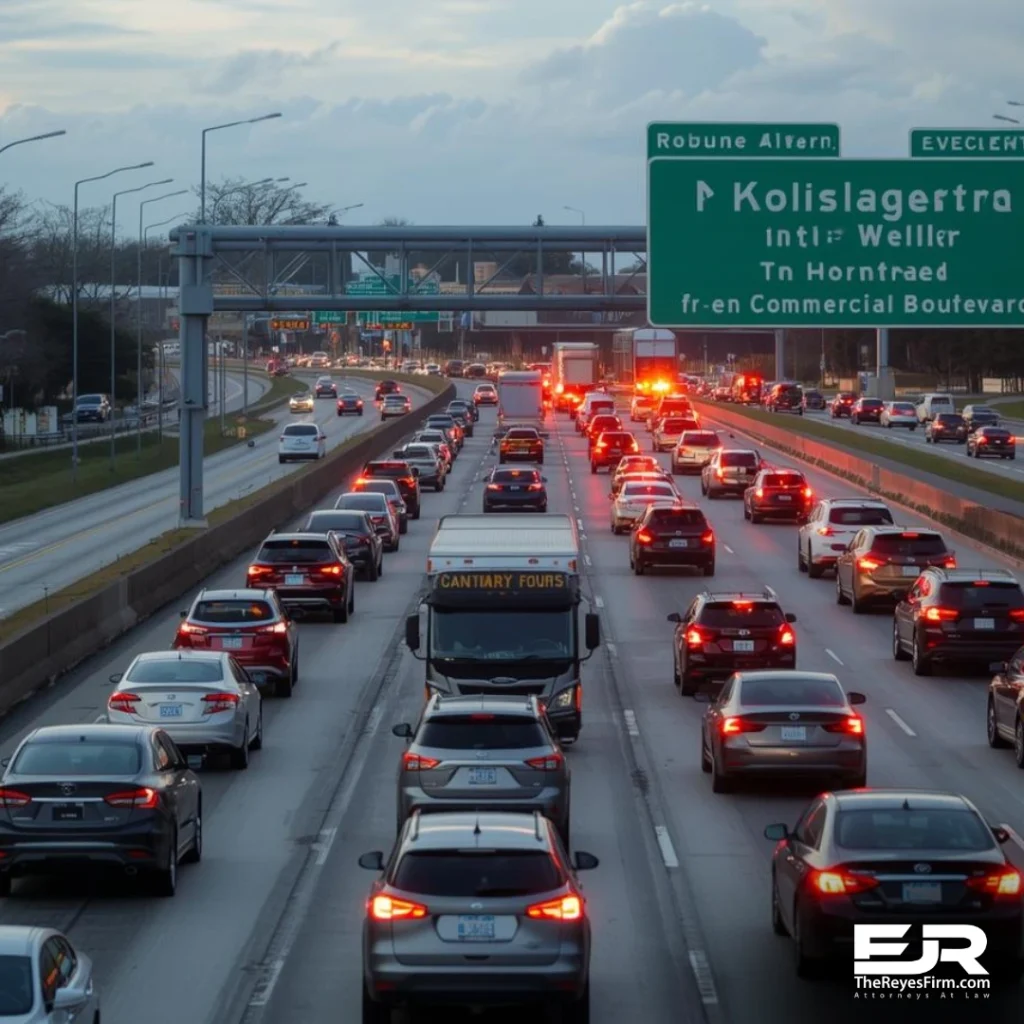
Tampa traffic with a commercial truck on a highway, used for a commercial truck accident attorney liability guide
Blog, Commercial Vehicles, Truck Accidents

Commercial Truck Accident Attorney: Who Can Be Held Liable (Driver, Carrier, Shipper)?

After a commercial truck crash, life can feel “off” in quiet ways. Sleep is lighter. Driving past the same intersection in Tampa feels different. Even simple errands can feel overwhelming when the body hurts, and the mind keeps replaying what happened. Many injured people also feel pressured fast. Insurance calls come in. Forms show up. Someone asks for a recorded statement. It is common to think, “Am I overreacting?” or “Should I just give them what they’re asking for so this can be over?” This article is meant to give structure and next steps. It explains who can be held legally responsible in a truck crash, what evidence matters, and how Florida law and trucking safety rules affect liability, all in plain language. A commercial truck accident attorney looks beyond the surface because truck cases often involve more than one responsible party. Florida truck crashes are not rare, and safety enforcement matters It is normal to feel overwhelmed when a commercial truck crash occurs. Many people assume it is a simple driver-versus-driver situation, only to realize that multiple companies and insurance policies are involved. Florida’s own traffic and safety data show why commercial truck crashes are a serious public safety issue. In 2024, Florida reported 46,651 commercial motor vehicle crashes and 315 fatalities tied to those crashes (preliminary). The same FLHSMV report shows 88,731 commercial vehicle inspections, with 14,091 vehicles and 5,900 commercial drivers placed out of service for safety violations (preliminary). Those numbers support a practical point. Truck safety rules are not just “paperwork.” They are meant to prevent crashes. When companies cut corners, liability often expands beyond the driver. Why commercial truck liability is different than a regular car accident Many people feel unsure about who is responsible. That uncertainty is understandable, especially when they are still sore, rattled, and trying to manage medical care and work. Commercial trucking is a system. That system can include: Driver schedules and dispatch pressure Hiring and training practices Maintenance and inspection routines Cargo loading plans and weight limits Multiple companies are working on the same shipment Florida law also recognizes that commercial vehicles are held to safety standards. Florida Statute § 316.302 ties Florida commercial motor vehicle safety requirements to federal safety rules. In plain terms, trucks operating in Florida are expected to comply with key federal safety regulations governing driver fitness, hours, inspections, and maintenance. That is why a commercial truck accident attorney often investigates more than the driver’s actions in the moment. Who can be held liable in a commercial truck accident? When someone is hurt, they usually want to know who caused the harm and who is responsible for fixing it. It can be stressful to ask that question, as the injured person does not want to accuse the wrong party. Depending on the facts, truck accident liability can involve: The truck driver The motor carrier (trucking company) The shipper The freight broker The loading company or warehouse A maintenance or repair provider A parts manufacturer Another driver In rare cases, a government agency is responsible for a dangerous road condition This article focuses on the three most common groups people ask about: drivers, carriers, and shippers. Truck driver liability: When the person behind the wheel is responsible It is common to feel conflicted about assigning blame to a driver. People often think, “Maybe it was just a mistake,” or “Maybe traffic was bad.” That concern is real. A truck driver can be held liable when unsafe driving caused or contributed to the crash, such as: Speeding or driving too fast for conditions Following too closely Unsafe lane changes or wide turns Distracted driving (phone, GPS, eating) Fatigue or drowsy driving Driving under the influence Failing to check blind spots Ignoring signals, work zones, or traffic controls Federal trucking rules that connect to driver behavior Many driver safety duties are covered by federal rules that apply through Florida’s commercial vehicle safety law (Florida Statute § 316.302). A few key examples include: Hours of Service (49 CFR Part 395): limits driving time and requires rest. This is often relevant when fatigue is suspected. Driving rules (49 CFR Part 392): cover the safe operation of commercial motor vehicles. Driver qualification rules (49 CFR Part 391): set standards for who is allowed to drive. A commercial truck accident attorney may look at these rules because they point to what should have happened versus what did happen. Evidence that can support driver liability A truck crash case should be built on proof, not assumptions. Evidence often includes: Dashcam, traffic camera, or nearby business video Witness statements Photos of vehicle damage, road layout, and skid marks Police crash reports Electronic logging device data (ELD) Post-crash drug and alcohol testing Black box or event data from the truck Cell phone records, if relevant and lawfully obtained This is one reason timing matters. Some data is overwritten or lost if it is not preserved early. Carrier liability: When the trucking company can be responsible After a crash, it is common to feel pressured when a trucking company is involved. The injured person may feel pressured to agree with someone else’s version of events before they feel steady. The carrier (also called the motor carrier) is the company that operates the truck. The carrier can be liable in two main ways. 1) The carrier may be responsible for the driver’s actions while working If the driver was on the job, the carrier may be legally responsible for the driver’s actions during that work. This matters because commercial coverage and company records may be central to the case. 2) The carrier may be responsible for its own safety failures Truck crashes often involve company-level safety problems, such as: Negligent hiring (bringing on an unsafe driver) Negligent retention (keeping a driver after repeated safety issues) Poor training or weak supervision Unsafe scheduling that pressures drivers to rush or skip rest Maintenance failures (brakes, tires, lights, steering) Failure to inspect trucks and trailers Ignoring safety violations that should

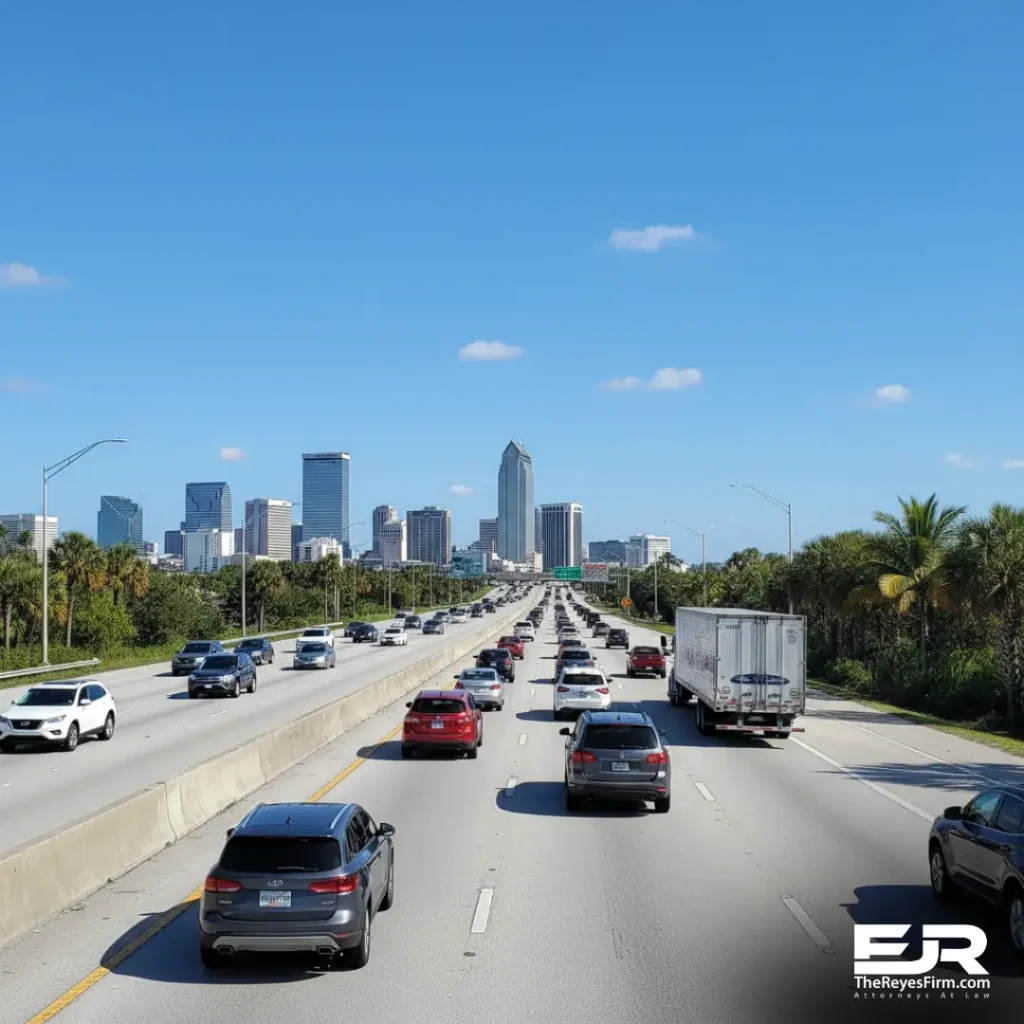
Aerial view of heavy traffic and a semi-truck on I-75 in Hillsborough County, illustrating a six-vehicle crash scene.
Commercial Vehicles, News, Truck Accidents

6-Vehicle Crash on I-75 in Hillsborough County: What Injured Drivers Should Do Next

A crash like a 6-vehicle crash on I-75 in Hillsborough County does not just create traffic. It can leave injured drivers sitting in their car, hands shaking, trying to process what just happened. In the minutes after a pileup, most people feel overwhelmed and unsure. They may wonder if they are overreacting, if they should just “tough it out,” or if they are about to say the wrong thing to the wrong insurance company. This guide is built to restore control. It explains what injured drivers should do next and adds an important layer for I-75: truck and commercial-vehicle factors that can affect how fault is proven and how evidence should be preserved. News summary: what has been reported so far Local reporting stated that a crash on I-75 in Hillsborough County involved six vehicles and left seven people injured. Early details can shift as investigators collect statements, review evidence, and confirm the chain of events. For injured drivers, the safest approach is to seek medical care and documentation promptly, even while the investigation is ongoing. Incident area: Southbound I-75 near SR 60 in Hillsborough County, Florida. Hillsborough County crash data: why this matters locally Multi-vehicle crashes are not rare in this area. Based on the FLHSMV Florida Crash Dashboard view for Hillsborough County (2025), the county recorded: 24,864 total crashes 15,708 injuries from all crashes 169 fatalities from all crashes 10,575 injury crashes 158 fatal crashes The dashboard also shows serious risk patterns that matter for anyone hurt on I-75: 6,039 hit-and-run crashes, with 1,402 hit-and-run injuries and 9 hit-and-run fatalities 683 pedestrian crashes, with 51 pedestrian fatalities 511 motorcycle crashes, with 28 motorcycle fatalities 746 bicycle crashes, with 19 bicycle fatalities It also shows which agencies investigated crashes in Hillsborough County: Police Department: 40.91% (10,172) Sheriff Department: 33.40% (8,305) Florida Highway Patrol: 25.65% (6,377) Other: 0.04% (10) These numbers help put an I-75 pileup in context. There are many crashes in Hillsborough County, and many involve injuries. Staying organized after a crash is not optional. It is how injured drivers protect their health and protect their claim. Why a multi-vehicle crash on I-75 gets complicated fast A two-car crash can be straightforward. A six-vehicle crash often is not, especially on a busy highway like I-75. Here is why: More drivers mean more versions of the story Each person saw the crash from a different lane and at a different moment. Some will only remember the impact. More insurance companies mean more finger-pointing Each vehicle may have a different insurer. Those insurers often argue about who should pay first. Chain reactions create multiple impacts A driver may be hit once, then pushed into another vehicle. Injuries can come from the second or third impact, not the first. Evidence can disappear quickly Cars get towed, debris gets cleared, and road conditions change. If an injured driver does not document early, key details can be lost. What should injured drivers do first at the scene? Safety comes first. If an injured driver can act safely, these steps help protect both health and documentation. Call 911 and ask for help Even if someone else already called, it is smart to confirm help is on the way. Share the direction of travel and the nearest exit Mention how many vehicles are involved Ask for medical support if anyone is hurt, dizzy, confused, or in pain Move to safety if possible If the vehicle can be moved and is safe, exiting active lanes can prevent a second crash. If it cannot be moved, staying buckled until help arrives may be safer. Accept medical evaluation if offered Many people say no because they want to go home. But adrenaline can hide symptoms, especially with head, neck, and back injuries. Keep statements simple and factual At the scene, stress is high, and people blurt things out. Do not guess about speed, distance, or fault Do not apologize in a way that sounds like an admission Share basic facts with law enforcement Save deeper explanations for later, when the injured driver has time to think clearly How to document the crash like a professional In a six-vehicle crash, photos and details often become the deciding factor later. Photos to take if it is safe Wide shots showing all vehicles, lanes, and traffic flow Close-ups of damage on every involved vehicle License plates Road signs, mile markers, and exit signs Skid marks, debris, and fluid trails Weather and visibility Any company name, DOT number, or fleet markings if a commercial vehicle is present Information to collect Names and phone numbers of involved drivers Insurance details Witness names and contact info The responding agency name, if visible A useful extra step An injured driver can record a short voice memo within an hour: Where it happened What they remember in simple steps What pain or symptoms did they notice Whether the traffic stopped suddenly, and whether they were pushed or hit multiple times Memories fade quickly. A short note can help keep the timeline straight. Medical steps that protect health and strengthen documentation After a 6-vehicle crash on I-75 in Hillsborough County, it is common for people to feel “okay” and then feel worse later. That does not mean they are exaggerating. It means the body is finally catching up. Common injuries after a highway pileup Whiplash and neck strain Concussion symptoms like headache, dizziness, or fogginess Back pain, including disc irritation Shoulder injuries from bracing or seatbelt pressure Knee injuries from impact with the dashboard Chest soreness from the seatbelt Cuts and bruises from airbags or broken glass Why early care matters in Florida Florida has time-sensitive insurance rules that can affect access to benefits. Even when someone hopes symptoms will fade, early evaluation is often the safest course of action. Practical steps injured drivers can take: Get checked as soon as possible, especially for head, neck, or back symptoms Follow treatment plans and attend follow-up visits Keep discharge paperwork, prescriptions, and therapy notes Write down symptoms

Fruitville Road sign at a Sarasota intersection with police lights nearby, representing a dump truck accident.
Blog, Commercial Vehicles, News, Truck Accidents

Fruitville Road Dump Truck Crash in Sarasota: What Injured Drivers Should Do Next

A dump truck crash can change a normal morning in seconds. One moment, traffic is calm, and everyone is waiting for the light to change. Next, there is a loud impact, cars lurch forward, and people are left shocked, sore, and trying to figure out what just happened. For many Sarasota drivers, Fruitville Road is familiar. It is part of the daily routine, with school drop-offs, work commutes, and errands. That familiarity is exactly why a serious crash there can feel unsettling. It happens in a place people trust. After a Fruitville Road dump truck crash in Sarasota, the next few days matter more than most people realise. Early medical care, documentation, and smart decisions can protect a person’s health and prevent insurance companies from controlling the story. News summary of the Fruitville Road dump truck crash in Sarasota The Florida Highway Patrol investigated a major crash on December 17, 2025, near the Fruitville Road and Tatum Road intersection in Sarasota County. Reports said a dump truck towing a trailer struck 13 vehicles stopped at a red light, triggering a 14-vehicle pileup. Troopers indicated the dump truck driver may have suffered a medical incident. Two people were taken to the hospital with injuries described as non-incapacitating, and the crash remained under investigation. This summary is important because it highlights two key facts that often shape truck crash claims: the size of the collision (many vehicles) and the mention of a possible medical event. Both can affect how liability and insurance play out. Why dump truck pileups can hurt people even when traffic is stopped A dump truck is not just a bigger vehicle. It carries far more weight than a normal car, and that weight creates a different kind of impact. Here is why that matters: More force at impact: The body can whip forward and back hard, even at lower speeds. Chain reactions: One hit can push a car into another, and the next, and the next. Multiple impacts: A person may be struck from behind, pushed forward, then hit again. A person may walk away thinking they are okay, then feel worse hours later. Headaches, neck pain, and back pain often show up after the adrenaline fades. What to Do at the Scene After a Fruitville Road Dump Truck Crash in Sarasota In a multi-vehicle crash, safety comes first. A busy intersection can be dangerous after a pileup, especially if other drivers cannot see the stopped vehicles. If a person is able to act safely, these steps can help: 1) Call 911 and report injuries Even if the pain feels minor, it is better to be checked. People can have injuries they do not notice right away. 2) Move to a safer place if possible If a vehicle is in an active lane and it is safe to move it, getting out of traffic can help prevent a second crash. 3) Take photos and a short video If it is safe, photos can capture details that disappear fast. Useful shots include: All sides of the vehicle that were damaged The dump truck and trailer, including markings and plates The traffic light, lanes, and intersection area Skid marks, debris, and road conditions Any visible injuries (bruises, cuts, swelling) 4) Get witness information It is fine to share basic facts with law enforcement after a Fruitville Road dump truck crash in Sarasota. Avoid guessing speeds, admitting fault, or arguing blame at the scene. 5) Keep statements simple It is fine to share basic facts with law enforcement. It is not the time to guess speeds or argue fault. What to do in the first 24 to 72 hours These first few days are where many claims are won or lost. Not because someone is trying to “win” a game, but because evidence fades and insurance pressure increases. Get medical care and follow through A person should not wait around hoping the pain goes away. Common injuries after a truck pileup include: Whiplash and neck strain Back injuries, including disc problems Concussions and mild head injuries Shoulder and knee injuries from bracing Numbness or tingling in arms or legs Anxiety, sleep issues, fear of driving If symptoms change, follow up with a doctor. Consistent medical notes help doctors treat the injury and help document what the crash caused. Start a simple crash folder This does not need to be fancy. A person can save: Photos and videos Tow receipt and tow yard information Repair estimates Medical visit summaries and prescriptions Notes about missed workdays and limitations Write a short daily symptom note A daily note can be simple: Pain level morning and night Sleep quality Headaches, dizziness, nausea What activities are harder (driving, sitting, lifting) Short notes often become powerful proof later because they show the injury in real life, not just on one doctor visit. Why Florida insurance rules make early medical care even more important Florida is a no-fault state, which means many drivers first turn to their own Personal Injury Protection (PIP) coverage. PIP can help pay for some medical care and lost wages, but it has rules and limits. One rule that surprises people is the 14-day treatment rule. In many cases, a person must get initial medical care within 14 days to access PIP medical benefits. The safest approach is simple: if someone feels pain, dizziness, headaches, or any new symptoms after the crash, they should get checked right away. Why truck crash claims are more complicated than normal car crashes A crash involving a dump truck and trailer can involve more than just two drivers. Depending on the situation, there may be: The dump truck driver The company that employs the driver The company that owns the truck The company that owns the trailer A maintenance provider A contractor responsible for hauling or loading More parties often mean more insurance policies. It also means more finger-pointing. Each insurer may try to shift blame to reduce what they pay. This is where truck and commercial

Traffic backed up after a tractor trailTraffic backed up after a tractor-trailer crash on I-95 at Commercial Boulevard in Broward County, Florida.er crash on I-95 at Commercial Boulevard in Broward County, Florida.
Blog, Commercial Vehicles, News, Truck Accidents

Tractor-Trailer Crash on I-95 at Commercial Boulevard in Broward: What Injured Drivers Should Do Next

A crash on I-95 can feel unreal. One second, a driver is moving with traffic, and the next second, everything stops. Cars slam their brakes, people honk, and the road turns into a wall of flashing lights. After a tractor-trailer crash on I-95 at Commercial Boulevard, most people are not thinking about legal rules. They are thinking about pain, their passengers, their car, and how they are going to get home. It is normal to feel overwhelmed. This guide focuses on what matters most. First, health and safety. Then, simple steps that help protect a future claim, especially when a commercial truck and multiple vehicles are involved. After a crash like this, speaking with a commercial vehicle and truck accident lawyer can help preserve evidence and address insurance pressure. Details of the FedEx and Multi-Vehicle Crash on I-95 at Commercial Boulevard Commercial Boulevard (SR-870) is a major road in Broward County, and the ramps near Exit 32 are busy, especially in the morning. Drivers often change lanes to make the exit, and traffic can slow down fast. In this reported crash, Florida Highway Patrol said it happened around 9 a.m. on northbound I-95 at the Commercial Boulevard exit. Troopers said it involved a FedEx truck, a semi-truck, and five other vehicles. Four people were taken to the hospital, and the off-ramp remained closed for hours before reopening. The reported chain of events began with a lane-change attempt near the exit, resulting in multiple impacts and a semi-truck losing an axle. Two other vehicles then struck the FedEx truck while trying to avoid the semi-truck. For someone injured in this kind of crash, the big lesson is simple. On a highway, one sudden move can affect many vehicles, and even careful drivers can get caught with nowhere to go. Why tractor-trailer crashes can hurt people more A tractor-trailer is not just a bigger car. It is heavier, longer, and harder to stop. When something goes wrong, the damage can spread fast. Here is why injuries can be catastrophic in truck crashes: Bigger force: A heavy truck carries more momentum. That means the impact can hit harder. More vehicles involved: When traffic stops on I-95, cars behind may not have time or space to brake. Multiple impacts: A person can be hit once, then pushed and hit again. Hidden injuries: Adrenaline can make someone feel okay at first. Pain can show up later. Common injuries include neck and back pain, whiplash, herniated discs, concussions, broken bones, shoulder injuries, knee injuries, and wrist injuries from bracing. Some people also deal with anxiety, nightmares, or fear of driving after a serious highway wreck. What to do right away after the crash If someone was involved in the tractor-trailer crash on I-95 at Commercial Boulevard, these steps help protect health and a claim. 1) Get to safety, if it is possible If the car can move and it is safe, pulling to the shoulder can lower the risk of another crash. If it cannot move, hazard lights should be on, and everyone should stay alert. Highways are dangerous after a collision because other drivers may not see stopped traffic in time. 2) Call 911 and ask for help Police and medical response matter in a major crash. If anyone feels pain, dizziness, confusion, or numbness, they should say so. Those symptoms can be signs of a serious injury. 3) Take photos and videos, but only when it is safe Evidence disappears fast once vehicles are moved and lanes reopen. Photos should include: All vehicles from wide angles and close-ups Damage on each side of the vehicles License plates Company names, logos, and markings on the truck DOT numbers on the truck (often on the cab door) Skid marks, debris, and the position of vehicles Road signs showing I-95 and the Commercial Boulevard exit These details can matter later when insurers argue about how the crash happened. 4) Get witness info Witnesses often leave once traffic resumes. If possible, someone should collect: Name and phone number A quick sentence about what the witness saw Whether the witness has dashcam footage 5) Avoid talking about fault at the scene People are often in shock. It is easy to say something that gets misunderstood. The safer approach is to stick to facts, get help, and let the investigation handle fault. Medical care matters, even if pain shows up later Many injuries do not feel serious at first. A person might go home and then wake up the next day with headaches, neck pain, back stiffness, or tingling in the arms. A smart plan looks like this: Get checked the same day if symptoms are strong Follow up with a doctor soon after, even if symptoms feel mild Explain every symptom clearly, including dizziness, nausea, numbness, and sleep issues Follow the treatment plan and attend appointments This is important for healing. It also creates a clear record that connects the injury to the crash. Insurance companies often use delays and gaps in care as reasons to deny or reduce claims. What to say to insurance companies, and what to avoid After a crash, calls often come quickly. Adjusters may sound friendly, but they are trained to limit what the company pays. Usually safe to share Name and contact information Where the crash happened That medical care is being handled Best to avoid Recorded statements to the other insurer Guessing speed, distance, or timing Saying “I’m fine” before a full medical check Signing broad medical releases without understanding them Accepting a quick settlement before the injury picture is clear A person does not need to argue with an adjuster. They can politely say they are getting medical care and will respond later. Why truck crash cases are different from regular car crashes A truck crash case often has more moving parts. There may be more insurance coverage, and there may also be more pressure from the trucking side. Evidence that can matter in a truck case Truck cases may

Semi-truck making a wide turn through a city intersection near a curb, illustrating the dangers of truck wide turns.
Blog, Commercial Vehicles, Truck Accidents

Wide-Turn Truck Accident and Squeeze-Play Crashes in Tampa

A fully loaded semi-truck can weigh 20 to 30 times as much as a car. When that truck makes a truck wide turn at a Tampa intersection and squeezes a smaller vehicle against the curb or into another lane, the crash can be sudden, violent, and life-changing.  The problem is that wide-turn and squeeze-play crashes are very confusing. The truck is enormous, the lanes are often tight, and everything happens in just a few moments. After a truck wide turn accident, a trucking company or insurance adjuster may quickly blame the smaller vehicle. They might say it was in a blind spot, too close to the truck, or “should have stayed back,” even if the truck drifted out of its lane or turned when it was unsafe to do so. For injured victims in Tampa and across Florida, this confusion is not just frustrating. It can decide who pays for hospital bills, lost wages, and long-term medical care. Florida now has stricter time limits and fault rules for negligence cases. That means the way a truck-wide-turn crash is documented can completely shape the injured person’s case and financial future. What Is a Wide-Turn Truck Accident? A wide-turn truck accident happens when a large truck swings wide to complete a turn and hits, traps, or squeezes a smaller vehicle nearby. These crashes often occur during right turns, when the trailer cuts inward toward the curb, creating a dangerous squeeze-play situation. In Tampa and across Florida, fault often depends on whether the truck driver signaled properly, checked blind spots, stayed in the correct lane, and made the turn safely. What Is a Wide-Turn Truck Accident and Why Is It Dangerous? What Is a Wide Turn in a Truck Accident? Many people ask, “What is a wide turn?” Among the most dangerous types of truck accidents, a wide turn happens when a truck swings farther out than a normal car would to complete the maneuver. This is especially common with a semi-truck’s wide right-hand turn. When a tractor-trailer turns right, the trailer does not follow the cab’s exact path. The trailer cuts inward toward the curb. To create space, the driver often steers slightly left first, then turns sharply right. If another car, cyclist, or pedestrian is already in the lane beside the truck, that wide movement can lead to a truck blind-spot accident or a squeeze-play truck accident in seconds. Is Making a Wide Right Turn Illegal in Florida? Drivers often wonder, “Is making a wide right turn illegal?” A wide turn by itself is not always against the law. Large trucks simply need more space than small passenger cars. However, a wide right turn can become illegal when the driver: Leaves the proper turning lane and crosses into another lane Fails to use a turn signal clearly and early Turns even when nearby traffic makes the maneuver unsafe Forces other vehicles to slam on their brakes or swerve to avoid a collision When these things happen, the action may be treated as an improper turn or a wide turn violation under Florida traffic law. These same facts can later support a claim of fault for a truck-wide right-turn accident in an injury case. Basic Truck Wide Turn Rules in Florida Commercial drivers in Florida must follow the same traffic laws as other drivers, plus additional safety standards because of their size and blind spots. When it comes to a truck-wide turn, Florida law sets clear expectations for a safe right turn. Under Florida Statutes §316.151, any driver making a right turn must approach and complete the turn “as close as practicable to the right-hand curb or edge of the roadway.” This rule applies to commercial trucks just as it does to regular vehicles and is often central to a right-turn truck accident case. Under Florida Statutes §316.155, drivers must also signal their intention to turn at least 100 feet before the turn, giving nearby drivers time to see and react. In practical terms, basic truck-wide turn rules include: Approaching the turn in the correct lane Keeping the vehicle as close as practical to the right edge when turning right Use turn signals well before turning and keep them on continuously for at least 100 feet before the turn. Checking mirrors and the truck driver’s blind spots (or “no zones”) before and during the turn Making sure the turn can be completed safely at the current speed and traffic conditions If a driver ignores these rules and causes a right-turn truck accident, that driver and the trucking company may be held legally responsible for the injuries and damage that follow. How Blind Spots, No-Zones, and Braking Distance Cause Squeeze-Play Crashes Where Are the Truck Driver Blind Spots and the Truck No Zone? Large trucks have big blind spots, often called the truck’s no zone. These are areas around the truck where smaller vehicles are hard or impossible to see, even when the driver checks the mirrors. Common blind spots include: A long area along the right side of the trailer A wide zone directly behind the trailer A smaller zone directly in front of the cab Areas along the left side near the cab and trailer A truck blind-spot accident occurs when a truck moves into one of these zones and strikes a vehicle already there. During a truck-wide turn, the right-side blind spot is especially dangerous. If the driver does not clear this no-zone carefully, the trailer can swing toward the curb and crush a lawfully traveling car in its lane. How Do Semi Truck Braking Distance and Turning Space Matter? Another key issue is semi-truck braking distance. Because trucks are so heavy, a fully loaded semi needs much more space to stop than a small car. If a truck is moving too fast, following too closely, or approaching an intersection too quickly, the driver may feel pressured to turn rather than slow down safely. In Tampa, many intersections are busy, and turning lanes can be short. When a driver

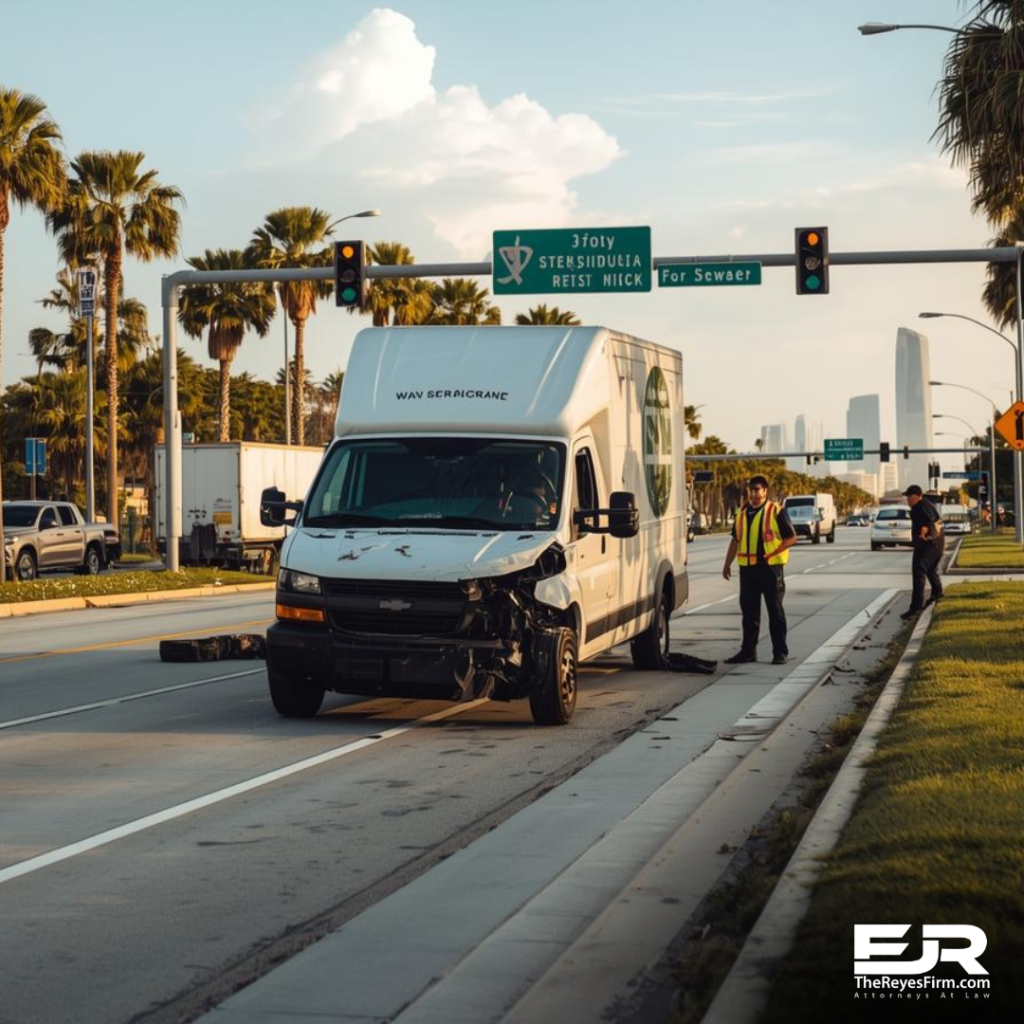
Damaged commercial van after company-caused car crash on a Tampa road, with traffic crew assessing the scene
Accident Injuries & why, After A Car Accident, After an Accident, Blog, Car accident, Commercial Vehicles, Company-Caused Car Accidents

Company-Caused Car Crashes in Tampa: Employer Liability, Rideshare Accidents, and Your Legal Rights

It happens fast. One moment you’re driving through downtown Tampa or merging onto I-275, and the next, you’re hit by a van or car that says “delivery in progress” on the side. The driver is clearly working, but now you’re left with injuries, bills, and more questions than answers. Who’s responsible? Can you sue the company? What are your rights? When a person causes a crash while working, the situation becomes more complex. These company-caused car crashes involve more than just two drivers. They often include big insurance companies, employer liability laws, and a trail of paperwork that can overwhelm anyone unfamiliar with Florida injury law. If a rideshare driver has injured you, a delivery vehicle, or someone driving for a business, you may be entitled to compensation, not just from the driver, but from the company that put them on the road. This guide will explain when companies are legally responsible, how these cases work in Florida, and how The Reyes Firm helps injured victims across Tampa get the justice they deserve. What is a company-caused car crash? A company-caused car crash is a motor vehicle accident caused by a company driver. That includes: Delivery drivers (Amazon, FedEx, DoorDash) Uber and Lyft drivers Construction or service trucks Company cars used by employees Contractors commuting to job sites These drivers may be behind the wheel of a company-owned vehicle or using their personal car, but either way, if they were working when the crash happened, the employer may be legally responsible.  This kind of responsibility is called vicarious liability, and under Florida law, including the dangerous instrumentality doctrine and statutes like Florida Statutes § 324.021(9)(b), employers and vehicle owners can be held accountable for crashes caused by someone driving in the course of their work or with their permission. Who’s responsible after a work-related car accident in Florida? If the person who caused your crash was “on the clock,” then both the driver and their employer could be on the hook. Signs the driver was working: They were wearing a work uniform The vehicle had a company logo or license plate tag They were making a delivery or picking up a customer. They admitted they were heading to or from a job site In Florida, an employer can be held liable if the driver was acting within the scope of employment, meaning they were doing something for work, not for personal errands. What if the driver says they weren’t working at the time? This is common. Companies often try to dodge responsibility by claiming the driver was “off-duty.” But don’t take their word for it. A personal injury attorney can investigate: GPS tracking and vehicle logs Rideshare app timestamps Delivery schedules Work emails or dispatch communications Even if the driver was in their own vehicle, the employer may still be liable if the driver was performing work duties at the time of the crash. Are Uber, Lyft, and delivery drivers considered company drivers? Yes, but coverage depends on their activity at the time of the crash. Driver Status Insurance Coverage Applies App is off Only the driver’s personal insurance applies App is on, no passenger yet Uber or Lyft provides limited coverage En route or with a passenger $1M commercial policy from Uber or Lyft applies So if you’re hit by a rideshare vehicle in Tampa while the driver is mid-ride or picking someone up, you may be able to file a claim under the company’s larger commercial insurance policy. The same goes for DoorDash, Instacart, Amazon Flex, and other gig delivery drivers. The key is proving they were working at the time. Rideshare accidents can be complex, and coverage depends heavily on what the driver was doing at the time of the company car crash. Our Ride-Sharing Accident legal team in Tampa can help you navigate the claim process and deal directly with Uber or Lyft’s insurance. Common causes of company-caused crashes in Tampa Tampa is a growing metro with busy roads and nonstop commercial traffic. Crashes involving company vehicles occur frequently, often because drivers are rushed or distracted. Top causes include: Speeding to meet delivery deadlines Distracted driving (texting, GPS, apps) Fatigue from long shifts Unsafe lane changes or running red lights Poor training or lack of driving experience Inadequate vehicle maintenance Whether it’s on I-4, Hillsborough Avenue, or Kennedy Boulevard, these accidents can lead to serious injuries and complex claims, especially if the company tries to minimize your damages. If your crash involved a delivery truck, service van, or company-owned vehicle, speak with a Tampa Truck & Commercial Vehicle Accidents Attorney who understands the unique complexities of commercial insurance and employer liability. What should you do after being hit by a company driver in Tampa? If you’ve been hit by someone driving for work, follow these steps: Call 911 – Get medical help and file a police report. Take photos and videos – Document the vehicles, the driver, injuries, and surroundings. Get the driver’s information – Ask for their name, employer, insurance, and license plate. Look for signs of employment – Uniforms, logos, delivery paperwork, or mobile apps. Seek medical attention – Even if you feel fine, injuries often show up later. Contact a Tampa car accident lawyer – A legal team can investigate, preserve evidence, and protect your rights. Can multiple parties be responsible in a company-related crash? Yes. Depending on the details, you may be able to file claims against: The driver (if negligent) The company (under vicarious liability) A third-party contractor or fleet manager A vehicle maintenance provider A product manufacturer (if a defect caused the crash) These cases often involve multiple insurance policies, which is why working with a lawyer helps you pursue every possible path to compensation. What kind of compensation can you recover after a company car crash? In a company-caused crash, damages can include: Medical bills – ER visits, surgery, therapy, medications Lost wages – If you missed work or can’t return Pain and suffering – For physical pain

Blog, Commercial Vehicles, Truck Accidents

Manslaughter Charges After Florida Truck Crash: What Grieving Families Should Know

The heartbreaking semi-truck crash on Florida’s Turnpike has taken an even more serious turn. A truck driver is now facing manslaughter charges after allegedly making an illegal U-turn that led to the deaths of three innocent people. What started as a traffic incident has turned into a serious criminal case, and families affected by the crash are left with more questions than answers. If you’re a loved one of someone hurt or killed in a truck crash like this, you may wonder: What does a Florida truck crash manslaughter charge mean? Can the families still sue for wrongful death? And how do criminal charges impact a civil lawsuit? This blog will break it down so grieving families across Florida can understand their rights, take action, and begin the path toward justice. What Happened in the Florida Turnpike Crash? In August 2025, Harjinder Singh, a 28-year-old semi-truck driver, attempted an illegal U-turn on the Florida Turnpike in St. Lucie County. A minivan traveling on the highway crashed into the trailer of his truck, killing all three passengers inside. Instead of staying in the area, Singh returned to California not long after the collision. The Florida Department of Highway Safety and Motor Vehicles (FLHSMV) issued an arrest warrant for Singh, charging him with three counts of vehicular homicide. Lt. Gov. Jay Collins, recently appointed in Florida, traveled to California to support efforts to return Singh to Florida. Singh is now in custody at the St. Lucie County Jail, where he is being held on an ICE detainer due to his immigration status. During his court appearance in the 19th Judicial Circuit, Judge Lauren Sweet denied him bond, labeling him a flight risk. In addition to vehicular homicide, Singh now faces three counts of manslaughter, with each charge potentially carrying up to 30 years in prison. The crash has brought national attention, but it’s the families of the victims who are left to pick up the pieces. Watch: Tampa Attorney Reacts to Fatal Truck Crash on Florida’s Turnpike Tampa personal injury attorney Edward Reyes shares a heartfelt reaction to the tragic semi-truck crash in St. Lucie County that claimed three lives. He discusses the higher duty truck drivers have on Florida roads, the devastating impact on the families left behind, and the importance of holding negligent drivers fully accountable. Crash Location: Florida’s Turnpike, St. Lucie County Below is the map showing where the fatal semi-truck crash occurred on Florida’s Turnpike near Fort Pierce: Criminal Case vs. Civil Lawsuit: What’s the Difference? When someone dies in a truck crash, two different types of legal cases may follow: Criminal Case: The State of Florida files charges (like manslaughter). The objective is to impose legal consequences on the driver, including incarceration, financial penalties, or probation. The case is handled by the state prosecutor, not the family. Even if convicted, the family doesn’t receive compensation. Civil Lawsuit: A lawsuit is filed by the family targeting the driver or the company involved. The goal is to recover money for funeral costs, lost income, and emotional pain. Filing a civil claim can happen alongside the criminal proceedings. A civil case can still hold the driver responsible, even if there’s no criminal conviction. So while a criminal case holds the driver accountable to the state, a civil lawsuit is how families seek justice and financial recovery for their own losses. What Does Manslaughter Mean in a Truck Crash? In Florida, vehicular manslaughter happens when a person causes someone’s death through reckless driving, even if they didn’t mean to harm anyone. Under Florida Statute § 782.07, this is a second-degree felony, punishable by up to 15 years in prison per death. Examples of reckless behavior include: Making illegal U-turns (as Singh is accused of) Speeding or aggressive driving Driving while distracted or sleepy Violating trucking safety rules In this case, Singh’s decision to make an illegal U-turn on a major highway may be seen as reckless enough to support a manslaughter charge. But for families, criminal charges don’t go far enough unless they also pursue a civil case. Florida Laws That Affect a Truck Crash Claim Who Can File a Wrongful Death Lawsuit? Florida law, specifically § 768.19, allows close family members to sue if someone dies due to negligence. This includes: Spouses Children Parents The representative of the estate (if one exists) How Long Do You Have to File? Florida’s statute of limitations gives families 2 years from the date of death to file a wrongful death claim. You could lose your right to take legal action after that point. What Can You Recover? Funeral and burial expenses Medical bills before death Loss of income and future financial support Emotional pain and suffering Loss of companionship or parental guidance A skilled personal injury attorney can calculate what your family may be owed and ensure no detail is missed. What to Do After a Fatal Truck Accident Losing a loved one is overwhelming. However, following these steps can safeguard your legal rights. Immediately After the Crash: Call 911 and request medical and police help Accept medical care if anyone is hurt. Get the names of officers and a copy of the crash report. Gather Evidence: If it’s safe to do so, document the scene with photos and videos. Talk to witnesses and get their contact info. Jot down everything you remember while it’s still fresh. Don’t Talk to the Insurance Company: Remember, the trucking company’s insurance team is looking out for their interests, not yours. Don’t give a recorded statement or accept a quick payout. Always speak to a truck accident attorney first Contact a Personal Injury Lawyer: They’ll launch an independent investigation Preserve critical evidence (black box data, driver logs) File your case within the deadline. Handle the insurance company for you. Why These Crashes Happen on Florida Roads Florida sees more truck traffic than most states, especially along routes like: Florida’s Turnpike I-75 I-275 US-1 and US-98 Thousands of trucks pass through Fort Pierce, Tampa, and Orlando every

Blog, Commercial Vehicles, Truck Accidents

1 in 10 Florida Crashes Involve a Work Truck – Were You Hit in Old Northeast?

Sandra P. was going about her normal day in Old Northeast, St. Petersburg, enjoying the familiar streets she’s walked a hundred times. Then all at once, everything shifted. A loud screech. A violent crash. And a commercial work truck that came out of nowhere left her shaken, hurt, and unsure of what to do next. The Real Cost of a Work Truck Accident Sandra’s injuries did more than send her to the hospital. They changed her daily life. There were endless doctor visits, time away from work, and the exhausting stress of trying to get the insurance company to take her seriously. Accidents involving work trucks in Old Northeast, St. Petersburg, Florida 33704 can be life-altering. These vehicles are large, weigh tons, and need more time and space to come to a stop. When they hit, the damage is often serious. That is why having an experienced truck accident lawyer in Old Northeast is so important. Why They Happen Here Old Northeast is one of St. Petersburg’s most beautiful neighborhoods, but with its mix of residential streets, small shops, and nearby downtown traffic, it is also busy. Large work trucks make tight turns, back into driveways, and navigate narrow roads every day. Unfortunately, some drivers: Are distracted or too tired to react quickly Skip important vehicle maintenance. Misjudge space on narrow roads Ignore stop signs or fail to yield. Just one of these mistakes can cause a crash that changes everything in a moment. When Sandra Reached Out At first, Sandra tried to handle the aftermath on her own. She quickly realized she should not have to face trucking companies and insurance adjusters by herself. That is when she called The Reyes Firm. She had heard from a friend that we have a trusted work truck accident lawyer serving Old Northeast and the greater St. Petersburg area. From the very first conversation, she felt the difference. We made sure Sandra understood her rights, explained every step, and got to work investigating the crash. We built a strong case, dealt with the insurance company, and refused to let them minimize her pain or her claim. Moving Forward With Confidence Sandra’s recovery has not been easy, but she is on the right path. She is getting the care she needs and the peace of mind that comes with knowing justice is being served. If you or someone you care about has been injured in a work truck accident in Old Northeast, St. Petersburg, FL 33704, you do not have to face it alone. An experienced personal injury lawyer can fight for your rights, protect your future, and help you focus on healing. Here for Old Northeast and All of St. Petersburg At The Reyes Firm, we are proud to stand up for crash victims in Old Northeast, St. Petersburg, FL 33704 and beyond. Whether it is a work truck, delivery van, or another driver’s negligence, we are ready to take action. Call 833-4-BAD-DAY to speak directly with a St. Petersburg truck accident lawyer who will fight for you from day one.

Truck Crash Legal Services Infographic
Commercial Vehicles, Truck Accidents

Large Truck Semi-Truck Crash Causes and Safety Concerns

A loaded semi can weigh 20 to 30 times as much as your car, which is exactly why large trucks are governed by a thick web of federal safety rules. When a trucking company or driver breaks those rules, the results can be catastrophic, and the violation itself can become powerful evidence in your case. Here is a clear look at the safety regulations behind large truck accidents, and why they matter so much after a crash. The Reyes Firm Hurt in a Tampa Truck Crash? A safety violation could be the key to your case. Had a bad day? Contact Us Now 11 Hours Federal daily driving limit for truckers FMCSA hours-of-service 80,000 lbs Typical max weight of a loaded semi Federal weight limit 2 Years Deadline to file your claim Fla. Stat. § 95.11(5)(a) No Fee Unless we recover for you Contingency basis Because large trucks are so heavy and so dangerous when something goes wrong, the trucking industry is one of the most heavily regulated on the road. These safety rules exist to prevent crashes before they happen. Understanding them helps you see not only how truck accidents occur, but how a company’s failure to follow the rules can become the foundation of a strong injury claim. For a broader look at how and why these crashes happen, see our guide to the common causes of commercial truck accidents; this article focuses on the safety regulations themselves. What safety regulations govern large trucks? Most large commercial trucks that cross state lines are regulated by the Federal Motor Carrier Safety Administration, part of the U.S. Department of Transportation. The FMCSA sets and enforces safety rules covering nearly every aspect of trucking, and trucking companies and drivers are legally required to follow them. These rules fall into a few main categories: limits on how many hours a driver can be behind the wheel, requirements for maintaining and inspecting the truck, standards for who is qualified to drive and for drug and alcohol testing, and rules for how cargo is loaded and secured. A failure in any one of these areas can lead directly to a serious crash, and each is worth understanding. How do hours-of-service rules prevent fatigued driving? Driver fatigue is one of the most dangerous problems in trucking, and the FMCSA’s hours-of-service rules are designed to combat it. For most property-carrying trucks, a driver may drive a maximum of 11 hours after 10 consecutive hours off duty, and may not drive beyond the 14th hour after coming on duty. Drivers must also take a 30-minute break after 8 hours of driving, and are limited to 60 hours over 7 days or 70 hours over 8 days. To enforce these limits, most trucks are now required to use electronic logging devices, which automatically record driving time and make it far harder to hide violations. When a driver or company pushes past these limits to meet a deadline, a fatigued driver ends up operating a heavy truck, and the electronic logs often reveal exactly what happened. 💡 Did You Know? Modern trucks carry a digital paper trail. Electronic logging devices record a driver’s hours, and many trucks also have event data recorders that capture speed, braking, and other information around a crash. This data can be powerful evidence of a safety violation, but it can be overwritten or lost within days, which is why acting quickly to preserve it is so important. What safety rules apply to the truck and its cargo? A truck is only as safe as its condition, and federal rules require trucking companies to systematically inspect, repair, and maintain their vehicles, keeping records of that work. Brakes, tires, lights, and steering components must be kept in safe working order, and drivers are expected to perform pre-trip inspections. When a company skips maintenance to save money or time, a brake failure or tire blowout can cause a devastating crash. Cargo is regulated too. Federal cargo securement rules govern how loads must be distributed, secured, and restrained so they do not shift, spill, or fall. Overloading a truck beyond the typical 80,000-pound federal limit, or loading it unevenly, makes it harder to stop and control and can cause rollovers. When cargo is improperly loaded or secured, responsibility may extend beyond the driver to the company or others who handled the load. What are the driver qualification and testing requirements? Not just anyone can legally drive a large truck. Drivers must hold a valid commercial driver’s license, meet medical certification requirements, and be qualified for the type of vehicle and cargo they operate. Trucking companies are responsible for verifying these qualifications and maintaining a driver qualification file, and they are required to conduct drug and alcohol testing under federal rules. When a company puts an unqualified, improperly licensed, or impaired driver behind the wheel, it creates serious risk, and it may face liability for negligent hiring or supervision if a crash results. The driver’s qualification file, testing records, and history often become important pieces of evidence in a truck accident case. How does a safety violation affect your injury claim? This is where safety regulations meet your case directly. When a trucking company or driver violates a federal safety rule, that violation can be strong evidence of negligence. In many situations, breaking a safety rule that is designed to prevent exactly the kind of harm you suffered helps establish that the company failed to act as it should have, which is the heart of a negligence claim. That is why the truck’s records matter so much. The electronic logs, maintenance records, inspection reports, driver qualification file, and drug and alcohol testing results can all reveal whether the rules were followed. A lawyer moves quickly to demand that this evidence be preserved before it is lost, then uses it to build your case. This kind of evidence is often the difference between a disputed claim and a clear one. 🛡️ Your Rights Under Florida Law: You have the

Accident Injuries & why, After A Car Accident, After an Accident, Commercial Vehicles, Company-Caused Car Accidents, florida cities we serve, Injury, Legal, Our Community, personal injury attorney, Why we serve

Walk Away from a Car Accident: Commercial Vehicle Insights on YouTube

Walk Away from a Car Accident: Commercial Vehicle Insights on YouTube Unfortunately, car accidents are common in today’s fast-paced world. The aftermath can be even more complex when a collision involves a commercial vehicle. Many individuals seek guidance and insights on platforms like YouTube, where various experts share knowledge about handling such situations. This article explores critical steps after a commercial vehicle accident, how to prove liability, joint injuries, and the compensation victims can receive, and how to schedule a free consultation with a car accident lawyer. What Should You Do After a Commercial Vehicle Accident? Steps to Take Immediately After an Accident After an accident with a commercial vehicle, it is crucial to remain calm and prioritize safety. Ensure that you and any passengers are safe and, if possible, move your car to a secure location away from traffic. Call emergency services immediately, as they will dispatch medical personnel and law enforcement to the scene. It is essential to document everything, including the accident’s time, date, and location. Exchange information with the commercial vehicle’s driver, including their name, contact details, and insurance information. If there are witnesses, gather their contact information, as they may provide valuable testimony later. This step is vital in establishing liability and ensuring all parties involved in the crash receive the necessary assistance. How to Document the Scene of the Crash Documentation is a critical aspect of handling a vehicle accident. Take photos of the crash scene, including the vehicles involved, any damage incurred, and relevant road conditions or signage. These images will be crucial evidence when filing claims or pursuing legal action. Additionally, write down your account of the accident as soon as possible, noting any details that may fade from memory. If law enforcement responds to the scene, ensure you obtain a copy of the police report containing essential information regarding the accident. This documentation will be instrumental in navigating the complexities of the legal process and securing appropriate compensation. When to Contact a Commercial Vehicle Accident Lawyer Engaging an accident attorney is often a wise decision following a commercial vehicle accident. A skilled car accident lawyer can provide invaluable guidance on navigating the legal landscape and ensure your rights are protected. It may be time to consult an attorney if you sustain injuries, face extensive medical bills, or experience significant property damage. They can help you understand the nuances of liability in commercial vehicle accidents, which often include employer liability if the driver was on duty during the crash. An attorney’s expertise can simplify the process and improve your chances of receiving fair compensation for injuries and damages. How Can You Prove Liability in a Car Accident Involving a Commercial Vehicle? Understanding Negligence in Commercial Vehicle Accidents Proving liability in a commercial vehicle accident often hinges on demonstrating negligence. Negligence occurs when a driver fails to exercise reasonable care, resulting in an accident that injures another party. In the case of commercial vehicle accidents, it can involve the driver, their employer, or even vehicle manufacturers if equipment failures contribute to the crash. Understanding the principle of negligence is essential for victims seeking compensation. The commercial driver may be liable for the accident if they were speeding, distracted, or otherwise violating traffic laws. Alternatively, if the driver acted within their employment scope, the employer might also share liability. Gathering Evidence for Your Case Gathering evidence is vital in proving liability in a collision with a commercial vehicle. Collect witness statements, photographs, and video footage from nearby security cameras or dashcams. Documentation of medical records, repair bills, and other expenses incurred due to the accident will strengthen your case. Obtaining the commercial vehicle’s maintenance records and driving logs is also beneficial, as these may reveal patterns of negligence or violations. An experienced car accident attorney can assist in compiling this evidence and developing a solid case to prove liability. Consultation with an Experienced Car Accident Attorney Consulting with a car accident attorney can clarify your case and the steps necessary to prove liability. An attorney with experience in commercial vehicle accidents understands the complexities of these cases and can help you navigate the legal process. During your consultation, they will assess the specifics of your situation, advise you on the best course of action, and outline potential compensation avenues. Their legal expertise is invaluable in ensuring you are not taken advantage of by insurance companies or other parties involved. What Are the Common Injuries in a Commercial Vehicle Accident? Types of Injuries Resulting from Vehicle Accidents The injuries sustained in a commercial vehicle accident can vary widely, ranging from minor to severe. Common injuries include whiplash, concussions, broken bones, and internal injuries, which may require extensive medical treatment. The size and weight of commercial vehicles, such as trucks, often result in more significant damage and injury than accidents involving passenger vehicles. Victims may experience long-lasting physical and emotional effects from these injuries, making it essential to seek medical attention immediately after the accident. Long-Term Effects of Injuries from Commercial Vehicle Crashes Long-term effects from injuries sustained in a commercial vehicle crash can significantly impact a victim’s quality of life. Chronic pain, mobility issues, and psychological trauma are expected outcomes that may require ongoing medical treatment and rehabilitation. In some cases, victims may be unable to return to work, leading to financial strain and loss of income. Understanding these potential long-term effects is crucial for victims when negotiating compensation, as they must consider both immediate and future medical expenses and the impact on their overall well-being. Seeking Compensation for Medical Expenses If you are injured in an accident with a commercial vehicle, seeking compensation for medical expenses is essential. This can include hospital stays, surgeries, physical therapy, and ongoing medical care costs. Your attorney can help you compile all relevant medical records and bills to substantiate your claim. Additionally, compensation may cover rehabilitation and any necessary adaptations to your home or vehicle due to your injuries. It is crucial to understand your rights and

Scroll to Top