Company-Caused Car Accidents

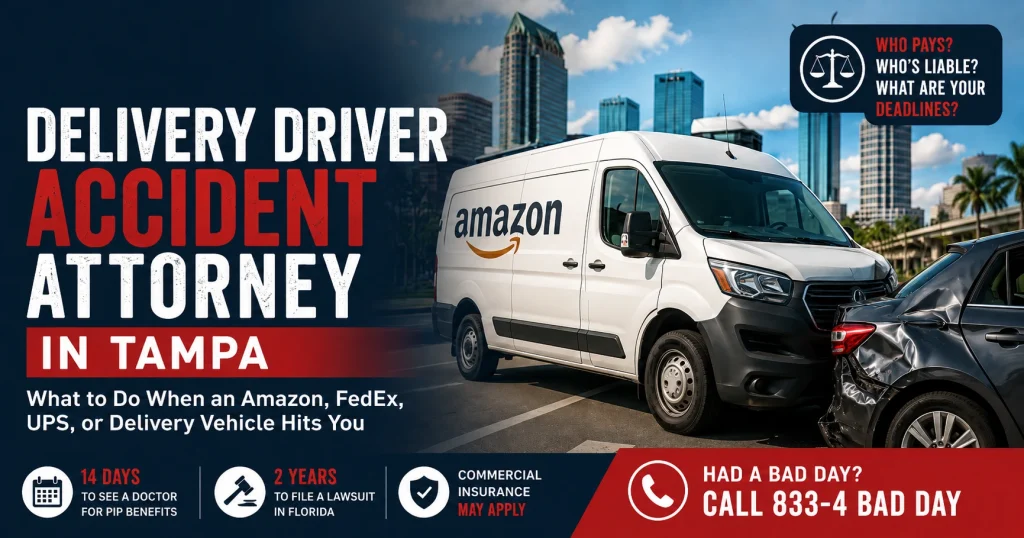
Delivery driver accident attorney in Tampa featured image showing a delivery van crash with a passenger car, for The Reyes Firm personal injury blog.
Blog, Commercial Vehicles, Company-Caused Car Accidents

Delivery Driver Accident Attorney in Tampa: What to Do After a Delivery Vehicle Crash

If you are looking for a delivery driver accident attorney Tampa after a crash, you may be hurt, stressed, and unsure which insurance company to trust.  Delivery vehicle cases can become confusing fast. Amazon, FedEx, UPS, USPS, and gig delivery crashes may involve contractors, app records, company policies, and multiple layers of insurance.  The Reyes Firm can review the crash, explain who may be responsible, and help protect key evidence before it disappears. The Reyes Firm Had a Bad Day? Was There a Logo on the Vehicle? A company logo, van number, driver uniform, delivery app, or package label may help identify who is responsible after a crash involving an Amazon, FedEx, UPS, or other delivery vehicle. Schedule Your Free Consultation What Should You Know First After a Delivery Driver Accident in Tampa? If a delivery vehicle hits you in Tampa, your case may involve more than the driver’s personal insurance. Depending on the facts, the claim may involve a delivery company, a contractor, a vehicle owner, a commercial insurance policy, or several layers of coverage.  Here are the first things to know: Delivery vehicle accidents are often more complex than ordinary car accidents.  Amazon, FedEx, UPS, USPS, and gig delivery crashes can involve different insurance rules. Florida PIP benefits may help pay initial medical expenses, but you must get qualifying medical care within 14 days. Florida’s current negligence statute of limitations is generally two years. Evidence such as dashcam footage, GPS data, route logs, and driver app records can disappear quickly. The Reyes Firm offers free consultations and handles injury cases on a contingency fee basis. No attorney’s fees are owed unless compensation is recovered for you. Costs and case expenses are handled in accordance with the written fee agreement. Had a bad day? Call The Reyes Firm at 833-4 BAD DAY. Once you know the basics, the next step is understanding who may pay for your injuries.  Who Pays for Your Injuries After a Delivery Driver Accident in Tampa? After a delivery driver accident in Tampa, payment may come from several sources. These may include your own Personal Injury Protection coverage, the delivery driver’s insurance, the vehicle owner’s insurance, a contractor’s policy, or a commercial policy connected to the delivery company.  Florida is a no-fault state for many motor vehicle injury claims. That means your own PIP coverage may apply first, no matter who caused the crash.  Florida’s PIP statute provides up to $10,000 in combined medical and disability benefits. Medical payment rules depend on timely care and whether a qualifying provider finds an emergency medical condition.  For serious injuries, PIP may not be enough. Delivery crashes can involve commercial coverage if the driver was working. The driver may also have been using a company vehicle, a contractor-owned van, or a delivery app.  A Tampa delivery vehicle injury claim may involve: The delivery driver The driver’s employer or contractor The company that owned, leased, or controlled the vehicle A delivery platform or parent company, depending on control and the facts A third-party maintenance company Another negligent driver Florida also recognizes comparative fault. That means your payment can be reduced if you share blame. Under Florida Statute 768.81, your compensation can be reduced by your percentage of fault. A party found more than 50% at fault for their own harm generally may not recover damages in a negligence action.  🛡️ Your Rights Under Florida Law: Do not assume you have no case just because an insurance adjuster says you were partly responsible. Fault can be disputed, crash reports may miss important facts, and delivery-vehicle cases often require deeper investigation. Knowing who may pay helps you see why the delivery company’s role matters so much.  Can You Sue Amazon, FedEx, UPS, or Another Delivery Company After a Crash? You may be able to bring a claim against a delivery company, contractor, vehicle owner, or commercial insurer after a crash. Whether Amazon, FedEx, UPS, USPS, or another company can be held responsible depends on the driver’s employment status, vehicle ownership, insurance coverage, and the level of control the company had over the delivery.  Each delivery model is different: Amazon delivery accidents may involve Delivery Service Partners, Amazon Flex drivers, contractor-owned vans, or app-based delivery records. FedEx accidents may involve different rules depending on whether the driver worked with FedEx Ground, FedEx Express, or an independent service provider. UPS delivery truck crashes often involve company employees, but the facts still matter. USPS crashes usually involve federal claim procedures and strict notice rules. DoorDash, Instacart, Uber Eats, and other gig delivery platforms may offer app-based insurance that varies based on driver status. The logo on the vehicle is not the end of the investigation. It is the beginning.  An attorney may look for: Driver employment or contractor records Delivery route logs GPS data App activity Dispatch communications Vehicle ownership documents Insurance policies Training and safety records Dashcam or onboard camera footage If you were hit by a delivery vehicle, avoid assuming the driver is the only responsible party. In many cases, the key question is who controlled the delivery work at the time of the crash.  Once you know who may be responsible, your next move is to protect your health and your evidence.  Still have questions? Call The Reyes Firm at 833-4 BAD DAY. The consultation is free, and there’s no obligation.  What Should You Do in the First 14 Days After a Delivery Vehicle Crash? After a delivery vehicle crash in Tampa, get medical care quickly and report the crash. Document evidence, avoid recorded statements to the delivery company’s insurer, and speak with a lawyer before signing anything.  Florida’s PIP statute requires initial medical services and care within 14 days after a motor vehicle accident. The statute also limits reimbursement to $2,500 if no qualifying provider finds an emergency medical condition.  Use this checklist: Get medical care as soon as possible. Do not wait to “see if it gets better.” Pain, concussions, back injuries, and soft tissue injuries can worsen over time.
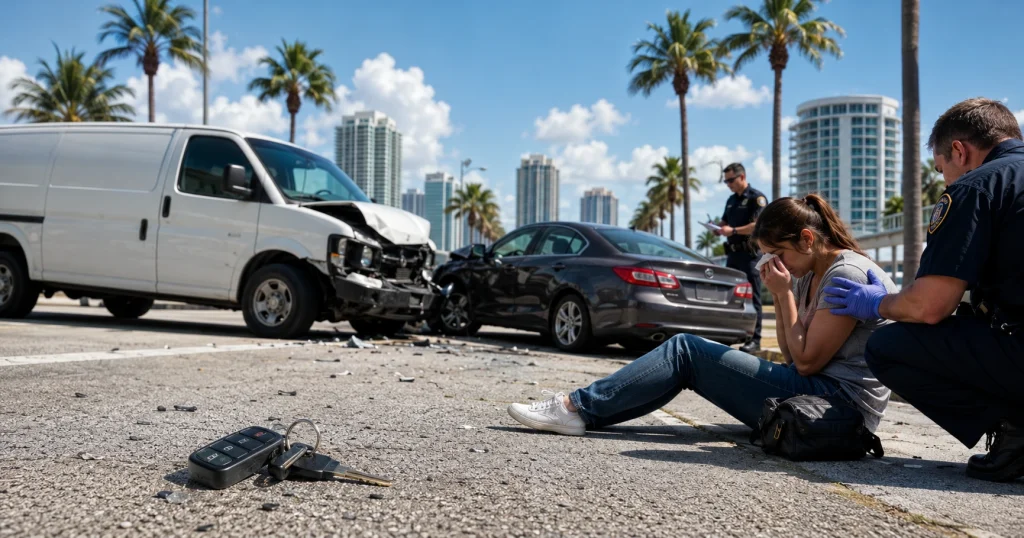
Tampa company vehicle crash scene involving borrowed car and injured victim pursuing negligent entrustment claim, for illustrative purposes only
Blog, Commercial Vehicles, Company-Caused Car Accidents

Negligent Entrustment in Florida: 5 Ways to Prove Owner Liability

In Florida, negligent entrustment means a vehicle owner may be liable if they gave a car, truck, or company vehicle to someone they knew, or reasonably should have known, was unsafe to drive. This can apply to parents, employers, private vehicle owners, and businesses that allow an unfit driver behind the wheel. Most people think of handing over car keys as an ordinary moment. A parent tosses the keys to a teenager heading to practice. A business owner assigns a work truck before the morning route. A friend lets someone drive home after dinner because it seems easier in the moment. But when the wrong person is allowed behind the wheel, that ordinary decision can change someone else’s life. A crash can take away the morning commute, the weekend baseball game, the family road trip, or the simple freedom of driving yourself where you need to go. The injury is not the whole story. The life interrupted is. That is why negligent entrustment matters in Florida. This legal claim focuses on whether the vehicle owner knew or should have known that the driver was unsafe before granting them access to the car, truck, company vehicle, or work vehicle. If you were hit by a borrowed car, company vehicle, work truck, or family vehicle in Tampa, Riverview, Brandon, Plant City, or anywhere in Hillsborough County, the driver may not be the only person responsible. The person or business that gave the driver access to the vehicle may also need to be investigated. Had a bad day? Call The Reyes Firm at 833-4 BAD DAY. The Reyes Firm Hit by Someone Who Should Never Have Had the Keys? A borrowed car, company vehicle, work truck, or family vehicle can raise bigger liability questions. Had a bad day? Schedule Your Free Consultation What You Need to Know In Florida, the person who handed over the keys may be legally responsible, not just the driver who caused the crash. Negligent entrustment means the owner gave a vehicle to someone they knew or should have known was not safe to drive. This can apply to parents who let unsafe teens drive, employers who ignore dangerous driving records, and anyone who gives keys to someone visibly impaired. Florida also has a strong vehicle owner liability rule known as the dangerous instrumentality doctrine, which may apply separately from negligent entrustment. In most Florida negligence cases, you have two years from the date of the crash to file a lawsuit under Fla. Stat. § 95.11(5)(a). Some exceptions may apply, but waiting can put your claim at serious risk. What Is Negligent Entrustment in Florida?  Negligent entrustment is a legal claim that may hold a vehicle owner responsible for giving a car, truck, or company vehicle to someone who is unsafe to drive. Negligent entrustment focuses on the owner’s conduct. It asks whether the owner knew, or reasonably should have known, that the driver was unfit to operate the vehicle safely. This is different from a basic claim against the driver. In a standard car accident claim, the focus is usually on what the driver did wrong. In a negligent entrustment claim, the focus expands to the person or business that allowed that driver to use the vehicle in the first place. Examples may include: A parent allowing an unlicensed teen to drive A business assigning a company vehicle to an employee with a dangerous driving record A vehicle owner lending a car to someone who appears intoxicated A company failing to check driving records before giving an employee access to a work truck A fleet owner ignoring repeated safety complaints about a driver If you were hit by a borrowed car, company vehicle, delivery van, work truck, or commercial vehicle in Tampa, Riverview, Brandon, Plant City, or anywhere in Hillsborough County, negligent entrustment may be an important legal issue to investigate. The Reyes Firm investigates every angle of liability from day one. That includes the driver, the vehicle owner, the employer, and any person or business that may have allowed an unsafe driver behind the wheel. When Does Negligent Entrustment Apply After a Florida Crash?  Negligent entrustment may apply when a vehicle owner gives access to a driver who is unlicensed, intoxicated, reckless, medically impaired, inexperienced, or has a history of dangerous driving. The central question is simple: Did the owner know, or should the owner have known, that this person was not safe to drive? Negligent entrustment may apply when the driver had warning signs, such as: A suspended or revoked license Prior DUI history Prior reckless driving citations Prior crashes Repeated speeding violations Visible intoxication before driving Lack of driving experience Underage driving without a valid license Known health or medical issues affecting safe driving Prior safety complaints from customers, coworkers, family members, or supervisors This issue often appears in company vehicle crashes, teen driver crashes, family vehicle crashes, borrowed car crashes, delivery vehicle crashes, and commercial fleet accidents. That distinction matters because the at-fault driver may have limited insurance. A negligent entrustment claim may reveal additional insurance coverage, company liability, or other responsible parties. ⚠️ Warning: Florida Has a Short Deadline for Negligence Claims In most Florida negligence cases, the deadline to file a lawsuit is two years from the date of the crash under Florida Statute § 95.11(5)(a). Some exceptions may apply, but waiting can put your claim at serious risk. If you believe negligent entrustment may have played a role in your crash, call The Reyes Firm at 833-4 BAD DAY. What Are the 5 Elements of Negligent Entrustment in Florida?  To prove negligent entrustment in Florida, you generally need to show that the owner gave the driver access to the vehicle, the driver was unfit, the owner knew or should have known the driver was unfit, the unfitness contributed to the crash, and you suffered damages. 1. Entrustment The owner gave the driver permission, access, or control of the vehicle. This can be direct, such as handing over the keys. It

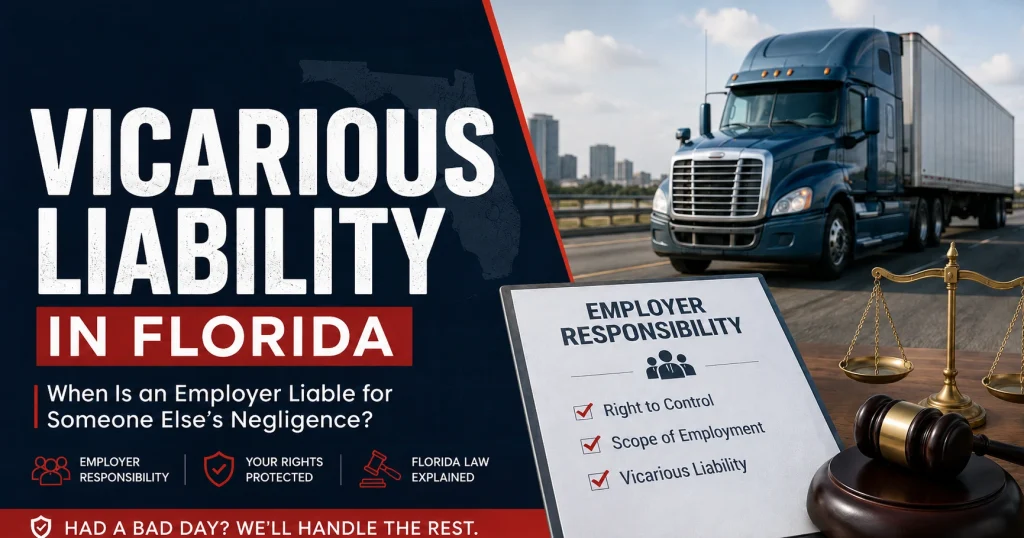
Vicarious liability in Florida graphic showing a commercial truck, employer responsibility checklist, and legal symbols for The Reyes Firm blog.
Blog, Commercial Vehicles, Company-Caused Car Accidents, Truck Accidents

Vicarious Liability in Florida: 3 Powerful Doctrines That Can Win Your Case

Quick Summary Vicarious liability in Florida means one party may be legally responsible for another person’s negligence because of their relationship. In accident cases, this often applies to employers, vehicle owners, fleet operators, and companies that put drivers on the road. Florida’s dangerous instrumentality doctrine can make a vehicle owner responsible when they allow someone else to drive their vehicle. Respondeat superior can make an employer responsible when an employee causes harm while acting within the scope of employment. Negligent hiring and negligent retention may apply when a company fails to properly screen, supervise, or remove an unsafe worker. If a company driver, work truck, or vehicle owner may be involved, The Reyes Firm can help you understand your options. The Reyes Firm Hurt by a Company Driver in Florida? You may have a claim against more than the driver. Get clear next steps after a serious crash. Had a bad day? Contact Us Now You did not see it coming. One second, you are driving home on I-275, and the next, a work truck runs a red light and changes your life. The driver hands you his license. You recognize the company logo on the door. Now you are wondering: can you bring a claim against the company too, or only the driver who hit you? That question is what vicarious liability in Florida is all about. It is a legal principle that may allow an injured person to pursue the individual who caused the crash, as well as the employer, vehicle owner, or business connected to that person. At The Reyes Firm in Tampa, we handle injury cases in which the company, fleet owner, employer, or vehicle titleholder may be one of the most important parties in the claim. Understanding how vicarious liability works can help injury victims see the full picture of who may be legally accountable. Quick Answer: What Is Vicarious Liability in Florida? Vicarious liability in Florida allows an injured person to hold one party legally responsible for another person’s negligence when the law recognizes a relationship between them. In car accident and commercial vehicle cases, this often applies through respondeat superior, the dangerous instrumentality doctrine, or negligent hiring and retention. For people injured in Tampa crashes involving company cars, delivery vans, work trucks, or commercial fleets, vicarious liability can determine whether the claim is limited to the driver or extends to the business behind the vehicle. What Does Vicarious Liability Mean in Florida? Vicarious liability means one party may be held legally responsible for another person’s negligent conduct, even if the first party did not personally cause the injury. In Florida personal injury cases, this often comes up when: An employee causes a crash while working. A vehicle owner allows someone else to drive their car, truck, or van. A company puts an unsafe driver behind the wheel. A commercial fleet vehicle is involved in a serious accident. A business argues the driver was an independent contractor rather than an employee. This matters because the person who caused the crash may not have enough insurance or financial resources to fully cover the harm. The company, employer, fleet owner, or vehicle owner may have additional insurance coverage and legal responsibility. What Is Respondeat Superior and How Does It Work in Florida? Respondeat superior means an employer may be liable for an employee’s negligent acts when those acts occur within the scope of employment. In plain English, if an employee causes harm while doing their job, the employer may have to answer for it. Florida courts generally look at whether: The employee was doing the kind of work they were hired to do. The conduct occurred within the job’s time and place limits. The employee’s actions were motivated, at least in part, by a desire to serve the employer. For example, a delivery driver who causes a crash while making deliveries in Tampa may create employer liability. A company technician driving between service appointments in Hillsborough County may also be acting within the scope of employment. The employer need not be personally careless for respondeat superior to apply. The employment relationship itself can create liability when the employee was acting within the scope of the job. ⚠️ Important: Florida’s Statute of Limitations: Most Florida negligence-based personal injury claims must be filed within 2 years under Florida Statute § 95.11. This deadline may apply to vicarious liability claims as well. Waiting too long can put your right to compensation at risk. Florida Statute § 95.11 identifies a two-year period for actions founded on negligence. If you were injured in a crash involving a company vehicle, work truck, delivery driver, or employer-driver, contact The Reyes Firm at 833-4 BAD DAY as soon as possible. What Is the Frolic and Detour Rule in Florida? The frolic-and-detour rule helps determine whether an employee was still acting within the scope of employment when the accident occurred. A detour is a minor departure from work duties. For example, a delivery driver who stops for gas or to grab lunch during a route may still be acting within the general scope of employment. A frolic is a major personal departure from the employer’s business. For example, if a driver leaves the work route for hours to handle a personal errand across town, the employer may argue that the driver was no longer acting within the scope of employment. This issue is often fact-specific. Courts may consider: How far the employee went from the work route. How long has the employee been out of work? Whether the employee was still serving the employer in some way. Whether the trip benefited the employer. Whether the employer knew or allowed the conduct. In Tampa commercial vehicle cases, this can become a central dispute. Employers may argue that the driver was on personal time. Injury victims may argue that the driver was still performing job-related duties. What Is Florida’s Dangerous Instrumentality Doctrine? Florida’s dangerous instrumentality doctrine can make a vehicle owner liable when they allow another

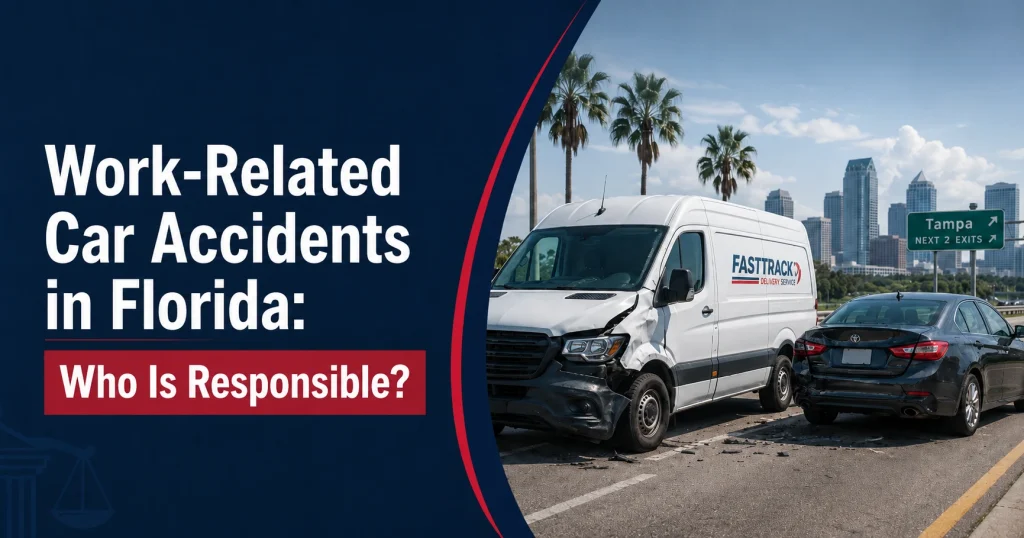
Featured image for a blog about work-related car accidents in Florida, showing a company delivery van and car crash in Tampa with the question of who may be responsible after a work-related crash.
Blog, Commercial Vehicles, Company-Caused Car Accidents

Work-Related Car Accidents in Florida: Who Is Responsible?

In Florida, responsibility for a work-related car accident usually depends on whether the driver was acting within the scope of employment. Depending on the facts, the employer, employee, another driver, a contractor, a vehicle owner, or another third party may be responsible. Quick Summary In Florida, a crash may be considered work-related if the driver was performing job-related duties at the time of the accident. An employer may be responsible when an employee causes a crash while acting within the scope of employment. Workers’ compensation may cover medical care and partial lost wages, but it does not cover pain and suffering. A separate personal injury claim may be available when a negligent third party caused or contributed to the crash. Florida generally gives injury victims 2 years to file a negligence lawsuit under Florida Statute 95.11. Had a bad day? Call The Reyes Firm at 833-4 BAD DAY for a free consultation.     Quick Answer: In Florida, responsibility for a work-related car accident usually depends on whether the driver was acting within the scope of employment. If the driver was doing something for work, an employer, third party, contractor, or commercial insurance policy may be involved. Work-Related Car Accidents in Tampa Can Get Complicated Fast You were running an errand for your boss. Maybe you were driving to a job site, heading to a client meeting, picking up supplies, or making a delivery. Then a crash happens. Now you are hurt, your car may be damaged, and you are trying to figure out who pays. Work-related car accidents in Tampa, FL, are often more complicated than regular car crashes. There may be more than one insurance policy involved. The driver may have been using a company vehicle, a personal vehicle, or a work-issued vehicle. The crash may involve an employee, an independent contractor, a rideshare driver, a delivery driver, or another company’s driver. At The Reyes Firm, we help injured people understand who may be responsible after serious car accidents involving work vehicles, company drivers, commercial insurance policies, and third-party negligence. This guide explains who may be responsible after a work-related car accident in Florida and what steps you can take to protect your rights. What Counts as a Work-Related Car Accident in Florida? A crash may be considered work-related when the driver was acting within the scope of employment at the time of the accident. In plain English, this means the driver was doing something connected to their job. Examples may include: A delivery driver making scheduled stops A technician driving between service calls A sales representative heading to a client meeting An employee picking up supplies for the office A company driver transporting equipment A worker driving from one job site to another An employee running an errand requested by a supervisor Florida courts often consider whether the employee’s conduct was connected to the job, occurred within work-related time and location limits, and was motivated at least in part by the employer’s interests. If the company benefited from the trip, even indirectly, employer liability may become an issue. Who Can Be Held Responsible for a Work-Related Car Accident in Tampa? Responsibility depends on who caused the crash, what the driver was doing, and which insurance policies apply. Responsible Party When They May Be Liable What They May Cover Florida Note Employer The employee was acting within the scope of employment Injury damages through commercial insurance Often based on respondeat superior Employer, in limited cases The company’s own conduct contributed to the crash Potential direct liability May involve negligent hiring, training, supervision, or entrustment Employee The driver was acting outside of work duties Personal auto coverage may apply Personal auto policies may dispute business-use crashes Workers’ Compensation The employee was injured while working Medical care and partial wage benefits Does not cover pain and suffering At-Fault Third Party Another driver caused or contributed to the crash Full personal injury damages May be pursued alongside workers’ comp under Florida Statute 440.39 Vehicle or Parts Manufacturer A defective vehicle or part contributed to the crash Product liability damages Often requires expert investigation What Is Respondeat Superior in a Florida Work Car Accident? Respondeat superior is a legal doctrine that can make an employer responsible for the negligent conduct of an employee. The phrase means “let the master answer.” In modern terms, it means an employer may be liable when an employee causes harm while performing job-related duties. This matters because employer liability can open the door to commercial insurance coverage. Commercial policies often carry higher limits than personal auto policies, which may make a major difference after a serious injury. However, the key question is not simply whether the driver had a job. The key question is whether the driver was acting within the scope of employment when the crash happened. Can You Sue Your Employer After a Work-Related Car Accident in Florida? This question needs a careful answer. In many workplace injury cases, workers’ compensation is the employee’s main remedy against their own employer. Florida workers’ compensation law generally limits direct negligence lawsuits against an employer when workers’ compensation applies. That does not mean you have no legal options. You may still have a personal injury claim if a negligent third party caused or contributed to the crash. For example, you may have a claim against: Another driver Another company’s employee A negligent contractor A vehicle owner A maintenance company A parts manufacturer A rideshare or delivery platform, depending on the facts Florida Statute 440.39 allows an injured employee to accept workers’ compensation benefits and also pursue a claim against a negligent third-party tortfeasor when the facts support it.  This is why it is important not to assume workers’ compensation is your only option. 🛡️ Your Rights Under Florida Law: Workers’ compensation may be your primary remedy against your employer, but it does not always end your case. If another driver, contractor, vehicle owner, or third party contributed to the crash, Florida law may allow you to pursue a separate

Featured image for an Uber accident lawyer Tampa FL article showing a damaged rideshare vehicle, police lights, gavel, and accident report to represent legal help after an Uber crash.
Blog, Commercial Vehicles, Company-Caused Car Accidents, Ride Sharing

Who Pays After an Uber Crash in Florida?

In Florida, who pays after an Uber crash depends entirely on the driver’s app status at the moment of the collision. If a ride is active, Uber’s $1 million primary liability policy applies. If the driver was waiting for a request, a lower coverage tier applies. If the app is off, only the driver’s personal insurance pays. Quick Summary Florida law divides every Uber trip into three coverage phases. The phase your driver was in at the time of the crash determines who pays and how much. During an active ride, Uber carries up to $1 million in primary liability coverage under Florida Statute § 627.748. You must seek medical care within 14 days of the crash to qualify for Florida Personal Injury Protection (PIP) benefits. Florida’s 2023 tort reform (HB 837) cut your deadline to file a lawsuit from four years to two. You have two years from the date of the crash. Act fast. The Reyes Firm Hurt in an Uber Accident in Tampa? Get clear next steps after a rideshare crash. Had a bad day? Schedule a Free Consultation You got into an Uber. You were just trying to get somewhere. Then the crash happened. Now you’re sitting with a sore neck, a phone full of photos, and no idea what comes next. Florida recorded 381,210 codable traffic crashes in 2024, more than 1,000 every single day, according to the Florida Department of Highway Safety and Motor Vehicles (FLHSMV). A share of those crashes involve rideshare vehicles. When one of them is yours, the insurance questions feel impossible. That’s because Uber crashes are not regular car accidents. Multiple insurance policies, corporate claims teams, and Florida’s own no-fault rules all stack on top of each other. An Uber accident lawyer who knows how these cases work can be the difference between a lowball offer and the compensation you actually deserve. At The Reyes Firm, we handle rideshare injury cases in Tampa and the South Shore communities, serving clients across Hillsborough County, Riverview, Brandon, Plant City, and surrounding areas. How Does Uber’s Insurance Coverage Work in Florida?  Uber’s insurance coverage in Florida is governed by Florida Statute § 627.748, which requires Uber to carry specific levels of liability insurance based on the driver’s activity at the time of the crash. Coverage ranges from zero when the app is off to $1 million in primary liability when a ride is active. Florida was one of the first states to enact a dedicated legal framework for Transportation Network Companies (TNCs) such as Uber and Lyft. That framework, enacted in 2017 under § 627.748, sets binding insurance minimums for every phase of a driver’s activity. The law also requires that Uber’s policy kicks in from the first dollar when the driver’s personal insurance lapses or fails to cover the claim. Uber cannot make you wait for a personal insurer to deny first. ⚠️ WARNING — Know Your Deadline After an Uber Crash: Florida Statute § 627.748 governs rideshare insurance coverage for Uber and Lyft crashes, but the lawsuit deadline comes from Florida Statute § 95.11. Florida’s 2023 tort reform, HB 837, signed on March 24, 2023, shortened the deadline for most negligence-based personal injury lawsuits from four years to two years. If your Uber crash happened on or after March 24, 2023, you generally have two years from the date of the accident to file a lawsuit. Uber app data, dashcam footage, and witness memories can disappear quickly. Don’t wait. What Are the Three Phases of Uber Coverage?  Florida law divides every Uber driver’s activity into three distinct periods. The period active at the moment of your crash controls which insurance policy applies and how much coverage is available. Understanding these phases is the single most important thing a crash victim needs to know. Here is how each period works under Florida Statute § 627.748: Phase Driver Status Who Pays Minimum Coverage Period 0 App off, not logged in Driver’s personal auto insurance only Depends on personal policy Period 1 App on, waiting for a ride request Uber’s contingent liability coverage $50,000 per person / $100,000 per incident / $25,000 property damage Period 2 & 3 Ride accepted or passenger in vehicle Uber’s primary commercial liability $1 million for death, bodily injury, and property damage Period 0 means the driver is a private citizen. Uber provides nothing. You pursue their personal auto insurance just like any other crash. Period 1 is the most misunderstood phase. The driver is logged in and technically “working,” but the coverage is on Uber’s lowest tier. If the driver’s personal policy is active and sufficient, Uber’s coverage is contingent. If the driver’s policy lapses, Uber steps in from the first dollar. Periods 2 and 3 are where the full protection lives. From the moment the driver accepts your trip request until you exit the vehicle, Uber carries $1 million in primary liability. Under § 627.748(d), the company cannot require your personal insurer to deny the claim first. This is the strongest coverage available in Florida rideshare cases. How do you prove which phase was active? A screenshot of your Uber app immediately after the crash documents your trip status and driver details. This is one of the most important pieces of evidence in any rideshare case. Watch: Uber Accident Lawyer Tampa What Should You Know After Getting Hit by an Uber Driver? After an Uber crash in Tampa, the insurance questions can get confusing fast. This short video explains why the driver’s app status matters, how Uber’s insurance may apply, and why injured victims should get legal guidance before speaking with insurance companies. If you were hit by an Uber driver in Tampa, The Reyes Firm can help you understand your rights, the available insurance coverage, and your next steps. Can You Sue Uber Directly After a Tampa Crash? You can pursue Uber’s insurance coverage in every active-phase crash. Suing Uber as a corporation directly is harder because Florida law classifies drivers as independent contractors and

Featured image for a blog about hiring a head-on truck accident attorney in Tampa after a serious semi-truck or commercial vehicle crash.
Blog, Commercial Vehicles, Company-Caused Car Accidents, Truck Accidents

Head-On Truck Accident Attorney in Tampa: What Every Survivor Needs to Know

You were driving. Maybe it was I-275 at rush hour, or a two-lane road near Brandon or Plant City. Then it happened. A semi crossed the center line, or came the wrong way, and hit you head-on. In the seconds after that kind of crash, nothing makes sense. Your airbags deployed. The car crumpled. Everything went quiet. Head-on collisions with large trucks are different from every other kind of accident. An 80,000-pound tractor-trailer hits your car with combined closing speeds that can exceed 100 miles per hour. Your car weighs about 4,000 pounds. The laws of physics do the rest, and the legal fight that follows is just as lopsided, unless you have the right people in your corner. The Reyes Firm represents families in Tampa and the South Shore communities who are dealing with the fallout from serious commercial vehicle crashes. This article will walk you through everything you need to know: what causes these crashes, who is responsible under Florida and federal law, what evidence disappears fast, and what your case may be worth. The Reyes Firm Hurt in a Head-On Truck Accident in Tampa? Get clear next steps after a serious head-on semi-truck, tractor-trailer, or commercial vehicle crash. Had a bad day? Schedule a Free Consultation Quick Summary Head-on crashes with large trucks are among the deadliest collisions on Florida roads. In 2024, FLHSMV recorded 46,651 commercial motor vehicle crashes, resulting in 315 fatalities statewide. NHTSA 2023 data shows 32.1% of two-vehicle fatal truck crashes involve a direct front-to-front impact. Commercial carriers deploy rapid-response legal teams to crash scenes within hours. You need representation just as fast. Florida’s statute of limitations for personal injury negligence claims is 2 years under Florida Statute 95.11(4)(a), as amended by HB 837 on March 24, 2023. Wrongful death claims also have a 2-year statute of limitations. Had a bad day? Call The Reyes Firm. 833-4 BAD DAY. Key Facts at a Glance Florida recorded 46,651 commercial motor vehicle crashes and 315 fatalities in 2024, according to FLHSMV. NHTSA reported 5,472 deaths in U.S. crashes involving large trucks in 2023. Hillsborough County recorded 3,083 commercial motor vehicle crashes, 916 injuries, and 16 fatalities in 2023. Most Florida negligence-based personal injury claims now have a 2-year deadline under Florida Statute § 95.11. Many interstate motor carriers must carry at least $750,000 in financial responsibility under 49 CFR Part 387. Why Are Head-On Truck Crashes So Dangerous? Head-on truck crashes are disproportionately fatal because the force of impact combines both vehicles’ speeds at once. NHTSA 2023 data shows 32.1% of two-vehicle fatal truck crashes involve front-to-front contact. At highway speeds, an 80,000-pound tractor-trailer delivers roughly 20 times the kinetic energy of a passenger car crash at the same speed. In 2023, large truck crashes killed 5,472 people nationwide, according to NHTSA. Of those fatalities, the vast majority were not truck occupants. They were people in passenger vehicles. Florida ranked among the top three states for large truck fatality counts that year, behind only Texas and California. That’s not a coincidence given the volume of commercial freight flowing through Hillsborough County every day. Florida’s corridors amplify the danger. I-4 between Tampa and Orlando is one of the most heavily trafficked freight routes in the Southeast. I-275 carries commercial traffic directly through the heart of Tampa, FL. I-75 connects Tampa to the rest of the state along a logistics spine that runs billions of dollars in freight every year. On these roads, a single moment of driver fatigue, a blown tire, or a misjudged overtake can push a 40-ton rig across the center line before any reaction is possible. Head-on truck crashes also look deceptively simple on a police report. Most lists only two vehicles. In reality, these crashes often trace back to a chain of decisions made by a dispatcher, a carrier, a broker, a maintenance provider, or a cargo loader, sometimes days before the collision happened. What Causes Head-On Truck Accidents in Tampa? Head-on truck crashes in Tampa, FL, are commonly caused by driver fatigue, distracted driving, impairment, wrong-way entry, mechanical failure, improper overtaking, and unsecured cargo. Federal regulations under 49 CFR Parts 392, 395, 396, and 393 govern each of these behaviors. Violations of those regulations are direct evidence of negligence. Driver fatigue. Federal hours-of-service rules under 49 CFR Part 395 cap how long a commercial driver can operate before mandatory rest. FMCSA data consistently show fatigue as one of the leading behavioral causes of large-truck crashes. Carriers and dispatchers sometimes push drivers past legal limits or look the other way while logbooks get falsified. When fatigue drifts a truck across the center line on I-275 or a county road near Riverview, the company that built that schedule shares liability for every injury. Distracted driving. Commercial drivers are prohibited from using handheld devices under 49 CFR Part 392.82. At 65 mph, a truck travels the length of a football field in about 3.3 seconds. Glancing at a dispatch message or adjusting a GPS is enough time for the truck to drift into oncoming traffic with zero steering correction. Impairment. Commercial drivers face a legal blood alcohol limit of 0.04%, half the standard for passenger vehicle drivers. Despite that lower threshold, NHTSA’s 2023 data showed a 19% increase in fatalities involving alcohol-impaired large truck drivers compared to 2022. Prescription drug impairment is also a documented factor in commercial crashes. Wrong-way driving. Florida’s interchange designs and low-visibility ramp lighting contribute to wrong-way driving incidents, particularly at night or in the early morning hours when fatigue peaks. A fully loaded tractor-trailer entering a divided highway in the wrong direction leaves almost no room for surviving vehicles to avoid impact. Tire blowouts and mechanical failures. Under 49 CFR Part 396, carriers must conduct pre-trip and post-trip inspections and keep vehicles in roadworthy condition. A blowout caused by a documented defect that was never repaired is not an accident. It is negligence, and it creates direct liability for the maintenance company, the carrier, and the driver. Improper

A FedEx delivery truck parked on a Tampa, Florida street; for illustrative purposes only.
Blog, Commercial Vehicles, Company-Caused Car Accidents

Proven FedEx Truck Accident Lawyer in Tampa: 5 Steps to Protect Your Case Right Now

You were just going about your day. Then a FedEx truck changed everything. Now you’re in pain, your car is wrecked, and FedEx’s insurance team is already working to protect their interests. Here’s what you need to know before you say another word to them. Quick Summary FedEx uses independent contractors to distance the company from liability, but Florida law can still hold FedEx responsible for your injuries. Critical evidence like dashcam footage, driver logs, and black box data can disappear within days. You need a lawyer sending preservation letters fast. Florida’s modified comparative fault rule means your payout drops if you’re found partly at fault. Protecting your percentage matters from day one. You have two years from the crash date to file a personal injury claim in Florida under Florida Statute 95.11(3)(a). FedEx carries commercial insurance coverage that far exceeds that of a typical car accident policy, which means more compensation is available for serious injuries. The Reyes Firm Hurt in a FedEx Truck Accident in Tampa? Get clear next steps after a serious delivery truck crash. Had a bad day? Contact Us Now 46,651 Florida CMV crashes in 2024 FLHSMV By the Numbers 2024 2 Years Florida statute of limitations Fla. Stat. 95.11(3)(a) $750K+ FMCSA min. liability coverage 49 C.F.R. § 387.9 315 CMV fatalities in Florida, 2024 FLHSMV By the Numbers 2024 Can you sue FedEx for a truck accident injury in Tampa? Yes, you can sue FedEx for a truck accident injury in Tampa, and in most cases, you should. FedEx operates through a web of subsidiaries and contracted delivery service partners (DSPs). They often argue that drivers are independent contractors, not employees, and therefore, FedEx isn’t responsible. Florida courts don’t always buy that argument. Under Florida law, a company can still face liability for an independent contractor’s actions if the company exercised significant control over how that person did their job. Routes, uniforms, tracking apps, delivery quotas, and required vehicle markings can all signal that FedEx controlled the driver more like an employee than a contractor. That’s called apparent agency or vicarious liability, and a skilled Tampa FedEx truck accident lawyer will investigate exactly that. FedEx also runs three main divisions: FedEx Express, FedEx Ground, and FedEx Freight. Each has a different corporate structure. Your attorney needs to identify which entity operated the truck that hit you, then pursue every responsible party. ⚠️ Deadline Warning: Under Florida Statute § 95.11(3)(a), you have two years from the date of your crash to file a personal injury lawsuit. Missing this deadline almost always means losing your right to recover anything. Don’t wait to call a lawyer. Why do FedEx truck crash cases move so much faster than you think? FedEx’s claims team and legal counsel mobilize quickly after a crash. They have systems in place to protect the company’s interests before most accident victims have even seen a doctor. You’re already behind if you haven’t called a lawyer. The evidence in these cases disappears fast. Dashcam footage gets overwritten. Electronic logging device (ELD) data gets purged. Vehicles get repaired. Witnesses forget what they saw. Your attorney’s first job is to send formal preservation letters to FedEx, demanding they hold onto every piece of relevant evidence before it’s gone for good. On top of that, FedEx delivers to every neighborhood in Tampa every single day. The I-4, I-75, and I-275 corridors see heavy commercial delivery traffic, and that means a lot of people get hurt in delivery truck crashes across Hillsborough County every year. These aren’t rare cases. They’re cases FedEx’s legal teams have handled thousands of times. You deserve someone on your side who has too. 💡 Did You Know? According to FLHSMV’s 2024 “By the Numbers” report, Florida recorded 46,651 commercial motor vehicle crashes in 2024, resulting in 315 fatalities. That’s nearly 128 CMV crashes every single day across Florida’s roads. Source: FLHSMV By the Numbers 2024, flhsmv.gov. Note: 2024 crash numbers are preliminary. Watch: What Happens After a FedEx or Delivery Truck Accident in Tampa? Delivery truck accident claims are not handled like ordinary car accident cases. This short video explains why crashes involving FedEx, Amazon, and other commercial delivery vehicles may involve higher insurance coverage, multiple responsible parties, and fast-moving insurance teams. If you were injured in a delivery truck accident in Tampa, The Reyes Firm can help you understand who may be responsible and what compensation may be available. Who is actually liable after a FedEx delivery truck accident in Tampa? Liability in a FedEx truck accident can reach further than you think. The driver is the obvious starting point, but your case may involve several other parties, each with their own insurance and their own lawyers. The FedEx driver, if they were negligent: speeding, distracted, fatigued, or violating federal hours-of-service rules FedEx Ground, FedEx Express, or FedEx Freight, under vicarious liability if the driver was effectively an employee, or under direct liability for negligent hiring, training, or supervision The contracted Delivery Service Partner (DSP) is the third-party company, FedEx, contracted to run the delivery route A vehicle maintenance provider, if poor repairs or skipped inspections contributed to the crash A parts manufacturer, if a defective brake, tire, or other component caused or worsened the collision Florida’s modified comparative fault rule, now governed by Florida Statute 768.81, determines how liability is split between all parties. Under the 2023 update to Florida law, if you’re found more than 50% at fault for the crash, you can’t recover damages at all. That’s a significant reason why you need a lawyer protecting your percentage of fault from the very start of your claim. 🛡️ Your Rights Under Florida Law: Under Florida Statute § 768.81, your compensation is reduced by your share of fault, and you may be barred from recovery if you are found greater than 50% responsible for your own harm. An experienced Tampa delivery truck accident lawyer works to protect the facts, challenge unfair blame, and keep your percentage of fault as low as

Amazon Van Accident Lawyer (1)
Blog, Commercial Vehicles, Company-Caused Car Accidents

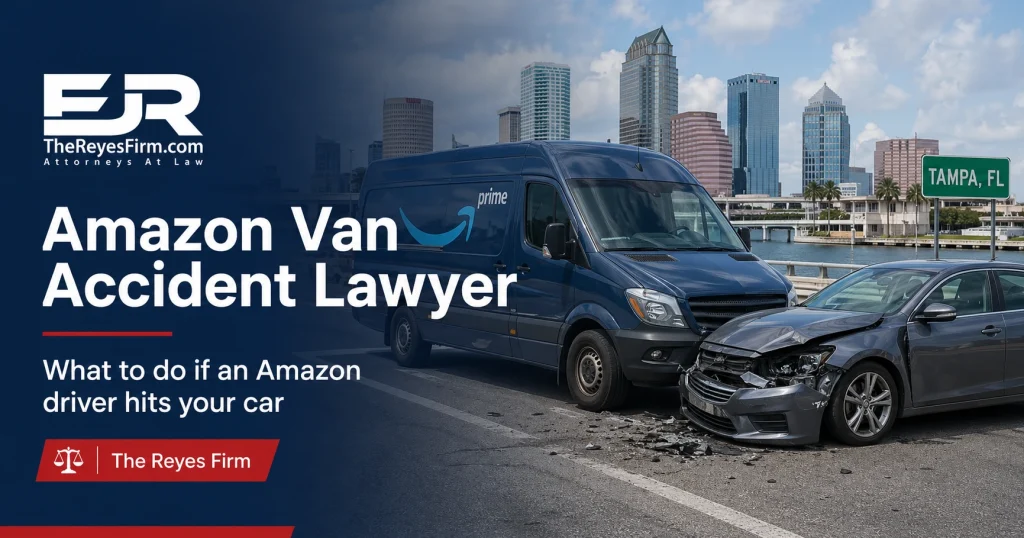
Amazon Van Accident Lawyer: What to Do If an Amazon Driver Hits Your Car

An Amazon van accident lawyer in Tampa can help you fight back. Learn your rights, who to sue, and what steps to take now. You’re stopped at a light on Dale Mabry Highway when a blue Amazon van blows through the intersection and slams into your driver’s side door. In seconds, your whole day changes. You’re sitting there dazed, staring at the Amazon logo on the side of the van, wondering what happens next. Here’s what most people don’t know: that driver may not technically be an Amazon employee. Amazon built its delivery system using small contractor companies called Delivery Service Partners. That setup exists specifically to make it harder for people like you to hold Amazon accountable. But Florida law has more tools than most states to cut through that structure. If an Amazon delivery van hit your car in Tampa or anywhere in the South Shore communities, you have real options. The Reyes Firm represents people injured by commercial delivery vehicles across Tampa, Riverview, Brandon, Plant City, and communities across Hillsborough County. This guide walks you through exactly what happens if an Amazon driver hits your car, who you can sue, and why you need to move fast. Quick Summary Amazon uses independent contractors called Delivery Service Partners (DSPs) to deliver packages, which creates a layered liability structure designed to limit Amazon’s exposure. Florida law gives you powerful tools to hold Amazon and its contractors accountable, including the dangerous instrumentality doctrine and the doctrine of respondeat superior. A CBS News analysis of six years of FMCSA data found that Amazon contractors had unsafe driving violation rates at least 89% higher than those of other carriers in every month studied. Evidence like GPS data, delivery logs, and dashcam footage disappears fast. You need a lawyer moving on your case within days, not weeks. Had a bad day? Call The Reyes Firm. 833-4 BAD DAY. The Reyes Firm Hurt in an Amazon Van Accident in Tampa? Get clear next steps after a crash with an Amazon delivery van. Had a bad day? Contact Us Now Who Is Actually Liable When an Amazon Van Hits Your Car? Multiple parties may be responsible when an Amazon van hits your car, including the driver, the DSP, and Amazon itself. Amazon primarily delivers packages through two systems: Delivery Service Partners, which are small contracted businesses that hire drivers and operate branded Amazon vans, and Amazon Flex, where individual gig workers use their own personal vehicles. On paper, Amazon argues the driver works for the DSP, not Amazon. Courts across the country have increasingly rejected that argument. Courts across the country have allowed direct negligence and vicarious liability claims against Amazon to proceed, and several have resulted in significant verdicts and settlements where Amazon bore substantial responsibility. That trend matters for Florida cases because courts look at who actually controls the work, not just what the contract says. In a Tampa delivery accident, your potential defendants include the driver, the DSP, and Amazon. Your attorney’s job is to investigate all three and pursue whoever has coverage. ⚠️ WARNING BOX: Florida’s statute of limitations for personal injury claims is two years from the date of the accident. Under Florida Statute § 95.11(3)(a), missing this deadline typically ends your right to compensation. But evidence disappears much faster than that. Act now. What Causes Most Amazon Van Accidents in Tampa? Amazon delivery van accidents in Tampa follow a predictable pattern. Tight delivery quotas push drivers to speed, skip stops, and take risks they would not otherwise take. Drivers navigate residential streets and busy corridors like Fletcher Avenue and Waters Avenue while simultaneously managing a routing app that pings them with stop updates, package counts, and performance scores. That combination of time pressure and distraction is a documented crash risk. The most common causes of Amazon van accidents in Tampa include speeding to meet delivery targets, distracted driving from the routing and scanning app, driver fatigue from shifts that can stretch well beyond eight hours, failure to yield at intersections and residential driveways, improper backing in tight neighborhoods, and poorly maintained vans with brake or tire issues the DSP failed to address. When any of these causes combine with a crash, they become evidence. Your attorney uses them to build the case that the crash was not just the driver’s fault but the result of a system Amazon designed and enforced. What Injuries Do People Suffer in Amazon Van Accidents? Amazon delivery vans are larger and heavier than most passenger vehicles. When a smaller vehicle collides with a car at speed, the smaller vehicle absorbs the impact force. The injuries are often serious and sometimes permanent. Common injuries in Amazon van accidents include whiplash and soft tissue damage to the neck and back, herniated or bulging discs, traumatic brain injuries (TBI) including concussions, spinal cord injuries that can cause partial or full paralysis, broken bones including ribs, wrists, and legs, internal organ injuries that may not show symptoms for hours, facial and dental injuries from airbag deployment, and severe anxiety, PTSD, and emotional trauma that affects daily life long after physical healing. The injuries that are hardest to prove are often the most serious. Traumatic brain injuries, disc injuries, and psychological trauma do not always show up on initial emergency scans. Your medical treatment records built over weeks and months are what make those damages real to an insurance company or a jury. See a doctor the same day, and keep every appointment. What Makes Amazon Van Accidents Different From Regular Car Crashes? Amazon van accident cases are more complex than standard car crashes because they involve corporate liability structures, commercial insurance policies, and evidence held by a large corporation with legal teams ready to defend them. The moment a crash happens, Amazon’s system starts working. Its contractor gets notified. Insurance adjusters start building a file. The company tracks every delivery through its Mentor app, capturing data on speed, braking, and phone use. DSP vehicles must carry $1

Company vehicle involved in a Tampa, Florida crash scene, for illustrative purposes only
After an Accident, Blog, Commercial Vehicles, Company-Caused Car Accidents

3 Mistakes That Can Kill Your Company Vehicle Accident Case in Tampa

Hit by a company vehicle in Tampa, FL? Avoid these 3 critical mistakes after the crash. You’re sitting on the side of the road, shaking, heart still pounding. A delivery van, a company pickup, or a work truck just hit your car. The driver gets out and seems apologetic. Maybe he hands you a card, says the company will take care of it, or tells you he’ll just pay you right now. You’re rattled. You just want this to be over. That’s exactly the moment when the biggest mistakes happen. At The Reyes Firm in Tampa, Florida, we represent people who were hurt in crashes involving company vehicles, work trucks, and commercial fleets. We see the same three mistakes in case after case, and each one costs our clients money, time, and leverage. This article walks you through what those mistakes are, what you should do instead, and why a company vehicle crash is a completely different situation from a regular car accident. Quick Summary Florida recorded 46,651 commercial motor vehicle crashes in 2024, and Hillsborough County is among the most dangerous counties in the state for truck and work-vehicle crashes. If you’re hit by a company vehicle, do not sign anything, do not say you’re fine, and do not accept cash at the scene. The company behind that vehicle likely already has an insurance team protecting it. You need someone protecting you. Florida’s statute of limitations for personal injury gives you a limited window to file a claim. Do not wait. Had a bad day? Call The Reyes Firm at 833-4 BAD DAY. What makes a company vehicle accident different from a regular car crash? A company vehicle accident is different from a regular car crash because multiple parties may share legal responsibility, and those parties begin building their defenses quickly. In a regular crash, you’re dealing with one driver and their personal insurer. When a work truck, delivery van, or employer-owned vehicle hits you, you may have a claim against the driver, the employer, a staffing company, a fleet manager, or all of them. Under Florida law, employers can be held responsible for the actions of their employees when those employees are acting within the scope of their job. This legal concept is called vicarious liability, and it’s one of the key reasons company vehicle cases often carry much higher insurance limits than standard personal auto crashes. The company’s insurer isn’t small either. Commercial fleet policies can carry coverage limits many times higher than a personal auto policy. That means more money is at stake, which means they fight harder and earlier. By the time you call a lawyer, they may already be working on the file. ⚠️ Florida’s Statute of Limitations for Personal Injury: 2 Years Under Florida Statutes Section 95.11(3)(a), you generally have two years from the date of a crash to file a personal injury lawsuit. Miss that deadline and you lose your right to sue, regardless of how serious your injuries are. If a government vehicle was involved, notice requirements can be even shorter. Do not wait. Source: Florida Statutes § 95.11. What are the 3 mistakes that destroy company vehicle accident claims? The three mistakes that destroy company vehicle accident claims are signing documents at the scene, telling anyone you feel fine, and accepting cash or a quick settlement before you know the full extent of your injuries. Attorney Edward Reyes explains exactly why each of these hurts you in the video below. Watch: 3 Things You Should Never Do Right After a Car Accident Watch Attorney Edward Reyes explain important steps and mistakes to avoid after a company vehicle accident in Tampa. Let’s go through each one in plain language. Mistake 1: Signing anything the other driver or their company hands you. When a company vehicle driver hands you a form at the scene, that document almost certainly contains language that limits your rights. You may be releasing the company from future liability before you even know how injured you are. Don’t sign anything until you’ve spoken to a lawyer. Mistake 2: Saying you’re fine or that you have no injuries. You may feel okay right after a crash. That’s adrenaline. Injuries like soft tissue damage, herniated discs, and traumatic brain injuries routinely take hours or days to become apparent. If you tell the driver, a witness, or an insurer that you’re fine, that statement will be used against you. You can speak briefly, but never volunteer a verdict on your own health. Mistake 3: Taking cash or accepting “we’ll handle it” at the scene. Some drivers, especially those worried about their job, will offer cash on the spot. A few hundred dollars feels like relief in the moment. But you don’t yet know what your injuries will cost. Once you accept money and walk away, the company will claim the matter is settled. It isn’t, but proving otherwise becomes very hard. Who can be held responsible after a company vehicle crash in Tampa? Responsibility in a company vehicle crash often extends beyond the driver. Under Florida law, an employer may be liable for a crash if the driver was performing job duties at the time of the incident. That’s the doctrine of respondeat superior, which is Latin for “let the master answer.” But liability can go further. A third-party staffing agency may have assigned the driver. A fleet maintenance company may have ignored a known brake issue. A dispatcher may have pressured the driver into making an unsafe delivery under a tight deadline. Each of those parties can share responsibility for your injuries. That’s why investigating quickly matters. Evidence like vehicle maintenance logs, GPS dispatch records, driver qualification files, and dashcam footage is controlled by the company. It can be overwritten, destroyed, or “cleaned up” if nobody demands it fast. The Reyes Firm sends preservation letters as one of the first steps in every case, putting the company on notice that it must retain evidence. 💡 Did You Know? Florida

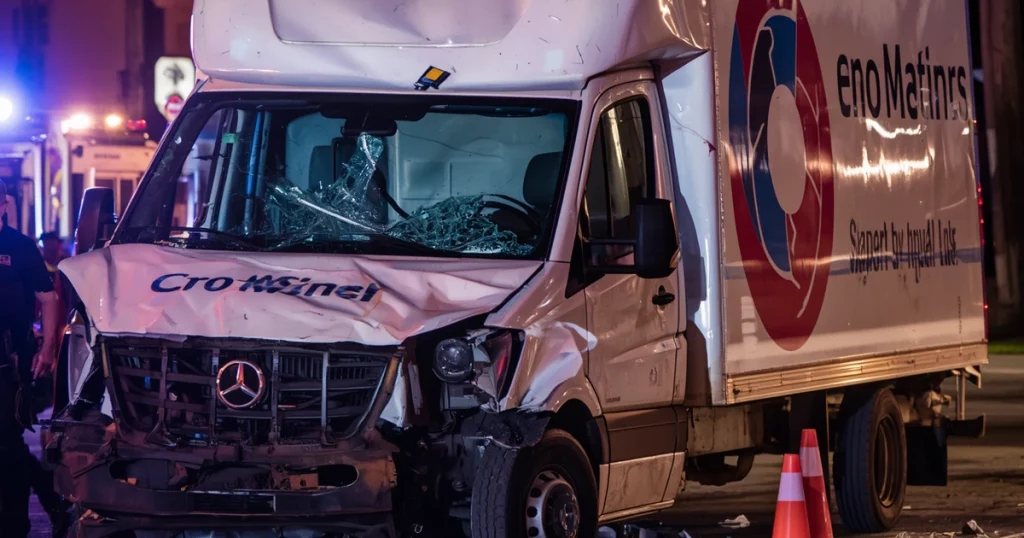
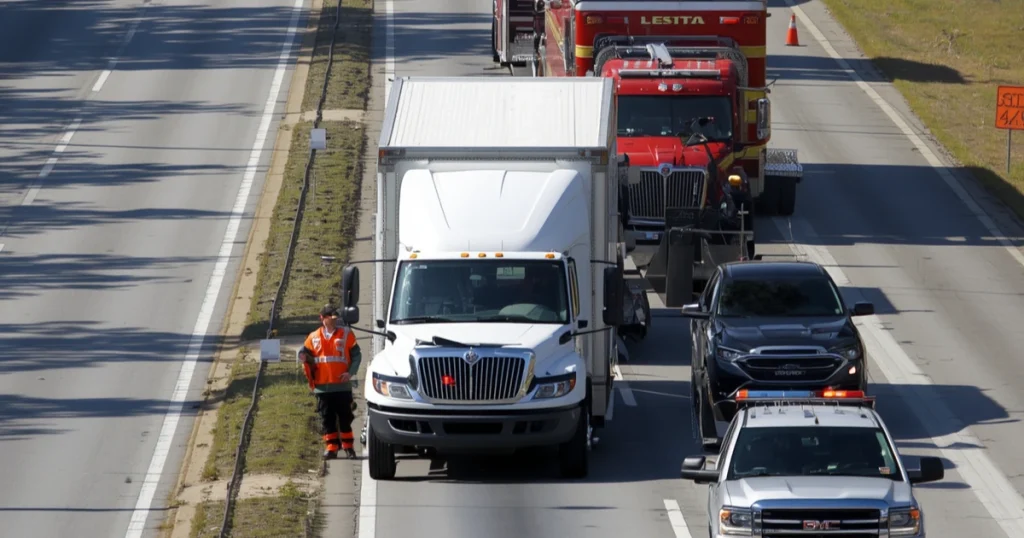
Cargo van accident on a Tampa, Florida road with emergency vehicles present, for illustrative purposes only.
Blog, Commercial Vehicles, Company-Caused Car Accidents

Cargo Van Accident Lawyer Tampa: Who May Be Liable After a Commercial Van Crash?

Hit by a cargo van in Tampa? A cargo van accident lawyer can help you pursue every liable party. You didn’t see it coming. One moment, you were driving through Tampa, and the next, a cargo van ran a red light, cut across your lane, or rear-ended you at a stop. Now you’re dealing with pain, medical bills, missed work, and a phone that won’t stop ringing with calls from insurance adjusters. Here’s what those adjusters won’t tell you: in a commercial van crash, the driver may not be the only one who owes you compensation. Depending on how the crash happened, the driver’s employer, a cargo loading company, a fleet maintenance contractor, or even a rental company could share legal responsibility for what you’re going through. This guide breaks down how Florida law handles cargo van accident liability, who can be held responsible, and what your next steps should be. Quick Summary After a cargo van crash in Florida, more than one party may be legally responsible, including the driver, their employer, a maintenance contractor, or the company that loaded the van. Florida’s statute of limitations for personal injury claims is 2 years from the date of the accident under Florida Statute § 95.11(3)(a). Miss that window, and you may lose your right to recover anything. Florida recorded 46,651 commercial motor vehicle crashes in 2024, resulting in 315 fatalities, according to FLHSMV. If you were hit by a cargo van, document everything, get medical attention, and call an attorney before speaking to any insurance company. The Reyes Firm Need a Cargo Van Accident Lawyer in Tampa? We help identify every liable party after a commercial van crash. Had a bad day? Contact The Reyes Firm Today Who Is Typically Liable After a Cargo Van Accident in Florida? Multiple parties can be held responsible after a cargo van crash in Tampa, not just the driver. Florida follows a modified comparative fault system under Florida Statute § 768.81. That means liability can be spread across several defendants based on their share of fault. In a commercial van crash, potential responsible parties often include the driver, the company that employed or dispatched them, a third-party maintenance provider, the business that loaded the cargo, or a vehicle manufacturer if a defect contributed to the crash. This multi-party liability structure is exactly why cargo van accident cases tend to be more complex than standard car accident claims. Each defendant has their own insurance carrier and legal team, and each will try to minimize their share of responsibility. ⚠️ Warning: Florida’s Comparative Fault Law Florida follows a modified comparative fault rule. If you are found to be more than 50% at fault for the crash, you cannot recover damages. Insurance companies often try to shift blame early, so do not give a recorded statement to any adjuster before speaking with a cargo van accident lawyer. Florida Statute § 768.81 Can the Driver’s Employer Be Held Responsible? Yes. If the cargo van driver was working at the time of the crash, their employer is very likely on the hook under a legal doctrine called respondeat superior, which means that when an employee causes a crash while doing their job, the employer shares legal responsibility. This applies to delivery companies, logistics firms, moving companies, contractors, and any business that sends workers out in vans. The employer does not get a pass just because they weren’t in the vehicle. Florida courts have applied this doctrine consistently in commercial vehicle cases. If the employer knew the driver had a poor driving history and hired them anyway, that opens the door to a separate claim for negligent entrustment, which can significantly increase the damages available to you. Why Does Evidence Disappear So Fast After a Cargo Van Crash? In Tampa and across Hillsborough County, evidence of cargo van crashes can vanish within days. Companies have legal teams moving the moment a crash is reported. You need someone moving just as fast on your side. Here is what disappears quickest and why it matters: Black box and ECM data: Most commercial vans carry an event data recorder (EDR), sometimes called a black box, that captures speed, braking, and impact data. This data can be overwritten or lost if a preservation letter is not sent immediately. Electronic logging device (ELD) records: Federal law requires commercial drivers to log their hours of service electronically. ELD data shows how long the driver had been behind the wheel before the crash, which is critical in fatigued driving cases. Telematics and GPS data: Delivery companies use real-time tracking systems that record routes, stops, speed, and driving behavior. That data is controlled by the company and can be deleted during routine system purges. Dashcam footage: Many cargo vans carry forward-facing or interior cameras. Footage is often overwritten on a rolling 24 to 72-hour loop unless someone demands it be preserved immediately. Maintenance records: Records showing a van had unresolved brake problems, worn tires, or skipped inspections are critical for establishing company negligence. They don’t stay available forever. Driver qualification files: FMCSA regulations require carriers to keep files on each driver’s license history, training, and prior violations. These files reveal patterns that a single crash report never will. The Reyes Firm sends preservation letters immediately after being retained. That is not paperwork. That is the first move in protecting your case before the other side cleans house. 💡 Did You Know? FMCSA crash data shows Florida recorded 6,222 large truck crashes in FY 2024, including 180 fatal crashes and 3,046 injuries. FLHSMV also reported 46,651 commercial motor vehicle crashes statewide that year, with 315 fatalities. What If the Cargo Van Were a Rental or Leased Vehicle? Rented cargo vans raise a distinct liability question that many people don’t think to ask. Companies like Penske, Ryder, and U-Haul rent cargo vans to individuals and businesses for commercial use every day. When a rented van is involved in a crash, the renting business, not the rental company, is generally

Scroll to Top