Company-Caused Car Accidents

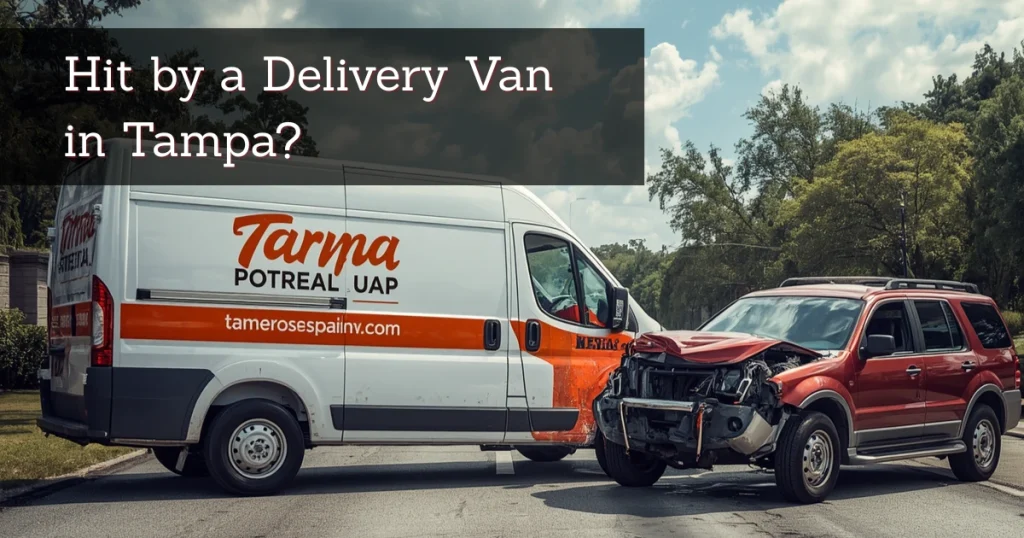
Illustrative image of a delivery van crash in Tampa, Florida for a blog about liability after an Amazon, FedEx, UPS, or other delivery van accident.
Blog, Commercial Vehicles, Company-Caused Car Accidents

Delivery Van Accident Lawyer: What Makes These Injury Cases Different?

Hit by a delivery van in Tampa? Learn who’s liable, how Florida law applies, and why these cases are complex. You were going about your day. Maybe you were stopped at a light. Maybe you were in a crosswalk. Then a delivery van ran into you. Now you’re dealing with a hospital bill, a totaled car, and a stack of insurance paperwork from a company with lawyers on speed dial. And you’re wondering: who exactly is responsible here? Amazon? FedEx? UPS? The driver? Some contractor nobody’s heard of? That’s the question this post answers. Delivery van accident cases are different from typical car accident claims, and understanding why could make a big difference in what you recover. Quick Summary Delivery van accidents are legally complex because liability may fall on the driver, the company, or both. Florida’s statute of limitations gives you just 2 years to file a personal injury claim under Florida Statute § 95.11(3)(a). Florida recorded 381,210 traffic crashes in 2024. Delivery vehicles are on the road every hour of every day. If a delivery van hit you, stop guessing who to sue and call a lawyer today. The Reyes Firm Hit by a Delivery Van in Tampa? Get clear next steps after a serious crash. Had a bad day? Contact Us Now Why Are Delivery Van Accidents More Complicated Than Regular Car Accidents? Delivery van accidents are more complicated because there are often multiple parties who may share liability, and the relationship between the driver and the company is not always straightforward. In a typical two-car crash, you figure out who was at fault and deal with their insurance. In a delivery van accident, you may need to investigate who owns the van, who employed the driver, what contracts were in place, and what the company’s insurance policy actually covers. That’s three or four legal questions before you’ve even gotten to fault. Companies like Amazon, FedEx, and UPS have built entire legal structures designed to limit what they owe injured people. Understanding those structures is the first step to getting past them. 💡 Did You Know? According to the Florida Department of Highway Safety and Motor Vehicles (FLHSMV), Florida recorded 381,210 traffic crashes in 2024, more than 1,000 crashes every single day. That statewide crash volume helps explain why commercial and delivery-related crashes remain a recurring issue on Florida roads. Source: FLHSMV Who Is Actually Liable When a Delivery Driver Hits You? Liability in a delivery van accident depends on whether the driver was classified as an employee or an independent contractor at the time of the crash. If the driver was acting as an employee of FedEx or UPS and within the scope of the job at the time of the crash, their employer can generally be held liable under a legal principle called respondeat superior. That’s a Latin phrase that means “let the master answer.” In plain terms, if an employee causes a crash while doing their job, the company is on the hook. Amazon operates differently. Many Amazon delivery drivers work through what’s called a Delivery Service Partner, or DSP, which is a third-party company Amazon contracts with to handle “last mile delivery.” Amazon has argued in court that DSP drivers are not Amazon employees, a position it uses to distance itself from liability for crashes. Whether Amazon or another parent company can be held liable usually depends on the facts, including how much control it exercised over the driver, the route, the delivery process, and the vehicle involved. 🛡️ Your Rights Under Florida Law: A company may face direct liability under theories such as negligent entrustment, negligent hiring, retention, supervision, or maintenance, depending on the facts. For example, if a company entrusted a vehicle to a driver it knew, or should have known, was unsafe or unqualified, that may support a negligent entrustment claim under Florida law. What About Independent Contractor Delivery Drivers? Independent contractor status does not automatically protect a company from liability, and this is one of the most misunderstood parts of delivery van accident cases. Companies may classify drivers as independent contractors, and that classification can affect liability arguments, insurance issues, and the scope of a claim. But Florida courts look at the actual nature of the working relationship, not just what a contract says. If the company controlled how the driver did the job, where they drove, when they had to deliver, and what vehicle they used, a court may still find the company responsible. The Reyes Firm has experience untangling these arrangements. We know how to pull contracts, insurance policies, and driver records to find out who really holds liability in your case. What Damages Can You Recover After a Delivery Van Accident in Florida? You may be entitled to compensation for medical bills, lost wages, future medical care, pain and suffering, and property damage. Florida operates under a modified comparative fault system under Florida Statute § 768.81. If you were partly at fault for the crash, your compensation is reduced by your percentage of fault. But if you are found more than 50% at fault, you may be barred from recovering anything at all. That’s why building a strong case from the start matters. The delivery company’s insurer will look for any reason to shift blame onto you. ⚠️ Important: In Florida, the deadline to file most personal injury lawsuits is generally 2 years from the date of the accident under Florida Statute § 95.11. If you miss the deadline, you may lose your right to seek compensation. Because exceptions can apply, it is smart to speak with a lawyer as soon as possible. Can I Sue Amazon, FedEx, or UPS Directly? Yes, potentially. But whether you can sue Amazon, FedEx, or UPS directly depends on the facts, including who employed the driver, who owned the van, who controlled the work, and whether the driver was acting within the scope of the job at the time of the crash. That is why early evidence matters. Records
Navigation app mounted on dashboard of a rideshare vehicle in Tampa at night, for illustrative purposes only.
Blog, Commercial Vehicles, Company-Caused Car Accidents, Ride Sharing

Florida Rideshare Accident Lawyer for Uber and Lyft Claims

Injured in an Uber or Lyft crash in Tampa? A Florida rideshare lawyer can help You ordered a ride home. Maybe you were coming from work, from a night out, or from a friend’s place. Then the crash happened, and now you’re sitting with medical bills, missed work, and a lot of unanswered questions. Rideshare crashes are confusing in a way that ordinary car accidents aren’t. You’re dealing with a driver, a massive tech company, and multiple insurance policies, all at once. Figuring out who owes you what is not straightforward. The Reyes Firm handles rideshare injury cases across Tampa, Hillsborough County, Pinellas County, Pasco County, Osceola County, and communities throughout Florida. If you were hurt in an Uber or Lyft crash anywhere in our service area, here’s what you need to know. This guide breaks down exactly how a Florida rideshare accident lawyer approaches these cases, from the three-phase insurance system to your rights under Florida law.  Quick Summary Rideshare crashes in Florida are covered by a layered insurance system that depends on what the Uber or Lyft driver was doing at the time of the crash. Florida Statute § 627.748 requires rideshare insurance coverage based on the driver’s app status, including at least $1 million in liability coverage during a prearranged ride. Most Florida negligence lawsuits must be filed within two years under § 95.11(5)(a). A rideshare accident attorney can begin preserving trip data, app status records, GPS information, and available video footage as soon as the firm is hired, even though the full claim may take longer to develop. If you were hurt in an Uber or Lyft crash in Tampa, document the scene, get medical care, and call a lawyer before you talk to any insurance company. Had a bad day? Call The Reyes Firm at 833-4-BAD-DAY — free consultation, no fee unless we win. The Reyes Firm Hurt in an Uber or Lyft Accident in Tampa? Get clear next steps after a rideshare crash. Had a bad day? Schedule a Free Consultation What Makes Rideshare Accidents Different From Regular Car Crashes? Rideshare crashes are not like typical two-car collisions. When you’re hurt in a standard car accident, you’re dealing with one driver and their insurance company. In a rideshare crash, you may be dealing with the driver’s personal auto policy, Uber or Lyft’s corporate insurance, and Florida’s no-fault PIP rules, all layered on top of each other. The company’s insurance coverage kicks in only under specific conditions. That’s why understanding what phase the driver was in at the time of your crash is the first thing any experienced Uber accident lawyer in Florida will ask. Under Florida Statute § 627.748, transportation network companies (TNCs) such as Uber and Lyft are required to maintain specific levels of liability coverage based on the driver’s status at the time of the crash. The statute is a key reason why Florida rideshare cases play out differently than crashes in states without dedicated TNC laws. 🛡️ Your Rights Under Florida Law: Florida Statute § 627.748 governs transportation network companies (TNCs) operating in Florida. It requires rideshare drivers or the rideshare company to maintain insurance while the driver is logged on to the app and while the driver is engaged in a prearranged ride. When the driver is logged on but has not yet picked up a passenger, the law requires at least $50,000 in bodily injury coverage per person, $100,000 per incident, and $25,000 for property damage. When the driver is engaged in a prearranged ride, the law requires at least $1 million in primary liability coverage. Read the full statute at Florida Statute § 627.748. How Does Uber and Lyft Insurance Work in Florida? The Three Phases Explained Florida rideshare insurance operates in three distinct phases, depending on what the driver was doing at the time of the crash. Phase 1: App is off. The driver is not logged into the Uber or Lyft app at all. This means the driver is operating as a private individual. Only their personal auto insurance applies, and most personal auto policies exclude commercial activity. If that policy is inadequate, your options narrow quickly. Phase 2: App is on, waiting for a ride request. The driver is logged in but has not yet accepted a ride. Here, Uber and Lyft are required under § 627.748 to carry contingent liability coverage of at least $50,000 per person for bodily injury, $100,000 per incident, and $25,000 for property damage. The required coverage may be maintained by the driver, the rideshare company, or both. If the driver’s coverage has lapsed or does not meet Florida’s requirements, the TNC’s coverage must apply from the first dollar. The TNC policy cannot require the personal insurer to deny the claim before doing so. Phase 3: Ride accepted or passenger in the vehicle. This is where the $1 million liability policy comes into play. From the moment a driver accepts a trip request until the passenger is dropped off, Uber and Lyft’s full corporate coverage is active. If you were a passenger in the vehicle or a pedestrian, cyclist, or other driver hit by an Uber or Lyft during an active trip, this is the coverage that applies to your claim. 💡 Did You Know? Florida recorded 381,210 codable traffic crashes in 2024, according to the Florida Department of Highway Safety and Motor Vehicles. That is more than 1,000 crashes per day statewide. In a busy area like Tampa Bay, an Uber or Lyft crash can happen in seconds and leave victims facing medical bills, missed work, and a confusing insurance claim. Review the official data at FLHSMV. Watch: The Reyes Firm What Happens After a Lyft Accident in Tampa? This short video explains why Lyft accident claims can get complicated fast, including how the driver’s app status affects insurance coverage and what injured people should do next. Who Is Liable in a Rideshare Accident in Florida? Liability in a Florida rideshare crash depends on the phase, the facts,

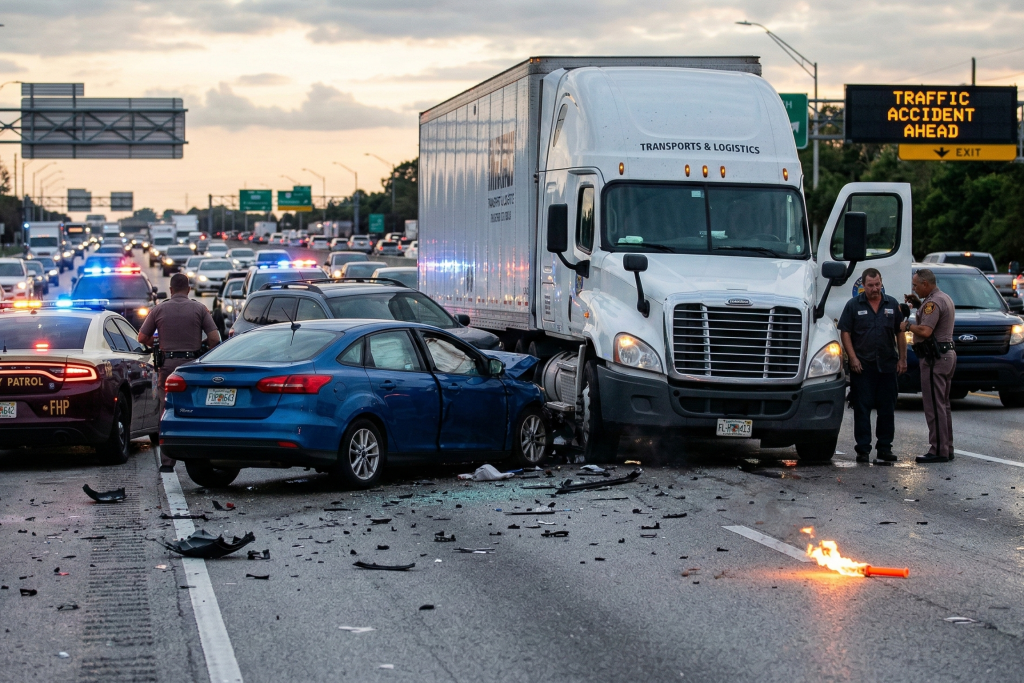
A branded company fleet van at the scene of a traffic incident with police lights visible in the background, representing a fleet vehicle accident in Tampa, Florida. For illustrative purposes only.
Blog, Commercial Vehicles, Company-Caused Car Accidents

Fleet Vehicle Accident Lawyer in Tampa: Who Is Liable After a Company Vehicle Crash?

If you need a fleet vehicle accident lawyer in Tampa, the first thing you should know is this: these crashes are not the same as regular car accidents, and the difference can significantly affect what your case is worth. You didn’t expect your day to go like this. One minute, you were driving through Tampa, minding your own business. Next, a company van, a delivery truck, or a branded fleet vehicle hits you, changing everything. Now you’re dealing with pain, lost wages, and a pile of medical bills. And on the other side of this mess is a corporation with lawyers, adjusters, and a playbook designed to minimize what they pay you. Here’s what most people don’t realize: fleet vehicle crashes are legally different from regular car accidents, and that difference can matter enormously for your claim. This article breaks down exactly why, who can be held responsible, and what you need to do to protect yourself. The Reyes Firm Hurt in a Fleet Vehicle Accident in Tampa? The business behind that driver may owe you more than you think. Had a bad day? Call us. Get Your Free Consultation Now Quick Summary Fleet vehicle crashes aren’t like regular accidents. The company behind the wheel may be just as liable as the driver. Florida law gives you 2 years from the date of the crash to file a claim under Florida Statute § 95.11(3)(a). That clock starts immediately. Florida recorded 381,210 traffic crashes in 2024, and commercial and fleet vehicles were involved in every single one. Get medical attention, document everything, and call a fleet vehicle accident lawyer before you speak to any insurance company. Had a bad day? Call The Reyes Firm at 833-4 BAD DAY — free consultation, no fee unless we win. Who Is Liable in a Fleet Vehicle Accident? The driver who hit you is liable. But in a crash involving a fleet vehicle, the vehicle’s owner is often liable as well. When an employee causes a crash while driving a company vehicle for work, the employer can be held responsible under a legal doctrine called vicarious liability. In plain terms, that means a business is responsible for what its employees do on the job, including when they are behind the wheel. If the driver was making deliveries, traveling between job sites, or running a company errand when the crash happened, the employer’s liability follows. That changes the entire landscape of your claim. Instead of dealing with one driver’s personal auto policy, you may be facing a corporate insurer with much higher coverage limits and far more resources to fight you. ⚠️ Important Florida’s statute of limitations for personal injury claims is 2 years from the date of the accident under Florida Statute § 95.11(3)(a). Miss that window, and you permanently lose your right to recover compensation, no matter how strong your case is. Why Company Fleet Crashes Are Different From Regular Accidents This is the question that matters most, and the answer comes down to three legal doctrines that simply don’t exist in a typical two-car collision. Vicarious liability is the foundation. When an employee is driving for work and causes a crash, the employer is automatically held responsible. You don’t have to prove the company did anything wrong on its own. The employment relationship is enough. Negligent entrustment goes further. This doctrine applies when a company hands the keys to someone they knew, or reasonably should have known, was an unsafe driver. A history of DUIs, a suspended license, prior at-fault crashes on their record, and the company gave them a vehicle anyway. That’s negligent entrustment, and it makes the company independently liable in addition to vicarious liability. Negligent hiring is the third angle. If the company failed to run a basic background check, skipped required driver qualification reviews, or ignored obvious red flags during the hiring process, they may be responsible for putting a dangerous driver on the road in the first place. These aren’t just legal technicalities. There are three separate, independent pathways to holding a company accountable. A skilled fleet vehicle accident attorney investigates all of them, because any one of them can significantly change what your case is worth. 💡 Did You Know? According to the Florida Department of Highway Safety and Motor Vehicles (FLHSMV), Florida recorded 381,210 traffic crashes in 2024, which works out to more than 1,000 crashes per day. Commercial and fleet vehicles were part of that statewide crash total. What Evidence Do You Need in a Fleet Vehicle Crash Case? Evidence in a fleet case goes well beyond the police report and photos from the scene. Because the company itself may be liable, you need records that the driver simply doesn’t have access to. Your attorney should be pursuing these from day one: Driver’s employment records — hiring documents, performance reviews, prior complaints Motor vehicle records (MVR) — the driver’s complete licensed history Vehicle maintenance logs — to determine if a mechanical failure played a role GPS and telematics data — many fleet vehicles track speed, braking, and location in real time Dashcam footage — from the vehicle itself or nearby business cameras Company driving policies — to show whether the employer followed their own rules Training records — to establish what the driver was or wasn’t taught Companies and their insurers know exactly what this evidence can do to a case. They also know it disappears fast. Telematics data gets overwritten. Dashcam footage gets deleted. The Reyes Firm works with investigators and experts who know how to preserve this evidence before it’s gone. Does Florida’s No-Fault System Apply to Fleet Vehicle Crashes? Florida is a no-fault state, which means your own Personal Injury Protection (PIP) coverage pays your initial medical bills and lost wages regardless of who caused the crash. That requirement is governed by Florida Statute § 627.736, which requires Florida drivers to carry at least $10,000 in PIP coverage. But PIP has a hard ceiling. It covers 80% of medical expenses and

Company-branded work van involved in a business vehicle accident in Tampa
Blog, Commercial Vehicles, Company-Caused Car Accidents, Truck Accidents

Business Vehicle Accident Lawyer in Tampa: What to Do When a Company Car Causes Your Crash

You’re stopped at a light. A van with a company logo on the door blows through and hits you. That logo matters more than you might think. When a crash involves a company car, a delivery truck, or any vehicle driven for business purposes, the legal picture changes quickly. There may be more insurance coverage available. There may be corporate liability. And there will almost certainly be a well-funded defense team working against you from day one. This guide explains how business vehicle accident cases work in Tampa, who can be held responsible, what Florida law says about your rights, and when to call a business vehicle accident lawyer. The Reyes Firm Hurt in a Business Vehicle Accident in Tampa? If a company car, work truck, or delivery vehicle caused your crash, get clear next steps today. Had a bad day? Schedule Your Free Consultation Quick Summary If a company driver caused your crash, you may have a claim against both the driver and their employer. Florida gives you 2 years to file under Florida Statute § 95.11(3)(a). That clock starts on the day of the crash. Florida recorded 381,210 crashes in 2024, more than 1,000 every single day, and business vehicles are on those roads constantly. Get medical care today. Document everything. Call a lawyer before you speak to any insurance company. Had a bad day? Call The Reyes Firm at 833-4 BAD DAY. Free consultation. No fee unless we win. What Is a Business Vehicle Accident? A business vehicle accident is any crash involving a vehicle being used for work purposes at the time of the collision. This includes company-owned cars, fleet trucks, delivery vans, work pickups, and personal vehicles driven for business errands. If the driver was on the clock or acting on behalf of their employer when the crash happened, the company may share legal responsibility. That legal principle is called vicarious liability. It means an employer can be held accountable for harm caused by an employee who was doing their job at the time. Did You Know? Florida recorded 381,210 traffic crashes in 2024, more than 1,000 every single day. Business vehicles, fleet trucks, and delivery vans are part of that number year-round. Who Can Be Held Liable After a Company Car Crash in Florida? More than one party can be liable, and identifying all of them is one of the first things a business vehicle accident lawyer does. Potentially responsible parties include: The driver, if they were speeding, distracted, or otherwise negligent The employer or company, if the driver was acting within the scope of their job A staffing or temp agency, if the driver was placed by a third party A vehicle maintenance company, if a mechanical failure contributed to the crash The vehicle manufacturer, in cases involving a defective part Florida follows a modified comparative fault rule under Florida Statute § 768.81. Your compensation can be reduced by your percentage of fault. If you are found more than 50% at fault, you lose the right to recover anything at all. This is why you should never accept or admit fault, even casually, before speaking to an attorney. Important Florida’s statute of limitations for personal injury claims is 2 years from the date of the accident under Florida Statute § 95.11(3)(a). Miss that deadline and you permanently lose your right to file, no matter how strong your case is. What Does “Scope of Employment” Mean, and Why Does It Matter? The scope of employment determines whether the employer is legally responsible for what their driver did. In plain terms, it asks: was the driver doing something work-related when the crash happened? A delivery driver who hits you during a drop-off is clearly within scope. A salesperson who hits you while running a personal errand during their lunch break is a closer call. Key distinctions Florida courts examine: Commuting: Driving to and from work is generally not considered scope of employment, unless the employee is in a company vehicle or travel is part of the job Minor detours: Stopping for coffee on a work route may still keep the employer liable Major departures: Driving far off-route for personal reasons may break the employer’s liability Borrowed vehicles: If an employer permits someone to drive a company car, liability can follow the vehicle An attorney will dig into driver logs, GPS records, dispatch data, and the employment agreement to build the full picture. What Should You Do Right After a Business Vehicle Crash in Tampa? Act quickly. The company and its insurer may begin their own investigation within hours of the crash. Steps to take immediately: Call 911 and get a police report filed at the scene Photograph the vehicles, road, skid marks, the company logo on the other vehicle, and your injuries Write down the driver’s name, license, insurance, and their employer’s name Get contact information from any witnesses before they leave Seek medical care the same day, even if you feel okay Do not give a recorded statement to any insurance company before speaking to a lawyer That last step is especially important. Corporate insurers are experienced at using your own words to minimize your claim. You are not required to speak with them before you have legal representation. Your Rights Under Florida Law Florida Statute § 627.736 requires Personal Injury Protection (PIP) coverage on all registered Florida vehicles. Your own insurance covers the first $10,000 of medical bills and lost wages regardless of fault. But PIP has limits. Serious injuries often require pursuing full tort recovery beyond PIP, which a business vehicle accident claim can provide. How Much Can You Recover in a Business Vehicle Accident Claim? Business vehicle claims often recover more than standard car accident claims because corporate defendants typically carry commercial auto policies with higher limits. If the company was also negligent in hiring, training, or supervising the driver, you may be able to pursue additional damages on that basis as well. Recoverable damages in a Florida business vehicle

Illustration of a damaged work vehicle after a crash for a Tampa work vehicle accident lawyer article
Blog, Commercial Vehicles, Company-Caused Car Accidents

Tampa Work Vehicle Accident Lawyer: What Happens If a Driver on the Job Hits Your Car?

You’re stopped at a red light on Dale Mabry. A van or a work vehicle with a company logo on the door rear-ends you. The driver apologizes, hands you an insurance card, and says, “Don’t worry, I’m covered through work.” You go home sore. A few days later, an insurance adjuster calls and asks for a recorded statement. You have no idea what your rights are or who is actually responsible for your medical bills. That is exactly the situation this guide is written for. We will walk you through how Florida law handles accidents caused by someone driving on the job, who can be held responsible, and what you need to do right now to protect your claim. The Reyes Firm Hit by a Work Vehicle in Tampa? Get clear next steps after a crash involving a company vehicle. Had a bad day? Contact Us Now Quick Summary If a driver who was working at the time hits your car, their employer may be on the hook for your damages, not just the driver. Florida’s statute of limitations for negligence claims is 2 years from the date of your accident under Florida Statute Section 95.11(3)(a). Miss that window, and you may lose your right to recover anything. Florida recorded 381,210 traffic crashes in 2024, according to the FLHSMV, and a significant portion involved commercial or work-related vehicles. Document everything at the scene, decline to record statements for the other driver’s insurance, and call an attorney before signing anything. Had a bad day? Call The Reyes Firm at 833-4 BAD DAY. Free consultation, no fee unless we win. Who Is Legally Responsible When a Driver Hits You During Work Hours? The driver is responsible. But so may be their employer. Florida recognizes a legal doctrine called vicarious liability. Under this rule, an employer can be held responsible for the negligent actions of an employee who was performing job duties at the time of the crash. If a delivery driver, sales representative, or service technician causes an accident while running an errand for their company, that company can be named in your claim. This matters because individual drivers often carry minimum-limit insurance. A company’s commercial policy typically carries much higher limits, meaning there may be significantly more money available to compensate you for your injuries, lost wages, and vehicle damage. The Reyes Firm regularly handles work-vehicle accident cases in Tampa. The first thing we do is investigate exactly what the driver was doing at the moment of impact. What Does “In the Course and Scope of Employment” Mean? This phrase determines whether the employer shares liability for your crash. Courts look at whether the employee was performing work-related duties when the accident occurred. If the driver was making a delivery, driving between job sites, picking up supplies, or transporting a client, the employer is likely on the hook. There are limits. If the employee was running a personal errand on company time (a detour courts sometimes call a “frolic”), the employer may not be liable for what happens during that side trip. These distinctions are fact-specific, and they are exactly the kind of issue a Tampa work vehicle accident attorney knows how to investigate and argue. Important Florida’s statute of limitations for personal injury claims is 2 years from the date of the accident under Florida Statute Section 95.11(3)(a). If you were hit by a work vehicle and have not spoken to a lawyer, the clock is already running. Miss this deadline, and you permanently lose your right to pursue compensation. Can a Company Still Be Liable If the Driver Was Off the Clock? In some work vehicle and trucking accident cases, the employer may still be responsible even if the driver says they were off duty. This video explains how company liability can still apply when the employer entrusted the vehicle to the driver. Video topic: employer liability after a trucking or work vehicle accident, including situations where the driver may have been off the clock. What if the driver were using a Personal Vehicle for Work? The employer can still be liable, even if the vehicle was not a company car. This situation comes up constantly with gig economy workers, real estate agents, contractors, and home health aides. They drive their own vehicles to work. If their employer required or expected them to use a personal car for work tasks and they caused an accident while doing so, the employer’s commercial policy may still respond. Florida courts look at the actual working relationship, not just the vehicle registration. An experienced Tampa work vehicle accident lawyer can pull dispatch logs, GPS data, employment records, and insurance declarations to build a full picture of who is responsible and what coverage is available. Did You Know? According to the Florida Department of Highway Safety and Motor Vehicles (FLHSMV), Florida recorded 381,210 traffic crashes in 2024, more than 1,000 crashes every single day. Work-related vehicle crashes represent a significant and often overlooked subset of that total. What Should You Do Right After a Work Vehicle Accident in Tampa? Act as if the evidence will disappear, because some of it will. Here is what to do immediately after a crash with a driver who was on the job: Call 911. Get law enforcement on scene. A police report creates an official record of what happened and often notes whether the at-fault driver was on the clock. Photograph everything. Capture the damage to both vehicles, the company logo on the at-fault vehicle, the license plate, any signage, road conditions, and any visible injuries. Collect the driver’s employment information. Get the employer’s name, a supervisor’s contact, and the company’s insurance information, not just the driver’s personal policy number. Seek medical attention the same day. Even if you feel okay. Adrenaline masks pain, and gaps in medical treatment are one of the first things insurance companies use to reduce your claim value. Decline a recorded statement. The employer’s insurance company is not on your side. Politely

Damaged delivery van after a Florida crash, featured image for a company vehicle accident lawyer article
Blog, Commercial Vehicles, Company-Caused Car Accidents

Company Car Crash Attorney in Florida: Who Pays After a Work Vehicle Accident?

In Florida, you can sue the company, not just the driver, when one of its vehicles causes a crash and the driver was working at the time. Right after a crash with a company-owned truck, delivery van, or fleet vehicle, most people are not thinking about legal theories. They are thinking about pain, confusion, missed work, car damage, and whether the business behind the vehicle will take responsibility. A company car crash attorney can identify the employer, fleet owner, maintenance vendor, and commercial insurance policies that may apply. These cases often involve several responsible parties, business records, and coverage disputes that do not exist in a typical two-car crash. This guide explains who may be held liable after a work-vehicle crash in Florida, what evidence matters, how employer liability works, and what injured people in Tampa, Riverview, Ruskin, Wimauma, and throughout Florida should do next. The Reyes Firm Hurt in a Company Vehicle Accident in Florida? Get clear next steps after a crash involving a delivery van, fleet car, or work vehicle. Had a bad day? Contact Us Now Quick Summary After a crash with a company vehicle, call 911, get medical care, and document the scene before evidence disappears. The company may be liable if the driver was working at the time or if the business failed to hire, train, maintain, or supervise safely. Florida cases often turn on the scope of employment, crash evidence, medical proof, and insurance strategy. Commercial policies may have higher limits, but they are usually defended aggressively. Had a bad day? Call The Reyes Firm at 833-4 BAD DAY. Key Takeaway In Florida, a company may have to pay after a work-vehicle crash if its employee caused the collision while on the job, or if the company itself acted carelessly through poor hiring, supervision, maintenance, or safety practices. Early medical care, thorough documentation, and rapid preservation of evidence often determine whether the claim remains strong. Can I Sue a Company for a Car Accident in Florida? Yes. Florida law allows you to sue the employer when one of its drivers causes a crash while working. The legal doctrine behind this is called respondeat superior, Latin for “let the employer answer.” Florida courts apply this when the driver was acting within the scope of their job at the time. The scope of employment covers deliveries, driving between job sites, and work errands. It generally does not cover personal detours during the shift. That distinction is exactly what the defense will argue, and it’s why dispatch records, route logs, and work schedules matter so much. Florida also has a separate rule called the dangerous instrumentality doctrine. A company that owns a vehicle can be held liable for a crash caused by any driver they permitted to use it, even if that driver wasn’t strictly “on the job” at the moment. These two doctrines can apply together or independently, depending on your facts. ⚠️ Warning: Florida Statute § 95.11 generally gives you two years from the date of the crash to file a negligence-based personal injury claim. But GPS logs, dashcam footage, dispatch records, electronic logging device data, and other company-held records can be overwritten or lost much sooner. An attorney may need to send a preservation demand quickly to protect key evidence. Do not wait. Who Pays After a Work Vehicle Crash in Florida? After a work vehicle crash in Florida, payment may come from the company’s insurance, the driver’s insurance, or another liable business party, such as an employer, maintenance company, or cargo-related company. The answer depends on who caused the crash, whether the driver was working at the time, and what insurance coverage applies. Video: Who May Pay After a Serious Commercial Vehicle Crash? This short video explains a question many people have after a serious commercial vehicle crash: who may pay the medical bills, handle vehicle damage, and be held financially responsible. It supports this article’s discussion of employer liability, insurance issues, and what to do next after a Florida work vehicle accident. This video reinforces the article’s explanation that company vehicle and commercial vehicle cases often involve insurance pressure, serious injuries, and questions about who should pay after the crash. What Does a Company Car Crash Attorney Do? A company vehicle accident lawyer investigates whether the driver, the employer, or multiple business-related parties may be responsible for the crash. The goal is not just to prove that a collision happened, but to show why the company should be financially accountable. That matters because crashes involving work vehicles are rarely simple. A person may be hit by a delivery van in Riverview, a service truck in Ruskin, or a corporate fleet vehicle in Tampa, yet the real decision-makers may be a parent company, a contractor, a maintenance vendor, a broker, or an insurer working behind the scenes. A strong case usually involves: identifying who owned the vehicle confirming whether the driver was on the clock reviewing insurance coverage preserving logs, electronic data, and camera footage proving the injury with medical evidence In many cases, the deeper issue is not just driver negligence. It is whether the business created risk and then tried to hide behind the driver after the crash. What should someone do after a work vehicle crash in Tampa? First, protect safety and call 911. Then get medical care, document the scene, exchange information, and avoid saying anything that could be taken as an admission of fault. Those first steps matter because company vehicle cases can quickly become evidence fights. A delivery van can be repaired, dashcam footage can be overwritten, and the employer can start building its defense the same day. Move to safety if possible. Do not stay in traffic if the area is dangerous. Call 911. A police response can help create an official crash record. Take photos and video. Capture vehicle positions, license plates, company logos, skid marks, debris, traffic signs, and road conditions. Get names and contacts. Ask for the driver’s name, employer, insurer, vehicle

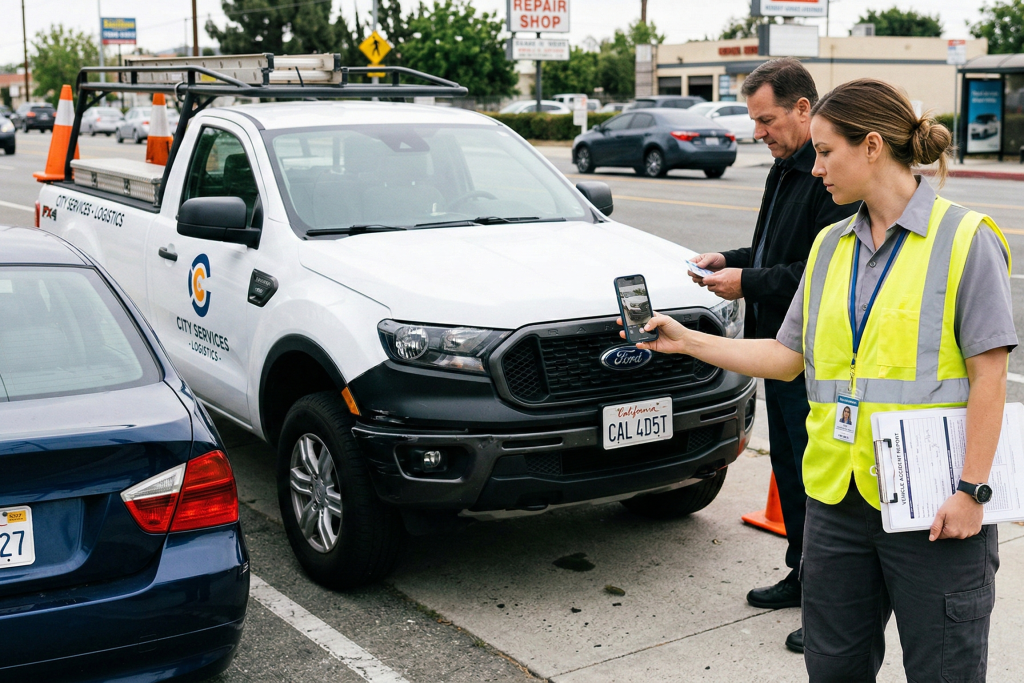
work vehicle accident
After A Car Accident, Blog, Company-Caused Car Accidents

Work Vehicle Accident: What Employees Should Do (And What to Avoid Saying)

A work vehicle accident can change everything in seconds. One moment, an employee is heading to a construction site, meeting a client at a development project, or traveling between inspections. The next moment, there is a crash, damaged equipment, possible injuries, and questions from police and insurance companies. For construction professionals, property owners, architects, government agencies, real estate developers, and engineering students in field training, driving is not optional — it is part of the job. Company trucks carry tools. Fleet vehicles transport teams. Supervisors move between active sites. When a crash happens, it does not just affect one person. It can delay projects, trigger insurance claims, and create legal risk for the employer. In Florida, these cases are often more complex than people expect. A work vehicle accident can involve workers’ compensation, personal injury law, commercial insurance policies, and employer liability rules. Many injured employees accidentally hurt their own claims by saying the wrong thing or failing to take the right steps. Understanding what to do — and what to avoid — can protect both a person’s health and their legal rights. What Is a Work Vehicle Accident? A work vehicle accident occurs when an employee is involved in a crash while performing job-related duties. The key factor is whether the employee was acting within the scope of employment at the time of the crash. This can include: Driving a company-owned truck or van Operating a fleet vehicle assigned to a project Using a personal vehicle for work errands Traveling between construction sites Delivering materials or equipment Attending inspections, meetings, or government site reviews For professionals in construction and development, driving is often part of daily operations. A superintendent might visit three sites in one day. An architect may inspect structural framing progress. A property owner might check on multiple rental properties. Engineering students in internships may accompany field supervisors in company vehicles. If an accident occurs during any of these activities, it may legally qualify as a work vehicle accident. That classification matters because it determines which insurance policies apply and whether the employer may share responsibility. Step 1: Make Safety the Top Priority After a work vehicle accident, safety comes first. Project deadlines, equipment, and company property do not matter more than human life. Employees should immediately: Check themselves and others for injuries Call 911 if anyone is hurt Move to a safe location if the vehicle is operable Turn on hazard lights Avoid standing in traffic lanes Construction professionals are often trained to think about safety hazards. Apply the same mindset used on job sites to the roadway. Is there leaking fuel? Is traffic moving at high speed? Is the vehicle unstable? Even if injuries seem minor, emergency evaluation is important. Adrenaline can hide pain. Soft tissue injuries, concussions, and internal injuries may not show symptoms immediately. Ignoring early signs can lead to more serious complications later. Step 2: Report the Accident Immediately Proper reporting protects both the employee and the employer. First, ensure law enforcement creates an official accident report. In Florida, police documentation is critical for insurance claims and potential litigation. Second, notify a supervisor or employer as soon as possible. Many companies — especially construction firms and development companies — have strict accident reporting policies. Delays can raise concerns about compliance or credibility. Employees should provide factual information only: Date and time Location Vehicles involved Basic description of what happened Avoid emotional or speculative statements. Simply stick to known facts. For property managers, architects, and engineers, documenting the timeline is important. If the accident occurred while traveling between sites, this helps establish that the employee was acting within job duties. Step 3: Document the Scene Thoroughly Evidence collected at the scene can make a significant difference later. If physically able, employees should: Take clear photos of all vehicles involved Photograph visible injuries Capture road conditions (wet pavement, debris, signage) Document construction zone conditions if applicable Obtain witness names and contact information For construction professionals and engineers, site conditions matter. Was there poor road design? Were traffic control devices missing? Was visibility blocked by equipment or materials? These details may not seem important in the moment, but they can affect liability. For example: A poorly marked construction zone may shift responsibility. An improperly secured load could create secondary liability. A malfunctioning traffic signal may involve a government entity. The more documentation gathered early, the stronger the case can become. Step 4: Seek Medical Treatment Within 14 Days Florida’s no-fault insurance system requires injured individuals to seek medical treatment within 14 days of the crash to qualify for Personal Injury Protection (PIP) benefits. This rule is strict. Missing the 14-day window can eliminate access to certain insurance benefits. Employees should: Visit an emergency room, urgent care, or primary doctor Inform the provider the injury resulted from a work vehicle accident Follow all medical advice Attend follow-up appointments Keep copies of all records and bills For construction professionals whose jobs are physically demanding, early treatment is essential. Delaying care may worsen injuries and increase recovery time. If the injury affects the ability to work, proper documentation also supports wage-loss benefits under workers’ compensation. What Employees Should Avoid Saying After a Work Vehicle Accident Words matter. In the stress of the moment, people often say things they later regret. Avoid Admitting Fault Saying “It was my fault” may feel polite, but fault is a legal conclusion based on evidence, not opinion. Even partial admissions can be used by insurance companies to reduce compensation. Avoid Minimizing Injuries Statements like “I’m fine” or “It’s just a small pain” can later be used to argue that injuries are not serious. Instead, employees should say they would like medical evaluation. Avoid Guessing Details Do not estimate speed, distance, or cause unless absolutely certain. If unsure, it is acceptable to say, “I do not know.” Avoid Speaking to Insurance Adjusters Without Guidance Insurance companies may request recorded statements. These statements are designed to protect the insurer, not the injured person. Employees

negligent hiring in driving accident
Accident Injuries & why, Blog, Company-Caused Car Accidents

Negligent Hiring in Driving Accidents: Red Flags That Raise Employer Risk in Florida

When a serious vehicle crash happens, most people look at the driver. But in many cases, the bigger legal problem started long before impact, during the hiring process. In Florida’s fast-growing construction and development environment, companies depend heavily on drivers to move materials, travel between job sites, and transport equipment. That’s why negligent hiring in driving accident cases are so costly. When a company puts an unqualified or unsafe driver behind the wheel without proper screening, the risk is not just operational, it’s legal. For construction firms, real estate developers, property managers, and public agencies, one poorly vetted driver can trigger major claims, project disruption, and lasting reputational damage. At The Reyes Firm, these cases often reveal warning signs that could have been caught early. Knowing what those red flags look like helps organizations reduce exposure and helps injured victims understand their rights. What Is Negligent Hiring in a Driving Accident? A negligent hiring driving accident occurs when an employer hires or keeps a driver who is unfit for the job, and that driver later causes a crash. In Florida, employers have a legal duty to use reasonable care when hiring employees. This duty becomes even more serious when the job involves operating: Company trucks Construction vehicles Heavy equipment transport vehicles Fleet vans Government or municipal vehicles Engineering inspection vehicles Negligent hiring is not about simple mistakes. It focuses on whether the employer ignored information that should have raised concern. For example, if a company hires a driver with a history of DUIs, reckless driving, or license suspensions — and fails to investigate further — that can form the basis of a direct claim against the company. This is different from basic employer liability. In negligent hiring, the company is being sued for its own carelessness in the hiring process — not just for what the employee did. Why This Matters to Construction, Engineering, and Development Professionals Construction professionals and developers often focus on structural safety, compliance, and project timelines. However, transportation risk is equally important. Large-scale projects typically involve: Delivery trucks transporting steel, concrete, and materials Dump trucks and heavy haulers Subcontractor vehicles entering and exiting job sites Engineers traveling between inspection sites Government vehicles managing public infrastructure These vehicles are heavier than standard cars and can cause catastrophic damage in a crash. If a negligent hiring driving accident occurs, the consequences may include: Multi-party litigation Project delays Insurance disputes Increased premiums Damage to professional reputation Loss of public contracts For government agencies and public-private partnerships, these cases may also trigger compliance investigations. For engineering students and future project managers, understanding hiring liability is part of responsible project leadership. Safety is not limited to structural integrity — it extends to operational decision-making. Key Red Flags That Raise Employer Risk Many negligent hiring cases share common warning signs. These red flags often show that the accident was predictable and preventable. 1. Poor Driving Record One of the strongest indicators in a negligent hiring driving accident case is a driver’s past driving history. Red flags include: Multiple speeding violations Prior reckless driving charges DUI convictions Suspended or revoked licenses Prior commercial vehicle crashes Employers are expected to review Motor Vehicle Records (MVRs). Failing to check — or ignoring serious violations — can be seen as unreasonable behavior. For companies operating heavy trucks in Florida’s busy traffic corridors, skipping this step can be extremely costly. 2. Failure to Conduct Background Checks Hiring a driver without reviewing their background increases risk significantly. A responsible hiring process should include: Criminal background screening Verification of prior employment Reference checks Confirmation of license class and endorsements For example, if a driver previously worked for another construction firm and was terminated for unsafe driving, that information is critical. When companies skip this process to save time or money, they increase exposure to negligent hiring claims. 3. Inadequate Training for Heavy or Specialized Vehicles Construction and engineering vehicles often require specialized skills. Some drivers need: Commercial Driver’s Licenses (CDL) Hazardous material endorsements Load securement training Defensive driving certification Equipment handling instruction Allowing someone to operate a dump truck, flatbed hauler, or equipment transporter without proper training is dangerous. For developers and contractors managing multiple subcontractors, verifying training standards is critical to reducing exposure. 4. Ignoring Workplace Complaints or Safety Warnings Sometimes warning signs appear after hiring. Coworkers may report: Aggressive driving Road rage incidents Substance use concerns Unsafe behavior at job sites Near-miss accidents If management ignores these warnings, liability risk increases. This may shift the case from negligent hiring to negligent retention — meaning the company kept an unsafe driver despite knowing the risks. For organizations managing large teams, proper reporting systems and documentation procedures are essential. 5. Failure to Follow Industry and Regulatory Standards Florida employers operating commercial vehicles must follow: Florida Department of Highway Safety regulations Federal Motor Carrier Safety Administration (FMCSA) standards OSHA job site safety rules DOT compliance requirements Failure to maintain logs, conduct drug testing, or ensure CDL compliance can strengthen a negligent hiring claim. For government agencies and public contractors, noncompliance can lead to additional regulatory consequences. How a Negligent Hiring Driving Accident Claim Is Proven in Florida To succeed in a negligent hiring claim, a plaintiff generally must show: The employer had a duty to hire competent drivers. The employer failed to act reasonably in screening or supervising. The driver was unfit or unsafe. That unfitness directly caused the crash and injuries. These cases often require deep investigation into: Personnel files Hiring policies Training manuals Safety meeting records Email communications Insurance documentation For large construction and engineering firms, internal documentation can become central courtroom evidence. Why Florida Employers Face Elevated Risk Florida’s environment increases exposure because of: High population density Tourism traffic Rapid urban development Heavy commercial vehicle activity Frequent highway construction zones Jurors in Florida understand how dangerous commercial vehicles can be. When evidence shows that an employer ignored clear red flags, verdicts can be significant. For firms seeking government contracts or large-scale development opportunities, a major lawsuit

employer liability for a company car accident
Blog, Company-Caused Car Accidents

Employer Liability for a Company Car Accident: When the Company Pays

A company vehicle rolling through a job site, heading to a client meeting, or traveling between project locations may seem like a normal part of doing business. In Florida, especially in industries like construction, engineering, and real estate development, company cars, trucks, and vans are everywhere. They’re essential tools that help businesses operate efficiently. But when one of those vehicles is involved in an accident, the consequences can be serious—physically, financially, and legally. Who pays when a crash involves a company vehicle? Is it the employee behind the wheel, the company, or both? Understanding employer liability for a company car accident case is critical not only for people who get injured but also for business owners, property developers, architects, government agencies, and engineering professionals who rely on vehicles to keep their projects running smoothly. These legal rules can affect insurance coverage, project timelines, business reputation, and financial risk. In Florida, employer liability is not automatic—but it is common. When certain conditions are met, the law allows injured parties to hold the company responsible, not just the driver. Knowing how and why this works can help professionals make smarter decisions, manage risks, and protect themselves before and after an accident happens. What Is Employer Liability for a Company Car Accident? Employer liability for a company car accident refers to situations where a business is legally responsible for injuries or damages caused by an employee driving a company vehicle. This responsibility often comes from a legal principle called vicarious liability, which essentially allows a company to “stand in the shoes” of its employees when they cause harm during work. In simple terms, vicarious liability means: An employer can be held responsible for the actions of an employee Only if those actions happen while performing their job duties For construction professionals, engineers, and property developers, this can include accidents caused while driving between job sites, delivering equipment, transporting materials, or meeting clients and contractors. Even if the employee did not intend to cause harm, the employer may still share responsibility if the accident occurred during work-related activities. For example, an engineering consultant inspecting a bridge site might accidentally hit a pedestrian while backing up a company truck. If the employee was acting within their job responsibilities, both the employee and the employer could face liability. Knowing this can help businesses ensure proper training, insurance coverage, and safety protocols are in place. The Legal Rule Behind Employer Responsibility Florida follows a legal doctrine known as respondeat superior, which translates to “let the master answer.” This principle holds employers responsible for the actions of employees while they are performing tasks on behalf of the company. To establish employer liability for a company car accident, three main elements must be met: Employee Status – The driver must be a true employee, not an independent contractor. Independent contractors are generally responsible for their own actions unless the company is directly negligent. Scope of Employment – The employee must be performing duties within the course of their job. Driving between project locations, carrying company equipment, or attending client meetings usually qualifies. Accident During Work Duties – The accident must happen while conducting work-related activities, not during personal errands or off-duty travel. When these criteria are satisfied, the employer’s insurance and resources often make them more capable of compensating injured parties than an individual driver. This is particularly relevant in industries like construction and engineering, where vehicle use is essential to daily operations and accidents can involve heavy equipment, hazardous materials, or complex project sites. What Counts as “Within the Scope of Employment”? Defining what counts as “within the scope of employment” is often the most contested aspect of these cases. Florida law generally considers an employee to be acting within the scope of employment when their actions are intended to serve the employer’s business purpose, rather than personal interests. Typical work-related driving includes: Traveling between construction or development sites Delivering equipment, tools, or materials to a job location Attending inspections, client meetings, or regulatory reviews Running errands ordered or approved by the employer Using a company vehicle during paid working hours For example, an architect visiting a property to finalize blueprints or an engineering student working on a site assessment as part of an internship could fall under this scope if driving is part of their official duties. Employers are usually not responsible if: The employee uses the vehicle for personal errands or trips The driving occurs outside work hours without employer approval There’s a substantial detour unrelated to business purposes These distinctions can make or break a claim, which is why companies should maintain clear policies regarding vehicle use and ensure employees understand them. Company-Owned Vehicle vs. Personal Vehicle Employer liability does not always depend on who owns the vehicle. Company-Owned Vehicles Courts are more likely to hold employers responsible when the company owns the vehicle. This is because the business controls the maintenance, policies, and assignment of the vehicle, making it easier to establish that the driving was part of the job. Personal Vehicles Used for Work Even when employees drive their own vehicles, employers can still be liable if: The driving was required or strongly encouraged by the employer The trip served the company’s business interests The employee was compensated for mileage or fuel For example, a property manager using their personal car to conduct routine inspections of multiple buildings may trigger employer liability if the employer requested these visits and benefited from the employee’s travel. Understanding these nuances is especially critical for real estate developers, contractors, and government agencies, as it affects insurance policies, risk planning, and liability exposure. Why These Cases Matter to Construction and Engineering Professionals Employer liability for company car accident cases often extends beyond traditional traffic law. The consequences can directly affect projects, budgets, and reputations in industries like construction, engineering, and real estate development. Potential impacts include: Project Delays: Legal disputes can hold up construction timelines or inspections, slowing down the completion of a project. Insurance Costs: Accidents

company vehicle accident liability
Blog, Company-Caused Car Accidents

Company Vehicle Accident Liability: Who’s Responsible and Why

Company vehicles are a daily part of life across Florida. From construction trucks entering job sites to engineering consultants driving between inspections, business-owned vehicles keep projects moving. But when one of these vehicles is involved in an accident, the legal issues are far more complex than a normal car crash. Suddenly, questions arise about insurance coverage, employer responsibility, and who is financially accountable for injuries or damage. Company vehicle accident liability is not just a legal concern—it is a serious risk for businesses and a critical issue for injured victims seeking fair compensation. These accidents often involve larger vehicles, heavier loads, and higher speeds, which increases the chance of severe injuries or even fatalities. They also involve corporate insurance policies that are designed to protect companies, not injured people. This article explains company vehicle accident liability from the perspective of The Reyes Firm, a Florida-based personal injury and accident law firm focused on representing plaintiffs. It breaks down who may be responsible, why liability matters, and how these cases affect construction professionals, property owners, architects, government agencies, real estate developers, and engineering students who interact with company vehicles every day. What Is Company Vehicle Accident Liability? Company vehicle accident liability refers to the legal responsibility for injuries, property damage, or death caused by a vehicle used for business purposes. This includes vehicles owned, leased, rented, or assigned by a company to an employee or contractor. Unlike personal vehicle accidents, company vehicle accident liability often involves multiple layers of responsibility. The law does not only look at who was driving. It examines who owned the vehicle, who controlled the driver, why the trip was being made, and whether safety rules were followed. In industries such as construction, engineering, and real estate development, vehicles are often extensions of the job site. Pickup trucks, vans, dump trucks, and utility vehicles are used to transport workers, materials, tools, and plans. When an accident occurs, the business behind the vehicle may be legally responsible for the harm caused. Florida law allows injured plaintiffs to pursue compensation when negligence is involved. Understanding how company vehicle accident liability works is essential for protecting both legal rights and long-term financial stability. Who Can Be Held Responsible in a Company Vehicle Accident? One of the most important aspects of company vehicle accident liability is identifying all potentially responsible parties. These cases rarely involve just one person. The Company or Employer In many situations, the employer is legally responsible for accidents caused by an employee driving a company vehicle. This is based on vicarious liability, a legal rule that holds employers accountable for the actions of employees performed within the scope of their job. For example, if a construction supervisor crashes a company truck while driving to a job site, the company may be liable. If an engineering firm employee causes a collision while heading to an inspection, the firm may be responsible. This matters greatly because companies usually carry commercial insurance policies with higher limits, which increases the amount of compensation available to injured victims. The Employee or Driver The driver may also share responsibility, especially if their actions were reckless or illegal. Speeding, distracted driving, texting, driving under the influence, or violating company safety policies can all increase personal liability. In some cases, both the driver and the employer are named in the claim. This shared liability is common in serious injury cases involving company vehicles. Independent Contractors and Subcontractors Many construction and development projects rely heavily on subcontractors. Businesses often assume they are protected from liability when a driver is labeled an independent contractor. However, Florida courts look beyond job titles. If the company controls the contractor’s schedule, vehicle use, routes, or job duties, the company may still be held responsible. This is especially relevant on large construction sites where multiple companies operate under one project manager. Vehicle Owners and Maintenance Providers If a mechanical failure caused the accident, liability may extend to whoever was responsible for maintaining the vehicle. Faulty brakes, worn tires, steering failures, or ignored maintenance issues can shift responsibility to the company or a third-party service provider. Why “Scope of Employment” Matters So Much A central question in company vehicle accident liability cases is whether the driver was acting within the scope of employment at the time of the crash. A driver is generally considered within the scope of employment when they are performing duties that benefit their employer. This includes: Driving to or from job sites Transporting tools, materials, or equipment Attending meetings with architects, developers, or government agencies Conducting inspections or site visits Problems arise when companies argue the driver was on a “personal errand” to avoid liability. Even small deviations, like stopping for food or fuel, usually do not remove employer responsibility if the trip was still work-related. Understanding scope of employment is critical because it often determines whether a commercial insurance policy applies. How Florida Law Treats Company Vehicle Accidents Florida’s legal framework treats company vehicle accident liability differently than standard car accidents. While Florida is a no-fault state for personal vehicles, serious injuries often allow claims beyond Personal Injury Protection (PIP). Commercial vehicles typically carry: Higher insurance limits Separate commercial auto policies Additional coverage requirements Florida also follows comparative negligence, meaning fault can be divided among multiple parties. This is common in construction-related crashes where site conditions, traffic design, and vehicle operation all play a role. For injured plaintiffs, identifying every responsible party is essential to securing full compensation. Common Causes of Company Vehicle Accidents Company vehicle accidents often stem from systemic issues rather than one simple mistake. Common causes include: Driver fatigue caused by long shifts and tight project deadlines Distracted driving due to phones, radios, or job-related communications Poor vehicle maintenance Inadequate driver training Unsafe job-site traffic patterns Pressure to meet construction or development timelines For architects and engineers, poor site layout or inadequate traffic planning can contribute indirectly to accidents. For developers and government agencies, oversight failures can increase exposure. How Insurance Works in

Scroll to Top