Truck Accidents

Semi-truck driving on I-75 under dark storm clouds, representing a fatal truck crash near Weston, Florida.
Blog, News, Truck Accidents, Wrongful Death

What Families Need to Know After the Fatal I-75 Truck Crash in Weston

A typical Sunday morning drive can turn into a nightmare in the blink of an eye. For the people driving near Weston on July 13, 2025, that nightmare became real. A tragic accident involving a large Amazon semi-truck stopped traffic and changed lives forever. When a big truck hits a person or a small car, the damage is often terrible, and families are left with broken hearts and many questions. The crash happened on I-75 near the I-595 interchange in Weston. Police reports say an Amazon semi-truck hit and killed a pedestrian. The accident caused a massive traffic jam that lasted for hours. While the traffic eventually cleared up, the pain for the victim’s family is just beginning. When a commercial truck is involved in a death, it is not just a simple car accident. It becomes a complicated legal situation involving big companies and insurance policies. Families often feel lost after such a tragedy. They don’t know who to hold accountable or how to cover the unexpected costs. The Reyes Firm understands that this is a confusing and scary time. This article explains what families need to know about the I-75 fatal truck crash in Weston and how the law in Florida works to protect them. What Happened on I-75 in Weston? On the morning of July 13, drivers on I-75 saw flashing lights and yellow tape. A pedestrian was struck by a massive delivery truck owned or operated by Amazon. Emergency workers arrived quickly, but sadly, the person died at the scene. Accidents like this are very different from a fender-bender in a parking lot. Semi-trucks are enormous and heavy. They take a long time to stop. If a driver is not paying attention or a truck component malfunctions, people can be seriously injured. In this case, investigators are examining why the truck struck the person. Was the driver speeding? Was the driver tired? These are questions that truck accident lawyers at The Reyes Firm ask to find the truth. Approximate location of the I-75 fatal truck crash in Weston at the I-595 interchange. Who Is Responsible for the Crash? When a car crash happens, it is usually just two drivers blaming each other. But in a truck crash, multiple parties may be responsible. This is called “liability.” For the I-75 fatal truck crash in Weston, a lawyer will look at a few different groups: The Truck Driver: Did they make a mistake? Were they looking at a phone or driving too fast? The Trucking Company: Did they hire a driver with a bad record? Did they require the driver to work excessive hours without sleep? The Maintenance Crew: Was the truck broken? If the brakes failed or a tire blew out, the company that repairs the trucks might be to blame. The Cargo Loaders: Sometimes, if boxes are packed incorrectly, the truck can tip over or be hard to steer. Video: Who is Liable in an Amazon Truck Accident? In this short video, Attorney Edward Reyes explains the complex layers of insurance and ownership that come into play when an Amazon delivery vehicle is involved in a crash. Learn more about how our investigators at The Reyes Firm look at drivers, owners, and distribution centers to find the truth. Why Amazon Truck Accidents Are Different You see Amazon trucks everywhere. But suing Amazon is not easy. Amazon is a large company with significant capital and a large legal team. They often use a special trick to protect themselves. They hire “independent contractors” instead of regular employees. This means that even if the truck says “Amazon” on the side, Amazon might say, “That driver doesn’t work for us directly. We aren’t responsible.” This makes it difficult for families to receive the compensation they deserve. However, skilled Amazon truck accident lawyers know how to fight this. If Amazon controlled the driver’s schedule, told them where to drive, and required them to wear an Amazon uniform, a lawyer could argue that Amazon would be responsible. This is a key part of the investigation for the I-75 fatal truck crash in Weston. What Is a Wrongful Death Claim? When someone dies because of another person’s mistake, the law calls it “wrongful death.” In Florida, the family cannot simply sue on their own. They must open an “estate” for the person who died. A “Personal Representative” is chosen to handle the lawsuit. This lawsuit is filed to help the family members who are left behind. This usually includes: The husband or wife. Children. Parents. Any blood relative who relied on the person for money or support. The goal of this claim is to get justice. It tells the trucking company that they cannot be careless with human lives. What Can Families Get Help With? No amount of money can bring a loved one back. However, the law allows families to receive financial assistance to help with the economic burden of the loss. This money is called “damages.” After a tragedy like the I-75 fatal truck crash in Weston, families can ask for payment for: Medical Bills: The cost of the ambulance or hospital before the person passed away. Funeral Costs: Paying for the burial and service. Lost Wages: The money the person would have earned at their job if they had lived. This helps the family cover future food, rent, and bills. Pain and Suffering: Money to make up for the sadness and loss of companionship. If the driver committed a serious offense, such as driving under the influence, the court may also require the company to pay additional penalties. The Time Limit to File a Lawsuit There is a stringent rule in Florida called the “Statute of Limitations.” This is a legal time limit that acts like a countdown clock. If a family waits too long and the statute of limitations expires, they lose their right to sue, regardless of how much evidence they have or how severe the accident was. According to Florida Statute § 95.11, the family generally

Detailed view of commercial truck axles and tires for a guide on Florida truck weight limits and FDOT violations, provided by The Reyes Firm.
Blog, Truck Accidents

Florida Truck Weight Limits & Violations (FDOT Guide)

You didn’t see it coming. One second, you were merging onto I-75, and the next, an 18-wheeler was on top of you. What nobody tells you afterward is that the truck may have been carrying more weight than the law allows, and that extra weight is why the driver couldn’t stop in time. Truck weight violations are a serious but often hidden problem on Florida roads. These violations are not always apparent at the crash scene. Many injured victims do not learn that excessive weight played a role until investigators uncover axle overloads, improper cargo loading, or violations of Florida trucking laws. When a semi-truck accident in Florida involves an overloaded truck, Florida law may allow injured victims to hold multiple parties accountable. Understanding Florida truck weight limits helps explain how these crashes occur, why they are often preventable, and how weight violations can serve as robust evidence in a personal injury claim. TL;DR: Florida Truck Weight Limits Florida caps most commercial trucks at 80,000 lbs gross and 20,000 lbs per axle under Florida Statutes § 316.535. A truck can be illegal even if the total weight is under the limit, because individual axles have their own limits. Overloaded trucks take longer to stop, are more likely to jackknife, and cause catastrophic injuries. Weight violations can support a negligence claim against the driver, trucking company, and cargo loader. Had a bad day? Call The Reyes Firm at 833-4 BAD DAY. Why Do Florida Truck Weight Limits Matter? Florida truck weight limits exist because an overloaded commercial truck can take twice as long to stop, and when it can’t stop in time, the people in smaller vehicles almost always pay the price. The 80,000-pound gross weight cap under § 316.535 is the legal line between acceptable risk and negligence. Overweight trucks are more likely to: Require much longer stopping distances Lose control during emergency braking or turns. Suffer brake failures or tire blowouts. Cause catastrophic injuries in collisions. Damage roads, ramps, and bridges Many overweight-truck accidents in Florida could be prevented if trucking companies complied with weight limits and load limits. What Laws Control Truck Weight in Florida? Understanding trucking regulations every driver must know starts with two Florida statutes that govern weight limits and enforcement. State statutes, FDOT regulations, and enforcement by the Florida Highway Patrol govern Florida truck weight limits. Two key statutes apply: Florida Statutes § 316.535 – sets maximum legal weights Florida Statutes § 316.545 – governs enforcement and penalties. Together, these laws define the maximum legal weight trucks may carry and how violations are handled. ⚠️ Deadline Warning: Evidence from overweight truck crashes, including weight tickets, electronic logs, and permit records, can disappear within weeks. Florida Statutes § 316.535 and § 316.545 establish the legal violations, but your attorney needs that evidence before it’s gone. What Are FDOT Truck Weight Regulations? FDOT Weight Regulations Explained FDOT weight regulations adopt Florida’s statutory limits and align with federal trucking standards. In most situations, FDOT truck weight limits cap the maximum gross vehicle weight at 80,000 pounds. However, the law does not rely solely on total weight. FDOT regulations also consider: Axle weight limits Distance between axles Tire width Bridge and route restrictions Permit requirements A truck can violate the law even if its total weight seems acceptable. 💡 Did You Know? Hillsborough County recorded 3,083 commercial motor vehicle crashes in 2023, according to FLHSMV’s 2023 Traffic Crash Facts report. Many commercial trucks travel through Tampa Bay on I-4, I-75, and I-275, making these corridors especially important in overweight truck crash investigations. Florida Commercial Truck Weight Limits Under the Law Under Florida Statutes § 316.535, Florida commercial truck weight limits include: Maximum weight per axle: 20,000 pounds Maximum gross vehicle weight: 80,000 pounds Axle load definition: The load carried by all wheels within 40 inches The statute also uses axle-spacing formulas to determine legal weight based on the distance between the first and last axles. This helps spread the weight safely across the roadway. Florida Semi Truck Weight Limits Explained Simply Florida semi-truck weight limits apply to tractor-trailers commonly seen on interstates such as I-4, I-75, and I-275. Even if a semi-truck does not exceed 80,000 pounds, it may still be illegal if: One axle exceeds 20,000 pounds Tandem axles exceed 34,000 pounds. Axle spacing does not meet legal requirements. Improper loading is a frequent cause of serious crashes. Florida Axle Weight Limits and Why They Matter What Are Florida Axle Weight Limits? Florida axle weight limits exist because axles carry the truck’s load. Excessive weight on one axle places undue stress on tires, brakes, and suspension systems. Under § 316.535: No axle may exceed 20,000 pounds Tire width limits also apply, generally capped at 550 pounds per inch of tire width. Truck Weight Limits Per Axle, Florida People often search for Florida truck weight limits by axle because axle overloads are among the most common violations. A truck can be illegal even if the total weight is under 80,000 pounds. Axle overloads frequently cause: Tire blowouts Brake overheating Steering failure Loss of vehicle control Legal Weight for a 53-Foot Trailer Per Axle in Florida The legal weight per axle for a 53-foot trailer in Florida follows the same axle and gross weight rules as other trailers. Trailer length does not allow extra weight without a permit. Improper cargo distribution in long trailers often leads to shifting loads, rollovers, and jackknife crashes. What Is the Florida Bridge Law for Trucks? Florida Bridge Law for Trucks Explained Florida’s bridge laws protect bridges from damage caused by excessive weight. Under § 316.535, allowable weight depends on axle spacing and bridge capacity. Florida Bridge Law Chart A Florida bridge law chart is used to calculate legal weight based on axle configuration. Violating bridge laws can weaken infrastructure and create serious safety risks for drivers and nearby traffic. How Does Florida Enforce Truck Weight Limits? Florida enforces truck weight limits through a combination of fixed weigh stations, mobile inspection teams, and Florida

Commercial semi-truck traveling on a Florida highway, representing truck maintenance negligence and mechanical failure risks.
Blog, Truck Accidents

Truck Maintenance Negligence in Florida: When Poor Upkeep Leads to Serious Accidents

Every day, drivers in Florida travel alongside large commercial trucks without much consideration for how those vehicles are maintained. Most people assume that trucks on the road are safe, inspected, and road-ready. Unfortunately, that assumption is often wrong. When a truck’s brakes fail, a tire blows out, or a trailer component gives way, the consequences can be catastrophic. One of the most common but least understood causes of serious truck crashes is negligent truck maintenance. These accidents are not always caused by a careless driver making a bad decision in the moment. Instead, many begin long before the crash, with skipped inspections, delayed repairs, missing maintenance records, or ignored safety warnings. When trucking companies put unsafe vehicles on the road, they put everyone else in danger. This issue matters to injured victims because truck maintenance failures are often preventable. Florida law and federal trucking regulations require companies to keep their vehicles in safe working condition. When those duties are ignored, injured people may have the right to seek compensation and accountability. Understanding how truck maintenance negligence works is a critical first step toward protecting those rights. Why Truck Maintenance Negligence Is a Major Safety Problem in Florida Florida is consistently ranked among the most dangerous states for commercial truck crashes. According to data compiled by the Florida Department of Highway Safety and Motor Vehicles (FLHSMV), commercial motor vehicles were involved in more than 46,000 crashes in a recent year, resulting in over 300 fatalities statewide. That figure represents nearly one out of every ten traffic deaths in Florida. These crashes are not limited to rural highways. Urban and suburban areas also experience a high volume of truck accidents, especially where freight routes overlap with daily commuter traffic. For injured victims, these statistics show a clear pattern: truck crashes are frequent, severe, and often deadly. When mechanical failures are involved, the risk increases further. A truck maintenance failure accident on a busy Florida roadway can involve multiple vehicles and catastrophic injuries. What Is Truck Maintenance Negligence Under Florida Law? Truck maintenance negligence occurs when a trucking company or another responsible party fails to properly inspect, repair, or maintain a commercial truck, and that failure contributes to a crash. Examples of negligent truck maintenance include: Skipping required inspections Ignoring worn brakes or unsafe tires Failing to repair known mechanical defects Poor trailer maintenance or cargo securement Missing or falsified maintenance records When a truck accident is caused by mechanical failure, Florida law allows investigators and courts to look beyond the driver and examine whether the truck should have been operating at all. Mechanical Failures Are a Documented Cause of Truck Crashes Accident statistics confirm that mechanical failures are a recurring contributing factor in serious and fatal truck crashes in Florida. Alongside driver fatigue and speeding, equipment-related failures consistently appear in crash investigations. Truck Brake Failure Accidents A truck brake failure accident is one of the most dangerous events on the road. FLHSMV crash data shows that brake-related defects are among the most frequently cited mechanical issues in serious truck crashes. Air brake systems require constant inspection and adjustment. When they fail, a truck may be unable to stop in time, leading to rear-end collisions or multi-vehicle pileups. Truck Tire Blowout Negligence Truck tire blowout negligence often involves worn tread, improper inflation, or failure to replace damaged tires. At highway speeds, a blowout can cause sudden loss of control, jackknifing, or rollovers. Steering, Suspension, and Trailer Failures Steering and suspension defects make trucks difficult to control, especially when fully loaded. A truck trailer maintenance failure, such as faulty couplings or worn trailer brakes, can result in trailers detaching or cargo spilling into traffic. Maintenance Failures Lead to Severe and Catastrophic Injuries Truck crashes involving mechanical failures frequently result in catastrophic injuries. Because commercial trucks are significantly heavier than passenger vehicles, even low-speed crashes can cause devastating harm. Reported injuries commonly include: Traumatic brain injuries Spinal cord injuries and paralysis Multiple fractures Internal organ damage These injuries often require long-term medical treatment and permanent lifestyle changes, increasing the legal and financial stakes in poorly maintained truck accident cases. Tampa and Hillsborough County: A High-Risk Area for Truck Crashes Crash data from the FLHSMV identifies Hillsborough County, which includes Tampa, as one of Florida’s most dangerous areas for commercial vehicle crashes. The county experiences hundreds of truck crashes each year, resulting in significant injuries and multiple fatalities. Major freight corridors like I-4 and I-75 run directly through Tampa. These highways are frequently listed among the dangerous highways for semi-truck crashes that Florida drivers encounter. Heavy traffic, construction zones, and high speeds make maintenance failures especially dangerous in this region. This is why injured victims often benefit from speaking with a Tampa truck accident lawyer familiar with local crash trends and enforcement practices. FMCSA Rules Make Truck Maintenance a Legal Duty Truck maintenance is not optional. Under federal law, trucking companies must follow strict safety rules enforced by the Federal Motor Carrier Safety Administration (FMCSA). FMCSA regulations require companies to: Systematically inspect and maintain all commercial vehicles Repair safety-related defects before operation. Remove unsafe trucks from service. Keep accurate inspection and maintenance records. FMCSA maintenance violations frequently appear in post-crash investigations. When these violations are present, they often serve as strong evidence of trucking company maintenance negligence under Florida law. Truck Inspection Violations in Florida Truck inspection violations commonly cited by Florida officers include: Brake system defects Tire and wheel problems Steering or suspension wear Lighting and reflector failures Trailer safety issues Repeated or unresolved violations suggest ongoing neglect rather than just one-time oversight. These findings often support claims of negligence in preventive maintenance trucks. Who Is Liable for Poor Truck Maintenance? In many cases, injured victims ask: Who is liable for poor truck maintenance? Liability may rest with: The trucking company The fleet or vehicle owner A third-party maintenance contractor A trailer owner or leasing company Responsibility depends on who had the duty to inspect, repair, or maintain the truck at the time of

A dark, moody photo of a semi-truck driving on a wet Florida highway during a heavy rainstorm, viewed through a rain-streaked windshield.
Blog, Truck Accidents

Weather-Related Semi-Truck Crashes in Florida: What You Need to Know

Imagine driving on Interstate 75 near Tampa when a classic Florida storm erupts, turning the highway into a sheet of water in mere seconds. Visibility drops to near zero, and the car ahead slams on its brakes. Now imagine a fully loaded semi-truck, weighing up to 80,000 pounds, failing to slow down behind you because the driver was pressured for time or wasn’t paying attention to the sudden change in conditions. This scenario is not a remote possibility; it is a deadly reality across Florida’s major highways, where the mixture of heavy commercial traffic and unpredictable tropical weather creates some of the most dangerous driving conditions in the nation. The core problem lies in the catastrophic power imbalance between a semi-truck and a passenger vehicle. When weather-related semi-truck crashes occur in Florida, the damage is disproportionately borne by the occupants of smaller vehicles. Unlike minor fender-benders, these collisions frequently result in life-altering injuries, including spinal cord trauma, traumatic brain injuries, and crushing fractures, or tragically, death. The sheer weight and momentum of a truck mean that even a slight delay in braking due to wet roads can double the stopping distance, making these accidents virtually unavoidable for innocent drivers. For the injured victims and their families, this issue matters because it shifts their entire lives from one of stability to one of financial and physical crisis. A trucking company and its insurance adjusters will often try to blame the weather, labeling the crash an “Act of God” to avoid paying fair compensation. However, a truck crash is rarely just an accident; it is usually the result of a negligent driver or a company’s failure to meet the strict legal standard under adverse conditions. The Reyes Firm exists to advocate for these victims, expose the actual negligence, and fight tirelessly to secure the Florida semi-truck accident compensation our clients need to rebuild their lives. What Special Rules Must Truck Drivers Follow in Bad Weather? The law holds commercial truck drivers to a much higher safety standard than regular drivers. This is known as the truck driver’s duty of care in bad weather conditions. The Federal Mandate of Extreme Caution The Federal Motor Carrier Safety Administration (FMCSA) sets the rules for all commercial motor vehicles. Section 392.14 of these rules is particular about driving in hazardous conditions like rain, fog, or mist: Extreme Caution is Required: Drivers must use “extreme caution” when visibility or traction is affected by weather. Speed Must Be Reduced: They cannot drive the posted speed limit if conditions make that speed unsafe. Their speed must be reduced to a safe operating speed. The Truck Must Stop: If conditions become dangerous, for example, if rain is so heavy that the driver cannot see clearly, the truck driver must pull over and wait until it is safe to drive again. When a truck driver fails to follow these straightforward rules, they are breaching their duty of care, which is often the foundation of a successful truck accident claim. How Does Florida’s Weather Make Semi-Truck Crashes More Dangerous? Florida’s tropical weather creates specific, well-known hazards that truck drivers are trained to handle. A Florida semi-truck accident often occurs when a driver fails to adjust to these familiar conditions. What is Hydroplaning, and Why is it Worse for Trucks? Hydroplaning is when a layer of water lifts a tire off the road, causing the vehicle to lose steering and braking control. Increased Risk: Because semi-trucks are so heavy, they require much more time and distance to stop than cars, especially on wet roads. If tire treads are worn (due to poor maintenance) or the driver is speeding, the risk of hydroplaning increases significantly. Jackknifing Danger: Sudden braking on a wet road can cause the trailer to swing violently around the cab, leading to a jackknife truck accident, which Florida rain often triggers. This is one of the most destructive types of truck accidents. What Role Does Low Visibility Play in Collisions? Heavy fog, particularly near coastal or swampy areas, and sudden, torrential rainstorms drastically reduce visibility. Failure to Use Lights: Drivers must use low-beam headlights in fog and rain. Using high beams in fog is a form of truck driver negligence, as it increases glare and reduces visibility for everyone. Following Distance: The FMCSA requires truck drivers to maintain a safe following distance. In low visibility, that distance must be increased. Tailgating in fog or heavy rain is highly dangerous and negligent. Who is Liable for a Truck Accident in Heavy Rain? After a collision, many people wonder, “Who is liable for a truck accident in heavy rain?” The answer is rarely just the truck driver; liability often extends to the company itself. The Driver, the Company, and Others In Florida, multiple parties can be held legally responsible for a truck accident: The Truck Driver: If their specific actions, such as speeding, driving while fatigued, or failing to pull over, caused the crash, they are directly negligent. The Trucking Company: The company is almost always a defendant because of two key legal concepts: Vicarious Liability: The employer is legally responsible for the mistakes their employee makes while working. Direct Negligence: The company may be at fault for its own actions, such as pushing unrealistic deadlines that force drivers to take risks in bad weather, or failing to maintain the truck’s tires or brakes, which directly contribute to a crash on a wet road. We hold the trucking company liable for adverse-weather semi-truck accidents in Florida and hold them accountable, ensuring our clients can recover damages from all available insurance policies. What Steps Should I Take After a Semi-Truck Crash in Florida? Your actions right after the crash are vital for both your health and your legal claim. If you can, take these steps to protect your rights. 5 Critical Steps for Victims: Get Medical Attention First: Your health is your top priority. Even if you feel okay, many severe injuries, especially head and neck trauma, are not immediately apparent. Seeking prompt

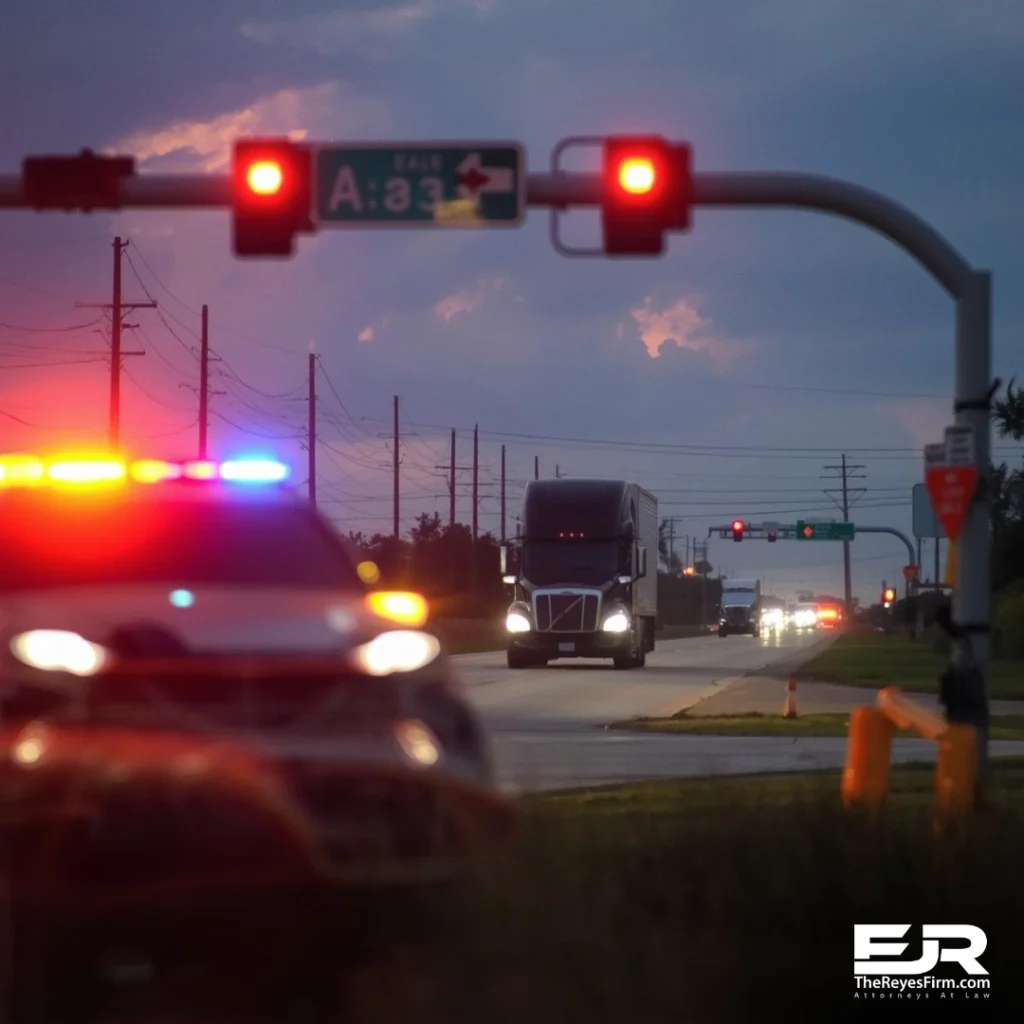
Police lights at a US-1 intersection with a semi-truck in the distance, representing a fatal pedestrian crash in Port St. Lucie, Florida.
Blog, News, Pedestrian Accident, Truck Accidents, Wrongful Death

Port St. Lucie Pedestrian Killed in Semi-Truck Crash on US-1: What Families Should Do Next

A family can be living a typical day when everything changes in seconds. That is the reality of a Port St. Lucie semi-truck pedestrian accident. These crashes are sudden and violent, often leaving loved ones searching for answers that do not come easily. The problem is that families are forced to make crucial decisions while still in shock. After a fatal Port St. Lucie pedestrian accident, evidence can disappear fast, and insurance companies may start calling before the family has even had time to breathe. What a family does in the first few days can affect what they can prove later. This issue matters because its impact is not only emotional. A Port St. Lucie fatal crash can also create immediate financial strain, especially when the person who died supported the household. Families deserve clear, plain-English guidance about what comes next, how Florida wrongful death claims work, and how to avoid common mistakes. Summary of the recent news report It was reported that Port St. Lucie Police were investigating after a 67-year-old man was killed in a collision involving a pedestrian and a flatbed semi-truck. The report said the crash happened before noon near SE Veterans Memorial Parkway and South U.S. Highway 1, and the victim was taken to HCA Florida St. Lucie Hospital, where he was pronounced dead. Authorities had not released the man’s identity at the time of publication, and police asked witnesses or anyone with video to contact Officer B. Thompson at (772) 871-5000. Incident Location: SE Veterans Memorial Pkwy & US-1 (Port St. Lucie) Open the incident location in Google Maps The directions map below shows the route from the crash location to The Reyes Firm’s Tampa office for families who want to meet with a lawyer in person. Directions: Incident Location to The Reyes Firm (Tampa Office) Open directions in Google Maps What makes a Port St. Lucie semi truck accident involving a pedestrian so serious? A Port St. Lucie semi truck accident is different from a typical car crash because a commercial truck is heavier, longer, and harder to stop. A pedestrian has almost no protection, so even a low-speed impact can be fatal. Truck crashes are also more complex. There may be multiple companies involved, such as: The trucking company (the employer) The owner of the truck or trailer A shipping or loading company (especially with flatbeds) A maintenance vendor This is one reason families often look for a Port St. Lucie truck accident lawyer quickly. A commercial case can turn into a paperwork battle if the proper steps are not taken early. For a deeper overview of how commercial truck cases work in Florida, including common causes and what evidence matters, read The Reyes Firm’s guide to semi-truck accidents in Florida. Where did the crash happen, and why do “US 1 accident Port St. Lucie” searches matter? When a tragedy happens on a major road, people often search by location. A family might type “US 1 accident, Port St. Lucie,” or “SE Veterans Memorial Parkway accident” to match what they heard with the reported details. Location matters because it can point investigators to: Nearby businesses with cameras Possible traffic cameras Lighting conditions and crosswalk placement Road design issues that affect visibility or turning Early posts may refer to it as a Port St. Lucie incident or a Port St. Lucie traffic accident while details are still being confirmed. That is normal. The legal questions are answered by evidence, not headlines. What should a family do first after a pedestrian is hit by a truck in Port St. Lucie? Families cannot fix what happened, but they can protect the truth. The Reyes Firm often recommends focusing on a simple, practical plan. What information should the family document immediately? A short notes page on a phone helps more than people expect. The family can write down: Date and approximate time Exact location, if known Investigating agency Names and numbers of anyone who says they saw the crash Nearby businesses that might have video Even small details can help later. How can families protect evidence before it disappears? Video is often overwritten quickly. The same applies to some trucking records. If the family knows the area, they can identify possible sources of footage, such as gas stations, restaurants, and storefronts near the intersection. This matters when the defense later claims the pedestrian was “not visible” or “appeared suddenly.” Should families contact their insurance provider right away? Families should be careful about early calls, especially when dealing with a Florida trucking company insurance claim. Adjusters may sound kind and calm, then ask for a recorded statement. A recorded statement can be used later to shift blame or reduce the claim. Many families are better protected when a truck accident lawyer handles communication. Should families accept a fast settlement offer? A quick offer can feel like relief. But early offers are often made before: The full evidence is gathered The full financial impact is understood. All responsible parties are identified. A rushed decision can close the door on better options later. How to get a Port St. Lucie police report after a fatal crash Families often search for how to get a Port St. Lucie police report because the crash report is one of the first official documents describing what happened. In many cases, the report can be requested through the investigating agency’s records process or, when available, through Florida’s crash report system. A lawyer can also help request additional materials connected to the report, such as: Diagrams and measurements Supplemental narratives Witness lists Photos collected by investigators Families should know that the first report is usually a starting point. A full investigation often requires more. What causes a Port St. Lucie pedestrian accident with a commercial truck? Every crash is different, but specific causes recur in severe trucking cases. Was the driver distracted or fatigued? Distraction can include looking at a phone, checking a GPS, or even looking away for a moment. Fatigue can be

Semi-truck driving on a wet Florida highway, illustrative image for truck crash safety content
Blog, News, Truck Accidents

Top Dangerous Highways for Semi-Truck Crashes in Florida (I-95, I-75, Turnpike)

A typical day on a Florida interstate can change in an instant. One bad decision by a truck driver, one sudden lane change, or one moment of distraction can turn a busy highway into a chain-reaction crash that leaves families in the hospital, and traffic backed up for miles. Crash data from Florida Highway Safety and Motor Vehicles (FLHSMV) shows just how serious the problem is. In 2023, more than 3,000 crashes involving commercial motor vehicles resulted in hundreds of injuries and several deaths. A newer FLHSMV summary for 2024 reports tens of thousands of commercial-vehicle crashes statewide and hundreds of fatalities, almost one in ten of all traffic deaths in Florida. These numbers confirm that specific routes are among the most dangerous for semi-truck accidents in Florida. This issue matters deeply to injured victims. A single semi-truck crash can lead to surgery, long-term medical care, and months or years away from work. By understanding which roads are the most dangerous for semi truck traffic, why these crashes occur, and what legal options exist, families can make safer choices on the road and stronger choices after a collision. TL;DR: Dangerous Highways for Semi-Truck Accidents in Florida Florida’s busiest freight routes, I-95, I-75, the Florida Turnpike, and I-4, are some of the most dangerous roads for semi truck accidents in the state. Massive trucks are sharing the highway with tourists who don’t know where they’re going and local commuters just trying to get to work. Crash data from FLHSMV shows thousands of commercial-vehicle crashes and hundreds of deaths each year, with hot spots in Hillsborough (Tampa), Miami-Dade, Broward, Palm Beach, Lee, and Collier Counties. The most significant causes of these crashes are speeding, tailgating, distracted driving, fatigue, bad weather, and poor truck maintenance, which often lead to multi-vehicle pileups, jackknifes, and underride crashes. After a truck crash, victims should seek medical care, report the collision, preserve evidence, and avoid giving recorded statements before speaking with a truck accident lawyer. A Tampa truck accident attorney at The Reyes Firm can investigate the wreck, deal with insurers, and pursue compensation for medical bills, lost wages, pain and suffering, and long-term needs. Why Are Florida Highways So Dangerous for Semi Trucks? Florida’s highways carry a heavy mix of freight, tourism, and daily commuting. Several factors combine to make many Florida roads risky for both truckers and regular drivers. How Do Traffic and Tourism Increase Crash Risk? Major routes such as I-95, I-75, I-4, and the Florida Turnpike serve both freight corridors and tourist routes. Semi trucks move goods between ports, warehouses, and other states, while rental cars, local drivers, and out-of-state visitors all share the same lanes. On these roads, heavy traffic means: Less space between vehicles Constant merging and lane changes More chances for rear-end and side-swipe crashes Because of this, several of these corridors are repeatedly listed among Florida’s most dangerous roads in safety articles and legal resources. How Do Weather and Road Design Play a Role? Florida’s weather can flip from sunshine to storms within minutes. Heavy rain, fog, and standing water reduce visibility and traction. A fully loaded semi-truck needs a long distance to stop, and wet pavement makes that distance even longer. At the same time, some highways have: Tight curves and limited shoulders Short on-ramps and exit ramps Work zones that squeeze traffic into narrow lanes These design issues, combined with bad weather, help explain why drivers often ask, “What is the deadliest highway in Florida?” or “Which highway has the most accidents?” Video: Why High-Speed Highways and Light Rain Are So Dangerous In this short clip, Attorney Edward Reyes explains why fatal accidents are more likely on high-speed interstates and how light rain on wet Florida highways can create deadly conditions. How Does Driver Behavior Add to the Danger? Human choices are a significant part of the problem. Common causes of semi-truck accidents include: Speeding and aggressive lane changes Following too closely in heavy traffic Distracted driving, such as texting or using in-cab screens Driving while tired, especially on long overnight runs When these behaviors happen on busy interstates or toll roads, serious truck driver accidents become much more likely. Hot-Spot Counties and Local Crash Burden FLHSMV and legal resource summaries show that certain counties experience exceptionally high levels of truck crashes. Hillsborough County (Tampa area) – One report notes that Hillsborough has one of the highest per-person truck-injury rates in Florida, with roughly fifty-plus truck-crash injuries per 100,000 residents. That rate is higher than even Miami-Dade’s, which already has heavy traffic. Palm Beach County – Recent data attributes more than three thousand truck crashes, hundreds of injuries, and over a dozen deaths in a single year. The county sits on both I-95 and I-75, with a mix of freight and tourism traffic. Lee and Collier Counties (Fort Myers and Naples / Alligator Alley area) – These counties together report hundreds of commercial-vehicle crashes and multiple fatalities each year along I-75 and nearby routes. These numbers confirm what injured drivers already feel: many Florida dangerous highways run directly through communities where people live, work, and commute every day. When Do Semi-Truck Crashes Happen Most Often? Time and season also affect crash risk. FLHSMV summaries show that more than half of fatal crashes happen during the day, between about 6 a.m. and 7 p.m. Peaks often occur during morning and evening rush hours, when commuters and trucks crowd the same lanes. Fridays, especially late in the afternoon, tend to have the highest crash counts. Some reports also note that December often has more truck crashes, while spring and early summer months may see fewer. For everyday drivers, this means that busy weekday commutes on interstates are among the most dangerous times to be near large trucks. Is I-95 One of the Deadliest Highways for Truckers in Florida? Many safety articles and legal analyses point to I-95 as the most dangerous road in Florida, especially for heavy trucks. What Makes I-95 So Dangerous for Semi Trucks? I-95 runs along Florida’s

Semi-truck and cars slowed in traffic on I-75 near Ocala, Florida, representing multiple crashes and lane delays.
Blog, News, Truck Accidents

Ocala I-75 Semi-Truck Accidents With Multiple Crashes: A Local Guide for Injured Drivers

When a semi-truck slams into slowed traffic on I-75 near Ocala and several vehicles are caught in the middle, life can change in seconds. A typical drive turns into a chain reaction of crashes, smoke, and sirens. Many families walk away from these scenes scared, confused, and unsure what to do next. The problem is that Ocala I-75 semi-truck accidents with multiple crashes are not simple fender benders. They often involve several trucks, many cars, different insurance companies, and serious questions about who is really responsible. While injured people are in the hospital, trucking companies and insurers may already be working to protect themselves and limit their liability. This issue matters because crash victims are dealing with pain, medical bills, missed paychecks, and significant changes in daily life. Without clear information and strong legal support from an Ocala truck accident lawyer or Marion County truck accident attorney, they can be pushed into unfair settlements or miss important Florida deadlines. A straightforward guide helps injured drivers protect their rights after a semi-truck pileup on I-75 in Florida. What Makes Ocala I-75 Semi-Truck Crashes So Dangerous? I-75 through Ocala and Marion County carries heavy traffic every day, including a high volume of commercial trucks. When something goes wrong there, the damage can be devastating. In a simple two-car crash, fault and damage are often easier to see. In a serious I-75 truck crash near Ocala, there may be: Multiple semi-trucks and many passenger vehicles High speeds and heavy congestion Vehicles pushed into each other like a line of dominoes. Fires, rollovers, or a jackknife tractor-trailer blocking several lanes Because a loaded semi-truck can weigh up to 80,000 pounds, smaller vehicles usually suffer the worst damage. This is why injuries in these crashes are often severe. Real-World Example: Multiple Semi-Truck Crashes on I-75 in Ocala   A July 2023 news report showed how quickly things can spiral on I-75 in Ocala when several crashes happen close together. In just a few hours, three separate wrecks near exits 352–354 involved a pickup hauling a moving trailer, a semitruck that damaged a guardrail and blocked a lane, and another semitruck that jackknifed while a pickup flipped onto its roof on the Highway 27 overpass.   According to Fire Rescue, the pickup driver in the final crash was thrown from the vehicle and rushed to the hospital, while the semitruck driver was not hurt. All southbound lanes were shut down, causing delays in both directions and forcing drivers to find alternate routes. For anyone injured in a crash like this, knowing what to do in the minutes and hours after impact, as outlined in the next section, can make a real difference in their safety, recovery, and legal rights. How Do Multi-Vehicle Pileups Happen on I-75 Near Ocala? Most pileups start with one bad moment. That moment might be: A semi-truck failing to slow down for stopped traffic A car cuts in front of a truck with almost no space. Sudden fog or heavy rain reduces visibility. Debris or spilled cargo on the road Once the first impact happens, drivers behind have almost no time to react. A single rear-end truck accident in Ocala can quickly escalate into multiple connected collisions as other vehicles slam on their brakes and crash. What Injuries Are Common After a Semi-Truck Pileup? People involved in Ocala I-75 semi-truck accidents with multiple crashes often suffer: Broken bones and fractures Neck and back injuries, including herniated discs Concussions and other brain injuries Internal bleeding and organ damage Severe cuts, bruises, and soft-tissue injuries Some injuries show up immediately. Others, like concussions or back problems, may appear hours or days later. This is why medical care is so critical, even when someone feels “just sore” at first. What Causes Ocala I-75 Semi-Truck Accidents With Multiple Crashes? These crashes are rarely “just bad luck.” They usually involve preventable safety failures. How Do Fatigue and Hours-of-Service Violations in Florida Lead to Crashes? Truck drivers must follow federal Hours-of-Service rules that limit how long they can drive before resting. When these rules are ignored, fatigue and Hours-of-Service violations in Florida can put everyone at risk. A tired driver may: React slowly to slowing or stopped traffic Drift between lanes on I-75 Misjudge speed or following distance Fall asleep at the wheel, even for a moment. In a semi-truck pileup on Florida’s I-75, a drowsy driver who fails to brake in time can easily trigger a chain reaction involving many vehicles. Attorneys often review logs, electronic logging device (ELD) data, and dispatch records to see if fatigue played a role. How Florida’s Hours-of-Service Rules Help Prove Driver Fatigue Florida has specific Hours-of-Service rules for truck drivers that limit how long they can stay on the road without proper rest. In many intrastate cases, a driver may drive up to 12 hours only after 10 straight hours off duty, cannot drive past the 16th hour after coming on duty, and cannot stay on duty more than 70–80 hours over 7–8 days without taking at least 34 straight hours off. When a serious I-75 truck crash happens near Ocala, a lawyer can compare these rules with the driver’s logs, electronic logging device (ELD) data, and dispatch records. Suppose the driver exceeded these limits or the company pushed unsafe schedules, resulting in fatigue and Hours-of-Service violations in Florida. In that case, it can be strong evidence that negligence played a significant role in the semi-truck pileup. What Are Cargo Securement Violations and Why Do They Matter? Cargo must be loaded and tied down correctly. When that does not happen, cargo securement violations in Florida can create hazardous situations. Poorly secured cargo can cause: A jackknife tractor-trailer in Ocala, when the trailer swings out Trailers to roll over and crush nearby vehicles Debris and freight were scattered across I-75 lanes. In major crashes, lawyers may review load manifests, inspection reports, and photos from the scene to determine whether shifting or falling cargo contributed to the pileup. Can Speeding and Bad Weather Turn

Semi-truck driving on a rainy Florida highway with heavy traffic, illustrating common causes of semi-truck accidents in Florida
Blog, Truck Accidents

Most Common Causes of Semi-Truck Accidents in Florida

A semi-truck crash can change a person’s life in an instant. One moment, someone is driving along I-75, I-4, or the Selmon Expressway, and the next, a massive 80,000-pound truck is sliding toward them with no way to stop. Some Florida routes are riskier than others, especially major freight corridors. See our guide to the most dangerous highways for semi-truck accidents in Florida. These crashes are sudden, frightening, and often far more serious than typical car accidents. Families are left facing injuries, stress, and questions they never expected to ask. The problem is that most people never learn what actually causes semi-truck accidents until they become victims themselves. Many assume truck drivers and trucking companies always follow safety rules. But in real cases, the cause is often something preventable: a tired driver, a distracted driver, a poorly maintained truck, or cargo that was loaded the wrong way. When these safety rules are ignored, innocent people pay the price. This issue matters deeply because knowing why a crash happened helps injured victims understand who is responsible. Trucking companies, insurance carriers, cargo loaders, and even parts manufacturers may try to avoid blame. But when victims understand the common causes of semi-truck accidents in Florida, they are better prepared to protect their rights, make informed decisions, and pursue the compensation they deserve. TL;DR: Common Causes of Semi-Truck Accidents in Florida Most semi-truck crashes in Florida are caused by preventable factors such as fatigue, distraction, speeding, poor maintenance, brake failure, and improper cargo loading. Bad weather, construction zones, and unsafe road conditions also contribute to many truck accidents across the state. Multiple parties may be legally responsible, not just the driver, such as the trucking company, broker, shipper, cargo loader, or maintenance provider. If someone is injured in a truck crash, they should get medical care, gather evidence, avoid giving recorded statements, and contact a Florida truck accident attorney quickly. Why Semi-Truck Accidents Are So Serious in Florida Semi-trucks are enormous compared to passenger cars. A fully loaded tractor-trailer can weigh 20–30 times more than an average vehicle. That size creates a massive force during an impact, even at low speeds. Florida’s environment makes things even riskier. Heavy tourism traffic, fast-moving interstates, sudden rainstorms, hurricanes, and crowded city streets create conditions where a small mistake can become a deadly crash. Because of this, truck accident victims often face catastrophic injuries, including brain trauma, spinal cord damage, broken bones, internal bleeding, and long-term disabilities. These cases also require deeper investigation because more parties may be involved. This is why many families turn to a trusted Tampa truck accident lawyer early in the process. Driver Behavior: Major Causes of Semi-Truck Crashes What driver behaviors cause the most semi-truck accidents in Florida? The most common causes stem from the driver’s actions behind the wheel. The following behaviors recur frequently in Florida truck accident claims and often determine who is legally responsible. Driver Fatigue Truck Accidents Fatigue is one of the most common causes of semi-truck accidents in Florida. Truck drivers often travel long distances, sometimes overnight, and they do not always get the rest their bodies need to stay alert and focused on the road. When a driver is exhausted, it becomes much harder to: React quickly Stay in their lane Make safe decisions Notice sudden changes in traffic. Fatigue can slow a driver’s reaction time almost as much as alcohol, making a tired truck driver a danger on Florida highways and city streets. Even though safety rules exist to prevent this, fatigue-related crashes still happen far too often. Understanding the Federal Hours-of-Service Rules (FMCSA Guidelines) To help prevent fatigue-related crashes, the Federal Motor Carrier Safety Administration (FMCSA) created Hours-of-Service (HOS) regulations that set strict limits on how long truck drivers can work before they must rest. These rules are designed to keep drivers awake, alert, and operating safely. Under these regulations, most long-haul truck drivers: Can drive up to 11 hours, but only after taking 10 consecutive hours off duty Cannot drive once they reach a 14-hour on-duty limit Must take required breaks during long shifts Cannot drive after 60 hours in 7 days or 70 hours in 8 days, depending on their schedule These limits help prevent dangerous exhaustion, but violations still occur. Some companies push drivers to meet tight deadlines, and some drivers skip rest periods to finish routes faster. When a driver violates HOS rules and a crash occurs, that violation can be strong evidence in a Florida truck accident claim. Investigators and attorneys often review logbooks, electronic logging devices, fuel receipts, and black box data to determine whether the driver was complying with federal law at the time of the crash. Anyone who wants to read the official rules can find them on the Federal Motor Carrier Safety Administration (FMCSA) website: https://www.fmcsa.dot.gov/regulations/hours-service/summary-hours-service-regulations Distracted Driving Truck Accidents A distracted driver is essentially driving blind. At highway speeds, even looking down for two seconds means the truck travels the length of a football field without the driver watching the road. Common distractions include: Texting GPS adjustments In-cab screens Food or drinks Reaching for items Because trucks are so large, distracted driving truck accidents often result in catastrophic damage. Speeding Truck Accidents in Florida Florida highways see many speeding truck accidents because drivers are often under pressure to meet strict delivery deadlines. A speeding semi-truck: Cannot stop quickly Is harder to steer Is more likely to roll over Can cause chain-reaction crashes Speeding is especially dangerous during storms or heavy traffic, which are common in the Tampa Bay area. Aggressive Driving Truck Accidents Some drivers engage in risky behaviors such as tailgating, weaving through lanes, brake-checking, or cutting off smaller vehicles. These aggressive-driving truck accidents often occur in congested areas, such as I-4 near downtown Tampa or the Veterans Expressway during rush hour. Aggressive driving by a trucker creates a highly hazardous situation for everyone on the road. Blind Spot Truck Accidents in Florida Trucks have large blind spots, sometimes called “no-zones,” along both sides, behind the trailer, and

Semi-truck driving on a Florida highway at sunset alongside a smaller car, illustrating the risk of semi-truck accidents in Florida.
Blog, Truck Accidents

Semi-Truck Accidents in Florida: Complete Guide to Causes, Liability & Claims

Semi-truck accidents that Florida drivers experience can change a life in seconds. One moment, someone is driving to work or picking up a child from school. The next moment, they are hit by a massive 18-wheeler, leaving them scared, hurt, and unsure of what to do next. Many people immediately search online for phrases like “semi truck accident Florida today” because they need answers fast. The problem is that crashes involving big trucks are far more complicated than regular car accidents. These cases involve federal trucking regulations, commercial insurers, and catastrophic injuries requiring long-term treatment. Without clear guidance, Florida truck accident victims can feel confused and overwhelmed at the exact moment they need help the most. This issue matters because families often face hospital bills, lost income, and emotional stress after a Florida semi truck crash. They deserve a straightforward explanation of their rights and support from a Tampa truck accident attorney who truly understands how these claims work. This guide gives victims the information they need to make strong, confident decisions. Why Semi-Truck Accidents in Florida Are So Dangerous According to Florida Crash Facts 2023, there were 33,102 large truck crashes statewide in a single year, including 2,353 crashes in Hillsborough County alone. “Large trucks” include semi-trucks, tractor-trailers, and other heavy commercial vehicles. These crashes led to 299 deaths and more than 7,600 injuries, showing just how serious semi-truck accidents in Florida can be. Many of the most serious truck wrecks happen on Florida’s busiest freight corridors, including I-95, I-75, I-4, and the Florida Turnpike. See our guide to the most dangerous highways for semi-truck accidents in Florida. Semi-trucks are significantly heavier than passenger cars. A tractor-trailer can weigh up to 80,000 pounds. Because of this size difference, semi truck accident victims often suffer much more catastrophic injuries than in other crashes. How These Crashes Impact Victims Many Florida truck accident victims deal with: Head and brain injuries Back and spinal cord injuries Broken or crushed bones Internal organ injuries Life-long disabilities Wrongful death These injuries often require emergency care, weeks in the hospital, and months of therapy. The financial impact can be overwhelming, which is why Florida truck accident laws give victims the right to seek compensation. Common Causes of Semi-Truck Accidents in Florida Understanding the common causes of semi-truck accidents in Florida helps victims determine what may have gone wrong and why. Watch: Why Semi-Truck Accidents in Florida Are So Dangerous In this short video, Attorney Edward Reyes explains how semi-truck accidents in Florida often happen when truck drivers are tired, distracted, or under intense time pressure. He also talks about the higher duty of care that semi-truck and commercial vehicle drivers owe to everyone else on the road. If you were hurt in a semi-truck or commercial vehicle crash and have questions about your rights, you can contact a Tampa truck accident attorney at The Reyes Firm to talk about your options and next steps. 1. Tired or Overworked Truck Drivers Many crashes happen when drivers are exhausted. Even though federal laws limit how long drivers can stay on the road, some companies push them to keep driving. Fatigue leads to slow reactions, drifting off the road, and falling asleep at the wheel. 2. Distracted or Impaired Driving People often ask, “What causes tractor-trailer accidents in Florida situations?” One major cause is distraction. A truck driver may be: Texting Looking at a GPS Eating Adjusting controls Impaired driving, whether from alcohol, drugs, or certain medications, is another major factor in 18-wheeler accident cases. 3. Poor Truck Maintenance Brakes, tires, and steering systems must be inspected regularly. When trucking companies forgo maintenance, it can lead to brake failures, tire blowouts, and other mechanical issues that cause Florida semi-truck accidents. 4. Improper or Unsafe Cargo Loading If cargo is not correctly balanced or secured, it can shift during transit. This may cause the truck to tip over, jackknife, or spill cargo onto the road. Who Is Liable in a Semi-Truck Accident? A common question is: “Who is liable in a semi truck accident in Florida?” Truck accident cases often involve more than one responsible party. Parties That May Be At Fault Truck driver — for careless, distracted, or impaired driving Trucking company — under Florida trucking company liability, companies may be responsible for poor hiring, lack of training, or unsafe scheduling Maintenance or repair companies — if bad repairs caused mechanical failure Cargo loaders — if unsafe loading contributed to the crash Truck or parts manufacturers — if a defective part failed A Florida semi-truck accident lawyer must investigate promptly because necessary evidence, such as black box data or driver logs, can be lost if not secured early. What to Do After a Semi Truck Accident in Florida Many injured people ask, “What should I do right after a semi-truck accident?” Here are the steps victims should follow to protect themselves: Essential Steps Call 911 so police and medical teams can assist. Get medical attention, even if the injuries seem minor. Take photos or videos of the vehicles, road, and injuries. Collect driver and witness information, including names and phone numbers. Avoid giving recorded statements to the trucking company or its insurer. Contact a Tampa truck accident lawyer to guide the next steps. These actions help protect both safety and the future claim. How to File a Semi Truck Accident Claim in Florida Another common question victims ask is: “How do I file a semi truck accident claim in Florida?” Here is the process in simple terms: The Claims Process Explained Notify your insurance company to activate your PIP (no-fault) benefits. Hire a Florida truck accident lawyer with experience handling significant commercial cases. Allow your attorney to investigate, including obtaining the police report, black box data, maintenance logs, and witness statements. Calculate damages, including medical bills, lost income, and long-term needs. Submit a demand asking the insurance companies for fair compensation. Negotiate or file a lawsuit if the insurer refuses a reasonable settlement. This process can take

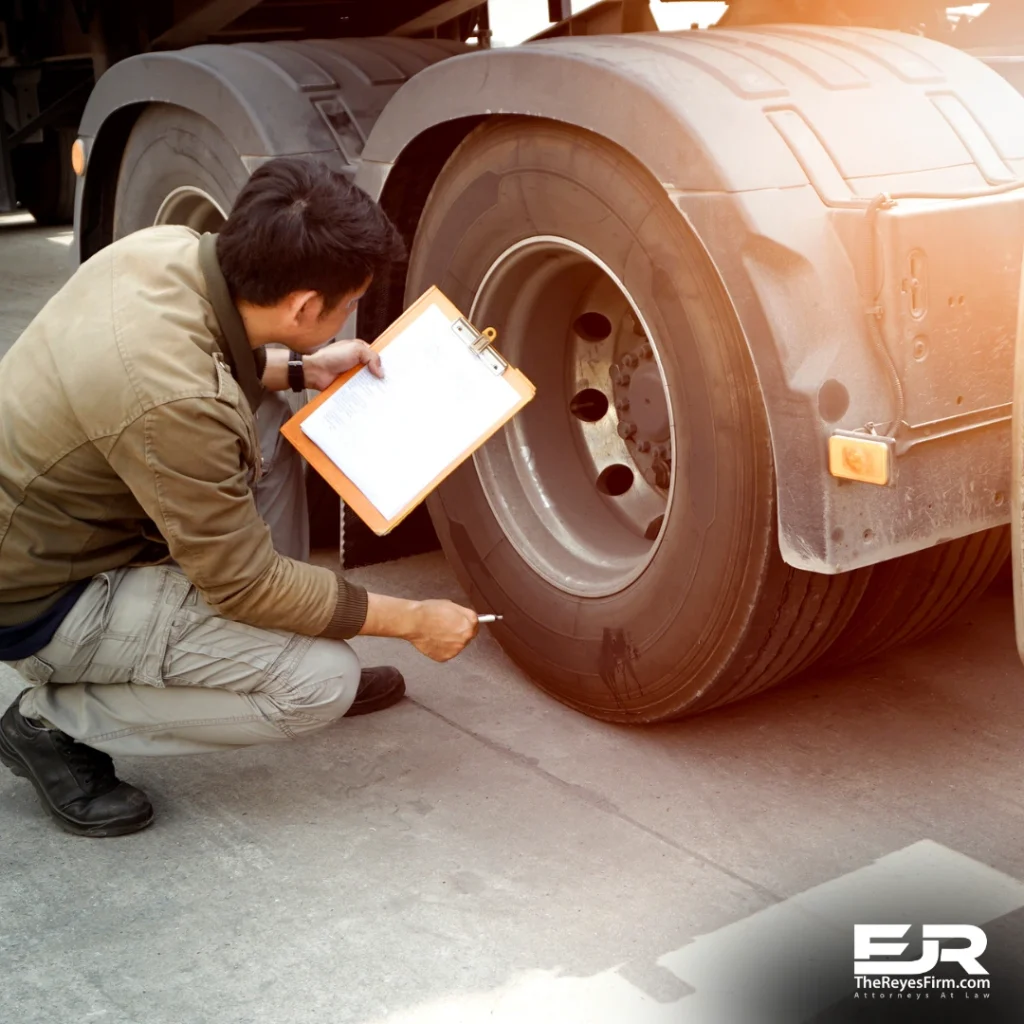
Inspector checking a semi-truck tire and wheel area with a clipboard, reviewing maintenance that could prevent a truck tire blowout accident and brake failure crash in Tampa.
Blog, Truck Accidents

Tampa Tire Blowout Lawyer for Truck and Brake Failure Crashes

A fully loaded semi rolling down I-4 or I-75 can weigh 20 to 30 times as much as a family car. When that truck is in good condition, most people never think twice about it. But when a tire explodes, or the brakes stop working, a quiet drive can turn into a violent truck tire blowout accident in a matter of seconds. The people in the smaller vehicle are usually the ones who get hurt the most. After a crash like this, injured victims and their families are left with hard questions. Was this just bad luck, or did someone ignore basic safety rules? Could better maintenance have prevented the wreck? Or did a hidden defect in the tire or brake system make the truck unsafe before it ever left the yard? Without clear answers, it is easy to feel lost while medical bills and lost wages keep adding up. A Tampa tire blowout lawyer for truck accidents can act quickly to preserve the failed tire, request maintenance records, examine possible retread or manufacturing defects, and identify every responsible party. The Reyes Firm investigates truck tire blowout and brake failure crashes in Tampa and across Hillsborough County. What Is A Truck Tire Blowout Accident? A tire blowout happens when a tire suddenly loses air and comes apart. The driver often hears a loud bang and feels the truck pull sharply to one side. On a passenger car, this is scary. On a tractor-trailer, it can be deadly. According to the National Highway Traffic Safety Administration (NHTSA), there were 646 motor vehicle traffic fatalities in 2023 in tire-related crashes across the United States. In a semi truck tire blowout or tractor-trailer tire blowout, the driver may: Swerve into another lane   Jackknife so the trailer swings out   Roll over when trying to correct the steering   Scatter chunks of rubber that other cars cannot avoid   When this happens at highway speed, it becomes a truck tire blowout on a highway situation. Traffic is fast, lanes are crowded, and other drivers have almost no time to react. Many people describe these types of truck accidents as tire explosion accidents because the tire seems to explode and shred all at once. So, do tire blowouts cause accidents? Very often they do, especially when a large commercial truck is involved, and drivers around it have no room to escape. What Causes A Tire Blowout On A Truck? Many families want clear answers about what causes a tire blowout. Most causes fall into one of two groups: poor maintenance or product defect. Sometimes both are involved. Maintenance Problems And Negligence Trucking companies and drivers are required to inspect their vehicles and keep them safe. When they fail to do that, and someone gets hurt, the result may be a truck maintenance negligence accident. Common maintenance-related problems include: Tires that are bald, cracked, or badly worn Underinflated or overinflated tires. Trucks loaded beyond safe weight limits. Mixing different tire types on the same axle Ignoring warning signs like shaking, bulges, or visible damage If a company knew, or should have known, that a tire was unsafe, it can be held responsible for injuries resulting from a truck tire blowout. How Can a Tampa Defective Tire Lawyer Prove a Defect? A defective tire claim may arise when unsafe materials, poor manufacturing, an inadequate design, or a faulty bonding process causes the tire to fail. A Tampa defective tire lawyer may use the failed tire, recall information, manufacturing records, expert testing, and evidence from similar failures to determine the cause of the blowout. Warning signs of a defective tire can include: The tread is separating from the rest of the tire Sidewalls are cracking or tearing before the tire is worn out. Multiple tires from the same batch are failing early. In these situations, injured victims may have grounds for a defective truck tire lawsuit against the tire maker, distributor, or other companies in the supply chain. A Tampa truck accident attorney can work with engineering experts to test the failed tire and explain how and why it failed. Can a Retreaded Truck Tire Cause a Blowout? Retreaded tires are not automatically defective or illegal. They can still cause serious crashes when the tire casing is damaged, the new tread is bonded incorrectly, or the tire is overloaded, underinflated, poorly installed, or inadequately inspected. A Tampa retreaded tires lawyer can investigate the retreader, trucking company, maintenance provider, and tire supplier. Important evidence may include: The failed tire and separated tread DOT tire identification markings Retreading and casing inspection records Tire pressure and maintenance records Purchase, installation, and repair invoices Other tires from the same truck or retread batch Federal rules allow retreaded tires on many commercial vehicles, so the claim should focus on the tire’s condition, placement, inspection history, and cause of failure instead of suggesting that all retreaded tires are unsafe. How Does a Tampa Truck Brake Failure Accident Lawyer Prove Fault? A Tampa truck brake failure accident lawyer proves fault by examining the braking system, maintenance history, inspection reports, repair invoices, driver reports, and electronic truck data. The evidence may show that a trucking company skipped maintenance, a repair shop performed unsafe work, or a defective brake component caused the crash. Why Do Truck Brakes Fail? There are many reasons why truck brakes fail, such as: Worn-out pads, shoes, or drums Air or fluid leaks that lower braking pressure Overheated brakes after long hills or heavy use Poorly adjusted brakes that do not apply enough force Rushed or incomplete repairs Defective parts inside the brake system When worn parts or skipped inspections are the cause, the crash becomes another form of truck maintenance negligence. When experts trace the problem to a bad design or a weak part, the case may involve a truck brake failure product defect as well. A semi-truck accident with brake failure is hazardous on busy routes like I-4, I-75, and the Selmon Expressway, where trucks share tight spaces with commuters and tourists. What

Scroll to Top