Truck Accidents

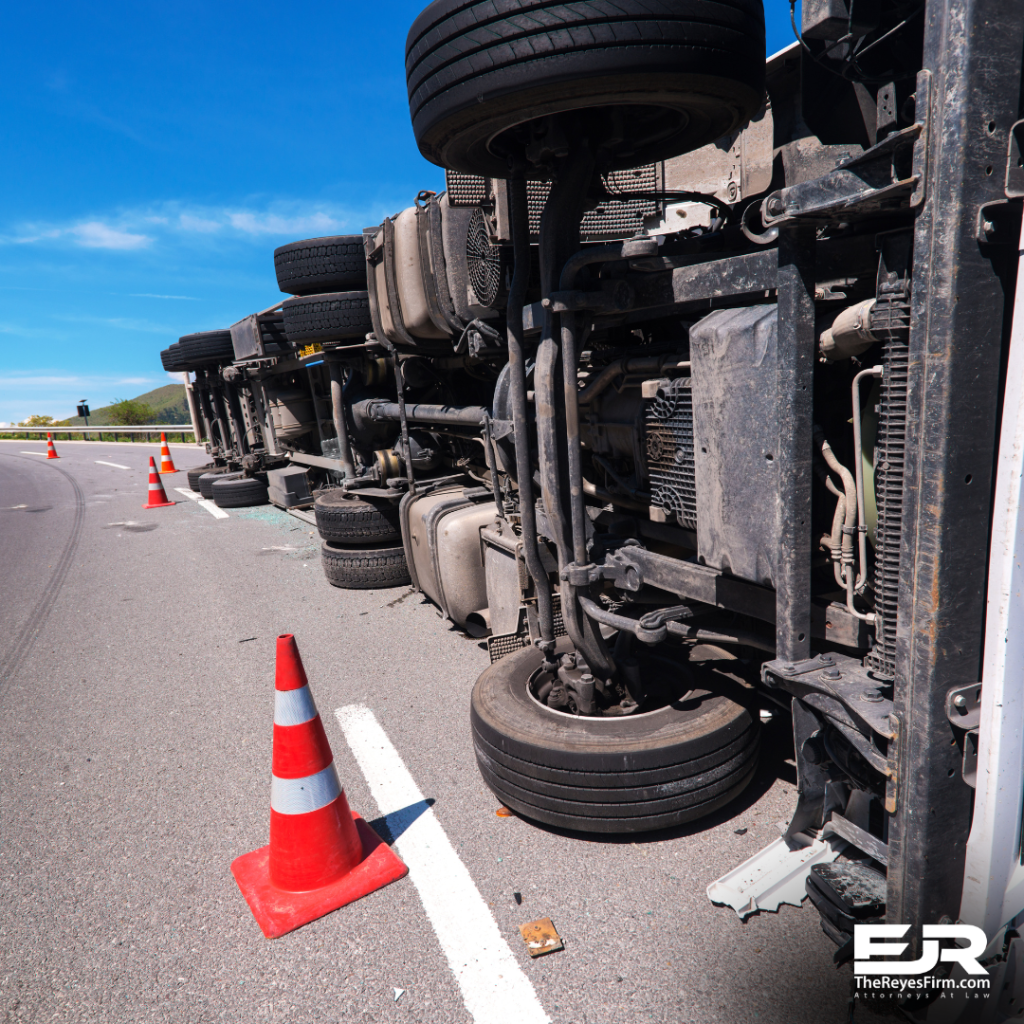
Truck lost load accident with boxes spilling from an open semi-trailer onto a Florida highway – The Reyes Firm logo in corner.
Blog, Truck Accidents

Causes of Truck Accidents in Tampa: Lost Loads and Cargo Spills

A typical drive on I-4, I-275, or the Selmon Expressway can change when cargo falls from a commercial truck. Unsecured cargo is one of the preventable causes of truck accidents in Tampa. A ladder, pallet, gravel, or piece of heavy equipment can enter traffic, forcing drivers to brake, swerve, or crash. After a crash like this, injured people are often told it was “just an accident” or an unavoidable road hazard. Insurance companies may blame other drivers, the weather, or even you. Meanwhile, hospital bills, car repairs, and missed work keep piling up, and no one is offering clear answers. This issue matters deeply for families in Florida. A truckload accident is usually preventable when companies follow basic safety rules. When they do not, Florida law allows injured victims to seek full compensation and hold the responsible parties accountable. Understanding how these crashes occur and who may be liable is the first step toward justice. What Is a Truck Lost Load Accident in Florida? A truckload accident is a type of truck accident that occurs when cargo that should remain inside or on a commercial vehicle falls, spills, or shifts, causing a crash. In plain terms, the truck was carrying something that did not stay put. Everyday examples on Tampa highways On Tampa roads, this can look like: Furniture or construction materials sliding off a flatbed Gravel, rock, or sand pouring from a dump truck Heavy equipment rolling off a trailer Chemicals or fuel from a tanker create a slick surface Sometimes a driver hits the debris directly. In other cases, vehicles crash while trying to avoid the objects. Either way, the result is often a catastrophic cargo spill truck accident that can injure many people at once. How Do Unsecured Loads Cause Truck Accidents in Tampa? Unsecured-load crashes usually happen because cargo was loaded, balanced, inspected, maintained, or secured incorrectly. Common causes include damaged tie-downs, overloaded trailers, unstable cargo placement, unsecured doors, and skipped safety inspections. Unsecured load truck accidents An unsecured load truck accident happens when cargo is not tied down, blocked, or covered as required by federal cargo securement rules (49 C.F.R. 393.100–393.136) and Florida’s load law (Florida Statute 316.520). Common causes include: Too few straps, chains, or binders Worn or damaged tie-downs that are never replaced Stacks of cargo that are too high or unbalanced Loose tarps that allow material to blow out of the truck When a truck loses its load on the highway because no one took the time to properly secure it, drivers in smaller vehicles are put in danger. Overloaded truck accidents An overloaded truck accident occurs when the load’s total weight exceeds the vehicle’s design capacity. Overloading: Increases stopping distance Makes tire blowouts and brake failures more likely Puts extra stress on doors, walls, and tie-downs If equipment fails under this pressure and the truck loses cargo across several lanes, the company that allowed the overload may share responsibility for the crash. Equipment failure and poor maintenance Even when cargo is loaded correctly, faulty equipment can still cause a cargo spill truck accident. Problems may include: Trailer doors that will not latch securely Broken anchor points that cannot hold straps Defective hitches or coupling devices When maintenance shops or manufacturers cut corners, they may also be held liable for injuries from truck cargo spills. What Injuries Happen In A Cargo Spill Truck Accident? A cargo spill can trigger a chain-reaction crash involving multiple vehicles. The injuries that follow are often catastrophic. Common physical injuries Typical injuries after a truck lost load crash include: Head injuries and concussions Neck and back injuries, including whiplash and herniated discs Broken bones and crush injuries Spinal cord damage and paralysis Burns or chemical exposure when hazardous materials are spilled Hidden and long-term injuries Some injuries from a lost-load truck accident do not show up right away. Soft-tissue injuries, traumatic brain injuries, and emotional trauma can develop over time. These conditions may require months or years of treatment and can permanently reduce a person’s ability to work or enjoy daily life. Who Is Liable If A Truck Loses Its Load? After a cargo spill, the key legal question is often who is liable if a truck loses its load. Florida law allows several parties to share fault when their actions contribute to a crash. Truck driver and trucking company The driver must inspect the load before and during the trip. The driver should verify that tie-downs are secure, doors are closed, and nothing has shifted. When those inspections are skipped or the driver speeds, drives while tired, or ignores warning signs, the driver may be negligent. The trucking company is responsible for hiring and training drivers, enforcing safety policies, and maintaining equipment. A company that rewards rushed schedules or ignores known safety problems may share liability for a truck lost load accident on a Florida highway. Who is responsible for loading a truck? In many cases, a separate crew handles loading. That raises the question of who is responsible for loading a truck safely. A warehouse, shipper, or third-party loader may be at fault if workers: Stack cargo in an unstable way Fail to use enough tie-downs Overload the trailer to save time or money. When unsafe loading practices lead to truck cargo spill injuries, that company’s insurance may also be part of the truck accident claim. Other potentially responsible parties Other groups can sometimes be brought into a personal injury claim after a truck cargo spill, such as: Maintenance shops that ignore worn or broken parts Manufacturers that provide defective straps, doors, or hardware Government entities that fail to address a known recurring debris hazard A careful investigation by a Tampa truck accident attorney helps identify every party that may owe compensation for cargo spill accident damages. Can I Get Compensation If Cargo Falls Off a Truck and Causes Me to Crash? Many drivers wonder what happens if something falls off a truck and causes a wreck, but the car never touches the truck
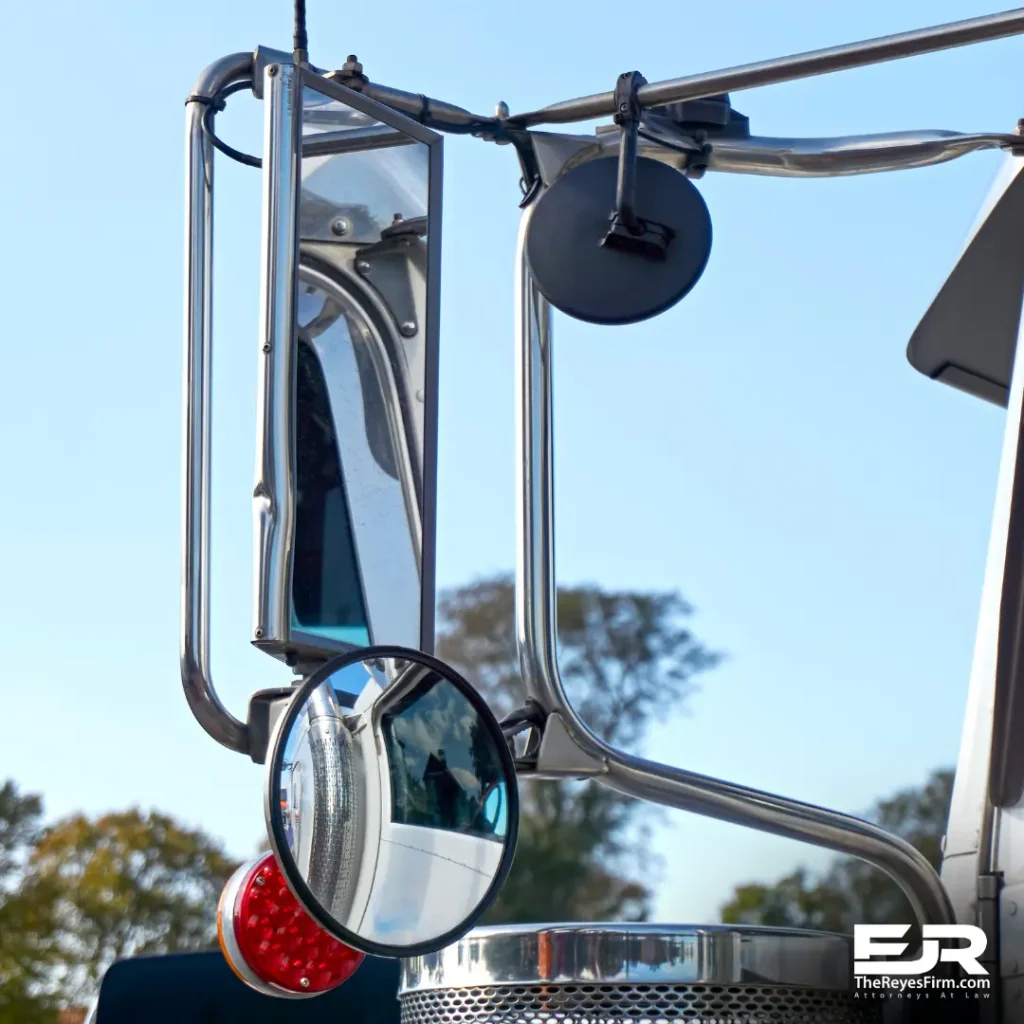
Close-up of semi-truck side and blind spot mirrors illustrating truck blind spot visibility issues – The Reyes Firm, Tampa truck accident lawyer
Blog, Truck Accidents

How a Tampa Blind-Spot Truck Accident Lawyer Proves Fault

Anyone who has driven beside a semi on I-4 or I-275 knows the feeling. One moment, a car is cruising next to the trailer. The next moment, the truck starts drifting over, as if that car were invisible. That “invisible” space is called a truck blind spot, and it plays a significant role in many catastrophic crashes in Tampa and across Florida. The problem is simple but dangerous: large trucks have huge no-zones where drivers cannot see smaller vehicles, even when they use their mirrors. When truck drivers rush, make quick lane changes, or turn without checking these zones, people in nearby cars, on motorcycles, or on bicycles can be sideswiped, crushed, or pushed off the road. These truck blind spot accidents are often blamed on the smaller vehicle, even when the truck driver had the power to prevent the crash. For injured victims, this is not just a traffic “oops.” It can be a life-changing event. Blind-spot collisions can cause broken bones, spinal cord injuries, brain trauma, and long-term pain. Families face medical bills, missed paychecks, and months of stress. That is why it matters to understand how blind spots work, who is at fault in a blind spot accident, and how a Tampa truck blind spot accident attorney at The Reyes Firm can prove visibility failures in a truck accident claim. What You Need to Know About Tampa Blind-Spot Truck Accidents A blind-spot truck accident happens when a commercial truck moves into a lane, turn, or traffic space occupied by a vehicle the driver did not see. Truck drivers must check that a lane movement can be made safely and use an appropriate signal when another vehicle may be affected. Dashcam footage, traffic cameras, truck data, mirror inspections, witness statements, and damage patterns may help prove how the crash happened. Being beside a truck does not automatically make the smaller vehicle responsible for the collision. Video and electronic trucking evidence may be lost or overwritten, so preservation should begin as soon as possible. Had a bad day? Call The Reyes Firm at 833-4 BAD DAY. What Is a Blind-Spot Truck Accident? A blind-spot truck accident happens when a commercial truck strikes or forces another road user from a lane because the truck driver did not see the person or vehicle in a no-zone. Blind-spot crashes are a hazardous type of truck accident because, in simple terms, if the smaller vehicle cannot be seen, it is in danger. These crashes often happen during lane changes, merges, wide turns, and movements through crowded intersections. Large trucks have areas around the front, rear, and sides that may not be visible through the driver’s mirrors. Truck drivers know these visibility limits exist and must account for them before turning or moving into another lane. A blind spot does not excuse an unsafe lane change. Florida Statute § 316.089 says a vehicle should not leave its lane until the driver has first confirmed that the movement can be made safely. Where Are a Semi-Truck’s Blind Spots or No-Zones? A semi-truck generally has major blind spots directly in front of the cab, behind the trailer, and along both sides. The right-side blind spot is usually the widest. A smaller car, motorcycle, bicycle, or pedestrian may disappear from the driver’s view in these areas. The FMCSA’s no-zone illustration shows approximate danger areas extending: About 20 feet in front of the truck About 30 feet behind the trailer About one lane along the truck’s left side About two lanes along the truck’s right side The exact visible area can change based on the truck, trailer, mirror setup, camera systems, driver position, and road conditions. Drivers should not assume that the illustration proves the exact sight line in a specific crash. Source: FMCSA Truck No-Zones Infographic. FMCSA’s official safety materials describe large blind spots around the front, rear, and sides of trucks and tell passenger-vehicle drivers to assume the truck driver cannot see them when the driver’s face is not visible in the side mirror. Watch This YouTube Video: Why Driving Beside a Semi-Truck Is Dangerous Watch this YouTube video as Edward Reyes, Esq. explains why driving beside a semi-truck can be dangerous. He discusses what may happen when the driver cannot see a nearby car in the mirrors and how the truck or trailer can move into the car’s path. For a helpful visual guide to truck no-zones, you can view this official infographic from the Federal Motor Carrier Safety Administration (FMCSA): FMCSA Truck No-Zones Infographic. How Do Blind-Spot Truck Crashes Usually Happen? Blind-spot truck crashes can happen when a commercial truck changes lanes, merges, or turns while another vehicle is hidden from the driver’s view. These collisions may involve the side of the cab or trailer and can force a smaller vehicle into another lane, onto the shoulder, or toward a barrier. How Do Semi-Truck Blind-Spot Accidents Happen on I-4? Blind-spot truck accidents on I-4 can happen when a truck changes lanes or merges while a smaller vehicle is traveling beside the cab or trailer. Entrance ramps, exits, congested traffic, and vehicles moving across several lanes can place a car in a truck’s no-zone. Possible I-4 blind-spot scenarios include: A truck merging from an entrance ramp into an occupied lane A truck moving toward an exit while a car is beside the trailer A truck changing lanes while a smaller vehicle is traveling beside it A sideswipe near the I-4 and I-275 interchange A truck returning to the right lane before it has safely cleared another vehicle A smaller vehicle being forced toward a shoulder, barrier, or nearby traffic After a crash, the investigation may examine the truck’s signal use, lane position, speed, mirrors, camera systems, GPS or telematics data, and the amount of time the smaller vehicle was beside the truck. Save any dashcam footage as soon as possible. Write down your direction of travel, nearby exits, lane positions, and any traffic or business cameras you noticed near the crash scene. How Do

Semi-truck making a wide turn through a city intersection near a curb, illustrating the dangers of truck wide turns.
Blog, Commercial Vehicles, Truck Accidents

Wide-Turn Truck Accident and Squeeze-Play Crashes in Tampa

A fully loaded semi-truck can weigh 20 to 30 times as much as a car. When that truck makes a truck wide turn at a Tampa intersection and squeezes a smaller vehicle against the curb or into another lane, the crash can be sudden, violent, and life-changing.  The problem is that wide-turn and squeeze-play crashes are very confusing. The truck is enormous, the lanes are often tight, and everything happens in just a few moments. After a truck wide turn accident, a trucking company or insurance adjuster may quickly blame the smaller vehicle. They might say it was in a blind spot, too close to the truck, or “should have stayed back,” even if the truck drifted out of its lane or turned when it was unsafe to do so. For injured victims in Tampa and across Florida, this confusion is not just frustrating. It can decide who pays for hospital bills, lost wages, and long-term medical care. Florida now has stricter time limits and fault rules for negligence cases. That means the way a truck-wide-turn crash is documented can completely shape the injured person’s case and financial future. What Is a Wide-Turn Truck Accident? A wide-turn truck accident happens when a large truck swings wide to complete a turn and hits, traps, or squeezes a smaller vehicle nearby. These crashes often occur during right turns, when the trailer cuts inward toward the curb, creating a dangerous squeeze-play situation. In Tampa and across Florida, fault often depends on whether the truck driver signaled properly, checked blind spots, stayed in the correct lane, and made the turn safely. What Is a Wide-Turn Truck Accident and Why Is It Dangerous? What Is a Wide Turn in a Truck Accident? Many people ask, “What is a wide turn?” Among the most dangerous types of truck accidents, a wide turn happens when a truck swings farther out than a normal car would to complete the maneuver. This is especially common with a semi-truck’s wide right-hand turn. When a tractor-trailer turns right, the trailer does not follow the cab’s exact path. The trailer cuts inward toward the curb. To create space, the driver often steers slightly left first, then turns sharply right. If another car, cyclist, or pedestrian is already in the lane beside the truck, that wide movement can lead to a truck blind-spot accident or a squeeze-play truck accident in seconds. Is Making a Wide Right Turn Illegal in Florida? Drivers often wonder, “Is making a wide right turn illegal?” A wide turn by itself is not always against the law. Large trucks simply need more space than small passenger cars. However, a wide right turn can become illegal when the driver: Leaves the proper turning lane and crosses into another lane Fails to use a turn signal clearly and early Turns even when nearby traffic makes the maneuver unsafe Forces other vehicles to slam on their brakes or swerve to avoid a collision When these things happen, the action may be treated as an improper turn or a wide turn violation under Florida traffic law. These same facts can later support a claim of fault for a truck-wide right-turn accident in an injury case. Basic Truck Wide Turn Rules in Florida Commercial drivers in Florida must follow the same traffic laws as other drivers, plus additional safety standards because of their size and blind spots. When it comes to a truck-wide turn, Florida law sets clear expectations for a safe right turn. Under Florida Statutes §316.151, any driver making a right turn must approach and complete the turn “as close as practicable to the right-hand curb or edge of the roadway.” This rule applies to commercial trucks just as it does to regular vehicles and is often central to a right-turn truck accident case. Under Florida Statutes §316.155, drivers must also signal their intention to turn at least 100 feet before the turn, giving nearby drivers time to see and react. In practical terms, basic truck-wide turn rules include: Approaching the turn in the correct lane Keeping the vehicle as close as practical to the right edge when turning right Use turn signals well before turning and keep them on continuously for at least 100 feet before the turn. Checking mirrors and the truck driver’s blind spots (or “no zones”) before and during the turn Making sure the turn can be completed safely at the current speed and traffic conditions If a driver ignores these rules and causes a right-turn truck accident, that driver and the trucking company may be held legally responsible for the injuries and damage that follow. How Blind Spots, No-Zones, and Braking Distance Cause Squeeze-Play Crashes Where Are the Truck Driver Blind Spots and the Truck No Zone? Large trucks have big blind spots, often called the truck’s no zone. These are areas around the truck where smaller vehicles are hard or impossible to see, even when the driver checks the mirrors. Common blind spots include: A long area along the right side of the trailer A wide zone directly behind the trailer A smaller zone directly in front of the cab Areas along the left side near the cab and trailer A truck blind-spot accident occurs when a truck moves into one of these zones and strikes a vehicle already there. During a truck-wide turn, the right-side blind spot is especially dangerous. If the driver does not clear this no-zone carefully, the trailer can swing toward the curb and crush a lawfully traveling car in its lane. How Do Semi Truck Braking Distance and Turning Space Matter? Another key issue is semi-truck braking distance. Because trucks are so heavy, a fully loaded semi needs much more space to stop than a small car. If a truck is moving too fast, following too closely, or approaching an intersection too quickly, the driver may feel pressured to turn rather than slow down safely. In Tampa, many intersections are busy, and turning lanes can be short. When a driver

Semi-truck driving toward the camera on a Florida highway near Tampa, illustrating different types of truck accidents.
Blog, Truck Accidents

Semi-Truck Accident Types in Tampa: What Drivers Need to Know

Every day, large trucks move across Tampa on I-4, I-75, I-275, the Selmon Expressway, and busy city streets. Most drivers barely notice them. That changes fast when a semi truck cannot stop in time, tips over, or swings across several lanes. In a second, a typical drive can turn into a serious collision with a vehicle that weighs many times more than a family car. The problem is that not every truck crash is the same. Some wrecks involve a simple rear-end hit. Others involve a trailer folding into a jackknife, a rollover that blocks the highway, or an underride crash where a smaller vehicle slides under the trailer. Different types of truck accidents create different injury patterns, different evidence, and different questions about who is responsible. This matters for injured victims and their families. The type of crash can affect which insurance policies apply, how much money may be available, how long Tampa truck accident claims may take, and how hard the trucking company and its insurer will fight. When someone in Tampa is facing hospital bills, missed work, and pain that will not go away, understanding what kind of truck crash happened is one of the first steps in getting help from an experienced Tampa truck accident lawyer. What are the most common semi-truck accident types in Tampa? The most common types of semi-truck accidents in Tampa include rear-end crashes, jackknife accidents, rollovers, underride crashes, wide-turn crashes, sideswipes, T-bone crashes, and blind-spot collisions. Each type can point to different causes, different evidence, and different parties who may be responsible. Truck accident type What usually happens Evidence to preserve Rear-end truck accident A truck hits the back of a smaller vehicle. Dashcam video, skid marks, brake records, phone records Jackknife truck accident The trailer swings out and folds toward the cab. Black box data, speed data, brake records, cargo records Underride truck accident A smaller vehicle slides under the rear or side of a trailer. Underride guard condition, lighting, reflective tape, crash photos Sideswipe truck accident A truck hits a vehicle in the next lane. Mirror use, blind spot evidence, lane position, witness statements Blind spot truck accident A truck moves into a lane without seeing a nearby car. Camera footage, signal use, driver training records, witness statements What are the main semi-truck accident types in Tampa and Florida? Florida sees many types of truck accidents, but several keep appearing in crash reports.  According to the Florida Department of Highway Safety and Motor Vehicles’ 2023 Traffic Crash Facts report, there were 47,197 crashes involving commercial motor vehicles statewide, leading to 330 deaths and 12,394 injuries. The same report shows 8,065 crashes in which an overturn or rollover was the first harmful event, and 283 in which a jackknife was a factor, underscoring how often these dangerous truck crash types occur on Florida roads. Knowing these common patterns helps victims describe what happened and understand what a lawyer will look at. Rear-end truck accidents Rear-end truck accidents happen when a large truck slams into the back of another vehicle. These wrecks are very common on crowded highways and at red lights. They often occur when: The truck driver follows too closely Traffic slows suddenly The driver is distracted by a phone, GPS, or radio. The truck is going too fast for rain or heavy traffic Because a truck is so heavy, even a low-speed rear-end crash can cause catastrophic neck, back, and head injuries in the smaller car. Jackknife truck accidents Jackknife truck accidents happen when a semi-truck trailer swings out and folds toward the cab, forming a sharp V or L shape. In Tampa, these crashes can block several lanes, involve multiple drivers, and create serious questions about braking, speed, cargo loading, and driver control. This usually happens when: The driver brakes hard on a slick road The trailer is not loaded evenly. The truck is going too fast when it tries to stop. When a truck jackknifes, it can sweep across several lanes and hit many vehicles at once. These crashes often lead to complex investigations and serious injury claims. Rollover truck accidents Rollover truck accidents involve a truck tipping onto its side or even onto its roof. Common reasons include: Taking a turn or ramp too fast Sudden steering to avoid an obstacle Top-heavy or shifting cargo Strong winds affect a tall trailer A rolling truck can crush nearby vehicles, spill cargo across the road, and shut down major routes like I-4 or I-275. Underride and override truck accidents Underride and override truck accidents are some of the most dangerous crashes on the road. In an underride crash, a smaller vehicle slides under the rear or side of the trailer. In an override crash, the front of the truck rises and overcomes a smaller vehicle ahead. These collisions often cause severe head and neck injuries and can be deadly. A Florida truck accident attorney will study whether the trailer had proper underride guards, working lights, and reflective tape, and whether the driver braked and reacted safely. Wide-turn truck accidents Wide-turn truck accidents, sometimes called squeeze-play crashes, happen when a truck makes a wide right or left turn and traps a smaller vehicle between the trailer and the curb or another lane. These wrecks are common on tight city streets, such as in downtown Tampa or Ybor City, where space is limited. Blind spots, poor use of mirrors, and a lack of turn signals often contribute. Sideswipe truck accidents Sideswipe truck accidents happen when the side of a truck scrapes or hits the side of another vehicle in a nearby lane. This can occur when: A truck changes lanes without checking its blind spots The driver drifts into another lane due to fatigue. Lane markings are hard to see in the rain or at night. Even what looks like a “glancing blow” can push a smaller car into a wall, another lane, or under the trailer. T-bone truck accidents T-bone truck accidents, also called side-impact crashes, occur

Semi-truck and damaged car after a highway crash with The Reyes Firm logo
Blog, Truck Accidents

Tampa Truck Accident Claims: What Injured Drivers Need to Know Before Calling a Lawyer

A fully loaded truck moving through I-275, I-4, or Dale Mabry can weigh as much as a small house. When that kind of vehicle slams into a car, Tampa truck accident claims are not just paperwork. They are often the only way an injured family can keep up with medical bills and lost income. The problem is that truck crashes are not treated like simple fender benders. There may be several insurance companies, multiple at-fault parties, and complex questions of fault under Florida auto accident law. At the same time, adjusters may be calling, asking for statements, and quietly trying to limit what they pay. This matters for injured victims because immediate decisions can shape the rest of the case. What someone does in the first days after a truck accident in Tampa, FL, can affect how strong the claim is, how high or low any offers are, and whether a family gets the support it needs to move forward. What Makes Tampa Truck Accident Claims So Complicated? Truck crashes in Tampa are different from most car crashes in several ways. Why are truck accident claims more difficult than regular car crashes? A commercial truck is much larger than a passenger car. As a result, injuries are often more serious. That means higher medical bills, longer recovery, and more at stake in truck accident claims. In many cases, more than one person or company may be at fault, such as: The truck driver The trucking company A loading or shipping company A maintenance or repair shop A parts manufacturer Watch: Who Can Get Sued After a Tampa Truck Accident? In this short video, Attorney Edward Reyes explains how responsibility can extend beyond just the truck driver, including brokers, shippers, and logistics companies. Each one may have its own insurance policy and defense team. This is why Tampa truck accident claims usually require a detailed investigation, not just a quick phone call. How do trucking rules change a Tampa truck accident case? Trucking companies must follow special safety rules. These rules cover: Driver hours and rest breaks Inspection and maintenance of the truck Weight and loading limits If a company breaks these rules, that can help prove negligence. An experienced Tampa truck accident lawyer knows how to find logbook records, black box data, and other evidence that may not appear in a basic police report. What To Do After a Truck Accident in Florida Many people search for what to do after a truck accident in Florida because they feel overwhelmed. A few key steps can protect both health and legal rights. What should someone do right after a truck accident in Tampa? Right after a truck accident in Tampa, the most critical steps are: Call 911 and report the crash Accept medical help at the scene. Cooperate with law enforcement. Take photos and video if it is safe to do so Get names and contact details for witnesses. If injuries are severe, it is better to stay still and wait for paramedics than risk worsening them. Why is medical treatment so important? Prompt medical care protects health and also strengthens Tampa truck accident claims. Doctor visits create a clear record that links the injuries to the crash. If an injured person waits too long, the insurance company may argue that the injuries came from something else or were not severe enough to need treatment. What is the 14-day rule in Florida after a crash? Many injured drivers ask, “What is the 14-day rule in Florida?”. Under Florida’s Personal Injury Protection (PIP) system, an injured person usually must see a doctor within 14 days of the crash to qualify for PIP benefits. Missing this 14-day window can make it harder to get certain benefits, even when the truck driver was clearly at fault. This is one reason quick medical care is so essential after a truck accident in Tampa, FL. How Do Tampa Truck Accident Claims Work? Understanding the process helps families feel more in control. How to file a truck accident claim in Tampa People often search for how to file a truck accident claim after a serious crash. In simple terms, the process involves: Reporting the crash to all involved insurance companies Gathering evidence about how and why the crash happened Documenting all injuries, medical bills, and lost wages Applying auto accident law in Florida and fault rules Sending a detailed settlement demand and negotiating In severe cases, a lawsuit may follow if the insurance company refuses to make a fair offer. What is the 51 percent rule in Florida? Fault matters in every case. Many families want to know, “What is the 51 percent rule in Florida?”  Under Florida’s modified comparative negligence system, found in section 768.81, Florida Statutes, if an injured person is found to be 51 percent or more at fault, that person may be blocked from recovering money from the other side. If the person is 50 percent or less at fault, any recovery is reduced by that percentage. Because of this rule, insurance companies often try to shift as much blame as possible onto the injured driver. Careful work by a Tampa truck accident lawyer can help push back against unfair fault claims and protect the value of Tampa truck accident claims. How Much Is a Tampa Truck Accident Case Worth? Money is not the primary concern right after a crash, but it quickly becomes essential as bills arrive. What is the average settlement for a truck accident? There is no single number that fits every case, so an average truck accident settlement is only a rough estimate. The value of truck accident settlements depends on factors like: Type and seriousness of injuries Cost of past and future medical care Time away from work and reduced earning ability Permanent disability or scarring Emotional harm and loss of enjoyment of life Because truck crashes are often severe, most truck accident settlements will usually be higher than many minor car crash settlements, but each case

Car driving behind a semi truck on a dark Tampa highway at night, illustrating the risk of underride and override truck collisions.
Blog, Truck Accidents

Underride and Override Collisions: Survival Tips and Legal Options

Every day in Tampa, families drive past massive semi trucks on I-4, I-75, I-275, and on busy city streets. Most trips are typical. But in a split second, a small car can end up crushed under or beneath a truck. These violent crashes, called underride and override collisions, can change a life in an instant. The problem is that underride accidents are not like regular fender benders. In many underride crashes, the front of a car slides under a trailer, or a truck rides up and over the back of a smaller vehicle. Regular safety features like bumpers and airbags may not protect occupants. At the same time, the legal side is complicated, involving trucking companies, multiple insurers, and detailed safety rules. This issue matters deeply to injured victims and their families. After a truck underride or truck override collision, someone may face surgery, long-term rehab, lost income, and pressure from insurance adjusters. Understanding what an underride and override are, who is liable in an underride crash, and what a truck underride injury claim can cover helps families make calm, informed decisions. The Reyes Firm, a Tampa personal injury law firm, offers the guide below to explain both safety tips and legal options. What does “underride and override” mean in a truck crash? Many families first ask, “What is underride and override in a truck accident?” Here is the simple version. What is an underride crash, and what is the underride meaning? An underride crash happens when a smaller vehicle goes under a larger truck or trailer during a collision. That underride meaning can include: A car hits the rear of a trailer and slides underneath A car hits the side of a trailer and becomes trapped under it. In these underride crashes, the edge of the trailer can strike the windshield and roof area at head level. That is why underride crash injuries are often severe or fatal. What is the override meaning in trucking? Override is the opposite. An override truck accident occurs when a large truck runs over the back of a smaller vehicle ahead of it. This can happen when: The truck is following too closely Traffic stops suddenly The brakes are worn, poorly maintained, or the driver reacts too late. Together, these events are called underride and override collisions. Both types are hazardous because they damage the passenger compartment directly, not just the front or rear bumper. Why are underride crashes so dangerous for Florida drivers? In a typical car-to-car rear-end crash, crumple zones and airbags are designed to protect people. In a truck underride accident, those systems may not work as intended. What kinds of injuries happen in underride crashes? Common underride crash injuries include: Traumatic brain injuries and skull fractures Neck and spinal cord injuries, including paralysis Severe facial fractures and eye injuries Crushed or amputated arms and legs Damage to internal organs and heavy bleeding Burns and smoke inhalation if a fire starts In an override truck accident, similar injuries can occur when the truck’s weight crushes or collapses the smaller vehicle. These are the kinds of injuries that often require surgery, extended hospital stays, and lifelong care. How are underride and override collisions different from regular accidents? Underride and override wrecks are different because: The impact happens higher on the car, often at head level. The smaller vehicle may be pinned under or inside the truck. Emergency crews may have difficulty reaching victims quickly. For these reasons, legal claims after underride and override collisions must take into account the seriousness of the trauma and the long-term impact on the victim’s life. What causes underride and override collisions in Tampa? Every crash has its own story, but specific patterns recur in underride accidents in Florida. How do truck driver and trucking company mistakes lead to underride crashes? Many serious wrecks come from preventable safety failures, such as: Following too closely in heavy Tampa traffic Speeding or driving too fast in the rain or fog Driving while tired or breaking hours-of-service rules Looking at a phone or an in-cab screen instead of the road Poor brake maintenance or worn tires Missing, bent, or weak rear underride guards Broken lights or missing reflective tape on the trailer at night When a truck cannot stop in time and climbs over a car, a truck override collision may occur. When a vehicle hits a dark, hard-to-see trailer and slides under it, the risk of an underride crash increases. Can other drivers or road conditions also play a role? Yes. Other drivers and road conditions sometimes help create underride and override situations. Examples include: Cutting sharply in front of a semi truck and braking Driving for long periods in a truck’s blind spots Tailgating directly behind a trailer Sudden lane changes in construction zones Missing guardrails or confusing lane markings In many cases, a Tampa truck accident lawyer will consider all these factors to determine how the crash occurred and how fault should be allocated. What about defective parts or poor equipment design? Sometimes the problem is in the equipment itself. A truck underride collision may be made worse by: Defective brake parts Weak or badly designed underride guards Poorly installed lighting or reflective tape In those cases, a Tampa personal injury attorney may also examine whether a parts manufacturer, repair shop, or other company should be part of an underride crash lawsuit. How can drivers reduce the risk of underride and override crashes? Drivers cannot control everything, but they can build habits that lower the chance of underride and override wrecks. What simple safety tips help around big trucks? Helpful everyday habits include: Leaving more space than usual when following a trailer Avoiding quick cuts in front of a tractor-trailer Using signals early before changing lanes or turning Passing steadily instead of sitting next to a trailer These steps give a truck driver more time to react and reduce the risk that a mistake becomes an override truck accident. How should you drive near trucks

Rollover truck accident on Florida highway with traffic cones and The Reyes Firm logo
Blog, Truck Accidents

Rollover Truck Accident: Liability and Evidence to Prove Negligence

Every time a massive truck hits the road in Florida, there’s a chance something could go wrong. And when it does, it can go terribly wrong, especially in a rollover truck accident. These aren’t just fender benders. Rollover accidents can shut down highways, crush smaller vehicles, and leave families changed forever in a matter of seconds. In the Tampa Bay area, with busy roads like I-4, I-75, and the Selmon Expressway, rollover truck crashes aren’t just possible. They’re happening more often than most people realize. Victims can suffer catastrophic injuries like spinal cord damage, traumatic brain injuries, or even wrongful death. For families trying to pick up the pieces, one big question always comes up: Who is responsible? Knowing your legal rights after a rollover truck accident is the first step toward recovery. This article explains what causes these crashes, who can be held legally responsible, what evidence is needed to prove negligence, and how a Tampa personal injury lawyer can help. If you or a loved one has been hurt in a rollover truck crash, here’s what you need to know. What Is a Rollover Truck Accident? A rollover truck accident occurs when a large commercial truck, such as an 18-wheeler, box truck, or delivery van, tips onto its side or roof. These accidents are hazardous because of the truck’s size and weight, which can reach up to 80,000 pounds when fully loaded. When that kind of weight rolls over, it can crush anything in its path, including smaller cars and motorcycles. In many rollover accidents, the truck doesn’t just fall over quietly. It might skid, slide, or flip multiple times, blocking lanes and creating chain-reaction crashes. Even worse, these rollovers can spill cargo, sometimes flammable or hazardous materials, into the road, creating even more danger for Tampa drivers. Florida’s flat highways and long stretches of open road make it tempting for truck drivers to speed or lose focus. But even one small mistake, like turning too fast or ignoring a maintenance issue, can cause a deadly rollover. That’s why these cases need to be taken seriously and why proving fault is so important. What Causes Rollover Truck Accidents in Florida? Many factors can cause a rollover truck accident, and most involve someone making a careless or risky decision. Here are the most common causes: 1. Speeding on Curves or Ramps Truck drivers need to slow down much more than regular drivers when taking a turn or exiting the highway. If they take a curve too fast, especially on roads like the I-275 interchange or Crosstown Expressway ramps, the truck’s high center of gravity can cause it to tip and roll. 2. Unbalanced or Shifting Cargo When cargo isn’t loaded correctly, it can shift during the trip. That sudden weight shift can throw the truck off balance, especially during turns or lane changes. In some cases, the cargo isn’t even secured, which violates trucking safety regulations. 3. Driver Fatigue or Distraction Truck drivers often work long hours. If they’re tired or distracted, they may miss key signs of danger. Drowsy driving reduces reaction time, and distracted driving — like texting or using a GPS — can lead to poor decisions in critical moments. 4. Tire Blowouts or Mechanical Problems Tires that are too worn or underinflated can explode while driving. A sudden blowout can cause the truck to lose control and roll over. Poorly maintained brakes or steering systems can also make it impossible to recover once the truck starts to tip. 5. Bad Weather or Slippery Roads Florida weather can change quickly. Heavy rain, flooding, or even hurricane winds can make it hard to stay in control. Wet roads combined with speeding or poor judgment can easily lead to a rollover crash. Who Can Be Held Responsible in a Rollover Truck Accident? One of the most essential parts of any personal injury claim is figuring out who was at fault. In a Florida rollover truck accident, more than one person or company might be responsible. Here’s a breakdown of possible liable parties: The Truck Driver If the driver was speeding, driving recklessly, distracted, or didn’t follow safety rules, they can be held personally responsible. Florida law requires commercial drivers to follow strict regulations regarding hours of service, maintenance checks, and behavior behind the wheel. The Trucking Company Trucking companies are legally responsible for their drivers’ actions. If they hired someone without proper training or encouraged drivers to ignore rest breaks to meet deadlines, the company can be held liable for negligence. Maintenance Crews or Repair Shops If a brake system, tire, or steering part failed due to poor maintenance or repairs, the company or mechanic who serviced the truck could be held responsible. Cargo Loaders or Shippers If a separate company was responsible for loading the truck and they didn’t balance the cargo properly or failed to secure it, they could be held at fault, especially if the cargo shift caused the rollover. Truck or Parts Manufacturer In rare cases, a defective truck part, such as a brake pad, steering column, or suspension system, may have caused the rollover. In those cases, the manufacturer may be held accountable under product liability laws. What Evidence Can Prove Negligence? Proving fault in a rollover truck accident requires more than just saying someone made a mistake. Your legal team must gather solid evidence to show negligence, that someone failed to act with reasonable care. Here are the most important types of evidence used in these cases: Black Box Data (Electronic Logging Devices) Many commercial trucks have black box data stored in electronic devices that record speed, braking, engine performance, and driving hours. This information can reveal whether the driver was speeding or operating the truck for too long without rest, both of which are major red flags that help prove negligence. Dashcam and Traffic Camera Footage Video evidence from the truck’s dashcam or nearby surveillance cameras can capture the moment the accident happened and may show signs of reckless or

Jackknifed semi-truck blocks multiple lanes on Florida highway with police and ambulance on scene
Blog, Truck Accidents

Jackknife Truck Accidents: What Causes Them and How Claims Work

It only takes a second for a typical drive on I-4 or I-75 to turn into chaos. You’re cruising along when suddenly, a giant semi-truck folds in half like a pocket knife, blocking the entire highway. That’s called a jackknife truck accident, and it’s one of the most dangerous types of truck accidents on Florida roads. Jackknife accidents can cause multi-car pileups, shut down traffic for hours, and leave people seriously hurt or worse. Because trucks are so large and heavy, when they lose control, the damage can be massive. These accidents don’t just happen out of nowhere. There’s usually a reason, and someone may be legally responsible. This article explains what a jackknife truck accident is, why they happen, who may be at fault, and how injured victims can get help. If the crash occurred in or around Tampa, knowing your legal rights can make a huge difference. What Is a Jackknife Truck Accident? A jackknife truck accident happens when the trailer of a big truck swings out and forms a sharp angle with the cab, like a folding knife. Instead of moving straight ahead, the trailer slides out to the side. This sudden movement can cause the truck to block multiple lanes, crash into nearby vehicles, or even flip over. These crashes are especially dangerous on highways like I-275, I-4, or the Florida Turnpike, where vehicles are traveling at high speeds. One jackknifed truck can trigger a chain reaction of other cars crashing behind or into it. Jackknife accidents are associated with large vehicles like: 18-wheelers Semi-trucks Company delivery trucks Commercial vans Tractor-trailers Because of their size, these trucks are more difficult to stop and control, especially if the road is slippery or the driver makes a mistake. What Causes a Jackknife Truck Accident? There isn’t just one cause. Most jackknife truck accidents happen because the truck loses traction or the driver loses control. Here are some common reasons: 1. Sudden or Hard Braking When a truck driver slams on the brakes too hard, the cab slows, but the trailer keeps moving. This can cause the trailer to slide to the side and jackknife. 2. Speeding or Driving Too Fast for Conditions Florida drivers know the weather can change fast. If a truck is going too fast on a wet or slick road and needs to stop quickly, it can lose control and jackknife. 3. Wet or Slippery Roads Rain, oil, and debris on the road reduce traction. Trucks need a lot of space to stop. If the road is slippery and the driver doesn’t slow down in time, it’s easy to lose control. 4. Unbalanced or Shifting Loads Trucks need to have their cargo loaded evenly. If the load is too heavy on one side or shifts during the drive, it can throw off the truck’s balance, making it easier to jackknife. 5. Faulty Brakes or Poor Maintenance Brakes, tires, and trailer systems must be in good condition. If a trucking company skips safety checks or avoids repairs, those problems can cause a crash. 6. Driver Fatigue or Inexperience Truck drivers work long hours. If a driver is too tired or not properly trained, they may react too slowly in emergencies or make risky decisions on the road. Who Is at Fault in a Jackknife Truck Accident? In Florida, the person or company who caused the accident can be held legally responsible. This is known as liability. But truck crashes are complicated, and more than one party can be involved. Here are the most common people or businesses who could be at fault: The Truck Driver If the driver was speeding, texting, distracted, or driving while tired, they could be held responsible. The Trucking Company Sometimes it’s not just the driver’s fault. Trucking companies must follow strict safety rules. If they hired an untrained driver, skipped maintenance, or forced drivers to break driving time limits, they may be responsible too. The Cargo Loader If the truck’s load was placed unevenly or wasn’t tied down properly, the loading company could be held accountable. The Manufacturer If a truck part, like the brakes or steering system, was defective and caused the accident, the company that made the part could be to blame. Another Driver In some cases, another car may have cut off the truck or caused a sudden stop, leading to the jackknife. That driver could be partly at fault, too. To determine who is responsible, a truck accident attorney must conduct a thorough investigation. That includes looking at the truck’s black box, driver logs, maintenance records, and traffic camera footage. What Should You Do After a Jackknife Truck Accident in Tampa? If you were in a jackknife accident, here’s what you should do right away to protect your health and your rights: Call 911 – Always call for help, even if the crash seems minor. Police reports are key to filing a Tampa truck accident claim. Get Medical Care – Some injuries don’t show up right away. Visit a doctor, even if you feel okay at first. Take Photos and Videos – If it’s safe, record the scene. Try to capture damage, skid marks, and road signs. Don’t Talk to Insurance Companies Alone – Trucking companies may try to get you to settle fast for less money. Call a Tampa Truck Accident Lawyer – An attorney can help you collect evidence, protect your rights, and file a strong claim. What Injuries Can Happen in a Jackknife Truck Accident? Because trucks are so heavy, some weighing over 80,000 pounds, jackknife accidents often cause catastrophic injuries. Common injuries include: Head injuries and concussions Spinal cord damage and paralysis Broken bones Internal bleeding Whiplash and neck injuries Burns or cuts from flying debris Wrongful death Even minor crashes can lead to long-term pain and medical bills. That’s why it’s so important to see a doctor and speak with a personal injury lawyer as soon as possible. What Compensation Can You Get After a Jackknife Truck Accident? If the accident

truck accident lawyer
Blog, Truck Accidents

Understanding the Role of a Truck Accident Lawyer in Your Case

When a truck accident happens, it doesn’t just cause physical damage — it can disrupt your entire life and business. For professionals such as construction managers, property owners, architects, and engineers, a truck crash can bring projects to a grinding halt. Equipment deliveries may be delayed, job sites may close temporarily, and ongoing contracts might face serious setbacks. Beyond the visible wreckage, the emotional and financial toll can be overwhelming. In Florida, where highways buzz with constant movement of commercial trucks carrying everything from building materials to heavy machinery, truck accidents are unfortunately common. These massive vehicles share the road with smaller cars, often leading to devastating outcomes when collisions occur. What makes things even more complicated is that truck accidents rarely involve just one responsible party. There could be multiple companies, drivers, contractors, or even government agencies involved. That’s why hiring a truck accident lawyer isn’t just helpful — it’s essential. A truck accident lawyer helps victims navigate the maze of insurance claims, legal paperwork, and investigations that follow a crash. More importantly, they protect your rights, ensuring that you’re not taken advantage of by large trucking companies or insurers eager to minimize payouts. Their role extends far beyond filing a claim — they become your advocate, investigator, and negotiator all in one. What Makes Truck Accidents So Complicated? Truck accidents are some of the most complex cases in personal injury law. Unlike standard car crashes, truck accidents often involve multiple layers of responsibility and regulation. Trucks are typically owned by one company, operated by another, and may be carrying cargo for a third. Add to that strict federal and state regulations that govern truck operations, and the web of liability quickly becomes tangled. For instance, a single crash could involve: The truck driver – who may have been speeding, distracted, or fatigued. The trucking company – that might have pressured drivers to exceed safe working hours. Cargo loaders or shippers – responsible for improperly balanced loads. Truck manufacturers or parts suppliers – if faulty brakes or tires caused the accident. Maintenance providers – who failed to perform essential inspections. Government agencies – if poor road design or maintenance contributed to the incident. Each party has its own insurance provider and legal defense team. While they work to protect their interests, you’re left trying to recover from injuries, medical expenses, and property damage. Without legal guidance, it’s easy to make costly mistakes — such as accepting an unfair settlement or signing away your rights. A truck accident lawyer steps in to untangle this complexity. They identify every liable party, determine how the accident happened, and build a strong case that maximizes your compensation. This comprehensive approach ensures that no detail is overlooked and no responsible party walks away unaccountable. How a Truck Accident Lawyer Builds Your Case 1. Conducting a Detailed Investigation Every successful case begins with a thorough investigation. A truck accident lawyer acts much like an engineer analyzing a failed structure — they dig deep into what went wrong and why. This process includes: Gathering police reports and witness statements. Requesting truck black box data, which records speed, braking, and driver activity before the crash. Reviewing traffic camera or surveillance footage. Inspecting the accident site and vehicle damage. Consulting accident reconstruction experts who can simulate the events leading to the crash. By analyzing this data, your lawyer can reconstruct the timeline of events and pinpoint the cause — whether it’s driver fatigue, equipment failure, or negligent supervision. This investigative precision is crucial, especially when facing corporations with deep pockets and experienced defense lawyers. 2. Determining Liability Truck accidents often result from a chain reaction of negligence. For example, a construction materials supplier might overload a truck, the driver might speed to meet delivery deadlines, and the company might fail to enforce safety checks. In such cases, responsibility is shared. Your lawyer’s job is to identify every party that played a role and ensure each contributes to your compensation. Florida follows a comparative negligence system, meaning your compensation can be reduced if you are found partially at fault. An experienced truck accident lawyer will work to minimize your fault percentage through solid evidence and expert testimony. 3. Calculating the Full Extent of Damages Many victims underestimate how much their case is truly worth. Beyond hospital bills and car repairs, there are long-term consequences such as: Lost wages and earning potential Medical rehabilitation and therapy costs Pain, suffering, and emotional distress Impact on business operations and contracts Loss of consortium or companionship Project delays or halted development A lawyer ensures that every aspect of your loss — both financial and emotional — is accurately calculated before negotiating with insurers. They often collaborate with economists, doctors, and vocational experts to present a full, data-driven picture of your damages. The Legal Process: Step by Step Step 1: Consultation and Case Evaluation When you first meet with a truck accident lawyer at The Reyes Firm, the conversation centers on you — your injuries, your goals, and your concerns. The attorney reviews all available evidence, explains your legal options in plain language, and sets clear expectations for the process ahead. This stage builds the foundation of trust and transparency. Step 2: Evidence Preservation Time is critical in truck accident cases. Trucking companies are required by law to retain certain records — such as driving logs and maintenance reports — for a limited time. A good lawyer will issue a spoliation letter, a formal notice preventing destruction or alteration of vital evidence. This is similar to preserving original site blueprints before starting a redesign — without accurate data, you can’t build a solid case. Step 3: Claim Filing and Insurance Negotiation Dealing with insurance companies can be one of the most stressful parts of recovery. Adjusters often try to settle early for less than what you deserve. A truck accident lawyer handles all communication, ensuring that your statements are consistent and that your claim is properly valued. They negotiate aggressively but professionally to

Attorney analyzing truck crash evidence with a semi-truck model on documents, representing a fatal I-595 crash in Davie, Florida.
Blog, News, Truck Accidents

Fatal Truck Crash Near I-595 in Davie: Legal Options After a Severe Loss

Free Consultation in Tampa Call: 833-4 BAD DAY Address: 4730 N. Habana Ave., Suite 201, Tampa, FL 33614 Had a bad day? ¿Tuviste un mal día? Consulta gratis en Tampa. Llámanos: 833-4 BAD DAY. A tragic car vs. semi-truck collision on Florida’s Turnpike near I-595 in Davie left one person dead and many questions unanswered. If you or a loved one were affected, or if you simply want to understand your rights after a crash like this, keep reading. We’ll break it down in plain language. This guide walks you through how Florida law treats serious truck accidents, what families need to do next, and how The Reyes Firm helps protect your legal rights after a devastating loss. What counts as a truck crash and why it’s often more serious A crash involving a semi-truck or any commercial vehicle is very different from a standard car accident. These vehicles can weigh over 80,000 pounds when fully loaded. When they roll over, like in the Davie crash, the impact can be deadly for the people in smaller cars. Video: Why Truck Accidents Are Different In this short clip, Attorney Reyes explains why truck crashes require a different legal approach than regular car accidents, including higher safety duties and federal rules that affect liability. Have questions about a truck crash near I-595 or Florida’s Turnpike? Call 833-4 BAD DAY for a free consultation. Florida Laws That Affect Your Truck Accident / Davie Fatal Semi-Truck Accident Claim What Happened Near I-595? According to NBC Miami, a man died after his vehicle collided with a semi-truck on the northbound lanes of Florida’s Turnpike near the I-595 exit ramp in Davie. The truck overturned, blocking traffic for hours. From a legal standpoint, this is where timing, investigation, and preserving evidence matter most. In truck crashes, there could be multiple responsible parties. The truck driver, the trucking company, their insurance providers, and even third-party maintenance crews may be liable depending on the facts. At The Reyes Firm, we take immediate steps to collect black box data, get witness statements, request dashcam footage, and ensure critical evidence is not lost. Legal Deadlines: How Long Do You Have to File? In 2023, Florida shortened the legal window to file a personal injury lawsuit. If your crash happened after March 24, 2023, you typically have just two years to take legal action. That includes: Truck accident injury claims: 2 years Wrongful death cases: 2 years from the date of death These time limits are strict. Once they pass, your case may be dismissed. (See Fla. Stat. § 95.11) What About PIP Insurance? Florida drivers are required to carry Personal Injury Protection (PIP), which covers certain expenses regardless of who caused the crash. However, PIP has limits and does not apply to every situation involving commercial trucks. PIP may cover: 80% of medical expenses 60% of lost wages Up to $10,000 in most cases It does not cover non-economic damages or provide full compensation if another party was clearly at fault. You will likely need to pursue a claim against the truck driver or company. (See Fla. Stat. § 627.736) Florida’s New 51 Percent Fault Rule Florida now uses a modified comparative negligence system. If you’re found more than 50 percent responsible for the crash, you cannot recover damages. If you’re 50 percent or less at fault, your compensation will be reduced by your percentage of fault. This means every detail matters. If the trucking company tries to shift the blame to you, we push back with strong evidence, expert testimony, and, if needed, accident reconstruction. (See Fla. Stat. § 768.81) Why Location Matters in Broward County This crash happened in a busy traffic zone on Florida’s Turnpike near I-595 in Davie. Broward County is one of the most active areas for commercial vehicle traffic in the state. As of October 30, 2025, Broward County reported nearly 30,000 crashes, including 176 fatalities and over 18,000 injuries, according to FLHSMV data. While not all involved commercial vehicles, the high volume of serious crashes in the area makes professional legal support essential after a truck-related accident. Nearby emergency and medical providers include: Davie Fire Rescue Broward Health Medical Center (Fort Lauderdale) Memorial Regional Hospital (Hollywood) Florida Highway Patrol These local resources may play a role in both emergency response and evidence gathering. Why You Need a Truck Accident Lawyer After a Crash in Davie After a major crash involving a commercial truck, having an experienced truck accident lawyer on your side can make all the difference. Trucking companies and their insurers often move fast to protect themselves, and victims can lose key evidence if they wait too long. A skilled Davie truck accident lawyer understands how to gather black box data, work with crash reconstruction experts, and negotiate for the compensation you deserve. What to Do After a Truck Accident in Davie If you or a loved one is ever involved in a crash like this, here’s what to do immediately: Call 911 and report the crash. Seek medical attention, even if you feel okay. Document the scene with photos and videos. Avoid giving any recorded statements to insurers. Contact The Reyes Firm as soon as possible. What Davie Drivers Ask After a Serious Truck Accident Who is the best accident lawyer near I-595 in Davie? The best lawyer for a case like this is someone with experience in serious truck crash cases and a track record of fighting for families. The Reyes Firm offers free consultations and fast support. How long do I have to file a claim in Florida? You have two years to file a personal injury or wrongful death claim in Florida for accidents that occurred after March 24, 2023. Does PIP cover truck crashes? PIP may cover your initial medical bills and some lost wages, but for most truck accidents, you’ll need to pursue compensation from the at-fault driver or trucking company. Can I still recover if I was partly at fault? Yes, but only if

Scroll to Top