Truck Accidents

Delayed pain after a truck accident in Florida while reviewing insurance documents
Blog, Truck Accidents

Delayed Pain After a Florida Truck Crash: Why Waiting Could Cost Your Claim

Life after a truck crash often feels quiet in the wrong way. The noise and chaos are gone, but the body feels strange. Sleep is light. Getting out of bed feels harder than it should. Friends ask how things are going, and the most honest answer is, “I’m not sure yet.” A few days later, pain starts to show up. A headache settles in. The neck feels stiff. The back hurts when sitting or standing for extended periods. At the same time, insurance companies start calling or emailing to request statements, forms, or quick decisions. Many people in this moment think, “Am I overreacting?” or “Should I just give them what they’re asking for so this can be done?” This article aims to slow things down and provide structure. It explains delayed injuries after a truck accident in Florida, why symptoms often appear late, how Florida law addresses the timing issue, and what practical steps can help protect both health and legal rights. It also connects with the broader topic of Semi-Truck Accident Injuries in Florida for anyone trying to understand what their body is doing after a significant impact. Why Pain Can Appear Days After a Truck Crash After a serious crash, it is normal to expect pain right away. When that does not happen, confusion sets in. This section explains why delayed pain is common and real. Some insurance companies argue that “real pain” would show up on day one. This short video explains why delayed pain is common, and why timing alone does not tell the whole story. Why this matters: It is common for pain and symptoms to show up hours or even days after a crash. Insurance companies may delay in questioning the injury, so seeking medical care and documenting symptoms as soon as they appear can help protect both health and the claim. The body goes into survival mode. Immediately after a crash, the body releases stress hormones, including adrenaline. These chemicals help people function in the moment, but they can also hide pain. When those chemicals fade, symptoms begin to surface. Swelling builds over time. Many injuries involve inflammation in muscles, joints, discs, or nerves. That swelling increases gradually, which is why pain often shows up days later instead of right away. Truck crashes involve extreme force. Commercial trucks can weigh up to 80,000 pounds. Even crashes that do not look severe can cause deep stress to the body. These forces often lead to injuries that may not fully manifest for some time. This is one reason delayed injuries after a truck accident in Florida are so common and often misunderstood. How Common Truck Crashes Are in Florida People often wonder if what they are experiencing is rare. Florida crash data shows that serious crashes, especially those involving trucks, happen every day. According to the Florida Highway Safety and Motor Vehicles “By the Numbers” report: Florida recorded 381,210 traffic crashes in 2024 46,651 crashes involved commercial motor vehicles, including trucks 315 people lost their lives in truck-related crashes These numbers show that truck crashes are a significant safety issue across the state. Many of these semi-truck crashes involve catastrophic injuries, including those that do not show symptoms right away. Understanding how common these crashes are helps people see that delayed pain is not unusual or dramatic. It is a known outcome of severe collisions. Common Delayed Injuries After a Florida Truck Accident When pain starts days later, many people second-guess themselves. This section explains injuries that often occur after the initial shock has subsided. Head and brain injuries Concussions do not always cause immediate symptoms. Delayed signs can include: Headaches that worsen Dizziness or balance issues Trouble focusing or remembering Sensitivity to light or sound A medical professional should always check these symptoms. Neck and shoulder injuries Whiplash and soft tissue injuries often feel mild at first, then worsen. Warning signs include: Stiffness when turning the head Shoulder or upper back pain Tingling in the arms or hands Back and spine injuries Disc injuries and nerve compression can develop slowly. Symptoms may include: Pain when sitting or standing Pain that travels down the legs Numbness or weakness Internal injuries after a truck crash Internal injuries after a truck crash can be dangerous because they are not always obvious. Symptoms to watch for include: Abdominal pain or pressure Shortness of breath Nausea or dizziness Extreme fatigue Any of these signs requires immediate medical care. Emotional and mental health symptoms Anxiety, fear, trouble sleeping, and mood changes are common after serious crashes. These are real injuries and deserve attention. Why Truck Crashes Are Different From Car Accidents Many people assume all vehicle crashes are treated the same. Truck crashes are different in meaningful ways. A greater force means a deeper injury. Because of their size and weight, trucks transfer more energy during a collision. This increases the chance of injuries that are not immediately visible. More parties are involved. Truck cases often involve: The driver The trucking company Maintenance or loading companies Multiple insurance policies This complexity means injuries and timelines are closely examined. Higher scrutiny from insurers Because truck crashes often involve serious harm, insurance companies review medical records carefully, especially when symptoms appear later. When Serious Injuries Require Trauma-Level Care in Florida After a truck crash, some injuries are severe enough to require specialized emergency treatment. Florida has a statewide trauma system designed for serious injuries. Florida is home to Level I and Level II trauma centers, which are equipped to handle life-threatening injuries such as internal bleeding, head trauma, and complex orthopedic injuries. These centers include facilities like Tampa General Hospital, St. Joseph’s Hospital, Orlando Regional Medical Center, and Jackson Memorial Hospital, among many others across the state. Being treated at a trauma center does not mean someone is “overreacting.” It implies the injury required advanced evaluation and care. Trauma center records are often required medical documentation in severe truck crash cases. The Florida 14-Day Accident Rule Explained Simply Deadlines after

Semi-truck accident injuries in Florida shown by a damaged passenger vehicle with an ambulance and truck in the background
Blog, Truck Accidents

Semi-Truck Accident Injuries in Florida & How Medical Care Works

The days after a serious truck accident often feel confusing and unsettled. Life moves on around you, but your body feels sore, stiff, or simply “off.” Sleep may be lighter. Typical tasks may take more effort. Many people try to downplay how they feel, telling themselves they should already be fine. It is common to second-guess everything. Am I overreacting? Should I really go back to the doctor? Should I give the insurance company what they’re asking for so this can be over? Having these thoughts is not a sign of weakness. They are a normal response after a sudden, violent event. This article is meant to bring clarity and structure. It explains common injuries Florida drivers and passengers experience in semi-truck accidents, how medical care usually works after these crashes, and why early, steady treatment matters. The goal is to help readers feel informed, not judged, and more confident about what to do next. Why Semi-Truck Accidents Are a Serious Safety Issue in Florida After a truck crash, many people wonder if what happened to them was just “bad luck.” The data shows otherwise. According to the Florida Department of Highway Safety and Motor Vehicles, Florida saw 46,651 crashes involving commercial motor vehicles in a recent reporting year. Those crashes led to 315 fatalities, meaning nearly one out of every ten traffic deaths in the state involved a commercial vehicle. Florida also recorded over 381,000 reportable traffic crashes overall, with more than 3,100 fatalities statewide. These numbers matter because they show that semi-truck crashes are not rare events. They are a significant and ongoing risk on Florida roads. Because semi-trucks are larger, heavier, and harder to stop, injuries from these crashes are often more severe than injuries from regular car accidents. Why Semi-Truck Accident Injuries Are Often More Severe It is normal to feel confused when pain seems out of proportion to how the crash looked. Many vehicles involved in truck accidents do not appear destroyed, yet the people inside are badly hurt. With cargo on board, a semi-truck can weigh up to about 80,000 pounds.  When that much weight collides with a passenger vehicle, the force transferred to the human body is extreme. In Florida, these semi-truck crashes often occur on high-speed roads such as I-4, I-75, I-95, and major state highways. Because of this, semi-truck accident injuries in Florida cases often involve: Greater force on the neck, spine, and head Higher risk of internal injuries Longer and more complex recovery periods Even crashes that seem manageable at first can lead to serious medical issues days or weeks later. Common Semi-Truck Accident Injuries in Florida Many injured people feel unsure because symptoms do not always show up right away. Doctors frequently see the following injuries after truck crashes in Florida. Head and Brain Injuries A person does not need to hit their head to suffer a brain injury. Sudden stopping or violent shaking can cause the brain to move inside the skull. Common symptoms include: Headaches Dizziness Trouble concentrating Memory problems Mood or personality changes These symptoms are often mistaken for stress or shock, which can delay proper care. Neck, Back, and Spine Injuries Whiplash is common, but truck crashes often cause deeper injuries, such as: Herniated or bulging discs Nerve compression Spinal cord injuries Pain and stiffness often worsen days after the crash, once adrenaline wears off. Broken Bones and Joint Injuries Ribs, arms, legs, hips, and shoulders are frequently injured. Some fractures require surgery, plates, or screws, followed by months of therapy. Internal Injuries Internal bleeding and organ damage may not cause immediate pain. This is why emergency doctors often recommend imaging after truck crashes, even when symptoms feel mild. Emotional and Psychological Injuries Anxiety, sleep problems, and fear of driving again are common. These are real injuries and deserve attention and care. Why Medical Care Matters After a Semi-Truck Accident Many people hesitate to seek medical care because they do not want to seem dramatic or make a situation worse. That hesitation is common, but it can create real problems later. Medical care after a truck accident does three essential things: Protects health by identifying injuries early Creates medical records linking injuries to the crash Guides recovery so injuries do not worsen over time Insurance companies often look closely at how soon treatment started. Delays can be used to question whether injuries were serious or related to the crash. The short video below explains what “gaps in treatment” mean and why staying consistent with a doctor’s plan matters. Prefer watching on YouTube? Read a short transcript (accessibility) “Gap, gap, gap…” Insurance companies pay attention to gaps in treatment. They may argue that if someone were truly hurt, they would have seen a doctor sooner or more consistently. Following a doctor’s advice and getting checked out when pain shows up helps create clear medical records. How Medical Treatment Usually Works After a Florida Truck Crash Emergency Evaluation Some people are transported by ambulance. Others go to the emergency room later when the pain increases. Emergency providers focus on ruling out catastrophic injuries and stabilizing the patient. Why Severe Truck Injuries Are Often Treated at Florida Trauma Centers After high-impact crashes involving semi-trucks, injured people are often taken to designated trauma centers rather than a standard emergency room. Florida has a statewide trauma system made up of Level I and Level II trauma centers that are equipped to handle severe injuries such as head trauma, spinal injuries, internal bleeding, and multiple fractures. Level I trauma centers provide the highest level of emergency care, with specialists available around the clock. Level II trauma centers also treat serious injuries, but may transfer patients if advanced care is needed. In Florida, hospitals such as Tampa General Hospital, Orlando Regional Medical Center, UF Health Jacksonville, and Jackson Memorial Hospital are designated trauma centers that frequently receive patients after major truck crashes. Being treated at a trauma center does not mean someone’s injuries are permanent. It implies the crash involved enough force

Florida tort reform 2023 affects semi-truck accident claims and lawsuits in Tampa
Blog, Truck Accidents

Florida’s 2023 Tort Reform: How the New Laws Can Impact Truck Accident Claims and Lawsuits

A truck accident can change a person’s life in an instant. One moment, someone is driving to work or running errands. Next, they are in the hospital, facing pain, expenses, and uncertainty about what comes next. In Florida, this reality affects thousands of families each year, especially since the state consistently ranks among the busiest and most dangerous for traffic crashes. In 2024 alone, there were 381,210 codable traffic crashes reported across Florida, including 46,651 commercial motor vehicle crashes that resulted in 315 fatalities or nearly 10% of all traffic deaths statewide. These figures show how often large vehicles, such as trucks, are involved in serious road incidents. At the same time, Florida’s 2023 tort reform laws made significant changes to how injury claims are handled in court. These new laws affect deadlines, fault rules, medical evidence, and insurance company strategies, all of which are relevant to a Florida tort reform truck accident claim. Understanding the new regulations and their implications is essential for anyone injured in a crash. What Florida’s 2023 Tort Reform Means Florida’s 2023 tort reform refers to changes in state law that affect personal injury lawsuits, including truck accident claims. Tort reform was enacted to limit lawsuits and control insurance costs, but many injured people now face tighter deadlines and more challenging legal hurdles. Key changes include: Shorter filing deadlines (statute of limitations) Stricter rules on fault (comparative negligence) More challenges to medical evidence Greater leverage for insurance companies and defendants Even before these changes, truck accidents were complex because they often involve multiple parties, higher damages, and stronger legal defenses. Tort reform made understanding the legal process even more important for victims and families. Truck Accidents Are a Serious Problem in Florida Florida’s roads remain among the most congested in the country, and semi-truck accidents in Florida can lead to catastrophic injuries because of the size and weight of commercial vehicles. According to state traffic data: 381,210 total reported crashes in 2024 46,651 commercial motor vehicle crashes 315 fatalities involving large vehicles like commercial trucks Crashes occur most often during the day and peak on Friday afternoons.  These numbers highlight how dangerous Florida highways can be, not just for passenger cars, but also for interactions with larger trucks. When a heavy commercial truck is involved, injuries tend to be more serious. Truck accidents may involve: Local delivery trucks Long-haul semi-trucks Construction vehicles Trailer rigs Company fleets These cases often involve thousands of pounds of machinery, which dramatically increases the risk of severe injury or death for occupants of smaller vehicles. Shorter Deadlines to File a Truck Accident Lawsuit One of the most important changes under Florida’s 2023 tort reform is the deadline to file a lawsuit. What Changed? Before 2023, most injury lawsuits in Florida, including truck accident cases, had a four-year deadline from the date of the crash. After the 2023 tort reform, most negligence claims must now be filed within two years, under Florida Statutes § 95.11. Missing this shorter deadline can permanently bar an injured person from bringing a lawsuit, regardless of how serious the injuries are. Why This Matters Evidence in truck accident cases is often time-sensitive. Critical records like: Truck driver logs Electronic control module data Maintenance reports Witness statements Can be lost or destroyed if not secured early. Missing the new two-year deadline can mean losing the right to pursue a Florida tort reform truck accident claim, even when the injuries are severe. New Fault Rules Can Reduce Compensation Florida’s comparative negligence rules were also changed under tort reform. What Is Comparative Negligence? If both drivers share blame for an accident, the court assigns a percentage of fault to each person. Under Florida’s updated comparative negligence law, an injured person who is found to be more than 50% at fault may not recover compensation, even if the other driver also contributed to the crash. This rule is set out in Florida Statutes § 768.81. Watch: Florida Tort Reform Changes Explained This short video explains the significant Florida tort reform changes from March 23, 2023, including modified comparative negligence, shorter lawsuit deadlines, and how medical bills may be argued in injury cases. Video: Overview of key Florida tort reform changes and how they can affect injury claims. Video Transcript (Expandable) Read the transcript and key takeaways Key takeaways: Fault rule changed: If a person is found more than 50% at fault, they may recover nothing. Deadline shortened: Many negligence lawsuits shifted from 4 years to 2 years to file. Medical referral disclosure: Certain attorney-to-provider referral details may be allowed in court. Medical bills are disputed differently: insurers may seek to limit what they say medical care “should” cost. Clean transcript: Since March 23, 2023, Florida’s personal injury law has changed through tort reform. One significant change is the adoption of modified comparative negligence. Under the new rule, if a plaintiff is found more than 50% at fault, they may recover zero. This matters because many crashes become “he said, she said” situations, like disputed lane merges or contested red-light crashes. Even when someone believes they did nothing wrong, fault arguments can impact whether a case is worth pursuing. Another significant change is the statute of limitations. In many negligence cases, the filing deadline has been reduced from four years to two years. That encourages earlier filing, but it can be difficult for people with long-term injuries who are still learning the full impact of the crash. The video also explains changes involving attorney referrals to medical providers. If an attorney refers a client to a provider, specific details about that relationship may be allowed in court. Attorney Edward Reyes notes that many injured people struggle to find providers who accept accident-related care because some providers prefer to avoid involvement in litigation. Finally, the video discusses how medical bills and future medical expenses may be argued in court, mainly when insurance reimbursement rates are used to suggest what medical care “should” cost. The Attorney Reyes explains that these arguments can create challenges

Heavy semi-truck traffic on a Florida interstate illustrating why semi-truck accidents are increasing in Florida
Blog, Truck Accidents

What Causes Truck Accidents in Tampa and Across Florida?

Traffic slows. Emergency lights flash ahead. A semi-truck sits sideways across the road. For many Florida drivers, scenes like this feel far too common. What used to be occasional news now seems like a regular part of daily driving, especially around Tampa and Central Florida. Across the state, crashes involving large commercial trucks are increasing, and the damage they cause is rarely minor. These crashes shut down highways, send people to trauma centres, and leave families dealing with injuries that can take months or years to heal. So why does it feel like semi-truck crashes are increasing everywhere? The answer is not guesswork. Florida crash data now confirms what drivers are seeing every day. Understanding why semi-truck accidents are increasing in Florida helps explain the danger on the roads and why injured drivers need to act carefully after a crash. Florida Is Seeing a Real Rise in Semi-Truck Crashes Florida has become one of the most dangerous states in the country for crashes involving commercial vehicles, including semi-trucks. According to the Florida Department of Highway Safety and Motor Vehicles (FLHSMV) By the Numbers report released in early 2024, the state recorded 46,651 crashes involving commercial motor vehicles, resulting in 315 traffic fatalities. These crashes accounted for nearly 10 percent of all traffic deaths statewide, even though commercial vehicles make up a much smaller share of the vehicle population. While year-to-year reporting methods vary, the broader statewide pattern is clear: commercial vehicle crashes are increasingly involved in Florida’s most serious and deadly traffic incidents. Increased freight movement, population growth, congested corridors, and construction-heavy highways have all contributed to higher exposure and risk. For everyday drivers, this confirms what many already experience behind the wheel. The danger posed by semi-truck crashes in Florida is not imagined. It is a documented, statewide safety issue with real local consequences. What Causes Truck Accidents in Tampa? Truck accidents in Tampa are often caused by heavy freight traffic, crowded commuter lanes, construction zones, sudden rain, and commercial activity tied to Port Tampa Bay. These risks are concentrated on I-4, I-75, and I-275, where large trucks must brake, merge, and change lanes in dense traffic. FLHSMV data show that Hillsborough County (which includes Tampa) had 3,083 crashes involving commercial motor vehicles (CMVs) in 2023, resulting in 916 injuries and 16 fatalities.  For context, Miami-Dade County recorded 8,817 CMV crashes in 2023, with 1,295 injuries and 15 fatalities. Several factors can make the Tampa area especially risky for truck-related crashes, including: Heavy truck traffic on I-4 and I-75 Cargo and freight activity tied to Port Tampa Bay Dense commuter traffic Ongoing construction zones Frequent rainstorms that reduce visibility and traction Note: In the FLHSMV report, CMV injury totals represent injuries to all persons involved in a CMV crash (not just truck occupants).  What Causes Truck Accidents in Orlando and Orange County? Truck accidents in Orlando and Orange County often involve the same risks seen across Central Florida: heavy traffic, frequent lane changes, construction, sudden slowdowns, driver fatigue, distraction, and bad weather. Busy routes such as I-4 and Florida’s Turnpike can make stopping and merging harder for large commercial trucks. Why Semi-Truck Accidents Are Increasing in Florida Florida’s Growth Has Strained Major Corridors Florida’s rapid growth has increased daily traffic demand, including more personal vehicles and more commercial deliveries. The U.S. Census Bureau reports Florida added over 467,000 residents from 2023 to 2024, which adds pressure to already-busy road networks.  At the same time, Florida’s major interstates carry some of the state’s heaviest truck activity. Federal freight data shows substantial truck flows on Florida corridors that connect major metros like Tampa, Orlando, and Miami. Those volumes are projected to remain high over time. When crowded commuter lanes and freight movement overlap, trucks have less space to brake, merge, or avoid sudden hazards, especially in known bottleneck areas like Tampa’s I-4 at I-275. Truck Drivers Are Under Heavy Pressure The trucking industry faces driver shortages and tight delivery schedules. Many drivers are paid by the mile rather than by the hour. That system can encourage longer driving hours and fewer breaks. Driver fatigue is one of the most common causes of truck crashes in Florida. Tired drivers have slower reaction times, poorer judgment, and difficulty staying focused. When fatigue meets heavy traffic or bad weather, serious crashes become far more likely. Distracted Driving Plays a Major Role Truck drivers rely on technology to do their jobs. GPS units, dispatch systems, and electronic logs all compete for attention. Even a brief distraction can be deadly when a semi-truck is involved. These vehicles cannot stop quickly or change direction easily. Many Florida truck crashes happen when a driver fails to notice slowing traffic, construction zones, or lane changes until it is too late. Many Fatal Truck Crashes Happen During Normal Daytime Hours One of the most surprising findings from Florida crash data is when truck crashes occur. More than half of fatal commercial vehicle crashes happen between 6 a.m. and 7 p.m. These are not late-night incidents. They happen during: Morning rush hour (7–9 a.m) Evening rush hour (4–7 p.m) Friday afternoons, which see the highest crash frequency This means everyday commuters, parents driving children to school, and workers heading home are at real risk. Non-Interstate Roads Are Especially Dangerous While interstates get most of the attention, more than half of fatal truck crashes in Florida occur on non-interstate roads. Highways like US 441, State Road 60, and Florida’s Turnpike are hazardous. These roads often have: Higher speed limits Fewer barriers or medians Narrow shoulders Direct access points and intersections On these roads, even a small mistake by a truck driver can lead to a deadly crash. Poor Maintenance and Mechanical Failures Still Happen Semi-trucks must be inspected and maintained regularly, but not every company follows the rules. Brake failures, tire blowouts, steering problems, and overloaded trailers remain common causes of truck crashes. Federal safety rules enforced by the Federal Motor Carrier Safety Administration are designed to prevent these failures. When

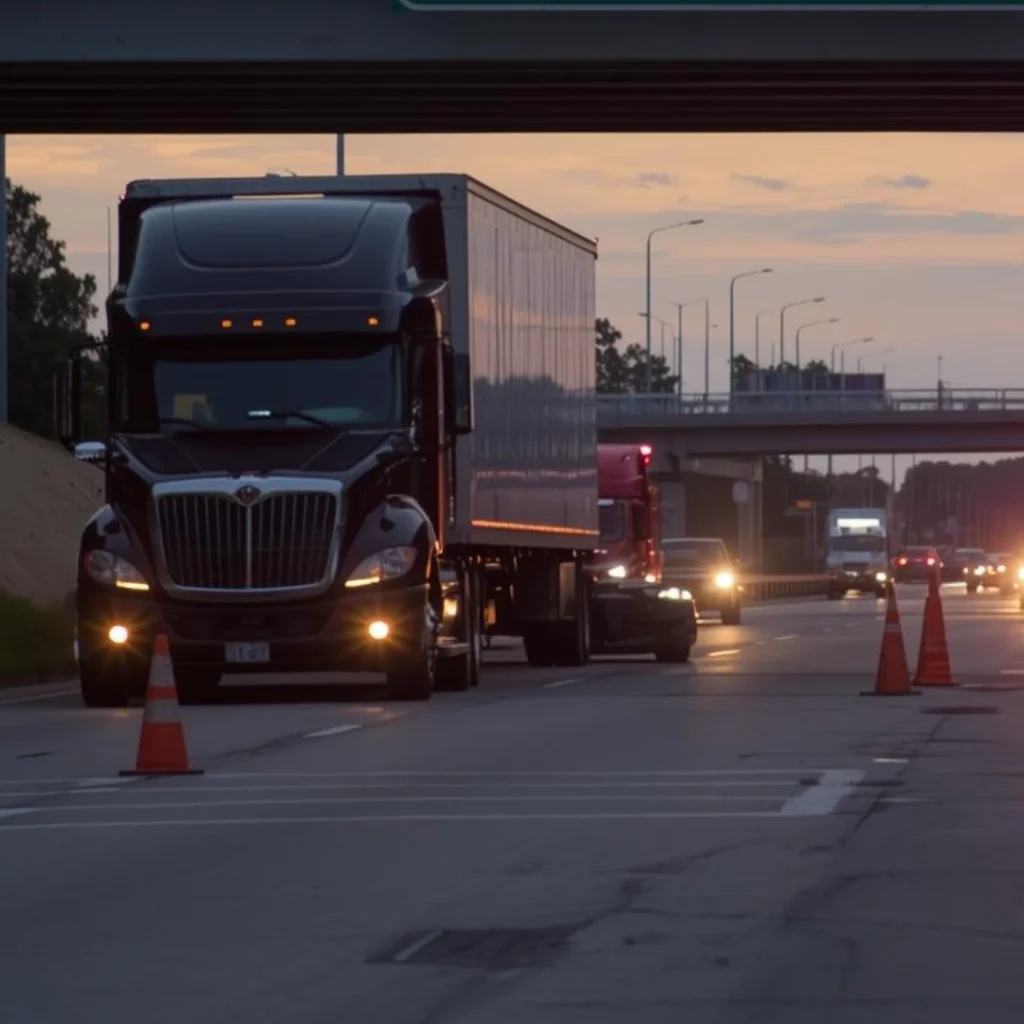
Scene of a fatal semi-truck crash in Tampa showing emergency response vehicles and police lights at night on Adamo Drive.
After an Accident, Blog, News, Truck Accidents, Wrongful Death

Fatal Semi-Truck Crash in Tampa: What Families Should Know After Losing a Loved One

When a fatal semi-truck crash happens in Tampa, the shock hits hard. One moment, everything is normal, and the next, a family is facing the sudden loss of a loved one. These moments are overwhelming. There are phone calls, questions from police, and decisions about what to do next, all while dealing with grief. Families often feel like they’re left in the dark. What caused the crash? Who is responsible? Will anyone be held accountable? These are challenging questions, and the answers aren’t always available right away. But knowing the basics can help families protect their rights and avoid mistakes that could affect their future. This guide is for families in Tampa dealing with a fatal crash involving a semi-truck. It is a simple, clear resource to help families understand what to do, what to expect, and how to move forward, step by step. What Happened in the Fatal Semi-Truck Crash in Tampa? In August 2024, a terrible crash happened outside Emperor’s Gentleman’s Club on Adamo Drive in Tampa. A man driving a semi-truck hit a group of people in the parking lot. One man, a 44-year-old father, was killed. Two other people were seriously hurt. Police later arrested the driver, and he was sentenced to life in prison in December 2025. While this was a criminal case, many families in Tampa want to understand what happens after a fatal crash like this. The legal system has two parts. Criminal and civil. Even if someone is arrested or charged, families may still have a separate legal case for wrongful death. This article uses the Tampa crash as a starting point to explain what families should know if they lose someone in a fatal semi-truck crash in Florida. The crash happened near Emperor’s Gentlemen’s Club in Tampa, just off Adamo Drive. Here’s where it occurred: What Should Families Do After a Fatal Truck Crash? After a fatal semi-truck crash in Tampa, families are often unsure of what to do first. The situation feels confusing and painful. But some early steps can help protect your family’s rights. First 72-Hour Checklist: Write down everything you know. Include where the crash happened, what time it was, who was there, and what the weather was like. Ask for the police report number. In Tampa, the crash may be handled by the Tampa Police Department or the Florida Highway Patrol. Collect photos and videos. If anyone has pictures or security footage of the crash, please save them. Even nearby businesses or traffic cameras may have helpful recordings. Keep personal items and phones safe. These may include text messages, call logs, or photos that help build the timeline. Do not talk to insurance companies right away. It’s okay to say, “We’re not ready to speak right now.” These small actions can make a big difference later, when evidence is needed, or questions arise about what really happened. Why Truck Crashes Are More Complicated Than Car Crashes Semi-truck crashes are very different from regular car accidents. These trucks are big, heavy, and more complex to stop. A loaded semi can weigh 80,000 pounds or more. When a crash happens, the damage is often much worse, especially for people walking nearby or riding in smaller vehicles. But the size of the truck isn’t the only difference. Semi-truck crashes usually involve more than one company. The driver might work for a trucking company. The trailer might belong to another business. There could also be a shipping company or cargo broker involved. This makes it harder to figure out who is legally responsible. Truck drivers also follow different safety rules, particularly regarding how long they can drive and when they must take breaks. If a driver was tired, distracted, or rushed, those rules may have been broken, and that matters in legal cases. What Is a Wrongful Death Case in Florida? When someone dies in a crash because of someone else’s actions or poor decisions, Florida law allows the family to file a wrongful death claim. This is a civil case, not a criminal one. It is designed to help families access financial assistance after the loss of a loved one. In Florida, wrongful death cases are typically filed by a personal representative of the deceased, someone named by the court (often a spouse or family member) who acts on behalf of the family. The money from a wrongful death case may help with: Funeral and burial costs Medical bills before death Lost income the person would have earned Loss of care or support (like if the person helped raise kids or care for a parent) Emotional pain and suffering, in some cases Every case is different, and the amount a family can recover depends on the relationship and the circumstances of the crash. Who Can Be Held Responsible After a Fatal Semi-Truck Crash? When a fatal crash happens, the truck driver is often the first person people think of. But in many cases, more than one party shares responsibility. Possible responsible parties include: The truck driver The trucking company that hired the driver The owner of the trailer or cargo A company that rushed or pressured the driver A repair shop that failed to fix a known problem A manufacturer, if a defective part contributed to the crash If the crash occurred while the driver was working or following company instructions, the employer may be held liable under a legal doctrine known as vicarious liability. That means the company may be liable for damages, not just the driver. What Kind of Evidence Can Help a Family’s Case? Evidence is key in a wrongful death case. In a fatal semi-truck crash, the most helpful evidence may come from sources beyond the police report. Common types of helpful evidence: Security camera or dashcam footage Truck “black box” data (shows speed, braking, and sudden movements) GPS or route tracking Driver logbooks and rest schedules Dispatch instructions and texts Maintenance and inspection reports Much of this evidence can be lost or deleted within

Semi-truck driving on a dark Florida highway with police lights in the distance, representing a fatal head-on crash on Hwy 640 in Mulberry.
Blog, News, Truck Accidents

Mulberry, FL, Semi-Truck Crash on Hwy 640: Legal Steps After a Fatal Head-On Collision

A Mulberry, FL, semi-truck crash can change a family’s life in seconds. One moment, it’s just a typical drive on Hwy 640, and then suddenly, there are flashing lights, a blocked roadway, and a phone call no one ever wants to receive. What makes semi-truck crashes different is not just the truck’s size. The chain reaction that follows is: multiple insurance companies, fast-moving investigations, pressure to make statements, and evidence that can disappear if no one acts quickly. This guide explains the legal steps after a fatal head-on collision in plain English. It is written from the perspective of a Florida personal injury lawyer and is easy to understand, helping families in Mulberry and Polk County make informed decisions during a difficult time. What Happened on the Mulberry Crash on Hwy 640 FOX 13 reported that a 36-year-old Fort Meade woman died after deputies said she attempted to pass another vehicle in a no-passing zone and collided head-on with a semi-truck. The crash happened Tuesday night on Highway 640 near Watson Road, southeast of Mulberry, according to the Polk County Sheriff’s Office. The semi-truck driver was taken to the hospital and was expected to survive. Why a Head-On Semi-Truck Crash Becomes a Legal Emergency When there is a fatal head-on crash, people often assume the case is simple. In reality, a serious Mulberry, FL, semi-truck crash triggers multiple questions right away, such as: Who is legally responsible, and is it only one person? What evidence exists, and who has control of it? What insurance applies, and how much coverage is available? What mistakes can hurt the case, even if the family is trying to do the right thing? Truck cases are different from regular car crashes because trucking companies often have procedures in place immediately. They may send investigators, contact insurers, and start building a defense early. Families should know that the trucking side typically moves quickly, even while the victim’s side is still in shock. What a “No-Passing Zone” Means Under Florida Law Florida has specific laws about passing and driving left of center. Two common statutes that come up in these cases are: Florida Statute 316.087 limits when a driver can be on the left side of the road in certain dangerous situations. Florida Statute 316.0875, which focuses on no-passing zones and explains that when signs or road markings define a no-passing zone, a driver may not drive on the left side of the roadway within that zone. These statutes matter because traffic violations can be used as evidence of negligence. But a real legal investigation still asks more profound questions. For example: Were the markings clear at night? Was the area well-lit? Was the roadway designed safely? Did the semi-truck driver react legally and adequately? Even when an early report suggests one driver caused the crash, the legal work is to confirm what is provable and what is not. The First 24 Hours: What Families Should Do and Not Do After a fatal crash, families are often dealing with grief, confusion, and logistics. But a few early decisions can protect the family’s rights. Helpful steps: Request the case number and the investigating agency’s information. Write down everything known so far (time, location, who called, hospital name). Save any photos or videos that family members receive. If the semi-truck driver survived and the family is injured, follow medical instructions and keep follow-up appointments. What to avoid: Do not post crash opinions on social media. Do not sign insurance paperwork quickly. Do not agree to recorded statements without legal advice. Insurance adjusters may sound kind. Their job is still to reduce payouts and close cases quickly. Why Evidence Can Disappear in Truck Crashes In a serious Mulberry, FL, semi-truck crash, the most crucial evidence often belongs to the trucking company. That includes: Driver logs and driving hours records Truck inspection and maintenance records “Black box” style data (speed, braking, throttle, and other event data) Dashcam or inward-facing camera footage (if the carrier uses it) Dispatch messages and route plans This evidence may not be held forever. Some items can be overwritten or lost through normal business processes. That is why truck accident lawyers often promptly send a preservation letter. The goal is simple: stop necessary evidence from disappearing before the victim’s side even has a chance to review it. Understanding Fault in Florida: Why the 51 Percent Rule Matters Florida uses a modified comparative fault system in many negligence cases. That means a person’s compensation can be reduced by their percentage of fault, and if they are found to be more than 50 percent at fault, they may be barred from recovering damages under the applicable statute. This is a big deal in head-on collisions because insurance companies may push hard to place most of the blame on one driver. Even when deputies believe a driver passed in a no-passing zone, the legal question remains: What does the evidence establish, and are there contributing factors? Fault can involve more than one party, which is why families often ask who is liable in a truck accident. Liability may rest with a trucking company, a maintenance provider, or a roadway issue, depending on the facts. Wrongful Death Claims in Florida: Who Can File and What Can Be Recovered In Florida, a wrongful death case is usually filed by the personal representative of the decedent’s estate, on behalf of the survivors and the estate. The types of damages that may be awarded are described in Florida Statute 768.21. While every case is different, the law can include categories such as: Loss of support and services Medical or funeral-related damages (depending on the situation) Other damages allowed under the statute are based on the survivor’s relationship and facts. For families, the main point is this: the case has a legal structure, and it must be handled carefully from the outset. A wrongful death claim is not just paperwork. It is the formal process of accountability and financial protection after a preventable loss.

How to report a semi-truck accident in Florida after a Tampa highway crash
Blog, Truck Accidents

How to Report a Semi-Truck Accident in Florida: Step-by-Step Guide for Tampa Drivers

A semi-truck crash can flip a normal Tampa commute into chaos in seconds. One heavy impact, a loud scrape of metal, and suddenly, cars are stopped across lanes while drivers try to figure out what just happened. What makes it worse is that truck accidents are often more catastrophic than regular car crashes. Florida faces a heavy burden from commercial-vehicle crashes, and major freight corridors such as I-4 near I-75 and I-75 usually experience congestion, construction, and fast-moving traffic, which increases risk. That is why knowing how to report a semi-truck accident in Florida matters. A clear report helps protect health, insurance rights, and the facts, mainly when trucking companies, insurers, and investigators rely heavily on early documentation. Tampa Checklist: Report a Semi-Truck Accident (Steps 1–10) Step 1: Get safe first, then call 911 Step 2: Get checked medically Step 3: Make sure law enforcement creates an official crash report Step 4: Take photos and video (especially truck identifiers) Step 5: Get witness info before people disappear Step 6: Exchange basic information, but avoid blame talk Step 7: If police do not respond, file the required self-report quickly Step 8: Report the crash to insurance, but keep it basic Step 9: Understand why timing matters in Tampa truck crashes Step 10: Build a simple “crash folder” so nothing gets lost Step 1: Get safe first, then call 911 Safety is the first essential action. Before photos, before phone calls to insurance, before anything else. If the vehicle can move and it is safe, the driver should pull to the shoulder or a safe area away from traffic. Secondary crashes on Tampa highways such as I-275, I-4, and I-75 can occur when trailing drivers do not notice slowdowns in time, especially during peak hours. When Florida drivers must notify law enforcement Florida does not treat every crash the same. In certain situations, drivers must notify law enforcement and remain at the scene. In plain terms, a driver should call 911 when a crash involves injuries, a death, or a hit-and-run, suspected DUI, a vehicle that needs a tow truck, a commercial motor vehicle (like a semi-truck), or when the visible property damage appears to be at least $500. Crash with injury Crash with fatality Hit-and-run crash Suspected DUI crash Crash requiring a wrecker/tow Crash involving a commercial motor vehicle Apparent damage of $500 or more Official references: Florida Statute 316.065 and FLHSMV’s Involved in a Crash? Guidance. When calling 911, the caller should share: The location (exit number, cross street, or nearby landmark) Whether anyone is hurt or feels pain Whether lanes are blocked That a semi-truck/commercial vehicle is involved Simple rule: if there is any injury doubt, the safest move is to seek medical help. Step 2: Get checked medically (truck crashes often cause “hidden” injuries) Truck collisions can cause severe injuries even when the vehicle does not look “totaled.” Commercial trucks are heavier, and force transfer is different. Injuries that often appear in serious truck crashes include: Traumatic brain injuries (TBI) Spinal-cord injuries Fractures Internal injuries Whiplash and soft-tissue injuries Long-term emotional trauma A driver should not wait for pain to become unbearable. Getting evaluated quickly helps protect health and creates early medical documentation. Step 3: Make sure law enforcement creates an official crash report A significant part of “reporting” is making sure the crash is documented as an official record. At the scene, the driver (or a passenger) should politely ask: Which agency is handling the report (TPD, HCSO, or FHP) The case/report number When the report may be available Tampa driver tip: When a crash happens on an interstate or major state roadway, the Florida Highway Patrol often responds. Knowing which agency handled the report saves time later. What if the police report is missing after a semi-truck accident in Florida? Sometimes, Tampa drivers cannot locate the crash report immediately. It may be delayed, filed under a different case number, or still being processed by the responding agency. In this short video, attorney Edward Reyes explains what the firm does when the police report is missing and what evidence can help fill the gaps. Helpful tip: If the police report is delayed or missing, a case can still proceed using the agency follow-ups and other evidence, such as nearby video footage. Key takeaways for Tampa drivers Follow up with the responding agency to confirm the report status and the correct case number. If a report is unavailable, other evidence, such as video footage and witness statements, can help clarify what happened. Details can change over time, so documenting early helps protect the facts. Step 4: Take photos and video (especially truck identifiers) If it is safe and the person is physically able, they should document the scene before moving any vehicles. Photos that matter: Wide scene photos (lane positions, debris field, skid marks) Damage to all vehicles (front/side/rear angles) Road conditions (rain, pooled water, low lighting, construction barrels) Street signs, mile markers, and nearby businesses Truck-specific details that matter even more: Company name on the tractor and trailer USDOT / MC numbers (usually on the cab) License plates for both the tractor and the trailer (often different) Trailer numbers, container markings, and any placards This matters because truck crashes may involve multiple responsible parties (driver, carrier, maintenance contractor, cargo loader, and others). Step 5: Get witness info before people disappear Witnesses come and go fast, especially in Tampa traffic, where people want to leave once lanes reopen. If someone saw what happened, the driver should ask for: Name Phone number Email (if possible) Even one neutral witness can help confirm what happened if the accounts later change. Step 6: Exchange basic information, but avoid blame talk Drivers should exchange basic information and avoid arguing over fault. Good approach: short, factual, calm. “Is everyone okay?” “Police are on the way.” “Let’s make sure everything gets documented.” What to avoid: Guessing speeds (“I was probably going 60…”) Making an apology that could be interpreted as accepting blame Debating the story with

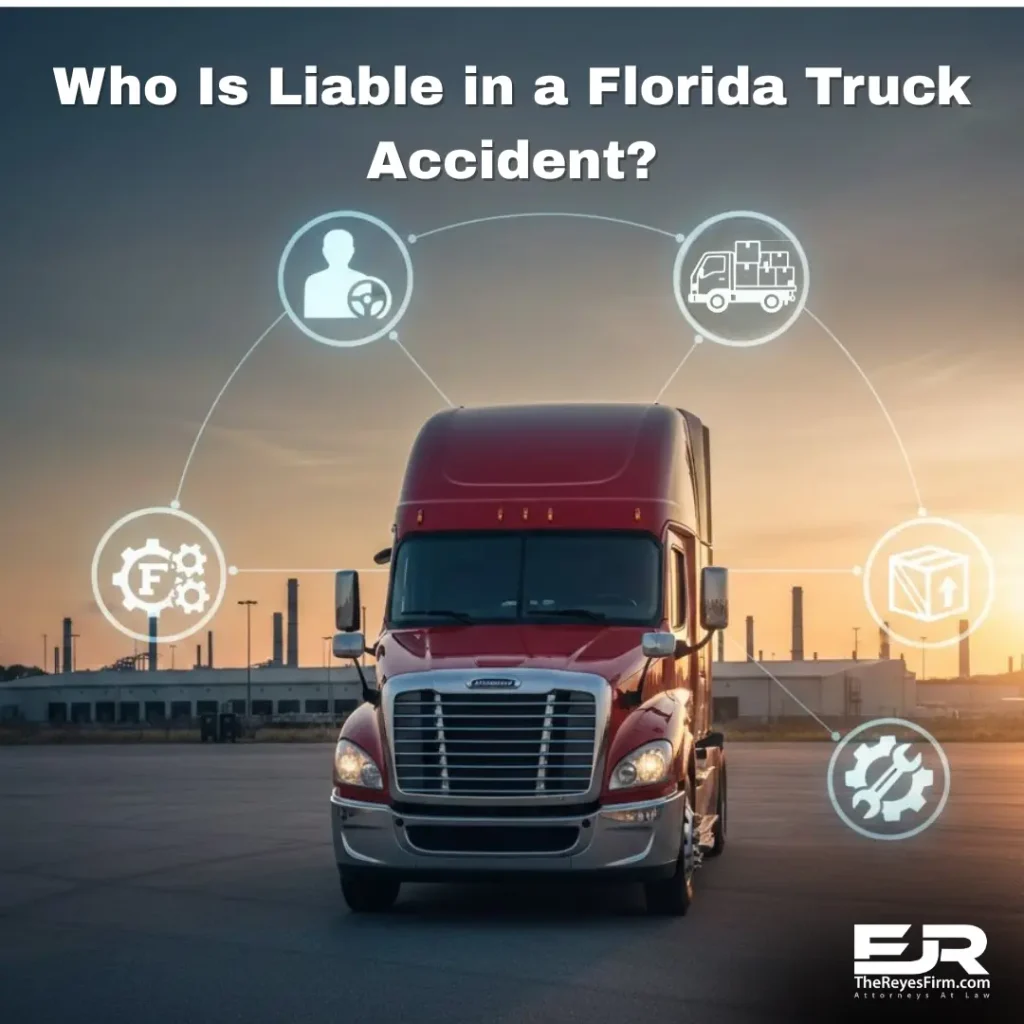
Featured image for a legal guide on who is liable in a truck accident in Florida, showing a semi-truck and icons representing multiple responsible parties.
Blog, Truck Accidents

Who Is Liable in a Truck Accident in Florida? A Clear Guide for Injured Drivers

Imagine a 40-ton steel giant barreling down I-275 or I-4 in Tampa. It is taller than your house and weighs more than twenty cars put together. When a semi-truck like this hits a regular vehicle, the results are rarely minor. Families are left dealing with broken bones, totaled vehicles, and a mountain of medical bills that seem to grow every single day. One of the biggest questions people ask after a crash like this is: Who is Liable in a Truck Accident in Florida? Unlike a minor fender-bender between two neighbors, a commercial truck accident is much more complicated. There isn’t just one person involved; there is an entire network of companies, drivers, and mechanics who all have a role in keeping that truck safe on the road. Finding the answer to who is at fault is like putting together a giant puzzle. Sometimes it is the driver’s mistake, but other times the problem began weeks ago in a repair shop or at a shipping warehouse. This guide will explain how liability works in Florida and why knowing the rules of the road is the first step toward getting your life back on track. Video: Who Can Be Liable After a Florida Truck Accident? Truck accident cases are often more complex than regular car crashes. This short video explains why liability can extend beyond the truck driver, including the trucking company and other parties involved in the load and delivery. Helpful breakdown on why multiple parties may be responsible in a Florida truck accident claim. The Truck Driver: The Human Factor In many crashes, the person behind the wheel is the first place people look for answers. Truck drivers have a demanding job and significant responsibilities. Because their vehicles are so large, they have to follow much stricter rules than a regular driver. When they ignore these rules, they become the primary factor determining liability in a semi-truck accident in Florida. Driver Fatigue and “Hours of Service” Driver fatigue is one of the most dangerous risks on Florida roads. Many truck drivers are paid per mile or per load, so there can be pressure to keep moving, even when they are tired. Fatigue slows reaction time, increases the likelihood of lane drifting, and can lead to “highway hypnosis,” where the brain zones out and misses hazards. To reduce fatigue-related crashes, federal law sets Hours of Service (HOS) limits. These rules control how long a commercial driver can drive and how long they must rest. Key HOS limits (standard rules for property-carrying truck drivers): 11-hour driving limit: A driver can drive up to 11 hours after 10 consecutive hours off duty. 14-hour duty window: A driver may not drive after the 14th hour of duty, even if they have taken breaks. 30-minute break rule: A driver must take at least a 30-minute break after 8 hours of driving time. Weekly on-duty limits: Drivers are limited to 60 hours in 7 days (or 70 hours in 8 days), with a restart option under the rules. Why this matters for liability in Florida truck accidents: If a driver violates HOS rules and causes a crash, it can support a claim that the driver was negligent for driving when they should have been resting. The trucking company may also share responsibility if it pressured the driver, set unsafe delivery windows, or ignored warning signs of fatigue. Distraction and Impairment A truck driver looking at a phone for just five seconds can travel the length of a football field without seeing the road. Because trucks take much longer to stop than cars, being distracted is a recipe for disaster. Additionally, alcohol regulations are much stricter for truck drivers. While a regular driver might get a DUI at a 0.08% blood alcohol level, a commercial truck driver can be in big trouble at just 0.04%. The Trucking Company: The Corporate Shield Sometimes, the driver is just following orders. In the legal world, there is a rule that says a boss is responsible for what their employees do while they are working. This is called “vicarious liability.” But the trucking company, also known as the “carrier,” can also be liable for its own mistakes. Negligent Hiring and Training A trucking company has a duty to ensure it places safe people on the road. If they hire a driver with a history of multiple accidents or a record of reckless driving, the company is being negligent. They also have to train their drivers properly. If a company allows a driver to operate a heavy rig through the busy streets of Tampa without teaching them to handle its weight, the company can be held liable if a crash occurs. Cutting Corners on Maintenance Trucking companies are required by law to inspect their trucks daily. They must check the brakes, tires, lights, and steering. However, maintenance costs money and takes the truck off the road. Some companies try to save money by delaying repairs. If a truck’s brakes fail on a steep exit ramp because the company didn’t want to pay for new brake pads, the company is liable. Cargo Loaders: The Weight Behind the Crash When you think about who is liable in a truck accident in Florida, you might not think about the people who put the boxes inside the truck. But these people have one of the most critical jobs. Improperly Balanced Loads If you have ever tried to carry a heavy, lopsided box, you know how hard it is to stay balanced. Now imagine that on a massive scale. If cargo is loaded mostly on one side of a trailer, the truck may tip over when making a turn. This is called a “rollover” truck accident. Falling Debris We have all seen trucks on the highway with things falling off the back. If a shipping company does not secure the cargo correctly and a heavy crate falls onto your car, that shipping company can be sued for the injuries it caused. They are responsible for making

US 27 highway sign at night with police lights in the distance, representing a three-vehicle pickup truck crash in Marion County, Florida.
Blog, News, Personal Injury, personal injury attorney, Truck Accidents

Three-Vehicle Pickup Truck Crash on US 27 in Marion County: What Injured Drivers Should Do Next

Driving on U.S. Highway 27 in Ocala is more than just a trip to the store. It is a drive on a road with a dark history. For decades, locals have called this stretch of highway “Bloody 27.” It earned that scary name because of how many serious accidents happen on it every year. While the road has been widened over time, the danger has not gone away. Just recently, the community in Marion County saw this firsthand when a terrible crash involving three pickup trucks happened near Northwest 90th Avenue. This recent accident was a tragedy that took the life of a 25-year-old and sent others to the hospital. The crash was severe enough to close the road for several hours. One person who lives right next to the highway told reporters at WCJB News that “people land in my pastures constantly.” This shows that for people in Ocala, “Bloody 27” is not just a historical nickname. It is a daily reality. When three big, heavy pickup trucks crash into each other, the results are catastrophic. If someone was hurt in a US 27 crash in Ocala, they are likely dealing with pain, medical bills, and a lot of questions. The Reyes Firm wants injured drivers and families to know they do not have to handle the insurance companies alone. This guide explains what happens after a serious crash and how to protect legal rights. Why “Bloody 27” Is Still So Dangerous Today A road with a nickname like “Bloody 27” should have become safer by now. The problem is a mix of high speeds and heavy traffic. US 27 is a major route through the “Backbone of Florida,” carrying everything from family cars to massive semi-trucks and heavy construction pickups. For more on how serious commercial crashes can be, see The Reyes Firm’s guide to semi-truck accidents in Florida. In a three-vehicle pickup crash, vehicle weight plays a significant role. Pickup trucks are heavier and taller than many standard cars. When heavy vehicles collide, the impact is greater, and injuries are often more severe. Many wrecks on this corridor happen during stop-and-go driving. One vehicle slows down to turn into a side road, driveway, or farm entrance, and the driver behind does not react in time. Heavy vehicles require more distance to stop, especially when the driver is distracted, fatigued, or speeding. The “Pasture” Danger: Why Rural Crashes Can Be Worse When a crash happens on a city street, curbs and buildings can limit where vehicles go. But on US 27 in Marion County, the road is surrounded by open fields and horse pastures. When vehicles leave the roadway at highway speeds, the crash can become even more dangerous. Rollovers: Pickup trucks are tall. If they slide into a ditch or soft ground, they are more likely to tip or flip. Secondary impacts: A vehicle may survive the initial impact and then crash into a fence, tree, or other off-road object. Delayed help: In rural areas, longer response times increase the risk of catastrophic injuries. Common Injuries After a Major Pickup Truck Crash The Reyes Firm often sees injuries that do not seem severe at first but become painful days later. In a multi-vehicle collision, a body can be thrown forward, sideways, or backward within a split second. Hidden brain injuries Even without a direct head strike, the brain can move inside the skull during a violent stop. This can cause a concussion or traumatic brain injury (TBI). Warning signs can include headache, nausea, dizziness, confusion, and light sensitivity. Anyone with symptoms should seek medical care right away. Neck and back damage High-impact forces can injure the spine, including the discs and soft tissues. Symptoms may include neck stiffness, back pain, numbness, tingling, or radiating pain into the arms or legs. Early evaluation and consistent care are essential. The 14-Day Rule: Do Not Lose PIP Benefits Florida’s no-fault system often starts with Personal Injury Protection (PIP). Under Florida’s PIP statute, initial medical services must be received within 14 days of the crash to qualify for PIP medical benefits. Florida Statutes § 627.736 (PIP) If someone waits too long, believing the soreness will fade, the insurer may deny PIP benefits. Even mild symptoms should be documented. Florida drivers can also review official guidance here: FLHSMV: Involved in a Crash? The Nightmare of the “Middle Vehicle” In a three-vehicle crash, the middle driver is often squeezed between two other vehicles. The rear driver may claim the middle driver stopped too fast. The front driver may state that the middle vehicle struck them before the rear impact occurred. Insurance companies can argue for months about who should pay. Florida’s comparative fault rule can be harsh. In many negligence cases, a party found to be greater than 50% at fault may not recover damages. Florida Statutes § 768.81 (comparative fault) This is one reason local legal help matters. A truck accident lawyer in Marion County can push for the evidence needed to place fault where it belongs. Preserving the “Black Box” Evidence (EDR and Truck Data) Many modern vehicles have an Event Data Recorder (EDR), sometimes called a “black box.” NHTSA explains that EDRs may record items such as pre-crash vehicle dynamics, driver inputs, crash forces, and restraint use. NHTSA: Event Data Recorder (EDR) In a severe incident such as a US 27 crash in Ocala, EDR data can help confirm what happened and support or challenge a driver’s account. But this evidence can disappear fast if the vehicle is repaired, sold, or sent to a junkyard too soon. If the crash involves a work truck or a commercial vehicle accident, the investigation can go even deeper. Company vehicles and semi-trucks may also include GPS data, dashcam footage, maintenance records, and other electronic data. That is why acting quickly matters. The Reyes Firm can send preservation letters and take legal steps to help protect vehicles and key records before they are altered, overwritten, or destroyed. Video: Why severe truck crash cases require

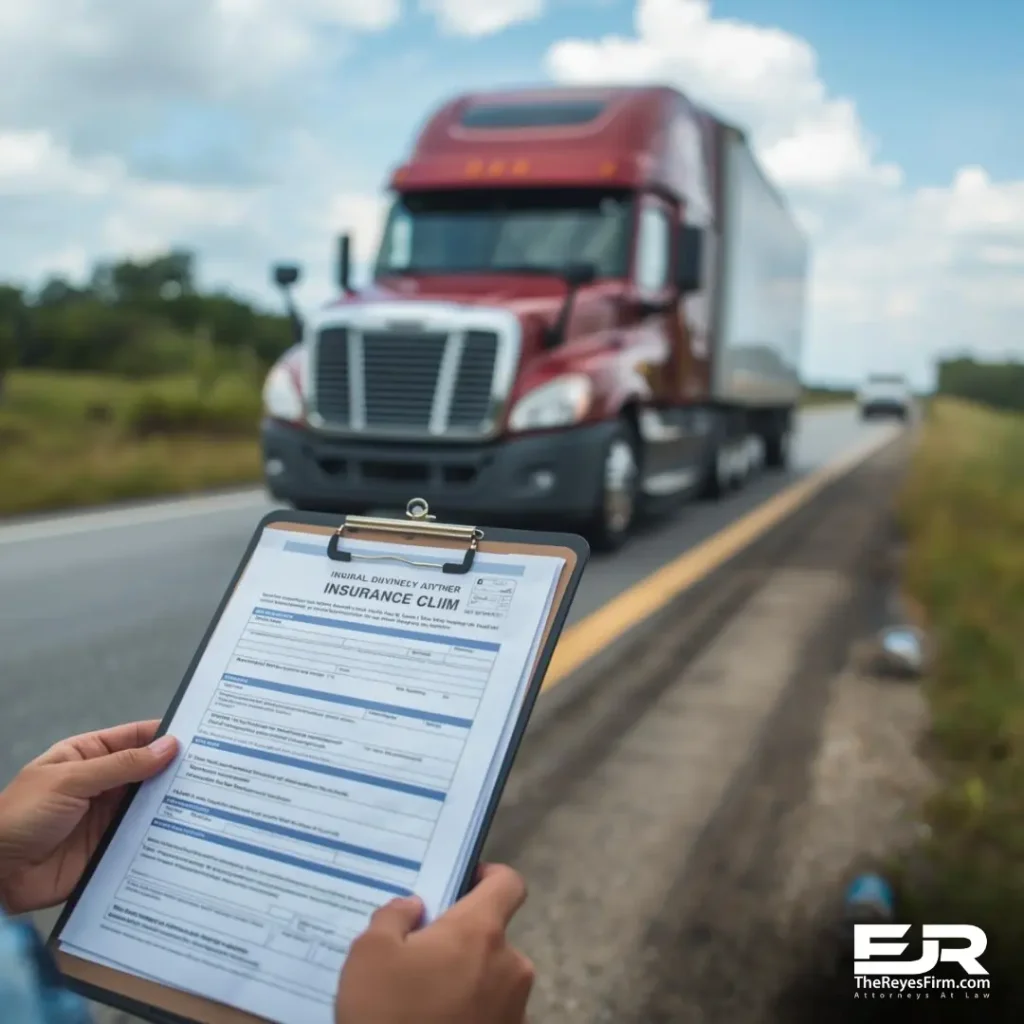
Florida semi-truck accident insurance claim paperwork with a semi truck on a highway in Tampa Florida
Blog, Truck Accidents

How Insurance Works in Florida Semi-Truck Accidents

A semi-truck crash in Florida can flip someone’s life upside down in a single moment. One minute, they are driving through Tampa or heading down I-4, and the next minute, they are dealing with an ambulance ride, scary symptoms, and a car that may be totaled. After the shock subsides, the same question usually comes up quickly: How will this be paid for? The problem is that Florida semi-truck accident insurance is not simple. Truck crashes often involve catastrophic injuries, multiple companies, and several insurance policies that can overlap. Insurance adjusters may call early, ask for statements, and push paperwork before the injured person even understands the diagnosis. This issue matters because the first few days can shape the whole case. A missed deadline, a delayed doctor visit, or a poorly worded statement can reduce the settlement available for medical care, lost income, and long-term recovery. Clear guidance helps injured victims protect their health and protect their claim. TLDR: Florida Semi-Truck Accident Insurance Florida PIP often pays first, but serious truck crash injuries can exceed PIP fast. Truck cases are complex because multiple companies and policies may apply, not just the driver’s insurance. Early insurance calls can pressure people into recorded statements before the full facts and medical picture are clear. Consistent medical care helps protect the claim and reduces arguments about “gaps in treatment.” When injuries are serious or fault is disputed, it usually helps to talk to a Tampa truck accident lawyer before signing anything. Why are Florida truck accident insurance claims more complicated than regular car accidents? Florida truck accident insurance claims are usually more complex because a semi-truck is part of a business operation, not just a personal vehicle. That business operation often creates more possible responsible parties, such as: The truck driver The trucking company (motor carrier) A separate trailer owner A broker or shipper who helped arrange the load A maintenance company that worked on the truck This is why many commercial truck insurance claims in Florida require deeper investigation. More parties often mean more finger-pointing, more delays, and more paperwork. How does the Florida no-fault insurance truck accident system work? Florida uses a “no-fault” system. This means after a crash, your own insurance is usually the first to pay, regardless of who caused the wreck. Even if a 40-ton rig slammed into you, your first point of contact for medical bills is your own provider. Understanding PIP coverage after a truck accident in Florida Every driver in the state must carry Personal Injury Protection, or PIP. In a Florida no-fault insurance truck accident, PIP is designed to provide immediate money for medical care. It typically pays: 80% of your medical bills. 60% of your lost wages. A maximum total of $10,000. Because semi-truck accidents are so violent, that $10,000 limit is often reached within the first few hours at a Tampa trauma center. Key Takeaway In Florida truck crashes, PIP may be the first layer, but it is often not enough for semi-truck injuries. The next steps usually depend on the fault, the available liability policies, and whether additional coverage, such as UM, applies. What is the 14-day rule for the PIP Florida accident? You must act fast to keep your benefits. Under the 14-day rule, PIP Florida accident law requires you to seek medical treatment within 14 days of the crash. If you wait until day 15 because you hoped the pain would go away, your insurance company can legally refuse to pay. To access the full $10,000, a doctor must also confirm you have an “Emergency Medical Condition” (EMC). Without this, your benefits are capped at just $2,500. The 90-day rule for Florida insurance claims Insurance companies cannot ignore you forever. Under the 90-day rule in Florida insurance claim guidelines, an insurer generally has 90 days to pay or deny your claim after receiving all necessary documents. This prevents them from stalling your recovery for years. If PIP is limited, what insurance pays the high costs? For serious truck injuries, the primary source of compensation is usually liability insurance, not PIP. This is where bodily injury liability coverage for Florida truck accident claims matters. Bodily injury liability coverage may pay for: Medical bills beyond PIP Future medical treatment and long-term care Lost wages and reduced earning ability Pain, suffering, and daily-life impact Disability, scarring, and permanent injury Wrongful death losses in fatal cases In a semi-truck crash, proving fault and proving damages are the two pillars of a strong claim. Who pays for a semi truck accident in Florida? This is one of the most common voice-search questions after a crash: “Who pays for a semi truck accident in Florida?” In many cases, payment happens in layers: PIP may pay first for some immediate medical expenses if the injured person qualifies and meets deadlines. The truck driver’s and the trucking company’s liability insurance may pay if they caused the crash. Other responsible parties’ insurance may pay if more than one business contributed to the crash. Uninsured or underinsured motorist coverage may help if liability coverage is missing or not enough. A strong case focuses on identifying all responsible parties and all available policies. What is trucking company insurance coverage after a crash? People often assume the truck driver’s policy is the only one that matters. In many cases, the trucking company’s coverage is the bigger issue. That is why trucking company insurance coverage after a crash is such a common phrase. A trucking company may be responsible for: Hiring and training decisions Safety rules and supervision Dispatch pressure and scheduling Truck maintenance and inspection compliance Load planning, weight, and securement practices Even when the driver made the mistake, the company’s actions often became part of the liability picture. What are commercial auto insurance policy limits in Florida truck cases? A common question after a semi-truck crash is: “How much insurance does a trucking company have?” The honest answer is: it depends on whether the truck is operating under Florida-only rules,

Scroll to Top