Author name: Edward Reyes, Esq

Florida driver reviewing medical bills after PIP insurance benefits are exhausted following a Tampa car accident, for illustrative purposes only.
Blog, Car accident

What Happens When PIP Is Exhausted After a Florida Car Accident?

What You Need to Know PIP running out does not automatically mean your car accident claim is over. Ask your insurance company for a written breakdown of what PIP paid, denied, reduced, or still has pending. Other possible sources may include bodily injury coverage, UM/UIM coverage, MedPay, health insurance, or another responsible party. If the driver who caused the crash has no bodily injury coverage, do not assume there is nothing left to investigate. Before accepting a settlement, know your unpaid bills, available insurance, and expected future treatment. Had a bad day? Call The Reyes Firm at 833-4 BAD DAY ((833) 422-3329). SCHEDULE A FREE CASE REVIEW Your treatment is not finished. The bills keep coming. Then your insurance company tells you your PIP benefits are exhausted. Now you are trying to figure out what happens when PIP is exhausted in Florida. Who pays the next medical bill? What happens if the driver who hit you has no bodily injury coverage? What if you do not have uninsured motorist coverage either? The first thing to understand is simple: PIP being exhausted does not automatically mean your injury claim is exhausted. It means one source of payment may be gone. Now you need to find out what was paid, what is still owed, and what other coverage or responsible parties may exist. If you are still trying to understand how the pieces fit together after a crash, our Florida car accident guide explains how PIP, liability insurance, medical expenses, lost income, and other damages can affect a Tampa car accident claim. What Does It Mean When Your Florida PIP Is Exhausted? Your PIP is exhausted when you’ve used all the benefits available under your policy. That does not mean your treatment has to stop or that every part of your injury claim is finished. It means PIP may no longer pay additional covered expenses, so the next step is finding out what other payment sources may apply. Florida Statute § 627.736 provides up to $10,000 in PIP medical and disability benefits, subject to the law’s requirements and limits. PIP generally pays 80% of reasonable and medically necessary covered medical expenses. Initial medical treatment generally must begin within 14 days of the crash. There is another part many people do not realize. Having $10,000 in PIP coverage does not mean you automatically have access to the full $10,000 for medical treatment. Florida law can limit medical benefits to $2,500 if the required emergency medical condition determination is not made. Edward Reyes, Esq., explains why Florida drivers may not automatically have access to the full $10,000 in PIP medical benefits after a crash and why the 14-day treatment rule matters. That is why the first question should not simply be: “How much PIP do I have left?” You also need to ask: “What happened to the benefits I had?” Ask for a PIP payment breakdown Do not rely only on someone telling you, “Your PIP is gone.” Ask your insurance company for a PIP payment ledger, payout log, or another written accounting showing: How much PIP has paid Which medical providers were paid Which bills are still pending Which charges were reduced Which bills were denied The date the insurer says your benefits became exhausted There is also a major difference between PIP exhausted and PIP denied. A bill may have been rejected, reduced, or still be under review. That doesn’t necessarily mean you’ve used all available benefits. ⚠️ Warning: Florida Has a 14-Day PIP Treatment Rule Florida Statute § 627.736 generally requires initial medical services and care within 14 days after a motor vehicle accident to qualify for PIP medical benefits. If your crash was recent and you have not been evaluated, do not wait simply because you hope the pain will go away. Who Pays Your Medical Bills After PIP Runs Out in Florida? No single automatic payer takes over when PIP runs out. The next source can depend on the insurance policies involved, who caused the crash, your health insurance, and the facts of the case. The goal is to identify every available source before assuming the remaining bills are yours alone. Here is the basic picture: Possible Source When It May Matter Remaining PIP If your benefits have not actually been fully exhausted MedPay If your policy includes medical payments coverage At-fault driver’s BI coverage If the responsible driver carries bodily injury liability insurance UM/UIM coverage If applicable, uninsured or underinsured motorist coverage is available Health insurance May cover eligible medical treatment under your plan Another responsible party If another driver, owner, employer, or business shares responsibility At-fault person’s assets May be evaluated in appropriate cases This is why the insurance card you saw at the crash scene may not tell you the whole story. For example, if the driver who hit you was working, making a delivery, or driving a company vehicle, the investigation may need to look beyond that driver’s personal policy. Our guide to commercial vs. personal insurance after a Florida crash explains why another policy may become relevant when a driver was using a vehicle for work. The important point is: PIP exhaustion is not the same as exhausting your entire injury claim. đź’ˇ Did You Know? Florida does not require every private passenger vehicle owner to carry bodily injury liability coverage in the same way it requires PIP and property damage liability coverage. That is one reason an injured driver can sometimes find out after a crash that the at-fault driver has no BI coverage available. What If the At-Fault Driver Has No Bodily Injury Coverage? If the driver who caused your crash has no bodily injury coverage, recovering compensation can be harder, but the investigation shouldn’t automatically stop. Fault and insurance coverage are separate questions. You need to confirm the actual policies involved and identify every person or business that may share responsibility for the crash. This is the part that can feel especially unfair. Someone else caused the crash. You are

Person using a wheelchair during rehabilitation after a spinal cord injury in Tampa, Florida, for illustrative purposes only.
Blog, Catastrophic Injury

What Compensation Can You Recover After a Spinal Cord Injury in Tampa?

What You Need to Know A spinal cord injury claim may include medical care you have already received and treatment you may need for years. Lost income is only part of the picture. Your future ability to work and earn a living may matter too. Wheelchairs, home changes, transportation, rehabilitation, and personal care can create major long-term costs. The effects of a spinal cord injury can become clearer over time, especially during rehabilitation. Accepting a settlement before you understand your future needs can leave important losses unaccounted for. Had a bad day? Call The Reyes Firm at 833-4 BAD DAY ((833) 422-3329). SCHEDULE A FREE CASE REVIEW A spinal cord injury can leave you with questions no one expected you to have to answer. Will you walk again? Can you go back to work? Who will help you at home? How will you pay for treatment after insurance stops covering part of it? If someone else’s negligence caused your injury, spinal cord injury compensation in Florida may need to cover much more than the hospital bills you have today. The real financial impact can continue for years. Our Tampa spinal cord injury attorney team looks at the whole picture, including your medical care, work, independence, family responsibilities, and the support you may need in the future. What Compensation Can a Spinal Cord Injury Claim Include? A spinal cord injury claim can include medical bills, future treatment, rehabilitation, lost income, reduced earning ability, personal care, accessibility costs, and the ways the injury has changed your daily life. The amount is different in every case because the needs of someone with a serious spinal cord injury can vary greatly. Florida law recognizes economic damages, including past and future lost income, medical expenses, lost services, and other financial losses caused by an injury. For someone living with a spinal cord injury, those losses may include: Type of Loss What It May Include Medical care Hospital stays, surgery, imaging, specialists, medications Rehabilitation Physical therapy, occupational therapy, inpatient or outpatient rehab Future treatment Follow-up care, additional procedures, ongoing therapy Medical equipment Wheelchairs, lifts, braces, cushions, transfer equipment Home changes Ramps, wider doors, accessible bathrooms, modified living spaces Transportation Accessible vehicles, vehicle modifications, medical transportation Personal assistance Home health aides, attendant care, help with daily activities Income losses Missed work, lower future earnings, career limitations Personal losses Pain, reduced independence, and loss of enjoyment of life No useful “average settlement” can tell you what a spinal cord injury case is worth. Two people can suffer injuries at the same level of the spine and still face very different futures. One may return to work. Another may need daily assistance. One may live in an accessible home. Another may need major renovations before returning home safely. Those details matter. ⚠️ WARNING: You do not have unlimited time to bring a claim. Florida Statute § 95.11 generally gives a person two years to file an action based on negligence. Some cases have different rules or notice requirements, so the deadline should be checked based on the facts of the accident. Why Do Future Costs Matter So Much After a Spinal Cord Injury? A spinal cord injury can create expenses long after the emergency room and hospital stay are over. Rehabilitation, medical equipment, medications, in-home help, transportation, and accessibility changes can continue for years. A fair evaluation of the claim should consider what life may actually cost after the immediate crisis has passed. This is one of the biggest differences between an ordinary injury claim and a catastrophic injury case. A hospital bill tells you what has already happened. It does not tell you what the next 10, 20, or 30 years may require. Future needs may include: Ongoing physical and occupational therapy Specialist appointments Prescription medications Wheelchair repair and replacement Home health care Personal assistance Future surgeries or hospital care What Costs Are Easy to Miss? Some of the most important expenses do not arrive as a traditional medical bill. For example, you may discover that your bathroom is too narrow for a wheelchair. Your vehicle may no longer work for you. A spouse or parent may be helping with bathing, transfers, meals, transportation, or appointments every day. Costs may include: Ramps and accessible entrances Wider doors and hallways Bathroom modifications Transfer equipment Accessible transportation Medical supplies used at home Replacement mobility equipment A life care plan for catastrophic injuries can help identify future needs in an organized way. It may address anticipated treatment, equipment, assistance, and other injury-related expenses. đź’ˇ DID YOU KNOW? Car crashes have accounted for 40.4% of spinal cord injuries in data cited by the National Institutes of Health, making motor vehicle crashes one of the leading causes of these life-changing injuries. Falls accounted for another 27.9%. A car crash is only one way a spinal cord injury can happen. Serious falls, motorcycle crashes, pedestrian collisions, commercial vehicle accidents, dangerous properties, and other negligent acts can also cause life-changing spinal injuries. How Does the Severity of a Spinal Cord Injury Change the Claim? The location and severity of a spinal cord injury can affect movement, sensation, independence, work, and how much help a person needs each day. Those real-life effects often matter more to a claim than the diagnosis alone. The goal is to understand what the injury means for this person’s life. You may hear doctors use terms such as “complete” and “incomplete” spinal cord injury. A complete injury generally involves a greater loss of motor and sensory function below the injury. With an incomplete injury, some function remains. But those labels do not tell you everything. One person with an incomplete injury may walk with assistance. Another may depend on a wheelchair. One person may dress and transfer independently. Another may need help with those tasks every day. What About Paraplegia and Quadriplegia? Paraplegia generally affects the lower body. Quadriplegia, also called tetraplegia, can affect both the arms and legs. Higher spinal cord injuries can also affect breathing, hand function, transfers,

Tractor-trailer on a Florida highway representing a fatal commercial truck crash involving a Tampa driver, for illustrative purposes only.
Blog, Commercial Vehicles, News, Tractor Trailer Accidents, Truck Accidents

Tampa Truck Driver Killed in Florida Turnpike Crash: What Families Should Know

What You Need to Know A 40-year-old Tampa truck driver died after his tractor-trailer left Florida’s Turnpike on August 16, 2026. Early reports said he lost control for an unknown reason before striking a guardrail and several trees. A single-vehicle truck crash can still raise questions about maintenance, vehicle condition, cargo, work schedules, and other evidence. If the driver was working at the time, certain family members may have rights under Florida workers’ compensation law. A separate claim may also be possible if evidence shows that another person or company contributed to the crash. Had a bad day? Call The Reyes Firm at 833-4 BAD DAY ((833) 422-3329). When someone leaves home for work and never comes back, the family is left with more than grief. There are questions. Why did the truck leave the road? Was there a mechanical problem? Did something happen with the load? What records exist? What happens now if the person who died was working? Those questions deserve careful answers. For families dealing with a serious commercial vehicle crash, a Tampa truck accident lawyer may need to look far beyond the first crash report to understand what actually happened. What Happened in the Florida Turnpike Tractor-Trailer Crash? A 40-year-old Tampa man died on August 16, 2026, after the tractor-trailer he was driving left the southbound lanes of Florida’s Turnpike near mile marker 306.5 in Sumter County. Early reports citing the Florida Highway Patrol said he lost control for an unknown reason before striking a guardrail and several trees. The map shows the reported crash area and is for location reference only. No other vehicles were reported to be involved. The driver suffered fatal injuries and died at the scene. Reports also said hazardous material was involved, and crews spent nearly 12 hours clearing the scene. That does not mean the cargo caused the crash. At the time of the initial reporting, no public finding had established that speed, fatigue, maintenance, cargo, a mechanical problem, or road conditions caused the driver to lose control. That is why the investigation matters. The first report may describe how a crash happened. It does not always explain why. đź’ˇ Did You Know? FLHSMV reported 46,651 commercial motor vehicle crashes in Florida in 2024, including 315 fatalities. The agency marked the 2024 figures as preliminary. Can Someone Else Be Responsible for a Single-Vehicle Truck Crash? Yes. A one-vehicle crash does not automatically mean the driver was fully responsible. Commercial trucks create many layers of evidence, and investigators may need to look at the truck itself, company records, maintenance history, cargo, work schedules, and other facts before reaching a conclusion. Some of the questions investigators may ask include: Were the brakes, tires, steering, or suspension working properly? Was the truck inspected and maintained on schedule? What does the truck’s electronic data show? How long had the driver been working? Were required rest periods followed? Was the cargo loaded and secured correctly? Were there company instructions or dispatch records that matter? Florida Statute §316.302 applies commercial motor vehicle safety rules to many trucks operating on Florida roads. These rules cover driver qualifications, hours of service, inspections, maintenance, and hazardous materials. None of those issues should be assumed. They should be investigated. That distinction matters most when the person who died was the driver. Families should not be left believing the crash was automatically the driver’s fault simply because no second vehicle was involved. What Evidence Can Help Explain a Fatal Truck Crash? Truck crashes can leave behind more evidence than most families realize. Some of that information may help explain what happened in the minutes, hours, or even days before the crash. Important evidence may include: Electronic logging device records Engine or event data Dashcam footage GPS and route records Maintenance and inspection history Driver work records Dispatch communications Cargo and shipping documents Post-crash inspection reports Photos and video from the scene Witness statements Employment and payroll records A trucking company, maintenance company, cargo company, insurer, or another business may control some of this information. That is why evidence preservation matters. A preservation demand is a formal request asking a company to keep records related to the crash instead of deleting, changing, or disposing of them. ⚠️ Warning: Work-Related Deaths Can Have Notice Requirements Florida Statute § 440.185 generally requires notice of a work-related injury within 30 days. In a fatal work accident, the worker’s agent or estate may be able to satisfy the notice requirement. Different claims can have different deadlines, so families should not assume they all follow the same timeline. What Rights Can a Truck Driver’s Family Have After a Fatal Work Crash? If the driver was working when the crash happened, the family may have rights under Florida’s workers’ compensation system. The exact benefits depend on the driver’s employment situation, family relationships, dependency, and other facts. Florida Statute §440.09 covers certain injuries and deaths that arise out of work performed in the course and scope of employment. Florida Statute §440.16 addresses death benefits. Depending on the circumstances, qualifying benefits may include: Funeral expenses Payments to certain dependents Benefits based on the worker’s wages Certain education benefits for an eligible surviving spouse The law currently allows up to $7,500 in actual funeral expenses and sets limits on certain dependency benefits. Workers’ compensation can be confusing for families because it works differently from a normal injury lawsuit. It can also limit lawsuits directly against an employer in many cases. But that does not always mean workers’ compensation is the only legal issue. Can a Family Have a Third-Party Claim Too? Possibly. If someone outside the employer contributed to the crash, the family may have a separate claim against that person or company. Florida Statute §440.39 recognizes third-party claims in certain work-related injury and death cases. For example, an investigation may look at the role of: A separate maintenance or repair company A parts manufacturer A cargo-loading company A shipper Another driver Another business connected to the truck or load

Passenger riding in a rideshare vehicle in Tampa, Florida, representing a Lyft passenger accident, for illustrative purposes only.
Blog, Commercial Vehicles

I Was a Passenger in a Lyft Accident in Florida. What Happens Next?

What You Need to Know If you were a passenger in a Lyft accident, you do not have to figure out who caused the crash before getting medical care. Florida requires specific insurance coverage while a Lyft driver is carrying a passenger. Save your Lyft trip receipt, driver information, screenshots, photos, messages, and medical records. Florida PIP benefits generally require initial medical care within 14 days of the crash. If the drivers blame each other, police reports, witnesses, video, vehicle damage, and other evidence can help determine what happened. Had a bad day? Call The Reyes Firm at 833-4 BAD DAY ((833) 422-3329). SCHEDULE A FREE CASE REVIEW You ordered a Lyft because someone else was doing the driving. Then your ride crashed. Now you may be hurt while your Lyft driver blames another driver, the other driver points back at your Lyft driver, and insurance companies start asking questions. If you are thinking, “I was a passenger in a Lyft accident. What happens now?”, you don’t have to handle the crash yourself. Your first priorities are getting medical care, saving information about your Lyft ride, and protecting your ability to make a claim. Who Pays If I’m Injured as a Passenger in a Lyft Accident? Who pays after a Lyft passenger accident depends on who caused the crash, the insurance available, and the Lyft driver’s status at the time. If your ride was already underway, Florida considers it a prearranged ride. You may need to investigate more than one driver and insurance policy before you know which coverage applies. You were the passenger. You may have had no control over how either vehicle was being driven. That does not mean the insurance process will be simple. What happened What may need to be investigated Your Lyft driver caused the crash Lyft driver and insurance covering the active ride Another driver caused the crash Other driver and available insurance Both drivers contributed Both drivers and potentially multiple policies A hit-and-run driver caused the crash Available uninsured motorist coverage and other applicable coverage An uninsured or underinsured driver caused it Applicable UM/UIM coverage and other available insurance Several vehicles were involved Each driver’s role and every potentially applicable policy A Lyft passenger accident can become more complex when the other vehicle is a delivery truck, box truck, semi-truck, or another commercial vehicle. A Tampa truck and commercial vehicle accident attorney can investigate additional companies, insurance policies, and evidence that may be involved. You do not need to decide at the scene which driver should pay. Under Florida’s rideshare insurance law, a prearranged ride begins when the driver accepts the ride request, continues while the passenger is being transported, and ends when the last rider leaves the vehicle. That makes one fact particularly important for a passenger: Was your Lyft ride active when the crash happened? Your trip history, receipt, and screenshots can help document that. What Insurance Covers Me While I’m Riding in a Lyft? Florida requires at least $1 million in primary automobile liability coverage while a rideshare driver is engaged in a prearranged ride. Florida law also requires PIP and uninsured or underinsured motorist coverage during this period. The coverage that applies to your injuries still depends on the crash facts and the policies involved. Florida treats different stages of rideshare driving differently. Lyft driver’s status Why it matters App is off Rideshare-specific coverage requirements generally are not active Logged in but waiting for a request A different level of rideshare coverage applies Ride accepted, and driver is going to the passenger A prearranged ride has begun Passenger is inside the vehicle The prearranged ride remains active Last passenger exits The prearranged ride ends During an active prearranged ride, Florida’s rideshare liability insurance requirements require at least $1 million in primary automobile liability coverage for death, bodily injury, and property damage. The driver, vehicle owner, transportation network company, or a combination of them may maintain the required coverage. Online Sunshine That does not mean an injured Lyft passenger automatically receives $1 million. It is an insurance coverage requirement, not a guaranteed settlement. Your injuries, medical treatment, lost income, responsibility for the crash, applicable policies, and other facts still matter. Florida law also requires a rideshare driver involved in a crash to provide applicable insurance information to directly involved parties, insurers, and investigating officers. Upon request, the driver must also disclose if they were logged into the rideshare network or engaged in a prearranged ride when the crash occurred.  For a deeper explanation of how these policies work, our Florida rideshare accident lawyer guide for Uber and Lyft claims explains the different insurance periods and how The Reyes Firm investigates rideshare crashes. 🛡️ Your Rights Under Florida Law: Florida Statute § 627.748 requires specific insurance coverage while a rideshare driver is engaged in a prearranged ride. The law also requires the driver to provide applicable insurance information after a crash and, upon request, disclose if the driver was logged into the network or completing a prearranged ride. Review the Florida rideshare insurance requirements under § 627.748. What Should I Save From the Lyft App After an Accident? Save your Lyft trip information as soon as you reasonably can. Your account may help document who was driving, which vehicle picked you up, when the ride occurred, and your pickup and destination. That information can help insurance companies investigate the crash and determine which coverage may apply. Do not focus only on pictures of the damaged vehicles. Your phone may contain some of the most useful ride information. Save or screenshot: Your Lyft driver’s name Driver profile and photograph Vehicle information License plate shown in the app Pickup location Destination Date and time of the ride Trip receipt Messages with the driver Any crash or safety report you submit Emails or messages you receive after reporting the accident Also preserve evidence outside the Lyft app: Photos of every vehicle License plates Photos of the crash scene Police report information Witness names

Realistic delivery van traveling through Tampa traffic in late afternoon, representing an Amazon delivery driver fatigue accident, for illustrative purposes only.
Blog, Commercial Vehicles

Amazon Delivery Driver Fatigue Accidents in Florida: Who Can Be Held Liable?

What You Need to Know Driver fatigue can affect reaction time, attention, judgment, and lane control. An Amazon delivery may involve a DSP driver, Flex driver, or another transportation company, so identifying the driver matters. Evidence of fatigue may come from witness accounts, video, crash patterns, driver statements, and available work or delivery records. Do not assume the Amazon logo tells you who is legally responsible for the crash. Florida generally gives you two years to file a negligence lawsuit, but important crash evidence can disappear much sooner. Had a bad day? Call The Reyes Firm at 833-4 BAD DAY ((833) 422-3329) SCHEDULE A FREE CASE REVIEW You were hit by an Amazon delivery vehicle, and something about the crash did not make sense. Maybe the driver never braked. Maybe the van drifted into your lane. Maybe the driver looked exhausted or admitted they had been driving for hours. If you suspect an Amazon delivery driver accident involved fatigue, that detail can matter. But proving a driver was tired takes more than a guess. The investigation may need to answer several questions quickly. Who was driving? Who hired that driver? What vehicle were they using? What were they doing before the crash? And what evidence still exists? Can Driver Fatigue Cause an Amazon Delivery Accident? Yes. Fatigue can reduce a driver’s ability to stay alert, react to danger, stay in their lane, and make safe decisions behind the wheel. If fatigue contributed to an Amazon delivery accident, evidence of the driver’s condition and actions before the crash may become important in determining how the collision happened. Drowsy driving is not limited to people falling completely asleep. A tired driver may react more slowly, miss traffic signals, fail to notice a stopped vehicle, drift between lanes, or respond too late to changing traffic. The National Highway Traffic Safety Administration reports that 644 people died in drowsy-driving-related crashes in 2024. NHTSA also warns that exact numbers are difficult to determine because drowsiness is not always identifiable after a crash. NHTSA research also describes drowsiness-related problems with lane keeping, attention, vigilance, and reaction time. That matters in Tampa, where delivery drivers may share busy roads with commuters, pedestrians, cyclists, and families throughout the day. đź’ˇ Did you know? NHTSA reports that 644 people died in drowsy-driving-related crashes nationwide in 2024. The agency also cautions that drowsy-driving crashes can be difficult to identify, which means the true scope of the problem is hard to measure precisely. A crash alone does not prove fatigue. The facts must still support it. That is why the investigation matters. How Do I Know What Kind of Amazon Driver Hit Me? Start with the vehicle and driver information you can see or document. Amazon deliveries can involve drivers working for Delivery Service Partners, Flex drivers using personal vehicles, and other transportation companies. The type of driver involved may affect which businesses, insurance policies, records, and legal relationships you need to investigate after the crash. Amazon states that its Delivery Service Partners, or DSPs, are independent businesses that hire and manage their own drivers. Amazon also uses Flex delivery partners, who deliver packages using their own vehicles. That means seeing an Amazon package or branded vehicle does not answer every liability question. Here is what you may need to identify: What you saw What may need to be investigated Amazon-branded delivery van Driver, DSP, vehicle ownership, available insurance, and the driver’s work activity Personal vehicle carrying Amazon packages Possible Flex delivery, driver status, and applicable insurance Unmarked or rental van Driver, vehicle owner, delivery company, rental records, and insurance Tractor-trailer moving Amazon freight Driver, motor carrier, vehicle owner, freight relationships, and commercial records This distinction is especially important if the driver seemed tired. For example, the investigation may need to determine what the driver was doing before the crash and which company controlled the work. If you can do so safely, take photos of more than the damage. Photograph the license plate, vehicle markings, company names, DOT numbers if visible, packages, and the overall scene. Get the driver’s information and save anything that may help identify the company involved. Florida’s 2023 crash report also shows why vehicle type matters. FLHSMV recorded 1,521 drivers of cargo vans weighing 10,000 pounds or less in crashes covered by its driver injury table. The same report listed 5,075 drivers of medium-to-heavy trucks over 10,000 pounds. Those categories are not Amazon-specific, but they show the range of vehicle types involved in Florida traffic crashes. Who Could Be Responsible for a Fatigued Amazon Driver Crash? Responsibility depends on the crash facts and the driver’s working relationship. The driver may be responsible for unsafe driving, while a DSP, vehicle owner, motor carrier, or another business may also need investigation. Amazon’s legal responsibility cannot be assumed simply because its name or packages were connected to the delivery. Why Are Amazon Delivery Accident Claims Different? Delivery vehicle accidents can raise questions about the driver, the company involved, commercial insurance, and who may be responsible for the crash. In this video, The Reyes Firm explains why an Amazon or other delivery truck accident may require a closer look at liability and insurance coverage. Video: The Reyes Firm discusses what can make Amazon, FedEx, and other delivery truck accident claims different from ordinary vehicle crashes, including questions about liability and commercial insurance. Potential parties may include: The delivery driver A Delivery Service Partner A vehicle owner A motor carrier Another contractor or transportation company Another driver who also contributed to the collision For a deeper look at these relationships, read our guide to Amazon DSP and Flex contractor liability. The key is not to stop the investigation after identifying the driver. You need to understand the whole delivery arrangement. This is especially important after a serious crash on I-4, I-75, I-275, or another busy Tampa road where a larger commercial vehicle may be involved. Florida also follows a modified comparative fault rule in many negligence cases. Under Florida Statute §

Person reviewing hospital bills and car insurance documents after a FedEx vehicle accident in Tampa, for illustrative purposes only.
Blog, Commercial Vehicles

Does Car Insurance Cover Hospital Bills After a FedEx Truck Accident in Florida?

What You Need to Know Florida car insurance may pay some hospital bills through Personal Injury Protection, or PIP, after a FedEx vehicle crash. You generally must receive initial medical care within 14 days to qualify for PIP medical benefits. A hospital bill may still arrive because PIP has limits, your policy may have a deductible, or the insurer has not finished reviewing the charge. MedPay or health insurance may help with some remaining costs, depending on your coverage. Before settling an injury claim, find out which bills remain unpaid and if an insurer is asking to be repaid. Had a bad day? Call The Reyes Firm at 833-4 BAD DAY ((833) 422-3329) SCHEDULE A FREE CASE REVIEW A hospital bill after a FedEx truck accident can be frightening, especially when you are still getting treatment. You may have already given the hospital your car insurance information. So why is a bill arriving at your Tampa home? Does car insurance cover hospital bills? In Florida, PIP may pay part of your eligible medical expenses after a motor vehicle crash, regardless of who caused it. But it does not promise to pay every charge. Here is how to find out what happened to your bill and what to check before you settle a claim. Does car insurance cover hospital bills after a FedEx truck crash? Yes, Florida PIP may cover eligible hospital care after a FedEx truck crash. The applicable policy depends on how you were involved in the accident and the insurance available to you. PIP has requirements and payment limits, so you should confirm the claim details with the insurer instead of assuming the hospital has been paid. Florida’s PIP law generally pays 80% of reasonable, medically necessary covered expenses, subject to its conditions and limits. Hospital care and ambulance services may qualify. A policy deductible, if one applies, can also affect payment. leg.state.fl.us First, identify the right PIP claim. Tell your auto insurer about the crash and give the hospital the claim number and billing information. If you were a passenger, pedestrian, or cyclist, ask your insurer which policy applies. Coverage priority can change with the facts. Possible source of payment What to check PIP Was the claim opened, and did the hospital submit the bill to the right insurer? Medical payments coverage, or MedPay Does your policy include this optional coverage, and what does it pay? Health insurance Will the plan process any remaining covered care, and does it require notice of the accident? Injury claim Which driver or company may be responsible for losses that insurance benefits did not cover? PIP and MedPay are different coverages. Your injury claim against a responsible party is separate from getting a hospital bill reviewed now. For a closer look at the first layer of coverage, read our guide to Florida Personal Injury Protection (PIP) coverage. ⚠️ Warning: Do not miss the initial care deadline. Florida Statute § 627.736 generally requires initial medical services and care within 14 days of a motor vehicle accident for PIP medical benefits. This is a deadline to begin qualifying care. It does not mean all treatment must end within 14 days. Why did I get a hospital bill if I have PIP? A bill does not always mean your PIP insurer denied your care. The hospital may have sent the claim to the wrong insurer, the insurer may still be reviewing it, or PIP may have paid only part of an eligible charge. Ask for both the hospital’s itemized bill and the insurer’s explanation of benefits. Compare the documents line by line: Hospital charge: What the provider billed for each service. Insurance decision: What the insurer paid, reduced, or declined to pay. Patient balance: What the provider says you still owe. Reason for the balance: A deductible, uncovered charge, coverage limit, processing error, or another stated reason. Do not assume the amount on the first statement is final. Ask the hospital billing office if the claim is still pending and which insurer received it. Ask the insurer for a written explanation of any reduced or denied PIP charge. Florida law requires an itemized explanation when a PIP insurer pays only part of a claim or rejects it. leg.state.fl.us 💡 Did you know? Florida PIP generally pays 80% of eligible medical expenses, up to the benefits available under the law and policy. The medical benefit limit also depends on whether an emergency medical condition is diagnosed. A $10,000 PIP limit does not mean every injured person receives $10,000 or that every hospital charge will be paid. Read Florida Statute § 627.736. What should I do when a hospital bill arrives? Start by checking where the bill was sent and what the insurer has done with it. Keep a copy of every statement, insurer notice, and payment record. If a charge was denied or never submitted, ask for the reason in writing so you can address the real problem before assuming you must pay. Use this checklist: Find the PIP claim number. Confirm that the hospital and other providers have it. Request an itemized bill. A total alone will not show which services are being charged. Get the explanation of benefits. Match each insurer decision to the hospital’s charges. Ask about other coverage. Check your policy for MedPay and contact your health insurer about its rules. Keep a bill log. Record the provider, service date, amount billed, amount paid, balance, and person you spoke with. Save repayment notices. If a health plan or another payer says it has a claim against a future settlement, keep the letter. Here is one useful question to ask the billing office: “Is this my final balance, or is the claim still being processed?” If it is final, ask which charges created the balance and if another insurer can review them. If a collector contacts you, keep the notice and check it against your records. A pending injury claim does not, by itself, tell you if a separate hospital balance

Semi-truck and passenger vehicles on an I-4 roadway near Winter Park, Florida, representing a multi-vehicle crash investigation, for illustrative purposes only
Blog, News, Truck Accidents

I-4 Truck Accident Lawyer: What the Winter Park Crash Means for Injured Drivers

What You Need to Know A semi-truck and three other vehicles were involved in a September 14, 2026, crash on I-4 near Winter Park. One person was taken to AdventHealth Orlando. The extent of the injuries was not reported. Investigators had not released the cause of the crash. The semi-truck’s involvement does not, by itself, establish fault. Photos, video, witness accounts, vehicle damage, and truck records may help show how each impact happened. If you were hurt in a Florida truck crash, get medical care and preserve what you can as soon as possible. Had a bad day? Call The Reyes Firm at 833-4 BAD DAY ((833) 422-3329) A four-vehicle crash can leave you with more questions than answers. You may know which vehicle hit yours, but you may not know what started the collision or which insurance company to call. If you are looking for an I-4 truck accident lawyer after a serious crash, those details matter. The September 14 collision near Winter Park shows why you should investigate the full sequence before deciding who was responsible. What Happened in the I-4 Crash Near Winter Park? A semi-truck and three other vehicles were involved in a crash on I-4 near Winter Park on September 14, 2026. Orlando Fire officials said they took one person to AdventHealth Orlando. At the time of the report, officials had not released the person’s condition or explained what caused the crash. Where Did the Winter Park I-4 Crash Happen? The four-vehicle crash was reported on Interstate 4 in Winter Park, Florida. The exact location was not released. Map shows the general area only; it does not mark the crash site. The report does not say which vehicle made the first contact, how the later impacts occurred, or if any driver was cited. Those unanswered questions matter to everyone involved, including the truck driver. A news report can tell you that a crash happened. It usually cannot tell you enough to decide who should pay for an injury. For more background on these cases, read our guide to semi-truck accidents in Florida. 📊 Did you know? The Federal Motor Carrier Safety Administration recorded 8,907 reported fatal and nonfatal crashes involving large trucks in Florida in 2024, with 4,450 injuries resulting from those crashes. The agency notes that its crash data can change as reports are updated. These statewide figures do not describe the Winter Park crash. How Do Investigators Determine Fault in a Four-Vehicle Truck Crash? Investigators try to build the crash sequence one impact at a time. They look at where the vehicles were traveling, where each was struck, and what happened between impacts. The driver whose vehicle hit yours may not have caused the first collision. More than one driver could also have contributed. For example, investigators may need to answer: Which vehicle made the first contact? Did a vehicle stop or change lanes before the crash? Did one impact push a vehicle into another? What do photos and vehicle damage show about the order of impacts? Do witnesses or cameras show something the drivers could not see? These are investigation questions, not findings about the Winter Park crash. A semi-truck may bring additional records into the investigation, including electronic vehicle data, driver records, and company documents. Investigators must review those records alongside evidence from the other vehicles. Our guide explains who may be liable after a truck accident in Florida. 🛡️ Your Rights Under Florida Law: Florida’s comparative fault law, section 768.81, allows fault to be assigned based on each party’s actions. In a negligence case covered by the statute, a person found more than 50% at fault for their own harm generally cannot recover damages. No share of fault has been established in the reported Winter Park crash. What Evidence Should You Save After a Multi-Vehicle Crash? Save the evidence you can collect safely, even if you do not yet understand how the crash began. A four-vehicle collision can produce several different accounts of the same few seconds. Photos, video, witness information, and medical records can help investigators test those accounts and connect an injury to the crash. If you are at the scene and it is safe to do so, try to keep: Photos of all vehicles, their positions, and visible damage. Photos of the road, lane markings, debris, and nearby signs. The crash report number and the names of responding agencies. Contact details for witnesses. Your own dashcam footage or information about nearby cameras. Afterward, keep your medical records, bills, receipts, and a record of missed work. Do not discard a damaged dashcam or delete a recording because you think someone else has better footage. Truck data, driver logs, inspection records, and company communications may also become relevant. An attorney can seek to preserve records that an injured driver cannot obtain at the scene. See our guide to evidence that helps a truck accident claim. The National Highway Traffic Safety Administration reported that 5,340 people died in U.S. crashes involving large trucks in 2024. That national figure explains why careful truck crash investigations matter. It says nothing about the severity or cause of this particular collision. What Should You Do If You Were Injured in the Winter Park Crash? Get medical attention, tell your insurer about the crash, and keep a record of what happens next. You do not need to work out the entire crash sequence before seeking care. If an adjuster asks what caused the collision, share what you actually saw and avoid filling gaps with guesses. Your next steps may include: Get checked by a medical professional. Describe your symptoms and follow the care plan you receive. Save your paperwork. Keep the crash report number, medical records, bills, and insurer messages together. Write down what you remember. Note your lane, direction of travel, and what you saw before each impact. Preserve photos and video. Save original files if you can, including dashcam footage. Ask for help reviewing the evidence. This can be especially useful when

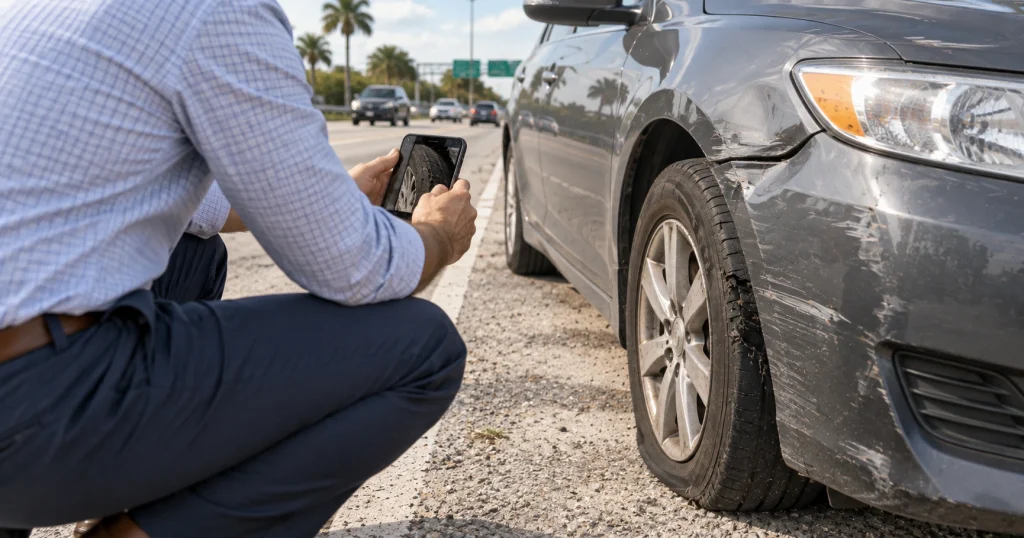
Tampa used tire accident lawyer investigating a damaged passenger-vehicle tire after a crash, for illustrative purposes only.
Blog, Car accident

Who Is Liable After a Used Tire Failure Accident in Tampa?

What You Need to Know A used tire can fail even when its tread appears deep enough. The tire seller, installer, manufacturer, dealership, or vehicle owner may be responsible. The failed tire, wheel, receipt, photographs, and repair records can become critical evidence. Florida negligence and product-related claims may have different filing deadlines. A tire’s DOT number can reveal its age and help identify safety recalls. Had a bad day? Call The Reyes Firm at 833-4 BAD DAY ((833) 422-3329). SCHEDULE A FREE CASE REVIEW A tire failure can turn a normal drive into a terrifying crash. You may lose control before you understand what happened. Afterward, the tire shop may blame the driver, the manufacturer may blame poor maintenance, and the insurance company may push for a quick answer before the evidence has been examined. If you are searching for a Tampa used tires lawyer, the key issue is not simply that the tire was previously owned. The real questions are why it failed, who knew or should have known it was unsafe, and what evidence proves the failure caused your injuries. The Reyes Firm helps injured people investigate serious crashes involving unsafe tires and vehicle components. We look beyond the crash scene to determine how the tire was manufactured, stored, inspected, sold, installed, repaired, and maintained. Why Can a Used Tire Fail Even When the Tread Looks Safe? A used tire may have acceptable tread and still be unsafe. Age, heat exposure, internal belt damage, poor storage, improper repairs, and long-term underinflation can weaken parts you can’t see from the outside. Tread depth matters, but it doesn’t tell the tire’s full history. Used tires create a special problem because the new owner may know little about their past. A tire could have struck a pothole, run while underinflated, carried too much weight, or sat outside in Florida heat for years. Some damage develops inside the tire. A buyer may not see weakened belts, separation between layers, or damage covered by a prior repair. The tire may appear usable until highway speed, heat, or pressure causes it to fail. Common warning signs include: Cracks or dry rot Bulges or bubbles in the sidewall Uneven or unusually shallow tread Exposed cords Tread beginning to separate Repeated pressure loss Vibration or unusual road noise A repair in the sidewall or shoulder A missing or unreadable DOT number A size or load rating that does not match the vehicle Warning sign What it may indicate Cracked rubber Age, sunlight exposure, or poor storage Sidewall bulge Internal structural damage Uneven tread Alignment, suspension, or inflation problems Sidewall repair An improper repair in a high-stress area Exposed cords Severe wear or structural failure Mismatched tires Reduced handling or stability Missing DOT number Difficulty confirming age and recall history The National Highway Traffic Safety Administration says to replace tires when tread reaches 2/32 of an inch. It also warns that you can’t always detect tire aging by appearance alone. Some vehicle and tire manufacturers recommend replacement after six to ten years, even when tread remains. Tampa’s warm climate also matters because NHTSA identifies sunlight and warmer conditions as factors that contribute to tire aging. Why Tire Tread Matters After a Commercial Vehicle Accident Worn tire tread can reduce traction and make a commercial vehicle more difficult to control, especially on wet roads. After a truck accident, examining the tires, tread depth, brakes, and maintenance records may reveal whether poor vehicle maintenance contributed to the crash. In this video, Tampa personal injury attorney Edward Reyes explains why these inspections matter. Video: Edward Reyes discusses tire-tread inspections and other maintenance evidence that may be examined after a commercial vehicle or semi-truck accident. đź’ˇ Did You Know? NHTSA reported that 511 people died in tire-related crashes in 2024. Its 2024 recall report also lists 12 tire-only recalls affecting 1,366,468 tires. These figures show why a tire’s condition and recall history deserve more than a quick visual check. (NHTSA TireWise; NHTSA 2024 Annual Recalls Report) Who Can Be Held Liable for a Used Tire Accident in Tampa? Several parties may be responsible for a used tire accident in Tampa. Liability may fall on the shop that sold the tire, the technician who installed it, the manufacturer, a vehicle dealership, a maintenance company, or an owner who kept driving after learning that the tire was unsafe. The correct answer depends on the cause of the failure. A tire with a manufacturing defect presents a different case from a sound tire damaged by an unsafe repair. A tire shop may also share responsibility with another company or driver. Potentially responsible party Conduct that should be investigated Used-tire seller Selling a damaged, recalled, excessively old, or unsuitable tire Installation shop Missing visible damage or installing the wrong size or rating Repair technician Using an unsafe repair method or repairing an unsafe location Tire manufacturer A design or manufacturing defect Vehicle dealership Selling a vehicle with unsafe tires or making misleading statements Maintenance company Failing to inspect, rotate, repair, or replace the tire properly Vehicle owner Ignoring damage, warnings, or repeated pressure loss Another driver Creating the collision that followed the tire failure The used-tire seller A seller may be liable if it sold a tire that a reasonable inspection should have identified as unsafe. Relevant questions include: Did the seller inspect both the inside and outside of the tire? Was the tire too old for safe use? Did it contain an unsafe repair? Was it the correct size and load rating for the vehicle? Was the tire under an active recall? Did the seller remove or hide identifying information? What did the seller tell the customer about its condition? The installer or repair shop A technician may install a safe tire incorrectly or install a tire that should have been rejected. Investigators may review mounting procedures, air pressure, balancing, valve-stem work, wheel damage, repair location, and torque records. The manufacturer A tire manufacturer may be responsible for a design or production problem.

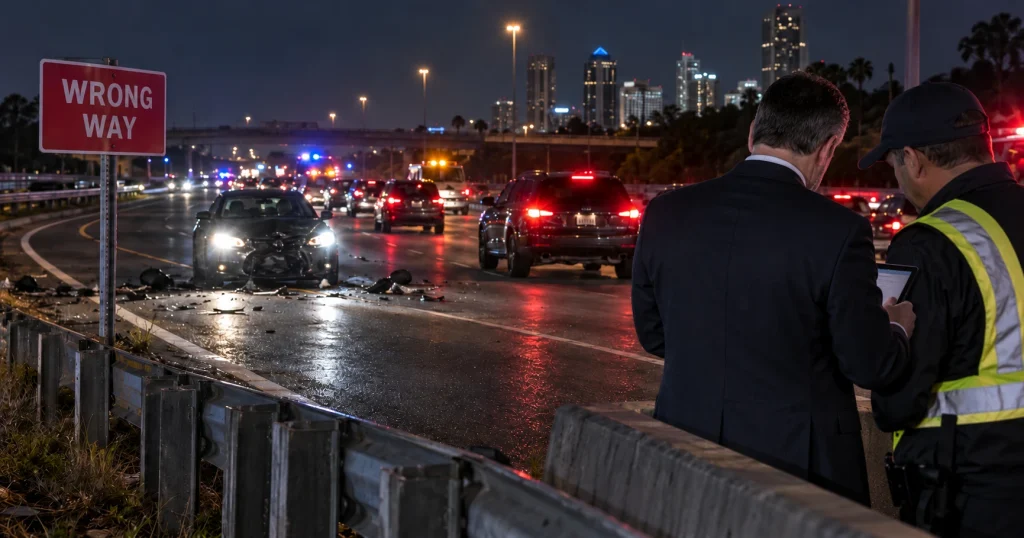
Wrong-way accident lawyer in Tampa examining a nighttime highway crash, for illustrative purposes only.
Blog, Car accident

Tampa Wrong-Way Accident Lawyer: Who Can Be Held Liable?

What You Need to Know Wrong-way crashes often cause head-on impacts, catastrophic injuries, and fatalities. The wrong-way driver may not be the only party responsible for the crash. Camera footage, 911 calls, vehicle data, and other evidence can disappear quickly. PIP, liability, commercial, and uninsured motorist insurance may all need review. Florida has strict medical-treatment and lawsuit deadlines that can affect your claim. Had a bad day? Call The Reyes Firm at 833-4 BAD DAY ((833) 422-3329)  SCHEDULE A FREE CASE REVIEW Seeing headlights coming toward you in your lane leaves almost no time to react. After the impact, you may face emergency treatment, a totaled vehicle, missed work, and questions about how the crash could have happened. A wrong-way accident lawyer should investigate more than the point of impact. The investigation should trace where the driver entered the roadway, why the driver continued in the wrong direction, which parties may share responsibility, and which insurance policies may cover your losses. At The Reyes Firm, we help people injured in Tampa and the South Shore communities understand their options after serious crashes. Why Are Wrong-Way Crashes So Dangerous in Tampa? Wrong-way crashes are especially dangerous because vehicles may meet at combined highway speeds with little time to react. In Tampa, these collisions can happen on interstate ramps, divided highways, and one-way streets. Darkness, impairment, confusing entry points, and missed warning signs can all contribute to a devastating impact. Wrong-way crashes often become head-on collisions. The front of each vehicle absorbs the impact, placing drivers and passengers at risk of brain injuries, spinal cord damage, internal injuries, fractures, and death. The danger is not limited to interstates. A driver can enter the wrong side of a divided road, turn incorrectly onto a one-way street, or cross a median into opposing traffic. Still, high-speed roads such as I-275, I-4, and I-75 can leave even less time to escape. The Florida Department of Transportation reports several serious patterns in its Wrong-Way Driving Program Strategic Plan: About 90% of Florida freeway wrong-way crashes occurred in darkness. About 59% involved alcohol. About 25% resulted in a fatality. On arterial roads, about 52% caused injury, and 7% were fatal. These figures show why investigators should examine lighting, visibility, impairment, road design, and the exact place where the wrong-way movement began. Read what to do after a head-on collision for additional steps that may protect your health and claim. đź’ˇ Did You Know? About one in four Florida freeway wrong-way crashes resulted in a fatality, according to FDOT’s Wrong-Way Driving Program Strategic Plan. The report also states that 90% occurred in darkness and 59% involved alcohol. Who Can Be Held Liable for a Wrong-Way Accident? The wrong-way driver is usually the first person investigated, but other parties may share responsibility. Depending on the facts, a claim may involve the vehicle owner, an employer, an alcohol provider, another negligent driver, or a government road authority. Each potential claim requires separate evidence and legal analysis. Potentially responsible party When liability may apply Evidence that may help Wrong-way driver Impairment, distraction, fatigue, confusion, or reckless driving Toxicology results, phone data, vehicle data, and witnesses Vehicle owner The owner permitted someone else to drive the vehicle Title records, insurance policies, and permission evidence Employer The driver was performing a job-related task Schedules, GPS data, employment records, and company policies Alcohol provider Florida’s limited dram shop requirements are met Receipts, video, transaction records, and witnesses Road authority A legally actionable road condition or known signage problem contributed Inspections, prior complaints, plans, and maintenance records Another driver A separate negligent act contributed to the collision Video, vehicle data, witnesses, and reconstruction findings Florida does not make a bar or restaurant responsible each time an adult customer causes an alcohol-related crash. Under Florida Statute §768.125, liability may arise when someone willfully and unlawfully provides alcohol to a minor or knowingly serves a person habitually addicted to alcohol. A potential claim involving FDOT, a city, a county, or another public body requires careful legal review. Government cases have special rules, notice procedures, defenses, and limits. A confusing ramp alone does not establish government liability. What Evidence Can Show Where the Driver Entered the Wrong Way? A strong investigation should reconstruct the wrong-way driver’s route before the collision. Identifying the entry point may reveal ignored signs, impairment, a navigation error, construction, or another contributing factor. Video and electronic records may be erased quickly, so preservation requests should begin as soon as possible after the crash. The investigation may start at the crash scene and move backward along the route. Useful questions include: Which ramp or intersection did the driver use? How far did the vehicle travel against traffic? Did other motorists call 911 before the collision? Were “Wrong Way” or “Do Not Enter” signs visible? Were pavement arrows, lighting, or construction relevant? Did nearby cameras capture the vehicle or earlier near misses? Evidence may include 911 audio, dispatch logs, traffic-management alerts, dashcam footage, business video, vehicle event data, phone and navigation records, toxicology findings, witness statements, and roadway photographs. A police report is useful, but it may not identify the full route, every insurance policy, or every responsible party. It also does not calculate the cost of future treatment or prove how the injuries will affect your ability to work. ⚠️ Deadline Warning: Florida generally allows two years to file an action based on negligence under Florida Statute § 95.11. Other deadlines and notice requirements may apply. Video and electronic evidence may disappear long before the lawsuit deadline. Which Insurance Policies May Pay After a Wrong-Way Crash? Several insurance policies may provide compensation after a Florida wrong-way crash. Your PIP coverage generally applies first to covered medical expenses and lost income. You may also recover from the responsible driver, vehicle owner, employer, or your uninsured or underinsured motorist coverage if the available liability insurance is insufficient. Possible sources include: Your PIP coverage The wrong-way driver’s bodily injury coverage The vehicle owner’s insurance Employer or commercial

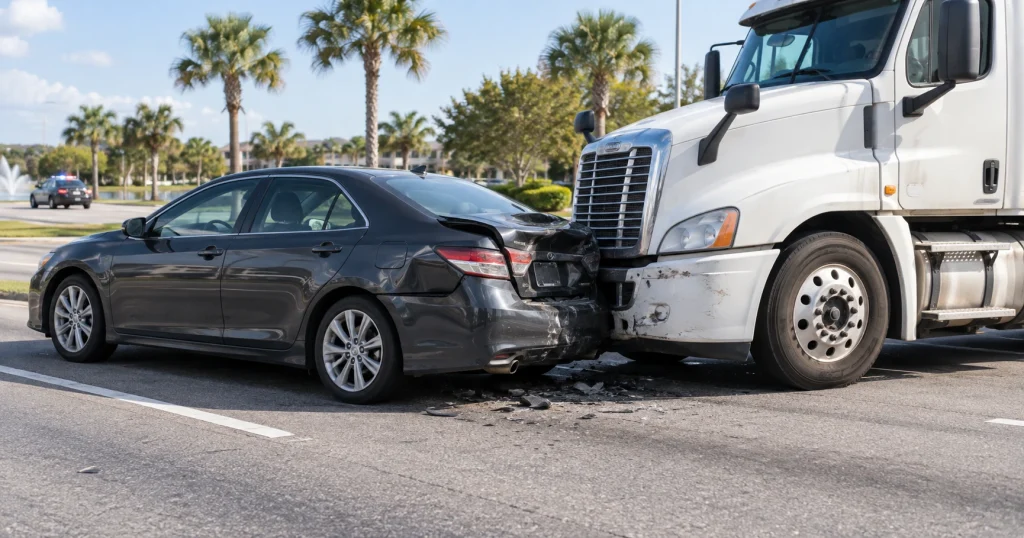
Illustration of a semi-truck rear-ending a passenger car on a roadway in Riverview, Florida.
Blog, Truck Accidents

Rear-End Truck Accidents in Riverview: Why They Can Be Severe and Who May Be Liable

What You Need to Know A rear-end truck accident can happen when a commercial truck strikes a smaller vehicle or when a passenger vehicle hits the back of a truck or trailer. The driver in the back is not automatically the only person who may be responsible. Truck data, electronic logs, maintenance records, dispatch messages, videos, and physical evidence may help explain what happened. A driver, motor carrier, maintenance company, cargo business, manufacturer, or another motorist may share liability. Florida generally allows two years to file a negligence lawsuit, but important trucking evidence may disappear much sooner. Had a bad day? Call The Reyes Firm at 833-4 BAD DAY ((833) 422-3329). SCHEDULE A FREE CASE REVIEW A rear-end truck crash can leave you trying to make sense of several things at once. You may be in pain, your car may be badly damaged, and an insurance company may already be asking for a statement before you know the full extent of your injuries. These crashes are not always simple. A commercial truck may hit stopped traffic, a smaller vehicle may strike a trailer that was hard to see, or one impact may set off a chain reaction. The location of the damage does not always tell the complete story. A Riverview rear-end truck accident lawyer can investigate how the vehicles moved, why the truck did not stop or why the crash could not be avoided, and whether a driver, trucking company, maintenance provider, cargo business, or another party contributed to the crash. What Is a Rear-End Truck Accident? A rear-end truck accident is a collision in which the front of one vehicle strikes the back of a commercial truck, trailer, or another vehicle. The phrase covers several different crash patterns, and those differences matter when determining fault. When a Commercial Truck Strikes a Smaller Vehicle This often happens when traffic slows or stops, and the truck does not have enough distance to brake. Investigators may examine speed, following distance, driver attention, fatigue, cargo weight, road conditions, and the condition of the brakes and tires. When a Smaller Vehicle Strikes a Truck or Trailer The following driver may appear responsible at first. However, the investigation should also ask why the truck was in that position and whether it was reasonably visible. Defective brake lights, missing reflective markings, an unsafe stop, a damaged rear underride guard, or a trailer entering the roadway without enough clearance may affect liability. When Several Vehicles Are Involved A truck may strike the final car in a line of stopped traffic and push it into other vehicles. Another driver may also cause the sudden stop or unsafe lane change that started the sequence. Damage patterns, videos, witness statements, and vehicle data may be needed to determine the order of impacts. A truck that turns sideways during the sequence can block several lanes. Learn more about jackknife truck accidents and why these crashes often involve more than one vehicle. Why Can a Rear-End Truck Accident Cause Severe Injuries? A commercial truck is much heavier and taller than a passenger vehicle. When that weight moves into a smaller car, the force can crush the rear of the vehicle, push it into traffic, or cause a second collision. People in the smaller vehicle often face the greatest risk. Large trucks also need more time and space to stop. Speed, cargo weight, wet pavement, road grade, brake condition, and tire condition can all increase the distance needed. The Federal Motor Carrier Safety Administration advises commercial drivers traveling below 40 mph to leave at least one second for every 10 feet of vehicle length. A typical tractor-trailer may need about four seconds, with another second added above 40 mph and more space in poor conditions. 💡 Did You Know? In a nationwide study of serious large-truck crashes, federal researchers found that 23.1% of the large trucks involved were in rear-end collisions. About 13% were the striking vehicle, including trucks that hit stopped, slower-moving, or decelerating vehicles. The study examined fatal and injury crashes investigated from 2001 through 2003. Source: FMCSA Large Truck Crash Causation Study What Can Cause a Rear-End Truck Crash in Riverview? A rear-end truck crash usually involves more than one factor. The driver may have made a mistake, but company decisions, vehicle condition, cargo, or another road user may also have contributed. Possible causes include: Following too closely or driving too fast for traffic Phone use, in-cab distraction, or failure to watch the road Fatigue or driving beyond safe limits Worn, defective, or poorly adjusted brakes A tire failure or another mechanical problem Overloaded or unevenly distributed cargo Rain, darkness, construction, or limited visibility Unsafe lane changes or merges by the truck or another vehicle A truck or trailer stopped in an unsafe location Defective lights, reflectors, or warning equipment A lane change before impact may require a separate look at the truck’s no-zones. Our guide to truck blind-spot accidents explains how visibility limits can affect fault. If a tire failed before the crash, maintenance and product records may become important. Read more about truck tire blowout accidents. Who May Be Liable for a Riverview Rear-End Truck Accident? A driver, company, contractor, manufacturer, or another motorist may be legally responsible. Some crashes involve several businesses and insurance policies, so the name printed on the truck may not identify everyone connected to the trip. Potential party Conduct and evidence to investigate Truck driver Speed, following distance, distraction, fatigue, impairment, lane movement, and pre-trip inspections Motor carrier Hiring, training, supervision, dispatch pressure, safety practices, and driving-hour monitoring Tractor or trailer owner Vehicle condition, inspections, repairs, leases, and responsibility for maintenance Maintenance provider Work performed on brakes, tires, lights, steering, and warning systems Cargo loader or shipper Cargo weight, balance, placement, securement, and loading instructions Parts manufacturer Defective brakes, tires, lights, collision systems, or underride equipment Another motorist Unsafe lane changes, sudden stops, distraction, speeding, or other careless conduct A trucking company may be responsible for a driver’s work and may

Scroll to Top