Accident Injuries & why

Car Accident
Accident Injuries & why, After an Accident, Car accident, FAQ, Our Community, Spanish, Teen Accidents, Why we serve

Lugares comunes donde ocurren accidentes:

Lugares comunes donde ocurren accidentes: ¡Los accidentes automovilísticos pueden ocurrir en cualquier momento! Los accidentes pueden ocurrir en cualquier viaje por carretera largo o en un viaje corto a la vuelta de la esquina. Esto podría suceder por múltiples razones. Estos son algunos lugares para revisar su entorno: Intersecciones y semáforos. o Un simple error del conductor (distraído, no presionar las pausas lo suficientemente rápido, correr una luz roja, señales de alto ocultas, luces amarillas y confusión) puede causar un terrible accidente. Intersección ocupada aumenta las posibilidades de accidentes. Los accidentes con huesos en T son los más comunes y los peores accidentes que ocurren en una intersección. Tráfico en hora punta o Con todo el mundo saliendo del trabajo, tratando de llegar a casa, la cabeza de todos se distrae y se apresura a llegar a casa. Esto también puede ser para los conductores que intentan llegar al trabajo a tiempo. La multitarea mientras se conduce es común entre los conductores. Con tantos autos en la carretera, esto puede aumentar las posibilidades de colisiones traseras. estacionamientos o Puede que no piense que este es un lugar común, pero con tantos automóviles que se mueven en una dirección diferente, esto puede aumentar las posibilidades de un accidente. Esto también puede aumentar los accidentes para los peatones que caminan para llegar a sus automóviles. Tu propio barrio o Todos piensan que debido a que no hay mucho tráfico en un vecindario, un accidente es muy común. Aquellos que viven allí se sienten cómodos y comienzan a conducir más rápido y de manera más imprudente. Este accidente puede consistir en golpear un automóvil que está retrocediendo, mover de costado un automóvil estacionado o incluso golpear a un peatón. ¡Déjame ayudarte a mantener tu vecindario seguro! Póngase en contacto con la firma Reyes al 813-421-3411 Estamos aquí para usted 24/7 y tenemos la experiencia para proteger sus intereses y conseguirle la recuperación que merece. Llámanos hoy y, sobre todo, quédate seguro en las carreteras.

Roadtrips
Accident Injuries & why, After an Accident, Blog, Car accident, FAQ, For Parents, For Teens, Injury, Legal, Premise Liability, Spanish, Teen Accidents, Why we serve

Aquí hay algunos consejos para prepararse para sus viajes de verano:

Aquí hay algunos consejos para prepararse para sus viajes de verano: ¡Todos aman hacer un viaje por carretera en verano con la familia! Durante estos viajes por carretera, lamentablemente, pueden ocurrir accidentes. Siga estos consejos antes de tomar la carretera para minimizar las posibilidades de un accidente. Haga revisar su vehículo. Al hacer esto, puede verificar si el aire acondicionado está funcionando, los niveles de líquido, cambiar el aceite, los frenos y otras bandas y mangueras. Compruebe si hay retiros del mercado. Verifique si alguna parte de su automóvil ha sido afectada por los retiros del mercado. Puede consultar la base de datos de retiro de la NHTSA. Aquí puede ingresar su VIN y ver el retiro de su automóvil específico. Tenga un kit de emergencia en la carretera. En este kit, debe tener un botiquín de primeros auxilios, una linterna, un cargador portátil, cables de puente, bengalas, agua, alimentos no perecederos, mapas, ropa adicional y una manta y toalla adicionales. Como siempre, BUCKLE UP!! Todas las personas que estén en su vehículo deben usar cinturón de seguridad. Al usar el cinturón de seguridad, usted y sus pasajeros estarán a salvo. Tener un accidente en un viaje por la Florida puede arruinar sus vacaciones, llame a mi oficina y permítame ayudarlo a aliviar su estrés. Póngase en contacto con la firma Reyes al 813-421-3411 Estamos aquí para usted 24/7 y tenemos la experiencia para proteger sus intereses y conseguirle la recuperación que merece. Llámanos hoy y, sobre todo, quédate seguro en las carreteras.

Neighborhood Accidents
Accident Injuries & why, After an Accident, Blog, Car accident, FAQ, For Parents, For Teens, Injury, Legal, Our Community, Premise Liability, Teen Accidents, Why we serve

Common places that accidents happen:

Common places that accidents happen: Car accidents can happen at any time! Accidents can happen on any long road trips you go on or a short trip around the corner. This could happen for multiple reasons. These are a few places to double check your surroundings: Intersections and Traffic Lights A driver simple carless mistake (distracted, not pressing the breaks fast enough, running a red light, hidden stop signs, yellow lights, and confusion) can cause a terrible accident. Busy intersection increases the chances of accidents. T-bone accidents are the most common and worst accidents to happen at an intersection.  Rush Hour Traffic With everyone getting off of work trying to get home everyone’s head is distracted and rushing to get home. This can also be for drivers trying to get to work on time. Multitasking while driving is common within drivers. With so many cars on the road this can increase the chances of rear end collisions.  Parking lots You may not think this a common place but with so many cars moving in different direction this can increase the chances of an accident. This also may increase accidents for pedestrians who are walking around to get to their cars.  Your Own Neighborhood Everyone thinks that because there isn’t a lot of traffic in a neighborhood an accident is very common. Those who live there get comfortable and start driving faster and more recklessly. This accident can consist of hitting a backing up car or sideswiping a parked car or even hitting a pedestrian.   Let me help you keep your neighborhood safe! Contact The Reyes Firm at 813-421-3411 We are here for you 24/7 and have the experience to protect your interests and get you the recovery you deserve. Call us today – and above all be safe on the roads!

Roadtrip
Accident Injuries & why, Blog, Car accident, FAQ, Health, Injury, Legal, Motorcycle Education, Our Community, Police Interaction, Road Accidents, Teen Accidents

Here are some tips to get ready for your summer trips:

Here are some tips to get ready for your summer trips: Every one love taking a road trip in the summer with the family! During these road trips unfortunately, accidents can happen. Follow these tips before hitting the road to minimize an possibilities of an accident. Have your vehicle checked. By doing this you can check if the air conditioning is working, the fluid levels, change your oil, brakes, and other belts and hoses.  Check for any recalls. Check to see if any parts of your car have been affected by the recalls. You can check the NHTSA Recall Database. Here you can enter your VIN and see your specific car’s recall.  Have an emergency roadside kit. In this kit you should have a first aid kit, a flashlight, portable charger, jumper cables, flares, water, non-perishable food, map, extra clothes, and an extra blanket and towel.  As always, BUCKLE UP!! Everyone who is in your vehicle should be wearing a seatbelt. By wearing a seatbelt, you and your passengers will be safe. Having an accident while on a road trip around Florida can ruin your vacation, call my office and let me help relieve your stress. Contact The Reyes Firm at 813-421-3411 We are here for you 24/7 and have the experience to protect your interests and get you the recovery you deserve. Call us today – and above all be safe on the roads!

Car Accident Injuries
Accident Injuries & why, After A Car Accident, After an Accident, Car accident, FAQ, Injury, Legal, Spanish, Teen Accidents, Why we serve

Las Lesiones de Accidente Automovilístico Más Comunes:

Las Lesiones de Accidente Automovilístico Más Comunes: Las estadísticas del Consejo Nacional de Seguridad muestran que hay al menos 27,000 accidentes automovilísticos por año, que dejan a millones de conductores y pasajeros heridos o discapacitados. Estas son las lesiones más comunes de un accidente automovilístico: Lesiones traumáticas del cerebro: Esta es la lesión es la más común proveniente de un accidente automovilístico y la más devastadora. Esto es cuando la cabeza sufre un golpe violento y puede implicar hematomas, sangrado o hinchazón del cerebro. Lesiones del cuello: Esto puede ser causado por el latigazo cervical y la tensión del cuello a problemas más serios, es decir, dislocación cervical y lesión del disco. Lesiones de la médula espinal: Esto implica fragmentos de hueso desplazados, material del disco o ligamentos que se magullan o se desgarran en el tejido de la médula espinal. Estos tipos de lesiones pueden causar la pérdida permanente de sensibilidad y ciertas funciones corporales. Lesiones en la espalda baja: Las lesiones en la parte baja de la espalda pueden causar dolor crónico y movilidad limitada. Estas lesiones incluyen esguinces, distensiones, discos herniados y vértebras fracturadas. Lesiones torácicas: Esto se ha reducido considerablemente debido a la colocación estándar de las bolsas de aire en los tableros y el volante, pero las lesiones en el pecho siguen siendo comunes. Las cuales incluyen costillas rotas, esternón (hueso de la pechuga) y pulmones perforados. Ruptura del diafragma: Una ruptura del diafragma significa que hay una ruptura del músculo en la parte inferior de la caja torácica. Esto sucede debido a un traumatismo contuso o penetrante en la parte inferior del tórax. Esto puede interferir con su respiración y cortar el suministro de sangre a los órganos. Lesiones faciales: Las lesiones faciales pueden ser causadas por el impacto con el volante, el tablero de instrumentos, la bolsa de aire, el parabrisas, la ventana lateral, los asientos del automóvil o el vidrio roto. Esto puede variar desde rasguños menores hasta laceraciones más profundas en la mandíbula y lesiones oculares. Heridas internas: Todos sus órganos corren el riesgo de sufrir daños graves en un accidente automovilístico, y algunos pueden poner en peligro la vida. Lesiones psicológicas: No todas las lesiones son físicas y se pueden ver. Estas lesiones pueden incluir angustia emocional, ansiedad, depresión y trastorno de estrés postraumático (TEPT). Lo que puede tener efectos a largo plazo en cada parte de tu vida. Es horrible saber que el error humano representa al menos el 90% de estos accidentes que se pueden prevenir. Si se lastima en un accidente automovilístico, busque atención médica. Luego, llame a mi oficina para que pueda hablar con un experto en accidentes automovilísticos para que pueda obtener la compensación financiera que merece. Póngase en contacto con la firma Reyes al 813-421-3411 Estamos aquí para usted 24/7 y tenemos la experiencia para proteger sus intereses y conseguirle la recuperación que merece. Llámanos hoy y, sobre todo, quédate seguro en las carreteras.

Accident Injuries
Accident Injuries & why, After A Car Accident, After an Accident, Car accident, FAQ, Injury, Legal, Teen Accidents, Why does this hurt

THE MOST COMMON AUTO ACCIDENT INJURIES:

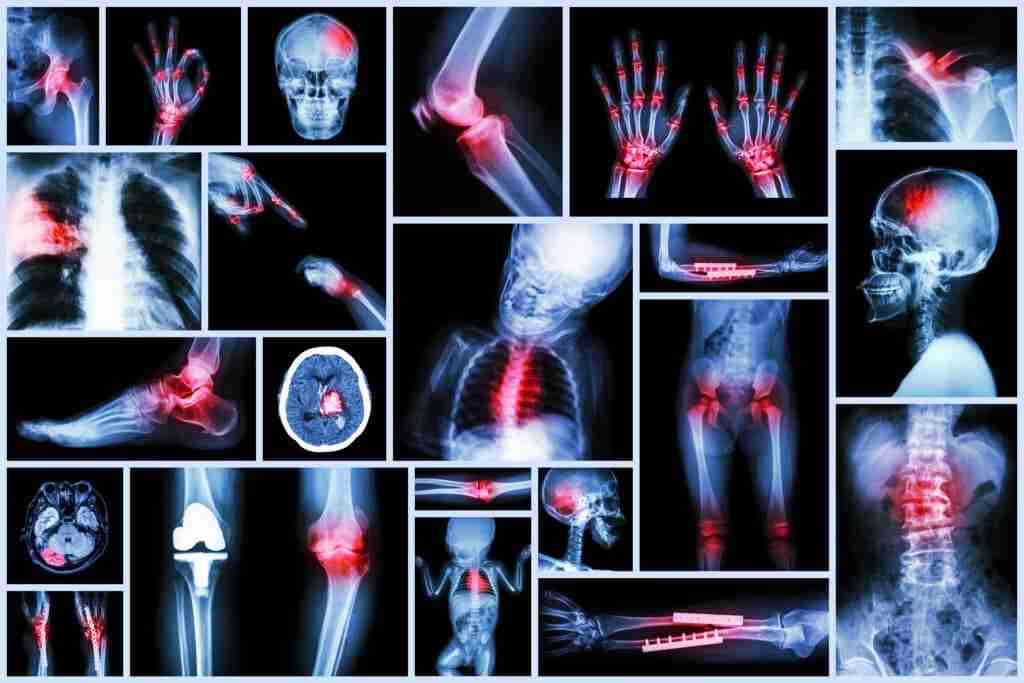
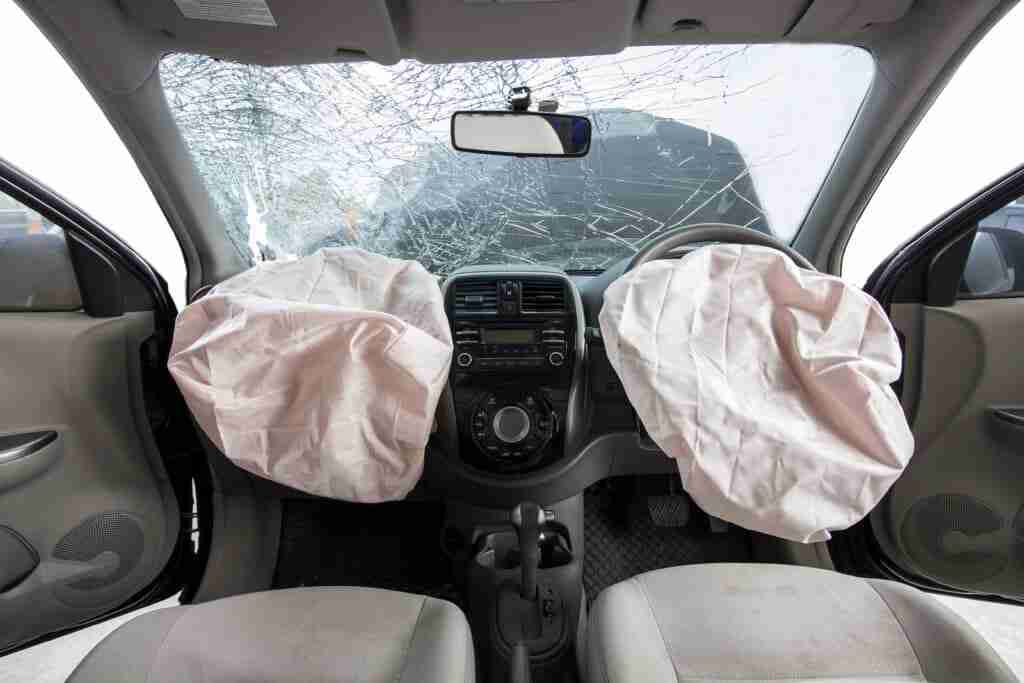
THE MOST COMMON AUTO ACCIDENT INJURIES: Statistics from the National Safety Council show that there’s at least 27,000 car crashes per year, which leave millions of drivers and passengers injured or disabled.  These are the most common injures from a car accident: Traumatic Brian Injuries:  This is the most common injury to come from an auto accident and most devastating. This is when the head suffers a violent hit and can involve bruising, bleeding or swelling of the brain.  Neck Injuries: This can be caused by whiplash and neck strain to more serious issues, i.e. cervical dislocation and disk injury.  Spinal Cord Injuries: This involves displaced bone fragments, disc material or ligaments bruising ot tearing into spinal cord tissue. These types of injuries can cause permanent loss of feeling and certain body functions.  Lower Back Injuries:  Lower back injuries can cause chronic pain and limited mobility. These injuries include sprains, strains, herniated discs and fractured vertebrae. Chest injuries:  This has been greatly reduced because of the standard placement of airbags in dashboards and steering wheel but chest injuries still remain common. Which include broken ribs, sternum (breast bone) and punctured lungs. Diaphragm rupture:  A diaphragm rupture means that there is a tear of the muscle across the bottom of the rib cage. This happens because of blunt or penetrating trauma to the lower chest. This can interfere with your breathing and cut off blood supply to organs. Facial injuries:  Facial injuries can be caused by impact with the steering wheel, dashboard, airbag, windshield, side window, car seats or shattered glass. This can vary from minor scratches to deeper lacerations to the jaw, and eye injuries. Internal injuries: All of your organs are at risk of serious damage in a car accident, and some life-threatening. Psychological injuries:  Not all injures are physical and can be seen. These injuries can include emotional distress, anxiety, depression and post traumatic stress disorder (PTSD). Which can have long-term effects on every part of your life. It’s horrible to know that human error accounts for at least 90% of these accidents that are preventable. If you get hurt in an auto accident seek medical attention. Then call my office so you can speak to an auto accident expert so you can get the financial compensation you deserve.  Contact The Reyes Firm at 813-421-3411 We are here for you 24/7 and have the experience to protect your interests and get you the recovery you deserve. Call us today – and above all be safe on the roads!

Erido en un accidente de bicicleta?
Accident Injuries & why, FAQ, Health, Injury, Legal, Our Community, Ride Sharing, Spanish, Why we serve

TRABAJEMOS JUNTOS PARA MANTENER SEGUROS NUESTROS CICLISTAS:

TRABAJEMOS JUNTOS PARA MANTENER SEGUROS NUESTROS CICLISTAS: ¿Sabías que Tampa es el lugar más peligroso para andar en bicicleta en los Estados Unidos? De acuerdo con un estudio del Wall Street Journal, el área de Tampa-St. Petersburg tiene 7.0 muertes de ciclistas entre 2007 y 2016 por cada 100,000 personas. Aunque deseamos que los números disminuyan, los modelos actuales predicen que los números se duplicarán en los próximos años. ¿Por qué están ocurriendo los accidentes? Conducción distraída (es decir, mirando mensajes de texto mientras se conduce) El efecto del clima cálido – Debido a que hace calor afuera, todos hacen actividades al aire libre, es decir, caminar, trotar y andar en bicicleta. Esto aumenta el número de ciclistas y peatones en riesgo. Población de conductores: a diferencia de otros estados, la Florida tiene una gran cantidad de conductores jóvenes, conductores de edad avanzada y conductores de fuera del estado, lo que provoca un mayor riesgo de accidentes y lesiones. Malos diseños de carreteras: muchos lugares en Tampa todavía no tienen un carril para bicicletas u otras rutas seguras para los ciclistas, lo que les obliga a usar la carretera, los hombros o la acera. Ninguna de esas opciones es segura para nuestros ciclistas o peatones. ¿Qué debes hacer? No podemos controlar el diseño de la ciudad o el clima, pero podemos hacerlo más seguro para ambos lados. Cosas que hacer como ciclista: Use el equipo de seguridad adecuado, esto también incluye el casco adecuado Apégate por caminos para bicicletas ¡Comparte el camino! Date tiempo suficiente al cruzar una intersección Cosas que hacer como conductor: ¡Suelte el teléfono! ¡Puede esperar! Conduzca siempre dentro del límite de velocidad. Dejar suficiente espacio entre usted y el ciclista ¡Comparte el camino! Buscar ciclistas y peatones Herido en un accidente de bicicleta? ¿Un ser querido herido en un accidente de bicicleta? ¡Llámame y déjame ayudarte a volver a pedalear antes! Póngase en contacto con la firma Reyes al 813-421-3411 Estamos aquí para usted 24/7 y tenemos la experiencia para proteger sus intereses y conseguirle la recuperación que merece. Llámanos hoy y, sobre todo, quédate seguro en las carreteras.

Bike Accident?
Accident Injuries & why, FAQ, Health, Injury, Our Community, Ride Sharing, Why we serve

LETS WORK TOGETHER TO KEEP OUR CYCLISTS SAFE:

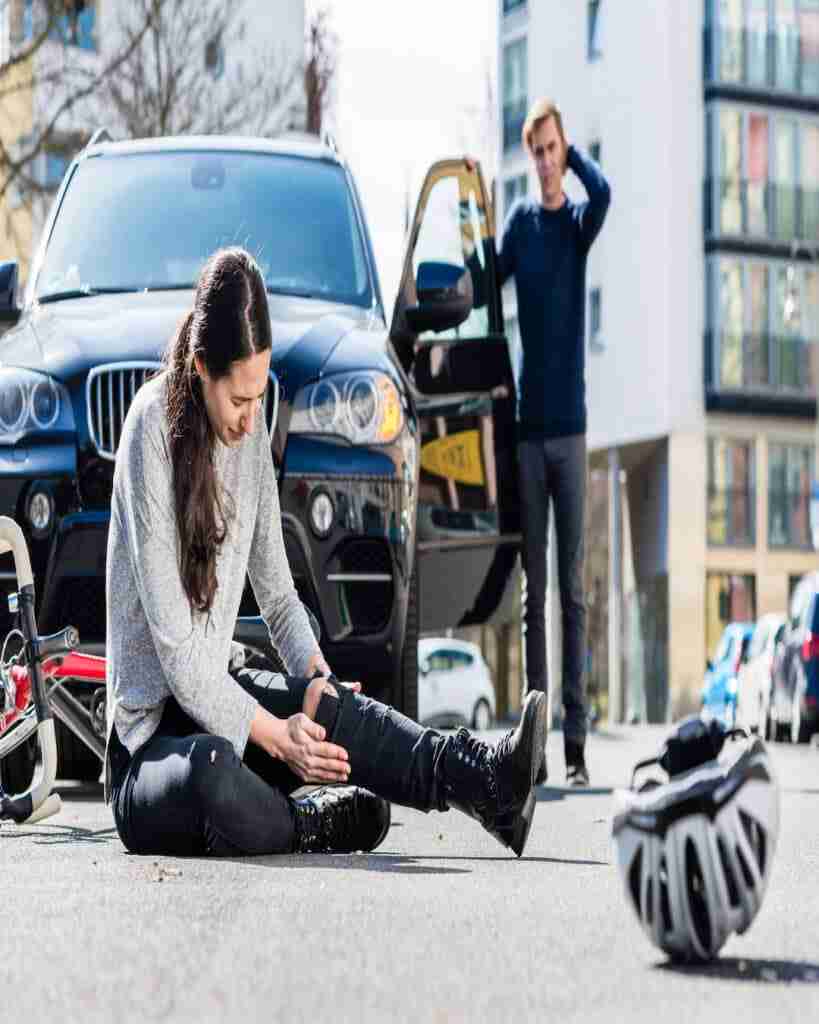
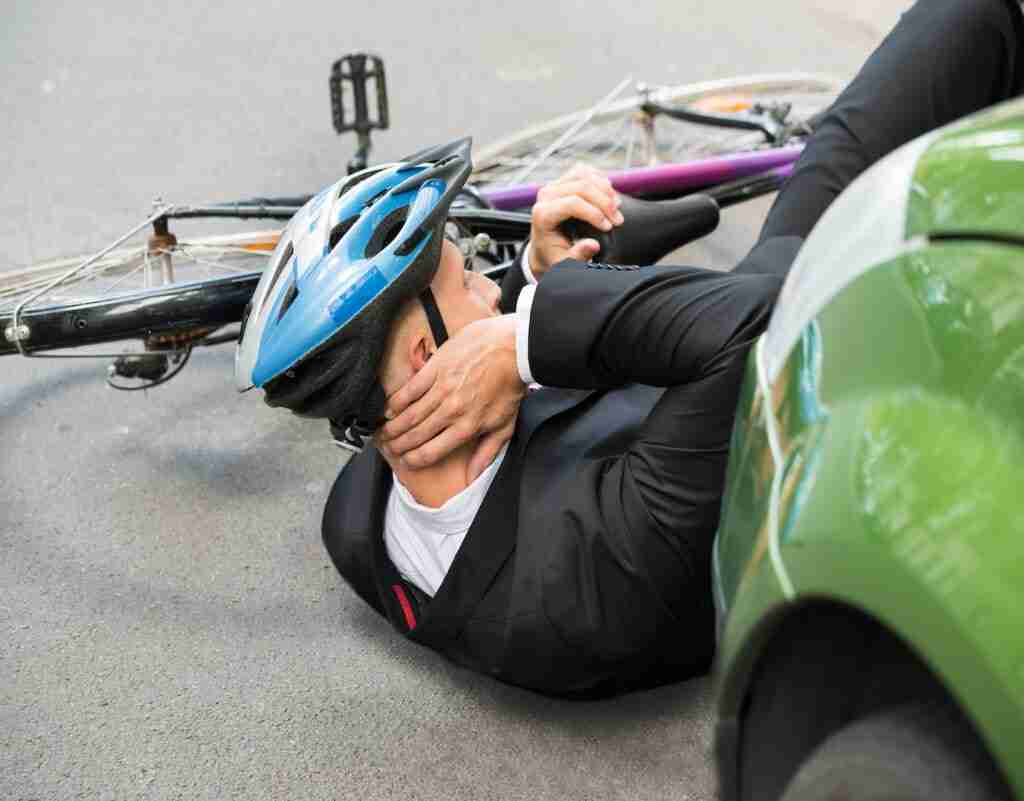
LETS WORK TOGETHER TO KEEP OUR CYCLISTS SAFE: Did you know that Tampa is the most dangerous place to bike in America? Tampa-St. Petersburg area has 7.0 bicyclists deaths from 2007-2016 per 100,000 people according to a Wall Street Journal study. Though we wish the numbers will decrease, the current models predict that the numbers will double in the years to come. Why are the accidents happening? Distracted driving (i.e. texting while driving) The Warm Weather Effect- Because it is warm outside, everyone is out doing outdoor activities i.e. walking, jogging, and biking. This then increases the number of cyclists and pedestrians at risk.  Driver Population- Florida unlike other states have a large number of young drivers, elderly drivers, and out-of-state drivers which then causes a higher risk for accidents and injury. Poor Road Designs- A lot of places in Tampa still don’t have a bike lane or other safe routes for cyclists, which forces them to use the road, shoulders, or the sidewalk. None of those options are safe for our cyclist or pedestrians.  What Should you do? We can’t control the design of the city or the weather, but we can make it safer for both sides.  Things to do as a cyclist: Wear the proper safety gear, this also includes the right helmet Sick to bike-friendly roads Share the road! Give yourself enough time when crossing an intersection Things to do as a driver: Put down the phone! It can wait! Always drive within the speed limit  Leave enough room between you and the cyclist Share the road! Look for cyclist and pedestrians Injured in a bike crash? A loved one injured in a bike crash? Call me and let me help you get back on the road cycling sooner!  Contact The Reyes Firm at 813-421-3411 We are here for you 24/7 and have the experience to protect your interests and get you the recovery you deserve. Call us today – and above all be safe on the roads!

Gemini_Generated_Image_sbovvgsbovvgsbov
Accident Injuries & why, After an Accident, Car accident, FAQ, Legal, Uninsured Motorist Coverage, Why we serve

Do I need to pay the 20% of my auto insurance coverage?

You were just in a car accident in Tampa — and now your doctor’s office is telling you that your PIP coverage only paid 80% of your medical bills. The other 20% is sitting on your kitchen table, and you have no idea who’s supposed to pay it. Here’s what Florida law actually says about that gap, and what your options are. TL;DR — QUICK SUMMARY Florida’s Personal Injury Protection (PIP) insurance covers 80% of reasonable and necessary medical expenses up to the $10,000 policy limit — leaving a 20% gap you may owe out of pocket unless other coverage applies. If another driver caused your accident, their bodily injury liability (BIL) coverage — or a lawsuit against them — can cover the 20% gap and any costs beyond your PIP limit. Your health insurance may cover the unpaid 20%, but coordination of benefits rules and subrogation rights can complicate how that works. Under Florida Statute § 95.11(3)(a), you have two years from the date of your crash to file a personal injury lawsuit to recover that gap and all other damages from an at-fault driver. Medical providers cannot legally balance-bill you for amounts above the PIP fee schedule unless you signed an assignment of benefits or a separate agreement — knowing this can protect you from improper bills. The Reyes Firm Confused About Your PIP Bills After a Tampa Crash? Get clear answers about the 20% gap and who should really be paying it. Had a bad day? Contact Us Now $10,000 Florida minimum PIP coverage limit Fla. Stat. § 627.736 80% PIP pays of covered medical bills Fla. Stat. § 627.736(1)(a) 2 Years Florida personal injury statute of limitations Fla. Stat. § 95.11(3)(a) $0 Cost to consult The Reyes Firm Contingency fee — no recovery, no fee What is Florida’s PIP 20% gap and do you have to pay it? Florida’s Personal Injury Protection law requires that your auto insurance cover 80% of reasonable and necessary medical expenses — and only 80%. That 20% remainder is what people call the “PIP gap.” Whether you personally owe it depends on several factors: who caused the accident, what other insurance you carry, and what agreements you signed with your medical provider. Florida is a no-fault state, which means after a car accident, your own PIP coverage pays first — regardless of who was at fault. Under Florida Statute § 627.736, every Florida driver must carry at least $10,000 in PIP coverage, and that coverage pays 80% of covered medical costs and 60% of lost wages. The 20% gap on medical bills is built into the statute itself — it’s not a billing error and it’s not optional. The question is who ends up responsible for covering it. If the accident was someone else’s fault, you may have a legal claim against the at-fault driver that covers the 20% gap, all medical costs beyond your $10,000 PIP limit, lost income, pain and suffering, and more. That’s where a Tampa personal injury attorney can make a real difference. ⚠️ Deadline Warning: Under Florida Statute § 95.11(3)(a), you have two years from the date of your crash to file a personal injury lawsuit against the at-fault driver. If you’ve been carrying the 20% gap yourself and another driver was responsible, waiting too long could permanently close the door on recovery. Call a lawyer before that deadline passes. How does Florida PIP insurance actually work after a car accident? Florida PIP works by paying directly to your medical providers — not to you — based on a statutory fee schedule. When you receive treatment after an accident, your provider bills your PIP insurer. The insurer pays 80% of the allowable amount under the fee schedule. The remaining 20% is either written off by the provider, covered by your health insurance, or billed to you depending on what agreements are in place. There are a few important things to understand about how PIP processes your bills: The fee schedule controls what’s “reasonable.” Florida PIP doesn’t simply pay 80% of whatever a provider charges. It pays 80% of the amount set by the Medicare fee schedule or 200% of Medicare — whichever applies to the provider. If a provider charges more than the schedule allows, PIP will not cover the excess, and the provider generally cannot bill you for the difference under Florida law. Emergency vs. non-emergency treatment matters. Under Fla. Stat. § 627.736, if your injury is classified as an emergency medical condition (EMC), you can access the full $10,000 PIP limit. If your treating provider does not certify an EMC, your accessible PIP benefit is capped at $2,500. This is one of the most misunderstood and financially damaging aspects of Florida PIP. You must seek treatment within 14 days. Florida law requires that you seek initial medical treatment within 14 days of the accident to be eligible to use your PIP benefits at all. Missing this window means losing your PIP coverage entirely — regardless of how serious your injuries are. Watch: Do You Pay 20% After a Car Accident?  Who pays the 20% PIP gap — you, your health insurer, or the at-fault driver? The answer depends on your specific situation, and there’s no single rule that applies to every accident victim. The 20% gap can be absorbed in several different ways. Option 1 — The at-fault driver’s bodily injury liability coverage. If another driver caused your accident, their liability insurance may cover your 20% co-pay, all medical expenses above your $10,000 PIP limit, lost wages not covered by PIP, and pain and suffering damages. Florida does not require drivers to carry bodily injury liability (BIL) insurance, but many drivers do carry it — and if they do, it’s often the best source of recovery for your gap costs. Option 2 — Your health insurance. If you have private health insurance, an employer plan, Medicare, or Medicaid, your health insurer may pick up the 20% co-pay after PIP pays its 80%.

Should I call my auto insurance
Accident Injuries & why, After A Car Accident, After an Accident, Car accident, Injury, Legal, Uninsured Motorist Coverage, Why we serve

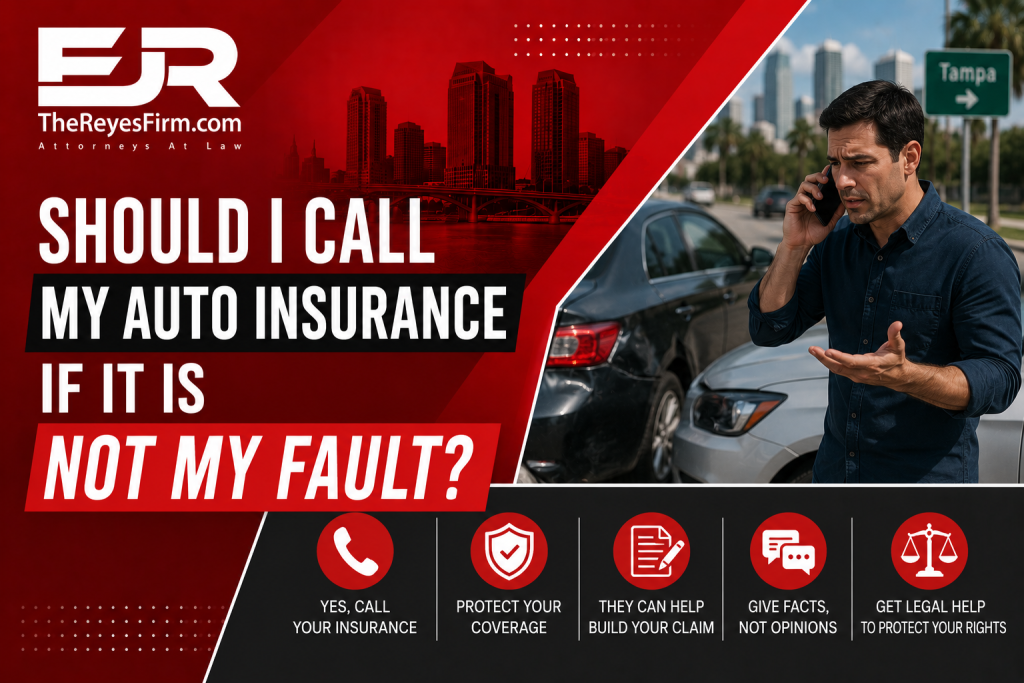
Should I call my auto insurance if it is not my fault?

You were just going about your day. Then someone rear-ended you at a red light. It clearly wasn’t your fault, so calling your own insurance company feels backwards, maybe even risky. In Florida, though, that phone call is one of the most important things you can do, and here’s why. TL;DR — QUICK SUMMARY Yes, you should call your own auto insurer even when the crash wasn’t your fault, because Florida is a no-fault state. Your Personal Injury Protection (PIP) coverage pays the first portion of your medical bills regardless of who caused the accident. You must seek medical treatment within 14 days of the crash, or you can lose your PIP benefits entirely. Reporting an accident you didn’t cause should not raise your rates, and most policies require you to report promptly anyway. Under Florida Statute 95.11(3)(a), you generally have two years to file an injury lawsuit, but the deadlines that bite first are your insurer’s reporting and treatment windows. The Reyes Firm Hurt in a Tampa Crash That Wasn’t Your Fault? Get clear next steps and protect your PIP benefits. Had a bad day? Contact Us Now 14 Days Deadline to seek care for PIP benefits Fla. Stat. 627.736 $10,000 Florida minimum PIP coverage Fla. Stat. 627.736 2 Years Florida injury filing deadline Fla. Stat. 95.11(3)(a) $0 Upfront cost with a contingency fee firm The Reyes Firm Should you call your own auto insurance if the accident wasn’t your fault? Yes. In Florida, you should report the crash to your own insurer even when another driver clearly caused it. That feels counterintuitive, but it comes down to one fact: Florida is a no-fault auto insurance state. Your own policy is designed to step in first, no matter who was to blame. Reporting promptly does two things. It opens your Personal Injury Protection (PIP) benefits so your medical bills start getting paid, and it satisfies the notice requirement built into nearly every auto policy. Wait too long, and you risk both your benefits and a dispute with your own company over late reporting. At The Reyes Firm, a Tampa personal injury law firm, the most common mistake we see after a not-at-fault crash isn’t saying too much. It’s saying nothing at all to the one insurer that’s actually obligated to help you first. ⚠️ Deadline Warning: Under Florida Statute § 95.11(3)(a), you generally have two years from the date of your crash to file a personal injury lawsuit. But your PIP coverage requires medical treatment within 14 days, so the clock that runs out first is usually the one on your benefits. Don’t wait. What is Florida’s no-fault system and how does PIP work? Florida’s no-fault system means that after most car accidents, your own insurance pays your initial medical expenses and lost wages, regardless of who caused the crash. The coverage that does this is Personal Injury Protection, and every Florida auto policy is required to carry it. Under Florida Statute § 627.736, PIP provides a minimum of $10,000 in coverage and typically pays 80% of reasonable medical bills and 60% of lost wages, up to that limit. It applies whether you were rear-ended, sideswiped, or hit by a driver who ran a stop sign. The trade-off for this quick, fault-free coverage is that PIP comes with strict rules, and the strictest is the deadline to get care. Because PIP has a cap, it often isn’t enough to cover a serious injury. When your damages exceed your PIP limits, you may be able to pursue the at-fault driver for the rest, which is where the no-fault system ends and a liability claim begins. 💡 Did You Know? Florida’s 14-day rule is one of the most important deadlines after a crash. Under Fla. Stat. § 627.736, you must receive initial medical care within 14 days of the accident to be eligible for PIP benefits at all. Miss that window and your own insurer can deny the entire claim, even if your injuries are real and serious. Source: Fla. Stat. § 627.736. Watch: Should I Call My Auto Insurance If It’s Not My Fault? This short video explains why Florida drivers need to report a crash to their own insurer even when someone else caused it, and how the no-fault system shapes what happens next. If you’re unsure what to say to either insurance company, The Reyes Firm offers free consultations, so you can call 833-4 BAD DAY before you make the call. Will calling my own insurer raise my rates or count against me? This is the fear that keeps people from making the call, and it’s largely unfounded for a crash you didn’t cause. Filing a PIP claim after a not-at-fault accident is exactly what the coverage exists for, and insurers are limited in how they can treat policyholders who report accidents that weren’t their fault. What can actually hurt you is the opposite choice. Failing to report can violate your policy’s notice requirement, give your insurer a reason to question the claim later, and leave your medical bills unpaid while the 14-day window closes. The downside of calling is small. The downside of staying quiet can cost you your benefits. If an adjuster, yours or the other driver’s, starts asking for a recorded statement or pressing for details, that’s a different matter. You can decline to give a recorded statement until you’ve spoken with a lawyer. Do I still deal with the at-fault driver’s insurance company? Often, yes, but carefully. Your PIP covers the first layer of your expenses. When your injuries are serious enough to exceed those limits, a claim against the at-fault driver’s insurer is how you pursue the rest, including the portion of medical bills PIP didn’t pay, full lost wages, and pain and suffering. That second insurer has no duty to look out for you, and its adjuster is working to pay as little as possible. In a serious or catastrophic crash, the difference between handling that claim alone and having a

Scroll to Top