Truck Accidents

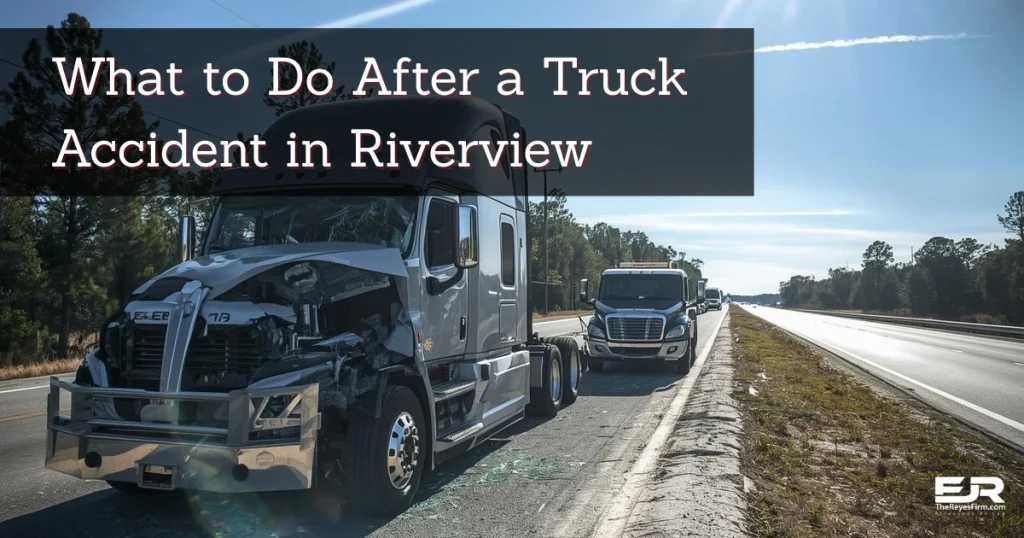
Crash scene image for a Reyes Firm article about what to do after a truck accident in Riverview, showing a damaged semi-truck and passenger vehicle on a Florida roadside.
Blog, Truck Accidents

What to Do After a Truck Accident in Riverview

A person involved in a truck crash in Riverview is often dealing with pain, confusion, and pressure all at once. In the first few minutes, it can be hard to know whether to call 911, move the vehicle, talk to the trucking company, or seek medical care. That uncertainty is normal. A serious crash on or near I-75, US-301, or another busy Riverview roadway can leave someone worried about injuries, missed work, vehicle damage, and the consequences a wrong step could have for an insurance claim. This guide explains what to do after a truck accident in Riverview in a clear, step-by-step way. It is designed to help injured people protect their health, preserve evidence early, and avoid common mistakes that can make a Florida truck accident claim harder. The Reyes Firm Hurt in a Truck Accident in Riverview? Get clear next steps after a serious crash. Had a bad day? Contact Us Now Quick Summary Call 911, get to safety, and report the crash right away. Get medical care as soon as possible, even if symptoms seem minor at first. Take photos, gather witness information, and preserve trucking evidence early. Do not admit fault or give a recorded statement without legal advice. Truck accident cases often involve multiple companies, multiple insurance policies, and evidence that can disappear quickly. Key Takeaway The most important steps after a truck accident in Riverview are to prioritize safety, seek medical attention quickly, document everything, and preserve evidence before the trucking company can control the narrative. Early action often makes a major difference in both health outcomes and claim strength. What should someone do first after a truck accident in Riverview? A person should focus on safety first, call 911, and get medical help on the way if anyone may be hurt. The next priority is documenting the scene without arguing about fault. This matters because truck crashes can become more complicated within minutes. The vehicles may be moved, debris may be cleared, witnesses may leave, and the trucking company may begin building its defense immediately. In Florida, crashes involving injury, a vehicle requiring towing, or a commercial motor vehicle generally require a long-form traffic crash report from law enforcement. That is one reason calling 911 is usually the safest first step after a Riverview truck crash. On a practical level, a person should try to do the following in order: Move to a safe location if you can do so without worsening injuries. Call 911. Call the police and emergency medical services. Check for immediate injuries without debating what happened. Take photos and video if physically able. Exchange basic information. Do not apologize or admit fault. In Riverview, this can be especially important on high-traffic routes where commercial vehicles travel through quickly, and scene conditions change fast. What the injured person does in the first 15 to 30 minutes can shape the rest of the case. Watch: What to Do After a Commercial Truck Accident This short video reinforces the key first steps after a commercial vehicle crash, including getting to safety, calling 911, taking photos, gathering witness information, avoiding recorded statements, and seeking medical care right away. Helpful video from The Reyes Firm covering the immediate steps to take after a commercial truck crash in Florida. What information should be collected at the scene? A person should gather identifying information, trucking details, and witness contacts before they disappear. Basic scene documentation can later help prove how the crash happened and who was involved. Truck driver’s name and contact information Employer or carrier name USDOT number if visible Insurance information License plate numbers Trailer number Photos of vehicle positions and damage Photos of skid marks, debris, lane markings, weather, and road conditions Witness names and phone numbers Police officer name, agency, and report number if available If the truck has a company logo, that should be photographed clearly. The same applies to any cargo markings, fleet numbers, or delivery branding on the vehicle. When should medical care happen after a Riverview truck crash? Medical care should happen immediately or as soon as possible after the crash. Even if symptoms seem manageable, delayed treatment can create both health risks and claim problems. This matters because truck accident injuries are often more serious than they first appear. A person may feel adrenaline at the scene and only notice neck pain, back pain, concussion symptoms, or numbness hours later. Florida’s personal injury protection law still includes a 14-day treatment rule. If an injured person wants to preserve potential PIP benefits, initial services and care generally need to be provided within 14 days of the crash. That does not mean someone should wait. It means earlier treatment is usually better for both health and documentation. Emergency room records, urgent care records, imaging, and follow-up visits often become part of the timeline that insurers study closely. What symptoms should never be brushed off? Any symptom involving the head, spine, breathing, or major pain should be taken seriously. Symptoms do not need to look dramatic to signal a real injury. Headache Dizziness Confusion Neck or back pain Numbness or tingling Shoulder pain Chest pain Abdominal pain Trouble walking Shortness of breath The next step is simple. Follow the medical advice given, keep appointments, and save every discharge paper, referral, receipt, and work note. What evidence matters most after a truck accident? The most valuable evidence is often the evidence that disappears first. That includes scene photos, witness statements, vehicle data, and trucking records. Why it matters is simple. A trucking case is rarely decided by damage photos alone. It may also depend on driver hours, maintenance history, dispatch pressure, inspection records, and whether the carrier followed federal safety rules. Truck accident evidence may include: Dashcam footage Surveillance video from nearby businesses Electronic logging device data Driver logs and hours-of-service records Black box or engine control module data Dispatch communications Trip sheets and delivery schedules Drug and alcohol testing records, when applicable Inspection, repair, and maintenance records Cargo loading
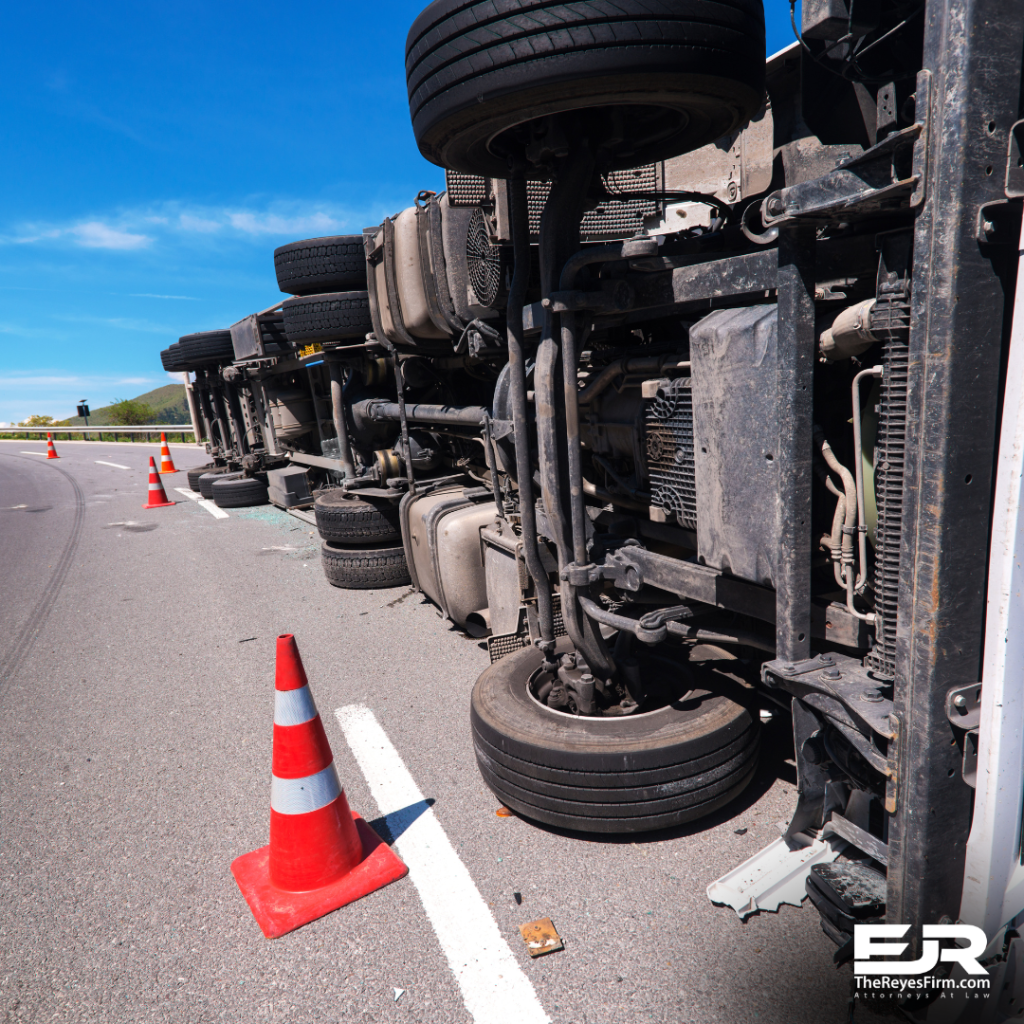
Rollover truck accident on Florida highway with traffic cones and The Reyes Firm logo
Blog, Truck Accidents

Port of Tampa Truck Accident Liability: Understanding Your Rights

Driving near the Port of Tampa can feel like navigating a maze of semi‑trucks, cargo containers and tight access roads. With thousands of commercial vehicles moving through the port each day, accidents aren’t just possible; they’re predictable. When a port truck crashes into your car, it may leave you dealing with severe injuries, complex insurance issues and questions about who’s responsible. This guide explains why port‑related truck accidents are different, how liability works, and what you should do to protect your rights. A truck rollover near a Florida highway, illustrating the seriousness of port truck accidents. Quick Summary For readers who want the main points up front, here’s a concise summary: Port truck accidents involve multiple parties – the driver, carrier, cargo loader and sometimes the port itself – making liability complex. Evidence such as driver logs, electronic data recorders, cargo manifests and port surveillance is crucial to prove negligence. Florida’s PIP law requires you to seek medical care within 14 days of the crash to qualify for no‑fault benefits. Florida’s modified comparative negligence system means that if you are more than 50% at fault, you cannot recover compensation. An experienced attorney can preserve evidence, identify all liable parties and negotiate fair compensation – contact The Reyes Firm for a free consultation.   What Makes Port Truck Accidents Different Ports are economic hubs, and the Port of Tampa handles thousands of containers every day. Tight schedules and congested access roads put tremendous pressure on drivers. When heavy trucks share crowded city streets, serious crashes can occur. These accidents are unique because they involve: Higher stakes: Commercial trucks can weigh 80,000 pounds or more, causing far greater injuries and property damage than a typical car crash. Multiple businesses: A trucking company, shipping carrier, terminal operator and cargo loader may all play a role in creating dangerous conditions. Special regulations: Drivers and carriers must follow federal hours‑of‑service rules that limit on‑duty hours. Key Takeaway: Port truck crashes often involve multiple companies. Understanding how carriers, brokers, cargo loaders and the port authority may share responsibility helps you build a stronger case. Who May Be Liable for Your Injuries Determining fault in a port truck accident isn’t straightforward. Responsibility may lie with more than one party: Truck driver: speeding, distracted driving or violating hours‑of‑service rules. Trucking company or carrier: negligent hiring, poor maintenance or failure to train the driver properly. Cargo loading company: improper loading or failing to secure cargo safely. Port authority or terminal operator: inadequate traffic control, poor signage or unsafe road conditions. Manufacturers or mechanics: defective parts or negligent repairs. Information Point: Under Florida’s comparative negligence law, a plaintiff who is more than 50% at fault cannot recover damages. Evidence Needed in Port Accident Claims Evidence is the foundation of any injury claim. In a port truck crash, timely collection is critical because records may be deleted or overwritten. Key evidence includes: Electronic logging devices (ELD) and driver logbooks showing hours on duty. Black box or engine control module data capturing speed, braking and acceleration. Cargo manifests and bills of lading showing who loaded and shipped the freight. Surveillance footage from port cameras, dash cams and nearby businesses. Witness statements and photographs of road conditions, skid marks and vehicle damage. Trauma after a collision can be as serious as physical injuries. Key Takeaway: Sending a preservation letter to the trucking company and port operator soon after the crash can prevent crucial evidence from being lost. Florida Laws You Need to Know Several state and federal laws impact your claim: PIP 14‑day rule: To claim no‑fault medical benefits, you must seek treatment within 14 days of the crash under the Florida PIP statute (§627.736). Serious injury threshold: To sue outside PIP, your injury must meet criteria such as permanent loss of a bodily function, significant disfigurement or scarring. Modified comparative negligence: In negligence cases, you cannot recover damages if you are more than 50% at fault under Florida’s comparative fault statute (§768.81). Crash report privilege: Statements made for crash reports cannot be used as evidence in court under §316.066. Commercial vehicle regulations: Owners and drivers of commercial motor vehicles must comply with federal safety rules under §316.302, which adopts 49 C.F.R. parts 382, 383, 385 and 390‑397 for Florida. Information Point: In 2024, Florida recorded 46,651 commercial motor vehicle crashes and 315 fatalities. These statistics explain why port roads demand special caution. Steps to Take After a Port Truck Accident Immediately after the crash and in the days that follow, take these steps to protect your health and legal rights: Call 911 and report the accident. Make sure law enforcement documents the scene. Seek medical attention right away – even if you feel okay – and follow up within 14 days to preserve PIP benefits. Document the scene: take photos of vehicles, road conditions, traffic signs and any cargo spillage. Collect contact information for witnesses, the truck driver and any port personnel. Do not give a recorded statement to the insurance company without legal counsel. Contact an experienced truck accident attorney to handle communications and evidence preservation. Dump truck accident scene near dusk – port roads can be particularly hazardous. Key Takeaway: The actions you take in the first hours and days after a crash can significantly impact your claim. Act quickly to protect your health and your case. When to Hire an Attorney Trucking companies and their insurers act quickly to protect their interests. Hiring an attorney early can level the playing field. An experienced lawyer can: Investigate the crash, gather evidence and identify every liable party. Send preservation letters to stop companies from destroying records. Negotiate with insurers to seek compensation for medical bills, lost wages, pain and suffering, and future damages. File a lawsuit and take your case to trial if necessary. Watch: Port of Tampa Truck Traffic and Liability To see why accidents near the port are so foreseeable, watch our short video explaining the congestion and risks around the Port of Tampa. The video highlights heavy

Featured image for a St. Johns County truck accident lawyer article showing a semi-truck near I-95 and SR-206 at night
Blog, News, Truck Accidents

I-95 St. Johns County Truck Accident Lawyer: What to Know After the Fiery Semi-Truck Crash Near SR-206

Traffic on I-95 can look normal one moment and turn chaotic the next. After a fiery semi-truck crash, injured people are often left dealing with pain, fear, road closures, insurance calls, and questions they never expected to ask.For families affected by a major wreck near SR-206 in St. Johns County, the situation is not just another news story. It can mean emergency treatment, missed work, damaged vehicles, and real uncertainty about what happens next.That is where clear guidance matters. This article explains what injured people should know after a serious commercial vehicle crash and why speaking with a St. Johns County truck accident lawyer early may help protect both health and a legal claim. Quick Summary Call 911, get medical care, and try to document the scene without putting safety at risk. In Florida, quick treatment matters for both health and insurance issues, including possible PIP benefits. Truck accident cases often involve multiple liable parties and more evidence than a regular car crash. Important evidence may include dashcam footage, black box data, ELD records, driver logs, maintenance records, and dispatch communications. A St. Johns County truck accident lawyer can help preserve evidence, manage insurance pressure, and investigate the full cause of the crash. Key Takeaway After a serious truck crash, the most important steps are to get medical care quickly, protect evidence, avoid admitting fault, and be careful with insurance calls. Early action can make a major difference in both recovery and the strength of a possible claim. What happened in the I-95 semi-truck crash near SR-206? A fiery semi-truck crash near SR-206 in St. Johns County reportedly involved an overturned truck, fire, a major interstate shutdown, and emergency cleanup efforts. Reports also said one person was airlifted to the hospital in critical condition. That kind of crash is not a minor highway accident. A rollover, fire, fuel spill response, and extended road closure all suggest a high-impact event that may require a much deeper investigation than a typical traffic claim. The first public reports usually explain where the crash happened and how traffic was affected. They do not always answer the bigger questions about what caused the wreck, what evidence exists, and who may be legally responsible. Approximate Incident Area What should someone do right after a truck accident? The first priority is safety. After that, the focus should shift to medical care, documenting the scene, and avoiding mistakes that could hurt a future claim. When possible, the most helpful immediate steps are: Call 911 right away. Emergency responders can secure the scene, assist the injured, and create an official report. Get medical care as soon as possible. Some serious injuries are not obvious in the first minutes after impact. Take photos and videos if it is safe to do so. Capture vehicle positions, damage, skid marks, road conditions, debris, and company markings on the truck or trailer. Exchange information, but do not admit fault. A person can cooperate without guessing what happened. Get witness information. Names and phone numbers may become important later. Be careful with insurance calls. Recorded statements can create problems if given too early. Why does getting medical care quickly matter so much in Florida? Quick treatment matters because it protects health and creates early medical documentation. In Florida, it may also affect access to PIP benefits, which are part of the state’s no-fault system. Many injured people are told to seek medical care within 14 days to help protect their Florida PIP eligibility. Waiting too long can give the insurance company an opening to argue that the injury was minor, unrelated, or caused by something else. Fast treatment is especially important after a truck crash because injuries may include head trauma, neck and back injuries, internal injuries, burns, or orthopedic damage that worsens over time. Why are truck accident cases more complicated than regular car accident claims? Truck accident cases are more complicated because they usually involve more evidence, more insurance issues, and more potentially responsible parties than a regular car crash. A passenger vehicle claim may involve only two drivers. A commercial truck claim may involve the truck driver, the trucking company, the trailer owner, a maintenance vendor, a cargo loader, a broker, or another business connected to the trip. These cases also involve specialized records. That can include driver qualification files, ELD records, dispatch communications, maintenance logs, inspection reports, cargo paperwork, and electronic crash data from the truck itself. What are common causes of serious truck accidents on I-95? Common causes of serious truck accidents include speeding, distracted driving, driver fatigue, following too closely, unsafe lane changes, mechanical failures, poor maintenance, and cargo-loading problems. On a fast-moving corridor like I-95, these dangers are magnified. A fully loaded semi-truck needs more distance to stop, has larger blind spots, and can cause catastrophic damage in a high-speed crash. That is one reason people often search for a truck accident attorney, a trucking accident attorney, an 18-wheeler accident attorney, or a big rig accident attorney after a major interstate wreck. These crashes are often more destructive and legally more complex than ordinary auto accidents. What evidence matters most after a commercial truck crash? Evidence is often the foundation of a strong truck accident case. In commercial vehicle claims, the evidence goes far beyond photos of a damaged bumper. Important evidence may include: Photos and videos of the scene Vehicle positions and visible damage Skid marks, debris, gouge marks, and roadway conditions Police reports and emergency response records Witness names and statements Company logos, trailer numbers, and DOT identifiers Dashcam footage Black box or event data recorder information ELD records and driver logs Dispatch communications Maintenance and inspection records Cargo loading documents Medical records and follow-up treatment records Evidence Checklist ☑ Photos of all vehicles ☑ Videos of the scene ☑ Witness names and numbers ☑ Company logos and trailer IDs ☑ Dashcam footage ☑ Black box data ☑ ELD records ☑ Driver logs ☑ Maintenance records ☑ Inspection reports ☑ Dispatch communications ☑ Medical records In a

Phone screen showing incoming insurance adjuster call after a truck accident
Blog, Truck Accidents

Truck Accident Attorney Advice: Steps When the Insurance Company Calls

After a serious truck crash, the world can feel upside down. The body aches, routines are interrupted, and then the phone rings with a calm, friendly voice from the insurance company. Many people feel pressure to talk right away and share everything they know. Yet early calls are when mistakes can happen. This guide explains why insurers contact crash victims so quickly, how to handle those calls, and when a truck accident attorney can step in to protect your peace of mind and your claim. Quick Summary Insurance adjusters call quickly after a truck crash to record facts and limit liability. You are not required to give a recorded statement on the first call. Florida law gives you only two years to file most negligence claims and a 14‑day window to seek medical care under PIP. Do not sign broad medical authorizations or agree to quick settlements without understanding your injuries. Gather evidence, use simple scripts, and call a truck accident attorney if the injuries or questions feel overwhelming. Why the insurance company calls so quickly After a commercial vehicle crash, multiple insurance policies may be triggered at once. Adjusters often call within hours to collect information, lock in details, and gauge exposure. They may sound sympathetic, but their goal is to protect their company’s interests. Calls typically focus on verifying who was involved, obtaining recorded statements and medical releases, offering quick repairs or small settlements, and locking in your version of events. Commercial vehicle crashes represent a significant share of roadway risk, which is why these calls come early and often. Key Takeaway Insurance adjusters reach out quickly to collect facts and control the narrative. You have no obligation to answer every question on the spot or to accept early offers. Slow down and know your rights. Step 1: Pause and put health first It’s normal to feel like you should respond immediately when the phone rings, but a rushed conversation can lead to rushed answers. Before you talk to any adjuster, take a moment to check your physical and emotional state. If symptoms are worsening, seek medical care right away. Sit down, breathe, and get a notepad ready. If possible, have a trusted person nearby during the call. Under Florida’s PIP law you must seek initial treatment within 14 days of the crash to qualify for benefits. Step 2: Confirm who is calling After a truck crash, multiple parties may call – your own insurer, the trucking company’s insurer, the driver’s insurer, or even third‑party investigators. Always ask for the caller’s full name, direct phone number, company name and claim number. Clarify who they represent: your insurer, the other driver’s insurer, or the trucking company’s insurer. If the caller refuses basic identification or will not provide written confirmation, you can hang up.   Step 3: Decline recorded statements at first Many injured people think they are required to give a recorded statement immediately. Recorded statements become evidence and can be used against you, especially when you do not yet know the full extent of your injuries. A safer response is to politely decline, ask for questions in writing, and schedule a later conversation after you have spoken with a doctor and collected documents. Step 4: Stick to basic facts In the chaotic aftermath of a crash, memory can be foggy. Avoid guessing speeds or distances or saying phrases like “I’m fine” or “I might have…”. Instead, provide only the basics: date and location, vehicles involved, whether police responded, and where you received medical care. Do not downplay injuries. Step 5: Be careful with medical releases Insurance companies often ask for a medical authorization to obtain your records. Never sign a blanket release on the first call. You can request that any authorization be limited by date range and provider, and always ask for a copy before signing. The authorization should cover only records related to this crash, not your entire history. Step 6: Know Florida’s claim rules and deadlines Florida law imposes strict rules for truck crash claims. Understanding these deadlines and thresholds helps you protect your rights. PIP basics: PIP law provides no‑fault medical coverage up to $10,000. To receive benefits, you must seek initial treatment within 14 days of the crash. Serious injury threshold: F.S. 627.737 limits pain and suffering claims to injuries that involve significant and permanent loss of a bodily function, permanent injury, significant scarring or disfigurement, or death. Statute of limitations: F.S. 95.11 gives you two years from the date of the crash to file most negligence actions. Waiting too long may bar your claim. Comparative fault: F.S. 768.81 states that if you are more than 50% at fault for your own harm, you generally cannot recover damages. If you are 50% or less at fault, your recovery may be reduced proportionally. Information Point Florida’s rules are strict: seek care within 14 days, know what counts as a serious injury, file your claim within two years, and understand how fault can reduce or bar recovery. An attorney can help you navigate these rules. Step 7: Get the crash report and protect privacy Crash reports are important evidence, but Florida law controls access. Law enforcement officers must file long‑form reports within ten days for crashes that involve injuries, deaths, commercial vehicles, or significant property damage. Statements made to complete the report are privileged and cannot be used against you in court. However, crash reports are exempt from public disclosure for a short period, and access is limited to eligible parties. You can order your report through the Florida Highway Safety and Motor Vehicles (FLHSMV) portal, or ask your attorney to obtain it.(F.S. 316.066) Step 8: Start an evidence folder A simple evidence folder can make or break a claim. Save photos of vehicle damage, the roadway, debris, and skid marks. Collect names and contact information for witnesses, tow and repair receipts, and medical discharge papers. Write a short daily note about pain levels, sleep patterns, missed work, and limitations. Detailed records show how

Edgewater truck accident lawyer article graphic showing a semi-truck after a fatal I-95 crash in Edgewater, Florida.
Blog, News, Truck Accidents

Edgewater Truck Accident Lawyer: What to Know After a Fatal I-95 Crash

After a serious crash, most people are not thinking about legal strategy. They are thinking about the phone call they just got, the damage they saw on the road, and whether life is about to get harder than it already feels. In a fatal or life-changing collision, the questions come fast. Was it really just a rear-end crash? Could the truck company be responsible too? What should an injured person or grieving family do before evidence disappears? This guide is built to give structure in that moment. For anyone searching for an Edgewater truck accident lawyer after the fatal I-95 crash near Edgewater, this article explains what happened, what steps matter now, and how Florida law may affect an injury or wrongful death claim. Quick Summary Call 911, get medical care, and protect the crash record and physical evidence right away. In Florida, a person usually needs medical treatment within 14 days to protect PIP eligibility. Truck accident cases often involve more than one potentially responsible party, not just the driver. A rear-end crash with a semi-truck may still require a deeper investigation into visibility, speed, braking, maintenance, driver hours, and company records. Florida’s modified comparative negligence rule can reduce recovery, and recovery may be barred if a person is found more than 50% at fault. Key Takeaway A fatal or severe truck crash on I-95 should never be treated like a regular car accident. Early medical care, rapid evidence preservation, and a Florida-focused investigation can make a major difference in what an injured person or family can prove. What happened in the fatal I-95 crash near Edgewater? The reported crash was a deadly rear-end collision involving a passenger vehicle and a tractor-trailer on northbound I-95 near Edgewater. According to local reporting, the crash happened near mile marker 241 in the Edgewater area of Volusia County. Authorities reported that a Hyundai traveling north struck the rear of a tractor-trailer traveling ahead of it in the center lane. The Hyundai driver died at the scene, and the truck driver remained on scene. That matters because a headline that calls something a rear-end crash does not answer every legal question. In a truck case, investigators may still need to examine lighting, stopping distance, speed changes, traffic conditions, fatigue, distraction, maintenance history, and whether critical records were preserved. Crash Location Map: I-95 Near Edgewater, FL Reported incident area on northbound I-95 near mile marker 241, just before SR 442 in the Edgewater area of Volusia County. The map shown is for general local reference based on public reporting of the crash area. What should someone do after a truck accident in Edgewater or on I-95? The first priority is safety, then medical care, then evidence. After an Edgewater or Volusia County truck crash, the injured person or family should focus on protecting their health and preserving evidence. That means doing the basic things quickly and doing them in the right order. Immediate steps after a truck accident Call 911 Call law enforcement and emergency medical services right away. Get to a safe place if possible If the vehicles can be moved safely and law enforcement directs it, reduce the risk of a second impact. Get medical care Even if symptoms seem minor, get evaluated. Shock and adrenaline can hide serious injuries. Take photos and video Document vehicle positions, damage, skid marks, debris, roadway layout, weather, lighting, lane markings, truck company names and logos, license plates, trailer numbers, and USDOT numbers if visible. Exchange information Get names, contact information, insurance information, and employer or carrier details. Find witnesses Get names and phone numbers before people leave. Do not admit fault A simple apology can be twisted later. Do not give a recorded statement to the trucking insurer Not before getting legal advice. For many people, the instinct is to go home and deal with it later. In truck cases, that can be a costly mistake because evidence can disappear fast. Watch: What to Do Right After a Commercial Vehicle Crash in Florida After a serious truck crash, the first steps matter. This video explains why calling the police, taking photos and videos, getting witness information, and seeking medical care within 14 days can help protect a Florida injury claim. This video reinforces key post-crash steps discussed in this article, including calling law enforcement, preserving evidence, identifying witnesses, and getting timely medical care in Florida. When should someone seek medical care after a Florida truck accident? As soon as possible. In Florida, medical care is not only about health. It also affects insurance benefits and case value. Under Florida’s no-fault law, PIP benefits generally require initial services and care within 14 days of the crash. Why does the 14-day rule matter? If treatment starts too late, an injured person may lose access to PIP medical benefits that could have helped pay early bills. That matters even in a truck case, even when the injuries are serious enough to go beyond PIP. Early records can help show when symptoms began, how severe the injuries were, whether the injuries are connected to the crash, and how treatment progressed over time. What if someone feels okay at first? That happens often. Concussions, neck injuries, back injuries, internal injuries, and soft-tissue injuries do not always feel severe in the first hours after a crash. Waiting can hurt both recovery and documentation. What evidence matters most in an Edgewater semi-truck accident case? The most valuable evidence is often the evidence a trucking company controls. A typical car crash may rely mostly on photos, witness accounts, and a police report. A truck crash may also involve business records, onboard data, driver-hour logs, maintenance files, dispatch communications, and inspection history. Key evidence in a truck case crash scene photos and video vehicle damage photos witness names and statements dashcam footage surveillance footage from nearby businesses or traffic systems the police crash report the truck’s electronic logging device data driver logs and hours-of-service records dispatch communications bills of lading or cargo records

Semi-truck driving on a Tampa highway with city skyline and overlay text: ‘After a Semi-Truck Accident in Tampa: Steps to Take Next’.
Blog, Truck Accidents

What Happens After a Semi-Truck Accident in Tampa? Steps to Take Next

Right after a semi-truck crash, most people do not think about filing a lawsuit. They think about the shaking in their hands, the noise, and the sudden fear of driving again. Then the second wave hits. A phone call from insurance. A request for a recorded statement. A form asking for medical records. A feeling that everything is moving too fast. If you are thinking, “Am I overreacting?” or “Should I just give them what they want so this ends?” you are not alone. This guide is here to help you feel steadier and more in control while you take the next steps. Need help now? Start here: Tampa Truck and Commercial Vehicle Accidents Attorney Quick checklist you can follow today Call 911 and ensure a police report is filed. Get medical care as soon as possible, and within 14 days to protect Florida PIP benefits. Take photos and video: damage, plates, company logos, USDOT number, debris, skid marks, road, and weather. Do not admit fault and do not apologize. Do not give a recorded statement before you get legal advice. Save your paperwork: discharge papers, prescriptions, receipts, towing and rental info. Talk to a truck accident lawyer early so that evidence such as ELD data and onboard records can be preserved. Key Takeaway If you only do four things, do these: call 911, get medical care within 14 days, document the scene, and avoid recorded statements. What happens after a semi-truck accident in Tampa After a Tampa semi truck accident, two things usually happen at the same time. First, your body and brain try to catch up. Even if you walked away, you may feel sore, foggy, or wired for days. Second, the paperwork starts. Insurance may ask for a statement before you even understand what hurts. That can make people feel pressured, or like they have to “prove” they are injured. This article is meant to reduce that pressure. It gives you steps you can take, in order, with simple reasons for each. Step 1: Get safe, then call 911 The first goal is not “legal.” It is basic safety. Check injuries and move out of danger if it is safe Look for obvious injuries in yourself and passengers. If the vehicle can move and it is safe to do so, get out of traffic. Turn on hazard lights. Stay away from the semi-truck’s blind spots if you exit your car. Information Point A second crash can happen quickly after the first. If you can safely get out of traffic, it can prevent more injuries. Call 911 and make sure a report is created A police report matters later because it helps confirm the basics. Who was involved, where it happened, and who saw what. If you are too shaken to explain everything clearly, that is normal. Give what you can, and stick to what you know. Step 2: Get medical care quickly, even if you feel “okay” Many people feel “fine” at the scene, then worsen later. That is common with concussions, whiplash, back injuries, and stress reactions. Florida’s 14-day PIP rule Florida’s PIP law generally requires “initial services and care” within 14 days to access PIP medical benefits. That deadline can affect people who wait, hoping their symptoms will fade. Key Takeaway Box If pain shows up on day 2 or day 10, it still matters. Get evaluated before day 14 to avoid losing important insurance benefits. What to say at the first appointment Keep it simple and honest. Tell the provider what happened, what hurts, and what feels different than normal. Example: “My neck feels stiff, I have headaches, and I feel dizzy when I stand.” Those details help with your care and create a clearer record later. Step 3: Document the scene as you will need it later This is one of the best ways to feel more in control. You are not “building a case.” You are protecting the truth. Photos and video to capture Take more than you think you need: Vehicle damage, close and wide The semi truck and trailer from multiple angles License plates Company logos and identifying numbers The USDOT number is visible Debris, skid marks, fluid spills Lane markings, traffic signals, and construction signs Weather and lighting conditions This also helps with related questions people searchfor, like vehicle accident response procedures and procedures for vehicle accidents. Information Point In a semi-truck accident, small details matter. Skid marks fade, debris gets cleared, and vehicles get moved. Witnesses matter, even when you are overwhelmed If witnesses stop, ask for names and phone numbers. You do not need a long statement. You just need a way to reach them later. Step 4: Exchange information and capture commercial details With regular crashes, you exchange names and insurance and move on. With trucks, there can be more than one company involved. Try to gather: Driver name and contact information Trucking company name Trailer information (sometimes a separate owner) Insurance details, if provided Witness contact details If you can safely note the USDOT number, do it. It can help identify the carrier later. This also connects to searches like how to check commercial vehicle details and how to check commercial vehicle insurance. In many cases, the crash report and claim process fill in the missing pieces, but early identifiers help. Step 5: What not to say, because it can be used against you This is the part people struggle with because it feels unnatural. Many people want to be polite or want to calm everyone down. Do not admit fault and do not apologize Even a simple “I’m sorry” can get repeated later as if it means “I caused this.” Try these instead: “I called 911.” “I’m going to get checked out.” “Let’s wait for the police.” Why this matters in Florida Florida uses a modified comparative fault rule in many negligence cases. If a person is found more than 50 percent at fault, they can be barred from recovering damages. Key Takeaway

Northbound I-75 near Bruce B Downs Blvd in Tampa, Florida, I-75 truck accident lawyer in Tampa resource image.
Blog, News, Truck Accidents

I-75 Truck Accident Lawyer Tampa: What to Do After a Fatal Crash Near Bruce B Downs Blvd

A fatal crash on I-75 can leave families feeling numb and stuck in slow motion. Phones ring, traffic alerts pop up, and suddenly nothing feels normal. In the days that follow, most people are not thinking about lawsuits. They are thinking about pain, missed work, hospital updates, and the fear of driving again. Many wonder if they should just cooperate with the insurance company so the calls stop. This guide offers clear next steps after a deadly crash on the northbound I-75 near Bruce B Downs Blvd in Hillsborough County, like the one reported by the Florida Highway Patrol and covered by FOX 13, and explains when it may help to speak with an I-75 truck accident lawyer in Tampa. Quick Summary Get medical care first, even if symptoms feel “minor” at first. Preserve evidence fast (photos, witness info, truck company details). Do not rush into recorded statements with insurance. Truck cases can involve multiple responsible parties, not just the driver. Florida wrongful death and injury cases have strict deadlines, and waiting can harm the case. An I-75 truck accident lawyer in Tampa can protect evidence, deal with insurers, and build a clear claim plan. What happened near Bruce B Downs Blvd, and why it matters FOX 13 reported a deadly crash that shut down the northbound I-75 near Bruce B Downs Blvd in Hillsborough County, then reopened later, with the Florida Highway Patrol as the reporting agency. According to troopers, a Dodge 1500 tried to overtake a Chevy box truck, crashed into the back of it, rolled over multiple times, and the driver was then struck in the center lanes by a tractor-trailer traveling northbound. For local families, this location matters because it is a high-speed, high-traffic corridor with heavy merging and exit movement. When a crash involves a commercial vehicle such as a tractor-trailer, the impact can be severe. Stopping distances are longer. Blind spots are larger. A chain reaction can happen fast. That is why a serious crash on I-75 often becomes more than a “simple accident.” It can become a complex case involving multiple companies, multiple insurers, and records that the injured person does not control. Why truck crashes are different from car crashes A tractor-trailer crash is usually investigated differently from a standard car crash because the evidence is different. A truck accident attorney or commercial truck accident attorney will often look for: Driver hours and rest history Dispatch pressure and delivery timelines Maintenance and inspection records Cargo weight and load securement Onboard data (depending on the truck and equipment) These cases also tend to involve higher insurance limits, more defense lawyers, and more aggressive blame-shifting. That is why families often search for an I-75 truck accident lawyer in Tampa early, even if they are not yet ready to take legal action. Step 1: Medical care comes first, even when pain feels delayed After a big-rig crash, adrenaline can mask symptoms. Some injuries do not show up until the next day or later. Common delayed symptoms after a truck crash include: Headache, dizziness, nausea, or confusion (possible concussion) Neck and back pain that gets worse after sleep Tingling, weakness, or numbness Shoulder, hip, and knee pain from bracing New anxiety while driving or riding in a car Practical steps for the first 24 to 72 hours: Get checked at the ER, urgent care, or a doctor’s office Follow discharge instructions Keep a short symptom journal (pain level, sleep, dizziness, movement limits) Save every bill, prescription receipt, and appointment note Insurance companies often argue that delayed treatment means the injury was not serious or was not caused by the crash. Early medical care protects health and creates a clear record. Video: “Sticky” Injuries After a Trucking Accident Some symptoms do not show up right away after a commercial vehicle crash. This short video explains common delayed issues like radiating pain, headaches, dizziness, and stress reactions. Read the transcript Here are the sticky injuries that happen right after a trucking accident. One, radiating pain. You may not have pain right now, but later on you’ll be like, “Why does my hand hurt? Why does my knee hurts?” It’s radiating pain. It’s coming from somewhere else. You may get headaches and dizziness. You may get a lot of headaches because the pressure of all the pain is sending all these signals to your brain and you start getting headaches. You may feel tired. You start feeling pain in areas that you didn’t think that were even affected because the way the body works. So these are the things that you would not expect after a car crash. One of the random things that may happen is you feel guilty, you feel grief, post-traumatic stress. It stresses you out to drive across that section. These are things that nobody tells you about that happens in the real life after a trucking accident or after a commercial vehicle accident. Step 2: Preserve evidence before it disappears Truck cases are evidence-heavy. Evidence also disappears faster than most people realize. If it is safe and possible, gather: Photos of all vehicles, damage, skid marks, and debris The truck’s company name, DOT number, and license plate Road signs and landmarks (Bruce B Downs Blvd area, mile markers, exit signs) Witness names and phone numbers Dashcam footage, if available Why speed matters in 18-wheeler cases A tractor-trailer may generate or store data and documents that can change or get overwritten during normal operations. A skilled 18-wheeler accident attorney may take steps quickly to preserve: Driver logs and duty status history Dispatch messages and route records Maintenance, inspection, and repair files Shipping papers and cargo records This is one of the biggest reasons families contact a trucking accident attorney early. The goal is simple: lock down proof before it is lost. Step 3: Be careful with insurance calls and recorded statements Insurance adjusters often call quickly after a serious truck crash. They may sound kind and supportive. They may say a recorded statement is

Semi-truck driving on a highway at sunset, used as the featured image for a truck accident lawyer guide on how settlements are calculated
Blog, Commercial Vehicles, Truck Accidents

Truck Accident Lawyer Explains: How Settlements Are Calculated (Damages Breakdown)

The week after a truck crash is often the hardest. The injured person may look “okay” to others, but inside, they feel sore, rattled, and overwhelmed. Sleep is off. Driving feels scary. Normal tasks take twice the energy. Then the paperwork starts. An insurance adjuster asks for a recorded statement. A form appears requesting medical records. The person may think, “Am I overreacting?” or “Should I just give them what they’re asking for so this stops?” This guide is meant to bring calm structure to a stressful moment. It explains, in plain language, how a truck accident lawyer breaks down damages in Florida, what statutes shape the process, and what steps help an injured person stay in control before signing anything. How a truck accident lawyer thinks about “settlement value.” It is normal to want a number fast. Bills pile up. The phone keeps ringing. The injured person may feel pressured to “wrap it up.” A truck accident lawyer usually starts somewhere else: with proof and categories. A Florida settlement is not one big mystery number. It is built from: Liability (who caused the crash and how it is proven) Damages (the losses the crash caused, proven with records) Case factors (insurance coverage, deadlines, and legal defenses) A key point: a settlement typically includes a release, meaning the injured person usually cannot seek additional compensation later for the same crash. That is why good cases focus on accuracy rather than speed. Why truck crashes in Florida often feel more intense than “regular” crashes Many people assume a truck crash claim works like any other car accident claim. That is understandable, but truck cases often involve more moving parts. A truck accident lawyer may look at: More responsible parties: the driver, the trucking company, a maintenance shop, or a cargo loader. More evidence: truck logs, inspection records, and other records that can help show what happened. More pressure: trucking insurers often respond quickly with adjusters and investigators. Higher crash impact: commercial vehicles can cause severe injuries. Florida also closely tracks commercial motor vehicle crashes. In its “By the Numbers 2024” report, FLHSMV listed 46,651 commercial motor vehicle crashes and 315 fatalities (noted as preliminary). Step 1: Liability and fault (who is legally responsible) After a crash, the injured person may feel confused about what matters most. Insurance questions can also make them feel blamed. In Florida, fault can directly affect what a person can recover. Florida’s comparative fault statute explains that fault can reduce damages, and it also includes a rule that can block recovery if the injured person is found more than 50 percent at fault in many negligence cases. What a truck accident lawyer uses to prove fault A strong liability file often includes: Police crash report and scene diagram Photos of vehicle damage and the roadway Witness contact info and statements Video (dash cam, nearby business cameras when available) Trucking records (driver logs, inspection, and maintenance history) Timeline evidence (calls, texts, dispatch, delivery schedule when relevant) Pro Tip Start a “crash folder” today Start a simple “crash folder” today. Save photos, the crash report number, and witness names, medical visit notes, and every receipt in one place, so nothing gets lost when the insurance company starts asking questions. Why early evidence matters in Florida Florida law lays out when a long-form crash report is required, including when a crash involves a commercial motor vehicle. It also explains that crash reports containing personal information are generally confidential for a period and may later become available under certain rules. The statute includes a 60-day confidentiality period for certain information in crash reports. Practical note: FLHSMV states that crash reports can be purchased through the Florida Crash Portal, with a $10 fee per report (plus portal fees). Step 2: Economic damages (the costs with receipts) People often feel uncomfortable talking about money right after getting hurt. They may worry they sound greedy. In reality, economic damages are simply the real-life bills and losses caused by the crash. Florida’s comparative fault statute even defines “economic damages,” including past and future lost income and medical expenses. Medical expenses (past and future) Medical damages can include: Ambulance and ER care Imaging (X-rays, CT scans, MRIs) Hospital bills and specialist visits Physical therapy and rehab Prescriptions and medical equipment Follow-up appointments Future care (ongoing therapy, injections, surgery, long-term treatment) Florida PIP basics that can affect early medical bills Florida’s PIP statute requires certain personal injury protection benefits and includes limits and rules. For example, it references a $10,000 limit on medical and disability benefits and includes requirements for receiving initial care within a certain time window. A truck accident lawyer often explains PIP early because many injured people do not realize how fast PIP issues can become stressful. Step 3: Lost income and future earnings impact A person may feel pressured to go back to work before they are ready. They may also worry their boss will not believe them. A truck accident lawyer typically separates this into two parts: Lost wages (what was missed already) This can include: Missed days of work Reduced hours Lost overtime, bonuses, or tips (if documented) Helpful proof: Pay stubs Employer letter confirming missed time Tax records in some cases Loss of earning capacity (what the injury changes long-term) This applies when the injury affects the person’s ability to earn money in the future, such as: A job requires lifting or driving, but medical limits now block it Chronic pain reduces the ability to work full-time A career shift becomes necessary This part is not guesswork. It is built from medical restrictions, job demands, and sometimes expert support. Step 4: Property damage and out-of-pocket expenses When someone is hurt, it is easy to forget the smaller costs, even though they add up fast. A truck accident lawyer may include: Vehicle repair or total loss value Towing and storage Rental car costs Damaged personal items (phone, glasses, child car seats) Travel costs to medical appointments Simple tracking helps. A

I-75 dump truck accident attorney blog guide image showing a dump truck and cars on I-75 in Florida, representing next steps after a crash.
Blog, News, Truck Accidents

I-75 Dump Truck Crash Near the Sarasota Charlotte County Line (MM 173): What Injured Drivers Should Do Next

A crash on I-75 can turn a normal day into a confusing, scary moment. One minute, traffic is moving. Next, cars are stopped, people are looking around, and drivers are trying to figure out what just happened. When a dump truck is involved, the risk is even higher, and this is when many people start searching for an I-75 dump truck accident attorney. Dump trucks are heavy, tall, and harder to stop quickly. If one tips onto a guardrail or ends up in the median, it can block lanes, cause chain reactions, and leave people injured in seconds. On February 27, 2026, MySuncoast (WWSB) reported a crash involving a dump truck on I-75 near the Sarasota-Charlotte County line around mile marker 173. The report described a dump truck on its side along the guardrail in the center median, along with major slowdowns and lane closures during cleanup. What happened on I-75 near the Sarasota Charlotte County line (MM 173) According to the MySuncoast report, the crash occurred on I-75 near the Sarasota-Charlotte County line, around mile marker 173. The report said the dump truck was on its side on the guardrail in the center median, and that traffic was slowed in both directions, partly due to cleanup and people looking at the crash scene. This kind of crash matters because “traffic delay” headlines often hide the real impact. A multi-vehicle crash near a busy interstate border area can mean: Hard impacts at highway speeds Sudden stops and rear-end collisions Unsafe lane changes as drivers try to avoid debris or blocked lanes Injuries that do not show up right away For injured drivers, the next steps should focus on two things: health and evidence. Map: I-75 Near Sarasota–Charlotte County Line (Around MM 173) This map shows the general area referenced in reports near I-75 at the Sarasota–Charlotte County line around mile marker 173. Why are dump truck crashes more serious than typical car crashes A dump truck is a commercial vehicle designed to carry heavy loads. Even when it is not carrying a full load, it still weighs far more than a normal passenger car. That difference changes the entire crash. More force in a collision When a heavier vehicle hits a lighter vehicle, the lighter vehicle usually takes more damage. That can lead to stronger impacts on the head, neck, back, and joints. More ways the crash can happen Dump truck crashes can involve problems that are not common in normal car wrecks, such as: A load shift that makes the truck unstable Tire blowouts or brake problems Poor maintenance Unsafe turns or lane changes Speed that is too fast for the road or traffic conditions More companies involved A dump truck driver often works for a company. There may also be a separate company that owns the truck, maintains it, or loads it. That matters because responsibility can fall on more than one party. This is one reason people search for an I-75 dump truck accident attorney after an interstate crash. These cases are usually not simple. Step 1: Get medical care early, even if the pain feels “not that bad” After a crash, adrenaline can hide injuries. Many people feel “shaken up” and think they will be fine. Then the next day, the pain starts. Common injuries after highway crashes include: Concussions and head injuries Whiplash and neck strain Back injuries, including herniated discs Shoulder and knee injuries from bracing Soft tissue injuries that get worse over time Getting checked is not just smart for health. In Florida, it can also protect important insurance coverage. Florida’s 14-day PIP rule Florida’s PIP law includes a major deadline. To qualify for PIP medical benefits, a person generally must receive initial services and care within 14 days after the crash. That means injured drivers should not wait weeks, hoping the pain will go away. A simple, safe move is to get checked at an ER, urgent care center, or doctor’s office, then follow up if symptoms persist. Video: What to Do Right After a Commercial Vehicle Crash in Florida Quick recap: call police and request a full report, take photos and video, get witness info, and seek medical care within 14 days to protect PIP. Step 2: Document the crash and injuries as soon as possible Evidence is easiest to collect right after the wreck. If the injured driver can do it safely, they should document: Vehicle damage from multiple angles Skid marks, debris, and road conditions Lane closures or traffic patterns Any visible injuries, like bruises or swelling The dump truck’s company name, license plate, and any DOT markings If police respond, the injured driver should also write down: The agency name (often Florida Highway Patrol on I-75) The time and location Any officer names or report numbers, if available When the scene is too dangerous, it is okay to prioritize safety. Evidence can still be gathered later, but early photos often tell the clearest story. Step 3: Watch what is said to insurance companies After a truck crash, insurance calls can happen fast. Some people receive calls within a day or two. A key rule is simple: injured drivers should be careful with recorded statements. Insurance adjusters may ask questions that seem normal, like: “How fast were you going?” “Are you feeling okay?” “Did you see the truck before the crash?” If the injured driver is still in pain, confused, or unsure, they can accidentally say something that sounds like an admission of fault. A safer approach is: Provide basic contact information Say medical care is ongoing Ask for questions in writing Avoid guessing about speed, distance, or timing This is also where an I-75 dump truck accident attorney can help. A lawyer can handle communications and protect the injured person from being pressured into harmful statements. Step 4: Understand Florida fault rules in plain language Florida uses a rule that affects how much money an injured person can recover if they are partly at fault for the

Tractor-trailer accident attorney guide image of a semi-truck on a Florida highway at sunrise, representing black box data and evidence preservation.
Blog, Truck Accidents

Tractor-Trailer Accident Attorney: How Black Box Data Can Help Your Case

After the hospital visit or urgent-care stop, life can feel out of sync. The injured person may be sore, tired, and rattled, but the calls and emails keep coming anyway. It is common to think, “Am I overreacting?” or “Should they just give the insurance company what it is asking for so this can be over?” That pressure can be intense, especially when the person is still trying to sleep, work, and manage pain. This article gives clear steps and plain answers. It explains what “black box data” is, why it matters in Florida tractor-trailer crashes, and how a tractor-trailer accident attorney can help protect it before it disappears. Why This Topic Matters in Florida Many people feel alone after a serious crash, but the numbers show how often Florida families deal with roadway trauma. In 2024, Florida recorded 381,210 codable traffic crashes and 3,184 deaths from vehicle crashes. The same report lists 46,651 commercial motor vehicle crashes and 315 fatalities tied to those crashes. Nationally, crashes involving large trucks remain a major safety issue. In 2023, 5,472 people were killed in crashes involving large trucks, and 70% of those killed were occupants of other vehicles. Those numbers matter because tractor-trailer crashes often cause more severe injuries. They also matter because trucking cases can turn into a battle over evidence, especially electronic evidence. What “Black Box Data” Means in a Tractor-Trailer Crash It is normal for an injured person to hear “black box” and feel confused. Many assume there is one device that tells the whole story. In trucking, “black box data” typically refers to several data sources. Common sources include: ECM (Engine Control Module) data EDR (Event Data Recorder) data (when equipped) ELD (Electronic Logging Device) records GPS and route tracking Fleet telematics (company tracking platforms) Onboard safety systems (stability control, collision warnings) Dash camera footage (when present) A tractor-trailer accident attorney often looks at black box data to answer one core question: What was the truck doing right before the crash? What Black Box Data Can Show, in Plain Language After a crash, memories can be incomplete. Pain, shock, and fast-moving events can make details blurry. Black-box data can help fill gaps with time-stamped facts. Depending on the truck and system, the data may show: Speed leading up to the crash Brake use, including when braking started and how hard Throttle position (whether the driver was accelerating) Engine RPM and power output Cruise control status Hard braking or sudden deceleration events Stability events (signs of loss of control) Timeline markers that can match video or witness timing This matters because early blame can start quickly. If the trucking company says the injured person “cut the truck off,” the recorded speed and braking history may support or contradict that story. Why Black Box Evidence Can Disappear Faster Than People Expect When someone is overwhelmed, it is easy to assume evidence will still be there later. But some electronic data can be overwritten or lost. Black box and related digital records may be affected by: Automatic overwriting (older data replaced by newer data) Company retention policies (data deleted after a set period) Repairs and return-to-service decisions Device swaps, software updates, or system resets Storage on third-party platforms that the public cannot access This is one reason a tractor-trailer accident attorney often focuses on early preservation of evidence. It is not about drama. It is about timing. How Evidence Is Preserved in a Florida Truck Case An injured person may feel pressured to move quickly, but the case itself often needs the opposite. It needs careful steps. A common first step is sending a preservation letter (also called a spoliation letter).  When someone feels overwhelmed, it is easy to think, “I’ll deal with this later.” But in trucking cases, waiting can mean key evidence disappears. This short video explains spoliation in plain language and why a preservation letter matters. Video: What “Spoliation” Means in a Trucking Accident (Evidence Can Disappear) In this short YouTube video, attorney Edward Reyes explains “spoliation” in simple terms and why preservation letters matter after a tractor-trailer crash. This is a written notice that tells the trucking company to preserve specific evidence, such as: ECM/EDR downloads (black box data) ELD logs and hours-of-service records GPS and telematics history Dispatch and delivery communications Maintenance and inspection records Driver qualification and training records Dash camera footage This type of request matters because a court can treat lost evidence differently when a party had notice and still allowed evidence to be destroyed.   What Florida Law Can Affect a Tractor-Trailer Injury Case People often want to know “What are the rules in Florida?” The answer depends on the facts, but several Florida statutes frequently arise in serious vehicle injury claims. Florida’s time limit to file a negligence claim Florida’s statute of limitations for many negligence cases is two years. The statute lists: “(5) WITHIN TWO YEARS” and includes “(a) An action founded on negligence.” This does not mean a person should wait until the last moment. Important evidence, including black box data, may be at risk long before that. Comparative fault in Florida Florida uses a modified comparative fault rule in many negligence cases. Under section 768.81, a person found more than 50% at fault for their own harm may not recover damages in a negligence action to which the section applies. This is one reason accurate evidence matters. Fault arguments can decide whether a person can recover at all. Florida’s no-fault and injury threshold rules In Florida, many crashes are no-fault, which often means PIP coverage may apply early. Section 627.736 addresses required PIP benefits. For stepping outside the no-fault system and pursuing certain damages, Florida’s injury threshold can matter. Section 627.737 lists examples such as: A lasting, serious loss of an important body function. An injury that a doctor can say is permanent, based on medical judgment and the available evidence. Significant and permanent scarring or disfigurement Death A tractor-trailer accident attorney can explain how these rules

Scroll to Top