Truck Accidents

Overturned commercial truck on a Florida highway near the Everglades. Image for illustrative purposes only.
Blog, News, Truck Accidents

Truck Crash on US-41 Near the Everglades: What Collier County Victims Need to Know About Their Rights

A loaded semi-truck carrying lumber overturned on US-41 near Turner River Road in Collier County in March 2026. Three people were injured. The highway shut down. And somewhere in the middle of all that chaos, real people had to figure out what to do next. That’s a situation nobody prepares for. One moment, you’re driving through one of the most remote stretches of Southwest Florida. Next, you’re dealing with injuries, a totaled vehicle, medical bills stacking up, and insurance adjusters calling your phone before you’ve even left the hospital. If you or someone you love was caught in that crash, or any truck accident on US-41 in Collier County, this guide is for you. We’ll walk you through who can be held responsible, what Florida law says about your rights, what evidence matters most, and what you need to do right now to protect your ability to recover compensation. You don’t need a law degree to understand your options. You just need the right information. Quick Summary If you were hurt in a truck crash on US-41 in Collier County, Florida law allows you to pursue compensation from multiple parties, including the trucking company, cargo loaders, and maintenance providers, not just the driver. You have exactly 2 years from the date of your accident to file a personal injury lawsuit in Florida under Florida Statute § 95.11(3)(a). Miss that window and your claim is likely gone forever. Florida recorded 381,210 traffic crashes in 2024, more than 1,000 every single day, and 3,184 people lost their lives on Florida roads that year (FLHSMV, 2024). Commercial truck crashes involve black box data, federal hours-of-service logs, cargo manifests, and maintenance records that disappear fast. The sooner you get an attorney involved, the better. Do not give a recorded statement to the trucking company’s insurance adjuster before speaking with a lawyer. One wrong answer can tank your claim. Had a bad day? Call The Reyes Firm at 833-4 BAD DAY, free consultation, no fee unless we win. Why Are Truck Crashes on US-41 Near the Everglades So Dangerous? US-41, also called the Tamiami Trail, runs roughly 275 miles across Florida from Tampa down to Miami. The stretch through Collier County near the Everglades is one of the most unforgiving sections of highway in the state. The road cuts through remote wilderness with long straightaways, minimal lighting, no median barriers in many sections, and shoulders that drop off quickly. There are few opportunities to pull over safely in an emergency. Cell service is spotty. Emergency response times are longer than in urban areas. Crash Location Map The map below highlights the US-41 and Turner River Road area in Collier County, a remote Everglades corridor where limited shoulders, long straightaways, and slower emergency access can make truck crashes especially dangerous. This stretch of US-41, also known as the Tamiami Trail, runs through a rural section of Collier County near the Everglades, where commercial truck crashes can become more severe due to isolation and road conditions. Combine that geography with heavy commercial truck traffic, loads of timber and construction materials moving between Naples and Miami, and drivers who may have been behind the wheel for hours, and you have a corridor where crashes are both more likely and more severe. According to the Florida Department of Highway Safety and Motor Vehicles (FLHSMV), Florida recorded 381,210 traffic crashes in 2024, more than 1,000 crashes every single day. That same year, 3,184 people were killed on Florida roads. Florida ranks 3rd in the nation for fatal car accidents. Source: flhsmv.gov When a semi-truck is involved, the consequences are almost always worse. A fully loaded commercial truck can weigh up to 80,000 pounds. A passenger vehicle weighs roughly 3,000 to 4,000 pounds. The physics of that mismatch do not favor the smaller vehicle. Did You Know? The FLHSMV reports that distracted driving is the leading cause of traffic crashes in Florida, cited in 1 in every 7 collisions statewide. For commercial truck drivers, distraction can mean a vehicle the length of a school bus drifting out of its lane at highway speed. If a trucker’s inattention contributed to your crash, that negligence is documented and recoverable. Who Can Be Held Legally Responsible for a Truck Crash in Collier County? This is one of the most important things to understand about commercial truck accidents. The driver is rarely the only party with legal exposure. In fact, in many cases, the trucking company bears more liability than the driver behind the wheel. Watch: Who Can Be Liable in a Florida Truck Accident Case? This video explains why truck accident claims often involve more than just the driver. Depending on the facts, liability may also extend to the trucking company, trailer owner, cargo loading company, maintenance provider, and other entities involved in the truck’s operation. In commercial truck accident cases, identifying every potentially liable party can make a major difference in the strength and value of the claim. Florida law allows injury victims to pursue claims against every party whose negligence contributed to the crash. In a semi-truck accident, which can include: The truck driver for speeding, distracted driving, fatigue, impaired driving, or failure to properly secure cargo. The trucking company is being pressured to violate federal hours-of-service rules, hire unqualified drivers, or fail to enforce safety protocols. The cargo loading company for improperly securing loads. In the March 2026 Collier County crash, the truck was carrying lumber. Unsecured or improperly distributed cargo is a leading cause of truck rollovers. The truck maintenance provider failed to catch brake defects, tire failures, or steering problems that contributed to the crash. The truck or parts manufacturer if a defective component, such as a faulty brake caliper or tire, caused or worsened the accident. Federal regulations from the Federal Motor Carrier Safety Administration (FMCSA) set strict rules for how long drivers can be on the road (a maximum of 11 hours after 10 consecutive hours off duty), how cargo must be secured and distributed, and

Riverview FL truck accident lawyer reviewing a commercial truck crash case in Hillsborough County
Blog, Truck Accidents

Why Truck Accident Cases in Riverview, FL Are More Complex Than Car Accident Cases

You didn’t see it coming. Maybe you were driving north on US-301 toward Brandon. Maybe you were merging onto I-75 near the Gibsonton Drive interchange. Maybe you were just heading home down Bloomingdale Avenue after a long day. And then an 80,000-pound semi-truck changed everything. A crash with a commercial truck is nothing like a fender-bender between two cars. The injuries are worse. The legal fight is longer. And the trucking company’s insurance team will have lawyers working against you before you’ve left St. Joseph’s Hospital South. This article explains exactly why truck accident cases in Riverview, FL, are harder than car accident cases, what your rights are under Florida and federal law, and what steps to take right now to protect your claim. Quick Summary Truck accident cases in Riverview involve multiple liable parties, federal regulations, and multimillion-dollar insurance policies. They are far harder to handle alone than a typical car crash. Florida gives you 2 years from the date of your accident to file a personal injury claim under Florida Statute § 95.11(3)(a). But critical truck data can disappear in days, not years. Florida recorded 3,184 traffic fatalities in 2024. Large truck crashes account for a disproportionate share of the most catastrophic injuries on our roads. (Source: FLHSMV) If a truck hits you in Riverview, preserve all evidence, decline any recorded statement from the insurer, and call a lawyer before you do anything else. Had a bad day? Call The Reyes Firm at 833-4 BAD DAY. Free consultation, no fee unless we win. Why Are Truck Accidents in Riverview So Much More Dangerous Than Car Accidents?   The physics tell the story. A fully loaded 18-wheeler weighs up to 80,000 pounds. The average passenger car weighs around 4,000 pounds. When those two collide on a Hillsborough County road, the car driver almost always takes the worst of it. According to the Florida Department of Highway Safety and Motor Vehicles (FLHSMV), Florida recorded 3,184 traffic fatalities in 2024. Commercial truck crashes consistently account for the most catastrophic injuries and deaths in that number.  Nationally, the National Highway Traffic Safety Administration (NHTSA) reported 39,345 traffic fatalities in 2024. That was the first time the number dipped below 40,000 since 2020, but it is still devastatingly high. Large trucks are involved in a disproportionate share of those deaths.  Riverview runs along some of the busiest freight corridors in Hillsborough County. US-301, I-75, and the Selmon Expressway connector carry heavy commercial truck traffic every day, connecting distribution warehouses near Gibsonton, construction supply yards off Bloomingdale Avenue, and the Port of Tampa Bay. That volume of truck traffic means the risk here is real and local. Who Is Actually Liable After a Truck Accident in Riverview, FL?   In a car accident, liability usually comes down to two drivers and two insurance companies. A truck accident in Riverview can involve a half-dozen or more parties, each with lawyers protecting their own interests. Potentially responsible parties in a commercial truck crash include: The truck driver for speeding, distracted driving, driving while fatigued, or driving under the influence The trucking company for negligent hiring, inadequate training, or pressuring drivers to violate federal hours-of-service rules The cargo loading company, if improperly secured, caused the truck to jackknife, roll, or spill The truck manufacturer if a defect in the brakes, tires, or steering system contributed to the crash A third-party maintenance contractor, if the truck was not kept in a safe working condition The Reyes Firm explains why truck accident liability is more complex than a typical car crash. Identifying all liable parties and building a case against each one requires investigating multiple defendants simultaneously, often against a tight timeline. That is one of the core reasons truck accident cases are far more complex than standard car accident claims in Riverview. Did You Know? According to the Florida Department of Highway Safety and Motor Vehicles, Florida recorded 381,210 traffic crashes in 2024, more than 1,000 per day. Commercial truck crashes can be among the most catastrophic in the broader set of crashes. At The Reyes Firm, our attorneys move quickly to identify every liable party before evidence is lost and before the trucking company’s legal team gains the upper hand. What Federal Regulations Apply to Truck Drivers in Florida and Why Does That Matter for Your Case?   This is where truck accident cases add a layer of complexity that car accident cases do not. Commercial truck drivers and the companies that hire them must comply with Federal Motor Carrier Safety Administration (FMCSA) regulations. These are federal rules covering everything from how many consecutive hours a driver can operate a vehicle to how freight must be loaded and secured. When a trucking company violates these rules, that violation becomes powerful evidence of negligence in your case. Key federal rules that come up in Riverview truck accident cases include: Hours-of-service limits. Drivers cannot operate for more than 11 hours in a single shift after 10 consecutive hours off duty. Fatigued driving behind the wheel of a semi is one of the leading causes of fatal truck crashes. Mandatory drug and alcohol testing. Commercial drivers are subject to pre-employment, random, and post-accident drug testing under federal law. Electronic logging devices (ELDs). Most commercial trucks are required to track driving hours electronically. That data is critical evidence in any truck accident lawsuit. Maintenance and inspection logs. Trucking companies must keep detailed records of every inspection and repair performed on each vehicle in their fleet. These records exist. But trucking companies will not hand them over willingly, and they are not required to keep them forever. Important Florida’s statute of limitations for most personal injury claims is generally two years from the date of the accident under Florida Statute § 95.11(3)(a). In truck accident cases, however, important evidence such as ELD data, driver logs, and onboard camera footage may be lost, deleted, or overwritten within days or weeks. The sooner an attorney sends a preservation letter to the trucking company

Illustration of a semi-truck crash on a Florida highway for a Weston U.S. 27 truck accident article
Blog, News, Truck Accidents

Weston Semi-Truck Accident Lawyer: What to Know After a U.S. 27 Crash

A normal drive can turn into a life-changing event in seconds. One moment, a person may be heading to work or taking a family member somewhere. Next, there may be flashing lights, a smashed vehicle, and a rush to the hospital. That is part of what makes a truck crash so overwhelming. It does not just interrupt the day. It can change a person’s health, job, finances, and peace of mind all at once. That is especially true when the crash involves a semi-truck. According to NBC Miami, the Weston crash on February 10, 2026, happened around 5:30 a.m. near Southwest 26th Street and U.S. 27, involved a minivan and a semi-tractor trailer, and left one person with severe injuries who was airlifted to Broward Health Medical Center in critical condition. Many people do not realize how different these cases are until they are living through one. A person may be dealing with emergency care, calls from insurance companies, and questions about who caused the crash. That is why many injured people start searching for a Weston semi-truck accident lawyer. They are not just looking for a lawsuit. They are looking for answers. Quick Summary A February 10, 2026, crash on U.S. 27 in Weston involved a minivan and a semi-tractor-trailer and left one person in critical condition. Truck accident cases are often more complex than regular car crashes because they can involve severe injuries, company-controlled evidence, multiple liable parties, Florida’s PIP rules, the serious injury threshold, and modified comparative fault. In Florida, quick medical care and early evidence preservation can make a major difference. Information Point A truck accident case is often bigger than it looks at first. The crash scene may be only one part of the evidence. Important proof may also be stored in company records, onboard data, maintenance files, and driver logs. Why are semi-truck crashes often more serious than regular car accidents? A semi-truck is much larger and heavier than a passenger car. Because of that size difference, the people in the smaller vehicle often suffer the worst injuries in a collision. Even a crash that starts as a traffic report can become a major medical and legal event for the people involved. National crash data helps explain why these cases deserve special attention. NHTSA reported that in 2022, 5,936 people were killed in traffic crashes involving large trucks, and 70% of those killed were occupants of other vehicles, not the truck itself. NHTSA also reported that 76% of fatal crashes involving large trucks happened on weekdays. Florida’s own numbers show how common commercial vehicle crashes are statewide. FLHSMV’s 2024 “By the Numbers” report lists 46,651 commercial motor vehicle crashes in Florida, involving 315 fatalities, and 381,210 codable traffic crashes statewide in 2024. That does not mean every truck accident leads to catastrophic injury. It does mean these crashes deserve careful attention from the start. When a semi-truck is involved, the physical force, the number of possible defendants, and the amount of evidence can all increase. Did You Know FLHSMV reported 46,651 commercial motor vehicle crashes in Florida in 2024. That is one reason truck accident cases are not rare, and why state and federal safety rules matter so much. What happened in the U.S. 27 Weston crash? The NBC Miami report gives a useful example of why truck accident cases can become serious very quickly. Officials said the crash happened on U.S. 27 near Southwest 26th Street in Weston, involved a minivan and a semi-tractor-trailer, and left one person critically injured. The northbound lanes between Southwest 26th Street and Interstate 75 were closed while crews responded and investigated the incident. Map of the Reported U.S. 27 Crash Area in Weston This map shows the reported area near U.S. 27 and Southwest 26th Street in Weston, where officials said the semi-truck crash happened. At the time of the report, the cause of the crash had not yet been publicly confirmed. That is common in the early stage of a serious truck collision. News reports often tell the public what happened on the road, but not yet why. The legal case usually turns on that second question. A crash like this may raise many issues. Was the truck driver speeding? Was the driver distracted or fatigued? Was the truck properly maintained? Was the cargo loaded safely? Those answers may not be visible from the roadside. They often come from a deeper investigation. Why is a truck accident claim different from a normal car accident claim? A regular car accident case may center on two drivers, vehicle damage, and insurance coverage. A truck accident claim is often more layered. It may involve the driver, the trucking company, the trailer owner, a maintenance vendor, a cargo loader, or even a parts manufacturer, depending on the facts. Truck cases also tend to involve more technical evidence. A commercial truck may have electronic data that can help show speed, braking, steering inputs, and other information near the time of impact. The company may also hold dispatch messages, driver qualification files, maintenance records, and log data that do not exist in a typical two-car collision. Florida’s comparative fault law adds another layer. Under section 768.81, a claimant’s damages can be reduced based on their share of fault, and any party found to be greater than 50% at fault for their own harm may not recover damages in a negligence action covered by the statute. That matters because insurance companies often try to frame the story early. In a serious truck case, even a small shift in blame can affect the value of a claim. That is one reason early investigation matters. Key Takeaway A truck crash is not just a bigger car crash. It usually involves more records, more legal issues, and more pressure from insurers to control the story early. What should an injured person do right after a U.S. 27 truck crash? The first step is always safety. A person should call 911, get to a safe location

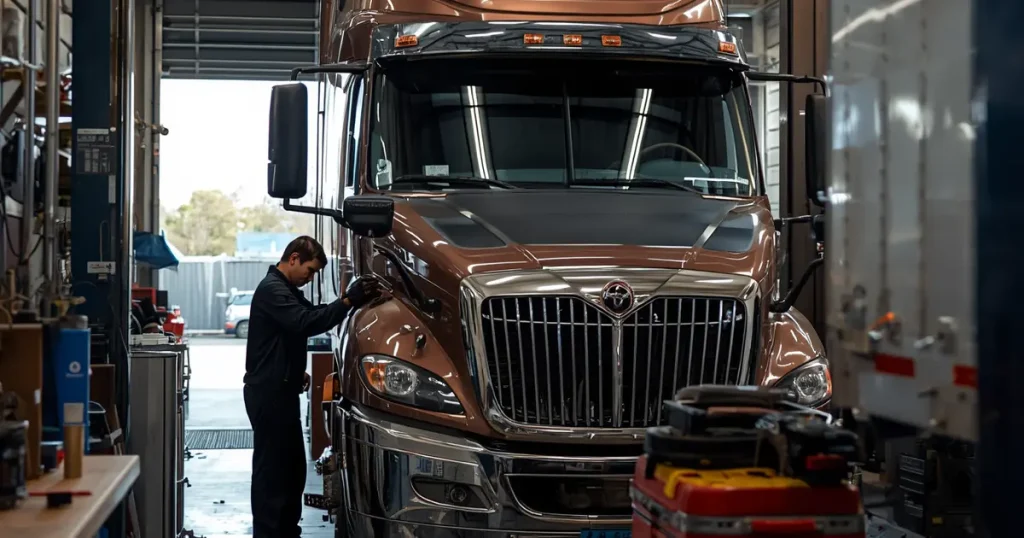
Technician inspecting a commercial truck tire and brake area for maintenance issues that may cause a Tampa truck accident
Blog, Truck Accidents

Top Causes of Truck & Commercial Vehicle Accidents in Tampa

Large commercial vehicles are vital to Tampa’s economy, but when accidents happen the consequences are often devastating. Unlike standard passenger cars, semi-trucks and other commercial vehicles can weigh up to 40 tons, meaning even a low-speed crash can cause catastrophic injuries and major property damage. Because trucking operations involve strict federal and state regulations and multiple parties—from drivers and trucking companies to maintenance shops and cargo loaders—investigating what caused a crash requires specialized expertise. If you’ve been hurt in a truck or commercial vehicle accident, The Reyes Firm is here to help you get answers and fair compensation. A semi-truck on I-75 highlights the weight difference between big rigs and passenger cars. Quick Summary Big rigs can weigh up to 80,000 pounds, so collisions with passenger cars often cause life‑changing injuries and extensive damage.  Driver fatigue, distracted driving and speeding are among the leading causes of truck crashes in Tampa. Neglected maintenance — such as faulty brakes, worn tires and defective equipment — and overloading make crashes more likely.  Driving under the influence remains a serious problem despite strict testing rules for commercial drivers. Multiple parties may share liability, including the driver, trucking company, maintenance shop, cargo loader and equipment manufacturer. Evidence like police reports, electronic data recorders, driver logs, maintenance records and witness statements is vital to prove fault. Why truck & commercial vehicle accidents are so dangerous Commercial trucks and buses dwarf standard passenger vehicles. A fully loaded semi may weigh 20 to 30 times more than a car, so it takes much longer to stop and transfers far greater force in a collision. These vehicles also have large blind spots and higher centers of gravity, making rollovers and underride crashes more likely. When a crash does occur, occupants of smaller vehicles often suffer life‑changing injuries or worse. Common causes of truck & commercial vehicle accidents Most truck crashes are preventable. They stem from human error, mechanical neglect or unsafe operating conditions. Below are the main causes of truck and commercial vehicle accidents in Tampa and across Florida. Driver fatigue: Long hours and tight delivery schedules can lead truck drivers to push past their limits. Fatigue slows reaction times and impairs judgment, making drowsy driving a serious hazard. Distracted driving: Using a phone, eating, adjusting navigation or in‑cab controls can take a driver’s eyes and mind off the road. At highway speeds, even a momentary distraction can cause disaster. Speeding & aggressive driving: Speeding reduces a driver’s ability to stop in time to avoid a collision. Aggressive maneuvers like tailgating and cutting off other vehicles can cause rear‑end or side‑impact crashes and rollovers. Neglected maintenance: Trucking companies must inspect and service their vehicles regularly. Faulty brakes, worn‑out tires and defective equipment are common causes of crashes. Maintenance records often reveal whether a carrier ignored warning signs. Watch: Tampa Truck Accident Video A technician inspects a truck’s brakes and tires. Mechanical failures like worn pads and defective components often play a role in serious crashes. Driving under the influence: Alcohol and drugs severely impair reaction time and decision‑making. Commercial drivers are subject to strict testing rules, but some still get behind the wheel while impaired, putting everyone at risk. Overloaded or improperly loaded trucks: Loading a trailer beyond its weight limit or failing to secure cargo can affect a truck’s stability, braking ability and steering. Overloaded trucks are prone to tipping over or jackknifing, especially on curves and inclines. Key takeaway: Driver error is common, but poorly maintained equipment and improper loading also cause many truck accidents. If you suspect mechanical failure, send a spoliation letter quickly so the trucking company preserves the evidence. (what is a spoliation letter?) Types of injuries in truck accidents Because of the massive forces involved, crashes with commercial vehicles tend to cause catastrophic injuries. Common injuries include: Traumatic brain injuries (TBIs) that affect memory, cognition and behavior Spinal cord injuries that may result in partial or total paralysis Multiple fractures and broken bones requiring surgery and long recovery Internal organ damage that may not be immediately apparent Amputations caused by crushing forces or severe lacerations Fatal injuries leading to wrongful death claims Who can be held liable? Truck accident claims often involve multiple defendants. Potentially liable parties include the driver, the trucking company, the company that loaded the cargo, a maintenance or repair shop, the manufacturer of a defective part, or even a government agency responsible for road design or maintenance. A thorough investigation is needed to identify all sources of compensation. Key evidence needed to prove fault Getting compensated after a truck crash requires more than a police report. Key evidence may include: Photographs and video of the accident scene, vehicle damage and road conditions Electronic data recorder (“black box”) data showing speed, braking and throttle inputs Driver logbooks and electronic logging devices (ELDs) showing hours of service and rest breaks Truck inspection and maintenance records to prove negligent upkeep Cargo loading documents and weight tickets Statements from eyewitnesses and expert accident reconstructionists Florida laws & deadlines Florida law imposes unique requirements on truck accident claims. Failing to follow these rules can jeopardize your case. Keep these deadlines in mind: PIP 14‑day rule: You must seek initial medical care within 14 days of the crash to receive personal injury protection (PIP) benefits. (§627.736) Serious injury threshold: You can recover for pain and suffering only if a doctor certifies a permanent injury, significant and permanent scarring or disfigurement, or death. (§627.737) Modified comparative fault: You cannot recover compensation if you were more than 50% at fault for the accident. (§768.81) Two‑year statute of limitations: Most negligence claims for personal injury must be filed within two years of the accident. (§95.11) Crash report privilege: Statements made to law enforcement for crash reports are privileged and cannot be used against you in court. (§316.066) Federal safety regulations: Commercial vehicle operators must comply with federal safety rules in 49 C.F.R. parts 382–386 and 390–397, which are adopted into Florida law. (§316.302) Stay mindful of deadlines

Illustration of a semi-truck crash scene in Riverview, Florida for an article about whether you need a Riverview truck accident lawyer after a semi-truck accident.
Blog, Truck Accidents

Do I Need a Riverview Truck Accident Lawyer After a Semi-Truck Crash?

A crash with a semi-truck can turn a normal day into chaos in seconds. One moment, a person is driving through Riverview, and the next, they are in pain, their vehicle is crushed, and they are trying to figure out who to call, what to say, and how they are supposed to pay for medical care. That is usually when the big question shows up: Do I need a Riverview truck accident lawyer after a semi-truck crash? For many injured people, that question comes up before they even have the crash report in hand. It comes up because truck accidents feel different, and they usually are. This article is here to give structure during a stressful time. It explains what to do first, when legal help may matter, what Florida law says, and why a truck crash in Riverview is often more complex than a regular car accident. Quick Summary Many people should at least speak with a Riverview truck accident lawyer after a semi-truck crash, especially if injuries are serious, fault is disputed, or the trucking company controls key evidence.  In Florida, a person generally must receive initial medical services and care within 14 days after the crash to access PIP medical benefits. Florida law now bars recovery in many negligence cases if the injured person is found more than 50% at fault.  Florida’s statute of limitations for many negligence actions is now 2 years, so waiting too long can be costly.  Nationwide, NHTSA reports that 5,472 people were killed and an estimated 153,452 people were injured in crashes involving large trucks in 2023, and 70% of those killed were occupants of other vehicles, not the truck.  Key Takeaway A semi-truck case is often not just about one driver and one insurance company. It may involve federal trucking records, multiple liable parties, and evidence that can disappear quickly, which is why early legal guidance can matter. Do I need a Riverview truck accident lawyer after a semi-truck crash? In many cases, yes. A person may not need a lawyer after every minor fender-bender, but a semi-truck crash is often different because the injuries are more catastrophic, the evidence is more technical, and the trucking company may already be protecting itself within hours of the wreck. NHTSA’s latest large-truck data shows why these cases deserve serious attention. In 2023, 5,472 people were killed in crashes involving large trucks, and about 70% of those deaths were people riding in other vehicles. NHTSA also estimated 153,452 injuries in large-truck crashes that year.  That matters in Riverview because local drivers share the road with commercial traffic moving through Hillsborough County on corridors like I-75, US-301, and nearby freight routes. When a passenger car collides with a tractor-trailer, the size and force difference alone can turn a survivable crash into a life-changing one.  The Reyes Firm Need Help After a Semi-Truck Crash in Riverview? Get clear next steps after a serious truck accident in Riverview. Had a bad day? Contact The Reyes Firm Why are truck accident cases usually harder than regular car accident cases? Truck accident cases are usually more complex because they often involve more serious injuries, more evidence, and multiple potentially responsible parties. A regular crash may involve two drivers. A truck crash can involve a driver, a carrier, a maintenance company, a cargo company, or others tied to the trip.  There is also a records problem. In a normal car crash, most of the key evidence is at the scene or with the drivers. In a trucking case, important evidence may be held by the company. That can include driver logs, dispatch records, inspection records, maintenance records, and onboard data.  This is one of the biggest reasons people look for a Riverview semi-truck accident lawyer or Riverview commercial vehicle accident lawyer. They are not just looking for someone to make phone calls. They are looking for someone who understands that a truck case needs to be built early and carefully. Watch: The Reyes Firm What Should You Do If a Semi-Truck Hits Your Car in Tampa, Florida? This short video explains why semi-truck crashes are different from regular car accidents, who may be responsible, and why early legal guidance can matter after a commercial truck crash in the Tampa Bay area. If a person was injured in a semi-truck accident in Riverview or the surrounding Tampa Bay area, this video gives a quick overview of what makes these claims more complex and why fault may involve more than just the driver. What should someone do right after a truck accident in Riverview? The first priorities are safety, emergency reporting, and medical care. After that, the goal is to protect evidence and avoid saying anything that can later be twisted against the injured person.  Here are the most important steps after a truck accident in Riverview: Call 911 and stay at the scene if it is safe to do so. FLHSMV says crashes involving injury, death, a commercial motor vehicle, a vehicle that must be towed, or apparent damage of at least $500 should be reported to law enforcement.  Get medical attention as soon as possible. Even if symptoms seem mild at first, prompt evaluation protects both health and the claim. Florida’s PIP statute says initial services and care must generally happen within 14 days after the motor vehicle accident for medical benefits to apply. Take photos and video. Try to document vehicle positions, damage, skid marks, road conditions, debris, weather, plate numbers, trailer numbers, and company logos. Exchange information, but do not admit fault. A person can be polite and cooperative without apologizing or guessing about what happened. Get witness names and contact details. Neutral witnesses can become important if the trucking company later disputes fault. Preserve your own evidence. Save dashcam footage, phone photos, receipts, discharge papers, and notes about pain and symptoms. Be careful with insurance calls. A quick recorded statement can lock an injured person into facts before they know the full extent of their injuries.

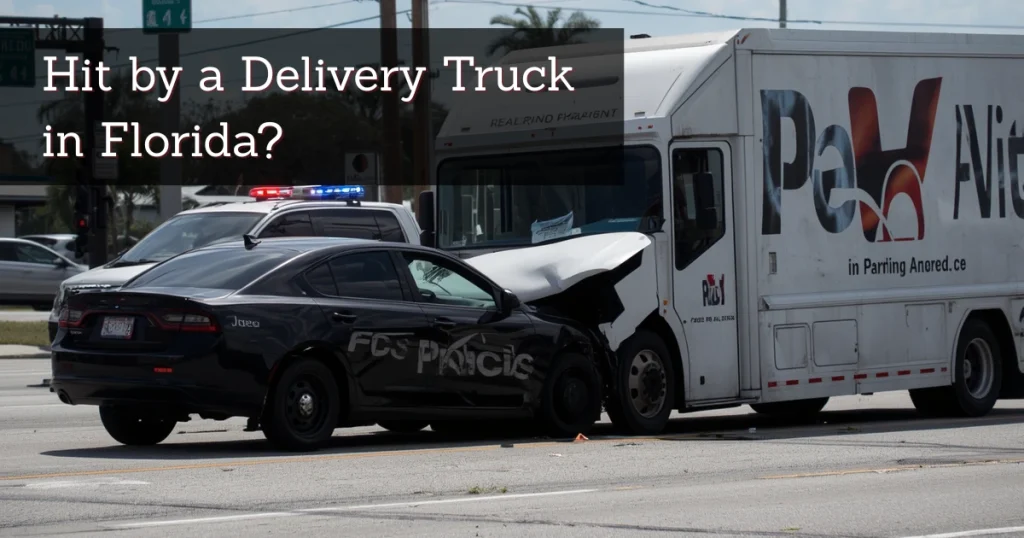
Illustration for article about being hit by a delivery truck in Florida, showing a delivery truck and damaged vehicle at a crash scene
Blog, Commercial Vehicles, Truck Accidents

Who Represents Delivery Truck Accident Victims in Florida?

Right after a delivery truck crash, most people are not thinking about statutes or insurance rules. They are thinking about pain, shock, car damage, missed work, and whether the company behind the truck is already getting ready to blame them. That reaction is normal. Delivery truck cases are often more stressful than a typical car accident because they may involve a driver, an employer, a vehicle owner, multiple insurance policies, and, in some cases, federal regulations the average person has never heard of. A Florida delivery truck accident lawyer represents people injured by working delivery vehicles and handles the company, insurers, and evidence on their behalf. After a crash, call law enforcement, get medical care, document the truck and scene, and contact The Reyes Firm before giving a recorded statement or accepting a settlement. Quick Summary Florida’s preliminary 2024 data shows 46,651 commercial motor vehicle crashes and 315 fatalities statewide. If a crash involves injury, death, a commercial motor vehicle, a wrecker, or at least $500 in apparent damage, Florida requires you to stay at the scene and call law enforcement. Florida PIP benefits generally require that initial medical care be obtained within 14 days of the crash. PIP typically provides up to $10,000 in medical and disability benefits, subject to the statute’s terms. If you are found more than 50% at fault, Florida’s modified comparative negligence rule can bar your recovery. Most negligence actions in Florida now have a 2-year filing deadline. Federal FMCSA regulations — including hours of service and vehicle maintenance rules — apply to commercial delivery vehicles and can strengthen your claim. Recoverable compensation may include medical bills, lost wages, loss of earning capacity, pain and suffering, and more. Key Takeaway A delivery truck accident case can get stronger or weaker in the first few days. The most important steps are getting safe, calling 911 when required, getting medical care quickly, and preserving the evidence that the delivery company may not volunteer later. What should someone do right after a delivery truck accident in Florida? First, get to safety, call law enforcement when required, get medical help, and start preserving evidence. In Florida, crashes involving injury or death, a commercial motor vehicle, a vehicle requiring a wrecker, or at least $500 in apparent damage must be reported to law enforcement immediately. That rule matters because delivery truck cases can change quickly. Vehicles are moved, camera footage disappears, company dispatch systems overwrite themselves, and the first version of the story is not always the most accurate one. Florida Law — When to Call 911 FLHSMV requires you to stay at the scene and call 911 if the crash involves an injury, fatality, hit and run, DUI, a vehicle needing a wrecker, a commercial motor vehicle, or at least $500 in apparent damage. What to do right away: Move to a safe location if possible. Call 911 or local law enforcement. Get the driver’s name, employer, plate number, insurance details, and any company information visible on the vehicle. Photograph vehicle positions, damage, skid marks, debris, road conditions, and delivery branding. Collect witness names and phone numbers. Do not admit fault or speculate about what happened. Florida law also requires drivers involved in a crash to provide identifying information and render reasonable assistance to injured people, meaning exchange information and help get medical care if someone may be hurt. Why are delivery truck crashes often more serious? Official crash data shows why delivery truck and commercial vehicle cases deserve careful attention in Florida. 46,651 Commercial motor vehicle crashes in Florida (preliminary 2024 data) 315 Fatalities in Florida commercial vehicle crashes (preliminary 2024) 40,901 Total U.S. roadway fatalities (NHTSA final 2023 data) Source context: FLHSMV preliminary 2024 crash data and NHTSA final 2023 roadway fatality data. Delivery truck crashes can be more catastrophic than a typical two-car collision due to a combination of physical and operational factors, vehicle size and weight, longer stopping distances, large blind spots, and the constant pressure on drivers to stay on schedule. Not every delivery vehicle is a tractor-trailer, but even smaller commercial vehicles can cause serious harm when they move through neighborhoods, stop suddenly, back into driveways, or rush through back-to-back deliveries. A delivery truck case is often not just “a car accident with a van.” It may involve business records, route pressure, vehicle maintenance questions, driver qualification issues, and multiple potentially responsible parties, all of which require a different kind of investigation than a simple two-car crash. What Are the Most Common Causes of Delivery Truck Accidents in Florida? Understanding what caused the crash is central to proving who is responsible. Some of the most frequent causes include: Driver fatigue and hours-of-service violations. Federal rules limit how long commercial drivers can operate without rest. When delivery companies push schedules too aggressively, drivers operate well past the point of safe alertness. Distracted driving. Delivery drivers frequently use GPS navigation, in-cab computers, and phones to manage route updates, customer communications, and proof-of-delivery systems, all while driving. Delivery quota pressure. Many delivery drivers are tracked by stop count and delivery time. That pressure can lead to speeding, running stop signs, and skipping mandatory rest breaks. Improper backing and blind spot failures. A large percentage of delivery truck crashes occur when drivers back into driveways, loading zones, or parking spaces with limited rear visibility. Inadequate vehicle maintenance. Brake failure, tire blowouts, and steering defects are more likely when trucks skip required pre-trip inspections or maintenance schedules. Unfamiliar routes. Delivery drivers constantly cover new neighborhoods, increasing the likelihood of sudden stops, wrong turns, and last-second lane changes. Overloaded vehicles. Cargo that exceeds weight limits or is improperly secured makes vehicles harder to control and significantly increases stopping distances. Impaired driving. Drug and alcohol violations occur in commercial trucking despite federal screening requirements, and prior violations may be discoverable through the FMCSA Drug and Alcohol Clearinghouse. Identifying the true cause, not just the surface-level description in the crash report, is one of the most important things an attorney can do in the

Illustration of a tow truck on a Florida interstate shoulder for a Seffner tow truck accident article
Blog, News, Truck Accidents

Seffner Tow Truck Accident Lawyer: What Families Should Know After a Fatal I-75 Exit Ramp Crash

After a deadly crash, most families are not thinking about legal terms first. They are trying to understand what happened, why it happened, and what they need to protect before important facts disappear. That is especially true when the crash involves a stopped tow truck on the shoulder of a busy highway ramp. A case like this can raise hard questions about roadway safety, visibility, warning lights, shoulder positioning, and whether more than one person or company may share responsibility. This guide is meant to give families in Seffner, Hillsborough County, and the Tampa Bay area clear next steps. For anyone searching for a Seffner tow truck accident lawyer, the goal is to explain what matters after a fatal I-75 Fowler Avenue exit ramp crash, what evidence should be preserved, and how Florida law may affect a wrongful death claim. Quick Summary Florida Highway Patrol said a 66-year-old Seffner man crashed into a stopped flatbed tow truck on the northbound I-75 exit ramp to Fowler Avenue on March 7, 2025, and later died from his injuries. Florida’s Move Over law was expanded on January 1, 2025, to cover any roadside vehicle stopped with hazard lights, flares, or visible emergency signage. FLHSMV’s 2023 crash report says Hillsborough County had 27,474 crashes, 230 fatalities, and 18,873 injuries, while Florida had 395,175 crashes, 3,375 fatalities, and 252,285 injuries. Florida’s PIP statute includes the 14-day rule for initial treatment and a $5,000 death benefit. Florida uses modified comparative negligence, and a party found greater than 50% at fault may be barred from recovering damages in a negligence case. Key Takeaway In a fatal tow truck crash, the family usually needs answers quickly, but not guesses. The strongest early steps are preserving evidence, protecting the estate’s rights, and making sure no one rushes into an insurance statement before the facts are clear. What happened in the Seffner tow truck crash? Public reporting says Florida Highway Patrol investigated a fatal crash on March 7, 2025, involving a 66-year-old Seffner man and a stopped flatbed tow truck on the northbound I-75 exit ramp to Fowler Avenue. The report says the passenger vehicle entered the outside shoulder and hit the stopped tow truck, and the Seffner driver later died from his injuries. That is the part families should keep in mind most carefully: the early report describes the crash, but it does not answer every legal question. FOX 13 reported that troopers did not know why the Seffner driver entered the outside shoulder, which means families should be careful not to assume fault before the evidence is fully reviewed. Map of the I-75 Exit Ramp to Fowler Avenue This map gives location context for the northbound I-75 exit ramp to Fowler Avenue in the Tampa area, where public reporting says the fatal tow truck crash happened. It is included for general reference and should not be treated as the exact crash point. Location context for the I-75 northbound exit ramp to Fowler Avenue near Tampa and Seffner. Public reporting says the crash happened on this exit ramp, but the exact point of impact was not specified in the report. Why does this kind of crash deserve a closer investigation? A shoulder crash involving a stopped tow truck is not always a simple one-vehicle story. It can involve roadway design, ramp traffic, sight lines, warning lights, truck placement, dispatch records, and the condition of both vehicles. Florida’s Move Over law exists because roadside stopped-vehicle situations are dangerous. FLHSMV says that, as of January 1, 2025, the law was expanded to include any vehicle parked on the side of the road with hazard lights flashing, emergency flares, or visible emergency signage. Drivers must move over when they can do so safely, or slow down if they cannot. That does not automatically decide liability in this crash. It does show why shoulder position, warning equipment, visibility, and roadway conditions can matter so much in a tow truck case. How serious is the traffic risk in Hillsborough County and Florida? The traffic danger is real, both locally and statewide. FLHSMV’s Florida Traffic Crash Facts Annual Report 2023 says Hillsborough County recorded 27,474 total crashes, 230 fatalities, and 18,873 injuries in 2023. The same report says Florida recorded 395,175 crashes, 3,375 fatalities, and 252,285 injuries statewide in 2023. Nationally, NHTSA estimated that 39,345 people died in traffic crashes in 2024. NHTSA said that was an improvement from 2023, but it still shows how often roadway violence changes families forever. What should families do after a fatal tow truck crash in Seffner? The first goal is to protect the truth. In a fatal commercial vehicle case, evidence can disappear fast, and families often do not realize how much information may exist outside the police report. Get the Florida Highway Patrol crash report and keep the report number. Save every photo, video, text, and voicemail related to the crash. Identify the tow truck company, driver, insurer, and any responding agencies. Preserve the family vehicle in its post-crash condition if possible. Keep medical records, hospital bills, funeral records, and estate paperwork together. Avoid recorded insurance statements until the family understands the facts and legal posture of the case. These steps matter because a tow truck crash may involve both ordinary crash evidence and business records. Once a vehicle is repaired, moved, or discarded without proper documentation, some evidence may be difficult to recover later. Do medical and insurance deadlines still matter after a fatal crash? Yes. In Florida motor vehicle cases, deadlines can still matter even when the crash is fatal. Florida Statute 627.736 requires that initial services and care for PIP medical benefits be received within 14 days of the motor vehicle accident and provides death benefits of $5,000 per individual. That does not replace a wrongful death claim. It does mean families may be dealing with both no-fault insurance issues and liability issues simultaneously, which is one reason organizations matter early on. What evidence matters most in a fatal tow truck accident case?

Illustration for a Martin County semi-truck accident lawyer guide showing an overturned semi-truck and traffic on a Florida highway.
Blog, News, Truck Accidents

Semi-Truck Overturns in Martin County Multi-Vehicle Crash on Florida’s Turnpike: What Injured Victims Should Know

After a crash like this, people usually aren’t thinking about the law. They are thinking about pain, traffic, medical bills, work, and how they are supposed to deal with everything at once. That is especially true after reports of a March 13, 2026, crash near mile marker 123 in the Hobe Sound area of Martin County, where traffic was reportedly stopped due to weather conditions before a semi-truck struck the line of vehicles and another semi overturned. Early reports said the crash involved multiple vehicles, at least two semi-trucks, long delays, and at least one minor injury. Those facts may still change as the investigation continues. This guide is here to give structure in a moment that can feel overwhelming. It explains what a Martin County semi-truck accident lawyer looks for, what someone should do right away, what mistakes can hurt a claim, and how Florida law may affect what happens next. Quick Summary The reported Martin County crash involved stopped traffic, weather conditions, multiple vehicles, and an overturned semi-truck on Florida’s Turnpike near Hobe Sound. After a truck accident, safety comes first. Call 911, get medical care, and document the scene if possible. In Florida, receiving medical care within 14 days can affect PIP benefits. Truck crash cases often involve more evidence and more potentially responsible parties than a normal car accident. Florida’s modified comparative negligence rule can reduce recovery, and recovery may be barred if a person is found more than 50% at fault. Key Takeaway: In a Florida Turnpike truck accident, the most important early steps are to protect your safety, get checked by a medical professional, preserve evidence, and avoid saying or signing anything before the full story is known. What happened in the Martin County semi-truck crash on Florida’s Turnpike? A serious crash was reported on March 13, 2026, near mile marker 123 in Martin County, close to Hobe Sound. Early reports said traffic had stopped due to weather conditions when a semi-truck struck the stopped vehicles, leading to a multi-vehicle crash and an overturned truck. For injured people, the key thing to understand is that the first version of events is rarely the final one. News reports can describe what happened at the scene, but a legal case depends on what the evidence later shows about speed, following distance, braking, visibility, driver attention, vehicle condition, and the order of impacts. That matters in a semi-truck overturn crash on Florida’s Turnpike because one impact can trigger several others. In a chain-reaction case, investigators often need time to figure out exactly who hit whom, and why. Map of the Reported Crash Area Reported incident location near mile marker 123 on Florida’s Turnpike in the Hobe Sound area of Martin County, Florida. Back to top What should someone do right after a Florida Turnpike truck accident? The first steps are simple, even if the moment feels chaotic: stay safe, call 911, get medical care, and preserve as much evidence as possible. Those early choices can protect both your health and your claim. Put safety first If it is safe to move and doing so will not worsen injuries, get out of immediate danger. If not, stay put and wait for emergency responders. This matters even more in a Florida chain-reaction truck accident. Stopped traffic, poor weather, debris, and low visibility can make a second collision possible. Call 911 Make sure police and emergency responders are on the way. An official report can help document vehicle positions, road conditions, witness information, and what officers observed upon arrival. Get medical care Even if you think you are probably okay, get checked. Pain does not always show up right away, especially after a stressful impact. Florida’s PIP law generally requires that initial treatment be provided within 14 days to qualify for benefits. Waiting too long can create insurance problems and give the other side a chance to argue that the injuries were not serious or were caused by something else. Document the scene If you are physically able, take photos and video of: Vehicle positions Damage to all vehicles Skid marks Debris Road and weather conditions Company logos and truck markings License plates and trailer numbers Visible injuries Evidence Checklist: Crash report number Truck company name and identifying numbers Photos of all vehicles Witness names and contact information Dashcam footage, if available Medical records and follow-up instructions Exchange information, but do not admit fault Share names, contact details, and insurance information. Keep it factual. This is not the time to guess what happened or apologize in a way that sounds like blame. In multi-vehicle crashes, the full story is often more complicated than it first appears. Be careful with insurance adjusters After a commercial truck crash, calls from insurers may come quickly. It is usually best not to give a recorded statement before getting legal advice. That is because a rushed statement can be used later to shift blame, minimize injuries, or lock you into facts that were incomplete. Back to top When should someone seek medical care after a Martin County truck accident? Medical care should be sought as soon as possible. Quick treatment protects your health first and creates a clear record linking the injury to the crash. In Florida, the 14-day PIP rule is a big reason not to wait. But even beyond insurance, early treatment matters because symptoms after a truck accident can develop over time. Someone may feel shaken up at the scene and only notice neck pain, back pain, headaches, numbness, or dizziness hours later. Common injuries after a multi-vehicle semi-truck crash in Martin County may include: Neck and back injuries Shoulder injuries Head injuries and concussion symptoms Soft tissue injuries Chest injuries Knee, wrist, and ankle injuries Emotional distress after the crash The main point is simple: do not wait for the pain to become unbearable before getting help. Back to top Why are truck accident cases different from regular car accident cases? Truck accident cases are usually more complicated because they

Semi-truck accident claims
Blog, Truck Accidents

Semi-Truck Accident Claims: Evidence, Deadlines, and Steps to Take

Semi-truck accidents can change your life in an instant. Because of their size and complexity, semi-truck accident claims require more evidence, more attention to deadlines, and more awareness of potential pitfalls than a typical car crash. This guide explains what makes these claims unique, what evidence you’ll need, the deadlines and laws that apply, and common mistakes to avoid. A jackknife semi-truck blocking a Florida roadway reminds us how devastating these crashes can be. Quick Summary: Semi-truck accident claims involve multiple parties and complex regulations. Gather police reports, driver logs, black box data, witness statements and maintenance records immediately. Florida’s statute of limitations for injury claims is two years; you only have 14 days to seek medical care to access Personal Injury Protection (PIP) benefits. Serious injury threshold laws limit when you can sue for pain and suffering. Do not accept the first insurance offer—consult a lawyer before signing anything. Document all injuries and damages, including non-economic losses like pain and suffering. Contact a semi-truck accident attorney as soon as possible to protect your rights. Table of Contents 1. Why Semi-Truck Claims Are Different 2. Essential Evidence to Gather 3. Deadlines and Florida Claim Rules 4. Common Mistakes to Avoid 5. Steps to Take After a Semi-Truck Crash 6. How The Reyes Firm Can Help 7. Watch: Quick Video Overview 8. Frequently Asked Questions Why Semi-Truck Claims Are Different Semi-truck collisions often cause catastrophic injuries because these vehicles can weigh upwards of 80,000 pounds. Claims are complicated by the fact that multiple parties may be responsible, including the driver, the trucking company, the cargo loader, and maintenance contractors. Regulations from the Federal Motor Carrier Safety Administration (FMCSA) govern everything from driver hours to maintenance standards, and a thorough investigation must consider these rules.   Essential Evidence to Gather In a semi-truck accident claim, you must gather comprehensive evidence to establish liability. The following items are critical: Police Reports: Document the scene, driver’s actions, and potential traffic violations; request a copy and preserve it. Driver Logs & Records: Federal law requires truckers to record hours, cargo details, and rest periods. These logs can reveal fatigue or hours-of-service violations. Black Box Data: Modern rigs have onboard electronic data recorders that capture speed, braking, and engine performance. This information can prove negligence. Witness Statements: Eyewitness accounts can provide unbiased details about how the crash occurred. Collect names and contact information. Maintenance Records: Service logs can show whether the truck was properly maintained; poor maintenance may shift liability to the trucking company. For more on hours-of-service rules, see FMCSA guidance.   Key Takeaway: Gather evidence early. Police reports, logs, and black box data can disappear. A qualified attorney can obtain and preserve this information quickly. Deadlines and Florida Claim Rules Timing is critical in semi-truck accident claims. Missing a deadline can bar your right to compensation. Florida law sets strict limits: Statute of limitations: Most personal injury claims must be filed within two years from the date of the accident. PIP 14-day rule: You must seek initial medical treatment within 14 days to access Personal Injury Protection benefits. Serious injury threshold: To sue for pain and suffering in Florida, you must have a permanent injury, significant scarring, or death. Comparative fault: Your compensation is reduced if you are partially at fault. If you are more than 50% responsible, you cannot recover damages. Commercial vehicle regulations: Owners and drivers of commercial vehicles in Florida must comply with federal safety rules. Relevant statutes: F.S. 95.11, F.S. 627.736, F.S. 627.737, F.S. 768.81, and F.S. 316.302. Information Point: Act quickly. Missing the two-year deadline or failing to seek medical care within 14 days can jeopardize your claim. Common Mistakes to Avoid Avoiding these pitfalls can significantly improve your chances of a successful claim: Not gathering evidence immediately after the crash. Accepting the first settlement offer from the insurance company. Failing to hire an experienced semi-truck accident attorney. Ignoring non-economic damages like pain and suffering. Failing to document injuries and recovery thoroughly. Steps to Take After a Semi-Truck Crash Call 911 and seek medical attention immediately. Move to a safe location if possible and exchange information with all parties involved. Document the scene: take photos, videos, and notes about road conditions and damage. Gather contact information from witnesses and first responders. Notify your insurance company without giving a recorded statement. Seek medical care within 14 days to preserve your PIP benefits. Start an evidence folder with all documentation, receipts, and medical records. Avoid signing any releases or accepting settlements before consulting a lawyer. Consult a semi-truck accident attorney to protect your rights and handle negotiations. Key Takeaway: Your health and safety come first. Call 911, get medical help, and document everything. How The Reyes Firm Can Help The Reyes Firm understands the unique challenges of semi-truck accident cases. Our experienced attorneys will gather evidence, deal with insurance companies, and ensure that you meet all deadlines. We focus on recovering compensation for medical expenses, lost income, and the physical and emotional toll the crash has taken on your life. Need help after a semi-truck accident? Contact us for a free consultation: Schedule a Free Case Review. Frequently Asked Questions What is considered a semi-truck? A semi-truck (also called a tractor-trailer or big rig) is a combination vehicle consisting of a tractor unit and one or more trailers used to transport freight. How is fault determined in a semi-truck accident? Fault is determined by analyzing evidence such as police reports, driver logs, black box data, and witness statements. Multiple parties may share liability. What evidence should I collect at the scene? Take photos and videos, gather the truck’s USDOT number, collect driver information, get witness contacts, and request a copy of the police report. Do I need to see a doctor even if I feel fine? Yes. Some injuries may not show symptoms immediately. Florida law requires you to seek medical care within 14 days to qualify for PIP benefits. How long do I have to file my claim? Most

Jackknifed semi-truck blocks multiple lanes on Florida highway with police and ambulance on scene
Blog, Truck Accidents

Why Semi‑Truck Crashes Happen: Common Causes and How to Protect Your Rights

When an 80,000‑pound semi‑truck collides with a 4,000‑pound car, the physics aren’t fair. Semi‑truck accidents often lead to devastating injuries, lost income and shattered lives. To prevent these tragedies and hold the right parties accountable, it’s important to understand what causes them—and what you should do after one occurs.  Quick Summary Semi‑trucks weigh 20 to 30 times more than passenger cars, so collisions often cause catastrophic injuries.  The leading causes of semi‑truck crashes include driver fatigue, distracted driving, speeding and aggressive maneuvers, improper loading, mechanical failures like brake issues, and unsafe road design or weather.  Multiple parties may be liable—drivers, trucking companies, loaders, manufacturers, maintenance providers and government agencies.  Strong evidence matters: police reports, photos, black‑box data, driver logs, maintenance records and expert analysis.  Florida’s strict rules require you to seek medical care within 14 days, meet the serious injury threshold to sue for pain and suffering, and file your claim within two years; if you’re more than 50% at fault, you can’t recover.  Key steps after a crash: call 911, move to safety, get medical care, document everything, collect witness information, avoid recorded statements, obtain the crash report, preserve evidence and contact an attorney.  The Reyes Firm works on contingency—no fees unless we win.  Why Are Semi‑Trucks So Dangerous? Because of their enormous size and weight, semi‑trucks handle very differently from passenger cars. They need much longer distances to stop, they have large blind spots, and they make wide turns that can squeeze smaller vehicles off the road. When a tractor‑trailer weighing 80,000 pounds hits a sedan weighing 4,000 pounds, the smaller vehicle and its occupants take the brunt of the impact. Top Causes of Semi‑Truck Crashes No single factor explains every semi‑truck crash. In most cases, multiple causes overlap. The following issues appear again and again in Florida crash investigations: Driver Fatigue Long shifts, overnight hauls and tight delivery windows mean truckers sometimes push past safe limits. Even though federal hours‑of‑service rules restrict drive time, violations are common. Fatigue slows reaction time, makes lane drift more likely and leaves drivers less able to respond to sudden hazards. Distracted Driving Cell phones, GPS screens, dispatch radios and snacks can all steal a driver’s attention. A semi‑truck barreling down I‑4 for just a few seconds without a focused driver can cause devastating harm. Phone records, dash‑cam footage and witness statements often reveal distraction. Speeding & Aggressive Driving Despite their weight, some rigs travel at speeds far above posted limits. Stopping distances lengthen dramatically as speed increases, and aggressive behaviors like tailgating, weaving and sudden lane changes create deadly situations—especially in construction zones. Engine control modules, often called “black boxes,” record speed data that can prove the driver was traveling too fast. Improper Loading & Cargo Shifts Heavy steel, concrete and equipment must be balanced and secured. When cargo is overloaded or stacked unevenly, weight can shift in transit, causing the trailer to jackknife or tip over. Cargo loading companies, contractors and third‑party logistics providers may all share responsibility for proper loading. Mechanical Failures Brakes, tires and steering components wear out quickly on commercial trucks that travel hundreds of miles each day. Brake failures, tire blowouts and steering malfunctions are among the most common mechanical causes of semi‑truck crashes. Florida’s hot weather accelerates wear, making regular inspections critical. When a maintenance provider or trucking company neglects repairs, they can be held liable. Key Takeaway: Brake Failures Demand Action A single worn brake pad can mean the difference between a safe stop and a catastrophic collision. Always request maintenance records after a truck crash and send a spoliation letter immediately to preserve them.   Unsafe Road Design & Weather Narrow lanes, unclear signage, sharp curves and sudden traffic shifts are dangerous for big rigs. Construction zones create additional hazards, especially when lane markings are poor or equipment intrudes into travel lanes. Heavy rain and wind can compound these issues. In these cases, liability may extend to a government agency or contractor responsible for road design and maintenance. Who Can Be Held Liable? In a semi‑truck crash, responsibility can lie with more than one person or company. Parties that may share fault include: The driver, for violating traffic laws or hours‑of‑service rules The trucking company, for negligent hiring, training, supervision or scheduling Cargo loaders or logistics companies, for improper loading and securement Manufacturers and parts suppliers, for defective brakes, tires or other components Maintenance providers, for negligent inspection and repair State or local agencies, for unsafe road design or poor signage How to Prove a Truck Crash Claim Proving negligence in a semi‑truck crash requires detailed evidence and technical analysis. Key evidence includes: Accident scene documentation: Photographs, videos, skid marks, debris and road signs record what happened and preserve evidence before vehicles are moved. Black‑box and ELD data: Electronic logging devices and event data recorders track speed, braking, hours driven and other critical metrics. Driver logs and employment files: Logbooks, dispatch records and personnel files reveal hours‑of‑service violations or unsafe work demands. Maintenance and inspection records: Service logs show whether brakes, tires and steering components were inspected and repaired as required. Witness statements and expert analysis: Eyewitnesses, accident reconstruction experts and engineers help establish what caused the crash and who is responsible. Florida Laws & Deadlines Florida’s personal injury laws set strict requirements for truck accident claims. Missing a deadline or failing to meet a threshold can bar your recovery. Important rules include: PIP 14‑Day Rule: You must obtain medical treatment within 14 days to access personal injury protection benefits under Florida Statutes. (§627.736) Serious Injury Threshold: To recover non‑economic damages, your injuries must be permanent or significantly disfiguring as defined in Florida Statutes. (§627.736) Modified Comparative Fault: If you are more than 50% at fault, you cannot recover damages under Florida Statutes. (§768.81) Two‑Year Statute of Limitations: Most negligence lawsuits must be filed within two years according to Florida Statutes. (§95.11) Crash Report Privilege: Statements made for crash reports cannot be used as evidence in court under Florida Statutes. (§316.066) Commercial

Scroll to Top