Truck Accidents

Tampa intersection with company delivery van in traffic, for illustrative purposes only
Blog, Commercial Vehicles, Truck Accidents

Hit by a Company Vehicle Settlement in Tampa: What Affects Your Case Value

Hit by a company vehicle in Tampa? Learn what affects your settlement value, who pays, and how The Reyes Firm fights for maximum compensation. You were doing everything right. Then a van with a company logo on the door ran a red light, or a delivery driver rear-ended you on the interstate, and your whole life changed in a second. Right now, you’re probably dealing with a lot. Doctor visits. Insurance calls you don’t know how to answer. Pain that doesn’t match what anyone is telling you about your injuries yet. And somewhere underneath all of it, a question you don’t quite know how to ask: what is this actually worth, and will anyone take it seriously? Here’s what you need to know. A hit by a company vehicle settlement in Tampa, Florida, works differently from a regular car accident claim. More parties can be held responsible. Higher insurance coverage is usually in play. And the company behind that driver often has professionals working to minimize your claim the moment the crash is reported. Understanding what factors shape your settlement value is the first step to making sure you’re protected. This applies if you were rear-ended by a company vehicle, T-boned by a commercial van, hit by a delivery driver, or injured by any work vehicle on Tampa roads. Quick Summary When a company vehicle hits you in Tampa, the employer can be held liable under Florida’s respondeat superior doctrine, not just the driver. Florida’s dangerous instrumentality doctrine means a company can owe you damages simply because they own the vehicle, even without direct fault. The value of your hit by a company vehicle settlement depends on injury severity, available insurance coverage, evidence quality, and liability clarity. Florida’s statute of limitations under Fla. Stat. 95.11(3)(a) gives you only 2 years from the date of the crash to file a personal injury lawsuit. Had a bad day? Call The Reyes Firm at 833-4 BAD DAY. What Happens Legally When a Company Vehicle Hits You in Florida? When a company vehicle hits you in Florida, you can typically pursue compensation from the driver, the employer, and sometimes additional parties, all at the same time. You don’t have to choose just one. Florida law recognizes two distinct legal doctrines that can hold a company responsible for its driver’s actions. First, respondeat superior, sometimes called vicarious liability, holds an employer responsible for the negligent acts of an employee who was acting within the scope of their job at the time of the crash. Second, Florida’s dangerous instrumentality doctrine holds a vehicle owner liable for any negligent operation of the vehicle by someone driving it with permission, regardless of whether the employer was directly at fault. These two doctrines, working together, are important to you. Respondeat superior covers situations where the driver was on the clock, making deliveries, running a work errand, or traveling between job sites. The dangerous instrumentality doctrine applies to situations in which the employee was driving a company-owned vehicle, even during activities that blur the line between personal and work use. Under Fla. Stat. 324.021, Florida is one of the few states in the country that imposes this strict vehicle owner liability. What this means in practice: companies have greater exposure to coverage in these cases than most people realize. That’s exactly why they move fast to protect themselves after a crash. ⚠️ Warning: Florida’s statute of limitations under Fla. Stat. § 95.11(3)(a) gives you only 2 years from the date of your accident to file a personal injury lawsuit. This deadline was cut from 4 years to 2 years under HB 837, effective March 24, 2023. Miss it, and your claim is gone permanently, no matter how strong your case is. Do not wait. Who Can Be Held Responsible Besides the Driver? In a hit-by-a-company-vehicle case, the driver is rarely the only party with legal exposure. Multiple defendants may owe you compensation, and identifying all of them is one of the most important things your attorney does early in your case. The employer or company that owns the vehicle is almost always the primary target. If the driver was on a delivery run, a sales call, a job site visit, or any task that served the company’s interests, the employer shares liability for the driver’s actions. Florida courts have consistently held that even minor detours during a work task can still fall within the scope of employment. Beyond the direct employer, a third-party maintenance company can be liable if poor vehicle upkeep contributed to the crash. A staffing agency or leasing company can be liable if they placed the driver and retained control over how that driver operated. A cargo loading company can be liable if an improperly loaded vehicle was a factor. In some cases, a vehicle manufacturer can be liable if a mechanical defect contributed to the crash. The reason this matters for your settlement is simple. More liable parties mean more insurance coverage in play. And more coverage typically means a stronger position for your claim. 💡 Did You Know? According to FLHSMV’s By the Numbers 2024 report, Florida recorded 46,651 commercial motor vehicle crashes statewide in 2024, resulting in 315 fatalities. Hillsborough County, where Tampa sits, has one of the highest per-capita commercial motor vehicle injury rates in the state at approximately 59 truck-crash injuries per 100,000 residents, higher than Miami-Dade. Source: FLHSMV What Factors Affect the Value of a Hit by a Company Vehicle Settlement? The settlement value for being hit by a company vehicle comes down to seven factors, and each one can move the number significantly up or down. Severity and permanence of your injuries. This is the single biggest driver of settlement value. Soft tissue injuries that resolve in weeks settle differently than spinal cord damage, traumatic brain injuries, fractures, or injuries requiring surgery. Long-term and permanent injuries carry future medical costs, lost earning capacity, and quality-of-life impacts that courts and insurers calculate into every serious claim. Available insurance coverage. Company
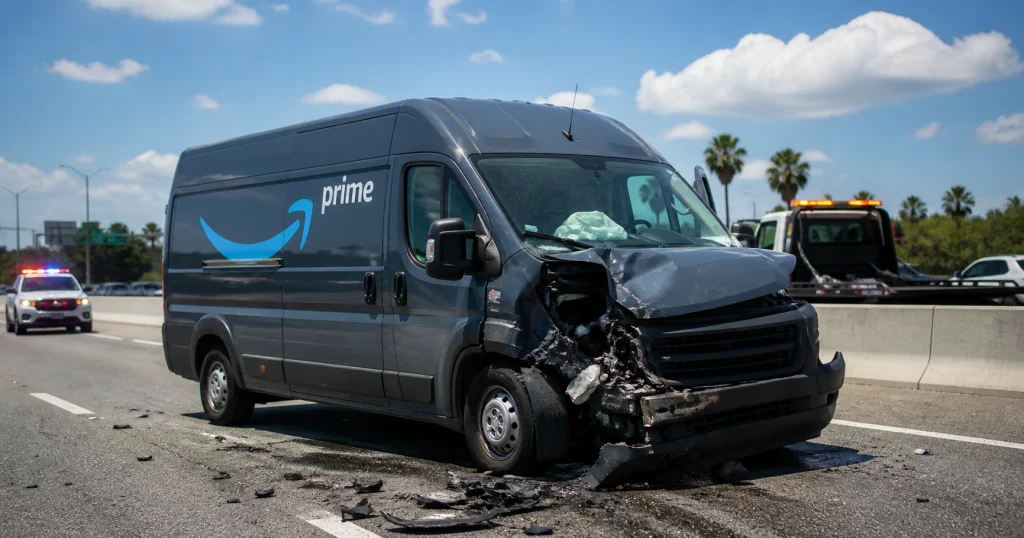
Amazon delivery van involved in a traffic crash on a Florida highway, for illustrative purposes only.
Blog, Commercial Vehicles, Legal, Truck Accidents

Amazon Truck Accident Lawyer in Florida: Who’s Liable and What to Do First

 Hit by an Amazon truck in Florida? Find out who’s liable, what evidence disappears fast, and how to protect your claim. You watched the Amazon logo drive away. Now you’re sitting with a totaled car, a hospital bill you didn’t plan for, and an insurance adjuster calling before you’ve had time to think straight. You’re wondering if Amazon is actually responsible, or if they’ll find some legal way to make it someone else’s problem. They will try. Amazon built a delivery structure specifically designed to do exactly that. But Florida courts are increasingly skeptical of it, and a skilled Amazon truck accident lawyer in Florida can challenge it. The Reyes Firm handles Amazon delivery vehicle crashes across Florida, including crashes on I-75, I-4, and I-275, in Tampa neighborhoods, and in communities across Hillsborough County, Miami-Dade, and Polk County. Amazon delivery volume in Florida has surged in recent years. Every day, thousands of Amazon vans, Sprinter trucks, and semi-trailers move through Tampa streets and Florida highways under extreme pressure to meet delivery quotas. Rushed drivers, overloaded routes, and aggressive scheduling create real danger on roads you drive every day. When that danger turns into a crash, you deserve to know exactly what your rights are and who is responsible. Here’s what you need to know right now. Quick Summary: Hit by an Amazon Truck in Florida? Amazon uses a Delivery Service Partner system designed to shift liability from itself to small contractors, but Florida courts look past that structure when Amazon controls the driver’s work. DSP vehicles must carry $1 million in commercial auto liability coverage. Amazon’s own policy may apply on top of that. The truck’s black box, GPS data, and Mentor app safety scores are critical evidence. Amazon’s contractors can overwrite that data within days without a preservation letter. Florida Statute § 95.11 gives you 2 years from the crash date to file. That clock does not stop for insurance negotiations. Had a bad day? Call The Reyes Firm at 833-4 BAD DAY. The Reyes Firm Hit by an Amazon Truck in Florida? Find out who’s liable before you talk to their insurer. Had a bad day? Get a Free Case Review How Does Amazon Structure Its Deliveries, and Why Does It Matter for Your Claim? Amazon delivers packages through two main programs, and the one that applies to your crash determines how your claim works and how much coverage is available. The Delivery Service Partner program is Amazon’s primary last-mile delivery system. Amazon contracts with hundreds of small companies called DSPs. Those companies hire their own drivers and operate Amazon-branded vans. On paper, the driver works for the DSP, not Amazon. Amazon uses this structure to put a legal buffer between itself and crash liability. In practice, the relationship looks nothing like a typical contractor arrangement: Amazon mandates delivery routes through its app Amazon requires branded uniforms, vehicles, and logos Amazon sets delivery windows and package quotas Amazon monitors driver speed, braking, and phone use through its Mentor app in real time Amazon can terminate a DSP contract at will based on performance metrics Amazon Flex is a separate gig program in which individual drivers use their personal vehicles to make deliveries. Flex drivers are classified as independent contractors. Amazon provides commercial auto liability coverage of up to $1 million per incident while the driver is actively on a delivery route. That coverage ends when the route ends. This distinction matters for your claim because the program type determines which insurance applies, how much coverage is available, and how strong an argument you have for holding Amazon directly responsible. 📊 Did You Know? In 2024, FLHSMV recorded 46,651 commercial motor vehicle crashes across Florida, resulting in 315 fatalities. That’s nearly 9.9% of all traffic crash deaths in the state. Amazon operates thousands of daily delivery routes across Florida through its DSP network. When one of those drivers causes a crash, the liable parties and available coverage can be dramatically different from a standard car accident claim. Source: FLHSMV By the Numbers 2024 (preliminary, as of June 2025). Can You Sue Amazon Directly for a Truck or Delivery Van Accident in Florida? Yes. You can sue Amazon directly, even if the driver worked for a separate DSP. Florida courts allow it, and juries have found Amazon liable under several legal theories. The primary theory is vicarious liability through actual control. Florida follows the respondeat superior doctrine, which holds an employer responsible for a worker’s actions performed within the scope of their employment. When Amazon mandates routes, monitors driver behavior in real time through the Mentor app, sets delivery quotas that pressure drivers to speed, and can terminate the entire DSP contract based on performance, courts treat that level of control as employer conduct regardless of what the contract calls the driver. A second theory applies specifically in Florida. The dangerous instrumentality doctrine holds that when a vehicle owner permits another person to operate their vehicle, the owner can be held vicariously liable for harm caused during that operation. When Amazon owns or leases the branded van and permits a DSP or its driver to operate it, this doctrine may apply directly. A third theory is negligent selection and retention. If Amazon chose a DSP with a history of safety violations or continued using a DSP whose drivers had prior incidents, Amazon may be independently liable for that choice. People ask all the time whether anyone has actually won a lawsuit against Amazon. The answer is yes, and the verdicts are significant. In August 2024, a Georgia jury found Amazon 85% responsible for a crash that seriously injured a child and awarded the family $16.2 million. A separate jury returned a $44.6 million verdict against Amazon, including $30 million in punitive damages, after Amazon disputed liability all the way through trial. These cases rejected Amazon’s independent contractor defense after juries examined the actual working relationship. Amazon is not a passive defendant. Their legal team will direct your claim to

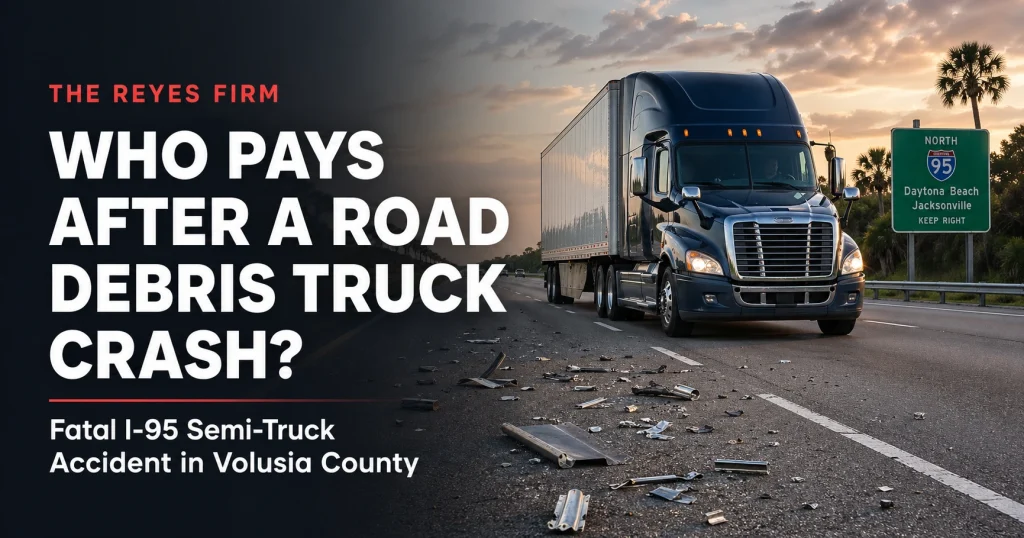
Semi-truck on I-95 in Florida with metal road debris on the highway, used for a legal blog about a fatal Volusia County semi-truck accident caused by roadway debris.
Blog, Commercial Vehicles, Legal, News, Truck Accidents

Who Pays After a Fatal Semi-Truck Accident Caused by Road Debris on I-95?

A semi-truck driver died on I-95 in Volusia County after hitting metal debris. If road debris caused your crash in Florida, learn your rights. On the evening of April 11, 2026, a truck driver was doing what millions of Floridians do every day: he was just trying to get down the road. He was northbound on I-95 in Volusia County, near Port Orange, when metal debris appeared in his lane. He swerved right to avoid it. He still hit it. The truck crossed back to the left, ran into the median, and struck several trees. The left side of the Freightliner Cascadia was torn apart. The driver was ejected and pronounced dead at the scene. The Florida Highway Patrol is still investigating. The driver’s family is left with no answers and no income. And somewhere out there, the question no one is asking on the news is: who left that metal debris on I-95? This article explains what road-debris truck crash cases in Florida actually look like, who can be held responsible, and why the clock starts running immediately. If you or your family are going through this right now, The Reyes Firm is here for you. We serve Tampa and the South Shore communities, as well as Riverview, Brandon, Plant City, and communities across Hillsborough County. We know this road and this state.  The Reyes Firm Lost Someone in a Fatal Road Debris Truck Crash? If road debris caused a fatal semi-truck accident in Florida, our team can help investigate who may be responsible. Had a bad day? Schedule a Free Consultation Quick Summary On April 11, 2026, a semi-truck driver died on northbound I-95 in Volusia County after his 2022 Freightliner Cascadia struck metal debris in the roadway and crashed into the median. Road debris crashes are not always random accidents. Someone may be legally responsible for that debris. Florida’s statute of limitations for personal injury and wrongful death claims is 2 years from the date of the crash under Florida Statute 95.11. In 2024, Florida recorded 46,651 commercial motor vehicle crashes resulting in 315 fatalities, according to FLHSMV’s By the Numbers 2024 report. If you lost a family member in a debris-related truck crash anywhere in Florida, The Reyes Firm can investigate who left that hazard on the road. Had a bad day? Call us: 833-4 BAD DAY. What Happened in the I-95 Volusia County Semi-Truck Crash? The facts, as reported by the Florida Highway Patrol: on April 11, 2026, at approximately 6:41 p.m., a semi-truck driver was traveling northbound on I-95 in the inside lane near mile marker 256 in Volusia County, in the area of Port Orange. Metal debris was blocking the roadway. The driver swerved right to avoid it, but still made contact with the debris. The truck then veered left, left the road, entered the center median, and struck multiple trees. The force of the collision tore apart the left side of the truck. The driver was ejected and killed. As of publication, the driver’s identity had not been released, pending notification of next of kin by the Medical Examiner’s Office. The crash remains under investigation. One critical question Florida Highway Patrol is working to answer: where did that metal debris come from? That answer could determine whether someone is financially responsible for this driver’s death. Crash Location Reference I-95 Northbound Near Mile Marker 256 in Volusia County, Florida According to WESH and the Florida Highway Patrol, the fatal semi-truck crash happened on I-95 northbound, just north of mile marker 256 in Volusia County, after the truck struck metal debris in the roadway.   ⚠️ Warning: Florida Statute of Limitations: Under Florida Statute § 95.11, families have only 2 years from the date of a fatal crash to file a wrongful death lawsuit. The I-95 Volusia County crash occurred on April 11, 2026. That deadline is firm. Waiting too long means losing the right to pursue compensation entirely. Evidence also disappears fast. Call a lawyer before you need to. Who Is Legally Responsible When Road Debris Causes a Fatal Crash? Road debris crashes are not always freak accidents. In many cases, someone is responsible. Florida law allows injured people and surviving family members to seek compensation from any party whose negligence created the hazard. Possible responsible parties include: Another truck or vehicle that lost its load or shed debris without securing it properly A company that failed to properly secure cargo on a commercial vehicle, violating federal FMCSA cargo securement rules under 49 CFR Part 393  A construction or road maintenance crew that left materials in an active travel lane A government entity responsible for maintaining I-95, if the debris was a known hazard that went unaddressed A third party whose negligent disposal of materials created the road hazard The challenge is identifying the source of the debris. That’s where investigation matters. Florida Statute 316.520 requires that loads transported on Florida roads be secured against falling, blowing, or shifting. A violation of this statute can be strong evidence of negligence in a debris crash case. Violations can result in civil liability, not just traffic citations. How Dangerous Is Road Debris for Commercial Trucks in Florida? More dangerous than most people realize. Florida is one of the most active commercial trucking states in the country, and its highways carry heavy freight traffic year-round. A loaded semi-truck traveling at highway speed has very little margin for error when debris suddenly appears in its lane. 💡 Did You Know? In 2024, Florida recorded 46,651 commercial motor vehicle (CMV) crashes resulting in 315 fatalities, according to FLHSMV’s By the Numbers 2024 report, preliminary as of June 2025. That works out to roughly one CMV fatality every 1.2 days somewhere in this state. Nationally, NHTSA reported 5,472 people killed in crashes involving large trucks in 2023, an 8.3% decrease from 2022. Even with that improvement, more than 15 people per day still died in large truck crashes across the U.S. Sources: FLHSMV By the Numbers 2024 | NHTSA

I-75 near Sun City Center Boulevard interchange in Hillsborough County Florida, a high-risk corridor for commercial truck crashes, for illustrative purposes only
Blog, Commercial Vehicles, Truck Accidents

Sun City Center Truck Accident Lawyer: Who Pays After a Crash on I-75 or US-301?

Hurt by a truck near Sun City Center, FL? A truck accident lawyer who knows I-75 and US-301 can help. You or someone you love was in a truck crash near Sun City Center. Maybe it happened on I-75 near the Sun City Center Boulevard interchange, or on US-301, where delivery traffic mixes with golf carts and passenger cars. The injuries are real, the insurance calls have already started, and nobody is explaining who actually pays. Sun City Center is one of Florida’s largest 55-plus communities, with a population of more than 34,000 residents and a median age of 70. The roads that run through and around it carry some of the heaviest commercial truck traffic in Hillsborough County. When a truck crash happens here, the stakes are higher than most, and the defense machinery on the trucking company’s side starts moving within hours. The Reyes Firm handles truck and commercial vehicle cases for people in Sun City Center, Ruskin, Wimauma, and throughout the South Shore communities. If a truck, semi, delivery vehicle, or commercial driver hurt you or your family, call 833-4 BAD DAY. Here is what you need to know first. Quick Summary I-75 and US-301 near Sun City Center experience constant heavy truck traffic, and crashes in this corridor are serious, often fatal. In Florida, you can pursue the trucking company, not just the driver, for failing to hire, train, or supervise safely. Black box data, dashcam footage, and dispatch records can be erased within days. An attorney must act fast to preserve them. Sun City Center’s 55-plus community faces unique risks after truck crashes, including the 14-day PIP window and interactions with pre-existing conditions. Had a bad day? Call The Reyes Firm at 833-4 BAD DAY. Why Are Truck Crashes Near Sun City Center So Dangerous? Sun City Center sits at one of the busiest commercial transport intersections in southern Hillsborough County. I-75 cuts directly through the area at Exit 240, funneling freight traffic between Tampa, Sarasota, and points south. SR-674, also called Sun City Center Boulevard, connects I-75 to US-301 and carries commercial vehicles, including phosphate mining trucks from southeast Hillsborough County, delivery fleets, and tankers. These are not just busy roads. They are high-speed corridors where 80,000-pound trucks share space with passenger cars, golf carts crossing at designated points, and residents who depend on these roads for doctor appointments, groceries, and daily life. When a loaded semi makes a wide turn at the SR-674 interchange, brakes late on a rain-slicked stretch of I-75, or rolls into a residential access road without clearance, the result can be catastrophic. Florida’s preliminary 2024 data from FLHSMV shows 381,210 codable traffic crashes statewide, resulting in 3,184 fatalities. The I-75 corridor through Hillsborough County consistently ranks among the state’s most dangerous stretches for commercial vehicle crashes. ⚠️ WARNING: Florida’s statute of limitations for personal injury claims is now generally two years for accidents occurring on or after March 24, 2023, under HB 837. For wrongful death cases, the deadline remains two years from the date of death under Florida Statute § 95.11(4). The more urgent concern is preserving evidence: black box data on commercial trucks can be overwritten in as little as 30 days. The moment you contact The Reyes Firm, we send a preservation demand to stop the clock on that critical evidence. Who Is Really Liable After a Truck Crash in Sun City Center? The driver who caused the crash is rarely the only one responsible. Behind every commercial truck on I-75 or US-301, there is a chain of decisions made by people who never touched the steering wheel. The trucking company may be liable under Florida’s respondeat superior doctrine if the driver was working at the time of the crash. But the company can also face separate liability for negligent hiring if they put a driver with a dangerous history behind the wheel, negligent training if the driver was never taught how to handle wide turns or emergency braking on high-speed corridors, and negligent maintenance if the truck’s brakes, tires, or lights were not kept to federal standards. Beyond the carrier, cargo brokers and shippers can share liability if an improperly loaded or overweight trailer contributed to a rollover or loss of control. Third-party maintenance contractors can be held accountable when mechanical failures trace back to skipped inspections. Florida’s comparative fault rules under Florida Statute Section 768.81 allow a jury to assign responsibility among all parties who contributed, which is exactly why The Reyes Firm investigates the full chain, not just the driver. 💡 DID YOU KNOW: Florida’s preliminary 2024 data from FLHSMV shows 46,651 commercial motor vehicle crashes statewide, resulting in 315 fatalities. That is nearly 128 CMV crashes every single day across Florida. Hillsborough County, which includes the I-75 and US-301 corridors through Sun City Center, consistently ranks among the state’s most dangerous counties for commercial vehicle crashes. Source: FLHSMV By the Numbers 2024 (preliminary as of June 2025), flhsmv.gov. What Is the Black Box Battle, and Why Does It Matter in Sun City Center Cases? Every commercial truck on Florida highways carries an event data recorder, also called a black box or ECM. It logs vehicle speed, braking force, steering input, throttle position, and hours of operation in the moments before and during a crash. In a Sun City Center case, that data can confirm whether the driver was speeding on I-75, whether brakes were applied in time, or whether the truck’s systems had logged prior mechanical warnings. The problem is that trucking companies control access to their own black boxes. Some systems overwrite data on a rolling 30-day cycle. Others get “serviced” after a crash in ways that conveniently delete logs. The defense investigator is often on scene within hours. Your attorney needs to move just as fast. What Happens After a Serious Commercial Vehicle Accident? After a serious truck or commercial vehicle crash near Sun City Center, many injury victims are left wondering who will pay their medical bills, repair

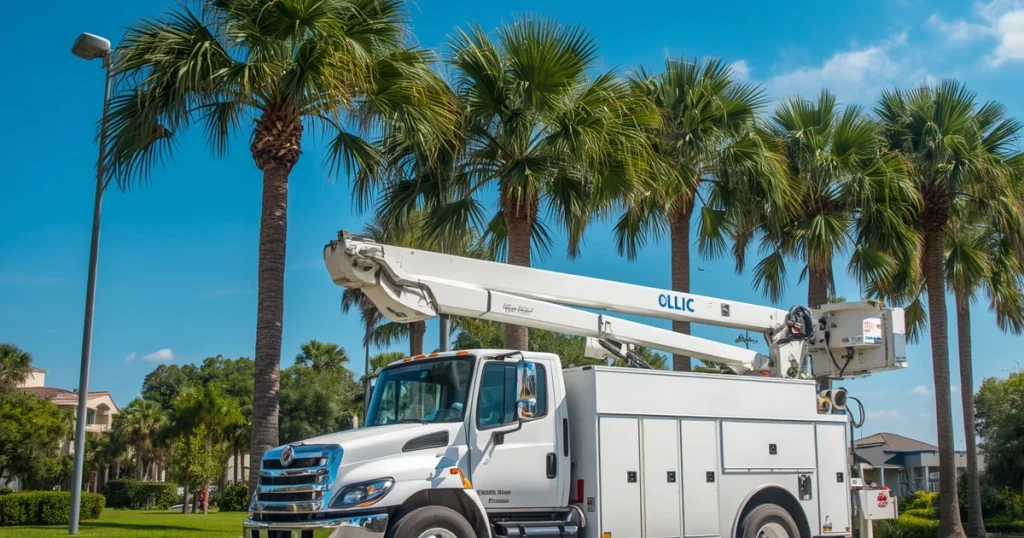
Utility bucket truck parked near a Tampa roadway after a service vehicle crash, for illustrative purposes only
Blog, Commercial Vehicles, Truck Accidents

Utility Truck Accident Lawyer in Tampa: Who Is Liable After a Service Vehicle Crash?

Hit by a utility or service vehicle in Tampa? A utility truck accident lawyer at The Reyes Firm can help you recover damages. You were heading home after a long day when a utility truck pulled out from a work zone without warning. Maybe a bucket truck was parked halfway in your lane with no cones. Maybe a cable company van blew through a red light at an intersection in Tampa and hit you before you could react. Whatever happened, you’re hurt, scared, and trying to figure out who’s actually responsible. That’s a completely reasonable place to be. Utility truck and service vehicle crashes don’t work like ordinary two-car accidents. They involve multiple companies, layered contractor relationships, and sometimes government agencies, and each already has professionals working to protect its own interests. You deserve someone in your corner doing the same for you. This article walks you through how Florida law applies to utility truck accident claims, who can be held liable, what sovereign immunity means if a government vehicle caused your crash, and what steps protect your case from day one. The Reyes Firm handles these cases across Tampa and the South Shore communities. Call 833-4 BAD DAY for a free consultation. Quick Summary Crashes involving utility trucks and service vehicles are legally complex because multiple parties, including contractors, utility companies, and sometimes government agencies, may share liability. Florida law gives you two years from the date of the crash to file a personal injury claim under Florida Statute § 95.11(3)(a). Government-entity claims require written pre-suit notice within three years, but waiting shrinks your window to act. Florida recorded 46,651 commercial motor vehicle crashes in 2024, resulting in 315 fatalities, according to the Florida Department of Highway Safety and Motor Vehicles (FLHSMV). After a crash with a utility or service vehicle, document everything, get medical care immediately, and call an attorney before speaking to any insurer. Had a bad day? Call The Reyes Firm at 833-4 BAD DAY. Free consultation, no fee unless we win. What Makes a Utility Truck Accident Different From a Regular Car Crash? Utility truck accidents involve more potential defendants than a typical two-car collision, and the evidence disappears faster. When a private driver hits you, you file a claim against that driver and their insurer. When a utility or service vehicle hits you, the list of potentially responsible parties gets longer quickly. The driver might be a direct employee of a power company, phone company, cable provider, or water utility. Or they might be an independent contractor working under a service agreement. The vehicle might be owned by the utility company, a staffing agency, or a third-party fleet company. Each of those relationships changes who you can sue and what legal theories apply. That’s exactly why calling a utility truck accident lawyer in Tampa early makes a real difference. The Reyes Firm traces liability through those layers so nothing gets missed. ⚠️ WARNING: Know Your Deadline Florida’s statute of limitations for personal injury claims is two years from the date of the accident under Florida Statute § 95.11(3)(a). Miss this deadline and you may permanently lose your right to recover damages. If the utility truck was operated by a government entity, additional pre-suit notice requirements apply and your effective window shrinks even further. Who Is Liable After a Utility Truck Hits You in Florida? More than one party can be legally responsible after a utility truck accident, and Florida law allows you to pursue all of them. Florida follows a modified comparative fault rule under Florida Statute § 768.81, which means you can recover damages as long as you are not more than 50 percent at fault for the crash. Liability depends on the relationship between the driver, the vehicle owner, and the company that directed the work. Here are the most common liable parties in utility truck accident cases: The driver, if they were distracted, speeding, failed to signal, or violated traffic laws The employer, if the driver was acting within the scope of their employment at the time of the crash, under the legal principle of respondeat superior The utility company, if it negligently hired, trained, or supervised the driver A subcontractor or staffing agency, if the driver was placed through a third-party arrangement The vehicle owner, if a mechanical defect or improper maintenance contributed to the crash Florida’s negligent entrustment doctrine also allows claims against any party that handed over a vehicle to a driver they knew, or should have known, was unfit to operate it. An experienced utility truck accident attorney in Tampa can subpoena employment records, service contracts, and vehicle ownership documents to trace that chain of responsibility before evidence disappears. What If the Utility Truck Were Operated by a Government Entity? If the truck that hit you was operated by a municipal water department, a county road crew, or any other government agency, Florida’s sovereign immunity rules apply, and the process differs from that of a standard personal injury case. Florida Statute § 768.28 waives sovereign immunity for government negligence claims but caps damages at $200,000 per person and $300,000 per incident unless the Florida Legislature grants a special appropriation. The statute also requires that you file a written pre-suit notice with the responsible government agency within three years of the incident before you can file a lawsuit. This is not optional paperwork. Missing that notice requirement bars your claim entirely. The Reyes Firm has experience navigating sovereign immunity claims in Tampa, Hillsborough County, and the surrounding communities. If you’re not sure the truck that hit you was government-operated, we can find out quickly and make sure your rights are protected before any deadline passes. 🛡️ YOUR RIGHTS UNDER FLORIDA LAW: Florida Statute § 768.28 allows injury victims to sue state and local government entities for negligence, but strict notice deadlines and damage caps apply. If a government utility vehicle caused your crash, you have legal rights. Those rights come with tight timelines you cannot afford to

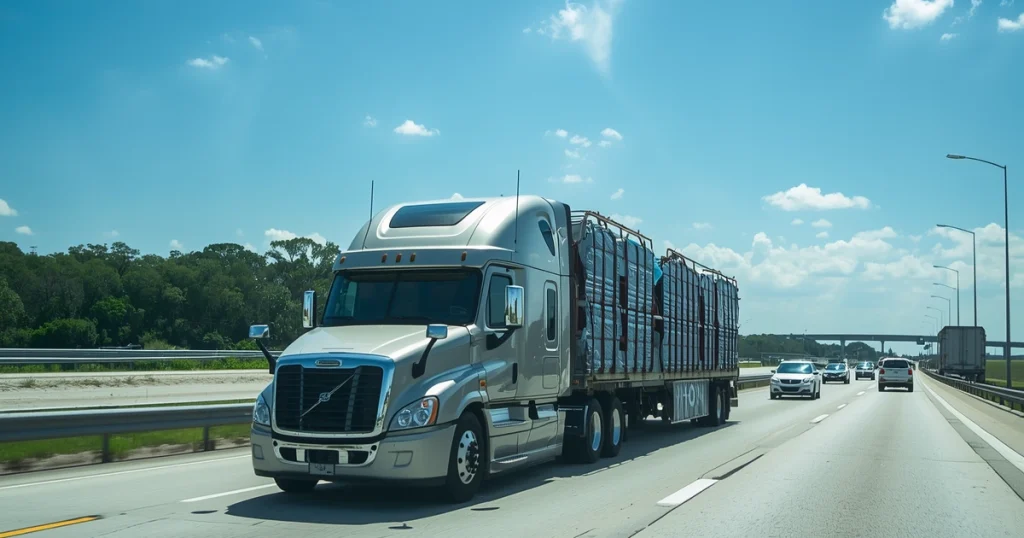
Heavily loaded commercial semi-truck on a Tampa highway, illustrating an overloaded truck accident case in Florida
Blog, Commercial Vehicles, Truck Accidents

Overloaded Truck Crash Lawsuits in Tampa: Deadline, Proof, and Liability

Florida generally gives you two years from the crash date to file a negligence lawsuit after an overloaded truck accident. A lawyer can use weigh station records, cargo manifests, bills of lading, onboard data, and crash reconstruction to prove excess weight, link it to the collision, and identify every party that may be liable. You never saw it coming. One moment, you were driving home on I-275 or sitting at a light on a Hillsborough County road. Next, a massive overloaded truck lost control, couldn’t stop in time, or rolled over right into your lane. Now you’re in pain. The insurance company is calling. And nobody at the trucking company is telling you what was actually in that trailer or how much it weighed. Here is what you need to know. When a commercial truck in Tampa, Florida, carries more weight than the law allows, that violation is not just a fine. It is evidence. It can show who caused your crash, why the truck behaved the way it did, and who owes you compensation for what you’ve been through. This article explains how Florida’s truck weight laws connect directly to your injury claim, who can be held responsible, and what a lawyer can actually do to prove it. Quick Summary When a truck carries more weight than Florida law allows, the trucking company, the cargo loader, and others can all be held responsible for your injuries. Florida law gives you 2 years from the date of your crash to file a personal injury lawsuit under Florida Florida Statute § 95.11(5)(a). That clock starts the day of the crash. Hillsborough County records approximately 59 commercial truck crash injuries per 100,000 residents, the highest per-capita rate in Florida, according to FLHSMV data. Call a Tampa truck accident attorney as soon as possible. Weight violation evidence disappears fast, including weigh station records, cargo manifests, and onboard computer data. An overloaded truck claim usually involves preserving cargo and weight records, identifying every responsible party and insurance policy, documenting your losses, and filing a lawsuit if a fair settlement is not reached before the deadline. The Reyes Firm Injured in a Tampa Overloaded Truck Crash? Cargo records, weigh station logs, and onboard data may not last forever. Speak with The Reyes Firm today. Talk to The Reyes Firm What Does It Mean When a Truck Is “Overloaded” Under Florida Law? A truck is overloaded under Florida law when it carries more weight than Florida Statute § 316.535 allows: a maximum gross weight of 80,000 pounds and 20,000 pounds per single axle. That limit exists specifically to protect people on the road. When a truck blows past it, the laws of physics change in ways that can kill you. An overloaded truck does not just weigh more. It behaves differently in every situation a driver faces: It takes much longer to stop. A fully loaded 80,000-pound truck already needs up to 525 feet to stop at highway speed. Add 15,000 illegal pounds, and that distance grows even further. Its brakes overheat faster. Braking systems are rated for specific loads. Excess weight causes brake fade, sometimes within a single long downgrade on I-75 or I-4. Its tires blow out more easily. Each tire carries a rated load. Overloading pushes tires past that rating, and a blowout on a loaded semi at highway speed is catastrophic. It rolls over more readily. Extra weight raises the truck’s center of gravity. On curves, ramps, and emergency maneuvers, that means rollovers. Its cargo can shift. Weight not properly distributed across the axles shifts during braking and turning, throwing the truck sideways. ⚠️ Warning: Florida Statute § 95.11(5)(a) gives most injury victims 2 years from the date of their crash to file a personal injury lawsuit. This deadline applies to truck accidents, including crashes caused by overloaded or overweight commercial vehicles. Florida reduced this deadline from 4 years in March 2023. If your crash happened after March 24, 2023, the 2-year clock applies to you. Missing it means losing your right to compensation entirely. Call The Reyes Firm at 833-4 BAD DAY before that window closes. Source:Florida Statute § 95.11(5)(a). Who Is Liable When a Truck Is Carrying Too Much Weight and Causes a Crash? Multiple parties can be responsible when an overloaded truck causes a crash in Florida, not just the driver. This is one of the most important things to understand about commercial truck cases. The person behind the wheel is often the last person who made the decision that hurt you. Here is who an attorney investigates in an overloaded truck case: The trucking company. Carriers set the schedules, own or lease the trucks, and control dispatch. If the company pressured a driver into taking an overweight load to meet a deadline, it would be liable. Under federal law, commercial carriers must also maintain minimum insurance of $750,000 for general freight under 49 CFR Part 387. In practice, policies are often far higher. The cargo loader or shipper. The company that packed and loaded the trailer controls how the weight is distributed across axles. If they overloaded the trailer or improperly distributed weight, they can be held responsible even if they never drove the truck or directly caused the crash. The cargo broker. Brokers arrange shipments between shippers and carriers. When a broker pushes a carrier to move a load that exceeds legal limits or arranges a shipment with impossible delivery windows that incentivize overloading, they can share liability. The driver. Commercial drivers are required to inspect their own loads under FMCSA regulations. A driver who signs off on a weigh ticket or skips a weigh station bears personal responsibility as well. The Reyes Firm investigates all of these parties. We never assume it is just the driver. Can a Lawyer Prove the Truck’s Cargo Weight Violated Safety Laws? Yes. A truck accident attorney can prove a weight violation using multiple categories of evidence, many of which are in the trucking company’s own records. The challenge is getting

18-wheeler traveling on US 41 near Ruskin Florida, for illustrative purposes only
Blog, Truck Accidents

Ruskin Truck Accident Lawyer: What You Need to Know After a Crash

You didn’t expect your day to go like this. Maybe you were heading south on US 41 toward Ruskin, or merging onto I-75 near the Ruskin exits, when a truck came out of nowhere and changed everything. Your car is destroyed. Your body hurts in ways you can’t fully describe yet. Your phone is blowing up with calls from an insurance adjuster you’ve never spoken to before. And somewhere in the back of your mind, you’re wondering: do I need a lawyer? Is this really that serious? If a commercial truck was involved in your crash, a semi, 18-wheeler, dump truck, delivery van, tractor-trailer, or any vehicle operated in the course of business, the answer is yes. This situation is more serious than a typical car accident in every legally relevant way. These cases involve different laws, different evidence, multiple responsible parties, and insurance companies with experienced teams who start building their defense before you even leave the hospital. This guide is for you. It covers what truck accident victims in Ruskin and the South Shore communities actually need to know: the evidence that disappears fast, the federal rules that apply to trucking companies, how insurance really works in these cases, what your injuries may be worth, and what deadlines you cannot miss. The Reyes Firm serves Tampa, Ruskin, and the South Shore communities, and we’ve built this resource so you walk into any conversation with any lawyer or any insurer knowing your rights. Quick Summary If a semi, 18-wheeler, delivery truck, or any commercial vehicle hurt you near Ruskin, Florida, you have legal rights, and time limits apply. Florida’s statute of limitations for most personal injury claims is 2 years from the date of your accident under Florida Statute § 95.11(3)(a). Miss that window, and you may permanently lose your right to recover any compensation. Florida recorded 46,651 commercial motor vehicle crashes in 2024, resulting in 315 fatalities. Hillsborough County alone recorded 3,083 CMV crashes in 2023. (Source: FLHSMV) Call a lawyer before you talk to the trucking company’s insurer. They have professionals working the case from day one. You deserve the same. Had a bad day? Call The Reyes Firm at 833-4 BAD DAY. Free consultation, no fee unless we win. The Reyes Firm Hurt in a Truck Accident Near Ruskin? Get clear next steps after a serious crash. Had a bad day? Contact Us Now Why Are Truck Accidents on US 41 and I-75 Near Ruskin So Dangerous?   US 41 through Ruskin, Gibsonton, and the surrounding South Shore communities is one of the most consistently dangerous corridors in Hillsborough County for serious crashes involving commercial vehicles. The road mixes heavy freight traffic with local commuters, turning traffic, pedestrians, and cyclists. Tanker trucks, flatbeds, dump trucks, and delivery vehicles use this corridor every single day. The posted speed limits, the number of driveways and intersections, and the sheer volume of trucks create a constant risk of collisions. The numbers confirm what South Shore residents already feel in their gut. Hillsborough County recorded 3,083 commercial motor vehicle crashes in 2023, resulting in 16 fatalities and 916 injuries, according to FLHSMV’s 2023 Traffic Crash Facts report. The county records one of the highest truck-crash injury rates per capita in the entire state, exceeding 59 injuries per 100,000 residents. That rate surpasses Miami-Dade County, which has a much larger population. I-75 adds another layer of danger. Freight traffic runs constantly through South Hillsborough County along this corridor. Trucks entering and exiting at the South Shore interchanges interact with local drivers who may not anticipate heavy vehicles’ stopping distances or their blind spots. Driver fatigue is a major factor on I-75. A truck driver who has been behind the wheel for 10 hours can have reaction times comparable to a legally drunk driver, and the federal rules meant to prevent that don’t work when companies pressure drivers to push past their limits. Beyond US 41 and I-75, local roads like Shell Point Road and SR 674 carry significant commercial traffic, serving the distribution centers, construction sites, and agricultural operations common to this part of Hillsborough County. Any of those roads can be the site of a serious truck crash. 💡 Did You Know? Florida recorded 46,651 commercial motor vehicle crashes in 2024, resulting in 315 fatalities, nearly 10% of all traffic deaths in the state that year. According to NHTSA’s 2023 data, 5,472 people were killed nationally in crashes involving large trucks. That’s roughly 15 people every single day. (Source: Florida Department of Highway Safety and Motor Vehicles, flhsmv.gov; National Highway Traffic Safety Administration, nhtsa.gov) What Should I Do Right After a Truck Accident in Ruskin, Florida?   The steps you take in the first 24 to 72 hours after a truck crash can determine how strong your case is. Here’s what to do and why each step matters. 1. Call 911 and stay at the scene. A police report creates an official record of the crash, the vehicles involved, and the initial statements of everyone present. Get the crash report number before you leave. You’ll need it to request the full report later. 2. Get medical care immediately, even if you feel okay. Adrenaline is powerful. Spinal injuries, traumatic brain injuries, and internal bleeding often don’t produce obvious pain in the first hours after a crash. Many truck accident victims feel fine at the scene and wake up the next day unable to move. If you wait days to see a doctor, the insurance company will argue your injuries weren’t caused by the crash. Go to the emergency room or an urgent care center the same day. 3. Document everything you can at the scene. Photograph the truck from multiple angles, including the company name on the cab and trailer, the license plate, the DOT number on the door, and any visible damage. Get photos of your vehicle, the road, skid marks, traffic signs, and your injuries. If there are witnesses, get their names and phone numbers before they leave.

Unsecured cargo timber logs protruding from the rear of a flatbed truck on a Florida highway, for illustrative purposes only
Blog, News, Truck Accidents

Unsecured Cargo Truck Accidents in Florida: Lawsuit Deadlines and Liability

Picture this. You’re driving south on US-98 just north of Lakeland, following a big Mack truck hauling a load of timber. The truck slows to turn. You don’t notice in time. The logs extending from the rear of that trailer come straight through your windshield. That’s exactly what happened on April 2, 2026, in Polk County, Florida. A 44-year-old driver was killed when timber pierced his cab and caused a hazardous materials spill. Investigators said the load met safety requirements. The crash remained under investigation, with no charges expected. That last part should stop you cold. Even a “legally secured” load can kill someone, and the question of who bears legal responsibility in unsecured cargo truck accident cases in Florida is rarely simple. This article breaks down every party who may owe you damages, what the FMCSA cargo securement rules actually require, and what a Tampa family should do right now if they’ve been hurt or lost someone to a falling or protruding load. Quick Summary When cargo falls from or protrudes from a truck in Florida, the driver, the trucking company, the cargo loader, and others can all share legal liability. Florida’s statute of limitations gives most injury victims 2 years from the date of the crash to file a claim under Florida Statute § 95.11(3)(a). Miss it, and you lose your right to sue. According to NHTSA data, unsecured loads and road debris caused 715 deaths and 16,595 injuries nationwide in a single year, and about two-thirds of debris crashes come from vehicles with improperly secured loads. Call 911, document everything at the scene, and do not give the trucking company’s insurer a recorded statement before you talk to a lawyer. Had a bad day? Call The Reyes Firm at 833-4 BAD DAY — free consultation, no fee unless we win. The Reyes Firm Hurt in a Florida Truck Accident? Get clear next steps after a serious cargo, timber, or semi-truck crash. Had a bad day? Schedule a Free Consultation Polk County Fatal Timber Truck Crash on US-98 April 2, 2026 | US-98 North at State Road 471, Polk County, FL On the morning of April 2, 2026, a 44-year-old commercial truck driver was killed on US-98 North near State Road 471, approximately 10 miles north of Lakeland. According to the Polk County Sheriff’s Office, he was traveling southbound behind a Mack truck hauling timber when the timber truck slowed to turn. His semi-truck struck the load of timber protruding from the rear of the trailer. Large pieces of timber pierced his cab, triggering a hazardous materials spill that closed the road for roughly seven hours. The timber truck driver was not injured. Investigators reported the load met safety requirements. No charges were expected, and the crash remained under investigation. Crashes like this one raise an immediate question for surviving families and injured victims: when a load is declared compliant, but someone still dies, who is legally responsible? Who Is Liable When Cargo Falls Off a Truck in Florida? Multiple parties can share legal liability when cargo causes a crash, and Florida law lets you pursue all of them at once. Florida follows modified comparative fault under Florida Statute § 768.81. That means even if you were partially at fault for the crash, you can still recover damages, as long as your share of fault is 50% or less. The liability for an unsecured cargo crash typically spreads across some combination of these parties: The truck driver, who has a duty to inspect and re-check the load The motor carrier (trucking company), which is responsible for training, equipment, and compliance The cargo loader or shipper, who may have improperly stacked, strapped, or distributed the load before the truck ever left the yard A broker, who scheduled the haul and may have pressured the carrier to move faster than was safe A maintenance company, if defective tiedowns, chains, or binders contributed to the load shifting Watch: Who Can Be Liable in a Florida Truck Accident? In serious truck accident cases, liability may extend beyond the driver. This video explains how the trucking company, trailer owner, cargo loader, maintenance company, and other commercial parties may also be held responsible after a crash involving a timber truck, an unsecured load, or a semi-truck. One of the most common mistakes families make is assuming only the driver is at fault. The companies behind the driver start protecting themselves the moment a crash happens. You need someone protecting you just as fast. ⚠️ Important Florida’s statute of limitations for personal injury and wrongful death claims is 2 years from the date of the accident under Florida Statute § 95.11(3)(a). If a family member was killed in a cargo crash, the wrongful death clock also runs 2 years from the date of death under Florida Statute § 95.11(4). Miss this deadline, and you permanently lose your right to recover damages. Call a lawyer now, not after your next paycheck clears. What Are the FMCSA Rules for Cargo Securement on Log and Timber Trucks? Federal law sets strict rules for how logs, lumber, and timber must be secured, and violating those rules can establish negligence in your lawsuit. The Federal Motor Carrier Safety Administration (FMCSA) adopted specific cargo securement standards under 49 CFR Part 393, Subpart I. General cargo must be firmly secured to prevent it from shifting, falling, blowing away, or becoming a road hazard. For logs and timber specifically, 49 CFR § 393.116 goes even further: The truck must be designed or adapted for transporting logs, and fitted with bunks, bolsters, stakes, or standards to cradle the load and prevent rolling Tiedowns must be used alongside those structural components The aggregate working load limit of all tiedowns must equal at least one-sixth the weight of the log stack Logs must be solidly packed, with each outside log touching at least two stakes, bunks, bolsters, or standards Drivers must inspect the cargo within the first 50 miles of a trip, then reexamine it

Company pickup truck involved in a crash on a Tampa Florida road, for illustrative purposes only
Blog, Truck Accidents

Company Pickup Truck Accident Lawyer Tampa: Can the Employer Be Responsible?

You’re sitting in the ER, or maybe you just got home and can barely move. A pickup truck with a company logo on the door ran a red light and hit you. The driver handed over their info. But here’s what nobody told you yet: there may be another party responsible, and they already have professionals working against you. This is not a regular car crash. When an employee causes a wreck while on the job, the employer often shares the legal and financial responsibility. That changes everything, including who you can pursue, what insurance is available, and what your case is worth. The Reyes Firm focuses on exactly these cases. We represent people hurt by company trucks, work vehicles, semis, delivery trucks, dump trucks, and any vehicle driven in the course of business across Tampa, Hillsborough County, and the South Shore communities, including Riverview, Brandon, and Plant City. This guide explains how employer liability works in Florida, what legal doctrines apply, and what steps to take right now. The Reyes Firm Hurt in a Company Pickup Truck Accident in Tampa? Get clear next steps after a serious crash involving a company vehicle. Had a bad day? Schedule Your Free Consultation Quick Summary In Florida, an employer can be legally responsible when their employee causes a crash in a company pickup truck. Florida’s 2-year statute of limitations under Florida Statute 95.11(3)(a) means you must act immediately to protect your claim. Hillsborough County recorded 3,083 commercial motor vehicle crashes in 2023, with 916 people injured. (Source: FLHSMV) Do not give a recorded statement to the company’s insurer before speaking with a lawyer. Had a bad day? Call The Reyes Firm at 833-4 BAD DAY. Free consultation, no fee unless we win. Can an Employer Be Legally Responsible for a Company Pickup Truck Accident in Florida? Yes. An employer in Florida can be held responsible for a crash caused by their employee if the employee was acting within the scope of their job at the time of the accident. This legal principle is called respondeat superior, which simply means “let the master answer” for what the employee did. If the company sends that driver out on a work errand, to make deliveries, handle service calls, or perform any job-related task, the company can be on the hook for the crash. You are not just pursuing a driver who may have minimal personal insurance. You are pursuing the business and the commercial insurance policy behind it. That distinction matters enormously in Florida. The Insurance Information Institute reports Florida’s uninsured motorist rate at 20.6% for 2023. Company trucks and work vehicles are far more likely to carry meaningful commercial coverage with higher policy limits than personal auto policies. When a company pickup is involved, there is usually a real policy worth fighting for. ⚠️ Important Florida’s statute of limitations for personal injury claims is 2 years from the date of your accident under Florida Statute 95.11(3)(a). Miss that deadline and you permanently lose your right to seek compensation. The clock starts the day of your crash, not the day you decide to act. What Is “Course and Scope of Employment” and Why Does It Matter? The course and scope of employment is the legal standard Florida courts use to decide whether an employer shares responsibility for what its employee did. If the driver was on company time, behind the wheel of a company vehicle, and engaged in work-related activity, a court will likely hold the employer liable. This applies across more industries than most people realize. It covers an HVAC technician driving between service calls, a landscaping crew member heading to a job site, a plumber making a supply run, a construction worker transporting equipment, and a sales rep traveling to a client meeting. Any vehicle driven in the course of business falls under this analysis. The question courts ask is simple: Was the driver doing something that benefited the company when the crash happened? If the answer is yes, or even probably yes, you may have a direct claim against the employer, not just the driver. 💡 Did You Know? According to FLHSMV, Florida recorded 381,210 traffic crashes in 2024, more than 1,000 every single day. In Hillsborough County alone, which includes Tampa, there were 3,083 commercial motor vehicle crashes in 2023, resulting in 916 injuries and 16 fatalities. Hillsborough also carries the highest per-capita commercial vehicle crash injury rate in Florida, roughly 59 injuries per 100,000 residents, higher than Miami-Dade’s 47. What if the Driver Was Off Duty or running personal errands? This is where cases get more complicated, but the answer is not always what the company wants you to believe. Florida courts recognize a doctrine called “frolic and detour.” If an employee takes a significant personal detour from their work duties, an employer may argue that it bears no responsibility for that trip. However, minor personal detours frequently remain within the employer’s legal liability. Stopping for gas on the way to a job site, grabbing lunch between service calls, or making a quick personal stop while still on the clock often does not break the chain of employer responsibility under Florida law. Do not take the company’s word for what their driver was doing. An experienced company pickup truck accident attorney can pull dispatch records, GPS and telematics data, driver logs, and communications to build the real picture of that driver’s day. The Reyes Firm investigates the company behind the driver, not just the driver. What Is Negligent Entrustment and When Does It Apply? Negligent entrustment is a separate legal theory that can hold an employer responsible regardless of what the driver was doing at the time of the crash. It applies when a company provides a vehicle to a driver they knew or should have known was unsafe to be behind the wheel. If the employer handed the keys to a driver with a history of DUIs, a suspended license, prior accidents on record, or other documented red

Company-branded work van involved in a business vehicle accident in Tampa
Blog, Commercial Vehicles, Company-Caused Car Accidents, Truck Accidents

Business Vehicle Accident Lawyer in Tampa: What to Do When a Company Car Causes Your Crash

You’re stopped at a light. A van with a company logo on the door blows through and hits you. That logo matters more than you might think. When a crash involves a company car, a delivery truck, or any vehicle driven for business purposes, the legal picture changes quickly. There may be more insurance coverage available. There may be corporate liability. And there will almost certainly be a well-funded defense team working against you from day one. This guide explains how business vehicle accident cases work in Tampa, who can be held responsible, what Florida law says about your rights, and when to call a business vehicle accident lawyer. The Reyes Firm Hurt in a Business Vehicle Accident in Tampa? If a company car, work truck, or delivery vehicle caused your crash, get clear next steps today. Had a bad day? Schedule Your Free Consultation Quick Summary If a company driver caused your crash, you may have a claim against both the driver and their employer. Florida gives you 2 years to file under Florida Statute § 95.11(3)(a). That clock starts on the day of the crash. Florida recorded 381,210 crashes in 2024, more than 1,000 every single day, and business vehicles are on those roads constantly. Get medical care today. Document everything. Call a lawyer before you speak to any insurance company. Had a bad day? Call The Reyes Firm at 833-4 BAD DAY. Free consultation. No fee unless we win. What Is a Business Vehicle Accident? A business vehicle accident is any crash involving a vehicle being used for work purposes at the time of the collision. This includes company-owned cars, fleet trucks, delivery vans, work pickups, and personal vehicles driven for business errands. If the driver was on the clock or acting on behalf of their employer when the crash happened, the company may share legal responsibility. That legal principle is called vicarious liability. It means an employer can be held accountable for harm caused by an employee who was doing their job at the time. Did You Know? Florida recorded 381,210 traffic crashes in 2024, more than 1,000 every single day. Business vehicles, fleet trucks, and delivery vans are part of that number year-round. Who Can Be Held Liable After a Company Car Crash in Florida? More than one party can be liable, and identifying all of them is one of the first things a business vehicle accident lawyer does. Potentially responsible parties include: The driver, if they were speeding, distracted, or otherwise negligent The employer or company, if the driver was acting within the scope of their job A staffing or temp agency, if the driver was placed by a third party A vehicle maintenance company, if a mechanical failure contributed to the crash The vehicle manufacturer, in cases involving a defective part Florida follows a modified comparative fault rule under Florida Statute § 768.81. Your compensation can be reduced by your percentage of fault. If you are found more than 50% at fault, you lose the right to recover anything at all. This is why you should never accept or admit fault, even casually, before speaking to an attorney. Important Florida’s statute of limitations for personal injury claims is 2 years from the date of the accident under Florida Statute § 95.11(3)(a). Miss that deadline and you permanently lose your right to file, no matter how strong your case is. What Does “Scope of Employment” Mean, and Why Does It Matter? The scope of employment determines whether the employer is legally responsible for what their driver did. In plain terms, it asks: was the driver doing something work-related when the crash happened? A delivery driver who hits you during a drop-off is clearly within scope. A salesperson who hits you while running a personal errand during their lunch break is a closer call. Key distinctions Florida courts examine: Commuting: Driving to and from work is generally not considered scope of employment, unless the employee is in a company vehicle or travel is part of the job Minor detours: Stopping for coffee on a work route may still keep the employer liable Major departures: Driving far off-route for personal reasons may break the employer’s liability Borrowed vehicles: If an employer permits someone to drive a company car, liability can follow the vehicle An attorney will dig into driver logs, GPS records, dispatch data, and the employment agreement to build the full picture. What Should You Do Right After a Business Vehicle Crash in Tampa? Act quickly. The company and its insurer may begin their own investigation within hours of the crash. Steps to take immediately: Call 911 and get a police report filed at the scene Photograph the vehicles, road, skid marks, the company logo on the other vehicle, and your injuries Write down the driver’s name, license, insurance, and their employer’s name Get contact information from any witnesses before they leave Seek medical care the same day, even if you feel okay Do not give a recorded statement to any insurance company before speaking to a lawyer That last step is especially important. Corporate insurers are experienced at using your own words to minimize your claim. You are not required to speak with them before you have legal representation. Your Rights Under Florida Law Florida Statute § 627.736 requires Personal Injury Protection (PIP) coverage on all registered Florida vehicles. Your own insurance covers the first $10,000 of medical bills and lost wages regardless of fault. But PIP has limits. Serious injuries often require pursuing full tort recovery beyond PIP, which a business vehicle accident claim can provide. How Much Can You Recover in a Business Vehicle Accident Claim? Business vehicle claims often recover more than standard car accident claims because corporate defendants typically carry commercial auto policies with higher limits. If the company was also negligent in hiring, training, or supervising the driver, you may be able to pursue additional damages on that basis as well. Recoverable damages in a Florida business vehicle

Scroll to Top