Truck Accidents

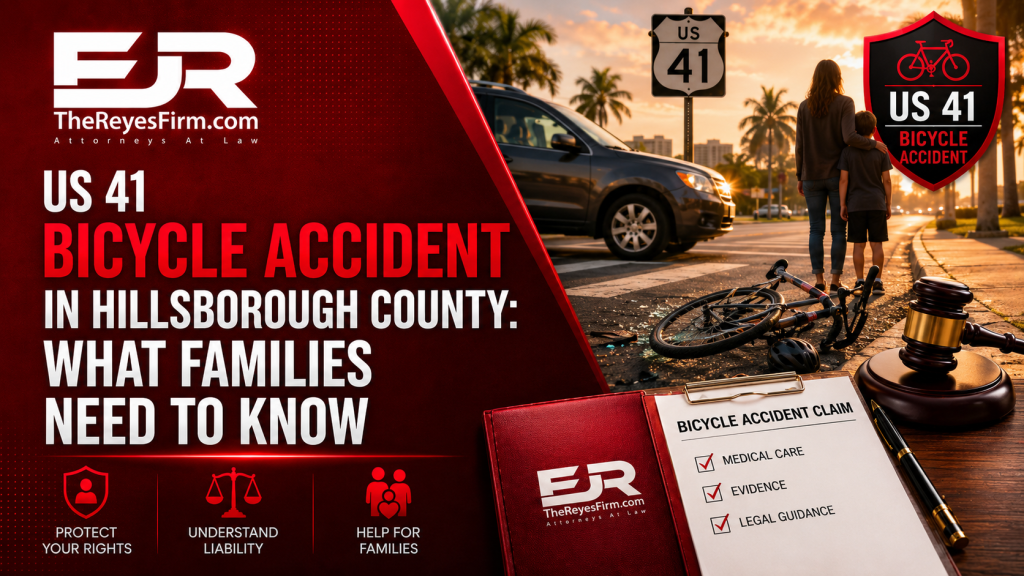
US 41 Bicycle Accident in Hillsborough County: What Families Need to Know
Accident Injuries & why, After A Car Accident, Truck Accidents

US 41 Bicycle Accident in Hillsborough County: What Families Need to Know

You were just trying to cross the street on your bike. Then a semi-truck on US 41 changed everything for your family. Now FHP is still investigating, a second driver fled the scene, and the trucking company’s insurance team is already working to protect their interests. Here’s what you need to know before you say another word to them. TL;DR — QUICK SUMMARY A 49-year-old bicyclist from Brandon was killed on US 41 near 24th Avenue South in the Palm River–Clair Mel area on November 11, 2025, after being struck by a northbound Volvo semi-truck and then run over by a hit-and-run pickup truck. Multiple parties may share liability — the semi-truck driver, the trucking company, the unidentified hit-and-run driver, and potentially the government entity responsible for the roadway’s design. Under Florida Statute § 768.81, fault is shared on a modified comparative basis, and a family may be barred from recovery if the cyclist is found greater than 50% responsible. The deadline to file a wrongful death lawsuit in Florida is two years from the date of death under Florida Statute § 95.11(4)(e) — and trucking evidence like ELD data and dashcam footage can be overwritten in weeks. If the hit-and-run driver is never identified, the family’s own Uninsured Motorist (UM) coverage may still provide compensation. The Reyes Firm Lost a Loved One in a US 41 Bicycle Crash in Hillsborough? Get clear next steps after a fatal Tampa bicycle crash. Had a bad day? Contact Us Now 46,651 Florida CMV crashes in 2024 FLHSMV By the Numbers 2024 2 Years FL wrongful death deadline Fla. Stat. § 95.11(4)(e) $750K+ FMCSA min. liability coverage 49 C.F.R. § 387.9 315 CMV fatalities in Florida, 2024 FLHSMV By the Numbers 2024 What happened in the fatal US 41 bicycle accident in Hillsborough County? On the evening of November 11, 2025, a 49-year-old Brandon man riding his bicycle was killed in a two-vehicle crash on U.S. Highway 41 near 24th Avenue South in the Palm River–Clair Mel area. According to the Florida Highway Patrol, the crash happened at approximately 6:45 p.m. as the cyclist attempted to cross the highway and was struck by a Volvo semi-truck heading northbound, driven by a 53-year-old Tampa man who stopped at the scene and cooperated with investigators. FHP later disclosed a second, devastating detail: while the bicyclist was still in the roadway after the initial impact, a dark-colored pickup truck ran over him and fled the scene without stopping. Troopers are still searching for that hit-and-run driver, which means this case now involves a criminal investigation alongside the civil claims a family may pursue. Can a family sue a trucking company after a fatal US 41 bicycle crash in Tampa? Yes — when a commercial truck kills a bicyclist on a Florida roadway, the surviving family members can bring a wrongful death lawsuit against the driver, the trucking company, and any other party whose negligence contributed to the crash. Florida’s wrongful death statute allows close family members and the estate to seek damages for medical and funeral expenses, lost financial support, lost services, and the emotional losses that follow a sudden death. In a crash involving a semi-truck and a hit-and-run vehicle, more than one defendant is usually on the hook. The semi-truck driver and his employer can be held responsible for the initial impact. The hit-and-run pickup driver, once identified, can be held both criminally and civilly liable for fleeing. And if the road itself was unreasonably dangerous — poor lighting, no safe crossing for cyclists, inadequate signage — a public entity may share fault. ⚠️ Deadline Warning: Under Florida Statute § 95.11(4)(e), a wrongful death claim in Florida generally must be filed within two years of the date of death. Missing this deadline almost always means losing your family’s right to recover anything. Don’t wait to call a lawyer — trucking evidence disappears even faster than the statute runs. Why do US 41 truck crash cases move faster than most families realize? The most important evidence in a US 41 bicycle crash starts disappearing within days. Modern semi-trucks generate dashcam video, electronic logging device (ELD) data, GPS telematics, and engine control module readings — and most of it is overwritten or recycled on a fixed retention schedule unless someone formally demands it be preserved. Many businesses along the US 41 corridor also have exterior security cameras, but their footage is typically deleted in 7 to 30 days. At the same time, the trucking company’s insurance team and rapid-response investigators are usually on scene before a grieving family has even processed the news. They photograph, measure, and interview while memories are fresh — building a defense before any plaintiff’s attorney is involved. The longer a family waits to call a lawyer, the more lopsided the case becomes. 💡 Did You Know? According to FLHSMV’s 2024 “By the Numbers” report, Florida recorded 46,651 commercial motor vehicle crashes in 2024, resulting in 315 fatalities. That’s nearly 128 CMV crashes every single day across Florida’s roads. Source: FLHSMV By the Numbers 2024, flhsmv.gov. Note: 2024 crash numbers are preliminary. Why is US 41 so dangerous for bicyclists in Hillsborough County? U.S. 41 ranks among the deadliest highways in the United States, and the stretch through Palm River–Clair Mel is one of its most hostile sections for anyone outside a passenger vehicle. The road is lined with warehouses, distribution centers, and industrial sites that send hundreds of tractor-trailers in and out every day, mixing high-volume truck traffic with high posted speeds and limited dedicated bicycle infrastructure. Two physical realities make this combination especially deadly. Large trucks carry significant blind spots along the front, sides, and rear where a cyclist can sit completely invisible to the driver. And a fully loaded semi-truck moving at highway speeds needs the length of a football field or more to stop. When poor lighting, sparse pedestrian crossings, and aggressive truck traffic come together on the same corridor, a cyclist who is doing everything right

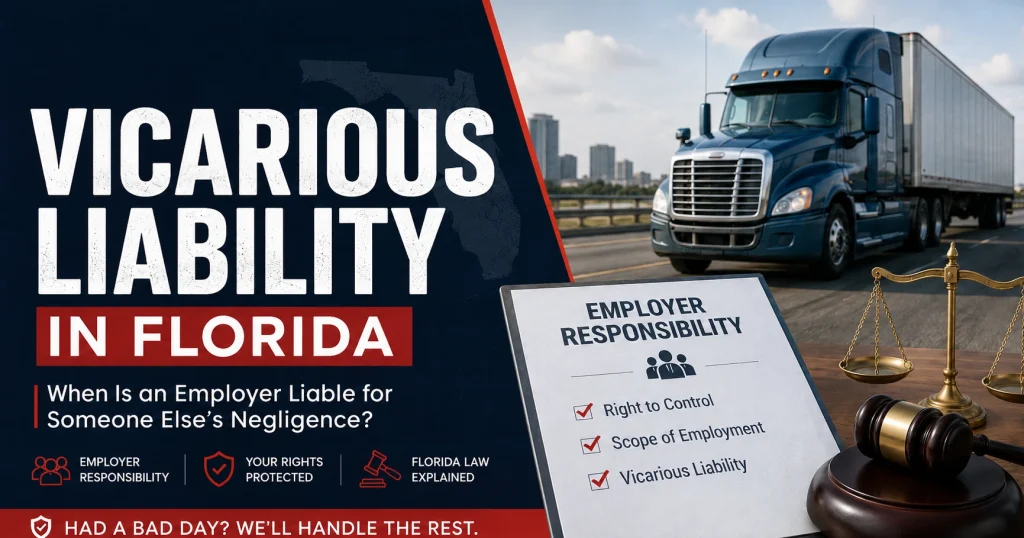
Illustration of a fiery Hernando County truck crash involving a Zephyrhills driver, created for a legal article about fatal commercial truck accidents in Florida.
Blog, News, Truck Accidents

Zephyrhills Driver Killed in Hernando County Truck Crash

A 27-year-old driver from Zephyrhills died after a fiery head-on collision involving a tractor-trailer in Hernando County, according to a news report citing the Florida Highway Patrol. The crash happened around 2:00 a.m. on May 22, 2026, on Treiman Boulevard just north of Belt Drive.  The report states that the Volkswagen Jetta was traveling southbound while a tractor-trailer driven by a 47-year-old man from Georgia was traveling northbound. FHP reported that the Volkswagen crossed the center line into the northbound lane and collided directly with the tractor-trailer. The impact caused the semi-truck to catch fire. Both drivers and a 52-year-old Georgia woman who was riding in the tractor-trailer were taken to area hospitals. The Zephyrhills driver later died from her injuries.  FHP had not released the names of those involved or additional details about why the vehicle crossed into oncoming traffic. That matters. Early crash reports can describe what appears to have happened, but they do not always explain why. For grieving families, that “why” can make all the difference. What Do We Know About the Hernando County Fiery Truck Crash? Based on the available public report, the crash involved a Volkswagen Jetta and a tractor-trailer on Treiman Boulevard in Hernando County. The collision was head-on, the tractor-trailer caught fire, and three people were transported to area hospitals. The Zephyrhills driver later died.  At this stage, the most important point is this: no one should assume the full legal cause of the crash based only on the first news report. Even when an initial report states that one vehicle crossed the center line, investigators may still need to determine the cause of that movement. Possible factors include distraction, fatigue, impairment, a medical emergency, poor visibility, road design, roadway debris, mechanical failure, evasive action, or other unknown factors. In a fatal truck crash, the investigation may include: Vehicle positioning and final rest locations Skid marks, gouge marks, debris fields, and burn patterns Speed and braking evidence Roadway design, lighting, and lane markings Driver statements and witness accounts Truck inspection and maintenance records Electronic logging device data Engine control module or “black box” data Dashcam, surveillance, or nearby traffic footage This kind of evidence can disappear quickly. That is why families should act promptly if they need answers after a fatal commercial vehicle crash. The crash was reported on Treiman Boulevard just north of Belt Drive in Hernando County, Florida. The map below shows the general area of the reported incident location. ⚠️ Warning: Florida law gives families only a limited time to bring certain wrongful death claims. Florida Statute § 95.11 provides a two-year limitations period for wrongful death actions. In truck crash cases, key evidence such as electronic logging data, dashcam footage, and vehicle data may be overwritten much sooner. Families should not wait to ask legal questions. Why Can Hernando County Truck Crashes Be So Serious? Hernando County sits within a larger Tampa Bay and Nature Coast traffic region where passenger vehicles, commercial trucks, construction vehicles, and out-of-state carriers often share the same roads. Treiman Boulevard, U.S. 19, I-75, the Suncoast Parkway, and nearby routes help connect Hernando County with Pasco County, Hillsborough County, Tampa, Brooksville, Spring Hill, and other regional communities. When a crash involves a tractor-trailer, the size and weight difference between a semi-truck and a passenger car can create devastating consequences. Truck crashes are often more severe because: Tractor-trailers require more stopping distance than passenger vehicles. The force of impact can be catastrophic for smaller vehicles. Large trucks may carry fuel, cargo, or equipment that increases the risk of fire. Commercial vehicles may involve multiple companies and insurance policies. Key records are often controlled by trucking companies or third parties. For families in Spring Hill, Brooksville, Zephyrhills, and nearby areas, a serious commercial truck crash can become more than a traffic incident. It can become a complex legal investigation. What Makes a Truck Crash Different From a Regular Car Accident in Florida? A commercial truck crash differs from a regular car accident because the investigation often extends beyond the two drivers. Commercial trucking cases may involve federal safety rules, company records, driver qualification files, cargo information, inspection reports, maintenance history, and electronic data. These cases may also involve several possible parties, depending on the evidence. Watch: Why Commercial Truck Accidents Can Be So Serious in Tampa Bay Commercial trucks move through Tampa Bay every day, including areas near ports, highways, and freight corridors. This video explains why heavy truck traffic can create serious risks for Florida drivers and why injured victims may need legal guidance after a commercial truck crash. Video by The Reyes Firm discussing commercial truck accident risks in Tampa, Florida. Potentially involved parties may include: The truck driver The trucking company or motor carrier The trailer owner A maintenance or repair company A cargo loading company A freight broker A shipper A vehicle or parts manufacturer Another driver or third party This does not mean every party is automatically responsible. It means the evidence must be reviewed carefully before conclusions are made. Florida Statute § 768.81 addresses comparative fault and the apportionment of responsibility in negligence cases. In plain English, that means Florida law may allow fault to be divided among responsible parties based on the evidence.  💡 Did You Know? Commercial truck crash evidence can include driver logs, dispatch records, black box data, maintenance files, drug and alcohol testing records, and FMCSA safety information. Some of this evidence may be controlled by the trucking company or its insurer, which is why early preservation is important. Why Does It Matter That the Truck Driver Was From Georgia? When an out-of-state truck driver is involved in a Florida crash, the legal case can become more complicated. The crash happened in Florida, but the driver, carrier, vehicle owner, insurer, or related companies may be based outside the state. That can raise questions such as: Who employed or contracted the driver? What company owned the tractor? What company owned the trailer? Was the driver operating

Vicarious liability in Florida graphic showing a commercial truck, employer responsibility checklist, and legal symbols for The Reyes Firm blog.
Blog, Commercial Vehicles, Company-Caused Car Accidents, Truck Accidents

Vicarious Liability in Florida: 3 Powerful Doctrines That Can Win Your Case

Quick Summary Vicarious liability in Florida means one party may be legally responsible for another person’s negligence because of their relationship. In accident cases, this often applies to employers, vehicle owners, fleet operators, and companies that put drivers on the road. Florida’s dangerous instrumentality doctrine can make a vehicle owner responsible when they allow someone else to drive their vehicle. Respondeat superior can make an employer responsible when an employee causes harm while acting within the scope of employment. Negligent hiring and negligent retention may apply when a company fails to properly screen, supervise, or remove an unsafe worker. If a company driver, work truck, or vehicle owner may be involved, The Reyes Firm can help you understand your options. The Reyes Firm Hurt by a Company Driver in Florida? You may have a claim against more than the driver. Get clear next steps after a serious crash. Had a bad day? Contact Us Now You did not see it coming. One second, you are driving home on I-275, and the next, a work truck runs a red light and changes your life. The driver hands you his license. You recognize the company logo on the door. Now you are wondering: can you bring a claim against the company too, or only the driver who hit you? That question is what vicarious liability in Florida is all about. It is a legal principle that may allow an injured person to pursue the individual who caused the crash, as well as the employer, vehicle owner, or business connected to that person. At The Reyes Firm in Tampa, we handle injury cases in which the company, fleet owner, employer, or vehicle titleholder may be one of the most important parties in the claim. Understanding how vicarious liability works can help injury victims see the full picture of who may be legally accountable. Quick Answer: What Is Vicarious Liability in Florida? Vicarious liability in Florida allows an injured person to hold one party legally responsible for another person’s negligence when the law recognizes a relationship between them. In car accident and commercial vehicle cases, this often applies through respondeat superior, the dangerous instrumentality doctrine, or negligent hiring and retention. For people injured in Tampa crashes involving company cars, delivery vans, work trucks, or commercial fleets, vicarious liability can determine whether the claim is limited to the driver or extends to the business behind the vehicle. What Does Vicarious Liability Mean in Florida? Vicarious liability means one party may be held legally responsible for another person’s negligent conduct, even if the first party did not personally cause the injury. In Florida personal injury cases, this often comes up when: An employee causes a crash while working. A vehicle owner allows someone else to drive their car, truck, or van. A company puts an unsafe driver behind the wheel. A commercial fleet vehicle is involved in a serious accident. A business argues the driver was an independent contractor rather than an employee. This matters because the person who caused the crash may not have enough insurance or financial resources to fully cover the harm. The company, employer, fleet owner, or vehicle owner may have additional insurance coverage and legal responsibility. What Is Respondeat Superior and How Does It Work in Florida? Respondeat superior means an employer may be liable for an employee’s negligent acts when those acts occur within the scope of employment. In plain English, if an employee causes harm while doing their job, the employer may have to answer for it. Florida courts generally look at whether: The employee was doing the kind of work they were hired to do. The conduct occurred within the job’s time and place limits. The employee’s actions were motivated, at least in part, by a desire to serve the employer. For example, a delivery driver who causes a crash while making deliveries in Tampa may create employer liability. A company technician driving between service appointments in Hillsborough County may also be acting within the scope of employment. The employer need not be personally careless for respondeat superior to apply. The employment relationship itself can create liability when the employee was acting within the scope of the job. ⚠️ Important: Florida’s Statute of Limitations: Most Florida negligence-based personal injury claims must be filed within 2 years under Florida Statute § 95.11. This deadline may apply to vicarious liability claims as well. Waiting too long can put your right to compensation at risk. Florida Statute § 95.11 identifies a two-year period for actions founded on negligence. If you were injured in a crash involving a company vehicle, work truck, delivery driver, or employer-driver, contact The Reyes Firm at 833-4 BAD DAY as soon as possible. What Is the Frolic and Detour Rule in Florida? The frolic-and-detour rule helps determine whether an employee was still acting within the scope of employment when the accident occurred. A detour is a minor departure from work duties. For example, a delivery driver who stops for gas or to grab lunch during a route may still be acting within the general scope of employment. A frolic is a major personal departure from the employer’s business. For example, if a driver leaves the work route for hours to handle a personal errand across town, the employer may argue that the driver was no longer acting within the scope of employment. This issue is often fact-specific. Courts may consider: How far the employee went from the work route. How long has the employee been out of work? Whether the employee was still serving the employer in some way. Whether the trip benefited the employer. Whether the employer knew or allowed the conduct. In Tampa commercial vehicle cases, this can become a central dispute. Employers may argue that the driver was on personal time. Injury victims may argue that the driver was still performing job-related duties. What Is Florida’s Dangerous Instrumentality Doctrine? Florida’s dangerous instrumentality doctrine can make a vehicle owner liable when they allow another

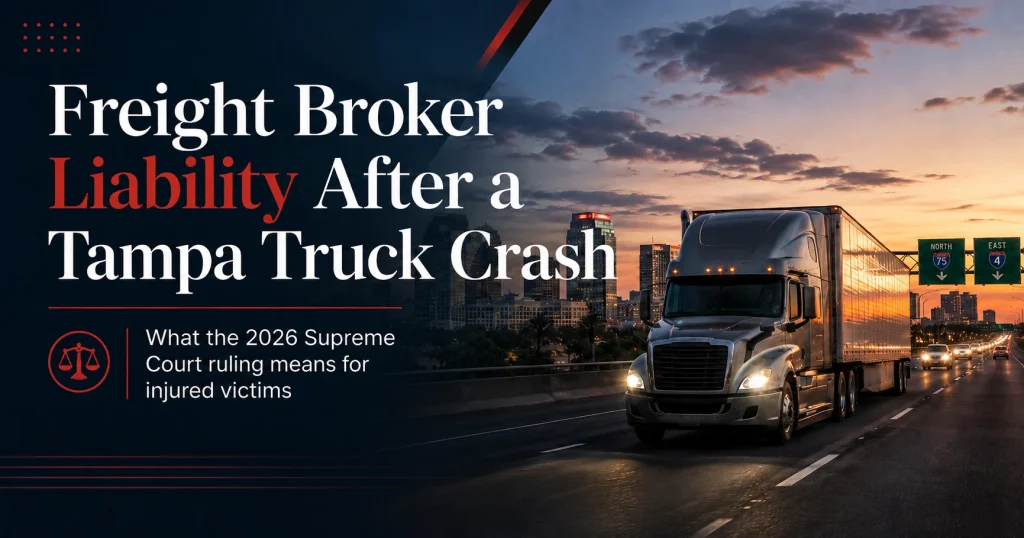
Commercial semi-truck driving on a Tampa-area interstate at dusk, illustrating freight broker liability after a serious truck crash.
Blog, Truck Accidents

Can You Sue a Freight Broker After a Tampa Truck Crash?

Quick Summary The U.S. Supreme Court ruled on May 14, 2026, that negligent-hiring claims against freight brokers are not categorically blocked by the Federal Aviation Administration Authorization Act when the claim involves motor vehicle safety.  That means a freight broker may be sued under state law if it failed to use reasonable care when selecting an unsafe trucking company. Florida recognizes negligent selection of an independent contractor as a viable claim, but the injured person still has to prove the carrier was unfit, the broker knew or should have known about the problem, and that the carrier’s unfitness caused the crash.  After a Tampa truck crash, liable parties may include the driver, trucking company, freight broker, shipper, cargo loader, maintenance company, or another party in the transportation chain. In Florida, most negligence-based personal injury claims must be filed within two years under Florida Statute §95.11(5)(a). Had a bad day? Call The Reyes Firm at 833-4 BAD DAY. The Reyes Firm Hurt in a Tampa Truck Crash? A freight broker, trucking company, or unsafe carrier may share responsibility. Get clear next steps after a serious commercial vehicle crash. Had a bad day? Schedule a Free Consultation Can You Sue a Freight Broker After a Tampa Truck Accident? Yes, if the facts support a negligent-hiring or negligent-selection claim. A freight broker is not automatically liable just because a truck crash happened. But after the Supreme Court’s 2026 decision in Montgomery v. Caribe Transport II, LLC, freight brokers can no longer rely on the FAAAA as a blanket federal shield against safety-based negligent-hiring claims.  That matters because many commercial truck crashes do not begin with the driver alone. They often begin with business decisions made before the truck ever enters I-75, I-4, I-275, Dale Mabry Highway, State Road 60, or another Tampa-area road. A broker may have arranged the shipment. A carrier may have accepted the load. A driver may have been dispatched despite poor safety history, driver qualification problems, inspection failures, or repeated violations. When a broker chooses an unsafe motor carrier despite warning signs, that decision may become part of the liability investigation. At The Reyes Firm, we look beyond the driver. In serious commercial vehicle cases, we investigate the full chain of responsibility, including the driver, carrier, broker, shipper, loader, maintenance provider, and any company whose decisions contributed to putting an unsafe truck on the road. What Is a Freight Broker in a Truck Accident Case? A freight broker is a company that connects shippers with trucking carriers. The broker usually does not own the truck. It usually does not employ the driver. Instead, the broker arranges the shipment, selects the motor carrier, and is paid to coordinate the load. That role matters after a crash because brokers are often in a position to review a carrier’s safety history before assigning a load. Depending on the facts, a broker may have access to information such as: FMCSA safety ratings inspection violations out-of-service rates driver qualification issues crash history insurance information carrier authority status prior incidents involving the same carrier internal carrier approval notes third-party carrier monitoring reports If a broker hires a carrier with obvious safety problems and that carrier later causes a serious crash, the injured person may have a claim that the broker failed to exercise reasonable care in selecting the carrier. That is why freight broker liability can matter in Tampa truck accident cases. The crash may involve more than the driver who hit you. It may involve the company that chose the carrier in the first place. What Did the Supreme Court Decide in Montgomery v. Caribe Transport? In Montgomery v. Caribe Transport II, LLC, the U.S. Supreme Court considered whether the FAAAA blocks state-law negligent-hiring claims against freight brokers. The case involved Shawn Montgomery, who suffered severe and permanent injuries after his tractor-trailer was struck by a truck driven for Caribe Transport. C.H. Robinson, a freight broker, had arranged the shipment. Montgomery alleged that C.H. Robinson knew, or should have known, that Caribe Transport had safety problems before selecting it for the load.  The legal issue centered on the FAAAA, a federal law that generally preempts certain state laws governing trucking rates, routes, and services. But the law also has a safety exception. That exception says federal preemption does not restrict a state’s safety regulatory authority “with respect to motor vehicles.” The Supreme Court held that a negligent-hiring claim involving the selection of an unsafe motor carrier can fall within that safety exception. In plain English, the Court said this type of safety-based claim is not automatically blocked by federal law. The Court did not decide that C.H. Robinson was negligent. It decided that Montgomery’s claim was not barred by federal preemption and could move forward. That distinction matters. A broker is not automatically responsible after every truck crash. But when a broker ignores safety red flags and chooses an unsafe carrier anyway, the injured person may now have a clearer path to bring that broker into the case. Why Does This Ruling Matter for Florida Truck Accident Victims? This ruling matters because serious truck accident cases often involve more than one responsible party. Before Montgomery, freight brokers often argued that the FAAAA preempted state negligent-hiring claims against them. Some courts agreed. That meant broker claims could be dismissed early, even when the injured person alleged that the broker selected an unsafe trucking company. After Montgomery, brokers can no longer invoke federal preemption as a categorical defense to negligent-hiring claims concerning motor vehicle safety.  For injured people in Florida, this may make it possible to investigate and pursue claims against a broker when the facts support it. This is especially important in catastrophic truck accident cases involving: severe injuries permanent disability traumatic brain injuries spinal cord injuries amputations wrongful death multi-vehicle crashes crashes involving unsafe carriers crashes involving repeated safety violations crashes involving poorly maintained trucks crashes involving driver qualification failures When injuries are life-changing, one insurance policy may not be enough. Broker liability

Semi-truck and damaged car on a Tampa highway illustrating why semi-truck crashes happen and the legal rights of injured drivers.
Blog, Truck Accidents

Why Do Semi‑Truck Crashes Happen? Leading Causes & Your Rights

Seeing a tractor–trailer jackknifed across lanes is every driver’s nightmare. When 80,000‑pound rigs collide with cars that weigh a fraction of that amount, the results are devastating. These wrecks often lead to life‑altering injuries, staggering medical bills and lost wages. We’ve rephrased the original blog to give you fresh language and all the same critical information. If a crash happened to you near a Tampa port, I‑275 or I‑75, and you’re hurting, know that The Reyes Firm is here to help. Quick Summary Semi‑trucks can weigh more than 20 times as much as a passenger car, making collisions far deadlier. The top causes of truck wrecks include drowsy drivers, distractions, speeding and aggressive driving, unsecured or imbalanced cargo, mechanical breakdowns and unsafe road design. Multiple parties may share responsibility — the driver, carrier, broker, shipper, manufacturer, maintenance provider or even road agencies. To prove your claim, gather strong evidence: police reports, photos, black‑box and electronic data, driver logs, dispatch and maintenance records, and expert testimony. Florida law imposes strict rules: you must see a doctor within 14 days for PIP benefits, meet the serious‑injury threshold to recover pain and suffering, file your case within two years and watch out for modified comparative fault that bars recovery if you’re more than 50 % at fault. After a crash, call 911, move to safety, get medical care, document the scene, exchange information, don’t give recorded statements, obtain the crash report, send a preservation letter for black‑box data and call an attorney. The Reyes Firm works on a contingency fee, meaning you owe nothing up front — we only get paid when we win your case. Why Semi‑Trucks Are So Dangerous A fully loaded tractor–trailer can weigh 80,000 pounds, more than 20 times heavier than an average passenger car. That massive difference in size and weight means trucks take longer to stop, create wide blind spots and make huge sweeping turns that can crush smaller vehicles. When a semi collides with a car, the forces involved often cause catastrophic injuries such as traumatic brain damage, spinal cord trauma, fractures, internal organ injuries and even fatalities. The risk increases on Tampa’s congested highways and port roads where trucks mix with heavy traffic and tight turning radii. Leading Causes of Semi‑Truck Crashes Many truck accidents are preventable. The most common factors include: Driver fatigue: Truck drivers work long hours under pressure to meet tight delivery windows. When they ignore Hours‑of‑Service limits or fail to take adequate rest breaks, they can fall asleep or suffer microsleep behind the wheel. Drowsy driving is a leading factor in nighttime crashes and rear‑end collisions. Distraction: Reaching for a cell phone, scrolling through social media, eating, adjusting the GPS or talking on a dispatch radio can pull a driver’s attention away from the road. Even a split‑second distraction can cause a big rig to drift into another lane or miss stopped traffic. Speeding & aggressive driving: Driving faster than the posted limit or faster than conditions allow reduces reaction time. Tailgating, abrupt lane changes, road rage or pushing through red lights increases the likelihood of losing control or causing multi‑vehicle pileups. Improper loading & cargo shifts: When freight is overloaded, unevenly distributed or poorly secured, it can shift and cause the trailer to jackknife, roll over or spill debris onto the roadway. Loading companies and shippers may share blame when they violate weight limits and securement rules. Mechanical failures: Braking systems, tires, steering and other components can fail if not properly maintained. Hot Florida weather accelerates wear and tear. Under the Federal Motor Carrier Safety Regulations, trucking companies must inspect, repair and keep records of all parts. A worn‑out brake rotor or bald tire can mean the difference between stopping in time and plowing into stopped traffic. Unsafe road design & weather: Narrow lanes, missing signage, tight curves, construction zones, heavy rain and high winds all increase the risk of a semi‑truck crash. When roads are poorly designed or not properly maintained, government agencies may share liability. 🛡️ Key Takeaway: Poor maintenance, especially brake and tire neglect, is a ticking time bomb. Make sure your attorney sends a preservation letter right away to secure black-box data, maintenance logs, and inspection reports. Who Can Be Held Responsible? Liability in a semi‑truck crash rarely stops at the driver. Depending on what caused the wreck, the following parties could be partly or fully responsible: The truck driver, for negligent driving, fatigue, distraction or impairment. The trucking company, for pressuring drivers to violate safety rules, failing to train or supervise, or ignoring maintenance. Cargo loaders or shippers, for overloading or failing to secure freight. Manufacturers and repair shops, for defective parts or negligent maintenance. Brokers and dispatchers, for negligent hiring or unrealistic schedules. Government entities, for dangerous road design or failing to fix hazards. How to Prove a Claim To win compensation, you must show how the crash happened, who was negligent and how their negligence injured you. Useful evidence includes: Police reports, witness statements and accident reconstruction analysis. Photos and videos of the crash scene, skid marks, debris and vehicle damage. Black‑box and electronic logging device (ELD) data showing speed, braking and hours of service. Driver qualification files, log books, dispatch records and delivery schedules. Maintenance and inspection records showing whether parts were repaired or replaced. Expert testimony from accident reconstructionists, engineers, doctors and economists. Florida Laws & Deadlines PIP 14‑Day Rule: You must seek medical care within 14 days to qualify for Personal Injury Protection benefits. (see statute). Serious Injury Threshold: To sue for pain and suffering in most motor‑vehicle cases you must have a permanent injury, significant scarring/disfigurement or loss of an important body function. (see statute). Two‑Year Statute of Limitations: You now have only two years to file a negligence lawsuit for personal injury or wrongful death. (see statute). Modified Comparative Fault: If you’re more than 50 % responsible for the crash, you cannot recover damages at all. (see statute). Crash Report Privilege: Statements made for a police crash

Overturned cattle truck on a Florida interstate near a damaged passenger car, illustrating an I-10 semi-truck crash near Marianna, Florida.
Blog, Commercial Vehicles, News, Truck Accidents

Cattle Truck Rollover on I-10: What Florida Drivers Need to Know After a Semi Crash

What should Florida drivers know after a cattle truck crash on I-10? A cattle truck crash on I-10 near Marianna is a reminder of how quickly a normal drive can turn dangerous when a semi-truck moves into a passenger vehicle’s lane. According to WTVY News 4, the Florida Highway Patrol reported that a semi hauling 89 head of cattle sideswiped a passenger car while both vehicles were traveling west on Interstate 10 near Marianna in Jackson County. The semi left the roadway, overturned on an embankment, and wrecker crews had to stabilize the trailer before removing the truck and cattle. The occupants of the passenger car, who were from Quincy, were treated at a nearby medical facility for injuries described as minor. For injured drivers and passengers, the legal question is rarely just, “What happened at the scene?” In a commercial truck crash, the deeper questions are often: Was the truck driver distracted, tired, speeding, or improperly trained? Did the trucking company follow Florida and federal safety rules? Was the livestock trailer properly loaded, inspected, and maintained? Did any company records, dashcam footage, ELD data, or black box data capture what happened before impact? At The Reyes Firm, we help injured people and families understand what to do after serious commercial vehicle crashes in Florida. If a truck sideswiped your car, forced you off the road, or caused a rollover crash, the steps you take early can affect your medical care, insurance claim, and ability to recover compensation. Quick Summary A semi hauling 89 head of cattle sideswiped a passenger car on I-10 near Marianna, Florida, then overturned on an embankment. The passenger car’s occupants were treated at a nearby medical facility for injuries described by FHP as minor. Florida commercial vehicle cases often require fast evidence preservation, including ECM data, ELD logs, dashcam footage, driver records, inspection records, and loading documents. Florida negligence-based personal injury lawsuits generally have a 2-year deadline under Fla. Stat. 95.11(5)(a), but truck evidence can disappear much sooner.  Florida PIP medical benefits generally require that initial medical care be provided within 14 days of a motor vehicle accident.  Had a bad day? Call The Reyes Firm at 833-4 BAD DAY. What happened on I-10 near Marianna, Florida? The April 2026 crash happened on Interstate 10 near Marianna in Jackson County. FHP said the semi and the passenger car were both traveling west when the semi sideswiped the car. The semi then went onto an embankment and overturned. Wrecker crews stabilized the trailer to keep it from tipping further and removed the truck, trailer, and cattle without further incident.  I-10 Near Marianna, Florida The reported cattle truck crash happened along Interstate 10 near Marianna in Jackson County, Florida. Map note: This map is provided for general geographic context only and does not identify the exact crash location. This kind of crash matters because passenger vehicles are at a serious disadvantage when sharing the road with large trucks. A semi-truck is much heavier than a passenger car, and when a large commercial vehicle drifts, sideswipes, or rolls over, the people in the smaller vehicle often face the greatest risk. The fact that the truck was hauling livestock also matters. A cattle truck crash may involve more than driver error. Investigators may need to examine the trailer, cattle loading process, route, speed, driver logs, vehicle inspection records, and the company’s safety practices. That is why injured drivers should not assume the police report tells the whole story. ⚠️ Warning: Florida truck crash evidence can disappear quickly. Florida’s statute of limitations gives many injured people a limited window to file a negligence-based lawsuit, but the practical deadline for preserving truck evidence is much shorter. Under Florida Statute § 95.11(5)(a), negligence actions generally must be filed within 2 years. But evidence like dashcam footage, ECM data, ELD logs, driver communications, GPS records, maintenance files, and loading documents may be controlled by the trucking company. If no one sends a preservation demand, key evidence can be overwritten, deleted, or lost. If a commercial truck caused your crash, act quickly. Is a livestock truck regulated like other commercial vehicles in Florida? A livestock truck may be regulated as a commercial motor vehicle under Florida law, but the exact rules depend on the vehicle, route, carrier, and how the truck is used. Florida Statute 316.302 requires many commercial motor vehicle owners and drivers operating on Florida public highways to follow federal safety regulations, including 49 C.F.R. parts 382-386 and 390-397. These rules can address driver qualifications, controlled substance and alcohol testing, safe driving rules, vehicle maintenance, inspections, and hours-of-service requirements.  However, livestock and agricultural transportation can involve specific exceptions. Florida recognizes covered farm vehicle exemptions when certain requirements are met, including that the vehicle is not being used in a for-hire motor carrier operation.  That is why a cattle truck crash should be investigated carefully rather than treated as a simple two-car accident. In a livestock hauler crash, investigators may need to determine: Who owned the truck and trailer Whether the truck was operating for-hire Who employed or contracted with the driver Whether any covered farm vehicle exemption applied Whether the cattle were loaded safely Whether the driver followed applicable hours-of-service rules Whether maintenance, inspection, or braking issues contributed to the crash A cattle truck rollover is not just a traffic report. It can involve trucking regulations, company policies, cargo loading decisions, and multiple insurance carriers. Why can cattle truck crashes be more complicated than regular car accidents? A normal car accident usually focuses on the drivers involved. A cattle truck crash can involve a much wider investigation. That is because livestock trailers carry live animals. Cattle can shift weight inside a trailer, which may affect balance, braking, lane control, and rollover risk. If the trailer was overloaded, improperly loaded, poorly maintained, or operated too fast for conditions, the crash may involve more than a single driving mistake. A truck accident lawyer may investigate: The truck driver’s actions before the crash The

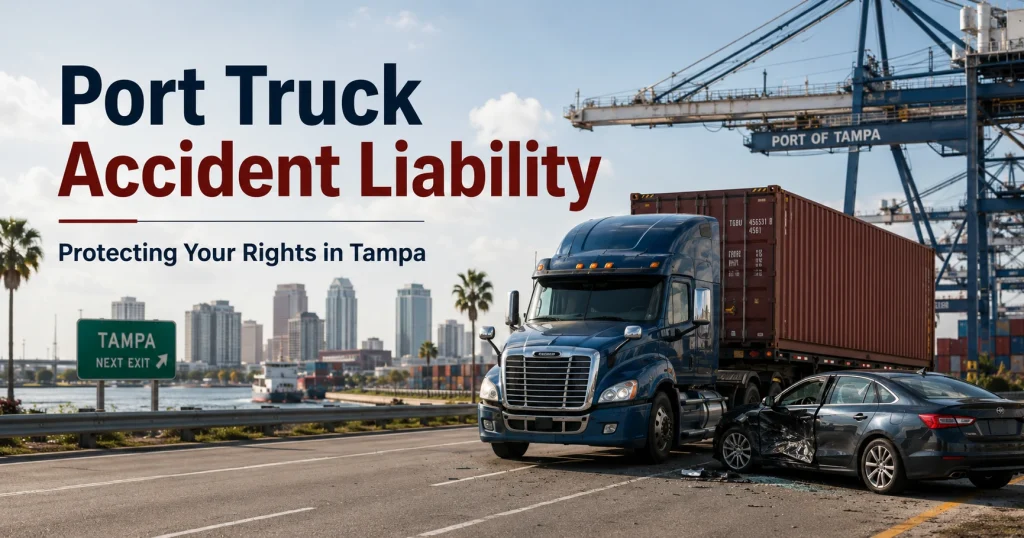
Commercial truck and car crash near Port of Tampa shipping terminals, for illustrative purposes only
Blog, Commercial Vehicles, Truck Accidents

Port Truck Accident Liability: Protecting Your Rights in Tampa

Driving near the Port of Tampa means sharing crowded roadways with long lines of semi‑trucks, stacked shipping containers and tight turns. With thousands of commercial vehicles moving through port gates every day, collisions aren’t rare — they’re bound to happen. When a truck from the port hits your car, the physical injuries, time off work and insurance battles can feel overwhelming. This guide breaks down why these wrecks are different, who may be responsible and how you can protect yourself. Quick Summary If you need the gist right away, here are the main points: Multiple players: Port‑related crashes can involve the driver, their employer, the cargo loader and the port itself. Identifying everyone responsible is vital. Evidence is fragile: Electronic logs, ELD data, cargo records and surveillance footage help prove fault, but some of this evidence can disappear within days. See a doctor fast: Florida’s no‑fault Personal Injury Protection (PIP) law requires you to get medical care within 14 days to qualify for benefits. Serious injury threshold: To go beyond no‑fault benefits, injuries must meet the state’s serious injury threshold. (627.737) Comparative fault rules: You cannot recover damages if you are more than 50% to blame. (768.81) Short deadlines: You typically have only two years to file a negligence claim. (95.11) Legal help matters: An experienced truck accident attorney can preserve evidence, negotiate with insurers and fight for fair compensation. Contact The Reyes Firm for a free consultation. (contact) Why Port Truck Crashes Are Different Ports are bustling economic engines. At the Port of Tampa, thousands of containers move through a maze of access roads every day. Drivers are under constant pressure to meet delivery schedules, navigate tight turns and merge with commuter traffic. A fully loaded semi‑truck can weigh up to 80,000 pounds — roughly 20 times the weight of a passenger car — so even a low‑speed impact can cause devastating injuries and property damage. Port accidents also involve more than just the truck driver; carriers, shipping companies, terminal operators and cargo loaders all play a role, and each has its own insurance policies and legal duties. Finally, port truckers must follow federal hours‑of‑service rules that limit how long they can drive without rest and require drug and alcohol testing. Violations of these regulations can provide evidence of negligence. Who Could Be Responsible for Your Injuries After a port accident, liability often rests with several parties: Truck driver: Speeding, distracted driving or violating hours‑of‑service limits. Trucking company/carrier: Poor hiring practices, inadequate training or neglected maintenance. Cargo loading company: Improperly secured freight or overloaded trailers that can tip or jackknife. Port operator: Unsafe road design, poor signage or inadequate traffic control within the port. Manufacturers/mechanics: Defective equipment or negligent repairs that lead to brake or tire failures. Gathering Evidence for Port Accident Claims Evidence is the foundation of a successful claim. Port operators and carriers may erase or overwrite data quickly, so securing proof early is essential.  ELD data and driver logbooks showing hours on duty Black box or engine control module recordings capturing speed, braking and acceleration Cargo manifests, bills of lading and port entry records identifying who loaded the freight Port and dash‑cam surveillance footage from the crash scene and surrounding area Witness statements and photos of skid marks, road conditions and vehicle damage 🛡️ Key Takeaway: Emotional trauma is just as real as physical injuries. If you feel anxious, sleepless, or on edge after a port truck crash, seek medical help and document your symptoms. Mental health treatment can be part of your injury claim. Florida Rules You Must Know Several state laws control how and when you can recover after a truck crash. Missing a deadline or misunderstanding a requirement could cost you your case. PIP 14‑day rule: Get medical care within 14 days to qualify for no‑fault benefits (PIP) Serious injury threshold: Only certain severe injuries allow lawsuits outside PIP (Serious) Modified comparative negligence: If you are more than 50% at fault, you recover nothing (Modified) Crash report privilege: Statements made for police crash reports cannot be used in court (Crash) Commercial vehicle regulations: Florida adopts federal safety rules, including limits on hours of service and drug testing (Commercial) Two‑year statute of limitations: Most negligence claims must be filed within two years (Two‑year) ℹ️ Information Point: Evidence can vanish quickly and deadlines come fast. An attorney can send preservation letters to stop data deletion and ensure you meet all filing deadlines. Steps to Protect Your Rights After a Port Truck Crash 1. Call 911 and make sure police create an official crash report. 2. Get immediate medical attention — even if you feel okay — and follow up within 14 days to preserve PIP benefits. 3. Take pictures of the vehicles, road conditions, cargo spillage and any visible injuries. 4. Exchange contact and insurance details with the truck driver, their employer and any witnesses. 5. Decline to give a recorded statement to insurers before speaking with a lawyer. 6. Notify your own insurance company about the crash, but stick to basic facts. 7. Start an evidence file: save medical bills, repair estimates, pay stubs and notes about your pain. 8. Consult with an experienced truck accident attorney; they can send preservation letters to secure ELD logs, black box data and port surveillance. 9. Do not sign any settlement offers until you know the full extent of your injuries and losses. 10. Stay off social media — posts can be used to undermine your claim. When to Contact a Lawyer Trucking companies and their insurers deploy rapid response teams to protect themselves after a crash. The longer you wait to seek counsel, the harder it becomes to collect crucial evidence. An experienced attorney can investigate the wreck, identify every responsible party, send preservation letters and negotiate with insurers. If a fair settlement cannot be reached, they will file a lawsuit and take your case to trial. Watch: Port Truck Traffic and Liability See why congestion around the Port of Tampa makes accidents so predictable. Our

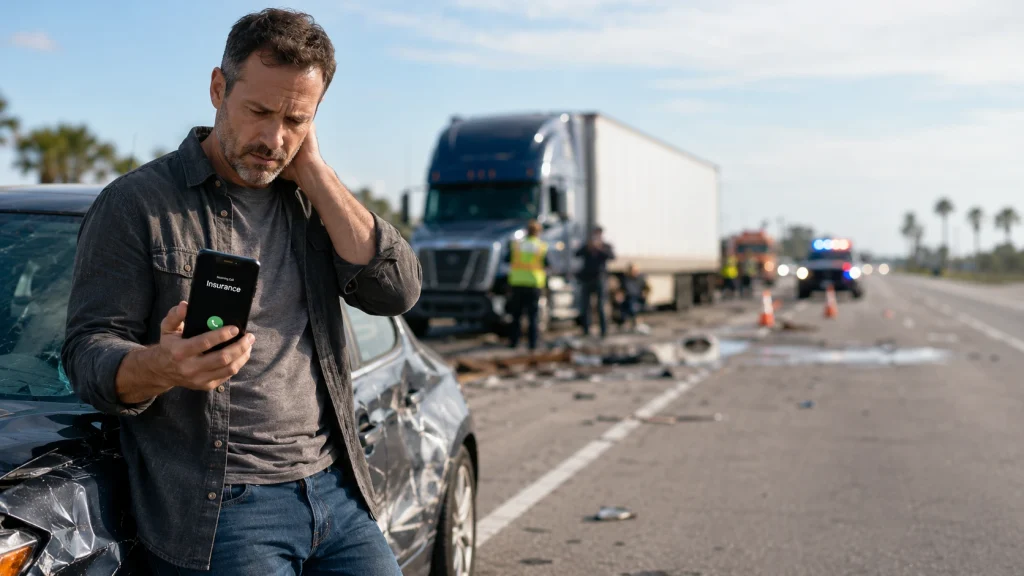
Truck crash survivor receiving an insurance adjuster call beside a damaged car after a semi-truck accident
Blog, Truck Accidents

Insurance Adjuster Calls After a Truck Crash: A Survivor’s Guide

Moments after a serious truck crash, you might still be processing the shock when the phone rings. On the line is an insurance adjuster sounding compassionate and eager to help. But the adjuster works for the trucking company, not for you. This guide explains why adjusters call so quickly, how to respond without jeopardising your rights, and when it’s smart to bring in a truck accident attorney to speak on your behalf. Quick Summary Insurers reach out immediately after a truck crash to collect statements that minimize their liability. You don’t have to give a recorded statement to the other side’s adjuster. Florida law sets a two‑year deadline for most negligence claims and just 14 days to seek initial treatment under PIP. Never sign blanket medical releases or accept early settlements without knowing the full extent of your injuries. Keep good records and consider hiring a truck accident lawyer if your injuries are serious or the process feels overwhelming. Why Adjusters Call So Quickly Trucking companies know that commercial crash claims can turn into multimillion‑dollar payouts. Their insurers will often call you within hours or days to get a statement before you have had time to understand your injuries or speak to counsel. Adjusters are friendly because they want you to feel comfortable sharing details that limit the company’s exposure. They may imply that your cooperation is required; in reality, you can politely defer the conversation until you’re ready. Step 1: Focus on Your Health First The scene of a truck crash is chaotic. Your top priority should be getting medical attention for yourself and anyone else who is injured. Call 911, move to a safe location if you can and follow medical advice. You are under no obligation to speak to the trucking company’s insurance representative while you are in pain or still on medication. Step 2: Verify Who’s Calling Ask for the adjuster’s full name, the company they represent, a claim number and a call‑back number. If the caller refuses to provide this information, end the conversation. You can always contact your own insurer or attorney and ask them to coordinate future calls. Step 3: Decline Recorded Statements The other party’s adjuster may push you to record your first conversation. You can respond with a polite refusal. Let them know you’d like to wait until you’ve recovered and spoken with legal counsel. You have no legal duty to provide a recorded statement on demand. Step 4: Stick to the Facts If you choose to share limited information, keep it factual: the date, time and location of the crash and the vehicles involved. Do not estimate speeds, describe how you feel or speculate about fault. Admitting fault or guessing at causes may be used against you later. Step 5: Limit Medical Releases Adjusters often ask you to sign forms allowing them to review your medical history. Never sign a broad authorization that gives them access to unrelated records. Restrict any release by date and provider, and only after you understand what treatment you need. Step 6: Understand Florida Rules and Deadlines Under Florida law, you have two years from the date of the crash to file most negligence lawsuits. To receive Personal Injury Protection (PIP) benefits, you must seek initial medical care within 14 days. Pain and suffering damages are only available for serious injuries – permanent impairment, significant scarring or death. Florida’s modified comparative fault rule means that if you are more than 50% to blame, you may not recover anything, and if you are 50% or less at fault, your award is reduced by your percentage of fault. Step 7: Get the Official Crash Report Within days of your crash, obtain the police report. Florida law shields many details in crash reports from public view for 60 days, but insurers and lawyers can request them. Double‑check that your personal information is redacted before sharing the report. Step 8: Build Your Evidence File Keep copies of photos, videos, witness contact information, medical bills, prescriptions, pay stubs and any communication with insurers. Record the date, time and topics of every call from adjusters. Step 9: Script Your Conversations Jot down a simple script so you’re not caught off guard. For example: ‘Thank you for calling. I’m still under medical care and will provide more information after I consult with my attorney.’ Practicing this ahead of time makes it easier to set boundaries. Step 10: When to Hire a Lawyer If your injuries are moderate to severe, if liability is contested, or if the trucking company’s insurer is pressuring you, speak to a truck accident attorney. An experienced lawyer will send a preservation letter to secure ELD logs and black‑box data, handle communications, negotiate settlements and, if necessary, file suit. They usually work on a contingency fee basis, meaning you pay nothing unless they win your case. How The Reyes Firm Can Help Navigating trucking insurance claims can feel like walking through a minefield. The Reyes Firm focuses on truck and commercial vehicle cases. When you hire them, they immediately send evidence preservation letters, investigate the accident, handle all adjuster communication and fight for the compensation you deserve. They offer free consultations, and you don’t pay any attorney’s fee unless your case settles or wins at trial. Call 833-4 BAD DAY (833-422-3329) or schedule a free case review online to get started. Watch: What To Do After a Commercial Vehicle Accident This short video explains the steps you should take immediately after a crash and why collecting the right evidence matters.  Frequently Asked Questions Can I ignore calls from the trucking company’s insurer? Yes. You can decline to speak and ask that all communication go through your lawyer or that they send questions in writing. Do I need to call my own insurer right away? You typically have a duty to notify your insurer, but you don’t have to give an on‑the‑spot recorded statement. You can ask to schedule the call at a convenient time and confirm your obligations

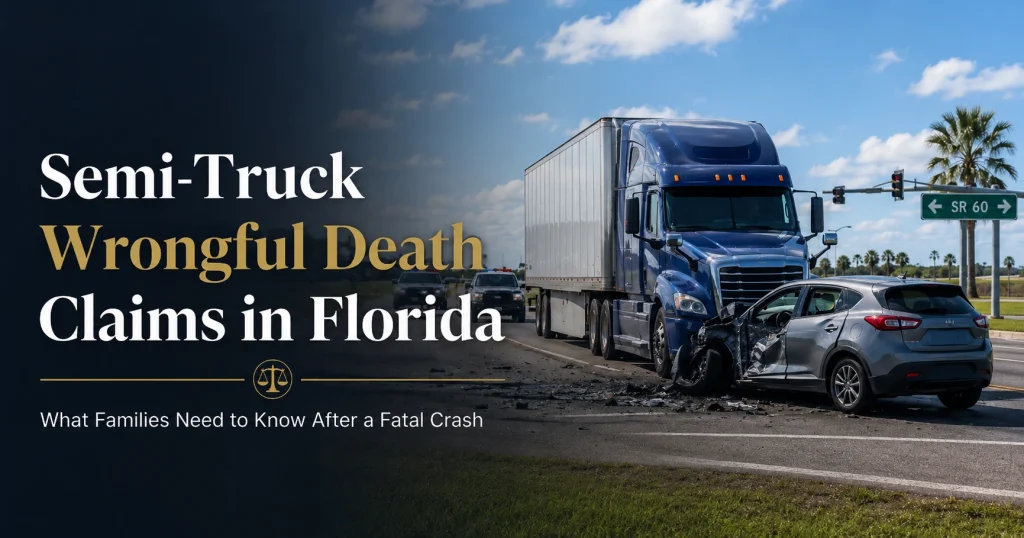
Featured image for a legal guide about semi-truck wrongful death claims in Florida, showing a serious semi-truck and passenger vehicle crash scene with text explaining what families need to know after a fatal crash.
Blog, News, Tractor Trailer Accidents, Truck Accidents

Fatal Semi-Truck Crashes in Florida: 7 Rights Your Family Has After a Wrongful Death

SUMTER COUNTY, FL — May 7, 2026. A 38-year-old Crystal River man died Wednesday morning after a tractor-trailer struck his Kia Soul at the intersection of County Road 470 and State Road 44, according to the Florida Highway Patrol. The crash occurred at approximately 10:30 a.m. The Ocala man driving the semi-truck sustained only minor injuries and was not transported. The Florida Highway Patrol has opened an investigation into the crash. That’s not a number in a report. That’s someone’s husband, son, or father. That Wednesday morning became a before-and-after line for an entire family. Crashes like this one happen on Florida’s rural and suburban roads every single day. A county road meets a state highway. A stop sign. A commercial vehicle is moving fast. A passenger car that never had a chance. If your family is living through something like this right now, this article is for you. Quick Summary A semi-truck or tractor-trailer crash can kill or catastrophically injure a passenger vehicle occupant in seconds, and Florida recorded 46,651 commercial motor vehicle crashes in 2024. Florida law gives families of wrongful death victims the right to pursue compensation from the truck driver, the trucking company, the freight broker, and other responsible parties. Critical evidence, including the truck’s black box data and electronic driver logs, can be overwritten within days after a crash. You have two years from the date of death to file a wrongful death lawsuit in Florida under Florida Statutes Section 95.11, but acting sooner protects the evidence. The Reyes Firm investigates fast, fights hard, and never charges you unless we win. Had a bad day? Call us at 833-4 BAD DAY. Who Can a Family Sue After a Fatal Semi-Truck Crash in Florida? In a Florida semi-truck wrongful death case, your family can pursue claims against every party whose negligence contributed to the crash. That almost always includes more than just the truck driver. Liable parties typically include the truck driver personally, the trucking company or motor carrier that employed or contracted the driver, the freight broker or shipper that set the schedule and load, and the maintenance company if a mechanical failure played a role. Under Florida Statutes Sections 768.19 and 768.20, a wrongful death claim must be brought by the personal representative of the deceased person’s estate on behalf of the estate and the deceased person’s survivors, which may include a spouse, children, and parents. Trucking companies move fast after crashes. Their insurers often have investigators at the scene before a grieving family has even made a phone call. Your family deserves someone fighting just as fast on your side. What Compensation Can a Family Recover in a Florida Wrongful Death Case? Florida’s Wrongful Death Act, under Florida Statutes Section 768.21, spells out exactly what surviving family members can recover. This is not limited to funeral expenses. Compensation can include the loss of support and services the deceased provided, loss of companionship and protection, mental pain and suffering of surviving family members, medical and funeral expenses, and the lost net income the deceased would have earned over their lifetime. A spouse can also claim loss of consortium. The specific amounts depend on the facts of each case, the policy limits involved, and the evidence your attorney builds on your behalf. These are not small numbers in commercial truck cases, because commercial carriers are required to carry significantly higher insurance minimums than private drivers. 🛡️ Your Rights Under Florida Law: Under Florida Statutes Section 768.21, a surviving spouse, eligible children, and parents of a deceased minor may recover for mental pain and suffering caused by a wrongful death. The personal representative of the estate files the lawsuit. You do not have to go through this alone, and you are not limited to a single defendant. The Reyes Firm Video Watch: What Is a Wrongful Death Case in Florida? Local attorney Edward Reyes explains how wrongful death cases work in Florida, including the role of the estate, surviving family members, and the personal representative who brings the claim. Wrongful death claims can involve both the estate and eligible survivors, which is why families should speak with a Florida wrongful death attorney before dealing with the insurance company alone. How Long Does a Family Have to File a Wrongful Death Lawsuit in Florida? You have two years from the date of your loved one’s death to file a wrongful death lawsuit in Florida. Florida Statutes Section 95.11 sets this deadline for wrongful death claims. Two years sounds like a long time. It is not. Evidence disappears fast in truck crash cases. The truck’s electronic control module, sometimes called the black box, records speed, braking, and throttle data, but that data can be overwritten in as little as 30 days. Driver logs, dashcam video, and dispatch communications all have short retention windows. Once that evidence is gone, it is gone. The first thing a truck crash attorney does is send spoliation letters demanding that the carrier preserve everything. That step needs to happen now, not in six months. ⚠️ Warning: Florida Statute § 95.11 generally sets a 2-year deadline to file a wrongful death lawsuit. But critical truck crash evidence, including black box data, electronic logs, and surveillance video, can disappear within days of a crash. Contact a Florida wrongful death attorney immediately to protect your family’s case. Why Are Semi-Truck Wrongful Death Cases Different From Regular Car Accident Claims? A semi-truck wrongful death case is fundamentally different from a standard car crash claim, and the differences all cut against unprepared families. Commercial vehicles operate under a separate body of federal law, specifically the Federal Motor Carrier Safety Regulations enforced by the FMCSA, which governs hours-of-service limits, required inspection schedules, driver qualification files, and drug and alcohol testing. A violation of any one of those regulations can shift liability directly to the carrier. On top of that, commercial carriers typically carry policy limits ranging from $750,000 to $5 million or more, which means their insurers fight

Featured image for a blog about hiring a head-on truck accident attorney in Tampa after a serious semi-truck or commercial vehicle crash.
Blog, Commercial Vehicles, Company-Caused Car Accidents, Truck Accidents

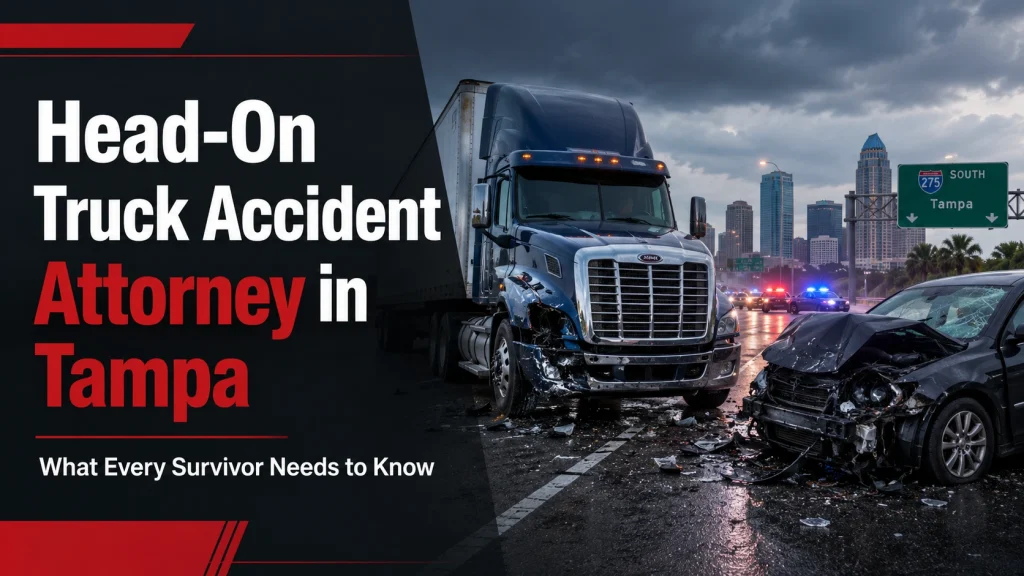
Head-On Truck Accident Attorney in Tampa: What Every Survivor Needs to Know

You were driving. Maybe it was I-275 at rush hour, or a two-lane road near Brandon or Plant City. Then it happened. A semi crossed the center line, or came the wrong way, and hit you head-on. In the seconds after that kind of crash, nothing makes sense. Your airbags deployed. The car crumpled. Everything went quiet. Head-on collisions with large trucks are different from every other kind of accident. An 80,000-pound tractor-trailer hits your car with combined closing speeds that can exceed 100 miles per hour. Your car weighs about 4,000 pounds. The laws of physics do the rest, and the legal fight that follows is just as lopsided, unless you have the right people in your corner. The Reyes Firm represents families in Tampa and the South Shore communities who are dealing with the fallout from serious commercial vehicle crashes. This article will walk you through everything you need to know: what causes these crashes, who is responsible under Florida and federal law, what evidence disappears fast, and what your case may be worth. The Reyes Firm Hurt in a Head-On Truck Accident in Tampa? Get clear next steps after a serious head-on semi-truck, tractor-trailer, or commercial vehicle crash. Had a bad day? Schedule a Free Consultation Quick Summary Head-on crashes with large trucks are among the deadliest collisions on Florida roads. In 2024, FLHSMV recorded 46,651 commercial motor vehicle crashes, resulting in 315 fatalities statewide. NHTSA 2023 data shows 32.1% of two-vehicle fatal truck crashes involve a direct front-to-front impact. Commercial carriers deploy rapid-response legal teams to crash scenes within hours. You need representation just as fast. Florida’s statute of limitations for personal injury negligence claims is 2 years under Florida Statute 95.11(4)(a), as amended by HB 837 on March 24, 2023. Wrongful death claims also have a 2-year statute of limitations. Had a bad day? Call The Reyes Firm. 833-4 BAD DAY. Key Facts at a Glance Florida recorded 46,651 commercial motor vehicle crashes and 315 fatalities in 2024, according to FLHSMV. NHTSA reported 5,472 deaths in U.S. crashes involving large trucks in 2023. Hillsborough County recorded 3,083 commercial motor vehicle crashes, 916 injuries, and 16 fatalities in 2023. Most Florida negligence-based personal injury claims now have a 2-year deadline under Florida Statute § 95.11. Many interstate motor carriers must carry at least $750,000 in financial responsibility under 49 CFR Part 387. Why Are Head-On Truck Crashes So Dangerous? Head-on truck crashes are disproportionately fatal because the force of impact combines both vehicles’ speeds at once. NHTSA 2023 data shows 32.1% of two-vehicle fatal truck crashes involve front-to-front contact. At highway speeds, an 80,000-pound tractor-trailer delivers roughly 20 times the kinetic energy of a passenger car crash at the same speed. In 2023, large truck crashes killed 5,472 people nationwide, according to NHTSA. Of those fatalities, the vast majority were not truck occupants. They were people in passenger vehicles. Florida ranked among the top three states for large truck fatality counts that year, behind only Texas and California. That’s not a coincidence given the volume of commercial freight flowing through Hillsborough County every day. Florida’s corridors amplify the danger. I-4 between Tampa and Orlando is one of the most heavily trafficked freight routes in the Southeast. I-275 carries commercial traffic directly through the heart of Tampa, FL. I-75 connects Tampa to the rest of the state along a logistics spine that runs billions of dollars in freight every year. On these roads, a single moment of driver fatigue, a blown tire, or a misjudged overtake can push a 40-ton rig across the center line before any reaction is possible. Head-on truck crashes also look deceptively simple on a police report. Most lists only two vehicles. In reality, these crashes often trace back to a chain of decisions made by a dispatcher, a carrier, a broker, a maintenance provider, or a cargo loader, sometimes days before the collision happened. What Causes Head-On Truck Accidents in Tampa? Head-on truck crashes in Tampa, FL, are commonly caused by driver fatigue, distracted driving, impairment, wrong-way entry, mechanical failure, improper overtaking, and unsecured cargo. Federal regulations under 49 CFR Parts 392, 395, 396, and 393 govern each of these behaviors. Violations of those regulations are direct evidence of negligence. Driver fatigue. Federal hours-of-service rules under 49 CFR Part 395 cap how long a commercial driver can operate before mandatory rest. FMCSA data consistently show fatigue as one of the leading behavioral causes of large-truck crashes. Carriers and dispatchers sometimes push drivers past legal limits or look the other way while logbooks get falsified. When fatigue drifts a truck across the center line on I-275 or a county road near Riverview, the company that built that schedule shares liability for every injury. Distracted driving. Commercial drivers are prohibited from using handheld devices under 49 CFR Part 392.82. At 65 mph, a truck travels the length of a football field in about 3.3 seconds. Glancing at a dispatch message or adjusting a GPS is enough time for the truck to drift into oncoming traffic with zero steering correction. Impairment. Commercial drivers face a legal blood alcohol limit of 0.04%, half the standard for passenger vehicle drivers. Despite that lower threshold, NHTSA’s 2023 data showed a 19% increase in fatalities involving alcohol-impaired large truck drivers compared to 2022. Prescription drug impairment is also a documented factor in commercial crashes. Wrong-way driving. Florida’s interchange designs and low-visibility ramp lighting contribute to wrong-way driving incidents, particularly at night or in the early morning hours when fatigue peaks. A fully loaded tractor-trailer entering a divided highway in the wrong direction leaves almost no room for surviving vehicles to avoid impact. Tire blowouts and mechanical failures. Under 49 CFR Part 396, carriers must conduct pre-trip and post-trip inspections and keep vehicles in roadworthy condition. A blowout caused by a documented defect that was never repaired is not an accident. It is negligence, and it creates direct liability for the maintenance company, the carrier, and the driver. Improper

Scroll to Top