News

Illustration of a fiery Hernando County truck crash involving a Zephyrhills driver, created for a legal article about fatal commercial truck accidents in Florida.
Blog, News, Truck Accidents

Zephyrhills Driver Killed in Hernando County Truck Crash

A 27-year-old driver from Zephyrhills died after a fiery head-on collision involving a tractor-trailer in Hernando County, according to a news report citing the Florida Highway Patrol. The crash happened around 2:00 a.m. on May 22, 2026, on Treiman Boulevard just north of Belt Drive.  The report states that the Volkswagen Jetta was traveling southbound while a tractor-trailer driven by a 47-year-old man from Georgia was traveling northbound. FHP reported that the Volkswagen crossed the center line into the northbound lane and collided directly with the tractor-trailer. The impact caused the semi-truck to catch fire. Both drivers and a 52-year-old Georgia woman who was riding in the tractor-trailer were taken to area hospitals. The Zephyrhills driver later died from her injuries.  FHP had not released the names of those involved or additional details about why the vehicle crossed into oncoming traffic. That matters. Early crash reports can describe what appears to have happened, but they do not always explain why. For grieving families, that “why” can make all the difference. What Do We Know About the Hernando County Fiery Truck Crash? Based on the available public report, the crash involved a Volkswagen Jetta and a tractor-trailer on Treiman Boulevard in Hernando County. The collision was head-on, the tractor-trailer caught fire, and three people were transported to area hospitals. The Zephyrhills driver later died.  At this stage, the most important point is this: no one should assume the full legal cause of the crash based only on the first news report. Even when an initial report states that one vehicle crossed the center line, investigators may still need to determine the cause of that movement. Possible factors include distraction, fatigue, impairment, a medical emergency, poor visibility, road design, roadway debris, mechanical failure, evasive action, or other unknown factors. In a fatal truck crash, the investigation may include: Vehicle positioning and final rest locations Skid marks, gouge marks, debris fields, and burn patterns Speed and braking evidence Roadway design, lighting, and lane markings Driver statements and witness accounts Truck inspection and maintenance records Electronic logging device data Engine control module or “black box” data Dashcam, surveillance, or nearby traffic footage This kind of evidence can disappear quickly. That is why families should act promptly if they need answers after a fatal commercial vehicle crash. The crash was reported on Treiman Boulevard just north of Belt Drive in Hernando County, Florida. The map below shows the general area of the reported incident location. ⚠️ Warning: Florida law gives families only a limited time to bring certain wrongful death claims. Florida Statute § 95.11 provides a two-year limitations period for wrongful death actions. In truck crash cases, key evidence such as electronic logging data, dashcam footage, and vehicle data may be overwritten much sooner. Families should not wait to ask legal questions. Why Can Hernando County Truck Crashes Be So Serious? Hernando County sits within a larger Tampa Bay and Nature Coast traffic region where passenger vehicles, commercial trucks, construction vehicles, and out-of-state carriers often share the same roads. Treiman Boulevard, U.S. 19, I-75, the Suncoast Parkway, and nearby routes help connect Hernando County with Pasco County, Hillsborough County, Tampa, Brooksville, Spring Hill, and other regional communities. When a crash involves a tractor-trailer, the size and weight difference between a semi-truck and a passenger car can create devastating consequences. Truck crashes are often more severe because: Tractor-trailers require more stopping distance than passenger vehicles. The force of impact can be catastrophic for smaller vehicles. Large trucks may carry fuel, cargo, or equipment that increases the risk of fire. Commercial vehicles may involve multiple companies and insurance policies. Key records are often controlled by trucking companies or third parties. For families in Spring Hill, Brooksville, Zephyrhills, and nearby areas, a serious commercial truck crash can become more than a traffic incident. It can become a complex legal investigation. What Makes a Truck Crash Different From a Regular Car Accident in Florida? A commercial truck crash differs from a regular car accident because the investigation often extends beyond the two drivers. Commercial trucking cases may involve federal safety rules, company records, driver qualification files, cargo information, inspection reports, maintenance history, and electronic data. These cases may also involve several possible parties, depending on the evidence. Watch: Why Commercial Truck Accidents Can Be So Serious in Tampa Bay Commercial trucks move through Tampa Bay every day, including areas near ports, highways, and freight corridors. This video explains why heavy truck traffic can create serious risks for Florida drivers and why injured victims may need legal guidance after a commercial truck crash. Video by The Reyes Firm discussing commercial truck accident risks in Tampa, Florida. Potentially involved parties may include: The truck driver The trucking company or motor carrier The trailer owner A maintenance or repair company A cargo loading company A freight broker A shipper A vehicle or parts manufacturer Another driver or third party This does not mean every party is automatically responsible. It means the evidence must be reviewed carefully before conclusions are made. Florida Statute § 768.81 addresses comparative fault and the apportionment of responsibility in negligence cases. In plain English, that means Florida law may allow fault to be divided among responsible parties based on the evidence.  💡 Did You Know? Commercial truck crash evidence can include driver logs, dispatch records, black box data, maintenance files, drug and alcohol testing records, and FMCSA safety information. Some of this evidence may be controlled by the trucking company or its insurer, which is why early preservation is important. Why Does It Matter That the Truck Driver Was From Georgia? When an out-of-state truck driver is involved in a Florida crash, the legal case can become more complicated. The crash happened in Florida, but the driver, carrier, vehicle owner, insurer, or related companies may be based outside the state. That can raise questions such as: Who employed or contracted the driver? What company owned the tractor? What company owned the trailer? Was the driver operating

Overturned cattle truck on a Florida interstate near a damaged passenger car, illustrating an I-10 semi-truck crash near Marianna, Florida.
Blog, Commercial Vehicles, News, Truck Accidents

Cattle Truck Rollover on I-10: What Florida Drivers Need to Know After a Semi Crash

What should Florida drivers know after a cattle truck crash on I-10? A cattle truck crash on I-10 near Marianna is a reminder of how quickly a normal drive can turn dangerous when a semi-truck moves into a passenger vehicle’s lane. According to WTVY News 4, the Florida Highway Patrol reported that a semi hauling 89 head of cattle sideswiped a passenger car while both vehicles were traveling west on Interstate 10 near Marianna in Jackson County. The semi left the roadway, overturned on an embankment, and wrecker crews had to stabilize the trailer before removing the truck and cattle. The occupants of the passenger car, who were from Quincy, were treated at a nearby medical facility for injuries described as minor. For injured drivers and passengers, the legal question is rarely just, “What happened at the scene?” In a commercial truck crash, the deeper questions are often: Was the truck driver distracted, tired, speeding, or improperly trained? Did the trucking company follow Florida and federal safety rules? Was the livestock trailer properly loaded, inspected, and maintained? Did any company records, dashcam footage, ELD data, or black box data capture what happened before impact? At The Reyes Firm, we help injured people and families understand what to do after serious commercial vehicle crashes in Florida. If a truck sideswiped your car, forced you off the road, or caused a rollover crash, the steps you take early can affect your medical care, insurance claim, and ability to recover compensation. Quick Summary A semi hauling 89 head of cattle sideswiped a passenger car on I-10 near Marianna, Florida, then overturned on an embankment. The passenger car’s occupants were treated at a nearby medical facility for injuries described by FHP as minor. Florida commercial vehicle cases often require fast evidence preservation, including ECM data, ELD logs, dashcam footage, driver records, inspection records, and loading documents. Florida negligence-based personal injury lawsuits generally have a 2-year deadline under Fla. Stat. 95.11(5)(a), but truck evidence can disappear much sooner.  Florida PIP medical benefits generally require that initial medical care be provided within 14 days of a motor vehicle accident.  Had a bad day? Call The Reyes Firm at 833-4 BAD DAY. What happened on I-10 near Marianna, Florida? The April 2026 crash happened on Interstate 10 near Marianna in Jackson County. FHP said the semi and the passenger car were both traveling west when the semi sideswiped the car. The semi then went onto an embankment and overturned. Wrecker crews stabilized the trailer to keep it from tipping further and removed the truck, trailer, and cattle without further incident.  I-10 Near Marianna, Florida The reported cattle truck crash happened along Interstate 10 near Marianna in Jackson County, Florida. Map note: This map is provided for general geographic context only and does not identify the exact crash location. This kind of crash matters because passenger vehicles are at a serious disadvantage when sharing the road with large trucks. A semi-truck is much heavier than a passenger car, and when a large commercial vehicle drifts, sideswipes, or rolls over, the people in the smaller vehicle often face the greatest risk. The fact that the truck was hauling livestock also matters. A cattle truck crash may involve more than driver error. Investigators may need to examine the trailer, cattle loading process, route, speed, driver logs, vehicle inspection records, and the company’s safety practices. That is why injured drivers should not assume the police report tells the whole story. ⚠️ Warning: Florida truck crash evidence can disappear quickly. Florida’s statute of limitations gives many injured people a limited window to file a negligence-based lawsuit, but the practical deadline for preserving truck evidence is much shorter. Under Florida Statute § 95.11(5)(a), negligence actions generally must be filed within 2 years. But evidence like dashcam footage, ECM data, ELD logs, driver communications, GPS records, maintenance files, and loading documents may be controlled by the trucking company. If no one sends a preservation demand, key evidence can be overwritten, deleted, or lost. If a commercial truck caused your crash, act quickly. Is a livestock truck regulated like other commercial vehicles in Florida? A livestock truck may be regulated as a commercial motor vehicle under Florida law, but the exact rules depend on the vehicle, route, carrier, and how the truck is used. Florida Statute 316.302 requires many commercial motor vehicle owners and drivers operating on Florida public highways to follow federal safety regulations, including 49 C.F.R. parts 382-386 and 390-397. These rules can address driver qualifications, controlled substance and alcohol testing, safe driving rules, vehicle maintenance, inspections, and hours-of-service requirements.  However, livestock and agricultural transportation can involve specific exceptions. Florida recognizes covered farm vehicle exemptions when certain requirements are met, including that the vehicle is not being used in a for-hire motor carrier operation.  That is why a cattle truck crash should be investigated carefully rather than treated as a simple two-car accident. In a livestock hauler crash, investigators may need to determine: Who owned the truck and trailer Whether the truck was operating for-hire Who employed or contracted with the driver Whether any covered farm vehicle exemption applied Whether the cattle were loaded safely Whether the driver followed applicable hours-of-service rules Whether maintenance, inspection, or braking issues contributed to the crash A cattle truck rollover is not just a traffic report. It can involve trucking regulations, company policies, cargo loading decisions, and multiple insurance carriers. Why can cattle truck crashes be more complicated than regular car accidents? A normal car accident usually focuses on the drivers involved. A cattle truck crash can involve a much wider investigation. That is because livestock trailers carry live animals. Cattle can shift weight inside a trailer, which may affect balance, braking, lane control, and rollover risk. If the trailer was overloaded, improperly loaded, poorly maintained, or operated too fast for conditions, the crash may involve more than a single driving mistake. A truck accident lawyer may investigate: The truck driver’s actions before the crash The

Featured image for a legal guide about semi-truck wrongful death claims in Florida, showing a serious semi-truck and passenger vehicle crash scene with text explaining what families need to know after a fatal crash.
Blog, News, Tractor Trailer Accidents, Truck Accidents

Fatal Semi-Truck Crashes in Florida: 7 Rights Your Family Has After a Wrongful Death

SUMTER COUNTY, FL — May 7, 2026. A 38-year-old Crystal River man died Wednesday morning after a tractor-trailer struck his Kia Soul at the intersection of County Road 470 and State Road 44, according to the Florida Highway Patrol. The crash occurred at approximately 10:30 a.m. The Ocala man driving the semi-truck sustained only minor injuries and was not transported. The Florida Highway Patrol has opened an investigation into the crash. That’s not a number in a report. That’s someone’s husband, son, or father. That Wednesday morning became a before-and-after line for an entire family. Crashes like this one happen on Florida’s rural and suburban roads every single day. A county road meets a state highway. A stop sign. A commercial vehicle is moving fast. A passenger car that never had a chance. If your family is living through something like this right now, this article is for you. Quick Summary A semi-truck or tractor-trailer crash can kill or catastrophically injure a passenger vehicle occupant in seconds, and Florida recorded 46,651 commercial motor vehicle crashes in 2024. Florida law gives families of wrongful death victims the right to pursue compensation from the truck driver, the trucking company, the freight broker, and other responsible parties. Critical evidence, including the truck’s black box data and electronic driver logs, can be overwritten within days after a crash. You have two years from the date of death to file a wrongful death lawsuit in Florida under Florida Statutes Section 95.11, but acting sooner protects the evidence. The Reyes Firm investigates fast, fights hard, and never charges you unless we win. Had a bad day? Call us at 833-4 BAD DAY. Who Can a Family Sue After a Fatal Semi-Truck Crash in Florida? In a Florida semi-truck wrongful death case, your family can pursue claims against every party whose negligence contributed to the crash. That almost always includes more than just the truck driver. Liable parties typically include the truck driver personally, the trucking company or motor carrier that employed or contracted the driver, the freight broker or shipper that set the schedule and load, and the maintenance company if a mechanical failure played a role. Under Florida Statutes Sections 768.19 and 768.20, a wrongful death claim must be brought by the personal representative of the deceased person’s estate on behalf of the estate and the deceased person’s survivors, which may include a spouse, children, and parents. Trucking companies move fast after crashes. Their insurers often have investigators at the scene before a grieving family has even made a phone call. Your family deserves someone fighting just as fast on your side. What Compensation Can a Family Recover in a Florida Wrongful Death Case? Florida’s Wrongful Death Act, under Florida Statutes Section 768.21, spells out exactly what surviving family members can recover. This is not limited to funeral expenses. Compensation can include the loss of support and services the deceased provided, loss of companionship and protection, mental pain and suffering of surviving family members, medical and funeral expenses, and the lost net income the deceased would have earned over their lifetime. A spouse can also claim loss of consortium. The specific amounts depend on the facts of each case, the policy limits involved, and the evidence your attorney builds on your behalf. These are not small numbers in commercial truck cases, because commercial carriers are required to carry significantly higher insurance minimums than private drivers. 🛡️ Your Rights Under Florida Law: Under Florida Statutes Section 768.21, a surviving spouse, eligible children, and parents of a deceased minor may recover for mental pain and suffering caused by a wrongful death. The personal representative of the estate files the lawsuit. You do not have to go through this alone, and you are not limited to a single defendant. The Reyes Firm Video Watch: What Is a Wrongful Death Case in Florida? Local attorney Edward Reyes explains how wrongful death cases work in Florida, including the role of the estate, surviving family members, and the personal representative who brings the claim. Wrongful death claims can involve both the estate and eligible survivors, which is why families should speak with a Florida wrongful death attorney before dealing with the insurance company alone. How Long Does a Family Have to File a Wrongful Death Lawsuit in Florida? You have two years from the date of your loved one’s death to file a wrongful death lawsuit in Florida. Florida Statutes Section 95.11 sets this deadline for wrongful death claims. Two years sounds like a long time. It is not. Evidence disappears fast in truck crash cases. The truck’s electronic control module, sometimes called the black box, records speed, braking, and throttle data, but that data can be overwritten in as little as 30 days. Driver logs, dashcam video, and dispatch communications all have short retention windows. Once that evidence is gone, it is gone. The first thing a truck crash attorney does is send spoliation letters demanding that the carrier preserve everything. That step needs to happen now, not in six months. ⚠️ Warning: Florida Statute § 95.11 generally sets a 2-year deadline to file a wrongful death lawsuit. But critical truck crash evidence, including black box data, electronic logs, and surveillance video, can disappear within days of a crash. Contact a Florida wrongful death attorney immediately to protect your family’s case. Why Are Semi-Truck Wrongful Death Cases Different From Regular Car Accident Claims? A semi-truck wrongful death case is fundamentally different from a standard car crash claim, and the differences all cut against unprepared families. Commercial vehicles operate under a separate body of federal law, specifically the Federal Motor Carrier Safety Regulations enforced by the FMCSA, which governs hours-of-service limits, required inspection schedules, driver qualification files, and drug and alcohol testing. A violation of any one of those regulations can shift liability directly to the carrier. On top of that, commercial carriers typically carry policy limits ranging from $750,000 to $5 million or more, which means their insurers fight

Semi-truck on I-95 in Florida with metal road debris on the highway, used for a legal blog about a fatal Volusia County semi-truck accident caused by roadway debris.
Blog, Commercial Vehicles, Legal, News, Truck Accidents

Who Pays After a Fatal Semi-Truck Accident Caused by Road Debris on I-95?

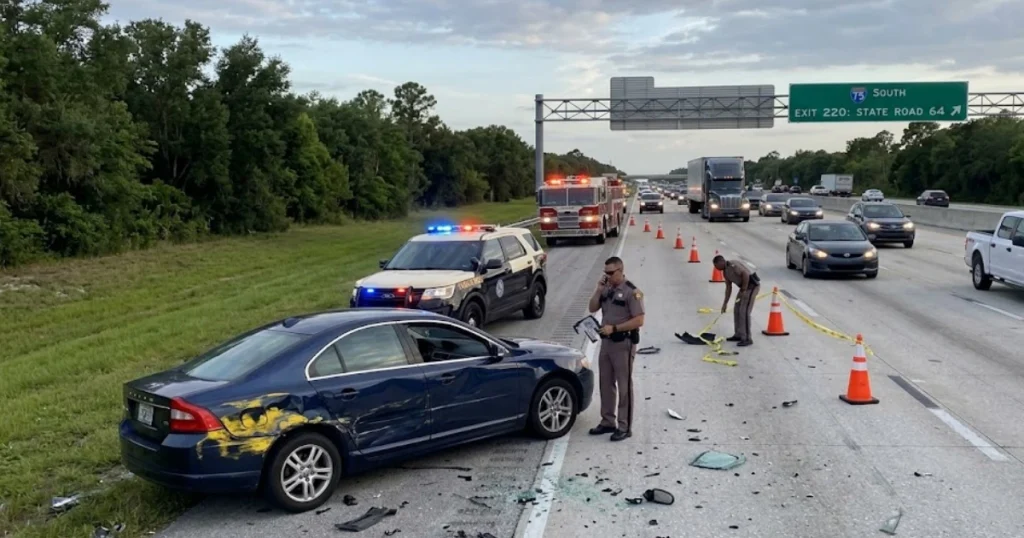
A semi-truck driver died on I-95 in Volusia County after hitting metal debris. If road debris caused your crash in Florida, learn your rights. On the evening of April 11, 2026, a truck driver was doing what millions of Floridians do every day: he was just trying to get down the road. He was northbound on I-95 in Volusia County, near Port Orange, when metal debris appeared in his lane. He swerved right to avoid it. He still hit it. The truck crossed back to the left, ran into the median, and struck several trees. The left side of the Freightliner Cascadia was torn apart. The driver was ejected and pronounced dead at the scene. The Florida Highway Patrol is still investigating. The driver’s family is left with no answers and no income. And somewhere out there, the question no one is asking on the news is: who left that metal debris on I-95? This article explains what road-debris truck crash cases in Florida actually look like, who can be held responsible, and why the clock starts running immediately. If you or your family are going through this right now, The Reyes Firm is here for you. We serve Tampa and the South Shore communities, as well as Riverview, Brandon, Plant City, and communities across Hillsborough County. We know this road and this state.  The Reyes Firm Lost Someone in a Fatal Road Debris Truck Crash? If road debris caused a fatal semi-truck accident in Florida, our team can help investigate who may be responsible. Had a bad day? Schedule a Free Consultation Quick Summary On April 11, 2026, a semi-truck driver died on northbound I-95 in Volusia County after his 2022 Freightliner Cascadia struck metal debris in the roadway and crashed into the median. Road debris crashes are not always random accidents. Someone may be legally responsible for that debris. Florida’s statute of limitations for personal injury and wrongful death claims is 2 years from the date of the crash under Florida Statute 95.11. In 2024, Florida recorded 46,651 commercial motor vehicle crashes resulting in 315 fatalities, according to FLHSMV’s By the Numbers 2024 report. If you lost a family member in a debris-related truck crash anywhere in Florida, The Reyes Firm can investigate who left that hazard on the road. Had a bad day? Call us: 833-4 BAD DAY. What Happened in the I-95 Volusia County Semi-Truck Crash? The facts, as reported by the Florida Highway Patrol: on April 11, 2026, at approximately 6:41 p.m., a semi-truck driver was traveling northbound on I-95 in the inside lane near mile marker 256 in Volusia County, in the area of Port Orange. Metal debris was blocking the roadway. The driver swerved right to avoid it, but still made contact with the debris. The truck then veered left, left the road, entered the center median, and struck multiple trees. The force of the collision tore apart the left side of the truck. The driver was ejected and killed. As of publication, the driver’s identity had not been released, pending notification of next of kin by the Medical Examiner’s Office. The crash remains under investigation. One critical question Florida Highway Patrol is working to answer: where did that metal debris come from? That answer could determine whether someone is financially responsible for this driver’s death. Crash Location Reference I-95 Northbound Near Mile Marker 256 in Volusia County, Florida According to WESH and the Florida Highway Patrol, the fatal semi-truck crash happened on I-95 northbound, just north of mile marker 256 in Volusia County, after the truck struck metal debris in the roadway.   ⚠️ Warning: Florida Statute of Limitations: Under Florida Statute § 95.11, families have only 2 years from the date of a fatal crash to file a wrongful death lawsuit. The I-95 Volusia County crash occurred on April 11, 2026. That deadline is firm. Waiting too long means losing the right to pursue compensation entirely. Evidence also disappears fast. Call a lawyer before you need to. Who Is Legally Responsible When Road Debris Causes a Fatal Crash? Road debris crashes are not always freak accidents. In many cases, someone is responsible. Florida law allows injured people and surviving family members to seek compensation from any party whose negligence created the hazard. Possible responsible parties include: Another truck or vehicle that lost its load or shed debris without securing it properly A company that failed to properly secure cargo on a commercial vehicle, violating federal FMCSA cargo securement rules under 49 CFR Part 393  A construction or road maintenance crew that left materials in an active travel lane A government entity responsible for maintaining I-95, if the debris was a known hazard that went unaddressed A third party whose negligent disposal of materials created the road hazard The challenge is identifying the source of the debris. That’s where investigation matters. Florida Statute 316.520 requires that loads transported on Florida roads be secured against falling, blowing, or shifting. A violation of this statute can be strong evidence of negligence in a debris crash case. Violations can result in civil liability, not just traffic citations. How Dangerous Is Road Debris for Commercial Trucks in Florida? More dangerous than most people realize. Florida is one of the most active commercial trucking states in the country, and its highways carry heavy freight traffic year-round. A loaded semi-truck traveling at highway speed has very little margin for error when debris suddenly appears in its lane. 💡 Did You Know? In 2024, Florida recorded 46,651 commercial motor vehicle (CMV) crashes resulting in 315 fatalities, according to FLHSMV’s By the Numbers 2024 report, preliminary as of June 2025. That works out to roughly one CMV fatality every 1.2 days somewhere in this state. Nationally, NHTSA reported 5,472 people killed in crashes involving large trucks in 2023, an 8.3% decrease from 2022. Even with that improvement, more than 15 people per day still died in large truck crashes across the U.S. Sources: FLHSMV By the Numbers 2024 | NHTSA

I-75 southbound near State Road 64 in Manatee County Florida following hit-and-run crash, for illustrative purposes only
Blog, Commercial Vehicles, News, Uninsured Motorist Coverage, Wrongful Death

Deadly I-75 Hit-and-Run in Manatee County: 5 Critical Rights Florida Victims Must Know Now

Hit by a driver who fled on I-75 in Manatee County? Learn your rights after a hit-and-run crash in Florida. A truck driver left for work before sunrise on a Monday morning and never came home. A vehicle weaving through southbound I-75 traffic near State Road 64 in Manatee County clipped another car, sending it into the path of a fully loaded semi. The semi overturned across all three southbound lanes. The driver died at the scene. He left behind four children. The person who caused it stopped for a moment. Then fled. If you lost someone in a crash like this, or you were hurt and the driver ran, you’re probably asking the same question every hit-and-run victim asks: “What can I actually do if they ran?” The answer, under Florida law, is more than you think. This article walks you through exactly what your rights are after an I-75 hit-and-run crash in Manatee County or anywhere in Florida, and what steps to take right now. Quick Summary A fatal hit-and-run on I-75 near State Road 64 in Manatee County killed a truck driver and father of four after the at-fault driver fled the scene. Florida law makes leaving a deadly crash scene a first-degree felony with up to 30 years in prison under Florida Statute 316.027. Even if the driver who fled is never found, you can still recover through your own uninsured motorist policy under Florida Statute 627.727. Florida recorded 97,902 hit-and-run crashes in 2024, and nearly 25% of all crashes involve a driver who flees. You are not alone in this. The Reyes Firm fights for hit-and-run victims across Tampa, Manatee County, and communities throughout Hillsborough County and South Florida. Had a bad day? Call 833-4 BAD DAY. Where Did the I-75 Hit-and-Run Crash Happen in Manatee County? The crash was reported on southbound I-75 near State Road 64 in Manatee County, Florida. The map below shows the approximate area for reader context only. Map note: Approximate location of the fatal hit-and-run crash on I-75 near SR-64 in Manatee County, Florida. For illustrative purposes only and not a precise crash-scene marker. What Happened on I-75 in Manatee County, and Why Does It Matter for Your Case? A vehicle was weaving aggressively through southbound I-75 traffic near State Road 64 in Manatee County when it struck another car. That impact forced the second vehicle into the path of a fully loaded semi-tractor-trailer. The semi overturned across all three southbound lanes, killing the truck driver at the scene. The driver who caused the chain reaction stopped briefly, then fled south on I-75. Florida Highway Patrol identified the at-fault driver after investigators tracked down the vehicle. Charges include vehicular homicide and leaving a crash scene involving death. The case is still under investigation. This crash matters for victims across Florida because it captures every element that makes hit-and-run cases so difficult: a high-speed corridor, a driver fleeing before evidence is collected, and a family left without answers. The I-75 corridor between Tampa and the South Shore communities carries some of the heaviest traffic in the state. When something goes wrong at speed on that stretch of road, the results are catastrophic. ⚠️ Deadline Warning: Florida’s statute of limitations for most personal injury and wrongful death claims is 2 years from the date of the crash under Florida Statute § 95.11(3)(a), as amended in 2023. If you miss this deadline, you lose your right to sue. Do not wait to find out your options. The Reyes Firm Hurt in a Hit-and-Run Crash on I-75? Get clear next steps after a serious crash in Manatee County or anywhere in Florida. Had a bad day? Contact Us Now Can I Still Sue If the Hit-and-Run Driver Fled or Was Not Identified? Yes. Florida law gives you recovery options even if the driver is never found. You have two main paths: a civil claim against the at-fault driver once identified, and a claim through your own uninsured motorist coverage under Florida Statute 627.727. Your uninsured motorist (UM) coverage exists for exactly this situation. Florida law treats a hit-and-run driver the same as an uninsured driver. Your own policy can step in and pay for your medical bills, lost income, pain and suffering, and in a wrongful death case, the full damages your family has suffered. What Happens When a Driver Flees a Crash Scene in Florida? In this video, Attorney Edward Reyes explains what may happen after a hit-and-run crash and why uninsured motorist coverage can become important when the driver who caused the crash leaves the scene. Video note: Attorney Edward Reyes, Esq. discusses what can happen when a driver flees a crash scene and how uninsured motorist coverage may help injured victims. For informational purposes only. As Attorney Reyes explains in the video above, cameras don’t always capture the fleeing driver. Ring cameras, phone recordings, and witness accounts all become critical. But even without the driver’s identity, your UM coverage can still pay. The insurance company needs to confirm that the hit-and-run happened and that you were injured. The Reyes Firm helps clients in Tampa, Manatee County, and communities across Hillsborough County build and present exactly that case. 📊 Did You Know? Florida recorded 97,902 hit-and-run crashes in 2024, according to the Florida Department of Highway Safety and Motor Vehicles (FLHSMV). That is nearly one hit-and-run every 5 minutes. More than 1 in 4 Florida crashes in 2024 involved a driver who fled the scene. Source: FLHSMV. What Are the Criminal Charges a Hit-and-Run Driver Faces in Florida? Leaving a crash scene that results in death is a first-degree felony in Florida, carrying up to 30 years in prison with a mandatory minimum of 4 years. Florida Statute 316.027(2)(c), known as the Aaron Cohen Life Protection Act, imposes these penalties because fleeing deprives the victim of any chance at immediate help. The charge requires proof that the driver knew a crash occurred and knew or should have known someone was

Nighttime semi-truck scene on I-75 in Sarasota County with emergency lights in the background, for illustrative purposes only.
Blog, News

Fatal I-75 Semi Crash Near Sarasota: 7 Things Families Must Know

You’re driving home late at night when someone you love is gone in seconds. That’s what happened on I-75 in Sarasota County just after midnight on April 12, 2026. A 34-year-old woman from New Port Richey was killed when a semi-truck slammed into her stopped pickup truck near mile marker 178. Three others suffered minor injuries. The crash remains under investigation by the Florida Highway Patrol. Crashes like this can be especially severe because I-75 carries enormous commercial freight traffic around the clock, through darkness, at highway speeds, with trucks that weigh 80,000 pounds fully loaded. When something goes wrong, the people in smaller vehicles pay the price. And the companies behind those trucks start protecting themselves immediately. If your family lost someone in a commercial vehicle crash anywhere along I-75, I-4, or I-275, or anywhere across Tampa, Sarasota County, and the South Shore communities, The Reyes Firm is ready to fight for you. Our Tampa personal injury attorneys focus on semi-truck and commercial vehicle cases. This is our lane. Quick Summary A semi-truck killed a 34-year-old New Port Richey woman on I-75 in Sarasota County just after midnight on April 12, 2026, according to the Florida Highway Patrol. Three other people suffered minor injuries, including a 19-year-old man from Tampa, a 33-year-old man from Alva, and a 3-year-old child from New Port Richey. Florida recorded 46,651 commercial motor vehicle crashes in 2024 with 315 fatalities, per FLHSMV. I-75 is one of Florida’s busiest commercial freight corridors. In a semi-truck crash, the driver is rarely the only liable party. The carrier, broker, maintenance company, and shipper may all share responsibility. Critical evidence like black box data, driver logs, and dashcam footage can disappear within days. Acting fast is not optional. Florida’s wrongful death law allows surviving families to pursue compensation for lost income, companionship, and future support under Florida Statutes Sections 768.16 through 768.26. Had a bad day? You don’t face this alone. Call The Reyes Firm at 833-4 BAD DAY. 7 Things Families Must Know After a Fatal Semi-Truck Crash on I-75 1. What Happened on I-75 in Sarasota County on April 12, 2026? Here are the confirmed facts from Florida Highway Patrol reports: Date and time: April 12, 2026, at approximately 12:08 a.m. Location: Northbound I-75 near mile marker 178, approximately one mile south of the Toledo Blade exit near the Sarasota County and DeSoto County line Vehicles involved: A pickup truck towing a sod-loaded trailer and a northbound semi-truck (tractor-trailer) What happened: The pickup truck stopped in the right travel lane, reportedly due to a possible trailer tire issue. Two adult passengers exited the vehicle to check on the trailer. The semi-truck, also traveling northbound in the right lane, struck the left side of the trailer and the pickup truck. Who was hurt: The 34-year-old driver from New Port Richey was pronounced dead at the scene. A 19-year-old man from Tampa, a 33-year-old man from Alva, and a 3-year-old child from New Port Richey suffered minor injuries. Public reports indicate the 33-year-old man and the child were outside the vehicle at the time of the crash. The 61-year-old semi-truck driver also sustained minor injuries. Investigating agency: Florida Highway Patrol Status: The crash remains under active investigation. 2. Why Are Semi-Truck Crash Cases Different From Regular Car Accident Cases? Semi-truck crash cases are fundamentally different from regular car accident cases. Those differences can determine how much your family recovers and how fast the evidence disappears. Black box and EDR data. Every commercial truck carries an Event Data Recorder that captures speed, braking, throttle input, and steering in the seconds before impact. That data belongs to the carrier and can be overwritten if you don’t act fast. Electronic logging devices. Federal law requires commercial drivers to track their hours on an ELD. Those logs reveal whether the driver had been on the road too long before the crash. Maintenance records. The carrier must keep detailed inspection and maintenance files on every vehicle. If a mechanical failure contributed to the crash, those records are the evidence. Driver qualification files. Carriers must document driver hiring, training, and background checks in accordance with FMCSA regulations. A history of prior violations or a failed drug screen can be critical. Multiple liable parties. In most semi-truck crashes, the driver is not the only defendant. The carrier, the broker, the shipper, the maintenance company, and others may all bear responsibility. Much larger insurance policies. Commercial carriers are required to carry far higher liability limits than ordinary drivers, which means the insurance company has more money at risk and will fight harder to protect it. ⚠️ Warning: Federal record-retention rules do not require carriers to preserve every record indefinitely, and electronic evidence can be lost or overwritten quickly if no preservation demand is sent. Black box data, dashcam footage, and driver logs can all disappear before a family even speaks to a lawyer. The Reyes Firm immediately sends spoliation letters demanding the preservation of all data, records, and footage. Call 833-4 BAD DAY now. 3. Who May Be Liable After a Fatal Semi-Truck Crash on I-75? Liability in a commercial vehicle crash rarely stops with one person. Florida law, under Florida Statute Section 768.81, allows courts to apportion fault among all parties whose negligence contributed to the crash. In a case like the April 12 I-75 collision, the following parties may face scrutiny: The semi-truck driver. Fatigue, distraction, following distance, and speed at the time of the crash all go under the microscope. The trucking company or carrier. The company is responsible for hiring qualified drivers, enforcing hours-of-service rules, maintaining vehicles, and complying with FMCSA safety regulations. The vehicle maintenance contractor. If faulty brakes, tires, or other mechanical failures contributed to the crash, the company responsible for maintenance may share liability. The cargo broker or shipper. If scheduling demands push the driver to operate while fatigued or in unsafe conditions, brokers and shippers can face liability under Florida and federal law. A manufacturer, if a defect was

Unsecured cargo timber logs protruding from the rear of a flatbed truck on a Florida highway, for illustrative purposes only
Blog, News, Truck Accidents

Unsecured Cargo Truck Accidents in Florida: Lawsuit Deadlines and Liability

Picture this. You’re driving south on US-98 just north of Lakeland, following a big Mack truck hauling a load of timber. The truck slows to turn. You don’t notice in time. The logs extending from the rear of that trailer come straight through your windshield. That’s exactly what happened on April 2, 2026, in Polk County, Florida. A 44-year-old driver was killed when timber pierced his cab and caused a hazardous materials spill. Investigators said the load met safety requirements. The crash remained under investigation, with no charges expected. That last part should stop you cold. Even a “legally secured” load can kill someone, and the question of who bears legal responsibility in unsecured cargo truck accident cases in Florida is rarely simple. This article breaks down every party who may owe you damages, what the FMCSA cargo securement rules actually require, and what a Tampa family should do right now if they’ve been hurt or lost someone to a falling or protruding load. Quick Summary When cargo falls from or protrudes from a truck in Florida, the driver, the trucking company, the cargo loader, and others can all share legal liability. Florida’s statute of limitations gives most injury victims 2 years from the date of the crash to file a claim under Florida Statute § 95.11(3)(a). Miss it, and you lose your right to sue. According to NHTSA data, unsecured loads and road debris caused 715 deaths and 16,595 injuries nationwide in a single year, and about two-thirds of debris crashes come from vehicles with improperly secured loads. Call 911, document everything at the scene, and do not give the trucking company’s insurer a recorded statement before you talk to a lawyer. Had a bad day? Call The Reyes Firm at 833-4 BAD DAY — free consultation, no fee unless we win. The Reyes Firm Hurt in a Florida Truck Accident? Get clear next steps after a serious cargo, timber, or semi-truck crash. Had a bad day? Schedule a Free Consultation Polk County Fatal Timber Truck Crash on US-98 April 2, 2026 | US-98 North at State Road 471, Polk County, FL On the morning of April 2, 2026, a 44-year-old commercial truck driver was killed on US-98 North near State Road 471, approximately 10 miles north of Lakeland. According to the Polk County Sheriff’s Office, he was traveling southbound behind a Mack truck hauling timber when the timber truck slowed to turn. His semi-truck struck the load of timber protruding from the rear of the trailer. Large pieces of timber pierced his cab, triggering a hazardous materials spill that closed the road for roughly seven hours. The timber truck driver was not injured. Investigators reported the load met safety requirements. No charges were expected, and the crash remained under investigation. Crashes like this one raise an immediate question for surviving families and injured victims: when a load is declared compliant, but someone still dies, who is legally responsible? Who Is Liable When Cargo Falls Off a Truck in Florida? Multiple parties can share legal liability when cargo causes a crash, and Florida law lets you pursue all of them at once. Florida follows modified comparative fault under Florida Statute § 768.81. That means even if you were partially at fault for the crash, you can still recover damages, as long as your share of fault is 50% or less. The liability for an unsecured cargo crash typically spreads across some combination of these parties: The truck driver, who has a duty to inspect and re-check the load The motor carrier (trucking company), which is responsible for training, equipment, and compliance The cargo loader or shipper, who may have improperly stacked, strapped, or distributed the load before the truck ever left the yard A broker, who scheduled the haul and may have pressured the carrier to move faster than was safe A maintenance company, if defective tiedowns, chains, or binders contributed to the load shifting Watch: Who Can Be Liable in a Florida Truck Accident? In serious truck accident cases, liability may extend beyond the driver. This video explains how the trucking company, trailer owner, cargo loader, maintenance company, and other commercial parties may also be held responsible after a crash involving a timber truck, an unsecured load, or a semi-truck. One of the most common mistakes families make is assuming only the driver is at fault. The companies behind the driver start protecting themselves the moment a crash happens. You need someone protecting you just as fast. ⚠️ Important Florida’s statute of limitations for personal injury and wrongful death claims is 2 years from the date of the accident under Florida Statute § 95.11(3)(a). If a family member was killed in a cargo crash, the wrongful death clock also runs 2 years from the date of death under Florida Statute § 95.11(4). Miss this deadline, and you permanently lose your right to recover damages. Call a lawyer now, not after your next paycheck clears. What Are the FMCSA Rules for Cargo Securement on Log and Timber Trucks? Federal law sets strict rules for how logs, lumber, and timber must be secured, and violating those rules can establish negligence in your lawsuit. The Federal Motor Carrier Safety Administration (FMCSA) adopted specific cargo securement standards under 49 CFR Part 393, Subpart I. General cargo must be firmly secured to prevent it from shifting, falling, blowing away, or becoming a road hazard. For logs and timber specifically, 49 CFR § 393.116 goes even further: The truck must be designed or adapted for transporting logs, and fitted with bunks, bolsters, stakes, or standards to cradle the load and prevent rolling Tiedowns must be used alongside those structural components The aggregate working load limit of all tiedowns must equal at least one-sixth the weight of the log stack Logs must be solidly packed, with each outside log touching at least two stakes, bunks, bolsters, or standards Drivers must inspect the cargo within the first 50 miles of a trip, then reexamine it

A motorcycle rider cruising down a palm-lined Florida highway, representing the roads where Plant City and Hillsborough County motorcycle accidents happen, illustrative purposes only
Blog, Motorcycles, News

Plant City Motorcyclist Seriously Injured in I-4 Reckless Driving Crash

A Plant City motorcyclist is fighting to recover after being struck and thrown from his bike on one of Hillsborough County’s busiest stretches of highway. On April 4, 2026, two vehicles were caught racing near 100 miles per hour on Interstate 4 when one of them slammed into a 52-year-old rider near Milepost 16.5, sending him tumbling across the pavement in front of a Florida Highway Patrol trooper. One driver was arrested. The other fled and has not been found. This kind of crash is not an accident in the true sense of the word. It is the predictable result of reckless behavior on a public road. When drivers treat a heavily trafficked interstate like a racetrack, innocent people pay the price. If you or someone you love was injured by a reckless driver in Hillsborough County, understanding your legal rights is the first and most important step toward recovery. Quick Summary On April 4, 2026, a 52-year-old Plant City motorcyclist was struck and thrown from his bike on I-4 near Milepost 16.5 in Hillsborough County. Two vehicles were racing near 100 MPH when a Kia Seltos driven by the at-fault driver collided with the rider. The motorcyclist suffered serious injuries. The at-fault driver was arrested for Reckless Driving Involving Serious Bodily Injury, a third-degree felony in Florida. The driver of the silver Toyota Camry fled and has not been identified. If you were injured by a reckless driver on a Hillsborough County roadway, call The Reyes Firm at 833-4-BAD-DAY for a free consultation. What Happened: I-4 Reckless Driving Crash in Plant City, April 4, 2026 A Plant City motorcyclist is recovering from serious injuries after being struck and thrown from his motorcycle on Interstate 4 in Hillsborough County. The Florida Highway Patrol reports two vehicles were racing at speeds near 100 MPH when one of them, a Kia Seltos, collided with the rider near Milepost 16.5 on SR-400. According to the FHP crash report, a trooper was traveling westbound on I-4 in Hillsborough County on the evening of April 4, 2026, when he observed two vehicles approaching at extreme speed and overtaking his marked patrol vehicle. The lead vehicle, a silver Toyota Camry, passed the trooper at 100 miles per hour, cut in front of a motorcyclist traveling in the outside lane, and also cut in front of the patrol vehicle. As the trooper accelerated to initiate a traffic stop on the Camry, the second vehicle, a Kia Seltos, attempted the same high-speed passing maneuver. The Kia failed. It struck the motorcyclist directly, adjacent to the patrol car. The rider, a 52-year-old Plant City man, was thrown from his motorcycle. He sustained serious injuries and was transported to an area hospital. His condition has not been publicly reported. The driver of the Kia Seltos stopped on the shoulder following the impact. FHP arrested him at the scene. He has since bonded out of jail. The driver of the silver Toyota Camry fled the scene and remains unidentified. FHP is requesting that anyone with information contact them at *FHP (*347). Crash Location on I-4 Near Plant City This map highlights the approximate stretch of Interstate 4 in Hillsborough County near Milepost 16.5, between McIntosh Road and Branch Forbes Road, where the serious motorcycle crash was reported. Key Crash Facts at a Glance Date: April 4, 2026 | Location: I-4 (SR-400), Milepost 16.5, Hillsborough County | Victim: 52-year-old Plant City man (motorcyclist) | Vehicle 1: Silver Toyota Camry (driver fled, still at large) | Vehicle 2: Kia Seltos (driver arrested) | Charge: Reckless Driving Involving Serious Bodily Injury (F.S. 316.192) | Status: Kia driver bonded out; Camry driver identity unknown What Is Reckless Driving Under Florida Law? (F.S. 316.192) Under Florida Statute Section 316.192, reckless driving is defined as operating a motor vehicle with willful or wanton disregard for the safety of persons or property. When reckless driving causes serious bodily injury, it becomes a third-degree felony punishable by up to 5 years in prison. This is not a traffic ticket. Reckless driving is a criminal offense in Florida, and when it injures someone, the stakes escalate significantly for the at-fault driver and the victim alike. Florida law recognizes different levels of severity: Reckless Driving (No Injury) Up to 90 days in jail and a $500 fine for a first offense. Up to 6 months in jail and a $1,000 fine for a second offense. Reckless Driving Causing Property Damage or Minor Injury A first-degree misdemeanor, punishable by up to 1 year in jail and a $1,000 fine. Reckless Driving Causing Serious Bodily Injury A third-degree felony, punishable by up to 5 years in prison and a $5,000 fine. This is the charge the at-fault driver currently faces. Vehicular Homicide (Reckless Driving Causing Death) A second-degree felony, punishable by up to 15 years in prison. Two vehicles racing in tandem on a public interstate at nearly 100 MPH, passing a marked police vehicle and a motorcyclist, meet every element of willful and wanton disregard under Florida law. It is also worth noting that the silver Toyota Camry, which passed the trooper first and cut in front of the motorcyclist, may be liable for setting off the chain of events that caused this crash. Under Florida law, a driver who contributes to the conditions causing an injury may bear civil responsibility even if they were not the direct point of impact. What Happens When the At-Fault Driver Flees? Florida Hit-and-Run Law Explained In Florida, leaving the scene of a crash involving injury is a felony under F.S. 316.027. When the fleeing driver is later identified, they face criminal charges and may be held civilly liable. In the meantime, injured victims may have options through their own uninsured motorist (UM) coverage. The Toyota Camry driver’s disappearance from this crash scene is not just morally troubling. It is also a serious criminal offense. Under Florida Statute Section 316.027, any driver involved in a crash resulting in injury must remain at the scene and

Overturned commercial truck on a Florida highway near the Everglades. Image for illustrative purposes only.
Blog, News, Truck Accidents

Truck Crash on US-41 Near the Everglades: What Collier County Victims Need to Know About Their Rights

A loaded semi-truck carrying lumber overturned on US-41 near Turner River Road in Collier County in March 2026. Three people were injured. The highway shut down. And somewhere in the middle of all that chaos, real people had to figure out what to do next. That’s a situation nobody prepares for. One moment, you’re driving through one of the most remote stretches of Southwest Florida. Next, you’re dealing with injuries, a totaled vehicle, medical bills stacking up, and insurance adjusters calling your phone before you’ve even left the hospital. If you or someone you love was caught in that crash, or any truck accident on US-41 in Collier County, this guide is for you. We’ll walk you through who can be held responsible, what Florida law says about your rights, what evidence matters most, and what you need to do right now to protect your ability to recover compensation. You don’t need a law degree to understand your options. You just need the right information. Quick Summary If you were hurt in a truck crash on US-41 in Collier County, Florida law allows you to pursue compensation from multiple parties, including the trucking company, cargo loaders, and maintenance providers, not just the driver. You have exactly 2 years from the date of your accident to file a personal injury lawsuit in Florida under Florida Statute § 95.11(3)(a). Miss that window and your claim is likely gone forever. Florida recorded 381,210 traffic crashes in 2024, more than 1,000 every single day, and 3,184 people lost their lives on Florida roads that year (FLHSMV, 2024). Commercial truck crashes involve black box data, federal hours-of-service logs, cargo manifests, and maintenance records that disappear fast. The sooner you get an attorney involved, the better. Do not give a recorded statement to the trucking company’s insurance adjuster before speaking with a lawyer. One wrong answer can tank your claim. Had a bad day? Call The Reyes Firm at 833-4 BAD DAY, free consultation, no fee unless we win. Why Are Truck Crashes on US-41 Near the Everglades So Dangerous? US-41, also called the Tamiami Trail, runs roughly 275 miles across Florida from Tampa down to Miami. The stretch through Collier County near the Everglades is one of the most unforgiving sections of highway in the state. The road cuts through remote wilderness with long straightaways, minimal lighting, no median barriers in many sections, and shoulders that drop off quickly. There are few opportunities to pull over safely in an emergency. Cell service is spotty. Emergency response times are longer than in urban areas. Crash Location Map The map below highlights the US-41 and Turner River Road area in Collier County, a remote Everglades corridor where limited shoulders, long straightaways, and slower emergency access can make truck crashes especially dangerous. This stretch of US-41, also known as the Tamiami Trail, runs through a rural section of Collier County near the Everglades, where commercial truck crashes can become more severe due to isolation and road conditions. Combine that geography with heavy commercial truck traffic, loads of timber and construction materials moving between Naples and Miami, and drivers who may have been behind the wheel for hours, and you have a corridor where crashes are both more likely and more severe. According to the Florida Department of Highway Safety and Motor Vehicles (FLHSMV), Florida recorded 381,210 traffic crashes in 2024, more than 1,000 crashes every single day. That same year, 3,184 people were killed on Florida roads. Florida ranks 3rd in the nation for fatal car accidents. Source: flhsmv.gov When a semi-truck is involved, the consequences are almost always worse. A fully loaded commercial truck can weigh up to 80,000 pounds. A passenger vehicle weighs roughly 3,000 to 4,000 pounds. The physics of that mismatch do not favor the smaller vehicle. Did You Know? The FLHSMV reports that distracted driving is the leading cause of traffic crashes in Florida, cited in 1 in every 7 collisions statewide. For commercial truck drivers, distraction can mean a vehicle the length of a school bus drifting out of its lane at highway speed. If a trucker’s inattention contributed to your crash, that negligence is documented and recoverable. Who Can Be Held Legally Responsible for a Truck Crash in Collier County? This is one of the most important things to understand about commercial truck accidents. The driver is rarely the only party with legal exposure. In fact, in many cases, the trucking company bears more liability than the driver behind the wheel. Watch: Who Can Be Liable in a Florida Truck Accident Case? This video explains why truck accident claims often involve more than just the driver. Depending on the facts, liability may also extend to the trucking company, trailer owner, cargo loading company, maintenance provider, and other entities involved in the truck’s operation. In commercial truck accident cases, identifying every potentially liable party can make a major difference in the strength and value of the claim. Florida law allows injury victims to pursue claims against every party whose negligence contributed to the crash. In a semi-truck accident, which can include: The truck driver for speeding, distracted driving, fatigue, impaired driving, or failure to properly secure cargo. The trucking company is being pressured to violate federal hours-of-service rules, hire unqualified drivers, or fail to enforce safety protocols. The cargo loading company for improperly securing loads. In the March 2026 Collier County crash, the truck was carrying lumber. Unsecured or improperly distributed cargo is a leading cause of truck rollovers. The truck maintenance provider failed to catch brake defects, tire failures, or steering problems that contributed to the crash. The truck or parts manufacturer if a defective component, such as a faulty brake caliper or tire, caused or worsened the accident. Federal regulations from the Federal Motor Carrier Safety Administration (FMCSA) set strict rules for how long drivers can be on the road (a maximum of 11 hours after 10 consecutive hours off duty), how cargo must be secured and distributed, and

Illustration of a semi-truck crash on a Florida highway for a Weston U.S. 27 truck accident article
Blog, News, Truck Accidents

Weston Semi-Truck Accident Lawyer: What to Know After a U.S. 27 Crash

A normal drive can turn into a life-changing event in seconds. One moment, a person may be heading to work or taking a family member somewhere. Next, there may be flashing lights, a smashed vehicle, and a rush to the hospital. That is part of what makes a truck crash so overwhelming. It does not just interrupt the day. It can change a person’s health, job, finances, and peace of mind all at once. That is especially true when the crash involves a semi-truck. According to NBC Miami, the Weston crash on February 10, 2026, happened around 5:30 a.m. near Southwest 26th Street and U.S. 27, involved a minivan and a semi-tractor trailer, and left one person with severe injuries who was airlifted to Broward Health Medical Center in critical condition. Many people do not realize how different these cases are until they are living through one. A person may be dealing with emergency care, calls from insurance companies, and questions about who caused the crash. That is why many injured people start searching for a Weston semi-truck accident lawyer. They are not just looking for a lawsuit. They are looking for answers. Quick Summary A February 10, 2026, crash on U.S. 27 in Weston involved a minivan and a semi-tractor-trailer and left one person in critical condition. Truck accident cases are often more complex than regular car crashes because they can involve severe injuries, company-controlled evidence, multiple liable parties, Florida’s PIP rules, the serious injury threshold, and modified comparative fault. In Florida, quick medical care and early evidence preservation can make a major difference. Information Point A truck accident case is often bigger than it looks at first. The crash scene may be only one part of the evidence. Important proof may also be stored in company records, onboard data, maintenance files, and driver logs. Why are semi-truck crashes often more serious than regular car accidents? A semi-truck is much larger and heavier than a passenger car. Because of that size difference, the people in the smaller vehicle often suffer the worst injuries in a collision. Even a crash that starts as a traffic report can become a major medical and legal event for the people involved. National crash data helps explain why these cases deserve special attention. NHTSA reported that in 2022, 5,936 people were killed in traffic crashes involving large trucks, and 70% of those killed were occupants of other vehicles, not the truck itself. NHTSA also reported that 76% of fatal crashes involving large trucks happened on weekdays. Florida’s own numbers show how common commercial vehicle crashes are statewide. FLHSMV’s 2024 “By the Numbers” report lists 46,651 commercial motor vehicle crashes in Florida, involving 315 fatalities, and 381,210 codable traffic crashes statewide in 2024. That does not mean every truck accident leads to catastrophic injury. It does mean these crashes deserve careful attention from the start. When a semi-truck is involved, the physical force, the number of possible defendants, and the amount of evidence can all increase. Did You Know FLHSMV reported 46,651 commercial motor vehicle crashes in Florida in 2024. That is one reason truck accident cases are not rare, and why state and federal safety rules matter so much. What happened in the U.S. 27 Weston crash? The NBC Miami report gives a useful example of why truck accident cases can become serious very quickly. Officials said the crash happened on U.S. 27 near Southwest 26th Street in Weston, involved a minivan and a semi-tractor-trailer, and left one person critically injured. The northbound lanes between Southwest 26th Street and Interstate 75 were closed while crews responded and investigated the incident. Map of the Reported U.S. 27 Crash Area in Weston This map shows the reported area near U.S. 27 and Southwest 26th Street in Weston, where officials said the semi-truck crash happened. At the time of the report, the cause of the crash had not yet been publicly confirmed. That is common in the early stage of a serious truck collision. News reports often tell the public what happened on the road, but not yet why. The legal case usually turns on that second question. A crash like this may raise many issues. Was the truck driver speeding? Was the driver distracted or fatigued? Was the truck properly maintained? Was the cargo loaded safely? Those answers may not be visible from the roadside. They often come from a deeper investigation. Why is a truck accident claim different from a normal car accident claim? A regular car accident case may center on two drivers, vehicle damage, and insurance coverage. A truck accident claim is often more layered. It may involve the driver, the trucking company, the trailer owner, a maintenance vendor, a cargo loader, or even a parts manufacturer, depending on the facts. Truck cases also tend to involve more technical evidence. A commercial truck may have electronic data that can help show speed, braking, steering inputs, and other information near the time of impact. The company may also hold dispatch messages, driver qualification files, maintenance records, and log data that do not exist in a typical two-car collision. Florida’s comparative fault law adds another layer. Under section 768.81, a claimant’s damages can be reduced based on their share of fault, and any party found to be greater than 50% at fault for their own harm may not recover damages in a negligence action covered by the statute. That matters because insurance companies often try to frame the story early. In a serious truck case, even a small shift in blame can affect the value of a claim. That is one reason early investigation matters. Key Takeaway A truck crash is not just a bigger car crash. It usually involves more records, more legal issues, and more pressure from insurers to control the story early. What should an injured person do right after a U.S. 27 truck crash? The first step is always safety. A person should call 911, get to a safe location

Scroll to Top