Truck Accidents

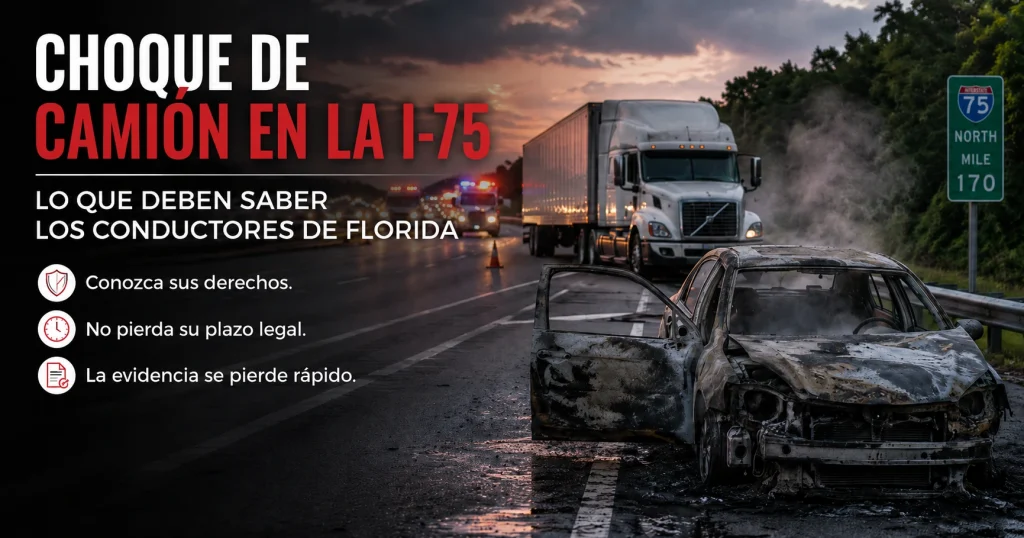
Camión semirremolque y automóvil quemado en la I-75, con vehículos de emergencia al fondo, para fines ilustrativos únicamente.
Blog, News, Spanish, Truck Accidents

Un Auto se Incendió en la I-75. Esto Es Lo Que Deben Saber los Conductores de Florida

Lo Que Usted Necesita Saber Un Toyota Corolla se incendió tras chocar con un tráiler Volvo en la I-75 en Charlotte County el 2 de junio de 2026. La Patrulla de Carreteras de Florida (FHP) reportó que el conductor del Toyota sufrió lesiones menores y fue llevado a un hospital. El choque sigue siendo importante porque los accidentes con camiones de carga pueden involucrar más evidencia, más cobertura de seguro, y más preguntas legales que un choque común entre dos autos. En Florida, las víctimas de lesiones generalmente tienen dos años para presentar una demanda por negligencia bajo el Estatuto de Florida § 95.11. Si usted se lesionó en un choque de camión en la I-75 o en cualquier parte de Florida, The Reyes Firm ofrece consultas gratuitas. ¿Tuvo un mal día? Llámenos. 833-4 BAD DAY. ¿Qué Pasó en el Choque de Camión en la I-75 en Charlotte County? El choque ocurrió antes de las 5 a. m. del 2 de junio de 2026, en la I-75 norte en Charlotte County, justo al sur de Tucker’s Grade. La Patrulla de Carreteras de Florida reportó que un hombre de 26 años manejaba un Toyota Corolla cuando el vehículo se desvió hacia la izquierda y chocó con un tráiler Volvo que viajaba en el carril central. Después del impacto, el Toyota se salió de la carretera, entró a una línea de árboles, y se incendió. El conductor fue llevado a un hospital con lesiones menores, y el conductor del tráiler no resultó herido. Ese primer reporte no responde a todas las preguntas legales. En un choque grave que involucra un vehículo comercial, el primer reporte puede explicar lo que pasó en la escena, pero puede no explicar por qué pasó, si algún factor externo contribuyó, o qué evidencia se debe preservar. Por eso un choque de camión de carga debe revisarse rápido, incluso cuando el primer reporte de lesiones diga “lesiones menores”. Ubicación aproximada del incidente El choque reportado ocurrió en la I-75 norte en Charlotte County, justo al sur de Tucker’s Grade. Este mapa se ofrece solo como referencia general de ubicación y puede no marcar el sitio exacto del choque. Mapa para fines informativos e ilustrativos únicamente. ¿Por qué son diferentes los choques de camiones de los accidentes de auto comunes? Un choque de camión de carga es diferente de un accidente de auto común porque los vehículos comerciales están sujetos a más reglas, más registros, y a menudo más cobertura de seguro. La ley de Florida hace que ciertos dueños y conductores de vehículos comerciales estén sujetos a reglas federales de seguridad bajo el Estatuto de Florida § 316.302. Esas reglas pueden involucrar horas de manejo, mantenimiento del vehículo, inspecciones, y registros de seguridad. En palabras simples, esto significa que un caso de choque de camión puede involucrar evidencia que no existe en un choque normal entre dos autos, como: Registros del conductor Datos de la caja negra o grabadora de eventos Registros del dispositivo electrónico de registro Registros de mantenimiento Reportes de inspección Registros de despacho Video de cámara de tablero Políticas de seguridad de la empresa La evidencia más importante en un choque de camión puede desaparecer rápido si nadie actúa para preservarla. Esto no significa que el conductor del camión o la empresa de transporte sean automáticamente culpables. Significa que el caso debe investigarse con cuidado antes de que las compañías de seguros decidan la historia por usted. ¿Puede un Incendio de Auto Afectar un Reclamo de Lesiones Personales? Sí. Un incendio de vehículo puede afectar un reclamo de lesiones personales porque puede causar lesiones más allá del impacto inicial. Una persona que escapa de un vehículo en llamas puede más adelante presentar síntomas de quemaduras, exposición al humo, choque (shock), lesiones de tejido blando, lesiones de espalda, lesiones en el cuello, o trauma emocional. Algunos síntomas no aparecen de inmediato. Un incendio de auto también puede afectar la evidencia. El vehículo mismo puede quedar dañado o destruido, lo que dificulta revisar los puntos de impacto, defectos, o condiciones después del choque. Esa es otra razón por la que la documentación temprana importa. ⏳ Plazo Importante: Bajo el Estatuto de Florida § 95.11, la mayoría de las demandas de lesiones personales por negligencia en Florida deben presentarse dentro de dos años. Pueden aplicar algunas excepciones según los hechos, así que las personas lesionadas deben hablar con un abogado de lesiones personales de Florida lo antes posible. Para un choque que ocurrió el 2 de junio de 2026, el plazo general de dos años vencería el 2 de junio de 2028. Esperar puede dificultar el caso porque la evidencia se desvanece, los testigos se vuelven más difíciles de localizar, y los registros pueden perderse. ¿Quién Puede Ser Responsable Después de un Choque de Camión en Florida? La responsabilidad después de un choque de camión en Florida depende de la evidencia. En algunos casos, el conductor del camión puede ser responsable. En otros casos, la empresa de transporte, el dueño del camión, la empresa de mantenimiento, quien cargó la mercancía, u otro conductor puede haber jugado un papel. En algunos choques, más de una parte puede compartir la culpa. Los casos de choques de camión en Florida a menudo analizan preguntas como: ¿El conductor del camión siguió las reglas de seguridad? ¿El camión recibió el mantenimiento adecuado? ¿La empresa de transporte mantuvo registros correctos? ¿El conductor estaba fatigado o distraído? ¿Las condiciones de la carretera, la iluminación, u otro vehículo contribuyeron? ¿El vehículo del conductor lesionado tuvo algún problema mecánico? ¿El primer reporte del choque omitió detalles importantes? Florida también sigue reglas de negligencia comparativa, lo que significa que la culpa puede dividirse entre más de una parte. Por eso una investigación cuidadosa importa. Usted no debe asumir que la primera versión de la historia del choque es la respuesta legal final. 📊 ¿Sabía Usted? El reporte preliminar “By the Numbers” de 2024 del FLHSMV registró 46,651 choques de vehículos comerciales en Florida y 315 muertes relacionadas
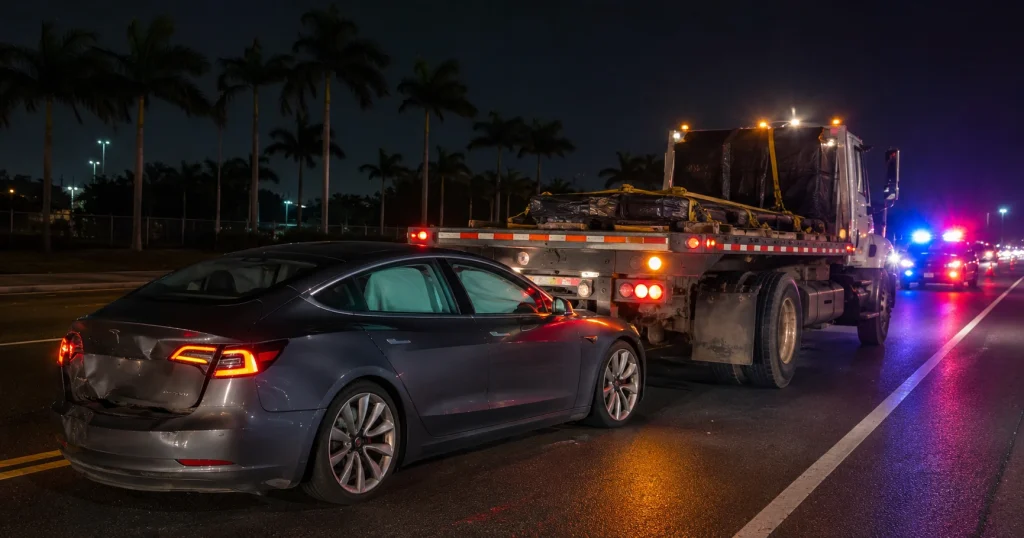
Illustration of a gray electric sedan and a flatbed commercial truck at a nighttime crash scene in South Florida, for illustrative purposes only. This is not a photograph of the June 25, 2026, Homestead crash.
Blog, News, Truck Accidents

Two Women Killed After Tesla Hits Flatbed Truck Near Homestead

What You Need to Know Two women died after a Tesla struck the rear of a flatbed commercial truck in southwest Miami-Dade. FHP said the crash happened around 2:30 a.m. on June 25, 2026. The truck was reportedly traveling about 20 mph with a caravan of work trucks. Investigators have not publicly announced the cause of the Tesla hitting the truck. Electronic data, vehicle inspections, video, and company records may help explain what happened. Had a bad day? Call The Reyes Firm at 833-4 BAD DAY. The Homestead Tesla truck crash left two young women dead and their families searching for answers. The collision involved a Tesla sedan and a slow-moving flatbed commercial truck on South Dixie Highway. Florida Highway Patrol has not publicly identified the cause. That means no one should assume that a single fact, including the rear impact, tells the full story. A complete investigation should examine both vehicles, both drivers, the truck company, roadway visibility, vehicle lighting, electronic data, and nearby video. What Happened in the Homestead Tesla-and-Flatbed Truck Crash? The crash happened at about 2:30 a.m. on June 25, 2026, in the northbound lanes of South Dixie Highway near Southwest 127th Avenue in southwest Miami-Dade. FHP said a gray Tesla struck the rear of a flatbed commercial truck traveling in a slow-moving caravan. Two women died at the scene. Local 10 reported that the commercial truck was moving at about 20 mph with other trucks. The truck drivers had reportedly finished working nearby before the crash. The two women were described as being in their late 20s or early 30s. Their bodies were removed from the Tesla several hours after the collision. U.S. 1 was closed between Southwest 240th Street and Southwest 232nd Street while troopers investigated. The cause remained under investigation at the time the report was updated. Reported detail Current information Date June 25, 2026 Approximate time 2:30 a.m. Location Northbound South Dixie Highway near Southwest 127th Avenue Vehicles Gray Tesla sedan and flatbed commercial truck Truck movement Reportedly traveling about 20 mph in a caravan Fatalities Two women in the Tesla Investigation Ongoing at the time of the news report No public report reviewed for this article states that automated driving technology was active. It also does not establish that the truck, the Tesla driver, or another party caused the crash. Where Did the Tesla Truck Crash at the Homestead Happen? The crash was reported in the northbound lanes of South Dixie Highway near Southwest 127th Avenue in southwest Miami-Dade County, near Homestead, Florida. Map shows the reported area of the crash and is provided for illustrative purposes only. 💡 Did You Know? FLHSMV’s preliminary 2024 report recorded 46,651 commercial motor vehicle crashes and 315 related fatalities in Florida. The report also found that 45% of fatal crashes occurred at night, between 7 p.m. and 6 a.m. Is the Rear Driver Always at Fault After Hitting a Slow-Moving Truck? No. A rear impact puts close attention on the following driver’s speed, distance, braking, and awareness, but it does not replace a complete investigation. In a fatal commercial truck crash, investigators should also examine the truck’s visibility, lighting, lane position, speed, company instructions, roadway conditions, and the conduct of every involved driver. Important questions may include: How fast was the Tesla traveling before impact? Did the driver brake or steer before the collision? Were the flatbed truck’s taillamps working? Were its reflective materials present and visible? Was the truck traveling fully within its lane? Were hazard lights or other warnings being used? How was the work-truck caravan organized? Was the roadway properly lit? Was distraction, fatigue, impairment, or a medical emergency involved? Florida law requires most motor vehicles, trailers, and semitrailers to have at least two rear taillamps. Those lamps must emit red light visible from 1,000 feet under the conditions described by the statute. Florida also requires stop lamps and turn signals on covered vehicles. Federal commercial vehicle rules also address required lamps and reflective devices. An inspection should document the condition of the truck before repairs, cleaning, or normal use changes the evidence. A lighting rule does not prove that a violation occurred in this crash. It identifies an issue investigators should examine before reaching a conclusion. What Evidence Could Explain Why the Tesla Hit the Flatbed Truck? The most useful evidence may come from both vehicles, the roadway, nearby cameras, and company records. Investigators should preserve electronic data from the Tesla and truck, inspect the flatbed’s rear lighting and reflective materials, review phone and toxicology evidence, locate witnesses, and collect GPS, dispatch, dashcam, and maintenance records before they disappear. Important evidence for a truck accident may include: Event data recorder information from both vehicles Speed, braking, steering, and throttle data Available vehicle camera footage Truck dashcam footage GPS and telematics records Dispatch instructions and work assignments Maintenance and inspection records Taillamp, stop-lamp, and reflector inspections Photos showing vehicle positions and damage Skid marks, debris, and roadway measurements Traffic, business, and residential camera footage Cell phone records Toxicology findings Witness statements FHP scene photographs and reports Investigators should also identify the truck, its owner, the motor carrier, the driver’s employer, and the company that organized the caravan. ⚠️ Warning: Florida Statute § 95.11 generally gives families two years to file a negligence or wrongful death lawsuit. Evidence can disappear much sooner. Vehicles may be repaired, electronic data may be overwritten, and surveillance video may be deleted within days or weeks. Can Families File a Wrongful Death Claim After a Fatal Commercial Truck Crash? A wrongful death claim may be available when evidence shows that negligence by a driver, company, vehicle owner, contractor, maintenance provider, or another party caused the death. Florida requires the personal representative of the estate to bring the case for eligible survivors and the estate. The available damages depend on each family’s facts. Florida’s Wrongful Death Act allows a claim when a person’s death results from negligence, a wrongful act, a default, or certain other legal violations.

What happens when a company truck hits you in Tampa, showing a damaged passenger car beside a commercial truck, for illustrative purposes only.
Blog, Commercial Vehicles, Truck Accidents

What Happens When a Company Truck Hits You in Florida?

What You Need to Know The driver may not be the only person responsible for the crash involving the company truck. The employer, vehicle owner, maintenance provider, or another business may share fault. Company records, video, GPS data, and vehicle information can disappear quickly. Several commercial and personal insurance policies may apply to the same accident. Had a bad day? Call The Reyes Firm at 833-4 BAD DAY. What happens when a company truck hits you is different from what happens after a typical car accident. You may have claims against the driver, the employer, the vehicle owner, and other businesses connected to the truck. Call 911, get medical care, and photograph the truck before it leaves. Do not accept an early settlement before you understand your injuries, the available insurance, and the evidence controlled by the company. A company vehicle may be a delivery van, box truck, fleet pickup, tractor-trailer, utility truck, or company car. The type of vehicle and the work being performed can change who is responsible and which rules apply. What Happens When a Company Truck Hits You at the Crash Scene? When a company truck hits you, call 911, request medical help, and document the vehicle before it leaves. Photograph the company name, truck number, license plate, damage, road conditions, and visible injuries. Get witness information, avoid discussing fault, and do not give the company’s insurer a rushed recorded statement. Call 911 even if the driver asks you not to A company driver may offer to report the damage to a manager without involving the police. Do not rely on that promise. A police report can help identify: The driver. The employer. The vehicle owner. The insurance carrier. Witnesses. Traffic citations. Tell emergency responders about every symptom you notice. That includes headaches, dizziness, neck pain, back pain, numbness, confusion, or trouble breathing. Do not say you are fine just because you can stand or walk. Photograph the company truck before it leaves The logo on the truck may not identify the company that owns the vehicle or employs the driver. Take clear pictures of: The company name and logo. The truck and trailer numbers. The license plate. The USDOT number, if displayed. Damage to every vehicle. Skid marks and debris. Spilled or unsecured cargo. Traffic signs and signals. The surrounding road. Take close pictures and wide pictures from several angles. Stay out of traffic and do not risk another injury. Get the driver’s work information Collect more than the driver’s personal name and phone number. Ask for: The driver’s license. The commercial driver’s license, if applicable. The employer’s name. The vehicle owner’s name. The insurance card. A supervisor’s contact information. The truck’s route or delivery information. Write down anything the driver says about the trip. Comments about rushing, working late, making a delivery, or returning to the warehouse may help explain what the driver was doing when the crash happened. Get medical care and save your records Some injuries become more painful after the shock of the crash wears off. Follow your doctor’s instructions and save: Medical records. Medical bills. Prescription receipts. Work restriction notes. Pay stubs. Towing bills. Rental car receipts. Insurance letters. Pictures of your injuries. You can also keep a short daily record of your pain, sleep problems, missed activities, and physical limits. Be careful when the company’s insurer calls A commercial insurance adjuster may contact you before you know the full extent of your injuries. You can report basic facts without guessing about speed, distance, fault, or your recovery. You can also explain that you are still receiving medical care and are not ready to give a recorded statement. Do not sign a release before you know what it covers. Signing a settlement release can end your claim, even if your symptoms later get worse. ⚠️ Warning: Florida Deadlines Can Affect Your Claim: Florida Statute § 95.11 generally gives you two years to file a negligence lawsuit. Florida Statute § 627.736 generally requires qualifying initial medical services within 14 days for potential PIP medical benefits. Videos, GPS records, and company data may disappear much sooner. Who May Be Liable After a Company Truck Crash in Florida? Liability may extend beyond the person behind the wheel. The driver, employer, motor carrier, vehicle owner, maintenance provider, cargo company, or parts manufacturer may share responsibility. The investigation should focus on who controlled the driver, owned the truck, planned the trip, maintained the vehicle, and created the unsafe condition. The company truck driver A driver may cause a crash by: Speeding. Following too closely. Running a red light. Making an unsafe lane change. Looking at a phone. Driving while tired. Driving under the influence. Failing to inspect the truck. A citation can help, but it may not show the full story. The officer may not have access to dashcam footage, GPS data, company messages, or maintenance records at the scene. The driver’s employer A company may be responsible when an employee causes a crash while completing assigned work. This can include: Making a delivery. Driving to a service appointment. Moving equipment. Returning to a warehouse. Traveling between work sites. Running an errand for a manager. Employer responsibility for an employee’s work-related conduct is sometimes called vicarious liability. The company may also be responsible for its own unsafe decisions. Examples include: Hiring an unsafe driver. Failing to train the driver. Ignoring prior violations. Allowing a tired driver to work. Setting unsafe delivery deadlines. Failing to enforce safety rules. Keeping an unsafe vehicle on the road. The vehicle owner The company name on the door may not match the name on the vehicle title. A separate business may own or lease the truck. A local delivery contractor may also operate a vehicle carrying a larger company’s logo or branding. Vehicle ownership records, lease agreements, insurance policies, and permission to use the truck should be reviewed before anyone is ruled out. A maintenance or repair company A maintenance provider may share responsibility if poor work contributed to

Truck accident evidence scene on a Florida highway with vehicle damage, skid marks, debris, and an investigator documenting the crash, for illustrative purposes only.
Blog, Truck Accidents

What Evidence Helps a Truck Accident Claim?

What You Need to Know Strong truck accident evidence proves fault, negligence, injuries, and damages. Key evidence includes photos, police reports, witness names, medical records, black box data, ELD logs, GPS data, maintenance records, and driver files. Some truck evidence is controlled by the trucking company, so it must be preserved fast. Florida truck crashes on I-4, I-75, and I-275 often involve more records than regular car crashes. Had a bad day? Call The Reyes Firm at 833-4 BAD DAY. What evidence helps a truck accident claim? The strongest evidence includes crash scene photos, police reports, witness names, medical records, black box data, ELD logs, GPS data, dashcam video, maintenance records, driver files, cargo records, and expert review. This proof helps show who caused the crash, how it happened, and how badly you were hurt. After a truck crash in Tampa, you may feel shocked, sore, and unsure what to do next. You may also hear from insurance companies before you know the full story. You deserve clear answers fast. This guide explains what to save, why it matters, and why truck evidence must be protected early. What Evidence Helps a Truck Accident Claim? Truck accident evidence helps prove fault, connect the crash to your injuries, and show your losses. The most useful proof usually comes from the crash scene, the truck itself, and the trucking company’s records. A strong claim uses all three. The main evidence in a truck accident claim includes: Photos of vehicle damage. Photos of skid marks, debris, cargo, and road conditions. Video from dashcams, traffic cameras, businesses, and bystanders. The Florida crash report. Witness names and contact information. Medical records and bills. Lost wage records. Black box or engine control module data. Electronic Logging Device, or ELD, data. GPS and telematics data. Driver logs and hours-of-service records. Truck inspection and maintenance records. Driver qualification files. Cargo records and bills of lading. Dispatch records and company messages. Accident reconstruction reports. Immediate Scene and Visual Evidence Scene evidence shows what the crash looked like before vehicles moved. Useful scene evidence includes: Vehicle positions. Truck number, trailer number, and company markings. License plates. Damage to all vehicles. Skid marks. Gouge marks. Broken glass. Debris fields. Cargo spills. Road work. Weather and light conditions. Traffic signs and signals. Injuries visible after the crash. Take photos from close up, far away, and several angles. If you are hurt, safety comes first. Do not walk into traffic to gather evidence. Official Reports and Public Records The Florida crash report can list drivers, vehicles, insurance details, witnesses, citations, and officer notes. Florida law requires that some long-form crash reports be completed within 10 days after the officer completes the report. See Florida Statute § 316.066. You can request crash reports through FLHSMV’s crash portal. FLHSMV says reports can be purchased online for $10 per report, plus a fee at flhsmv.gov. Electronic and Truck-Specific Data Electronic data can show how the truck moved before impact. Key digital evidence may include: Speed. Braking. Throttle use. Steering input. Engine status. GPS location. Route history. Stop times. Driver hours. Sudden speed changes. Dashcam footage. Telematics alerts. Trucking Company and Driver Records The trucking company may hold records showing driver fatigue, unsafe hiring practices, poor maintenance, inadequate training, or pressure to rush. Federal rules require motor carriers to keep driver qualification files. See 49 CFR § 391.51: ecfr.gov.  Company records may include: Driver qualification files. Driver application records. CDL records. Medical examiner certificates. Driving records. Drug and alcohol test records. Training records. Maintenance records. Inspection reports. Repair orders. Dispatch messages. Route plans. Delivery deadlines. Cargo documents. Accident register records. Motor carriers must also keep an accident register for 3 years after certain crashes. See 49 CFR § 390.15: ecfr.gov. Witness and Expert Evidence Witnesses can explain what they saw before, during, and after the crash. Helpful witnesses may include: Drivers nearby. Passengers. Pedestrians. Road workers. Business owners. First responders. Tow truck operators. Trucking employees. Experts may also help. Crash experts can study damage, road marks, black box data, and video. Medical experts can explain injuries, future care, and long-term limits. Medical and Damages Evidence Medical proof connects the crash to your injuries. Save these records: Emergency room records. Ambulance records. Imaging results. Orthopedic records. Neurology records. Physical therapy notes. Prescription records. Surgery records. Medical bills. Mileage to appointments. Work restriction notes. Pay stubs. Tax records. Employer letters. Photos of bruising, cuts, swelling, or casts. Florida PIP insurance may apply to early medical costs after a motor vehicle crash. Florida Statute § 627.736 explains personal injury protection benefits. The next step is understanding why truck cases require stronger evidence than regular car crashes.  Why Does Truck Accident Evidence Matter More Than a Regular Car Crash? Truck accident evidence matters more because a crash may involve many parties. That can include a commercial driver, motor carrier, trailer owner, broker, repair shop, or cargo company. A regular police report may not show the full chain of fault.  Evidence Issue Regular Car Crash Truck Accident Claim Main driver records Driver license and insurance CDL, driver file, logs, medical card, safety history Vehicle data Limited vehicle data Black box, ELD, GPS, telematics Company involvement Usually none Carrier, broker, shipper, repair vendor Maintenance proof Basic repair history Federal inspection and repair records Cargo proof Usually not central Bill of lading, load weight, securement records Safety rules Florida traffic laws Florida law plus federal truck safety rules Evidence risk Photos and report may be enough Company data can be lost or overwritten Truck crashes are a serious issue in Florida. FLHSMV’s preliminary 2024 “By the Numbers” report listed 46,651 commercial motor vehicle crashes and 315 related deaths statewide. 📊 Did You Know? NHTSA’s 2024 overview reported that deaths in large-truck crashes fell from 2023 to 2024. It also reported that estimated injuries in large-truck crashes rose by 5.0 percent: crashstats.nhtsa.dot.gov. Truck accident claims near Tampa, Riverview, Brandon, Plant City, and other parts of Hillsborough County need fast review. Heavy trucks use I-4, I-75, and I-275

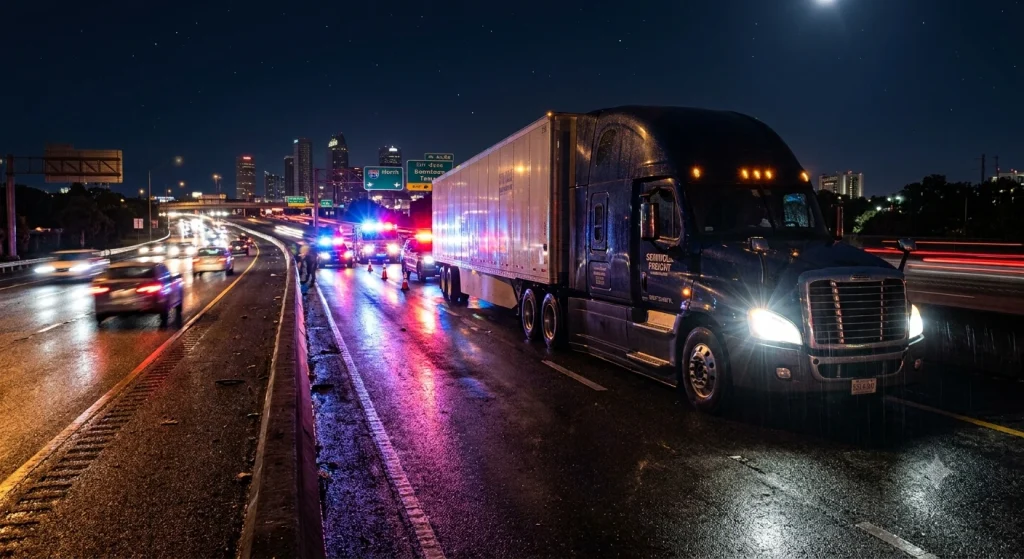
Camión comercial en una carretera de Tampa, Florida, con luces de emergencia después de un choque, for illustrative purposes only.
Blog, Spanish, Truck Accidents

Responsabilidad de la Empresa de Camiones Después de un Choque en Florida: Lo Que las Víctimas Deben Saber

Lo Que Necesitas Saber En Florida, puede que puedas demandar a la empresa de camiones, no solo al conductor, después de un choque grave con un camión comercial. La responsabilidad de la empresa de camiones en casos de choques en Florida frecuentemente involucra la conducta del conductor, fallas de seguridad de la empresa, propiedad del vehículo y reglas federales de camiones. Evidencia clave como datos ELD, datos de la caja negra, video de cámara de tablero y registros de mantenimiento puede desaparecer rápidamente sin una carta de preservación. Florida registró 46,651 choques de vehículos motorizados comerciales y 315 fallecidos en 2024, según datos preliminares del FLHSMV. Bajo el Estatuto de Florida § 95.11(5)(a), la mayoría de las demandas por negligencia deben presentarse dentro de 2 años. ¿Tuviste un mal día? Llama a The Reyes Firm. 833-4 BAD DAY. The Reyes Firm ¿Te Lastimaste en un Choque con un Camión en Tampa? Aprende quién puede ser responsable y qué pasos puedes tomar para proteger tu caso. ¿Tuviste un mal día? Programa Tu Consulta Gratuita No esperabas estar aquí. Un momento ibas conduciendo a casa por la I-275, y al siguiente, un camión de 18 ruedas cargado lo cambió todo. El dolor es real. Las facturas ya están llegando. Las llamadas del seguro puede que ya se sientan abrumadoras. En un caso de responsabilidad de empresa de camiones por un choque en Florida, el conductor puede no ser la única parte responsable. La empresa que contrató al conductor, era dueña o controlaba el camión, estableció la ruta, se encargó del mantenimiento o ignoró las reglas de seguridad también puede ser legalmente responsable. En el momento en que ocurre un choque en la I-4, I-75, I-275 u otra carretera de Tampa, el equipo de seguros de la empresa de camiones empieza a proteger su lado. Necesitas a alguien protegiéndote a ti con la misma rapidez. ¿Puedes Demandar a una Empresa de Camiones en Florida Después de un Choque? Sí. Puedes demandar a una empresa de camiones después de un choque en Florida si el conductor estaba trabajando para la empresa o si las propias fallas de la empresa ayudaron a causar el accidente. Estos casos frecuentemente involucran responsabilidad vicaria, contratación negligente, supervisión deficiente, mantenimiento inseguro o violaciones de regulaciones federales de camiones. La responsabilidad vicaria significa que una parte puede ser responsable por las acciones de otra persona. En casos de accidentes de camiones, esto frecuentemente significa que la empresa puede ser responsable si su conductor causó el choque mientras realizaba trabajo relacionado con su empleo. Una empresa de camiones también puede ser responsable por sus propias decisiones. Esto puede incluir contratar a un conductor inseguro, mantener a un conductor peligroso en la carretera, saltarse el mantenimiento, ignorar los límites de horas de servicio o no entrenar a los conductores. Un abogado de accidentes de camiones en Tampa puede ayudar a preservar evidencia antes de que los sistemas de la empresa de camiones sobreescriban datos clave. Eso importa porque los casos de choques con camiones frecuentemente dependen de los registros de la empresa, no solo de lo que ocurrió en la escena del choque. ⚠️ Advertencia: Bajo el Estatuto de Florida § 95.11(5)(a), la mayoría de las demandas por negligencia deben presentarse dentro de 2 años. Esto incluye muchos reclamos de lesiones personales en Florida. Si pierdes el plazo, puede que pierdas tu derecho a buscar compensación, incluso si la empresa de camiones causó el choque. ¿Qué Es la Doctrina del Instrumento Peligroso de Florida? La Doctrina del Instrumento Peligroso de Florida puede hacer que el dueño de un vehículo sea legalmente responsable cuando ese dueño permite que otra persona opere el vehículo y esa persona causa daño por conducción negligente. En casos de choques con camiones, esta regla puede importar cuando un transportista, dueño o empresa relacionada controlaba el vehículo comercial. La doctrina no es solo sobre contratación deficiente. Se enfoca en la propiedad, el permiso y el control. Si una empresa era dueña del camión o tenía control legal sobre él, ese hecho puede ayudar a establecer la responsabilidad. Esta regla también puede importar cuando una empresa intenta transferir la culpa llamando al conductor contratista independiente. Los tribunales de Florida pueden ir más allá de la etiqueta y examinar quién controlaba el camión, la ruta, la carga y el trabajo. Los casos de camiones comerciales en Tampa frecuentemente involucran estructuras empresariales complejas. Un transportista puede arrendar equipos. Un conductor puede trabajar bajo contrato. Un intermediario puede organizar el envío. Por eso debe investigarse la cadena completa de propiedad y control. ¿Cómo Pueden las Violaciones de la FMCSA Ayudar a Probar la Negligencia de la Empresa de Camiones? Las violaciones de la FMCSA pueden servir como evidencia sólida de negligencia en un caso de accidente de camión en Florida. Si una empresa de camiones rompe las reglas federales de seguridad y esa violación contribuye a un choque, esos registros pueden ayudar a mostrar que la empresa no actuó de forma segura. La Administración Federal de Seguridad de Transportistas Motorizados regula muchas partes del transporte de carga comercial. Estas reglas cubren las horas de servicio, los archivos de calificación del conductor, las pruebas de drogas y alcohol, los deberes de inspección, los registros de mantenimiento, el aseguramiento de carga y los requisitos de seguro. Las violaciones comunes que pueden respaldar un reclamo de negligencia de la empresa de camiones incluyen: Violaciones de horas de servicio: La empresa permitió o presionó al conductor a permanecer al volante demasiado tiempo. Registros ELD faltantes o alterados: La empresa no rastreó el tiempo de conducción o no preservó los registros requeridos. Problemas de calificación del conductor: La empresa contrató o mantuvo a un conductor que no cumplía con los estándares de seguridad. Fallas de mantenimiento: La empresa permitió que un camión con frenos, neumáticos, luces o piezas de dirección inseguros saliera a la carretera. Fallas en el aseguramiento de carga: La empresa o la parte cargadora no aseguró la carga de forma segura. Las reglas federales

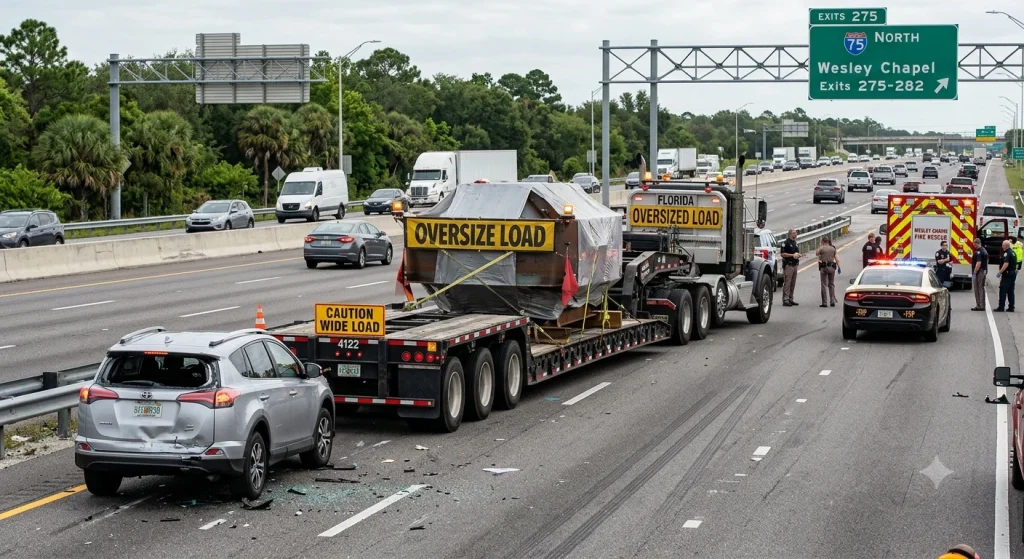
Oversized semi-truck trailer on I-75 near Wesley Chapel with damaged passenger SUV, for illustrative purposes only.
Blog, News, Truck Accidents

I-75 Semi-Truck Trailer Crash in Wesley Chapel: What Injured SUV Passengers Should Know

What You Need to Know A semi-truck trailer reportedly detached and crushed an SUV on northbound I-75 near Milepost 280 in Wesley Chapel. Fox 13 reported that two Georgia women in the SUV were hospitalized with minor injuries. Trailer detachments can raise questions about driver decisions, helper vehicles, equipment, inspection, and load securement. Truck crash evidence can disappear fast, including inspection records, driver logs, dashcam footage, and company communications. Florida law may allow fault to be divided among more than one person or company. Had a bad day? Call The Reyes Firm at 833-4 BAD DAY. Introduction A normal drive on I-75 can turn terrifying in seconds when a semi-truck trailer comes loose. If you were inside the SUV, or if someone you love was hurt, you may be shaken, sore, and unsure what happens next. This I-75 semi-truck trailer crash near Wesley Chapel involved an oversized tractor-trailer, a helper vehicle, and a passenger SUV that was trapped under a detached trailer, according to Fox 13. The report said the crash happened Saturday morning near Milepost 280 on northbound I-75. Truck crashes near Tampa are different from regular car crashes. The evidence is more complex. The insurance companies move fast. You need answers before the trucking company controls the story. What happened in the I-75 semi-truck trailer crash near Wesley Chapel? Fox 13 reported that a tractor-trailer with two oversized trailers was traveling northbound on I-75 when the helper vehicle driver unlocked the rear trailer during a lane change. FHP said the rear trailer swung left, struck a Subaru Forester, and rode over the SUV before traffic stopped. According to the report, the crash happened around 9:52 a.m. near Milepost 280. The trailer was described as an empty evaporator tank. Northbound lanes were blocked until about 11:40 a.m. The SUV driver was a 23-year-old woman from Georgia. Her passenger was a 22-year-old woman from Georgia. Both were taken to a nearby hospital. Fox 13 reported that officials had not said if the helper vehicle driver would face legal charges. Where the I-75 Semi-Truck Trailer Crash Happened The crash was reported on northbound I-75 near Milepost 280 in Wesley Chapel, near the SR 54/Wesley Chapel Boulevard interchange. Map shown for illustrative purposes only. Exact crash location should be confirmed through the official crash report. Why can a detached semi-truck trailer create a serious injury claim? A detached trailer can crush, trap, or override a passenger vehicle. Even when early reports describe injuries as minor, pain can worsen after shock fades. A crash like this can involve neck injuries, back injuries, shoulder injuries, concussion symptoms, anxiety, and fear of driving. Commercial vehicle crashes remain a serious issue across Florida. FLHSMV’s preliminary 2024 “By the Numbers” report lists 46,651 commercial motor vehicle crashes and 315 CMV-related fatalities statewide. NHTSA’s 2024 overview also reported that large-truck crash deaths decreased from 2023 to 2024, but estimated injuries in large-truck crashes increased by 5.0 percent. 📊 Did you know? FLHSMV’s preliminary 2024 data reported 46,651 commercial motor vehicle crashes in Florida. That number shows why I-75 truck crashes near Tampa need careful evidence review, not quick assumptions. Who may be responsible after an oversized trailer detaches on I-75? Responsibility may extend beyond the semi-truck driver. The helper vehicle driver, trucking company, trailer owner, maintenance provider, loading crew, route planner, or another company may have played a role. The key question is who had control, who made the lane-change decision, and who failed to keep the trailer secure. In a crash involving an oversized hauler, lawyers may look at: Possible party What must be reviewed Semi-truck driver Speed, lane position, driver logs, training, route planning Helper vehicle driver Communication, unlocking decision, timing, lane-change role Motor carrier Hiring, supervision, safety policies, insurance coverage Trailer owner Coupling equipment, inspection history, maintenance records Maintenance company Repairs, defects, prior warnings, service records Cargo or equipment company Securement, trailer setup, oversized load procedures This is why a Tampa truck accident lawyer should move fast. A simple police report may not answer every question. What evidence matters after a semi-truck trailer detaches? The strongest evidence often comes from the truck, trailer, company files, and nearby cameras. It may show how the trailer was connected, who gave instructions, how the lane change was planned, and if the equipment was safe before the crash. Important evidence may include: FHP crash report and scene photos Truck and trailer inspection records Maintenance and repair records Driver qualification files Helper vehicle communications Dashcam or bodycam footage Event data recorder information GPS and dispatch records Oversized load permits Cell phone records Witness statements Nearby traffic or business camera footage ⚠️ Warning: Florida Statute § 95.11 generally gives two years to file a negligence injury lawsuit. Do not wait that long to protect truck crash evidence. Video, records, and electronic data can be lost much sooner. If you were hurt near Wesley Chapel, Tampa, or another part of the I-75 corridor, preserve your medical records, photos, vehicle damage images, and insurance letters. Do not give a recorded statement to the trucking company’s insurer before getting advice. For more context, read our guides on what happens after a commercial vehicle accident and what to do if you need a vehicle-with-logo accident lawyer. What Florida laws affect an I-75 semi-truck trailer crash claim? Florida law can affect deadlines, fault, load securement, and commercial vehicle safety rules. In this type of crash, the most important issues may include how the trailer was secured, how the commercial vehicle was operated, and how fault is apportioned among all persons or companies involved. Florida Statute § 316.520 says a vehicle may not be driven or moved on a highway unless it is built or loaded to prevent its load from dropping, shifting, leaking, blowing, or escaping. It also refers to cargo securement devices that meet 49 C.F.R. § 393.100. Florida Statute § 316.302 applies federal commercial motor vehicle safety rules to many owners and drivers of commercial motor vehicles operating on Florida roads. Those rules

A stressed driver holding his head in pain after a traumatic brain injury from a Florida truck accident on a rainy highway, serving as a featured image for Tampa personal injury firm The Reyes Firm.
Blog, Catastrophic Injury, Traumatic injury, Truck Accidents

Traumatic Brain Injury Claims After a Florida Truck Crash

What You Need to Know Truck crashes can cause traumatic brain injuries even without a direct blow to the head. Florida PIP coverage is usually limited to $10,000, which can disappear fast in a TBI case. A brain injury victim may need to prove a permanent injury under Florida Statute 627.737. Most Florida negligence lawsuits must be filed within two years under Florida Statute 95.11. A strong case may require black-box data, medical evidence, expert testimony, and a life care plan. Had a bad day? Call The Reyes Firm at 833-4 BAD DAY. A crash with a semi-truck, 18-wheeler, delivery truck, or commercial vehicle can change your life before you understand what happened. The impact may leave you with headaches, confusion, memory loss, dizziness, mood changes, or symptoms that do not appear until days later. If you are searching for help with traumatic brain injury claims after a Florida truck crash, you are probably worried about medical bills, work, family, and what the trucking company will do next. At The Reyes Firm, we help injured people in Tampa and the South Shore communities take quick, focused action after serious truck crashes. Quick Answer: Truck crashes cause severe traumatic brain injuries because large commercial vehicles create violent forces that can shift the brain inside the skull. Florida PIP benefits are usually capped at $10,000, so serious TBI cases often require a no-fault insurance claim. To pursue full damages, the injured person may need to prove a permanent injury under Florida Statute 627.737. Most Florida negligence lawsuits must be filed within two years under Florida Statute 95.11. The Reyes Firm is located at 4730 N. Habana Ave., Suite 201, Tampa, FL 33614. We are serving Tampa, Riverview, Brandon, Plant City, and communities across Hillsborough County. Why Do Truck Crashes Cause Complex Traumatic Brain Injuries? Truck crashes cause complex brain injuries because commercial vehicles are large, heavy, and harder to stop. The crash force can throw the head forward, backward, or sideways. That motion can injure the brain even when there is no skull fracture, bleeding wound, or visible cut. NHTSA’s crash research focuses on how vehicle forces affect the head, brain, and body in collisions. A traumatic brain injury, or TBI, happens when force disrupts normal brain function. In a Florida truck crash, that force may come from: The head striking a window, airbag, dashboard, or steering wheel A violent whiplash motion A side impact that rotates the head and neck A rollover crash An underride crash A sudden stop after impact Cargo or debris entering the vehicle A coup-contrecoup injury can happen when the brain hits one side of the skull, then rebounds and hits the other side. This can happen even if you never lose consciousness. These crashes are common on high-speed, high-volume Tampa roads such as I-4, I-75, I-275, the Selmon Expressway, and commercial routes throughout Hillsborough County. Signs of Delayed TBI Symptoms to Watch For Delayed TBI symptoms can appear hours, days, or even weeks after a truck crash. You should get medical care fast if you notice severe headaches, confusion, dizziness, memory gaps, nausea, mood swings, sleep changes, vision problems, or trouble focusing. Brain injuries can be hidden, but the damage can still be serious. Watch for these symptoms: Headaches that worsen Confusion or brain fog Memory gaps about the crash Dizziness or balance problems Light or noise sensitivity Nausea or vomiting Mood swings, anger, anxiety, or depression Trouble sleeping or sleeping too much Slurred speech Trouble concentrating Seizures Brief loss of consciousness Prompt medical care matters. It protects your health and creates a record that connects your symptoms to the crash. ⚠️ Warning: Florida PIP benefits require that initial medical care be obtained within 14 days of a motor vehicle crash. Florida Statute § 627.736 provides up to $10,000 in medical and disability benefits, but reimbursement may be limited to $2,500 if no emergency medical condition is found. How Do You Break Through Florida’s No-Fault Insurance Barriers? Florida’s no-fault system means your own PIP coverage usually pays first after a crash. But PIP is limited, and a brain injury can use up that money almost immediately. A truck crash TBI claim may need to move beyond PIP when the injury meets Florida’s serious injury threshold. Florida PIP may cover part of: Medical bills Disability benefits Certain lost income Death benefits in fatal cases But PIP is not built for a serious brain injury. A TBI may require emergency care, imaging, neurologists, medication, therapy, neuropsychological testing, cognitive rehab, and future care planning. The Serious Injury Threshold Under Florida Statute 627.737 Florida Statute 627.737 allows an injured person to pursue pain-and-suffering damages outside the no-fault system if the injury meets the serious-injury threshold. This includes significant and permanent loss of an important bodily function, permanent injury within reasonable medical probability, significant scarring, disfigurement, or death. For a TBI claim, the key issues are often: Threshold issue What it means in plain English Permanent injury A doctor finds the brain injury is lasting Loss of function The injury affects memory, speech, balance, mood, or thinking Significant impact The injury changes work, family life, or daily function Death A fatal crash may support a wrongful death claim The trucking company may argue that your symptoms are mild, temporary, or unrelated. That is why your medical records, scans, specialist visits, and symptom history matter. What Deadlines and Fault Rules Apply Under Florida Law? Florida truck crash TBI claims have strict deadlines and fault rules. Most negligence lawsuits must be filed within two years. Florida also applies a modified comparative negligence rule. That means the trucking company may try to blame you to reduce or block your recovery. The Two-Year Statute of Limitations Under Florida Statute 95.11 Florida Statute 95.11 gives most negligence victims two years to file a lawsuit. This deadline applies to many truck crash injury claims after Florida tort reform. If the deadline passes, you may lose the right to bring the claim in court. You should not

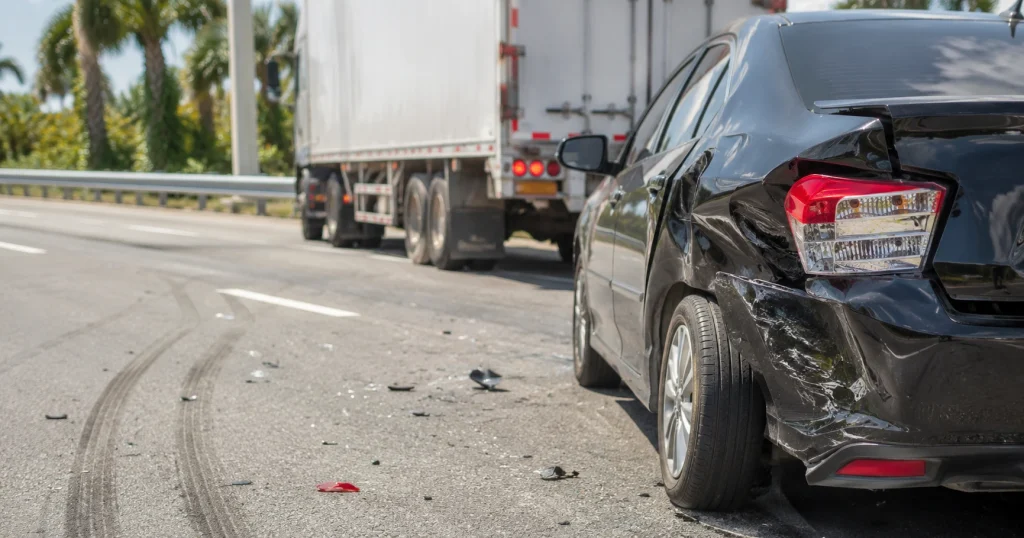
Auto dañado después de un accidente con un camión comercial en una carretera de Florida, con escombros y marcas de frenado en el pavimento, for illustrative purposes only.
Blog, Spanish, Truck Accidents

Cómo saber si tu caso de accidente de camión en Tampa vale más que la oferta del seguro

Lo que necesitas saber La primera oferta del seguro puede no incluir tu atención médica futura, pérdida de ingresos, dolor o necesidades de lesión a largo plazo. Una oferta del seguro por un accidente de camión en Tampa puede ser demasiado baja cuando los registros de la empresa de camiones no han sido revisados. Los datos de la caja negra, las bitácoras del conductor, los archivos de mantenimiento, los registros de carga y las políticas de seguridad de la empresa pueden cambiar el valor de tu caso. La ley de Florida puede afectar tu reclamo, especialmente si la compañía de seguros intenta culparte del choque. ¿Tuviste un mal día? Llama a The Reyes Firm al 833-4 BAD DAY. Un accidente de camión puede voltear tu vida al revés en segundos. Un momento estás conduciendo por Tampa, y al siguiente estás lidiando con dolor, facturas médicas, trabajo perdido y llamadas de un ajustador de seguros. Si recibiste una oferta del seguro por un accidente de camión en Tampa, puede que sientas presión de aceptarla y seguir adelante. Pero una oferta temprana puede no mostrar lo que tu caso realmente vale, especialmente cuando un camión comercial, un vehículo de reparto, un camión de 18 ruedas o un vehículo de empresa causó el choque. En The Reyes Firm, ayudamos a personas lesionadas en Tampa y las comunidades de South Shore a entender qué puede estar omitiendo la compañía de seguros. Nuestra oficina está ubicada en 4730 N. Habana Ave., Suite 201, Tampa, FL 33614, y nuestro equipo maneja casos de camiones y vehículos comerciales en Tampa, Riverview, Brandon, Plant City y comunidades de todo el Condado de Hillsborough. Respuesta Rápida: Un caso de accidente de camión en Tampa puede valer más que la oferta del seguro si la oferta no incluye atención médica futura, pérdida de ingresos, negligencia de la empresa de camiones, datos de la caja negra, bitácoras del conductor o costos de lesión a largo plazo. Antes de firmar cualquier cosa, haz que un abogado de accidentes de camiones en Tampa revise la oferta. ¿Por qué la oferta del seguro podría ser más baja que lo que vale tu caso de accidente de camión? Una oferta del seguro por un accidente de camión puede ser más baja que lo que vale tu caso porque la aseguradora puede no haber contado tus necesidades médicas completas, la atención futura, la pérdida de ingresos, el dolor o la evidencia de camiones comerciales. Las ofertas tempranas frecuentemente llegan antes de que el panorama completo de la lesión esté claro y antes de que los registros clave de la empresa sean asegurados. Los reclamos por accidentes de camiones son diferentes a los reclamos por accidentes de autos regulares. Un choque en la I-4, I-75 o I-275 puede involucrar a un conductor, empresa de camiones, empresa de carga, proveedor de mantenimiento, contratista de reparto o múltiples pólizas de seguro. La compañía de seguros puede mirar solo las primeras facturas médicas. Eso puede omitir el impacto real del choque. Tu caso puede valer más si tienes: Dolor continuo Recomendaciones de cirugía Trabajo perdido Capacidad de ingresos reducida Lesión permanente Estrés emocional Necesidades de tratamiento futuro Una falla de seguridad de la empresa de camiones Florida tuvo 381,210 choques de tráfico registrables en 2024, según el informe Por los Números 2024 del FLHSMV. El mismo informe establece que los agentes de la Patrulla de Carreteras de Florida trabajaron en 1.649 de los 2.962 choques fatales del estado ese año. 📊 ¿Sabías que? La Guía de Bolsillo 2024 de la FMCSA reportó 5,476 choques fatales que involucraron camiones grandes y autobuses en 2022. La FMCSA también reportó 114,000 choques con lesiones que involucraron camiones grandes ese mismo año. ¿Cuáles son las 7 señales de que tu oferta del seguro por accidente de camión en Tampa puede ser demasiado baja? Tu oferta por el accidente de camión puede ser demasiado baja si fue hecha rápidamente, ignora la atención futura, te presiona a firmar una exención o no incluye evidencia de la empresa de camiones. En los casos de accidentes de camiones en Tampa, la primera oferta puede proteger más a la aseguradora que a tu recuperación. Aquí están las 7 señales de advertencia. 1. Aún necesitas tratamiento médico. Debes tener cuidado con cualquier oferta hecha antes de que tu tratamiento esté completo. Puede que aún necesites imágenes, inyecciones, terapia, cirugía o atención de seguimiento. Una vez que llegas a un acuerdo, generalmente no puedes volver después para pedir más dinero. 2. La oferta solo cubre las facturas actuales. Un acuerdo justo por un accidente de camión debe mirar más allá de las facturas de hoy. También debe considerar el tratamiento futuro, la pérdida de capacidad de ingresos, el dolor a largo plazo y el impacto de la lesión en la vida diaria. Una oferta baja frecuentemente mira solo lo que ya se ha facturado. 3. El ajustador te está presionando a llegar a un acuerdo rápidamente. La presión rápida es una señal de alerta. La compañía de seguros puede querer que llegues a un acuerdo antes de que hables con un abogado de accidentes de camiones en Tampa. No tienes que firmar nada antes de entender tus derechos. 4. Los registros de la empresa de camiones no han sido revisados Los casos de camiones frecuentemente necesitan más evidencia que los casos de accidentes de autos. Las bitácoras del conductor, los registros de inspección, los datos de la caja negra y los archivos de mantenimiento pueden mostrar lo que realmente ocurrió. Si esos registros no han sido revisados, la oferta puede estar omitiendo hechos importantes. 5. El choque involucró un vehículo comercial Un semirremolque, camión de caja, camión volquete, camioneta de reparto, vehículo de viaje compartido o camión de empresa puede involucrar a más de una parte responsable. Eso puede aumentar el seguro disponible y el valor del reclamo. La aseguradora puede no explicar eso claramente. 6. Te culpan sin pruebas Las compañías de seguros pueden argumentar que ibas a exceso

Rainy Florida highway scene with a commercial semi-truck and debris after a crash, representing Riverview truck accident liability, for illustrative purposes only.
Blog, Truck Accidents

Who Can Be Liable in a Riverview Truck Accident?

What You Need to Know More than one person or company may be liable after a Riverview truck accident. The driver, trucking company, truck owner, cargo loader, broker, maintenance company, or manufacturer may share fault. Truck accident cases are more complex because they often involve company records, safety rules, and multiple insurers. Knowing what to do after a truck accident in Riverview can help protect your health and your claim. A Riverview truck accident lawyer can move fast to preserve evidence before it disappears. Had a bad day? Call The Reyes Firm at 833-4 BAD DAY. The Reyes Firm Unsure Who Is Liable After a Riverview Truck Accident? The driver may not be the only responsible party. Get clear next steps after a serious truck crash. Had a bad day? Schedule a Free Consultation After a serious truck crash, you may be asking who can be held liable and why the insurance process already feels so confusing. You may be hurt. Your car may be totaled. The trucking company may already have people investigating the crash. That can feel unfair. You should not have to figure out the driver, carrier, cargo company, broker, and insurance issues on your own while trying to heal. The Reyes Firm helps injured people in Tampa and the South Shore communities after serious truck and commercial vehicle crashes. Our office is located at 4730 N. Habana Ave., Suite 201, Tampa, FL 33614, and we are serving Tampa, Riverview, Brandon, Plant City, and communities across Hillsborough County. Who can be liable in a truck accident in Riverview? Several parties may be liable in a truck accident, including the truck driver, motor carrier, truck owner, maintenance company, cargo loader, broker, parts manufacturer, or another driver. A Riverview truck accident lawyer looks beyond the crash report to find who controlled the truck, driver, cargo, route, and safety decisions. Truck crashes in Riverview can occur on I-75, US-301, Gibsonton Drive, Boyette Road, Bloomingdale Avenue, and nearby roads used by delivery, dump, box, and tractor-trailers. Here are the parties that may need to be investigated. Potential liable party How they may be responsible Truck driver Speeding, fatigue, distraction, unsafe turns, following too closely Trucking company or motor carrier Unsafe hiring, poor training, skipped maintenance, pressure to meet deadlines Truck owner Allowing an unsafe truck or trailer on the road Maintenance company Bad brake work, missed tire problems, faulty repairs Cargo loader Overloaded cargo, unsecured cargo, unsafe weight balance Freight broker or shipper Unsafe carrier selection in some cases Parts manufacturer Defective brakes, tires, steering parts, lights, or safety systems Another driver Cutting off the truck, causing a chain reaction, or forcing evasive action Government entity or road contractor Unsafe road work, missing signs, or dangerous road conditions in limited cases Watch: Who May Be Liable in a Truck Accident? In this video, The Reyes Firm explains why truck accident cases often involve more than the driver. The trucking company, trailer owner, cargo loader, maintenance company, and dispatch company may also need to be investigated after a serious crash. This video is for general information only. Liability depends on the facts, evidence, and companies involved in the truck crash. ⚠️ Warning: Florida Statutes § 95.11 gives most people two years to file a negligence lawsuit after an injury crash. If evidence is lost or the deadline passes, your claim can become much harder or impossible to bring. Why are truck accident cases more complex than car accident cases? Truck accident cases are more complex because they often involve more evidence, more companies, larger insurance policies, and commercial safety rules. A simple car crash may involve two drivers. A truck crash may involve the driver, carrier, trailer owner, cargo loader, repair shop, broker, and manufacturer. That is why liability is not always clear at first. The truck driver may have made a mistake, but the company may have created the danger before the driver ever got on the road. A loaded trailer may have been unsafe. Brakes may have been ignored. A delivery schedule may have pushed the driver to keep going while tired. A truck case may involve: Driver qualification files Commercial driver’s license records Hours-of-service records Electronic logging device data Truck black box data GPS and dispatch records Maintenance and inspection files Cargo loading records Company safety policies Prior crash or violation history Florida sees thousands of commercial vehicle crashes each year. FLHSMV’s 2024 By the Numbers report listed 46,651 commercial motor vehicle crashes and 315 commercial motor vehicle fatalities in Florida. That is one reason truck accident cases need fast investigation. The sooner evidence is preserved, the easier it may be to identify every person or company that played a role. What should you do after a truck accident in Riverview? After a truck accident in Riverview, call 911, get medical care, take photos, save witness information, avoid recorded statements, and contact a lawyer before key evidence disappears. Trucking companies and insurers may move quickly after a crash, so you should protect yourself as soon as possible. Here is what to do after a truck accident in Riverview: Call 911. Ask for police and emergency medical help. Report pain right away. Tell the officer and paramedics about any pain, even if it feels minor at first. Take photos and videos. Capture the truck, trailer, license plate, company name, road, debris, injuries, and vehicle damage. Get witness names. A witness may be hard to find later. Do not give a recorded statement. The trucking insurer may use your words against you. Save every document. Keep medical bills, discharge papers, repair estimates, insurance letters, and photos. Call a Riverview truck accident lawyer. A lawyer can send preservation letters before records are deleted, changed, or lost. Florida Statutes § 316.066 requires a long-form crash report for crashes involving injury, death, a vehicle requiring a wrecker, or a commercial motor vehicle. That report can be one helpful piece of the case, but it may not identify every liable party. Can the trucking company

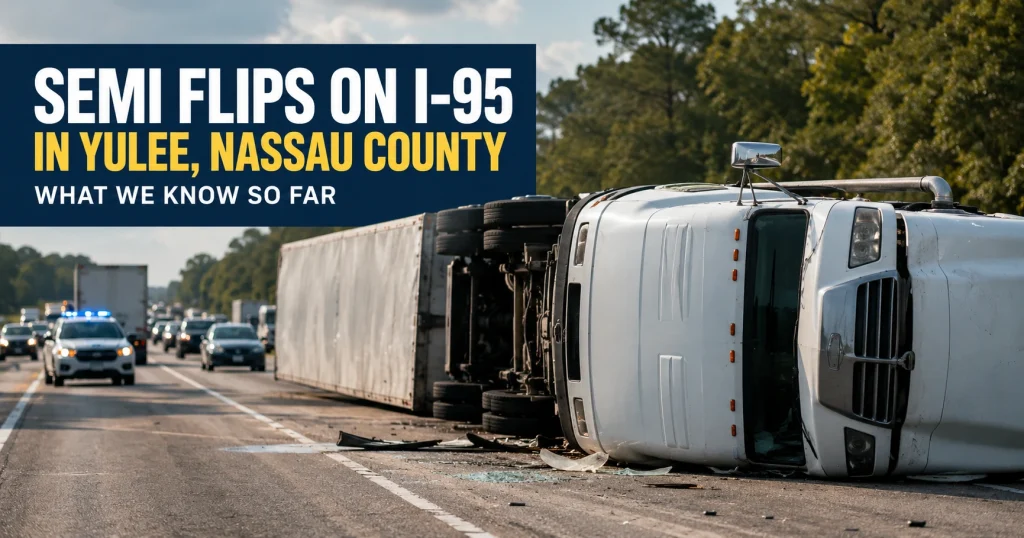
Overturned semi-truck on a Florida interstate with emergency vehicles and traffic in the background, representing the reported I-95 South semi crash in Yulee, Nassau County, for illustrative purposes only.
Blog, News, Truck Accidents

I-95 Nassau County Semi Crash: What Florida Families Should Know

Quick Summary A tractor-trailer reportedly flipped onto its side on I-95 South in Yulee, Nassau County. News4JAX reported that the crash blocked the two right lanes and caused backups. Florida Highway Patrol said the crash involved injuries. Early reports did not say how severe the injuries were. Families may have legal options, depending on the evidence and Florida law. Had a bad day? Call The Reyes Firm at 833-4 BAD DAY. Traffic slowed on I-95 South in Yulee after a tractor-trailer flipped onto its side. The I-95 Nassau County semi crash blocked two right lanes and involved injuries, according to News4JAX.  For families, early news can raise difficult questions. What happened? How serious were the injuries? What evidence will matter later?  Early reports do not always explain the full cause. A truck crash investigation may review the road, vehicle, driver, cargo, and records before fault is clear.  What Do We Know About the Crash? The verified report says a tractor-trailer flipped onto its side on I-95 South in Yulee, Nassau County. The crash blocked the two right lanes and caused traffic backups. Florida Highway Patrol said injuries were involved, but the early report did not specify their severity. The early report did not assign fault. At this stage, the public report does not say what caused the tractor-trailer to overturn. It does not identify any final fault finding. It also does not state that any driver, company, or other party caused the crash. Known reported facts: Detail Reported information Location I-95 South in Yulee, Nassau County Vehicle Tractor-trailer Incident Semi flipped onto its side Traffic impact Two right lanes blocked Injuries Reported by FHP, severity unclear Fault Not stated in early report That careful wording matters because truck crash cases depend on evidence, not guesses.  Why Can This Type of Crash Be So Serious? A semi-truck rollover can be serious because large commercial vehicles are heavy, long, and hard to stop quickly. Even a single-truck crash can block lanes, increase the risk of secondary crashes, spill cargo, and put nearby drivers in danger. A rollover can create risk beyond the first impact. Florida traffic data shows why commercial vehicle crashes deserve close review. FLHSMV reported 46,651 commercial motor vehicle crashes and 315 fatalities in Florida in 2024. 💡 Did you know? FLHSMV reported 46,651 commercial motor vehicle crashes in Florida in 2024, with 315 fatalities. That does not explain this Nassau County crash. It shows why commercial vehicle safety matters across Florida. For people in Tampa, Riverview, Brandon, Plant City, and communities across Hillsborough County, truck crashes can raise similar questions. That can include crashes on I-4, I-75, I-275, and other major roads. The next question is what makes these cases different from a regular car crash.  What Makes a Truck or Commercial Vehicle Crash Different? A truck or commercial vehicle crash can involve more evidence and more parties than a regular car crash. Depending on the evidence, investigators may review the driver, carrier, maintenance company, cargo loader, owner, broker, or another business. More records may exist in a truck crash.  Truck cases may involve: Driver qualification records Hours-of-service logs Electronic logging device data Engine control module data Maintenance and inspection records Cargo loading documents Dashcam or traffic camera footage Insurance policies and company safety records FMCSA explains that hours-of-service rules limit driving and work time. The goal is to help drivers stay awake and alert. FMCSA lists key limits for property-carrying drivers, including an 11-hour driving limit after 10 straight hours off duty and a 14-hour work window. NHTSA reported that deaths in crashes involving large trucks decreased 2.5 percent from 2023 to 2024.  Key safety questions may include: Did the truck driver have enough rest? Was the truck inspected before the trip? Were the brakes, tires, and lights in safe condition? Was the cargo loaded and secured properly? Was any camera or electronic data saved? Still have questions? Call The Reyes Firm at 833-4 BAD DAY. The consultation is free, and there’s no obligation.  Watch: Why Commercial Truck Crashes Near Tampa Can Be So Serious Commercial trucks move through busy Florida roads every day, including areas near the Port of Tampa. This video explains why heavy truck traffic, tight roads, delivery pressure, and commercial routes can create serious risks when something goes wrong. Note: This video is provided for general education. It does not describe the exact I-95 Nassau County semi crash discussed in this article. Those records can help families understand what happened after the first report fades from the news.  What Should Families Do After a Fatal Crash in Florida? Families should focus first on medical care, safety, and documents. After a serious truck crash, the investigation may move quickly. Key evidence can disappear. If a death occurs, Florida law may also set strict deadlines. Families should protect evidence early.  Practical steps may include: Get medical care and follow treatment instructions. Save photos, videos, names, and witness details. Keep all crash-related paperwork. Avoid recorded statements without legal guidance. Do not post crash details online. Ask about saving truck data, camera footage, and maintenance records. ⚠️ Warning: Florida Statute § 95.11 generally provides a 2-year statute of limitations for negligence and wrongful death actions. Missing a deadline can harm a case. Families should speak with a Florida attorney as soon as they can. This does not mean every crash leads to a claim. It means injured people and families should understand the timeline before proof becomes harder to find. Once the timeline is clear, the next step is looking at who may be legally responsible.  Who May Be Liable After This Type of Crash? Possible liable parties may include a driver, a trucking company, a vehicle owner, a maintenance contractor, a cargo loader, or another party. That answer depends on the evidence. No one should assume fault from an early news report alone. Fault must be proven with evidence.  The investigation may consider: Speed and braking Lane position Driver fatigue Distraction Vehicle defects Tire or brake

Scroll to Top