Truck Accidents

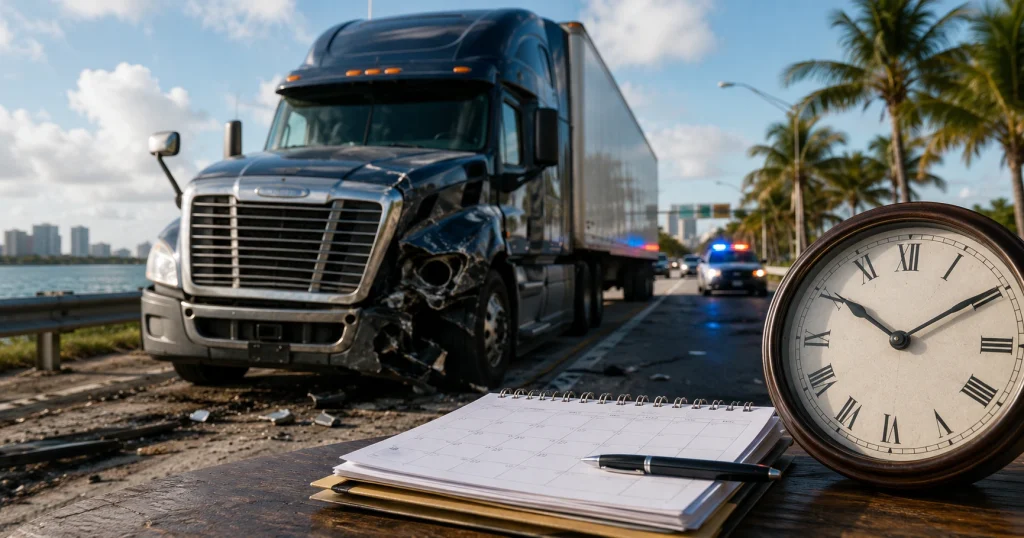
Camión comercial dañado junto a una carretera de Florida, con un reloj y calendario que representan el plazo para presentar una demanda, solo para fines ilustrativos.
Blog, Spanish, Truck Accidents

¿Cuánto Tiempo Tiene Para Demandar Tras un Accidente de Camión en Florida?

Lo Que Usted Necesita Saber En la mayoría de los reclamos por lesiones de accidentes de camión en Florida, usted generalmente tiene 2 años desde la fecha del choque para presentar una demanda. El Estatuto de Florida § 95.11 ahora establece un plazo de 2 años para reclamos por negligencia, incluyendo la mayoría de los reclamos de lesiones personales que surgen de choques de camiones. Las demandas por lesiones de accidentes de camión en Florida generalmente tienen un plazo de 2 años. La regla de 2 años generalmente aplica a choques ocurridos a partir del 24 de marzo de 2023, cuando entró en vigor la Ley HB 837 de Florida. Los choques antes del 24 de marzo de 2023 pueden caer bajo el plazo anterior de 4 años, según los hechos. Los reclamos por muerte injusta generalmente tienen un plazo separado de 2 años. Los reclamos que involucran vehículos del gobierno pueden requerir un aviso escrito especial antes de presentar una demanda, bajo el Estatuto de Florida § 768.28. Presentar un reclamo de seguro no detiene el plazo para demandar. ¿Tuvo un mal día? Llame a The Reyes Firm al 833-4 BAD DAY. Introducción Después de un choque de camión, usted puede estar lidiando con dolor, cuentas médicas, trabajo perdido, y llamadas de las compañías de seguros. Lo último que piensa es en un plazo legal. Pero el plazo de Florida para demandar por accidentes de camión puede ya estar corriendo. Eso puede crear un problema serio. Si pasa demasiado tiempo, usted puede perder el derecho de presentar una demanda, incluso cuando el conductor del camión o la empresa de transporte causó el choque. Esta guía explica cuánto tiempo tiene para presentar su caso, cuándo generalmente empieza a correr el plazo, qué excepciones pueden aplicar, y por qué actuar pronto puede proteger su reclamo. ¿Cuánto Tiempo Tengo Para Presentar una Demanda de Accidente de Camión en Florida? En la mayoría de los casos de accidentes de camión en Florida, usted tiene 2 años desde la fecha del choque para presentar una demanda por lesiones personales. El Estatuto de Florida § 95.11 aplica un plazo de 2 años a las acciones basadas en negligencia. En palabras simples, negligencia significa que alguien no actuó con cuidado razonable y causó daño. Los reclamos de accidentes de camión generalmente son reclamos por negligencia porque a menudo involucran manejo descuidado, prácticas de transporte inseguras, mal mantenimiento, u otras fallas que causaron la lesión. Este plazo puede aplicar a reclamos contra: El conductor del camión La empresa de transporte Una empresa de mantenimiento Una empresa de carga Un corredor u otra empresa responsable Otro conductor que contribuyó al choque El plazo de Florida cambió en 2023. La Ley HB 837 redujo el plazo para muchos reclamos por negligencia de 4 años a 2 años. La ley entró en vigor el 24 de marzo de 2023. Advertencia Importante Sobre el Plazo Si su choque ocurrió a partir del 24 de marzo de 2023, generalmente aplica el plazo de 2 años. Si su choque ocurrió antes del 24 de marzo de 2023, puede aplicar el plazo anterior de 4 años. Usted no debe asumir esto sin una revisión legal. Unos días pueden hacer una diferencia importante. Si no está seguro de qué plazo aplica, hable con un abogado de accidentes de camión de Florida lo antes posible. ¿Cuándo Empieza a Correr el Plazo de 2 Años Después de un Choque de Camión? En la mayoría de los casos de accidentes de camión, el plazo empieza a correr en la fecha del choque. Generalmente no empieza cuando: Usted termina su tratamiento médico Usted se entera de que su lesión es permanente La compañía de seguros niega su reclamo Las negociaciones de acuerdo se rompen Usted se da cuenta de que la empresa de transporte puede ser responsable Este es uno de los errores más comunes que cometen las personas lesionadas. Se enfocan en recibir tratamiento, reparar su vehículo, y regresar al trabajo. Pasan meses antes de que se den cuenta de que el plazo legal ha estado corriendo todo ese tiempo. Presentar un reclamo de seguro tampoco detiene el plazo de prescripción. Una demanda debe presentarse en la corte antes de que vence el plazo. ¿Todavía tiene preguntas? Llame a The Reyes Firm al 833-4 BAD DAY. La consulta es gratuita y sin obligación. ¿Qué Pasa Si Pierdo el Plazo Para Presentar mi Caso de Accidente de Camión en Florida? Si usted pierde el plazo de prescripción, la corte puede desechar su demanda. En muchos casos, eso significa que usted pierde el derecho de buscar compensación a través del sistema judicial. Eso puede pasar incluso si: El conductor del camión claramente tuvo la culpa Sus lesiones son catastróficas Usted tiene evidencia sólida Usted todavía estaba negociando con la compañía de seguros Usted no sabía que el plazo aplicaba Las compañías de seguros conocen estos plazos. Si el plazo vence, puede que tengan poca razón para continuar las negociaciones de acuerdo. 💡 ¿Sabía Usted? Presentar un reclamo de seguro no es lo mismo que presentar una demanda. El proceso de seguro puede continuar mientras su plazo legal sigue corriendo. Por eso es importante tratar el plazo de prescripción como una fecha límite firme, no como un horario flexible. ¿Hay Excepciones al Plazo de Prescripción Para Accidentes de Camión en Florida? Sí, pero las excepciones son limitadas y dependen mucho de los hechos. Usted no debe confiar en una excepción a menos que un abogado de Florida haya revisado su caso. Muerte Injusta Tras un Choque Fatal de Camión Si un familiar muere a causa de un accidente de camión, la familia puede tener un reclamo por muerte injusta. En Florida, los reclamos por muerte injusta generalmente deben presentarse dentro de 2 años desde la fecha de la muerte. Esta fecha puede ser diferente de la fecha del choque si la persona lesionada sobrevivió días, semanas, o meses después de la colisión. Choques de Camión que Involucran Vehículos del Gobierno

Truck driver using a cell phone near commercial trucks on a Tampa roadway, for illustrative purposes only.
Blog, Truck Accidents

Can a Tampa Truck Accident Lawyer Subpoena Cell Phone Records?

What You Need to Know Truck driver cell phone records may show calls, texts, data use, or app activity close to the crash time. Phone evidence is strongest when it matches GPS, dashcam video, black box data, dispatch messages, and witness accounts. A carrier log may show activity, but message content often requires a separate legal request or device review. Preservation demands should identify personal phones, company phones, apps, cloud accounts, and dispatch systems. Florida and federal rules restrict texting and handheld phone use by covered commercial drivers. Had a bad day? Call The Reyes Firm at 833-4 BAD DAY. You may already suspect the truck driver looked down at a phone before hitting you. The driver may deny it. The trucking company may begin defending the claim while you are still receiving medical care. Phone records, dispatch messages, dashcam footage, and truck data could help prove what happened. But carriers, apps, employers, and device owners follow different retention practices. Some evidence may be overwritten or deleted before the insurance company finishes its investigation. If your crash happened on I-4, I-75, I-275, or another Tampa roadway, contact a Tampa truck accident lawyer as soon as possible. Our Tampa truck accident attorneys can identify the personal phones, company devices, dispatch platforms, cloud accounts, and truck systems that should be preserved. The Reyes Firm can compare that evidence with braking, speed, GPS, video, and witness information to build a clear crash timeline before the driver, trucking company, or insurer controls the story. ⚠️ Phone Evidence May Not Wait 30 to 90 Days Do not wait 30 to 90 days to start preserving evidence. Wireless carriers, apps, cloud accounts, dispatch systems, dashcams, and phones follow different retention practices. Some records may be overwritten or deleted much sooner. If you suspect the truck driver was texting, calling, using navigation, or responding to dispatch, contact The Reyes Firm now. A Tampa truck accident lawyer can identify the record holders, send a focused spoliation letter for truck driver cell phone evidence, and pursue the proper legal process for relevant records. Call (833) 4BAD DAY for a free case review and to discuss immediate truck accident evidence preservation in Tampa. Had a bad day? Call The Reyes Firm. Can a Tampa Truck Accident Lawyer Prove the Driver Was Using a Phone? Yes. Cell phone records may show calls, texts, data sessions, app activity, screen use, or dispatch contact close to the crash time. The strongest investigation matches those timestamps with GPS, dashcam footage, black box data, braking, witness statements, and the official crash timeline. A distracted truck driver attorney in Tampa should investigate more than the carrier bill. Important evidence may exist on the physical phone, in a cloud account, inside a company dispatch platform, or on another synced device. Federal rules prohibit covered commercial drivers from texting while driving and restrict handheld phone use. Employers also may not require or allow covered drivers to engage in prohibited handheld use while driving. Timing is critical. Investigators may compare phone activity with: The 911 call and police arrival time. The truck’s speed and braking data. GPS location and route history. Dashcam or nearby surveillance footage. Witness reports of lane drift or delayed braking. Dispatch messages sent before impact. FMCSA rules prohibit covered commercial drivers from texting while driving and restrict handheld phone use. FMCSA also states that employers may not require or allow covered drivers to text or use a handheld phone while driving. Read the FMCSA distracted-driving guidance. 💡 Did You Know? FLHSMV reported that more than 52,900 distracted-driving crashes occurred in Florida during 2025, causing over 2,100 serious bodily injuries. The agency released those figures in April 2026. What Phone and App Records Can Be Used After a Tampa Truck Crash? Useful records may include call and text logs, data-session records, app activity, device-location history, screen-time information, photographs, cloud backups, and messages with dispatch. The available proof depends on the phone, carrier, account settings, company systems, and legal access. Content and metadata are different, and each may require a separate request. Common sources include: Carrier call-detail records. SMS and MMS metadata. Company-owned phone records. Dispatch or fleet-messaging platforms. Navigation and route apps. Cloud backups and synced devices. Screen-time, notification, and app-usage logs. Metadata may show that activity occurred at a certain time. It may not reveal the full message. The content may exist on the device, in a cloud account, in a company system, or on another person’s phone. A careful request should also identify who paid for the phone, who controlled the account, and which apps the driver used for work. A trucking company may issue one device while the driver also uses a personal phone. Both may matter if the evidence supports a focused request. The broad guide on what evidence helps a truck accident claim explains how phone records fit with scene evidence, medical proof, driver files, maintenance records, and other truck-specific data. Phone evidence is not limited to semi-truck claims. If the collision involved a passenger car or another noncommercial driver, our car accident lawyer in Tampa resource explains how The Reyes Firm handles standard motor vehicle injury claims. Commercial truck cases often require a broader investigation because the driver, motor carrier, dispatch vendor, equipment owner, and phone provider may control different records. How Does a Tampa Truck Accident Attorney Preserve Phone Evidence? Preserving phone evidence starts by identifying every relevant device, account, app, and company system. A spoliation letter for truck driver cell phone evidence should be sent quickly to the driver, trucking company, device owner, dispatch provider, and other record holders, supported by the facts. The preservation demand should cover: The personal and company-issued phones. SIM cards and replacement devices. Call, text, and data metadata. Dispatch and fleet-messaging records. Cloud backups and synced devices. Mobile device management records. Phone-use policies and disciplinary records. The truck’s dashcam, GPS, ELD, and black box data. The letter should also demand that the parties stop routine deletion, factory resets, phone replacement, account closure,

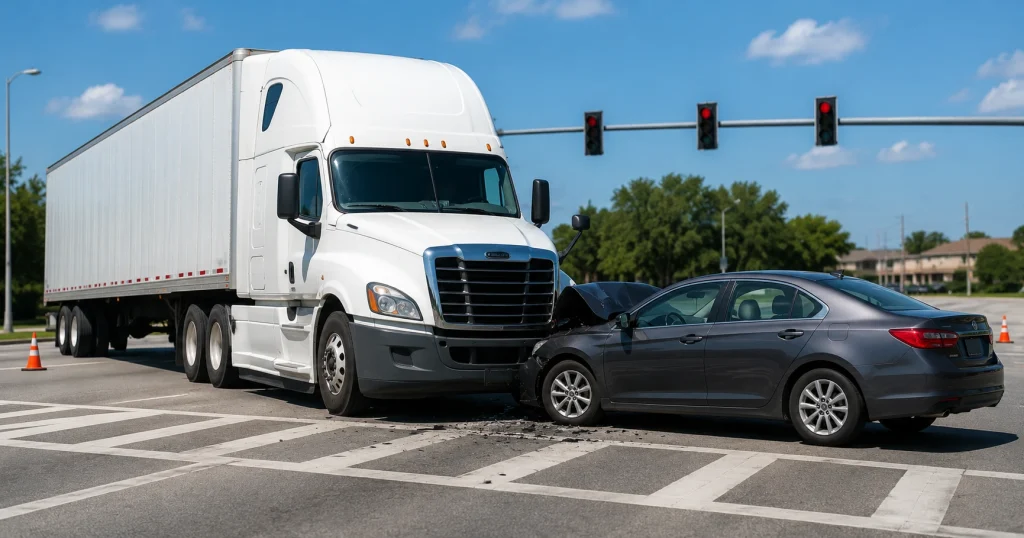
A tractor-trailer and passenger car collision at a generic Florida intersection, for illustrative purposes only.
Blog, News, Truck Accidents

85-Year-Old Homosassa Man Killed in Fiery Citrus County Truck Crash

What You Need to Know An 85-year-old Homosassa man died in a May 13, 2026 collision involving a Chrysler Pacifica and a tractor-trailer at US-19 and US-98. Reports citing the Florida Highway Patrol say the minivan turned left under a red light and entered the truck’s path. A news report or initial crash finding does not always resolve every civil liability question. Florida generally gives families two years to file a wrongful death action. Truck data, signal records, video, vehicle inspections, and witness accounts should be preserved quickly. Had a bad day? Call The Reyes Firm at 833-4 BAD DAY. A fatal Citrus County truck crash can leave a family with painful questions. You may want to know how the collision happened, who was responsible, and if any legal action is possible. The May 13 crash involved a tractor-trailer carrying lumber and a minivan driven by an 85-year-old Homosassa man. The reported facts may point toward the minivan driver’s actions, but a full investigation can still be needed before anyone reaches a final civil liability decision. This article discusses the reported crash and the Florida laws that may affect similar cases. The Reyes Firm does not represent any person involved in this incident based on the information currently available. What Happened in the Citrus County Truck Crash? An 85-year-old Homosassa man died after his Chrysler Pacifica collided with a tractor-trailer at US-19 and US-98 in Citrus County on May 13, 2026. Reports citing FHP say the minivan turned left under a red light, both vehicles caught fire, and the truck driver suffered minor injuries.  The crash happened shortly before 8 a.m. The Chrysler Pacifica was reportedly traveling north on US-19 before turning left at the US-98 intersection. Incident Location US-19 and US-98 in Citrus County, Florida The fatal collision was reported at the intersection of U.S. Highway 19 and U.S. Highway 98 near Homosassa in Citrus County. The map identifies the general intersection reported by authorities. It does not show the exact position of the vehicles or the crash scene. Map provided for location reference only. The tractor-trailer was hauling lumber. After the collision, both vehicles came to rest near the southwest corner of the intersection and caught fire. The Homosassa driver was pronounced dead at the scene. The 48-year-old tractor-trailer driver from Ocala reportedly had minor injuries and was not taken to a hospital. FHP continued investigating the collision. The publicly reported facts should be treated as preliminary unless investigators release a final report. ⚠️ Warning: Florida’s Wrongful Death Deadline: Florida Statute § 95.11 generally gives a family two years to file an action for wrongful death. Evidence can disappear long before that deadline, so families should not wait two years to begin investigating a fatal crash. What Does a Reported Red-Light Left Turn Mean Under Florida Law? Florida law generally requires a driver facing a steady red signal to stop and remain stopped until the signal permits movement. A driver making a left turn must also yield to approaching traffic that is already in the intersection or close enough to create an immediate danger.  Reports say the minivan turned left under a red light. If confirmed, that fact could strongly affect the liability investigation. Florida Statute § 316.075 requires traffic facing a steady red light to stop. A limited exception permits a left turn from one one-way street onto another one-way street after stopping and yielding. That narrow exception may not apply to an ordinary two-way intersection. Florida Statute § 316.122 separately requires a left-turning driver to yield to vehicles coming from the opposite direction when those vehicles present an immediate hazard. Investigators may examine: Question Evidence that may help What color was each signal? Signal sequencing and traffic control records How fast was the tractor-trailer moving? Electronic control module data, video, and measurements Did either driver try to avoid impact? Braking data, tire marks, and vehicle damage Could either driver see the other vehicle? Sightline analysis, lighting, weather, and obstructions Did the truck have a mechanical problem? Inspection, repair, and maintenance records A traffic violation can be important evidence. It does not allow investigators to ignore other facts that may have contributed to the collision. Can a Family Bring a Claim If Their Loved One May Have Caused the Crash? A family may investigate a fatal crash even when early reports place fault on their loved one. A successful wrongful death claim still requires evidence that another person or company contributed to the death. Florida’s comparative fault law can reduce compensation or bar recovery when the deceased person bears most of the legal fault.  Florida Statute § 768.81 divides responsibility among the people and companies whose conduct contributed to a crash. A party’s recovery is generally reduced by that party’s percentage of fault. A person found more than 50 percent responsible for their own harm may be barred from recovering damages in a covered negligence action. This means the family’s attorney must review more than the initial description of the crash. The investigation may examine: The tractor-trailer’s speed The truck driver’s reaction time Braking and steering inputs Vehicle lighting and conspicuity The truck’s mechanical condition Signal timing and visibility Nearby surveillance or dashcam footage Statements from independent witnesses A claim may not exist if the evidence shows the deceased driver was entirely responsible. A careful investigation helps the family understand the facts instead of relying only on assumptions. NHTSA reported that 39,254 people died in United States traffic crashes during 2024. The national fatality rate was 1.19 deaths per 100 million vehicle miles traveled.  💡 Did You Know? FLHSMV recorded 381,210 codable traffic crashes and 3,184 traffic deaths in Florida during 2024. The same preliminary report listed 46,651 commercial motor vehicle crashes involving 315 fatalities. View the FLHSMV report. What Evidence Should Be Preserved After a Fatal Tractor-Trailer Crash? The most important evidence may include the truck’s electronic data, driver records, maintenance files, signal information, photographs, and video. Some records can be overwritten or lost through

Commercial truck driver reviewing a DOT medical certificate beside a parked tractor-trailer in Tampa, for illustrative purposes only.
Blog, Commercial Vehicles, Truck Accidents

Can an Expired DOT Medical Certificate Affect a Florida Truck Accident Claim?

What You Need to Know An expired DOT medical certificate may show that a covered truck driver was not medically qualified to operate. The expired certificate does not automatically prove that the driver caused your Tampa truck accident. Evidence must connect the certificate lapse, the driver’s condition, the carrier’s knowledge, and the collision. The trucking company’s driver qualification file may show when it learned about the expiration. Current FMCSA rules allow limited use of newly issued paper certificates, but they do not extend an expired certificate. Had a bad day? Call The Reyes Firm at 833-4 BAD DAY. You may have learned that the truck driver who hit you had an expired medical card. That can raise serious questions about the driver’s qualifications and the trucking company’s safety practices. An expired DOT medical certificate truck accident claim requires more than showing that a date passed. You need evidence explaining what the expiration meant, what the carrier knew, and how the lapse relates to the crash. A Tampa truck and commercial vehicle accident attorney can move quickly to preserve the driver’s qualification records before key documents or electronic data are lost. Can an Expired DOT Medical Certificate Strengthen a Florida Truck Accident Claim? Yes. An expired DOT medical certificate can support a Florida truck accident claim when it shows the driver was not medically qualified to operate and the lapse relates to the crash. It does not prove fault by itself. The strongest cases connect the expired certificate to driver condition, carrier knowledge, and crash evidence. Federal law requires covered commercial drivers to remain physically qualified. A motor carrier generally may not require or permit a driver to operate if that driver is not qualified under the applicable rules. Florida Statute § 316.302 applies many federal commercial-vehicle safety requirements to trucks operating on Florida roads. The exact rules can differ for some intrastate operations and exempt vehicles. An expired certificate may support claims involving: Negligent operation by the driver Negligent hiring Negligent retention Inadequate supervision Poor qualification tracking Failure to enforce company safety policies Allowing an unqualified driver to remain on the road The certificate becomes more important if evidence shows the driver had symptoms or a medical condition related to the collision. Examples may include a loss of consciousness, severe fatigue, impaired vision, or another physical limitation. The investigation must still establish a legal connection. A certificate that expired one day before a crash may raise concerns, but the date alone does not explain why the collision happened. ⚠️ Warning: Florida Statute § 95.11 generally gives an injured person two years to file a negligence lawsuit. Do not treat that deadline as permission to wait. Driver files, camera footage, dispatch messages, and electronic truck data can disappear much sooner. Review Florida Statute § 95.11. What Does an Expired DOT Medical Certificate Actually Prove? An expired certificate proves that the listed certification period ended. It may show the driver could not lawfully continue certain non-exempt commercial driving without a new certification. It does not automatically prove that the driver was ill, impaired, or caused the collision. Those points require medical, licensing, company, and crash-specific evidence. FMCSA guidance states that a medical examiner’s certificate expires at midnight on the listed expiration date. The guidance also states that there is no general grace period for continued operation under an expired certificate. The certificate may establish: The date the driver’s last certification ended The length of the prior certification period The medical examiner who issued it The presence of a medical variance or restriction A gap between the expiration date and a later examination A possible failure in the carrier’s qualification-monitoring process It does not establish: That the driver had a disqualifying condition on the crash date That the driver intentionally concealed a medical problem That a medical condition caused the crash That the trucking company knew about the lapse That every commercial driving operation required that specific certification Some commercial drivers and operations fall under limited exceptions. The driver’s license class, cargo, route, employer, vehicle weight, and interstate or intrastate status must be reviewed. What about the FMCSA paper-certificate exemption in 2026? From April 11 through October 11, 2026, FMCSA permits certain interstate CDL holders and carriers to rely on a newly issued paper certificate for up to 60 days while electronic certification information is processed. That rule may protect a driver whose new examination was completed on time but whose updated information had not yet appeared electronically. It does not add 60 days to an expired certificate. Investigators should compare: The prior certificate’s expiration date The date of the new medical examination The date the new certificate was issued The date information was electronically transmitted The driver’s CDL or CDLIS record The carrier’s copy of the new certificate FLHSMV instructs non-exempt CDL holders to maintain current medical documentation. A failure to keep that documentation current may result in CDL disqualification. How Do Truck Accident Lawyers Connect the Expired Certificate to the Crash? Truck accident lawyers connect the lapse to the collision by building a timeline. They compare the certificate expiration date with the crash date, the driver’s symptoms, medical-exam history, license status, dispatch records, and vehicle data. They also examine what the carrier knew and why it still allowed the driver to work. The goal is not to point to an expired card and stop investigating. The goal is to determine if the lapse reveals a safety failure that contributed to the crash. Important questions include: Did the driver complete a new medical examination before the old certificate expired? Did the new examination identify restrictions or require follow-up care? Was the driver’s commercial license downgraded or disqualified? Did the carrier receive an expiration warning? Did dispatch continue assigning routes after the expiration date? Did the driver experience symptoms before or during the crash? Did the company ignore earlier medical or safety concerns? Useful evidence may include the driver qualification file, medical examiner certificates, motor-vehicle records, CDLIS status, dispatch messages, safety-system alerts,

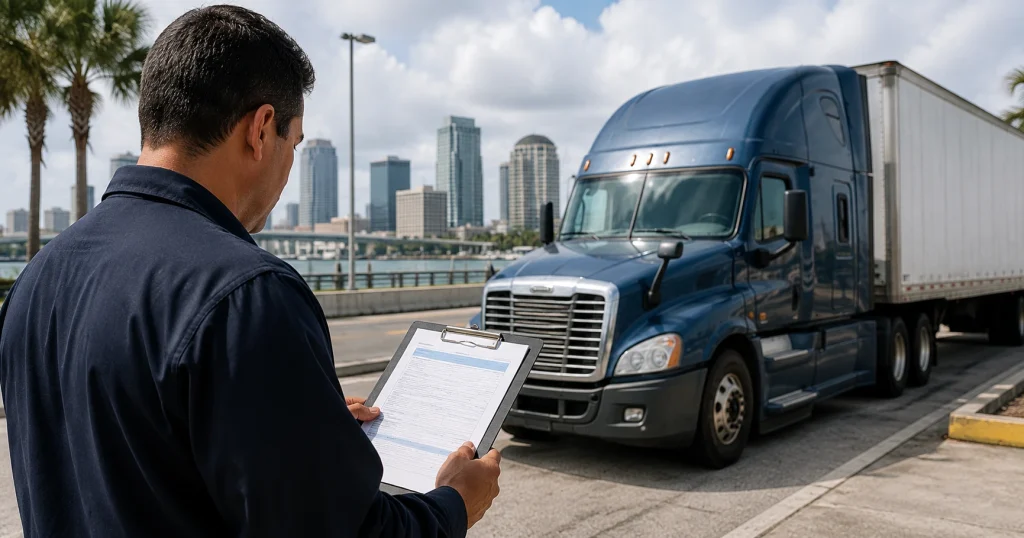
Investigator reviewing post-crash drug and alcohol testing documents near a commercial truck after a Tampa accident, for illustrative purposes only.
Blog, Truck Accidents

What Do Post-Crash Drug and Alcohol Tests Show After a Tampa Truck Accident?

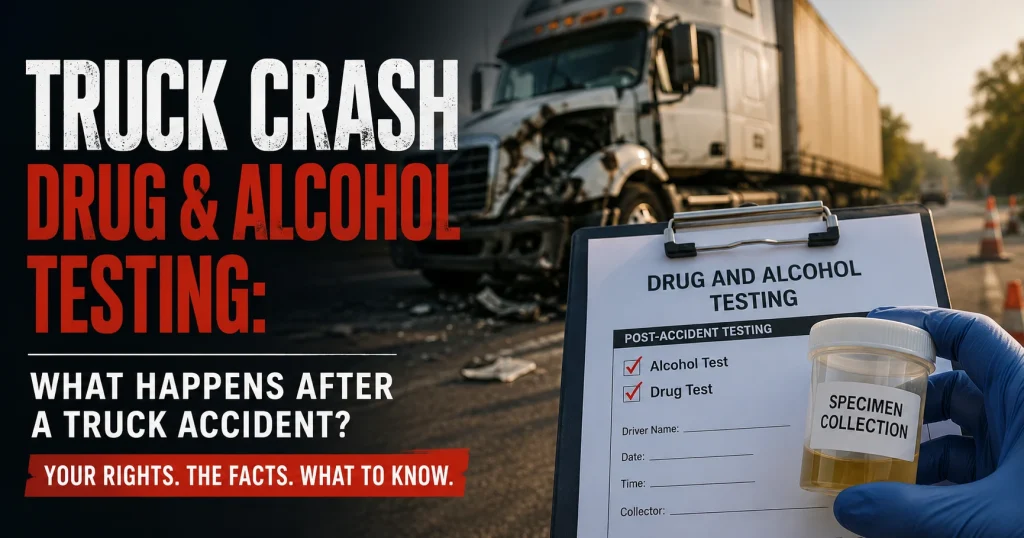
What You Need to Know Federal rules require post-crash testing only after certain commercial vehicle accidents. A fatal crash generally triggers testing even when the truck driver receives no citation. Alcohol testing has an eight-hour limit, while controlled-substance testing has a 32-hour limit. A positive or negative result does not decide the entire Tampa truck accident case by itself. Testing records, collection times, delay explanations, and company policies should be preserved quickly. Had a bad day? Call The Reyes Firm at 833-4 BAD DAY. The testing clock may already be running after a serious commercial truck crash. If you were injured, post-crash drug and alcohol testing may reveal what the driver had in their system and if the trucking company followed federal safety rules. These records are usually controlled by the carrier, laboratory, medical review officer, or government agency. A Tampa truck and commercial vehicle accident attorney can act quickly to preserve them before delays, retention rules, or company procedures make the investigation harder. If you are searching for a truck accident lawyer Tampa residents can call after a serious collision, ask how the firm investigates federal testing requirements and company-controlled evidence. What Are Post-Crash Drug and Alcohol Tests After a Truck Accident? Post-crash drug and alcohol tests are federally regulated tests that may be required after certain commercial vehicle crashes. They can show a driver’s alcohol concentration or detect specific controlled substances under DOT procedures. They also create a timeline that may reveal if the carrier followed required testing rules. The Federal Motor Carrier Safety Administration, or FMCSA, requires laboratory testing for five drug classes: Marijuana. Cocaine. Opiates and opioid derivatives. Amphetamines and methamphetamines. Phencyclidine, commonly called PCP. DOT alcohol tests identify an alcohol concentration of 0.02 or higher. The testing procedures are different from the roadside observations, field sobriety tests, or criminal investigation that police may conduct. A law-enforcement breath, blood, or urine test can sometimes satisfy the federal requirement when it follows applicable standards, and the employer obtains the result. 49 C.F.R. § 382.303 explains when government test results may qualify. When Must a Trucking Company Order Testing After a Crash? A trucking employer must order post-crash testing after a fatal crash involving a covered commercial driver. Testing is also required after some injury or tow-away crashes when the commercial driver receives a qualifying moving-traffic citation within the federal time window. Not every Tampa truck accident automatically triggers testing. The basic FMCSA testing chart works like this: Type of crash Citation required before employer testing? Testing required? A person dies No Yes A person receives immediate medical treatment away from the scene Yes Yes A vehicle has disabling damage and must be towed Yes Yes Injury or tow-away crash with no qualifying driver citation Not applicable Generally no under this rule The citation timing also matters. The federal rule refers to a citation issued to the commercial driver within eight hours for alcohol testing and within 32 hours for controlled-substance testing. A company may have a broader internal policy, but its private policy does not change the minimum federal trigger. The crash report, citations, medical transport records, and tow records should all be reviewed together. ⚠️ Warning: Under 49 C.F.R. § 382.303, an employer must document why a required alcohol test was not completed within two hours. Alcohol-testing attempts stop after eight hours. Controlled-substance testing attempts stop after 32 hours, and the employer must preserve an explanation for the delay. These records may become key evidence. What Can the Test Results Show in a Tampa Truck Accident Case? Test results can show the alcohol concentration measured at collection, the presence of specified drugs or metabolites above federal cutoffs, and the time the sample was taken. They may support a larger investigation, but a result alone does not decide fault, impairment at impact, or the cause of the Tampa crash. A post-crash result may help answer questions such as: Was alcohol detected at or above a reported concentration? Did the laboratory report a positive result for a covered drug class? How long after the collision was the sample collected? Did the carrier meet the federal testing deadline? Did the driver remain available for required testing? Did the employer document a delay or missed test? Did police conduct a separate breath, blood, or urine test? A positive result can be important, but the full timeline still matters. Investigators may need expert review to assess collection time, laboratory procedures, medications, confirmation testing, and the relationship between the result and the driver’s actions. A negative result also does not close the investigation. It does not rule out fatigue, distraction, speeding, unsafe maintenance, poor supervision, or another safety failure. FLHSMV’s preliminary 2024 report counted 46,651 commercial motor vehicle crashes and 315 fatalities in Florida. Across all vehicle categories, the agency separately recorded 4,814 alcohol-confirmed crashes and 450 drug-confirmed crashes. The impairment categories are not truck-specific and should not be used to assume impairment in an individual case. 💡 Did You Know? NHTSA reported that 4 percent of large-truck drivers involved in fatal crashes in 2023 had a blood alcohol concentration of 0.08 or higher. Federal regulations use a lower 0.04 threshold for operating a commercial motor vehicle. Source: NHTSA, Traffic Safety Facts: Large Trucks, 2023 Data. What Testing Records Should Be Preserved After a Truck Crash? A complete investigation should seek more than the final positive or negative result. The testing timeline, collection forms, chain-of-custody documents, laboratory report, medical review officer records, citations, tow records, and explanations for delay can show if the carrier followed the rule and handled the evidence correctly. Important records may include: Alcohol testing forms and instrument results. Drug-testing custody and control forms. Laboratory screening and confirmation reports. Medical review officer communications. The exact collection date and time. Records explaining a test completed after two hours. Records explaining a missed eight-hour or 32-hour deadline. Driver instructions and company testing policies. Police, hospital, ambulance, citation, and tow records. Communications between the carrier, driver, testing site, and laboratory. These

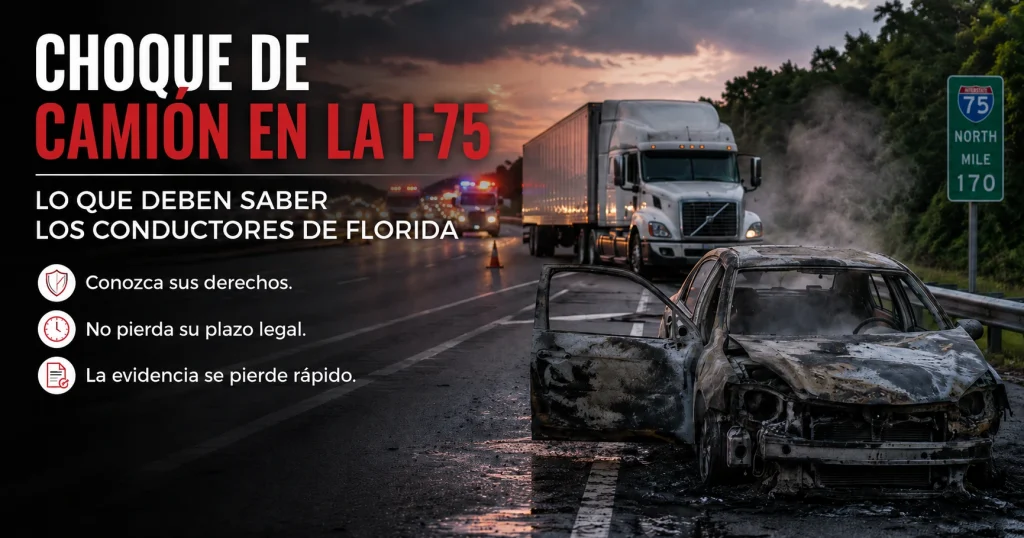
Camión semirremolque y automóvil quemado en la I-75, con vehículos de emergencia al fondo, para fines ilustrativos únicamente.
Blog, News, Spanish, Truck Accidents

Un Auto se Incendió en la I-75. Esto Es Lo Que Deben Saber los Conductores de Florida

Lo Que Usted Necesita Saber Un Toyota Corolla se incendió tras chocar con un tráiler Volvo en la I-75 en Charlotte County el 2 de junio de 2026. La Patrulla de Carreteras de Florida (FHP) reportó que el conductor del Toyota sufrió lesiones menores y fue llevado a un hospital. El choque sigue siendo importante porque los accidentes con camiones de carga pueden involucrar más evidencia, más cobertura de seguro, y más preguntas legales que un choque común entre dos autos. En Florida, las víctimas de lesiones generalmente tienen dos años para presentar una demanda por negligencia bajo el Estatuto de Florida § 95.11. Si usted se lesionó en un choque de camión en la I-75 o en cualquier parte de Florida, The Reyes Firm ofrece consultas gratuitas. ¿Tuvo un mal día? Llámenos. 833-4 BAD DAY. ¿Qué Pasó en el Choque de Camión en la I-75 en Charlotte County? El choque ocurrió antes de las 5 a. m. del 2 de junio de 2026, en la I-75 norte en Charlotte County, justo al sur de Tucker’s Grade. La Patrulla de Carreteras de Florida reportó que un hombre de 26 años manejaba un Toyota Corolla cuando el vehículo se desvió hacia la izquierda y chocó con un tráiler Volvo que viajaba en el carril central. Después del impacto, el Toyota se salió de la carretera, entró a una línea de árboles, y se incendió. El conductor fue llevado a un hospital con lesiones menores, y el conductor del tráiler no resultó herido. Ese primer reporte no responde a todas las preguntas legales. En un choque grave que involucra un vehículo comercial, el primer reporte puede explicar lo que pasó en la escena, pero puede no explicar por qué pasó, si algún factor externo contribuyó, o qué evidencia se debe preservar. Por eso un choque de camión de carga debe revisarse rápido, incluso cuando el primer reporte de lesiones diga “lesiones menores”. Ubicación aproximada del incidente El choque reportado ocurrió en la I-75 norte en Charlotte County, justo al sur de Tucker’s Grade. Este mapa se ofrece solo como referencia general de ubicación y puede no marcar el sitio exacto del choque. Mapa para fines informativos e ilustrativos únicamente. ¿Por qué son diferentes los choques de camiones de los accidentes de auto comunes? Un choque de camión de carga es diferente de un accidente de auto común porque los vehículos comerciales están sujetos a más reglas, más registros, y a menudo más cobertura de seguro. La ley de Florida hace que ciertos dueños y conductores de vehículos comerciales estén sujetos a reglas federales de seguridad bajo el Estatuto de Florida § 316.302. Esas reglas pueden involucrar horas de manejo, mantenimiento del vehículo, inspecciones, y registros de seguridad. En palabras simples, esto significa que un caso de choque de camión puede involucrar evidencia que no existe en un choque normal entre dos autos, como: Registros del conductor Datos de la caja negra o grabadora de eventos Registros del dispositivo electrónico de registro Registros de mantenimiento Reportes de inspección Registros de despacho Video de cámara de tablero Políticas de seguridad de la empresa La evidencia más importante en un choque de camión puede desaparecer rápido si nadie actúa para preservarla. Esto no significa que el conductor del camión o la empresa de transporte sean automáticamente culpables. Significa que el caso debe investigarse con cuidado antes de que las compañías de seguros decidan la historia por usted. ¿Puede un Incendio de Auto Afectar un Reclamo de Lesiones Personales? Sí. Un incendio de vehículo puede afectar un reclamo de lesiones personales porque puede causar lesiones más allá del impacto inicial. Una persona que escapa de un vehículo en llamas puede más adelante presentar síntomas de quemaduras, exposición al humo, choque (shock), lesiones de tejido blando, lesiones de espalda, lesiones en el cuello, o trauma emocional. Algunos síntomas no aparecen de inmediato. Un incendio de auto también puede afectar la evidencia. El vehículo mismo puede quedar dañado o destruido, lo que dificulta revisar los puntos de impacto, defectos, o condiciones después del choque. Esa es otra razón por la que la documentación temprana importa. ⏳ Plazo Importante: Bajo el Estatuto de Florida § 95.11, la mayoría de las demandas de lesiones personales por negligencia en Florida deben presentarse dentro de dos años. Pueden aplicar algunas excepciones según los hechos, así que las personas lesionadas deben hablar con un abogado de lesiones personales de Florida lo antes posible. Para un choque que ocurrió el 2 de junio de 2026, el plazo general de dos años vencería el 2 de junio de 2028. Esperar puede dificultar el caso porque la evidencia se desvanece, los testigos se vuelven más difíciles de localizar, y los registros pueden perderse. ¿Quién Puede Ser Responsable Después de un Choque de Camión en Florida? La responsabilidad después de un choque de camión en Florida depende de la evidencia. En algunos casos, el conductor del camión puede ser responsable. En otros casos, la empresa de transporte, el dueño del camión, la empresa de mantenimiento, quien cargó la mercancía, u otro conductor puede haber jugado un papel. En algunos choques, más de una parte puede compartir la culpa. Los casos de choques de camión en Florida a menudo analizan preguntas como: ¿El conductor del camión siguió las reglas de seguridad? ¿El camión recibió el mantenimiento adecuado? ¿La empresa de transporte mantuvo registros correctos? ¿El conductor estaba fatigado o distraído? ¿Las condiciones de la carretera, la iluminación, u otro vehículo contribuyeron? ¿El vehículo del conductor lesionado tuvo algún problema mecánico? ¿El primer reporte del choque omitió detalles importantes? Florida también sigue reglas de negligencia comparativa, lo que significa que la culpa puede dividirse entre más de una parte. Por eso una investigación cuidadosa importa. Usted no debe asumir que la primera versión de la historia del choque es la respuesta legal final. 📊 ¿Sabía Usted? El reporte preliminar “By the Numbers” de 2024 del FLHSMV registró 46,651 choques de vehículos comerciales en Florida y 315 muertes relacionadas

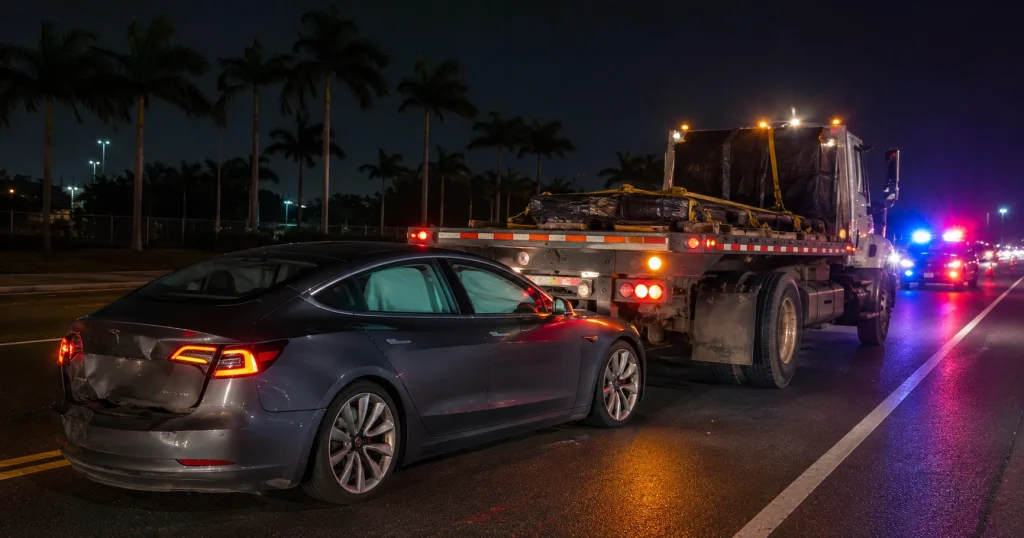
Illustration of a gray electric sedan and a flatbed commercial truck at a nighttime crash scene in South Florida, for illustrative purposes only. This is not a photograph of the June 25, 2026, Homestead crash.
Blog, News, Truck Accidents

Two Women Killed After Tesla Hits Flatbed Truck Near Homestead

What You Need to Know Two women died after a Tesla struck the rear of a flatbed commercial truck in southwest Miami-Dade. FHP said the crash happened around 2:30 a.m. on June 25, 2026. The truck was reportedly traveling about 20 mph with a caravan of work trucks. Investigators have not publicly announced the cause of the Tesla hitting the truck. Electronic data, vehicle inspections, video, and company records may help explain what happened. Had a bad day? Call The Reyes Firm at 833-4 BAD DAY. The Homestead Tesla truck crash left two young women dead and their families searching for answers. The collision involved a Tesla sedan and a slow-moving flatbed commercial truck on South Dixie Highway. Florida Highway Patrol has not publicly identified the cause. That means no one should assume that a single fact, including the rear impact, tells the full story. A complete investigation should examine both vehicles, both drivers, the truck company, roadway visibility, vehicle lighting, electronic data, and nearby video. What Happened in the Homestead Tesla-and-Flatbed Truck Crash? The crash happened at about 2:30 a.m. on June 25, 2026, in the northbound lanes of South Dixie Highway near Southwest 127th Avenue in southwest Miami-Dade. FHP said a gray Tesla struck the rear of a flatbed commercial truck traveling in a slow-moving caravan. Two women died at the scene. Local 10 reported that the commercial truck was moving at about 20 mph with other trucks. The truck drivers had reportedly finished working nearby before the crash. The two women were described as being in their late 20s or early 30s. Their bodies were removed from the Tesla several hours after the collision. U.S. 1 was closed between Southwest 240th Street and Southwest 232nd Street while troopers investigated. The cause remained under investigation at the time the report was updated. Reported detail Current information Date June 25, 2026 Approximate time 2:30 a.m. Location Northbound South Dixie Highway near Southwest 127th Avenue Vehicles Gray Tesla sedan and flatbed commercial truck Truck movement Reportedly traveling about 20 mph in a caravan Fatalities Two women in the Tesla Investigation Ongoing at the time of the news report No public report reviewed for this article states that automated driving technology was active. It also does not establish that the truck, the Tesla driver, or another party caused the crash. Where Did the Tesla Truck Crash at the Homestead Happen? The crash was reported in the northbound lanes of South Dixie Highway near Southwest 127th Avenue in southwest Miami-Dade County, near Homestead, Florida. Map shows the reported area of the crash and is provided for illustrative purposes only. 💡 Did You Know? FLHSMV’s preliminary 2024 report recorded 46,651 commercial motor vehicle crashes and 315 related fatalities in Florida. The report also found that 45% of fatal crashes occurred at night, between 7 p.m. and 6 a.m. Is the Rear Driver Always at Fault After Hitting a Slow-Moving Truck? No. A rear impact puts close attention on the following driver’s speed, distance, braking, and awareness, but it does not replace a complete investigation. In a fatal commercial truck crash, investigators should also examine the truck’s visibility, lighting, lane position, speed, company instructions, roadway conditions, and the conduct of every involved driver. Important questions may include: How fast was the Tesla traveling before impact? Did the driver brake or steer before the collision? Were the flatbed truck’s taillamps working? Were its reflective materials present and visible? Was the truck traveling fully within its lane? Were hazard lights or other warnings being used? How was the work-truck caravan organized? Was the roadway properly lit? Was distraction, fatigue, impairment, or a medical emergency involved? Florida law requires most motor vehicles, trailers, and semitrailers to have at least two rear taillamps. Those lamps must emit red light visible from 1,000 feet under the conditions described by the statute. Florida also requires stop lamps and turn signals on covered vehicles. Federal commercial vehicle rules also address required lamps and reflective devices. An inspection should document the condition of the truck before repairs, cleaning, or normal use changes the evidence. A lighting rule does not prove that a violation occurred in this crash. It identifies an issue investigators should examine before reaching a conclusion. What Evidence Could Explain Why the Tesla Hit the Flatbed Truck? The most useful evidence may come from both vehicles, the roadway, nearby cameras, and company records. Investigators should preserve electronic data from the Tesla and truck, inspect the flatbed’s rear lighting and reflective materials, review phone and toxicology evidence, locate witnesses, and collect GPS, dispatch, dashcam, and maintenance records before they disappear. Important evidence for a truck accident may include: Event data recorder information from both vehicles Speed, braking, steering, and throttle data Available vehicle camera footage Truck dashcam footage GPS and telematics records Dispatch instructions and work assignments Maintenance and inspection records Taillamp, stop-lamp, and reflector inspections Photos showing vehicle positions and damage Skid marks, debris, and roadway measurements Traffic, business, and residential camera footage Cell phone records Toxicology findings Witness statements FHP scene photographs and reports Investigators should also identify the truck, its owner, the motor carrier, the driver’s employer, and the company that organized the caravan. ⚠️ Warning: Florida Statute § 95.11 generally gives families two years to file a negligence or wrongful death lawsuit. Evidence can disappear much sooner. Vehicles may be repaired, electronic data may be overwritten, and surveillance video may be deleted within days or weeks. Can Families File a Wrongful Death Claim After a Fatal Commercial Truck Crash? A wrongful death claim may be available when evidence shows that negligence by a driver, company, vehicle owner, contractor, maintenance provider, or another party caused the death. Florida requires the personal representative of the estate to bring the case for eligible survivors and the estate. The available damages depend on each family’s facts. Florida’s Wrongful Death Act allows a claim when a person’s death results from negligence, a wrongful act, a default, or certain other legal violations.

What happens when a company truck hits you in Tampa, showing a damaged passenger car beside a commercial truck, for illustrative purposes only.
Blog, Commercial Vehicles, Truck Accidents

What Happens When a Company Truck Hits You in Florida?

What You Need to Know The driver may not be the only person responsible for the crash involving the company truck. The employer, vehicle owner, maintenance provider, or another business may share fault. Company records, video, GPS data, and vehicle information can disappear quickly. Several commercial and personal insurance policies may apply to the same accident. Had a bad day? Call The Reyes Firm at 833-4 BAD DAY. What happens when a company truck hits you is different from what happens after a typical car accident. You may have claims against the driver, the employer, the vehicle owner, and other businesses connected to the truck. Call 911, get medical care, and photograph the truck before it leaves. Do not accept an early settlement before you understand your injuries, the available insurance, and the evidence controlled by the company. A company vehicle may be a delivery van, box truck, fleet pickup, tractor-trailer, utility truck, or company car. The type of vehicle and the work being performed can change who is responsible and which rules apply. What Happens When a Company Truck Hits You at the Crash Scene? When a company truck hits you, call 911, request medical help, and document the vehicle before it leaves. Photograph the company name, truck number, license plate, damage, road conditions, and visible injuries. Get witness information, avoid discussing fault, and do not give the company’s insurer a rushed recorded statement. Call 911 even if the driver asks you not to A company driver may offer to report the damage to a manager without involving the police. Do not rely on that promise. A police report can help identify: The driver. The employer. The vehicle owner. The insurance carrier. Witnesses. Traffic citations. Tell emergency responders about every symptom you notice. That includes headaches, dizziness, neck pain, back pain, numbness, confusion, or trouble breathing. Do not say you are fine just because you can stand or walk. Photograph the company truck before it leaves The logo on the truck may not identify the company that owns the vehicle or employs the driver. Take clear pictures of: The company name and logo. The truck and trailer numbers. The license plate. The USDOT number, if displayed. Damage to every vehicle. Skid marks and debris. Spilled or unsecured cargo. Traffic signs and signals. The surrounding road. Take close pictures and wide pictures from several angles. Stay out of traffic and do not risk another injury. Get the driver’s work information Collect more than the driver’s personal name and phone number. Ask for: The driver’s license. The commercial driver’s license, if applicable. The employer’s name. The vehicle owner’s name. The insurance card. A supervisor’s contact information. The truck’s route or delivery information. Write down anything the driver says about the trip. Comments about rushing, working late, making a delivery, or returning to the warehouse may help explain what the driver was doing when the crash happened. Get medical care and save your records Some injuries become more painful after the shock of the crash wears off. Follow your doctor’s instructions and save: Medical records. Medical bills. Prescription receipts. Work restriction notes. Pay stubs. Towing bills. Rental car receipts. Insurance letters. Pictures of your injuries. You can also keep a short daily record of your pain, sleep problems, missed activities, and physical limits. Be careful when the company’s insurer calls A commercial insurance adjuster may contact you before you know the full extent of your injuries. You can report basic facts without guessing about speed, distance, fault, or your recovery. You can also explain that you are still receiving medical care and are not ready to give a recorded statement. Do not sign a release before you know what it covers. Signing a settlement release can end your claim, even if your symptoms later get worse. ⚠️ Warning: Florida Deadlines Can Affect Your Claim: Florida Statute § 95.11 generally gives you two years to file a negligence lawsuit. Florida Statute § 627.736 generally requires qualifying initial medical services within 14 days for potential PIP medical benefits. Videos, GPS records, and company data may disappear much sooner. Who May Be Liable After a Company Truck Crash in Florida? Liability may extend beyond the person behind the wheel. The driver, employer, motor carrier, vehicle owner, maintenance provider, cargo company, or parts manufacturer may share responsibility. The investigation should focus on who controlled the driver, owned the truck, planned the trip, maintained the vehicle, and created the unsafe condition. The company truck driver A driver may cause a crash by: Speeding. Following too closely. Running a red light. Making an unsafe lane change. Looking at a phone. Driving while tired. Driving under the influence. Failing to inspect the truck. A citation can help, but it may not show the full story. The officer may not have access to dashcam footage, GPS data, company messages, or maintenance records at the scene. The driver’s employer A company may be responsible when an employee causes a crash while completing assigned work. This can include: Making a delivery. Driving to a service appointment. Moving equipment. Returning to a warehouse. Traveling between work sites. Running an errand for a manager. Employer responsibility for an employee’s work-related conduct is sometimes called vicarious liability. The company may also be responsible for its own unsafe decisions. Examples include: Hiring an unsafe driver. Failing to train the driver. Ignoring prior violations. Allowing a tired driver to work. Setting unsafe delivery deadlines. Failing to enforce safety rules. Keeping an unsafe vehicle on the road. The vehicle owner The company name on the door may not match the name on the vehicle title. A separate business may own or lease the truck. A local delivery contractor may also operate a vehicle carrying a larger company’s logo or branding. Vehicle ownership records, lease agreements, insurance policies, and permission to use the truck should be reviewed before anyone is ruled out. A maintenance or repair company A maintenance provider may share responsibility if poor work contributed to

Truck accident evidence scene on a Florida highway with vehicle damage, skid marks, debris, and an investigator documenting the crash, for illustrative purposes only.
Blog, Truck Accidents

What Evidence Helps a Truck Accident Claim?

What You Need to Know Strong truck accident evidence proves fault, negligence, injuries, and damages. Key evidence includes photos, police reports, witness names, medical records, black box data, ELD logs, GPS data, maintenance records, and driver files. Some truck evidence is controlled by the trucking company, so it must be preserved fast. Florida truck crashes on I-4, I-75, and I-275 often involve more records than regular car crashes. Had a bad day? Call The Reyes Firm at 833-4 BAD DAY. What evidence helps a truck accident claim? The strongest evidence includes crash scene photos, police reports, witness names, medical records, black box data, ELD logs, GPS data, dashcam video, maintenance records, driver files, cargo records, and expert review. This proof helps show who caused the crash, how it happened, and how badly you were hurt. After a truck crash in Tampa, you may feel shocked, sore, and unsure what to do next. You may also hear from insurance companies before you know the full story. You deserve clear answers fast. This guide explains what to save, why it matters, and why truck evidence must be protected early. What Evidence Helps a Truck Accident Claim? Truck accident evidence helps prove fault, connect the crash to your injuries, and show your losses. The most useful proof usually comes from the crash scene, the truck itself, and the trucking company’s records. A strong claim uses all three. The main evidence in a truck accident claim includes: Photos of vehicle damage. Photos of skid marks, debris, cargo, and road conditions. Video from dashcams, traffic cameras, businesses, and bystanders. The Florida crash report. Witness names and contact information. Medical records and bills. Lost wage records. Black box or engine control module data. Electronic Logging Device, or ELD, data. GPS and telematics data. Driver logs and hours-of-service records. Truck inspection and maintenance records. Driver qualification files. Cargo records and bills of lading. Dispatch records and company messages. Accident reconstruction reports. Immediate Scene and Visual Evidence Scene evidence shows what the crash looked like before vehicles moved. Useful scene evidence includes: Vehicle positions. Truck number, trailer number, and company markings. License plates. Damage to all vehicles. Skid marks. Gouge marks. Broken glass. Debris fields. Cargo spills. Road work. Weather and light conditions. Traffic signs and signals. Injuries visible after the crash. Take photos from close up, far away, and several angles. If you are hurt, safety comes first. Do not walk into traffic to gather evidence. Official Reports and Public Records The Florida crash report can list drivers, vehicles, insurance details, witnesses, citations, and officer notes. Florida law requires that some long-form crash reports be completed within 10 days after the officer completes the report. See Florida Statute § 316.066. You can request crash reports through FLHSMV’s crash portal. FLHSMV says reports can be purchased online for $10 per report, plus a fee at flhsmv.gov. Electronic and Truck-Specific Data Electronic data can show how the truck moved before impact. Key digital evidence may include: Speed. Braking. Throttle use. Steering input. Engine status. GPS location. Route history. Stop times. Driver hours. Sudden speed changes. Dashcam footage. Telematics alerts. Trucking Company and Driver Records The trucking company may hold records showing driver fatigue, unsafe hiring practices, poor maintenance, inadequate training, or pressure to rush. Federal rules require motor carriers to keep driver qualification files. See 49 CFR § 391.51: ecfr.gov.  Company records may include: Driver qualification files. Driver application records. CDL records. Medical examiner certificates. Driving records. Drug and alcohol test records. Training records. Maintenance records. Inspection reports. Repair orders. Dispatch messages. Route plans. Delivery deadlines. Cargo documents. Accident register records. Motor carriers must also keep an accident register for 3 years after certain crashes. See 49 CFR § 390.15: ecfr.gov. Witness and Expert Evidence Witnesses can explain what they saw before, during, and after the crash. Helpful witnesses may include: Drivers nearby. Passengers. Pedestrians. Road workers. Business owners. First responders. Tow truck operators. Trucking employees. Experts may also help. Crash experts can study damage, road marks, black box data, and video. Medical experts can explain injuries, future care, and long-term limits. Medical and Damages Evidence Medical proof connects the crash to your injuries. Save these records: Emergency room records. Ambulance records. Imaging results. Orthopedic records. Neurology records. Physical therapy notes. Prescription records. Surgery records. Medical bills. Mileage to appointments. Work restriction notes. Pay stubs. Tax records. Employer letters. Photos of bruising, cuts, swelling, or casts. Florida PIP insurance may apply to early medical costs after a motor vehicle crash. Florida Statute § 627.736 explains personal injury protection benefits. The next step is understanding why truck cases require stronger evidence than regular car crashes.  Why Does Truck Accident Evidence Matter More Than a Regular Car Crash? Truck accident evidence matters more because a crash may involve many parties. That can include a commercial driver, motor carrier, trailer owner, broker, repair shop, or cargo company. A regular police report may not show the full chain of fault.  Evidence Issue Regular Car Crash Truck Accident Claim Main driver records Driver license and insurance CDL, driver file, logs, medical card, safety history Vehicle data Limited vehicle data Black box, ELD, GPS, telematics Company involvement Usually none Carrier, broker, shipper, repair vendor Maintenance proof Basic repair history Federal inspection and repair records Cargo proof Usually not central Bill of lading, load weight, securement records Safety rules Florida traffic laws Florida law plus federal truck safety rules Evidence risk Photos and report may be enough Company data can be lost or overwritten Truck crashes are a serious issue in Florida. FLHSMV’s preliminary 2024 “By the Numbers” report listed 46,651 commercial motor vehicle crashes and 315 related deaths statewide. 📊 Did You Know? NHTSA’s 2024 overview reported that deaths in large-truck crashes fell from 2023 to 2024. It also reported that estimated injuries in large-truck crashes rose by 5.0 percent: crashstats.nhtsa.dot.gov. Truck accident claims near Tampa, Riverview, Brandon, Plant City, and other parts of Hillsborough County need fast review. Heavy trucks use I-4, I-75, and I-275

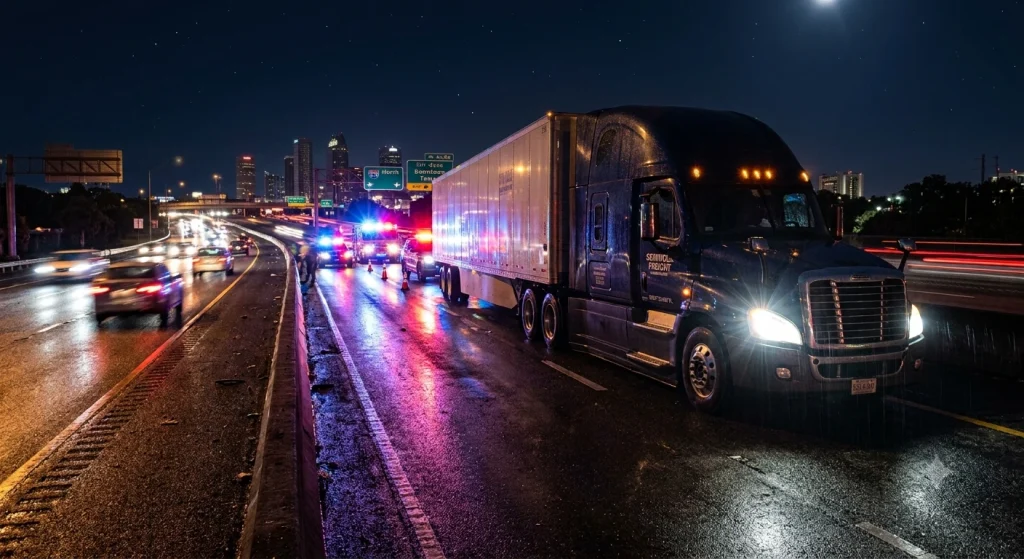
Camión comercial en una carretera de Tampa, Florida, con luces de emergencia después de un choque, for illustrative purposes only.
Blog, Spanish, Truck Accidents

Responsabilidad de la Empresa de Camiones Después de un Choque en Florida: Lo Que las Víctimas Deben Saber

Lo Que Necesitas Saber En Florida, puede que puedas demandar a la empresa de camiones, no solo al conductor, después de un choque grave con un camión comercial. La responsabilidad de la empresa de camiones en casos de choques en Florida frecuentemente involucra la conducta del conductor, fallas de seguridad de la empresa, propiedad del vehículo y reglas federales de camiones. Evidencia clave como datos ELD, datos de la caja negra, video de cámara de tablero y registros de mantenimiento puede desaparecer rápidamente sin una carta de preservación. Florida registró 46,651 choques de vehículos motorizados comerciales y 315 fallecidos en 2024, según datos preliminares del FLHSMV. Bajo el Estatuto de Florida § 95.11(5)(a), la mayoría de las demandas por negligencia deben presentarse dentro de 2 años. ¿Tuviste un mal día? Llama a The Reyes Firm. 833-4 BAD DAY. The Reyes Firm ¿Te Lastimaste en un Choque con un Camión en Tampa? Aprende quién puede ser responsable y qué pasos puedes tomar para proteger tu caso. ¿Tuviste un mal día? Programa Tu Consulta Gratuita No esperabas estar aquí. Un momento ibas conduciendo a casa por la I-275, y al siguiente, un camión de 18 ruedas cargado lo cambió todo. El dolor es real. Las facturas ya están llegando. Las llamadas del seguro puede que ya se sientan abrumadoras. En un caso de responsabilidad de empresa de camiones por un choque en Florida, el conductor puede no ser la única parte responsable. La empresa que contrató al conductor, era dueña o controlaba el camión, estableció la ruta, se encargó del mantenimiento o ignoró las reglas de seguridad también puede ser legalmente responsable. En el momento en que ocurre un choque en la I-4, I-75, I-275 u otra carretera de Tampa, el equipo de seguros de la empresa de camiones empieza a proteger su lado. Necesitas a alguien protegiéndote a ti con la misma rapidez. ¿Puedes Demandar a una Empresa de Camiones en Florida Después de un Choque? Sí. Puedes demandar a una empresa de camiones después de un choque en Florida si el conductor estaba trabajando para la empresa o si las propias fallas de la empresa ayudaron a causar el accidente. Estos casos frecuentemente involucran responsabilidad vicaria, contratación negligente, supervisión deficiente, mantenimiento inseguro o violaciones de regulaciones federales de camiones. La responsabilidad vicaria significa que una parte puede ser responsable por las acciones de otra persona. En casos de accidentes de camiones, esto frecuentemente significa que la empresa puede ser responsable si su conductor causó el choque mientras realizaba trabajo relacionado con su empleo. Una empresa de camiones también puede ser responsable por sus propias decisiones. Esto puede incluir contratar a un conductor inseguro, mantener a un conductor peligroso en la carretera, saltarse el mantenimiento, ignorar los límites de horas de servicio o no entrenar a los conductores. Un abogado de accidentes de camiones en Tampa puede ayudar a preservar evidencia antes de que los sistemas de la empresa de camiones sobreescriban datos clave. Eso importa porque los casos de choques con camiones frecuentemente dependen de los registros de la empresa, no solo de lo que ocurrió en la escena del choque. ⚠️ Advertencia: Bajo el Estatuto de Florida § 95.11(5)(a), la mayoría de las demandas por negligencia deben presentarse dentro de 2 años. Esto incluye muchos reclamos de lesiones personales en Florida. Si pierdes el plazo, puede que pierdas tu derecho a buscar compensación, incluso si la empresa de camiones causó el choque. ¿Qué Es la Doctrina del Instrumento Peligroso de Florida? La Doctrina del Instrumento Peligroso de Florida puede hacer que el dueño de un vehículo sea legalmente responsable cuando ese dueño permite que otra persona opere el vehículo y esa persona causa daño por conducción negligente. En casos de choques con camiones, esta regla puede importar cuando un transportista, dueño o empresa relacionada controlaba el vehículo comercial. La doctrina no es solo sobre contratación deficiente. Se enfoca en la propiedad, el permiso y el control. Si una empresa era dueña del camión o tenía control legal sobre él, ese hecho puede ayudar a establecer la responsabilidad. Esta regla también puede importar cuando una empresa intenta transferir la culpa llamando al conductor contratista independiente. Los tribunales de Florida pueden ir más allá de la etiqueta y examinar quién controlaba el camión, la ruta, la carga y el trabajo. Los casos de camiones comerciales en Tampa frecuentemente involucran estructuras empresariales complejas. Un transportista puede arrendar equipos. Un conductor puede trabajar bajo contrato. Un intermediario puede organizar el envío. Por eso debe investigarse la cadena completa de propiedad y control. ¿Cómo Pueden las Violaciones de la FMCSA Ayudar a Probar la Negligencia de la Empresa de Camiones? Las violaciones de la FMCSA pueden servir como evidencia sólida de negligencia en un caso de accidente de camión en Florida. Si una empresa de camiones rompe las reglas federales de seguridad y esa violación contribuye a un choque, esos registros pueden ayudar a mostrar que la empresa no actuó de forma segura. La Administración Federal de Seguridad de Transportistas Motorizados regula muchas partes del transporte de carga comercial. Estas reglas cubren las horas de servicio, los archivos de calificación del conductor, las pruebas de drogas y alcohol, los deberes de inspección, los registros de mantenimiento, el aseguramiento de carga y los requisitos de seguro. Las violaciones comunes que pueden respaldar un reclamo de negligencia de la empresa de camiones incluyen: Violaciones de horas de servicio: La empresa permitió o presionó al conductor a permanecer al volante demasiado tiempo. Registros ELD faltantes o alterados: La empresa no rastreó el tiempo de conducción o no preservó los registros requeridos. Problemas de calificación del conductor: La empresa contrató o mantuvo a un conductor que no cumplía con los estándares de seguridad. Fallas de mantenimiento: La empresa permitió que un camión con frenos, neumáticos, luces o piezas de dirección inseguros saliera a la carretera. Fallas en el aseguramiento de carga: La empresa o la parte cargadora no aseguró la carga de forma segura. Las reglas federales

Scroll to Top